Publication: Cact. Suc. Mex. 26(2): 38 (figs. 18-21). 1981 Remarks: as “Echinocereus pamanesiorum”;
Description
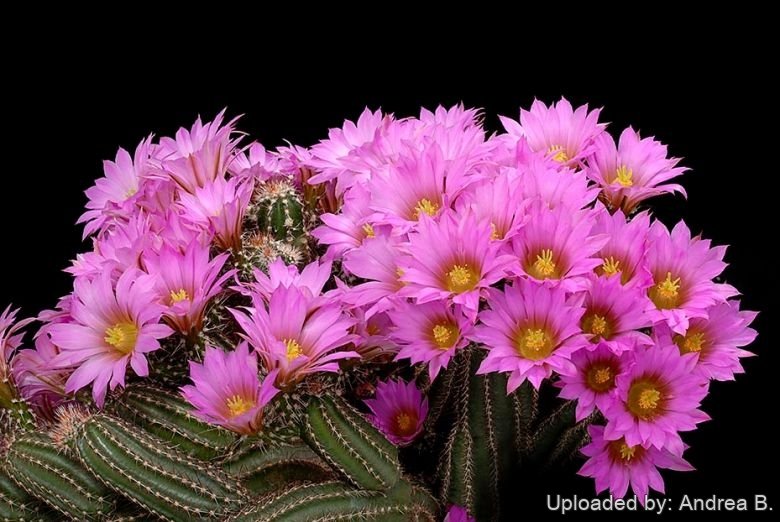
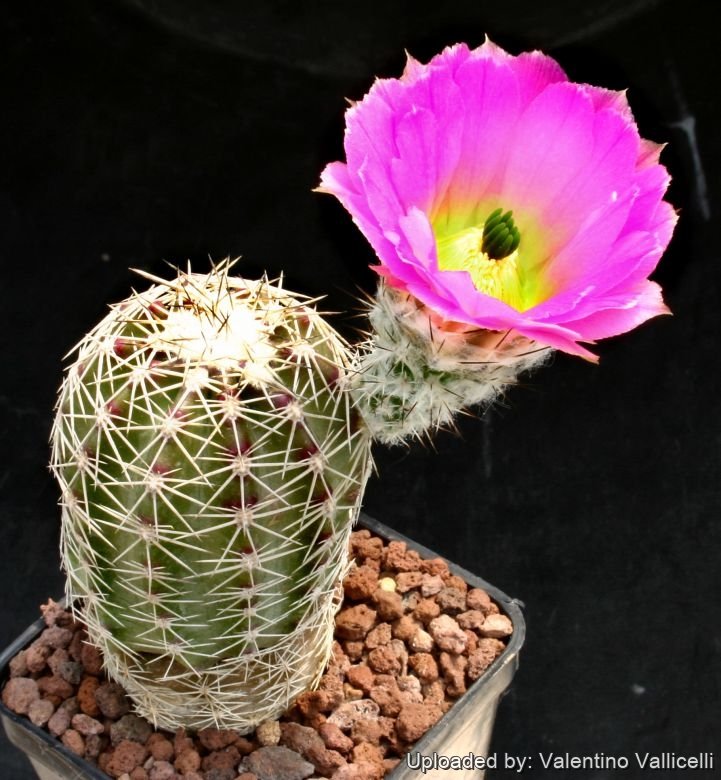
Solitary or occasionally clumping and forming cluster up to 30 cm in diameter
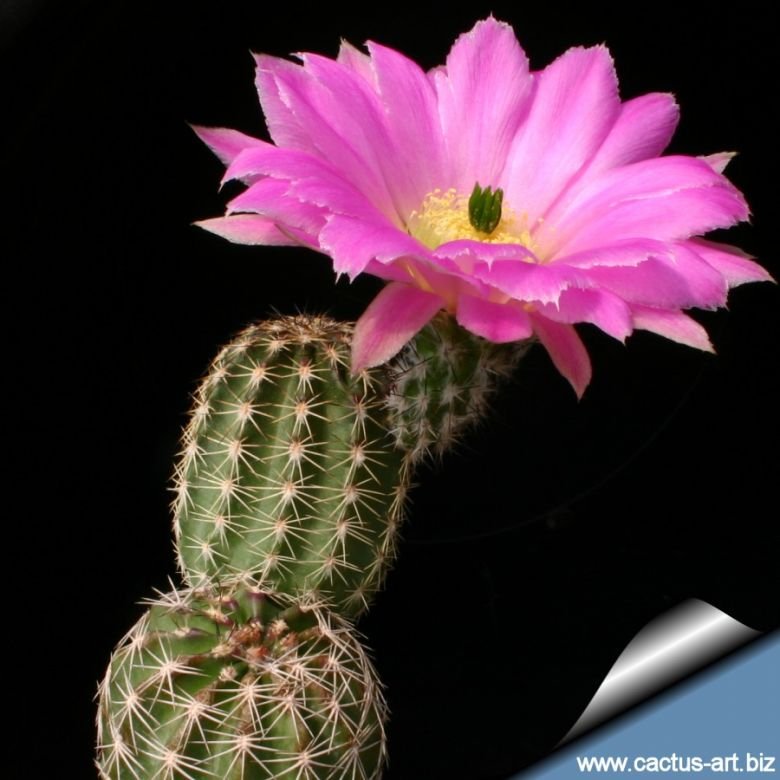
Stems: Green up to 35 cm tall, 8 cm in
Ribs: 9-16
Roots: Fibrous.
Areoles: Oval.
Radial spines: 9-16 light-grey or brownish to dark-grey adpressed up to 13 mm.
Central spines: 0-3projecting up to 25 mm brown to black.
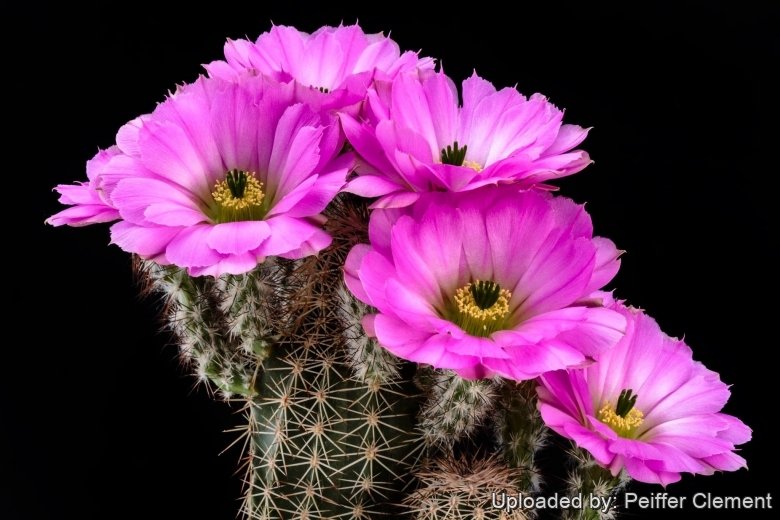
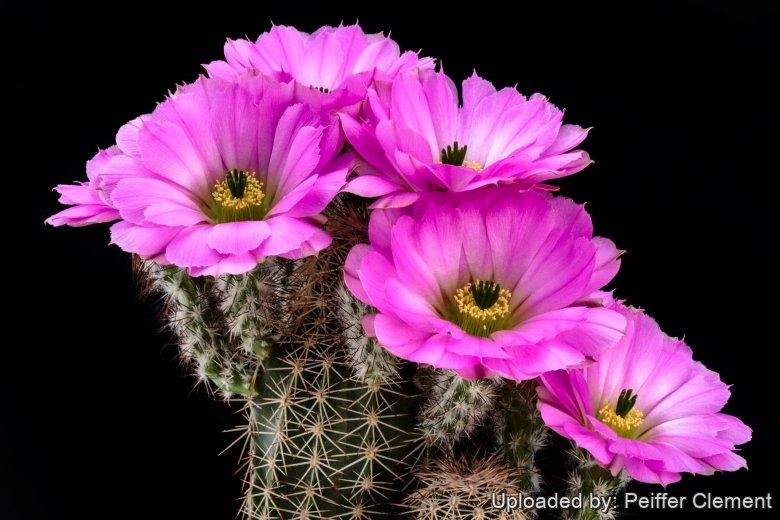
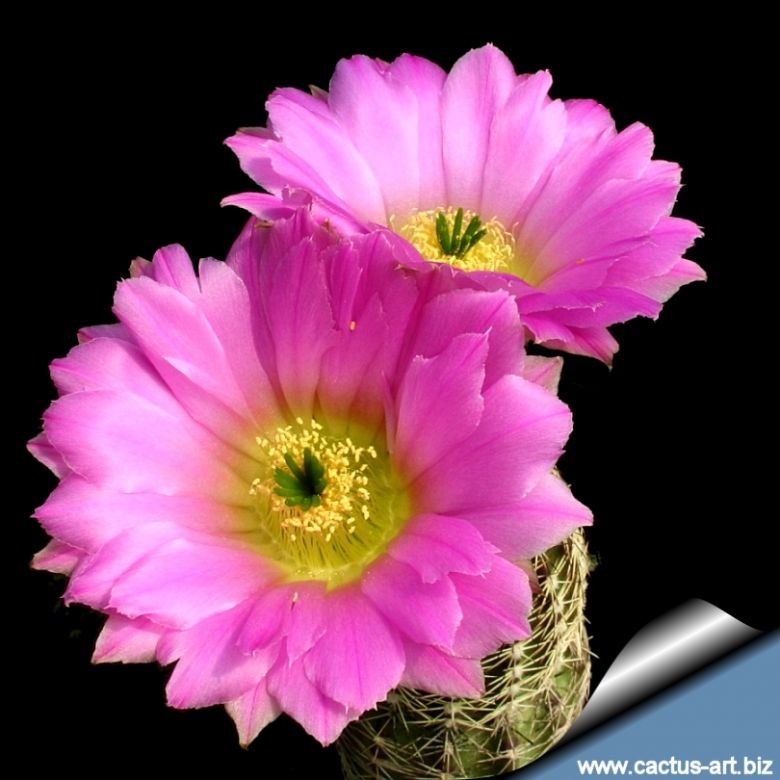
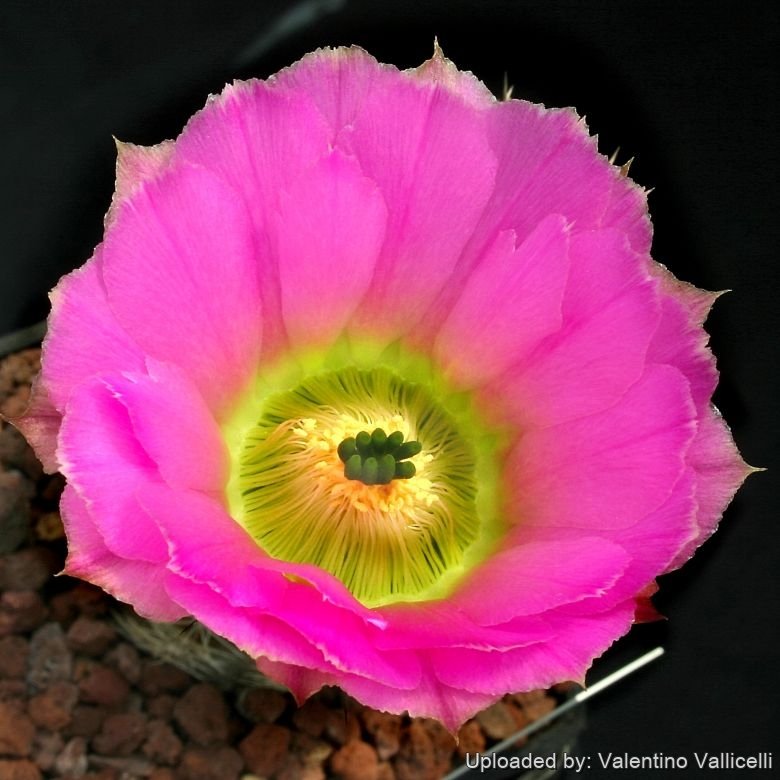
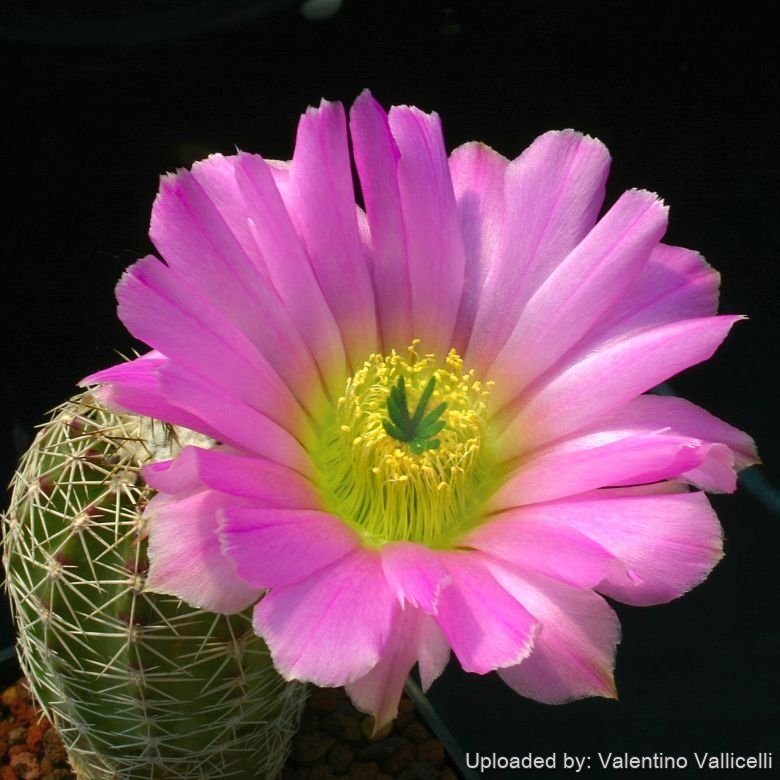
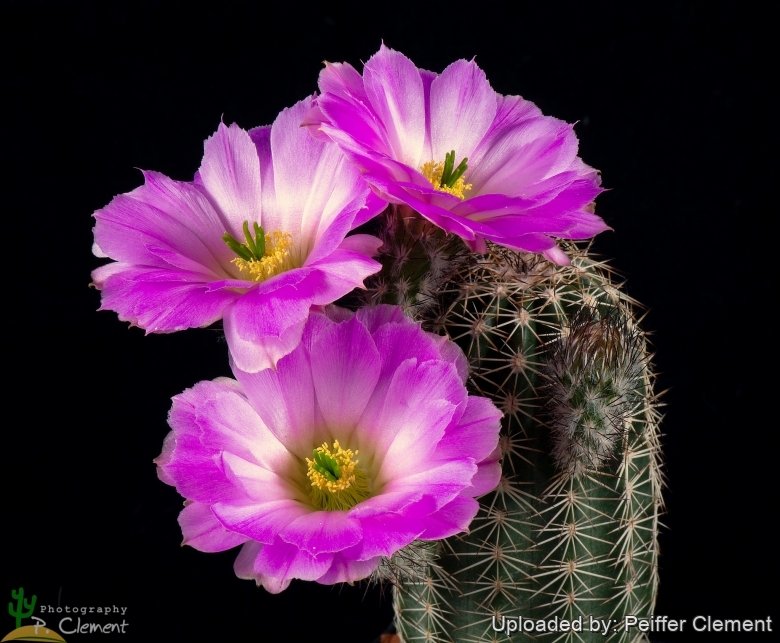
Flowers: Funnel shaped length up to 9 cm, diameter up to 8 cm bright purple-pink with a yellow-green throat. Bud hairy and spined, tube green, filament greenish, anther yellow, pollen yellow, style white-greenish, stigma 9-14 lobed green.
Origin and Habitat
Mexico (Zacatecas) grows on stony hills with various other succulent plants. TL: Mexico, Zacatecas, Rio Huaynamota, bridge between Huejuquilla & San Juan Capistrano, Lau 1247 (MEXU).
Cultivation and Propagation
In culture E. pamanesiorum is without problems, easy to grow, very attractive and regularly shows its beautiful flowers, if provided with an adequate winter rest period. It is sensitive to over-watering (rot prone), and needs good drainage. Keep drier and cool in winter. Needs full sun. In the summer they need an airy location in bright sun; well watered when it’s hot. To achieve the best spine density give these plants lots of sun. In the winter light, cool, and absolutely dry conditions. Very cold resistant above -12° C or less for short periods of time. In mild climate they grow well when planted freely outside in well-drained soil.
Propagation:: Seeds, Cuttings
Notes
The specific epithet honors General Fernando Pámanes Escobado (ex Governor of the State of Zacatecas)
Gallery