Publication: Kew Mag. 1(4): 159 (1984) ( = densa )
Description
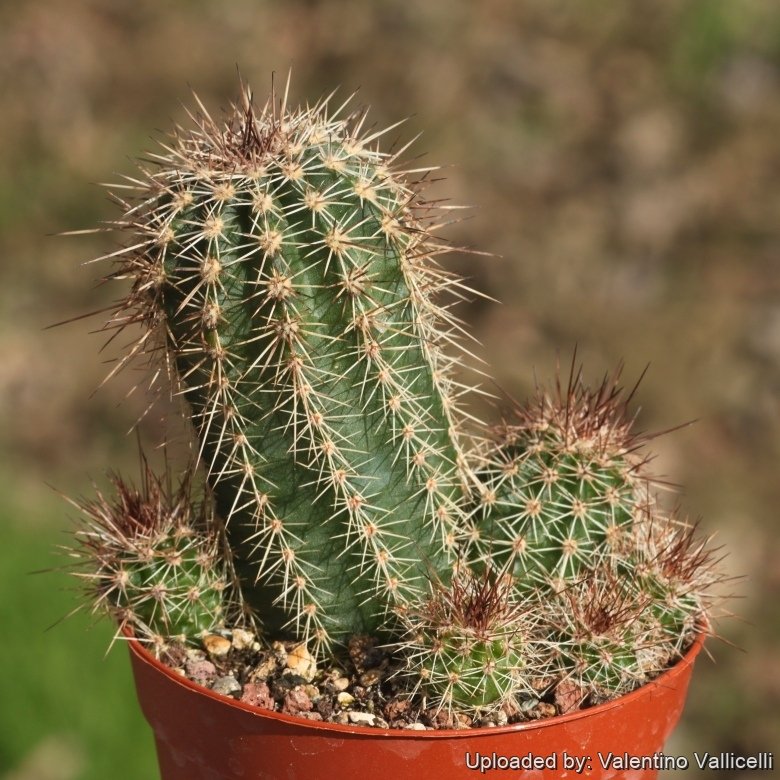
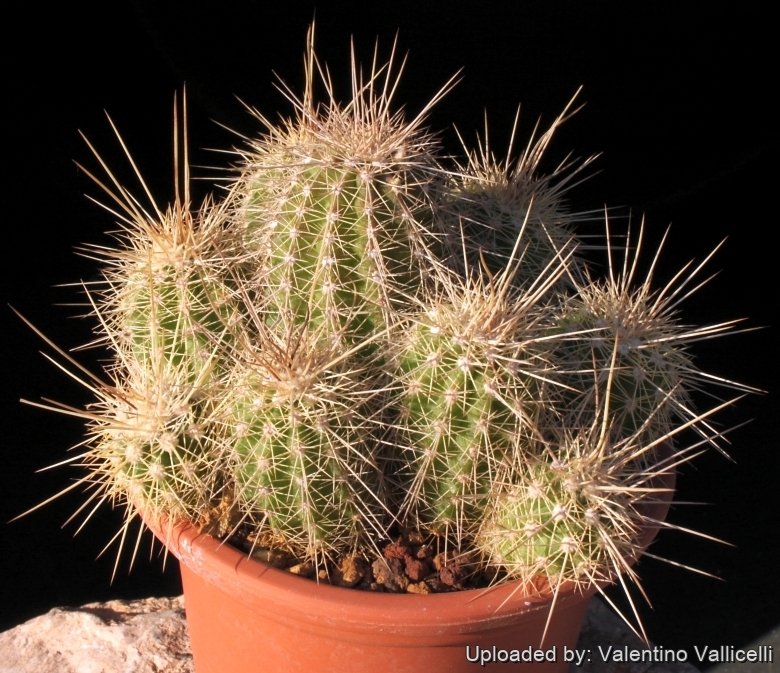
Small compact cactus that forms dense cushion like clumps with 30-40 articles, but occasionally of several hundred stems.
Stem: Green to greysh-green.
Radial spines: 8-12.
Central spines: 2-4 about 3-4 cm long straight, aciucular, creamy white to pale brownish, turning whitish-grey as they age.
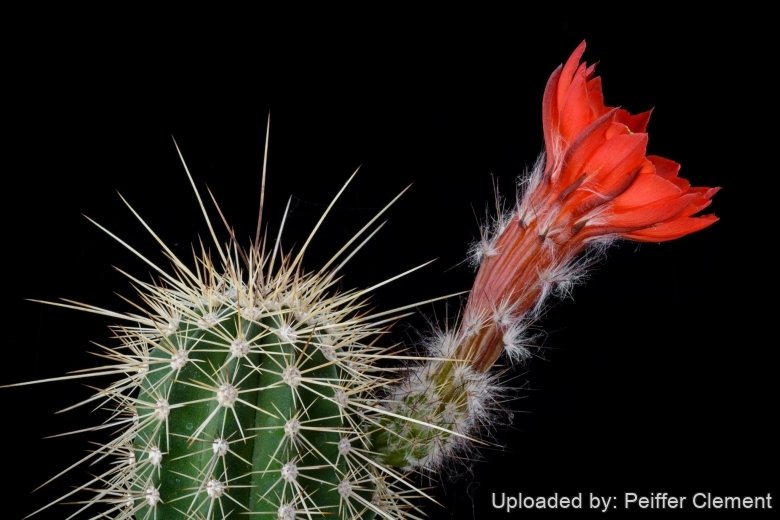
Flowers: Red, iurnal, arising near the stem’s apex, tubular to funnel-shaped.
Blooming season: Apr-Jun, the flowers remain open for 2 or 3 days. Blooming generally begins 5 to 10 years after sowing, as the plant matures.
Origin and Habitat
Zacatecas near Fresnillo, Mexico. (and maybe in guanajuato and Chihuahua).
Altitude: Around 1100-2200 metres above sea level.
Habitat: In the same area it is possible to find a rich shrubby and succulent flora comprising: Mammillaria uncinata, Opuntia streptacantha, Opuntia robusta, Opuntia imbricata, Arbutus glandulosa, Dodonaea viscosa and Agave filifera.
Cultivation and Propagation
This cactus is often cultivated for its flowers. It is among the easiest species to grow and propagate. Water regularly from March to October. Rot prone in winter, it needs good drainage. Claret Cups require strong sunlight to maintain a healthy appearance, and a harsh “dry and cool” winter environment combined with maximum light exposure enhances spring flower production.
Frost Tolerance: Hardy to -5° C, but can tolerate temperatures down to -12° C for short periods if very dry.
Bibliography
Major references and further lectures
1)James Cullen, Sabina G. Knees, H. Suzanne Cubey “The European Garden Flora Flowering Plants: A Manual for the Identification of Plants Cultivated in Europe, Both Out-of-Doors and Under Glass” Cambridge University Press, 11/Aug/2011
-
David R Hunt; Nigel P Taylor; Graham Charles; International Cactaceae Systematics Group. “The New Cactus Lexicon” dh books, 2006
-
Edward Anderson “The Cactus family” Timber Press, Incorporated, 2001
-
Baker, M. & Van Devender, T. 2013. Echinocereus polyacanthus. In: IUCN 2013. “IUCN Red List of Threatened Species.” Version 2013.2. <www.iucnredlist.org>. Downloaded on 14 January 2014.