Description
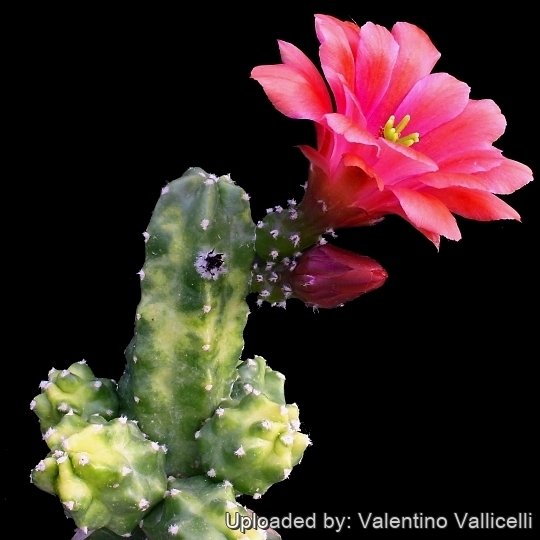
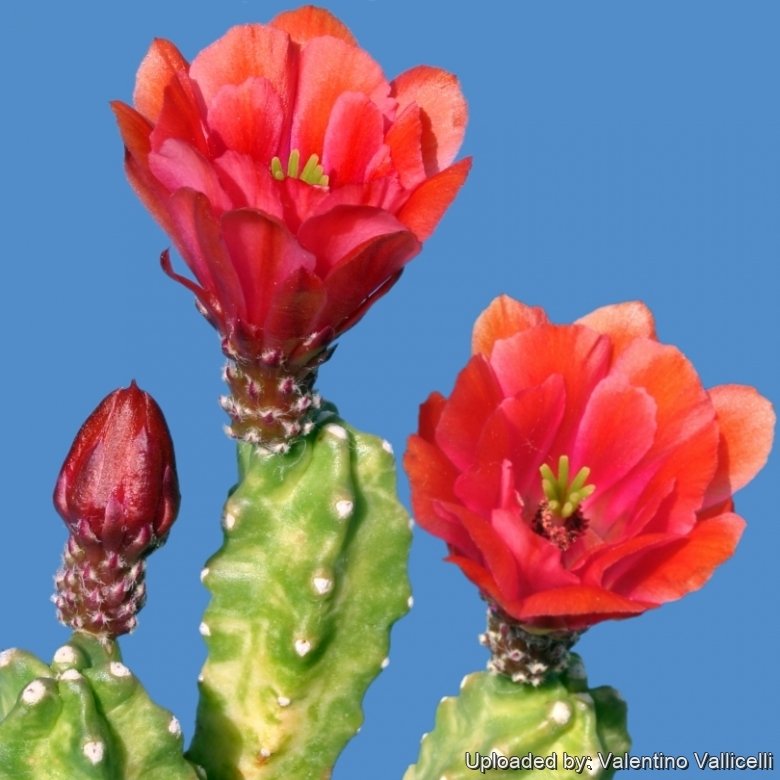
Echinocereus scheeri var. gentryi f. cucumis cv. Honk Hong is a nice cultivars (hybrid?) with beautiful colourful flowers. The plant itself has a nice yellowhis/green spotted variegation on soft green finger-thick almost spineless stems, and not terrifically dangerous, either.
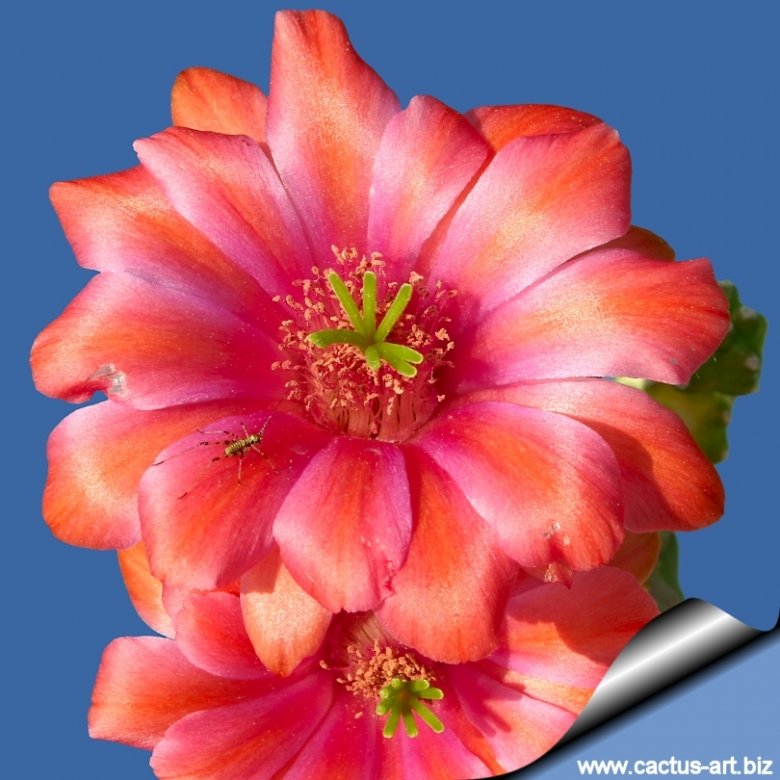
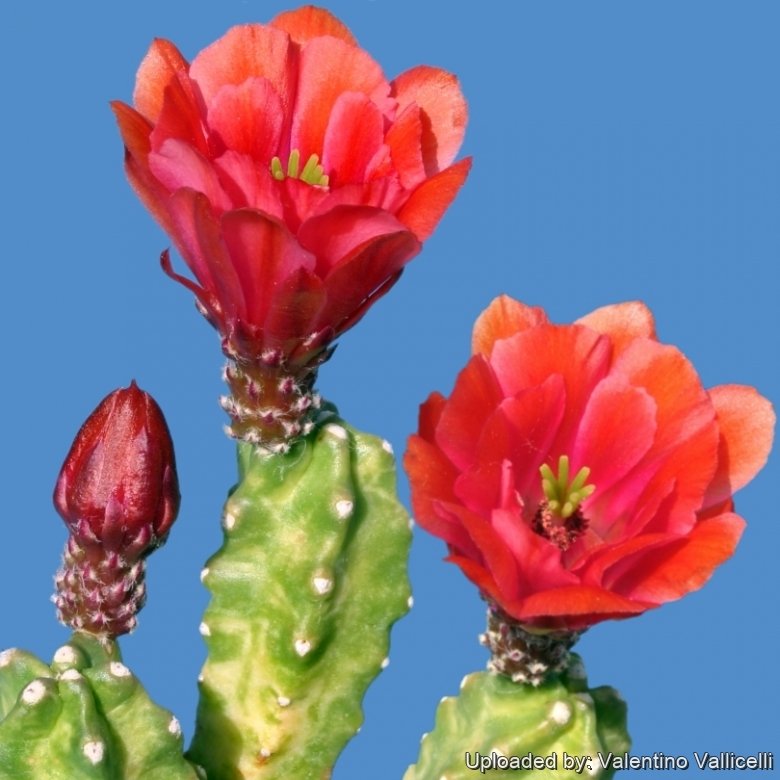
Flowers: Up to 9,5 cm long, 6,5 cm in diameter with pinky-red petals shading to a bright magenta margin. Throat phosphorescent violet.
Blooming season: Flowers are produced in early summer and remain open for up to four days, tending to open more at night and the flowering continues for weeks and weeks (unlike Echinopsis which shows off for a day or two).
Origin and Habitat
Garden origin (Nursery produced cultivar)
Cultivation and Propagation
The variegated Echinocereus scheeri var. gentryi f. cucumis cv. Honk Hong is regarded as choice and difficult in cultivation, but despite that it is relatively easy to grow. It is sometime seen as grafted plants, but grows well on its own roots too.
Growth rate: It is a relatively rapidly growing species that will make clumps given the best conditions.
Soils: It likes very porous standard cactus mix soil.
Repotting: This plant needs plenty of space for its roots, repotting should be done every other year or when the it has outgrown its pot. Use pot with good drainage.
Watering: It is sensitive to over-watering (rot prone), and needs good drainage. Keep drier and cool in winter. In the summer it need an airy location in bright sun; keep it well watered when it’s hot.
Fertilization: Feed with a high potassium fertilizer in summer.
Hardiness: In the winter light, cool, and absolutely dry conditions. Reputedly resistant to frost if kept on the dry side prior to, and during, cold weather (hardy to -7° C or less for short periods of time, USDA Zone 9 to 10). In mild climate they grow well when planted freely outside in well-drained soil.
Exposition: The variegated cultivars cannot tolerate prolonged exposure to direct sun light (especially during the hottest summer days), so grow them in half-shade or under filtered sun.
Uses: It is an excellent plant for container growing. It look fine in a cold greenhouse and frame or outdoor in a rockery.
Pests & diseases: It may be attractive to a variety of insects, but plants in good condition should be nearly pest-free, particularly if they are grown in a mineral potting-mix, with good exposure and ventilation. Nonetheless, there are several pests to watch for:
- Red spiders: Red spiders may be effectively rubbed up by watering the plants from above.
- Mealy bugs: Mealy bugs occasionally develop aerial into the new growth among the wool with disfiguring results, but the worst types develop underground on the roots and are invisible except by their effects.
- Scales: Scales are rarely a problem.
- Rot: This species is particularly easy and accommodating, seldom suffer of cryptogamic diseases. Rot it is only a minor problem with Echinocereus if the plants are watered and “aired” correctly. If they are not, fungicides won’t help all that much.
Propagation: Grafting or cuttings, as it can branch from the base. To make a cutting twist off a branch and permit it to dry out a couple of weeks, lay it on the soil and insert the stem end partially into the soil. Try to keep the cutting somewhat upright so that the roots are able to grow downward.