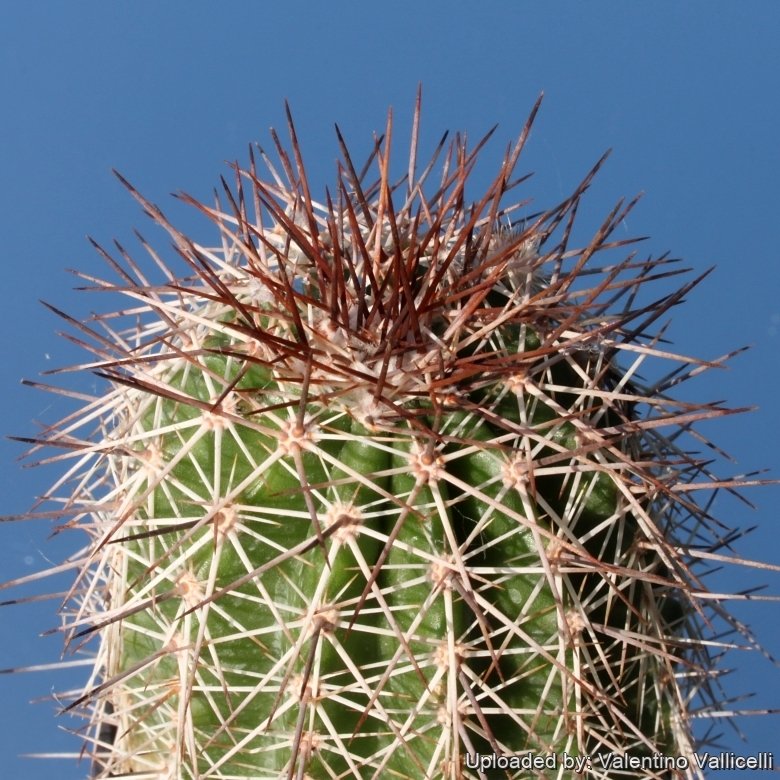
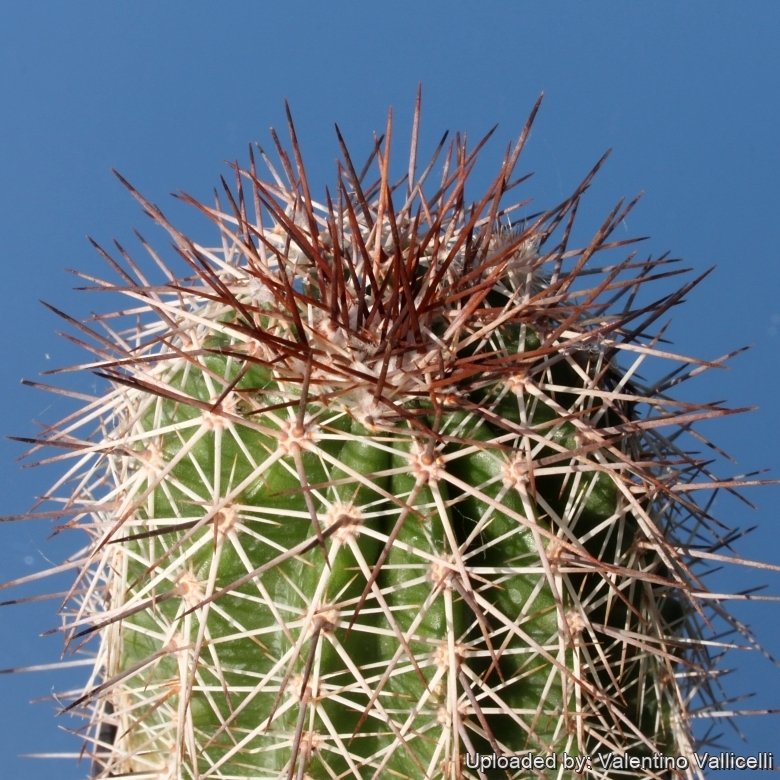
Publication: Kew Mag. 2: 258. 1985
Description
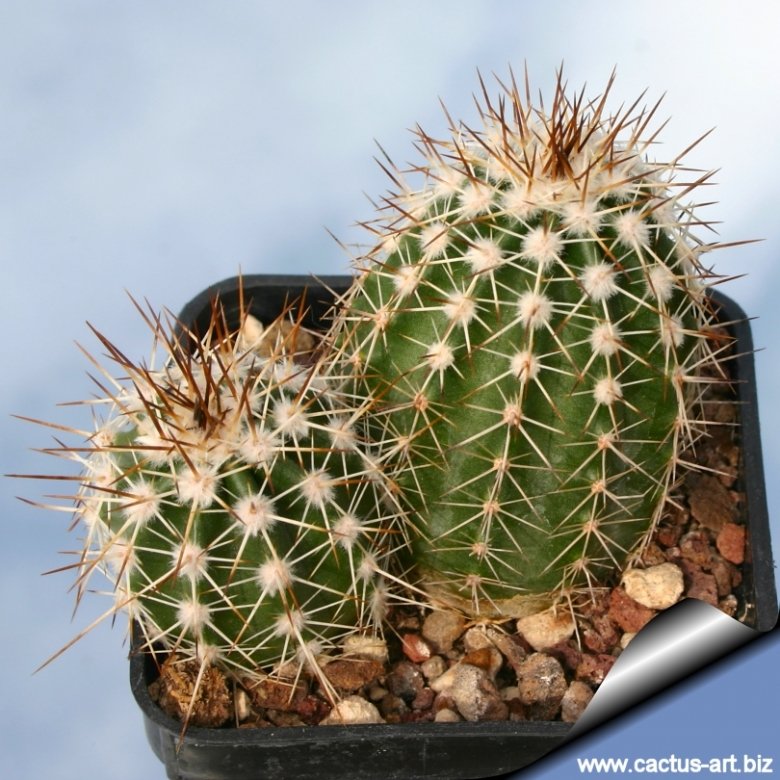
Clumping plant propagating using underground stolons, that forms large colonies of stems partly obscured by spines.
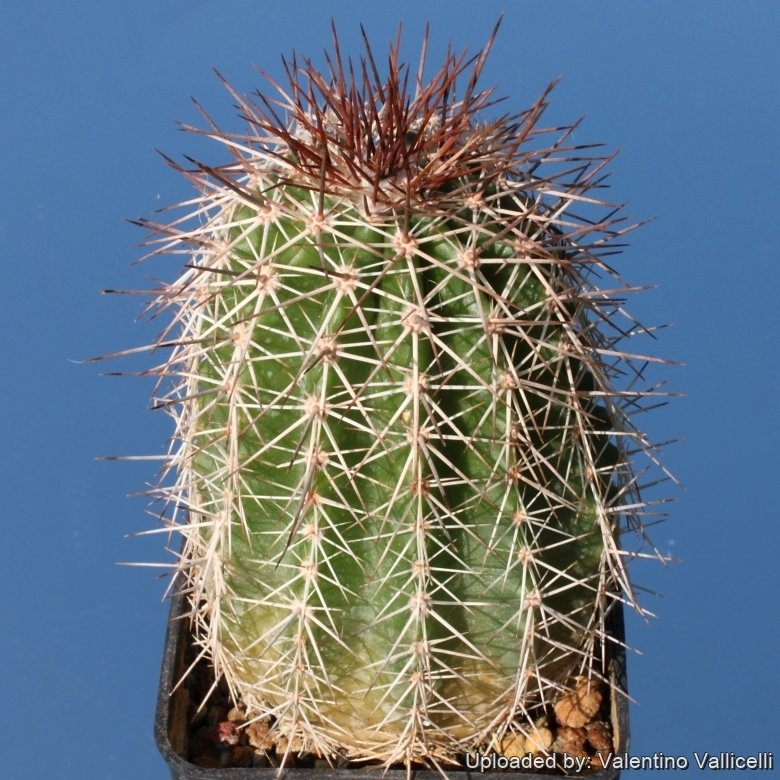
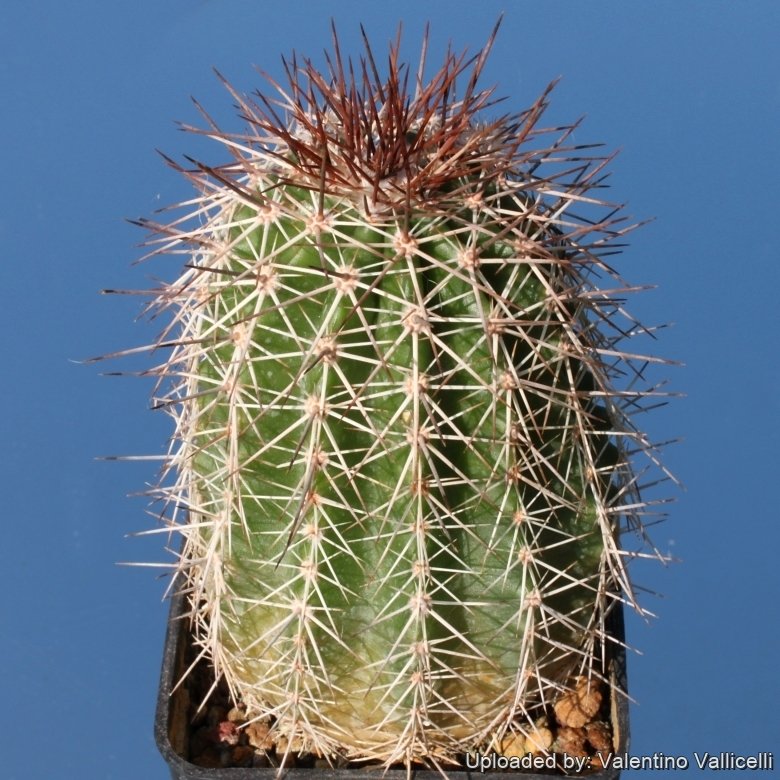
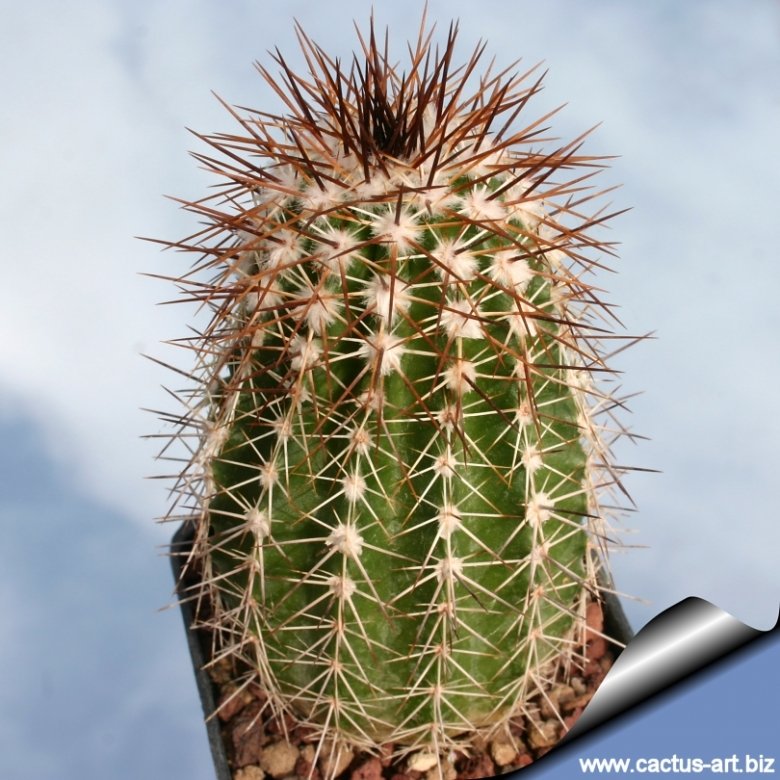
Stem: Upright, ovoid to cylindrical, slightly tapering toward the apex, ribbed, greyish-green to olive-green up to 15 cm tall, 6-8 cm in diameter.
Ribs: 14-16 , low and slightly tuberculated.
Areoles: Round to slightly elliptical, close set, 5 mm apart, the young ones have abundant white or brownish wool.
Central spines: 3 to 5 acicular, stiff and straight, one longer, up to 2,5-3 cm long, pointing downward in the lower part of the areole, usually brownish (or reddish, blackish or greyish).
Radial spines: 10 to 12, flattened against the stem up to 1,5 cm long darker at the tip.
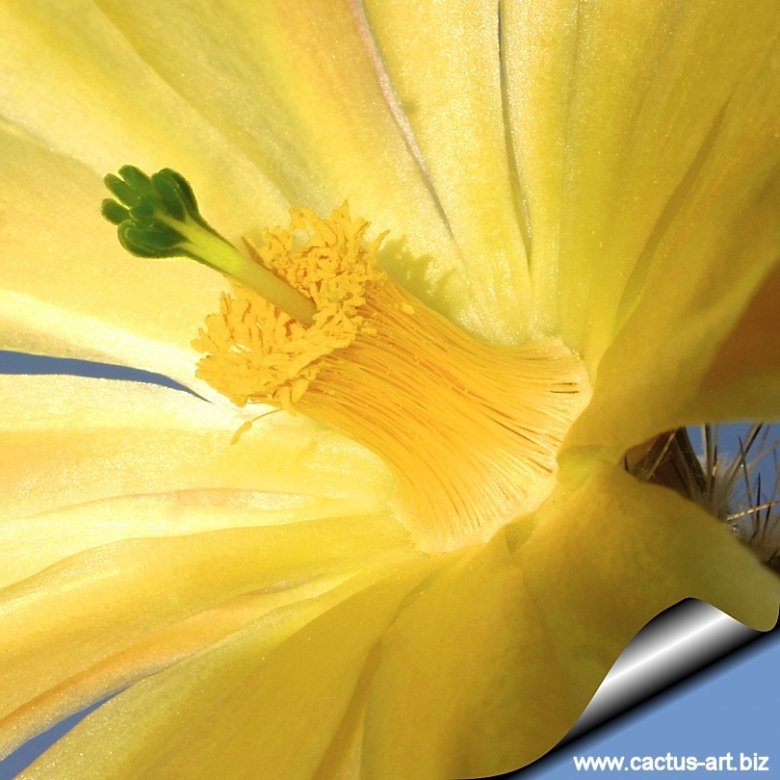
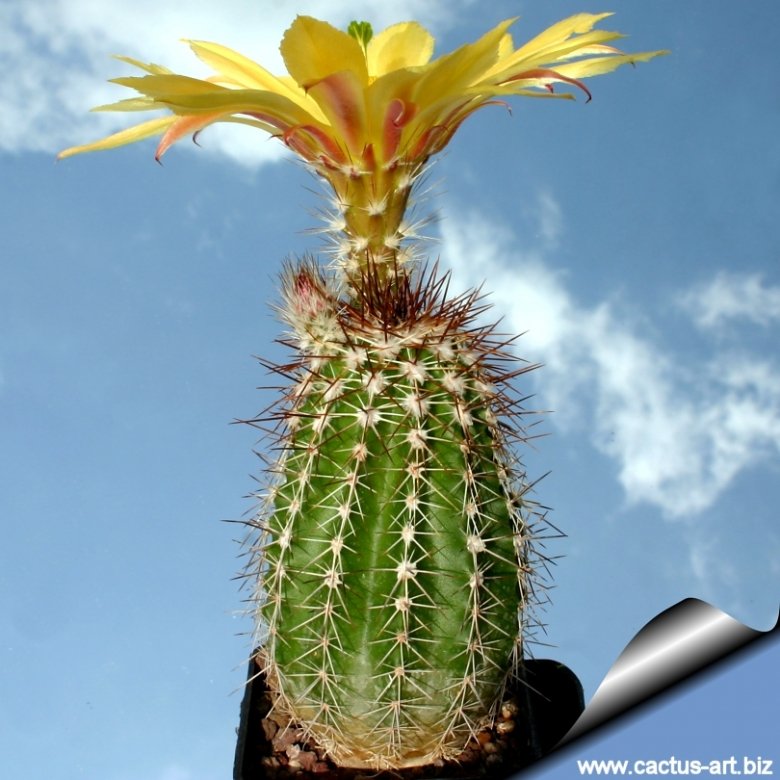
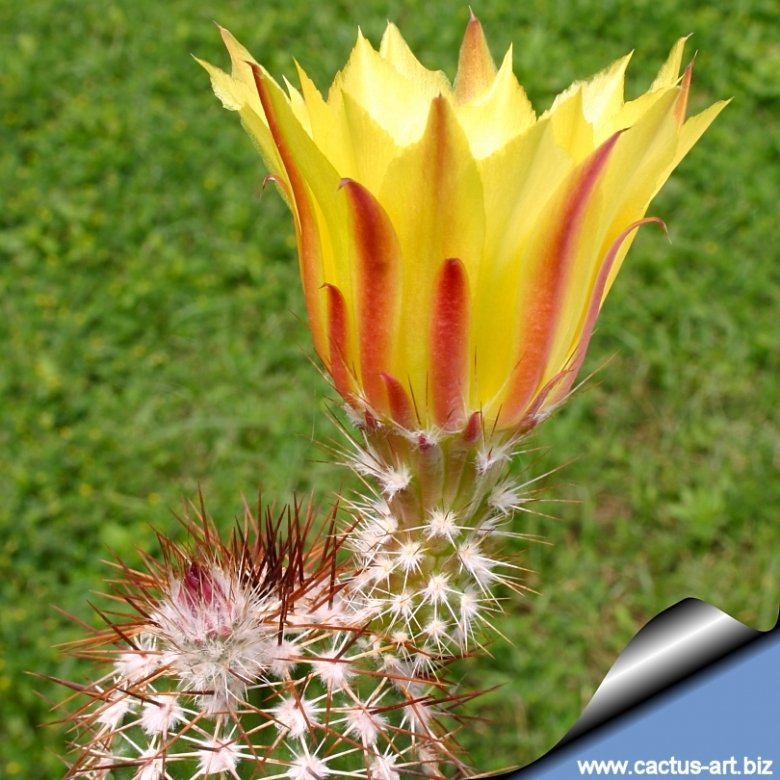
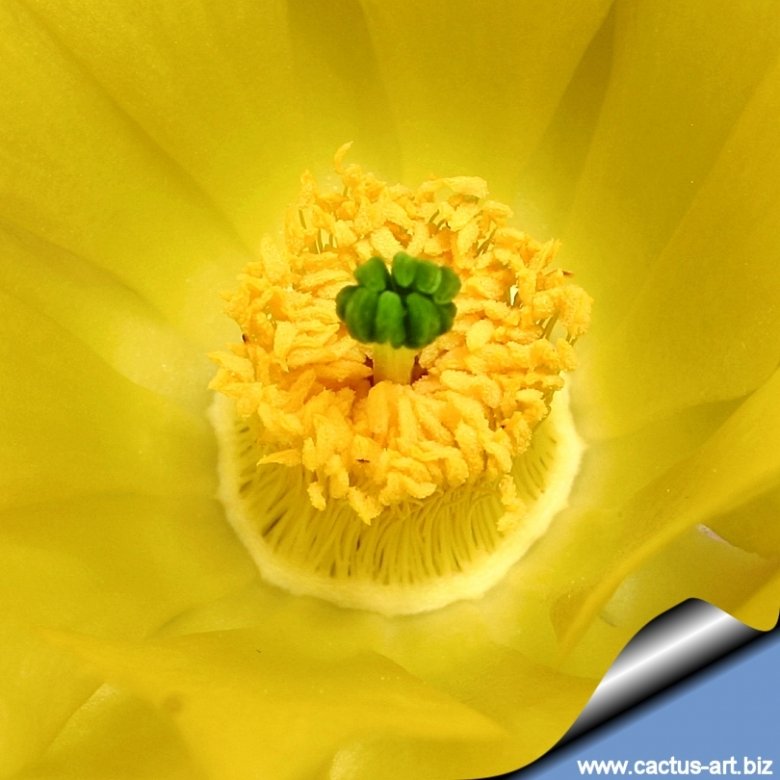
Flowers: Sub-apical, short funnel-form, bright, showy yellow or whitish often turning pinkish on second day, up to 7,5 cm long and 7-10 cm in diameter.
Blooming season: Late spring, May-June.
Fruits: Red, very spiny.
Origin and Habitat
Mexico (Eastern Sonora, Western Chihuahua)
Habitat: Open forest, desert grassland, oak woodland transition areas.
Cultivation and Propagation
In culture E. stoloniferus is without problems and regularly shows its beautiful flowers, if provided with an adequate winter rest period. It is sensitive to over-watering (rot prone), and needs good drainage. Keep drier and cool in winter. It needs to be kept in a cool place during winter rest
Without this cool winter period they normally wont get many buds.
Relatively cold resistant, (can briefly tolerate temp. as low as -7°C)
Stems may possibly become purple and limp in winter but revitalize in early spring.
Propagation: Seed, but the as stems of this cactus branches readily and soon forms a mass of shoots the simplest way to propagate it is to cut a piece of a stem (or of a stolon) in summer, let it dry for a couple of days, and pot it up.
Notes
Echinocereus stoloniferus steadily produces secondary growths by means of underground or surface stolons (like Agave, Sempervivum, etc.) and forms rapidly large clumps.
Gallery