Publication: Bot. Voy. Herald [Seemann] 7-8: 291. 1856
Description
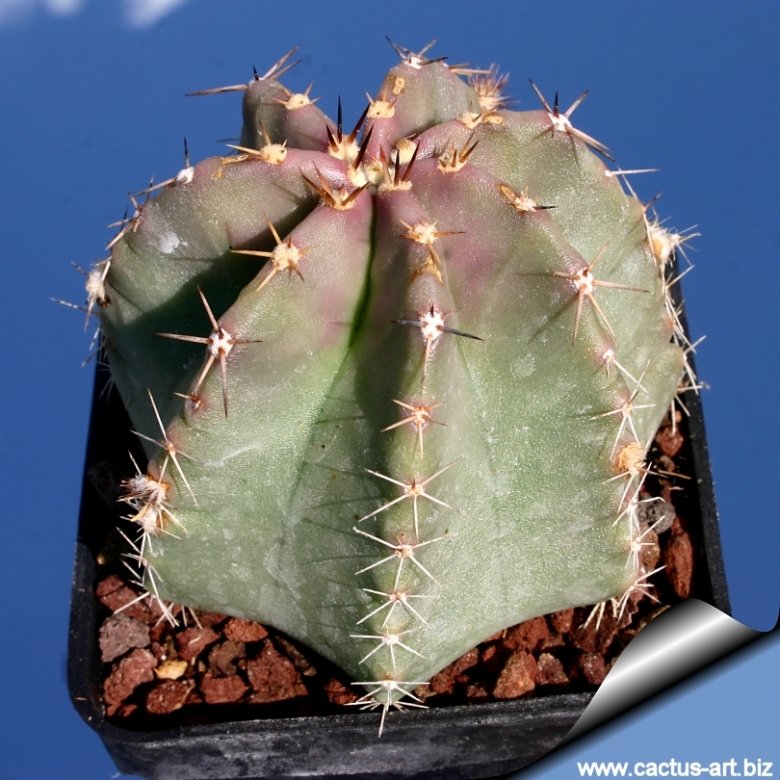
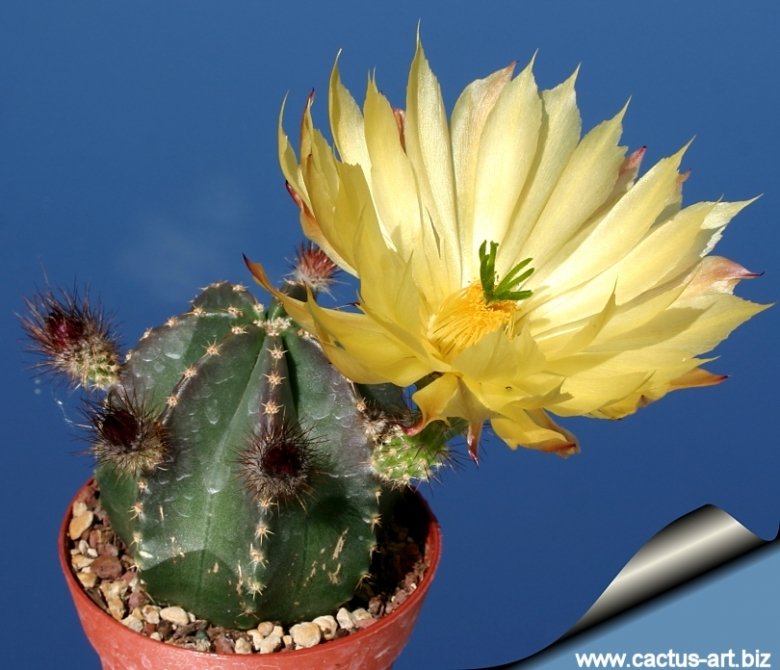
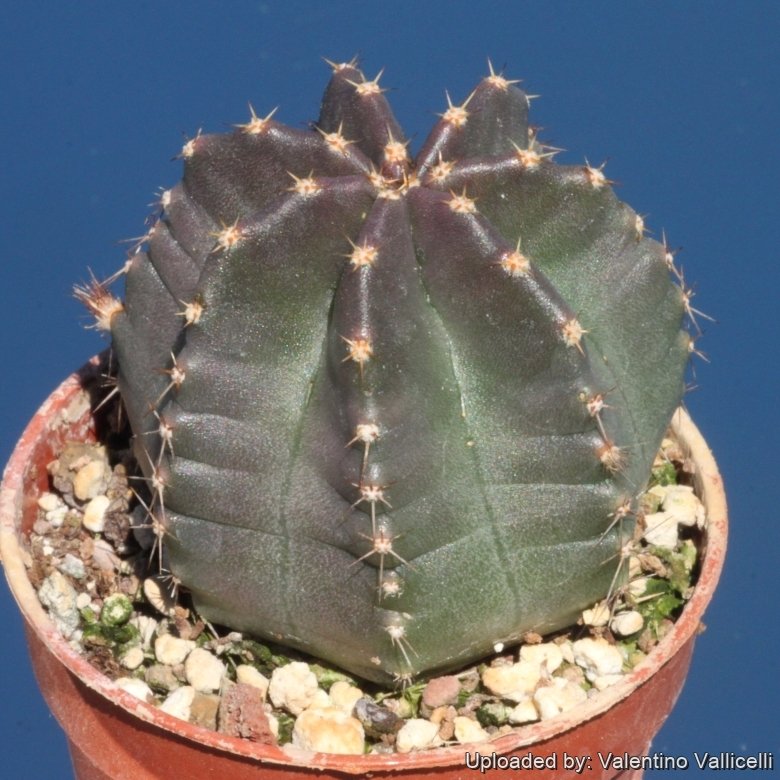
Echinocereus subinermis is the least armed species of the genus with very short spines and huge yellow blooms.
Habit: At first simple or slowly clumping.
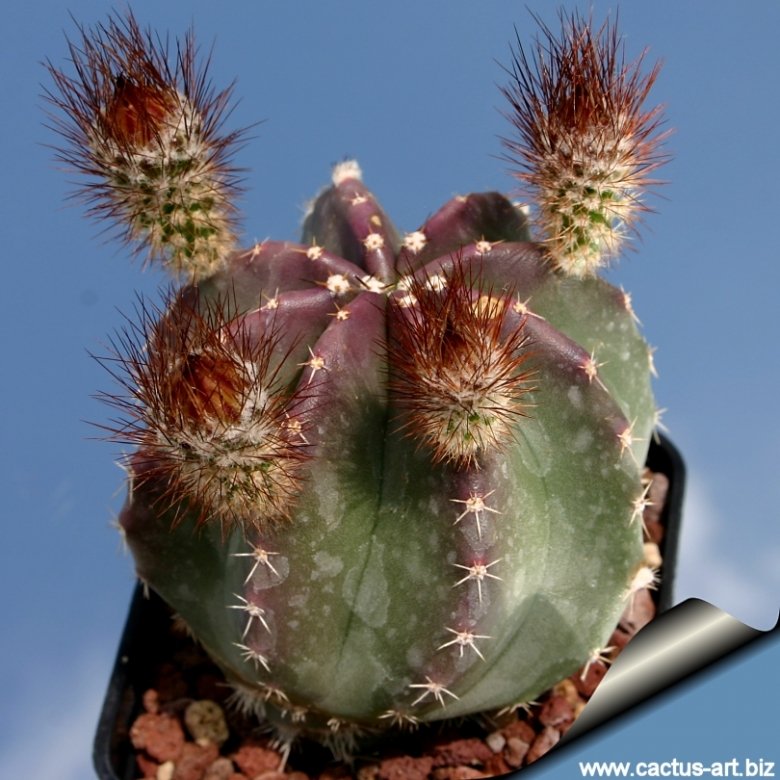
Stem: When young pale green, afterwards bluish green and finally darker green and more or less purplish, 10-20 cm tall, 7 to 9 cm in diameter.
Ribs: 5-11 with narrow furrows between them, broad somewhat sinuate, rounded.
Areoles: Small, slightly woolly, 10-12 mm apart.
Central spines: Usually absent or one (1 to 4 in var. ochoterenae) very short and inconspicuous to up to 2 cm long, thin and porrect.
Spines: Younger plants have short spines while older ones are almost spineless.
Radial spines: 0 to 10 (usually 3 to 8), widely spreading, small, unequal, conic, yellowish, or creamy with a darker tip, deciduous, 1 to 8 mm long (or more).
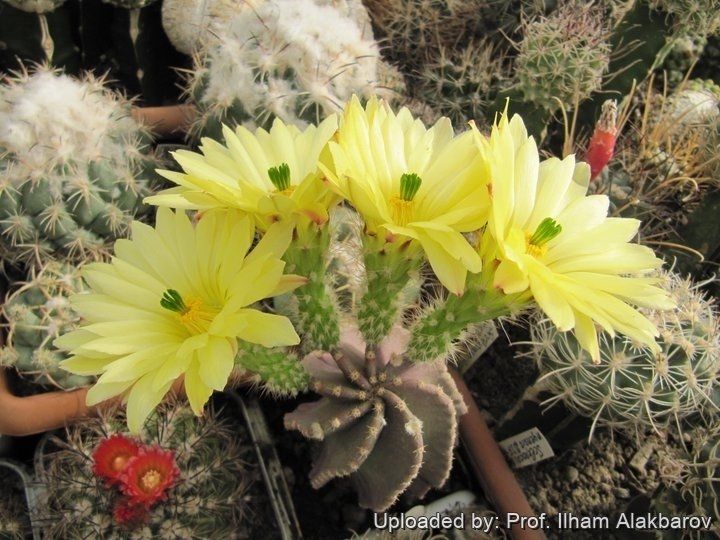
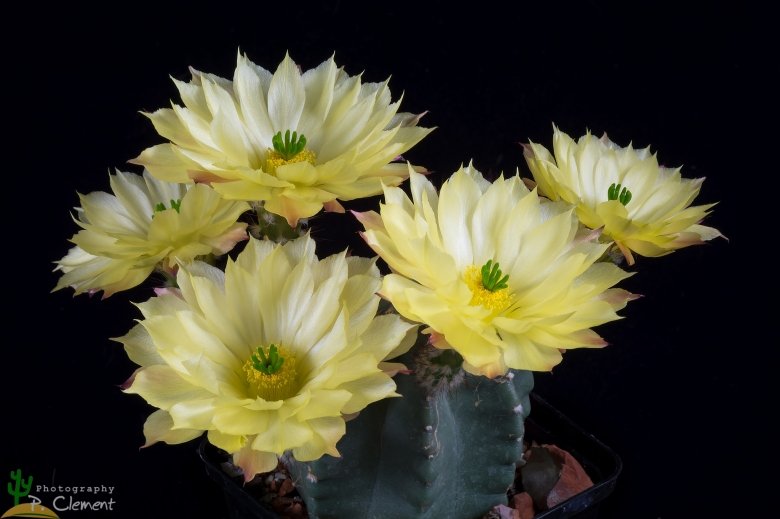
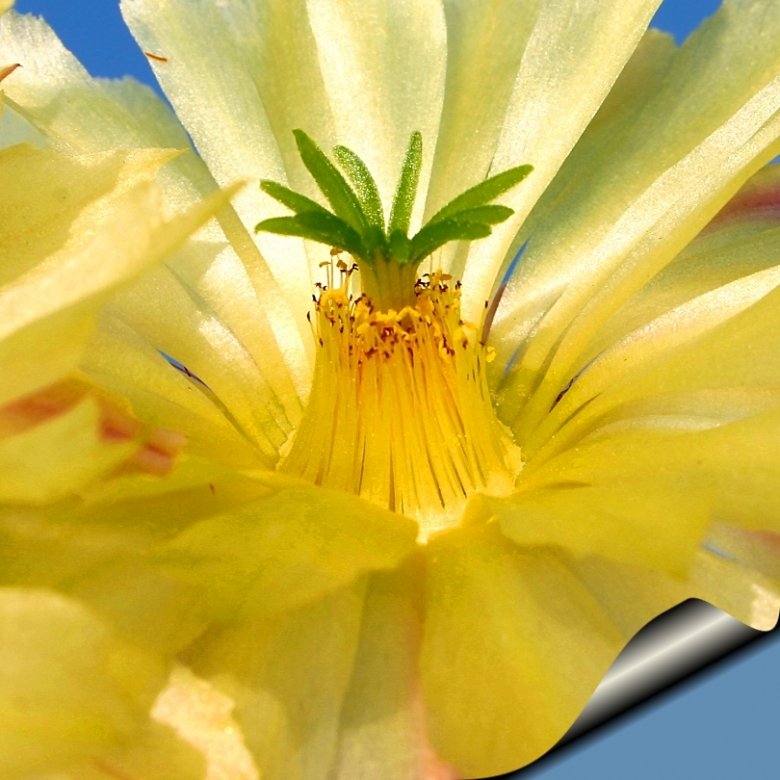
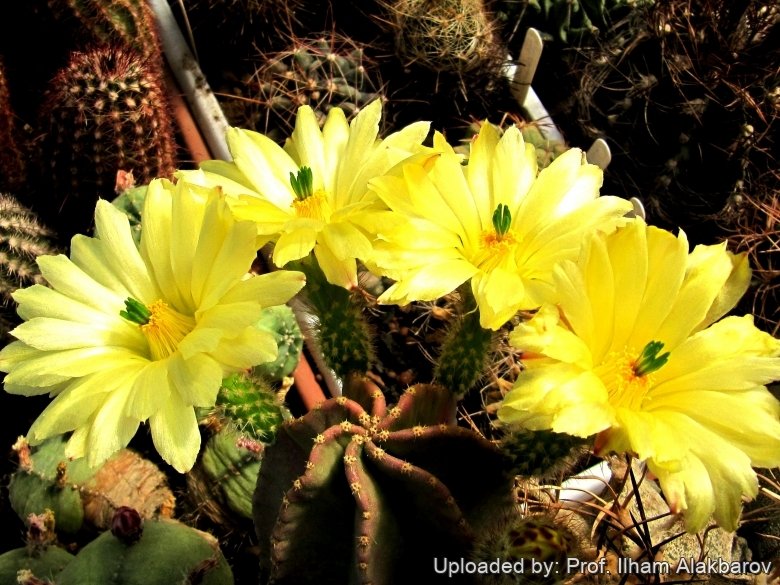
Flowers: Large and showy up to 10-12 cm in diameter near the stem tips and from second to third areoles on the ribs, perianth segments oblanceolate, acute, cream to bright-yellow delicately sweet-scented, often with some reddish midstripes. Stigma with 10-12 green lobes. Filaments light yellow. Spines of areoles on ovary and flower-tube short, white to brown with scarce white wool.
Blooming season: Spring and summer. The individual flowers will last up to six days. Blooming generally begins 4 to 5 years after sowing, as the plant matures.
Fruit: Obovoid, spiny, grey-green with white pulp, deciduous by a longitudinal slit.
Origin and Habitat
Northern Mexico (southern Sonora, western Chihuahua, northern Sinaloa)
Altitude: 200-1300 meters above sea level.
Habitat: It grows in wood clearings and rocky slopes in tropical deciduous oak forests on loamy-sandy soil and igneous rocks along with Mammillaria sonorensis, Mammillaria gueldemanniana, Mammillaria marksiana, Mammillaria floresii, Echinocereus scheeri,Ferocactus schwarzii, Ferocactus alamosanus, Opuntia decumbens, Pachycereus pecten-aboriginum, Bursera laxiflora, Sabal mexicana, Agave vilmoriana, Agave bovicornuta and Agave guadalajarana.
Cultivation and Propagation
This cactus is cultivated and highly priced for its flowers. It is among the easiest species to grow, flower and propagate.
Waterings: Water regularly from March to October. Rot prone in winter, it needs good drainage.
Hardiness: It can not tolerate much frost. Frost Tolerance: Hardy to -2° C.
Exposition: It does not like full harsh sun as it seems to have a delicate skin and few spines, so give it a protected position in the partial-shade or under filtered sun.
Propagation: Seeds (usually), it also can be grown from cuttings, as it can branch from the base.
Bibliography
Major references and further lectures
-
Edward Anderson “The Cactus family” Timber Press, Incorporated, 2001
-
Nathaniel Lord Britton, Joseph Nelson Rose “Cactaceae: Descriptions and Illustrations of Plants of the Cactus Family” vol. 4 The Carnegie Institution of Washington, Washington 1923
-
James Cullen, Sabina G. Knees, H. Suzanne Cubey “The European Garden Flora Flowering Plants: A Manual for the Identification of Plants Cultivated in Europe, Both Out-of-Doors and Under Glass” Cambridge University Press, 11/Aug/2011
-
David R Hunt; Nigel P Taylor; Graham Charles; International Cactaceae Systematics Group. “The New Cactus Lexicon” dh books, 2006
-
Hernández, H.M., Gómez-Hinostrosa, C. & León de la Luz, J.L. 2013. Echinocereus subinermis. In: IUCN 2013. “IUCN Red List of Threatened Species.” Version 2013.1. <www.iucnredlist.org>. Downloaded on 24 October 2013.
-
Flora of North America Editorial Committee “Flora of North America: North of Mexico. Magnoliophyta: Caryophyllidae, part 1” Oxford University Press, 1993
-
Karl Schumann “Blühende Kakteen. Iconographia Cactacearum.” Im Auftrage Der Deutschen Kakteen-Gesellschaft Herausgegeben Von Prof. Dr. Karl Schumann (Prof. Dr. Max Gürke, Dr. F. Vaupel). 1900
From llifle page Echinocereus luteus
Description
Echinocereus subinermis var. luteus (ayn: Echinocereus luteus), is one of the morphological or local forms of Echinocereus subinermis, and the two plants are not readily distinguishable, if not for the geographical provenance. More likely they are one and the same species and most authors have dismissed E. luteus as perhaps not worthy of even varietal status. Echinocereus subinermis var. luteus is a beautiful golden-flowered cactus with bluish green, more or less purplish, stems. Old individuals attain a height of 30 cm rarely, and the plant rarely branches once or twice from the main stem. The stem is oval to conical shaped, 8 to 9 ribbed, with very small spines. Flowers are yellow and outer petals are tinged with red colour, and fragrant. The spines on flower-tube and ovary are acicular.
Stem:* Short to elongated up to 30 cm tall, generally solitary, sometimes branching near base, bluish green, more or less purplish, 8 strongly or 9-ribbed.
Ribs: Rather thin, hardly, if at all, undulate, rounded.
Areoles: Small, 10 to 12 mm apart.
Spines: Small, the radials 6 to 8, unequal, 2 to 8 mm long, widely spreading, white with darker tips.
Central spine: Usually missing, if present, single, and porrect.
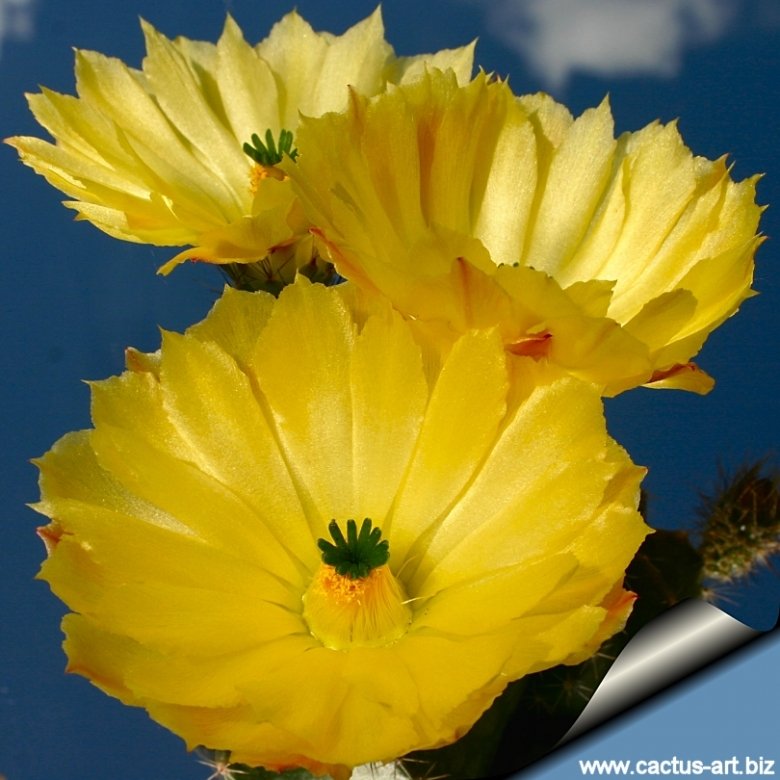
Flowers: On each rib appearing near top of plant and from second or third areole. Flower-buds acute, reddish, covered with long, brownish bristles; areoles on ovary and flower-tube bearing white wool and light-coloured acicular spines with dark tips; flowers pale yellow, delicately sweet-scented, 7 cm long, including the ovary. Outer perianth segments streaked with red. Inner perianth segments lemon-yellow, oblanceolate, acute. Filaments light yellow, stigmas deep green.
Origin and Habitat
Sonora eastward from Sierra de Alamos and in Sinaloa.
Type locality: Sierra de Alamos, Sonora, Mexico.
Altitude range: 250-1300
Habitat and ecology Echinocereus subinermis var. luteus is infrequently scattered in moist barrancas and foothills in shady places on rocks and in short-tree forest and oak forest, together with Echinocereus scheeri, Mammillaria gueldemanniana, Mammillaria sonorensis, and Ferocactus alamosanus.
Bibliography
Major references and further lectures
-
Nathaniel Lord Britton, Joseph Nelson Rose “Cactaceae: Descriptions and Illustrations of Plants of the Cactus Family” Volume 3, 1922
-
Howard Scott Gentry “Rio Mayo Plants: A Study of the Flora and Vegetation of the Valley of the Rio Mayo, Sonora” Carnegie Institution of Washington, 1942
-
Supriya Kumar Bhattacharjee “Handbook of aromatic plants” Pointer Publishers, 2000
-
Nathaniel Lord Britton, Joseph Nelson Rose “Smithsonian Institution United States National Museum Contributions from the United States National Herbarium”, volume 16, part 7 “Studies in Cactaceae-1”, page 239, Plate 67, Washington Government Printing Office 1913
Source: Echinocereus luteus, LLIFLE - Encyclopedia of living forms, CC-BY-SA, retrieved 2026-10-25.
Cultivars and forms (4)
Subspecies (1)
Cultivars (1)
Gallery