Publication: Veg. Fl. Sonoran Des. 2: 1011. 1964
Description
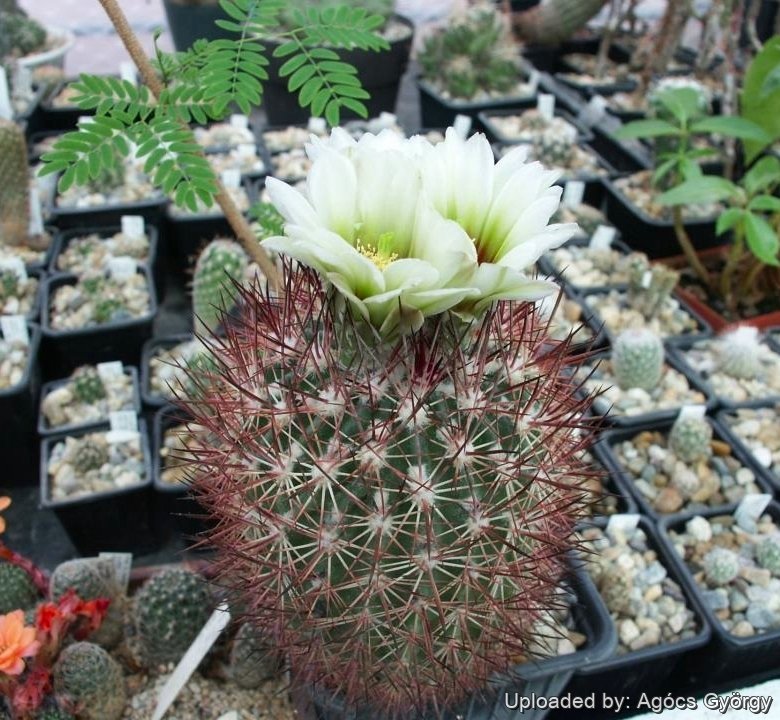
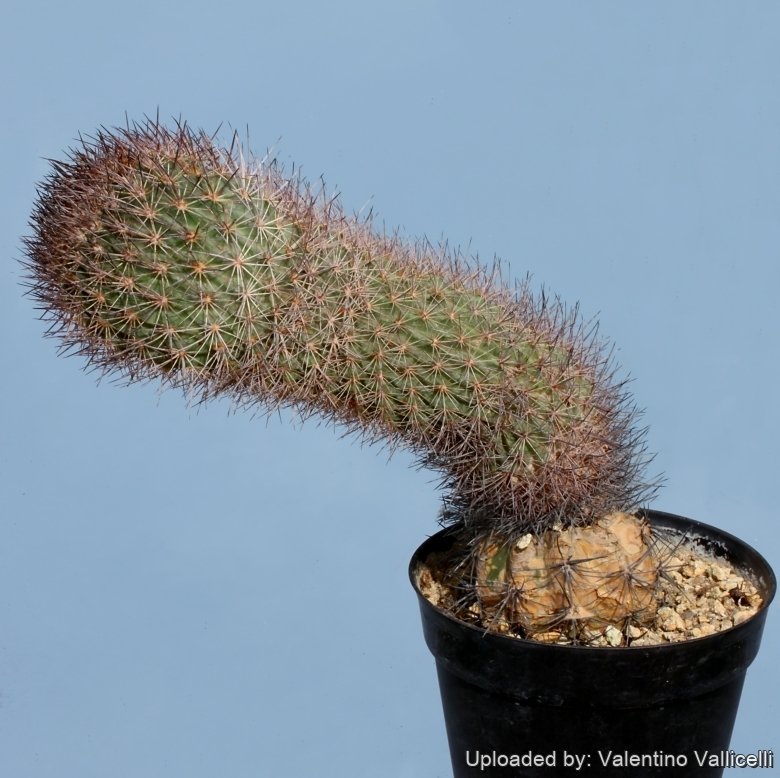
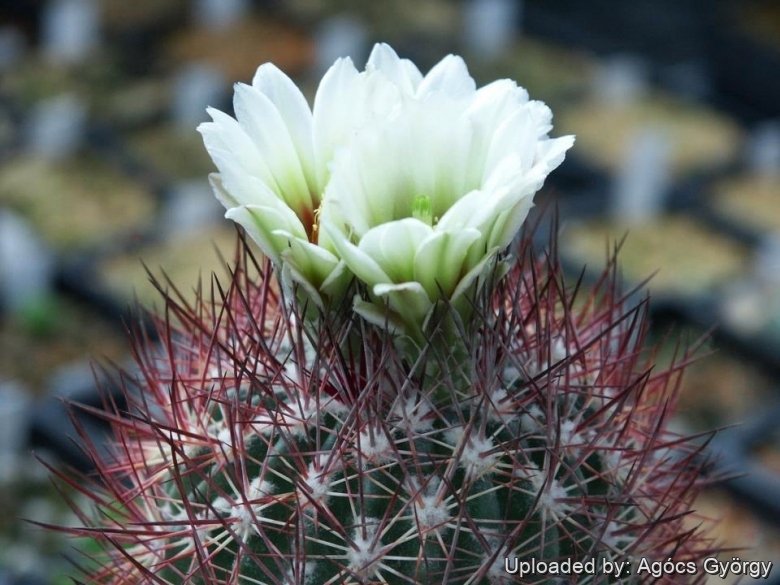
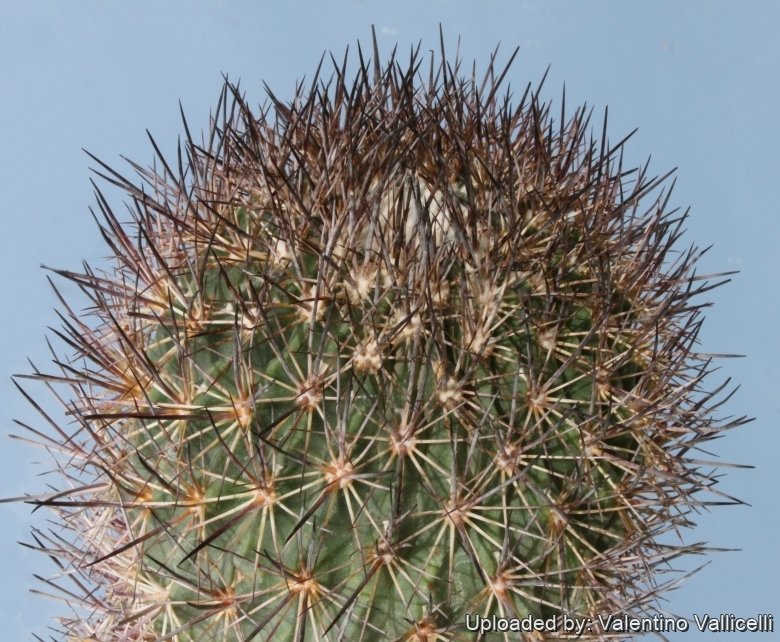
Echinomastus johnsonii is a small barrel cactus densely covered by yellow, pinkish, reddish or greyish lavender to maroon spines, with flowers ranging in colour from magenta to pink to greenish yellow. The yellow-flowered plants have been named Echinomastus johnsonii var. lutescens.
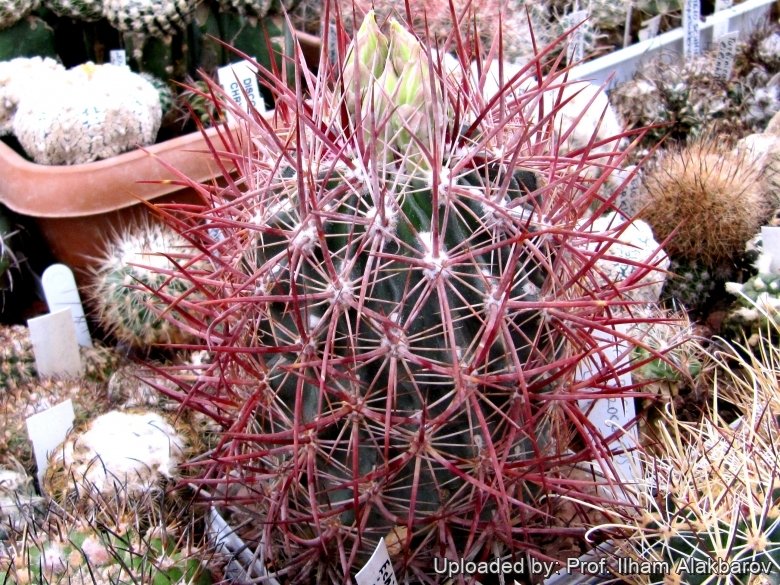
Stems: Usually solitary, ovoid to cylindrical, 10-25 cm high, 5-10(-15 ) cm in diameter, densely covered by spines.
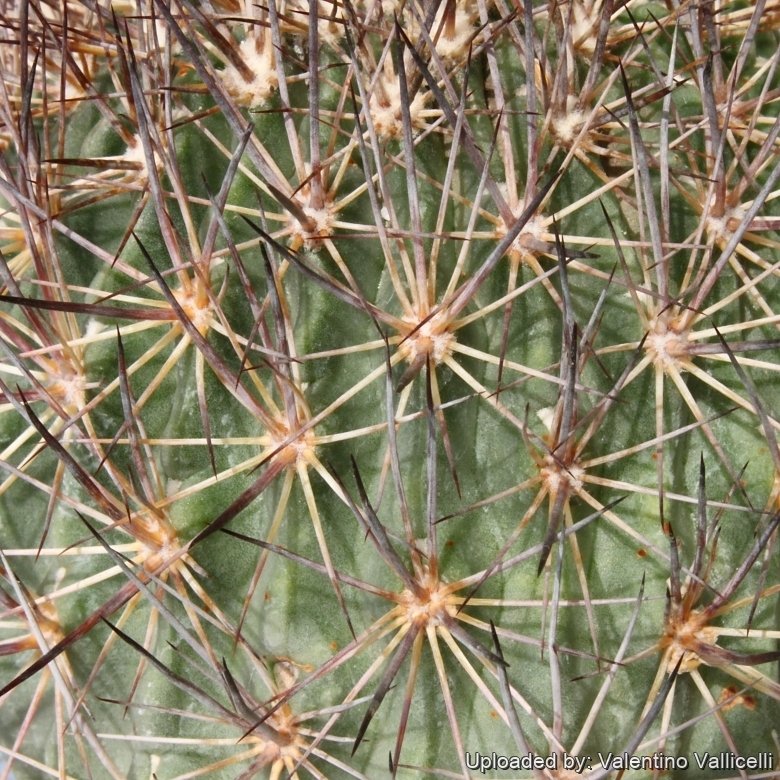
Ribs: (13-)17-21, strongly indented above each tubercle and then rising gradually to the next. Tubercles distinct, about 6 mm high. Areoles 15-26 mm apart along ribs; areolar glands present at least seasonally.
Central spines: 4-9, pale yellow, pinkish, reddish or grayish lavender to maroon, becoming darker with age, straight to strongly decurved; abaxial central spine porrect, spreading, 3-4 cm long.
Radial spines: 9-10(-16) per areole, lighter in color, spreading, 1,2-2(-4) cm long; abaxial (shortest).
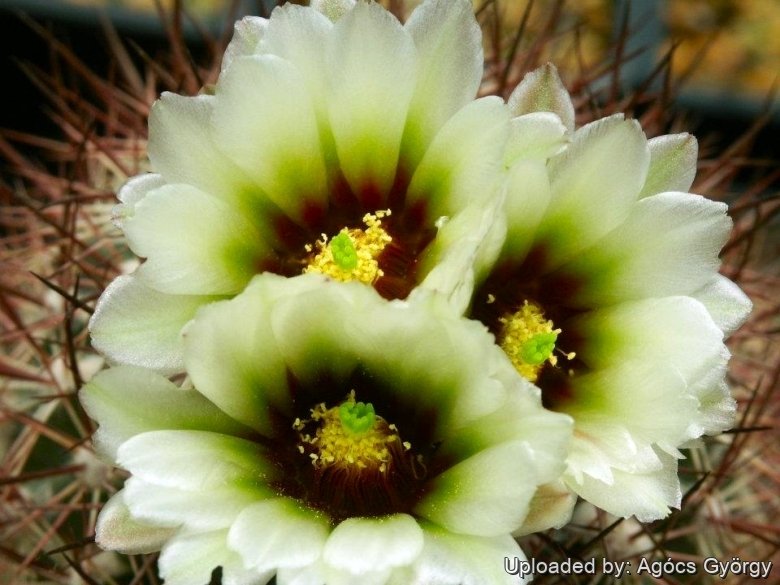
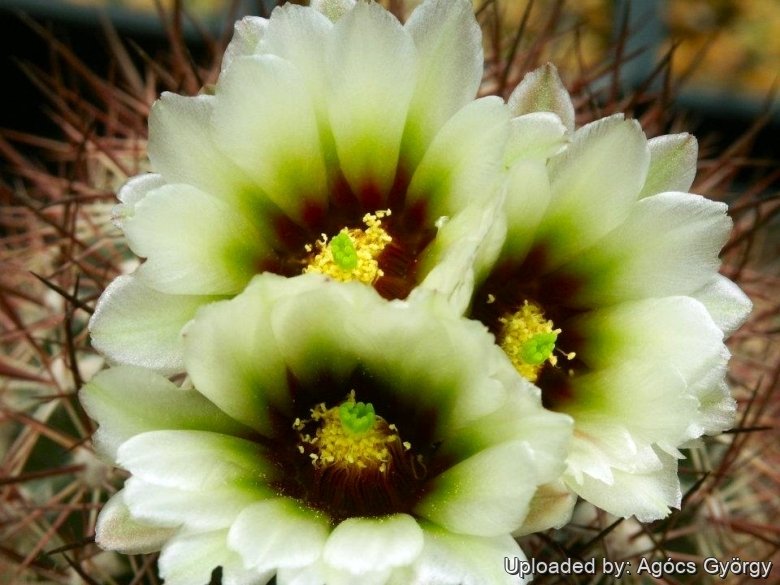
Flowers: Funnelform, magenta, pink, or greenish yellow , basal portions blotched with maroon, 4-6 cm long, 5-7,5 cm in diameter. Stigma lobes yellowish white to green.
Blooming season (in habitat): (Feb-) Mar-May
Fruits: Spherical 17-18 mm green, becoming tan at maturity, dehiscing vertically only along single, longitudinal split. Fruiting Apr-Jun.
Chromosome number 2n = 22.
Origin and Habitat
The Echinomastus johnsoni is found in Eastern California, southern Nevada, Utah and western Arizona. The yellow flowered and the pink-flowered plants occur in separate populations, as far as is known, the pink-flowered plants occur to the north of the yellow-flowered plants.
Habitat: Mojave desert scrub and upper edge of Sonoran desert scrub, rocky slopes, gravelly hills.
Cultivation and Propagation
This is one of the most beautiful cacti but rarely seen in cultivation, it needs perfect drainage to flourish. It is quite difficult to grow on its own roots. Very easily rot! It’s thought that’s better to watch this species in photo or in the natural habitat rather than to try to cultivate it. For this reasons the plant is often grafted on a frost hardy stock.
This plant need full sun and above all a very good ventilation, especially in winter. Keep totally dry during winter. It can tolerate temperature below zero (-15° C or less). Mature individuals - if the growing conditions are not optimal, easily rot and die.
Propagation: Seeds are relatively difficult to germinate (only a limited percentage of seeds germinate). Grafting is often used to speed growth rate and to create a back-up for plants in collection.
Bibliography
Major references and further lectures
-
Edward Anderson “The Cactus family” Timber Press, Incorporated, 2001
-
James Cullen, Sabina G. Knees, H. Suzanne Cubey “The European Garden Flora Flowering Plants: A Manual for the Identification of Plants Cultivated in Europe, Both Out-of-Doors and Under Glass” Cambridge University Press, 11/Aug/2011
-
David R Hunt; Nigel P Taylor; Graham Charles; International Cactaceae Systematics Group. “The New Cactus Lexicon” dh books, 2006
-
Brian Loflin, Shirley Loflin “Texas Cacti: A Field Guide” Texas A&M University Press, 26/ott/2009
-
Albert Michael Powell, James F. Weedin “Cacti of the Trans-Pecos and Adjacent Areas” Texas Tech University Press, 2004
-
Del Weniger “Cacti of the Southwest: Texas, New Mexico, Oklahoma, Arkansas, and Louisiana” University of Texas Press, 1969
-
“Rare Plants of Texas: A Field Guide” Texas A&M University Press, 2007
-
Roland H. Wauer, Carl M. Fleming “Naturalist’s Big Bend: An Introduction to the Trees and Shrubs, Wildflowers, Cacti, Mammals, Birds, Reptiles and Amphibians, Fish, and Insects“ Texas A&M University Press, 2002
-
Butterworth, C., Baker, M. & Porter, J.M. 2013. Sclerocactus johnsonii. In: IUCN 2013. “IUCN Red List of Threatened Species.” Version 2013.2. <www.iucnredlist.org>. Downloaded on 06 April 2014.
Gallery