Description
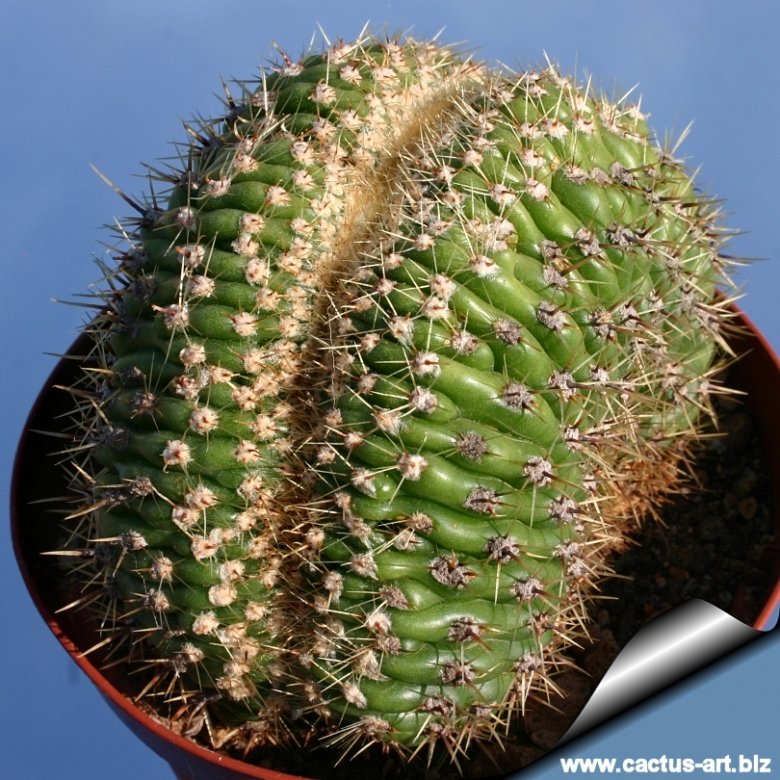
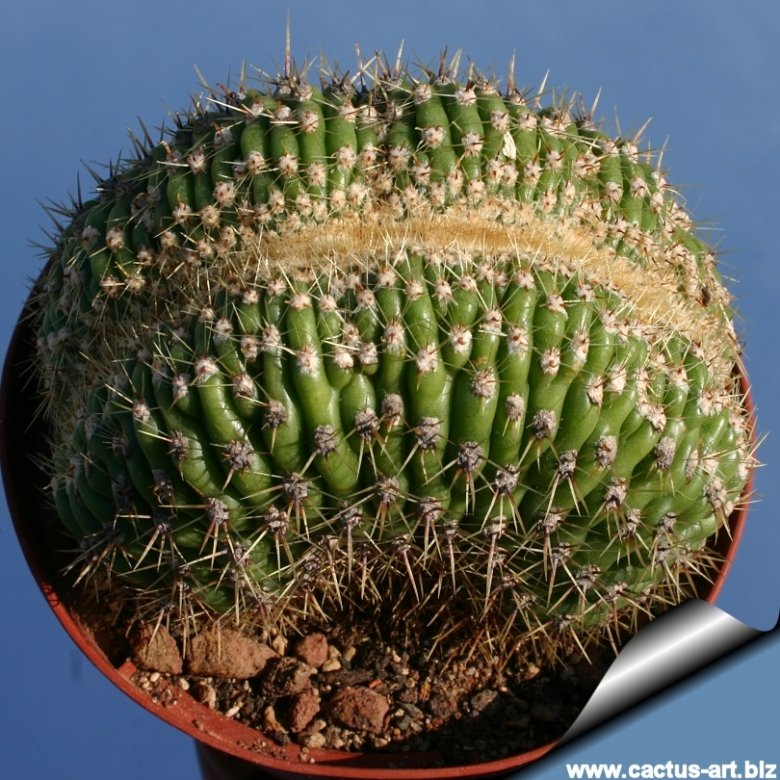
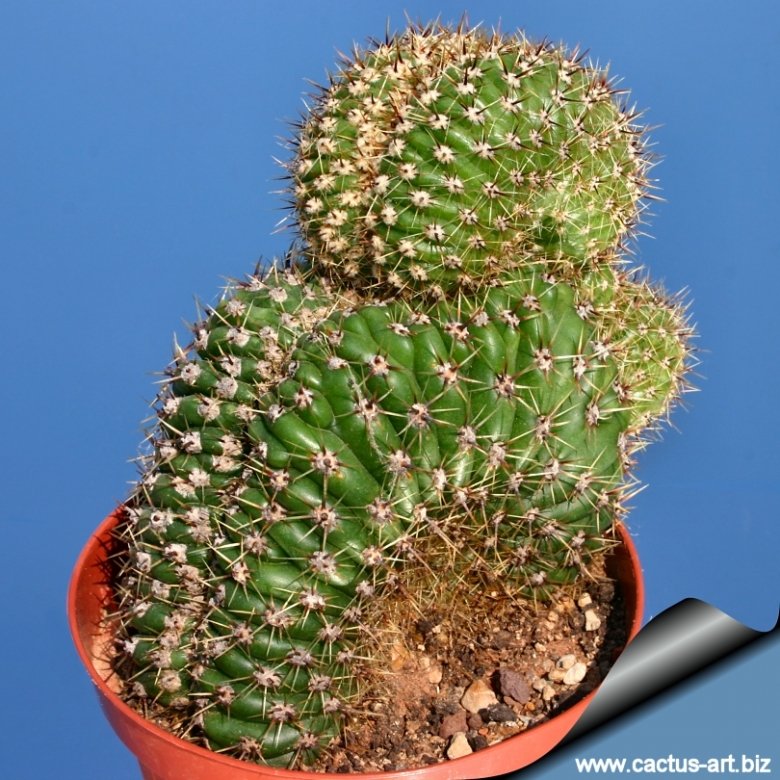
The typical Trichocereus candicans is a clump-forming cactus that resembles the ‘torch cactus’ but not as tall and does not stand as straight. It tends to lean on one side and forms pups from the base and on the other side. It eventually forms a large clump 1 to 3 m across. The rare crested form can also get very big making a spectacular specimen.
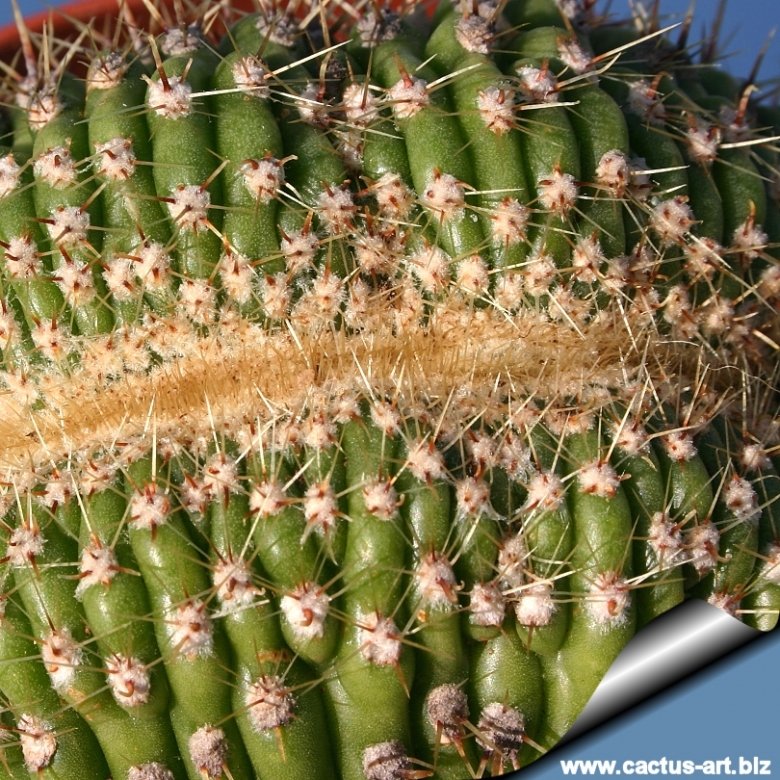
Stem: Cylindrical erect or usually spreading rounded apicallly 12-18 cm across and 40-60(-100) cm long. The stem is medium green in colour on the shaded side and yellowish green on the sun baked side.
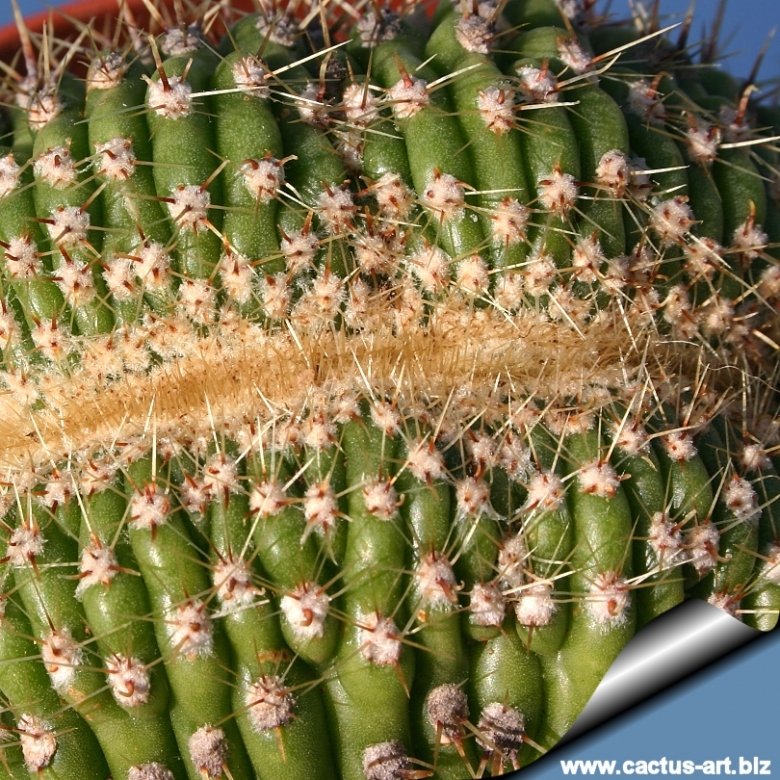
Ribs: 9-11, obtuse, usually low.
Areoles: Large white, 2-3 cm apart.
Spines: Yellowish to brownish-yellow , somewhat mottled awl shaped.
Central spines: Numerous up to 10 cm long (but usually less).
Radial spines: 10-12 unequal, spreading up to 4 cm long.
Flower: Showy, funnelform, bright white on the inside with yellow centers and pinkish on the outside, very large 18-25 cm from top to bottom and 11-19 cm across, scales on flower tube ovate, acuminate, bearing long hairs in their axils. They can be profuse. The fragrance of the flowers is very strong—perhaps one of the strongest in the cacti family. The flowers are nocturnal begins to open near sundown and close in the mid afternoon. It can stay open for two or more days if the weather is cool and/or cloudy.
Fruit: Globose to ovoidal, dehiscent, splitting on one side.
Blooming season: It usually blooms in late spring, but can be a early as mid March, and sometimes in September.
Origin and Habitat
Garden origin (Nursery produced cultivar)
Cultivation and Propagation
Trichocereus candicans is very easy to grow and cold hardy as low as -8°C (or less). It needs a fertile, well drained soil mix. Water the plants well and allow them to dry before watering again. This species seems to do better with a little more water than most cacti. In fact, its cultivation requirements are really more like ‘normal’ plants than most other cacti. During the growing season fertilize them monthly with a balanced fertilizer
Sun Exposure: Outside full sun, but during hot summers the cactus are subject to sun burning, so grow them in light shade. Inside they need bright light, and some direct sun. During winter months, put them in a cool luminous place and encourage them to enter winter dormancy by withholding water and fertiliser over the winter, as they will etiolate, or become thin, due to lower levels of light. They are susceptible to fungal diseases if over-watered, but are not nearly as sensitive as many other cacti, especially in warm weather. They tend characteristically towards black rotted spots unless watering is moderate and only in hot weather. If kept damp through cold periods, they will invariably suffer.
It produces good amounts of growth each year if kept well fed and watered throughout the warmest months, particularly if it has been acclimatised to accept full sun.
Propagation: The way to multiply this cactus is by dividing the main crest in smaller pieces that can be rooted.