Publication: Bradleya 1: 96 (1983), nom. nov. Remarks: N. B.: non Echinopsis silvestrii Speg 1905
Description
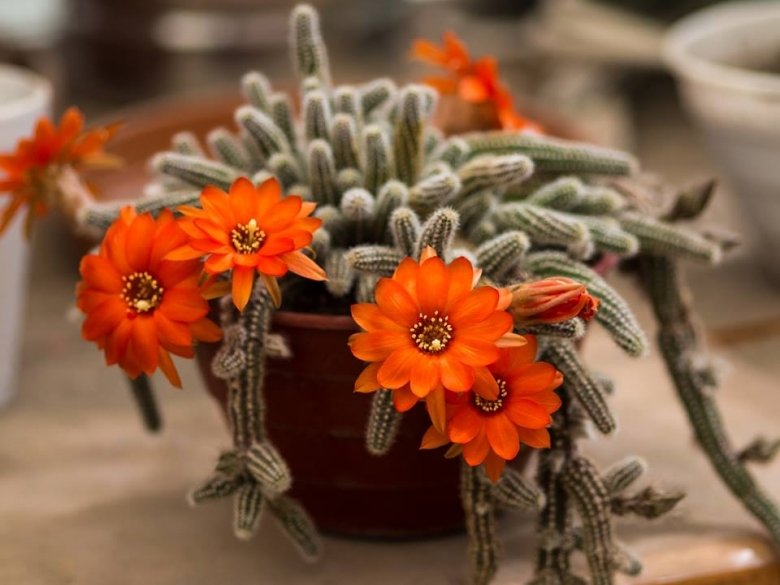
The peanuts cactus, Echinopsis chamaecereus (probably best known under its old name Chamaecereus silvestrii), is a very popular cactus with many crowded finger-like stems. Established plants can reach a height of 15 cm and width of 30 (or more) cm.
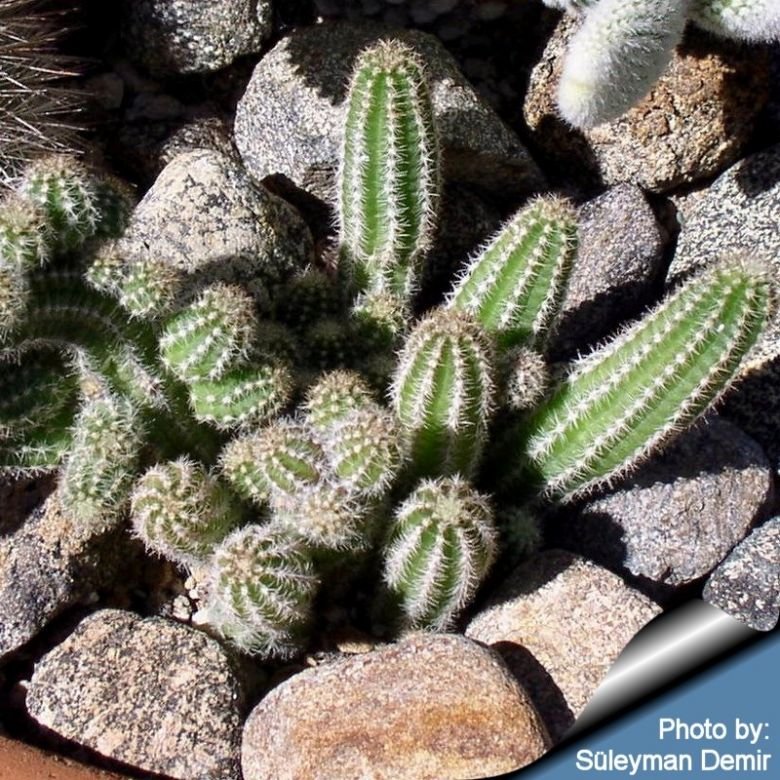
Stems: Pale green finger sized, initially erect that became prostrate up to 10 cm tall, 1.2 cm in diameter, up to 15 cm long. As cactus ages, eventually eventually become woody and spineless.
Ribs: 8 to 10.
Spines: 10 to 15 soft, white bristles, 2 mm long.
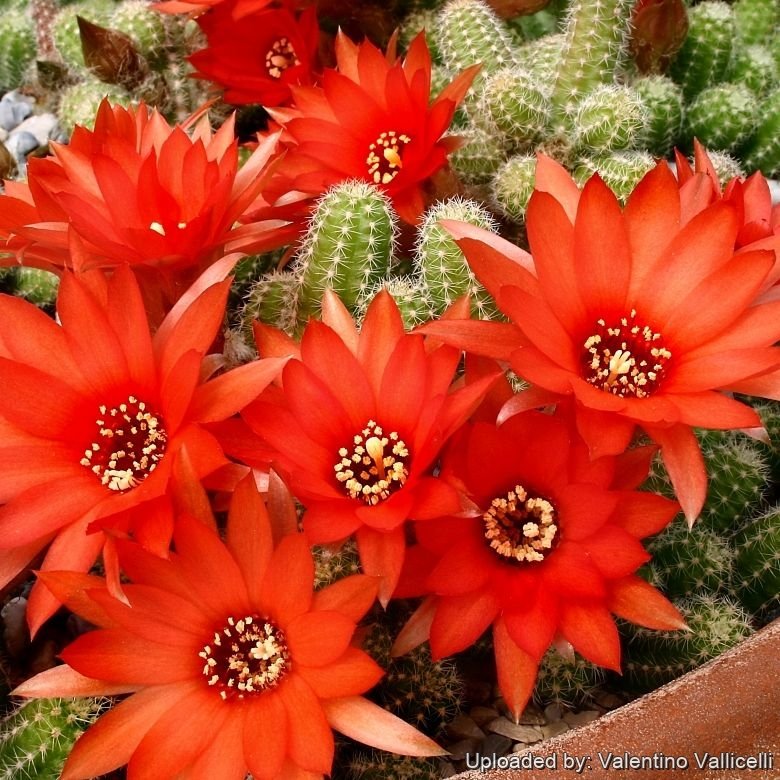
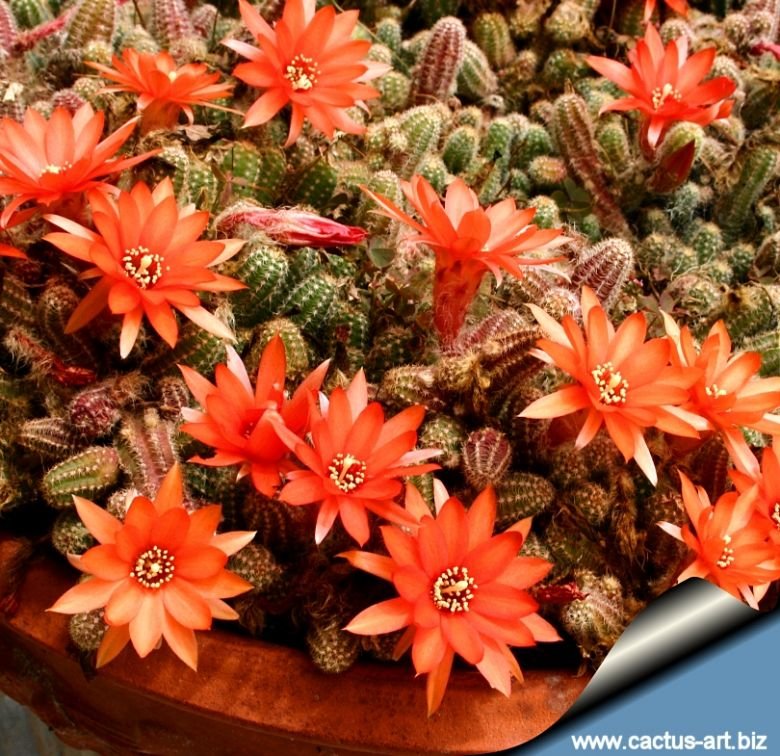
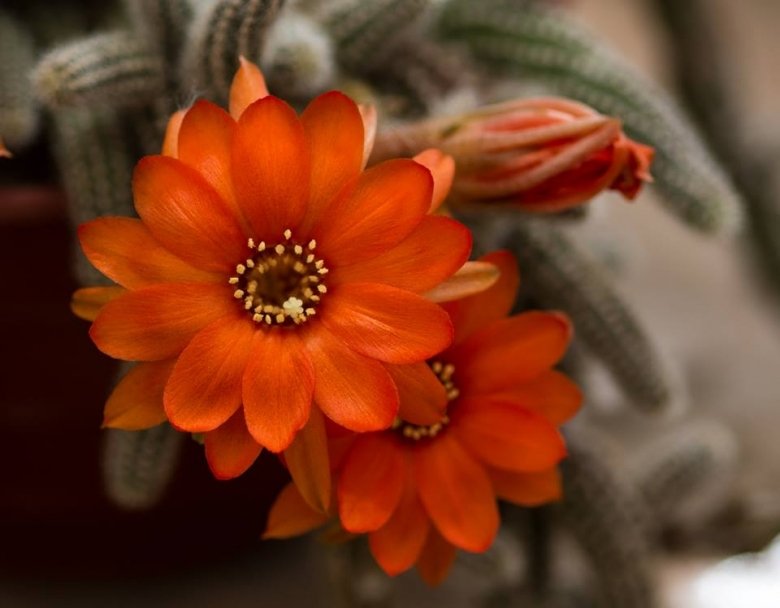
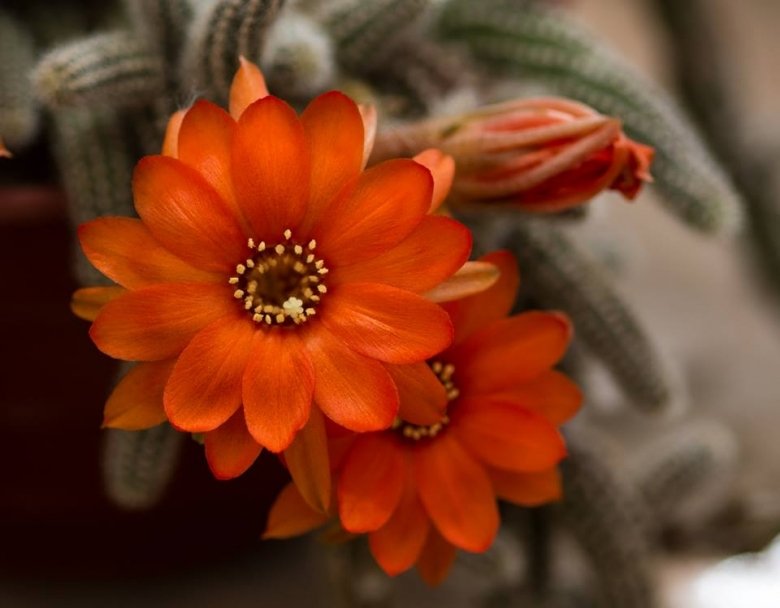
Flowers: Orange-red about 5 cm in diameter, often produced in prolific quantities from an early age.
Blooming season: In several flushes in late spring and early summer.
Remarks: Chamaelobivia hybrids: The peanut cactus is still often encountered as Chamaecereus silvestrii, and occasionally as Lobivia silvestrii. This plant has been intensively hybridized with other Echinopsis(especially Lobivia ssp.). This hybrids are sometime called “Chamaelobivia” and are pretty easy to grow and easy to get to bloom and are now available in different striking flower colours. They are often thicher, stronger, larger growing than C. sylvestrii and tend not to have the typical peanut shaped offsets. The offsets produced being more strongly attached to the main stems.
Origin and Habitat
This species is supposed to be endemic to Argentina, occurring between Tucumán and Salta. Echinopsis chamaecereus was collected by the botanist Carlo Spegazzini and described at the beginning of the XX century. However, the plant was never found again in the area during several expeditions on horseback by expert Roberto Kiesling, who only found in the area the widespread Echinopsis saltensis.
Habitat and Ecology: Because the species has not been found in the wild, the type of vegetation it grows in is unknown.
Cultivation and Propagation
This is an easily grown cactus, suited to hanging baskets as well as pots. Grow in well-drained soil in a sunny spot. This Echinopsis needs a period of cool rest in winter to produce flowers abundantly. It flowers freely indoors if conditions suit it. The plant survives outside without protection in winter (cold hardy to -8° ) but somewhat prone to rot, then, too.
Needs moderate water in summer, none in winter Watch for infestations of mealybug, scale insects and spider mite.
Propagation:: Easy to propagate from offsets or seed. Small joints are produced in quantities (peanuts) These offsets can be detached and planted immediately as they root easily with no assistance when they touch the ground. Just let them lay on the soil and you have a new start.
Bibliography
Major references and further lectures:
-
Edward Anderson “The Cactus family” Timber Press, Incorporated, 2001
-
James Cullen, Sabina G. Knees, H. Suzanne Cubey “The European Garden Flora Flowering Plants: A Manual for the Identification of Plants Cultivated in Europe, Both Out-of-Doors and Under Glass” Cambridge University Press, 11/Aug/2011
-
David R Hunt; Nigel P Taylor; Graham Charles; International Cactaceae Systematics Group. “The New Cactus Lexicon” dh books, 2006
-
Clive Innes, Charles Glass “Cacti” Portland House, 1991
-
John Borg “Cacti: a gardener’s handbook for their identification and cultivation” Blandford P., 1970
-
RHS “A-Z encyclopedia of garden plants.” United Kingdom: Dorling Kindersley. 2008
-
Kiesling, R. 2013. Echinopsis chamaecereus. The IUCN Red List of Threatened Species. Version 2014.3. <www.iucnredlist.org>. Downloaded on 13 February 2015.
From llifle page Chamaecereus silvestrii f. cristatus
Description
The standard Echinopsis chamaecereus a.k.a. the “Peanut Cactus” is a mat forming succulent with many crowded finger-like stems. Established plants can reach a height of 15 cm and width of 30 or more centimetres.
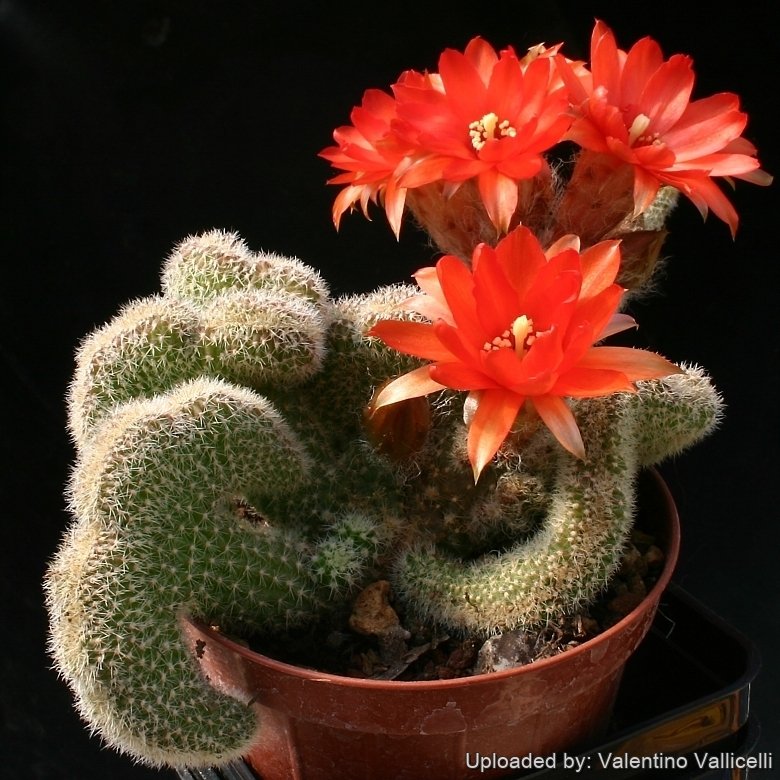
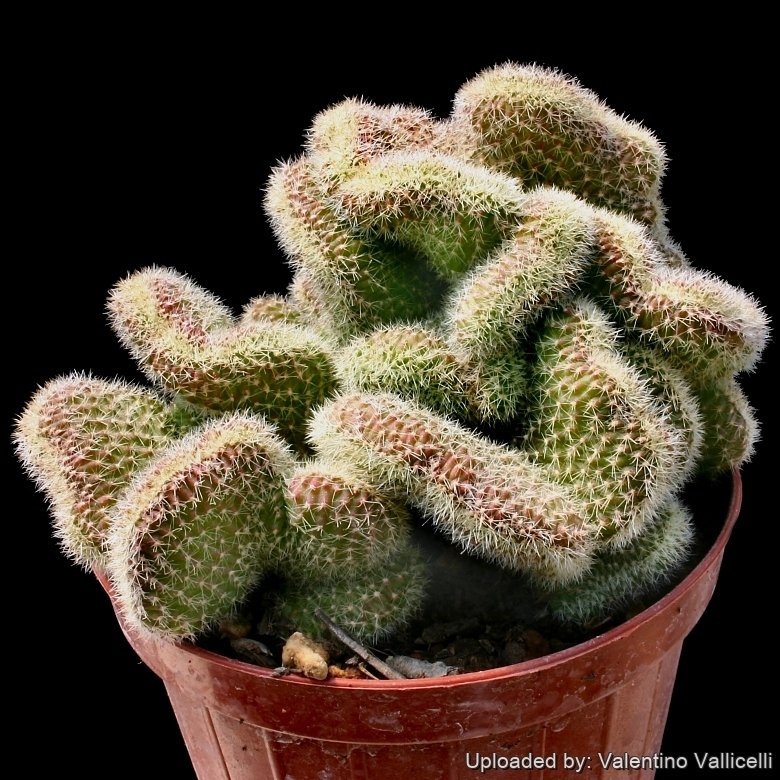
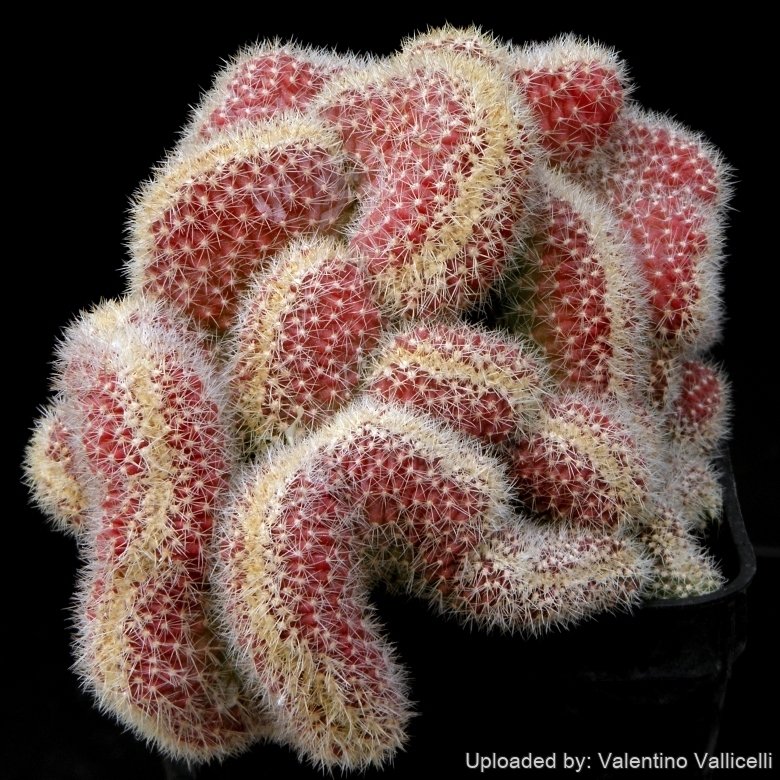
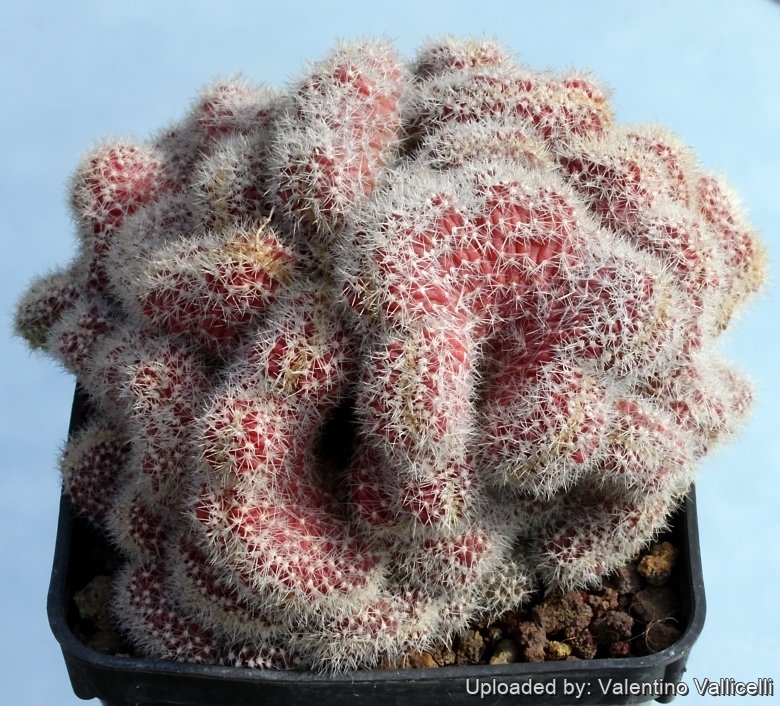
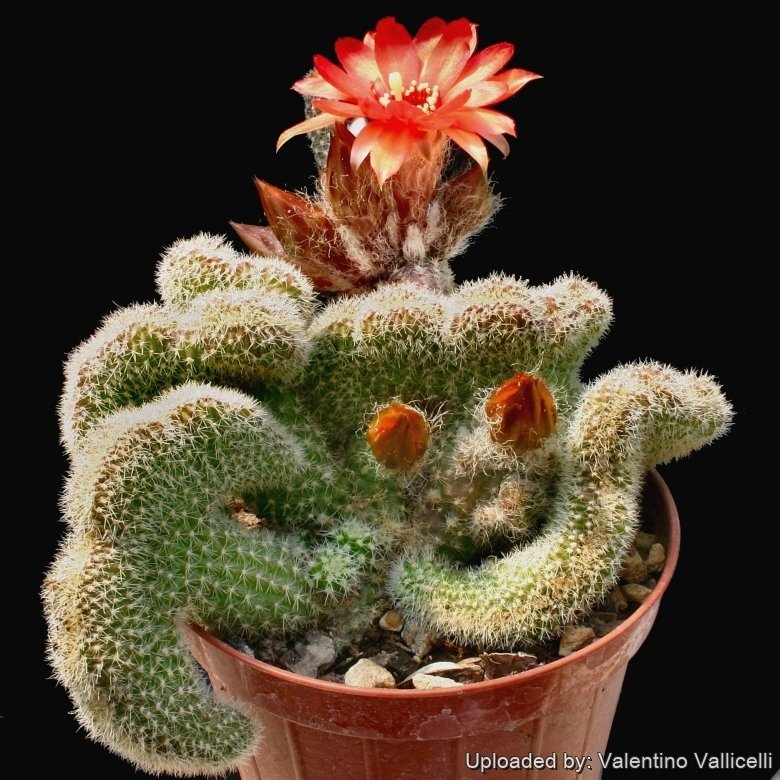
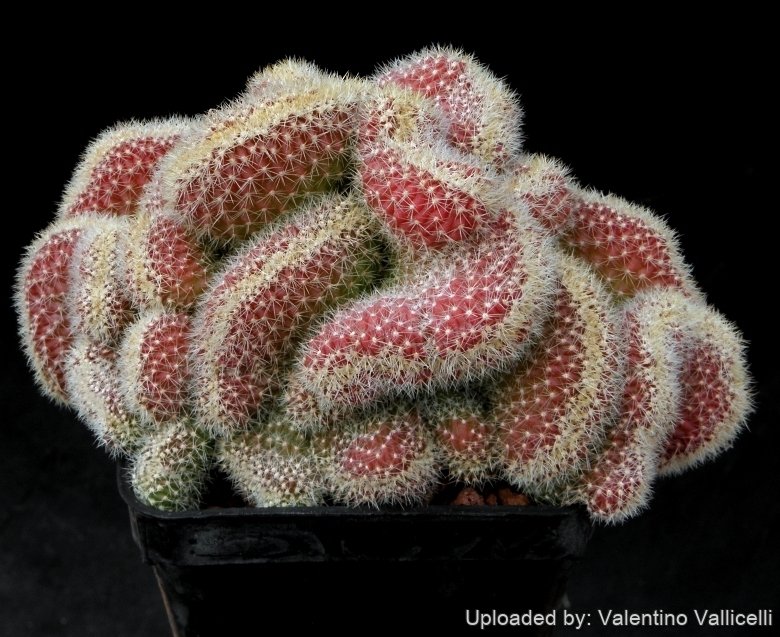
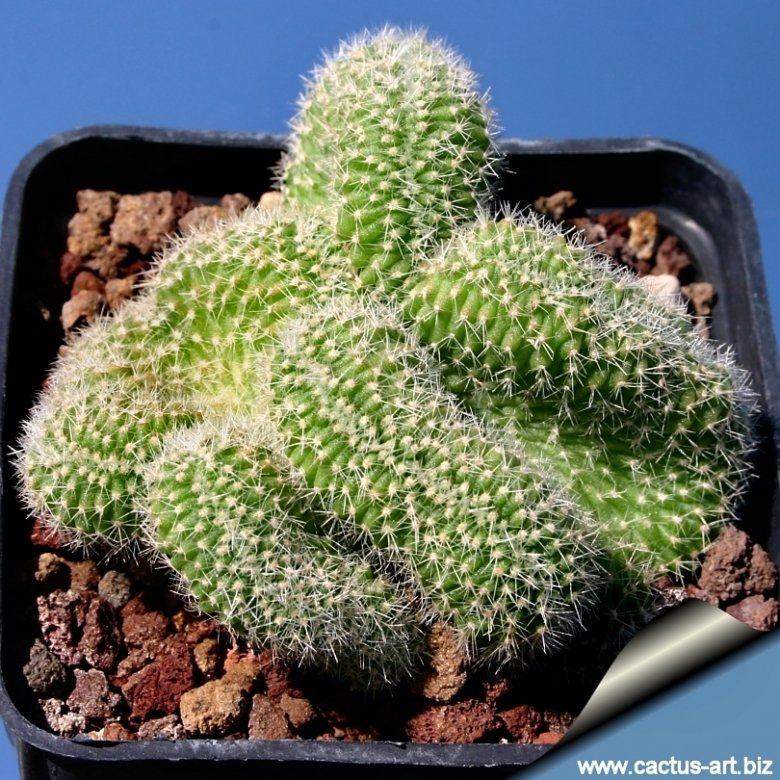
The crested form is much rare than the normal plant, and is particularly sought after for its white glassy cover of spines. Also this crest stay quite small, making a fascinating specimen. However these crested plant sometimes throws off normal stems that produce flowers, while the crested growth wont flower at all.
Stems: Pale green, fun shaped inly 1-2 cm thick. The epidermis take a nice purple tinge during cooler winter rest periods.
Spines: 10 to 15 soft, white bristles, 2 mm long.
Flowers: Orange-red about 5 cm in diameter.
Blooming season: In several flushes in late spring and early summer.
Origin and Habitat
Garden origin (Nursery produced cultivar)
Cultivation and Propagation
It is not too difficult in a greenhouse, although grows quite slowly. It is usually seen as a grafted plant but can grow on its own roots too.
Soil: Use a mineral well permeable soil with little organic matter (peat, humus).
Exposure: They need a good amount of light shade to full sun this help to keep the plants healthy, although slow growth.
Watering: Water sparingly from March till October (weekly during summertime, if the weather is sunny enough), with a little fertilizer added. Less or no water during cold winter months, or when night temperatures remain below 10° to prevent root loss. It is sensitive to overwatering (rot prone).
Fertilization: Feeding may not be necessary at all if the compost is fresh then, feed in summer only if the plant hasn’t been repotted recently. Do not feed the plants from September onwards as this can cause lush growth which can be fatal during the darker cold months.
Hardiness: Keep perfectly dry in winter at temperatures from 5 to 15 degrees centigrade. (but it is relatively cold resistant and hardy to -5° C, or possibly colder for short periods) In the rest period no high atmospheric humidity!! (Temperature Zone: USDA 9-11)
Crested growth: Unlike ‘monstrose’ varieties of plants, where the variation from normal growth is due to genetic mutation, crested growth can occur on normal plants. Sometimes it’s due to variances in light intensity, or damage, but generally the causes are unknown. A crested plant may have some areas growing normally, and a cresting plant that looks like a brain, may revert to normal growth for no apparent reason. If you have any of the crested part left you need to remove the normal growth and leave the crested part behind this will need to be done regularly.
Propagation: Grafting or cuttings. Plants are usually grafted onto column-shaped cacti but proved to be able to produce their own roots if degrafted. Cuttings will take root in a minimum temperature of 20° C (but better in hot weather). Cuttings of healthy shoots can be taken in the spring and summer. Cut the stem with a sharp, sterile knife, leave the cutting in a warm, dry place for a week or weeks (depending on how thick the cutting is) until a callus forms over the wound. Once the callus forms, the cutting may be inserted in a container filled with firmed cactus potting mix topped with a surface layer of coarse grit. They should be placed in the coarse grit only; this prevents the cut end from becoming too wet and allows the roots to penetrate the rich compost underneath. The cuttings should root in 2 to 6 weeks. Large crested piece must be placed on the soil surface without burying the plant base down in the soil.
Source: Chamaecereus silvestrii f. cristatus, LLIFLE - Encyclopedia of living forms, CC-BY-SA, retrieved 2026-10-25.
Cultivars and forms (16)
Forms (1)
Cultivars (15)
- Echinopsis chamaecereus cv. Annie
- Echinopsis chamaecereus cv. Arlequin
- Echinopsis chamaecereus cv. Boom
- Echinopsis chamaecereus cv. Cactus Art
- Echinopsis chamaecereus cv. Captain Jessop
- Echinopsis chamaecereus cv. Lutea
- Echinopsis chamaecereus cv. Lutea cristata
- Echinopsis chamaecereus cv. Mephysto
- Echinopsis chamaecereus cv. Perla di Verona
- Echinopsis chamaecereus cv. Rainbow
- Echinopsis chamaecereus cv. Rot Violet
- Echinopsis chamaecereus cv. Violet
- Echinopsis chamaecereus cv. Westfield Alba
- Echinopsis chamaecereus cv. Wotan
- Echinopsis chamaecereus cv. Yellow Bird
Gallery