Publication: I.O.S. Bull. 3(3): 94 (1974)
Description
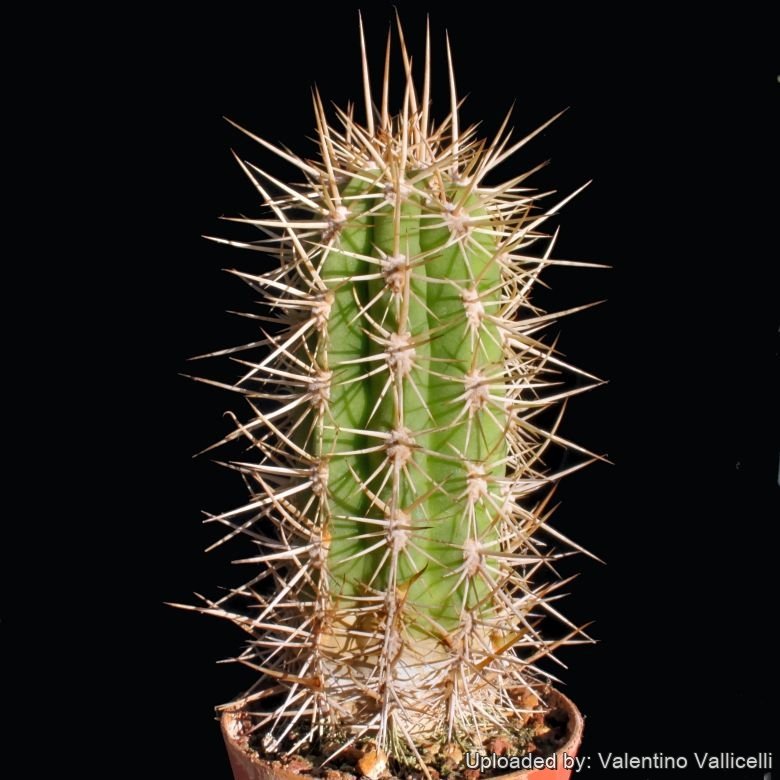
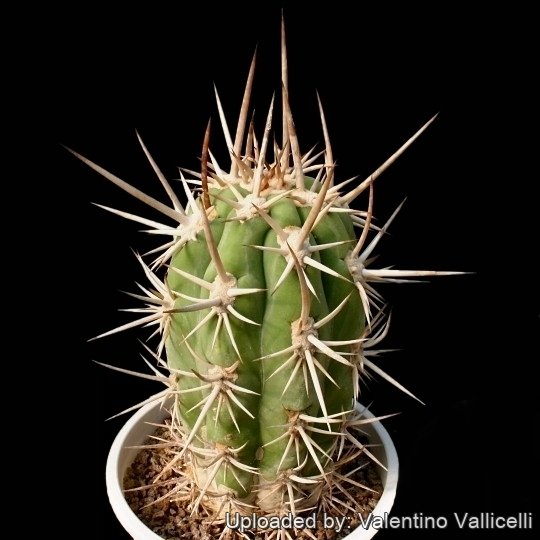
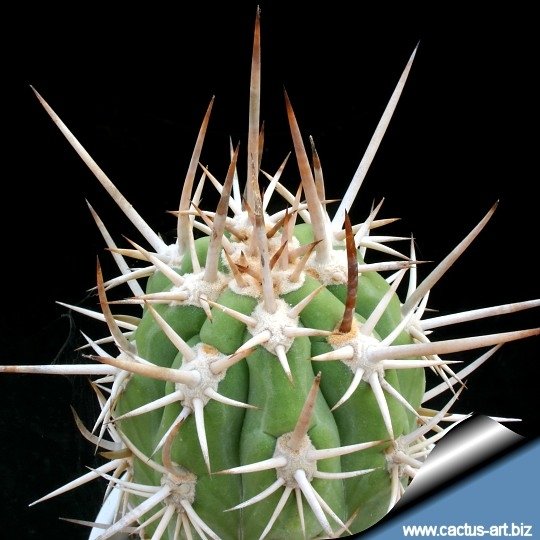
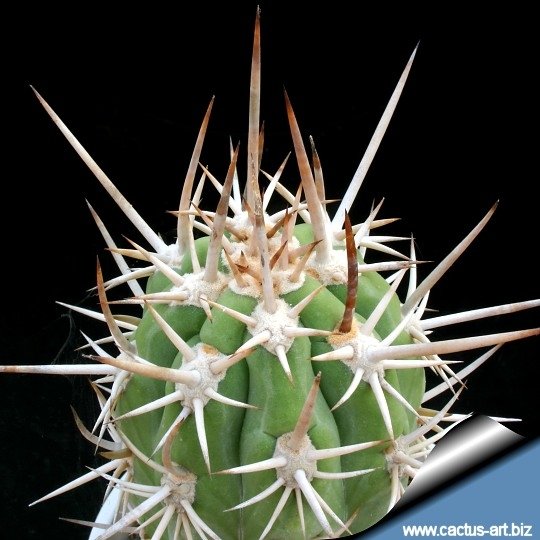
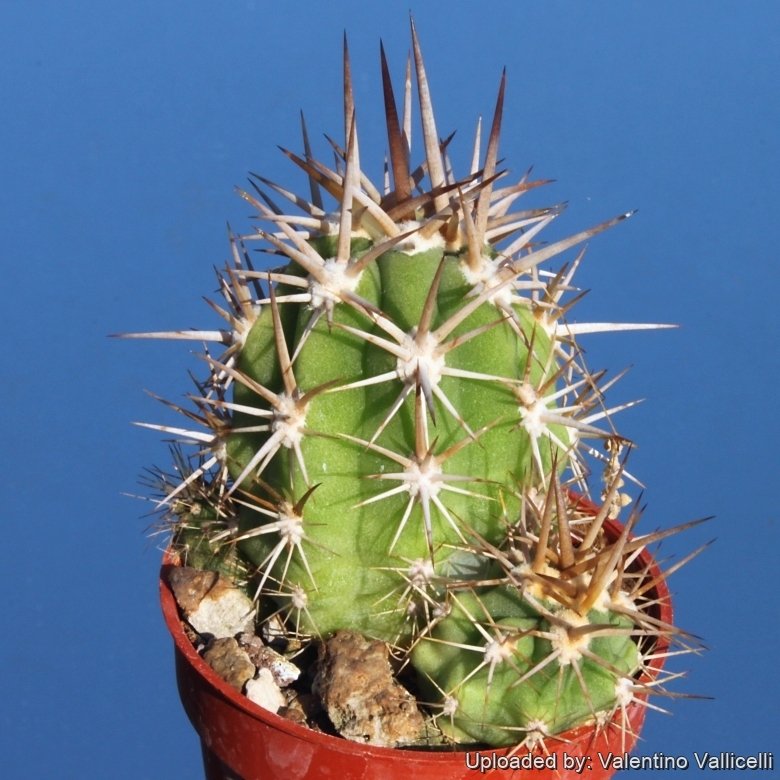
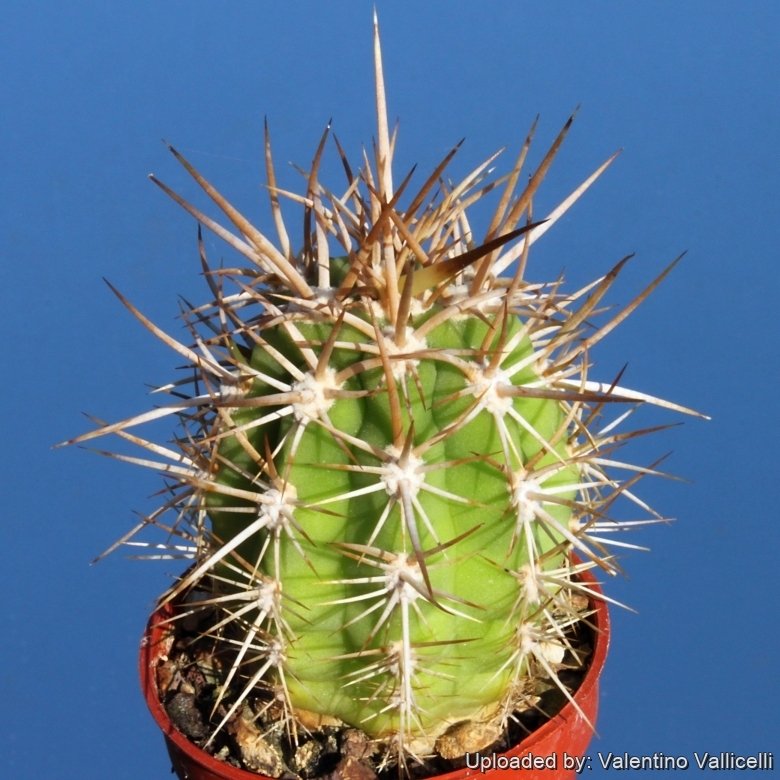
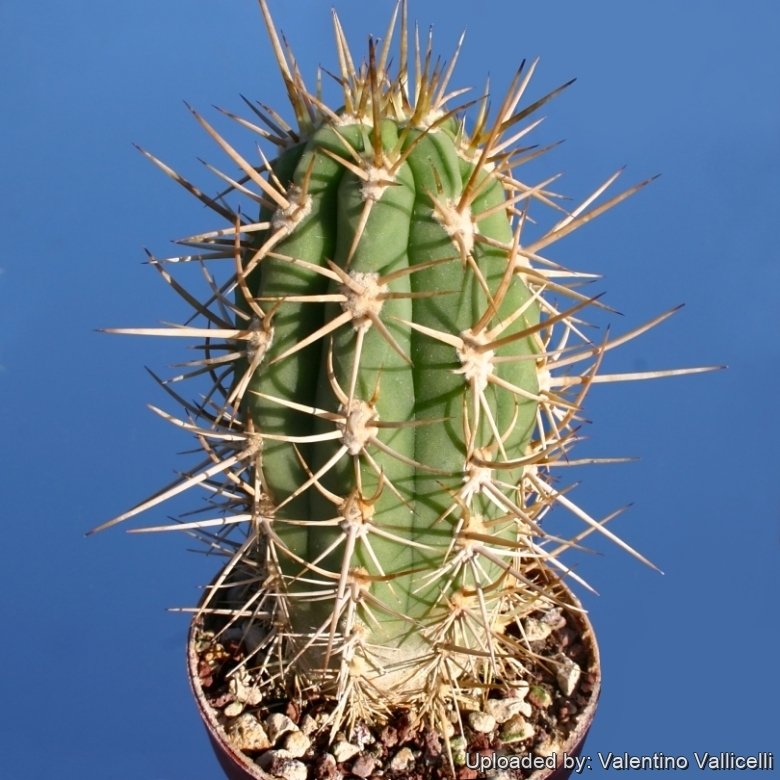
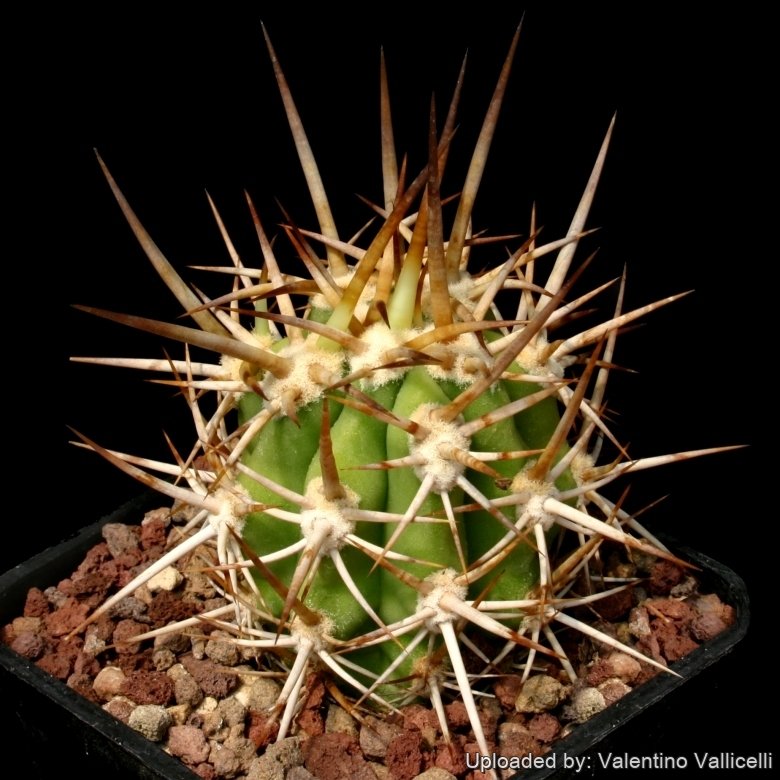
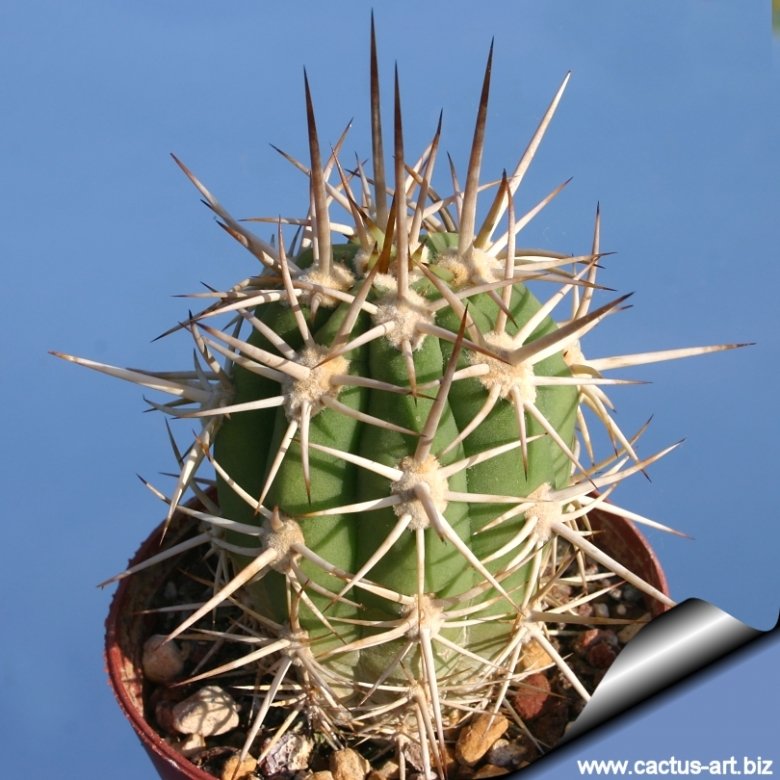
Echinopsis chiloensis previously known as Trichocereus chiloensis is a fiercely spiny cactus.
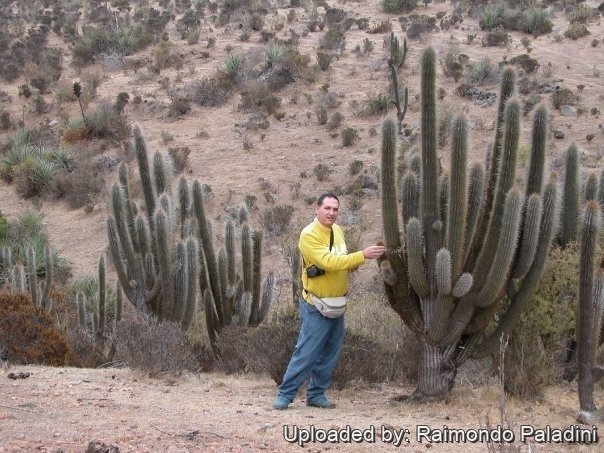
Growth Habits: Rarely single, it usually develops into a multi-stemmed shrub or small tree, with branches
arising from near the base, starting nearly at right angles to the main trunk but soon erect, the tallest sometimes 8 meters high.
Stem: Up to 8 m tall, stems 10-12 cm in diameter.
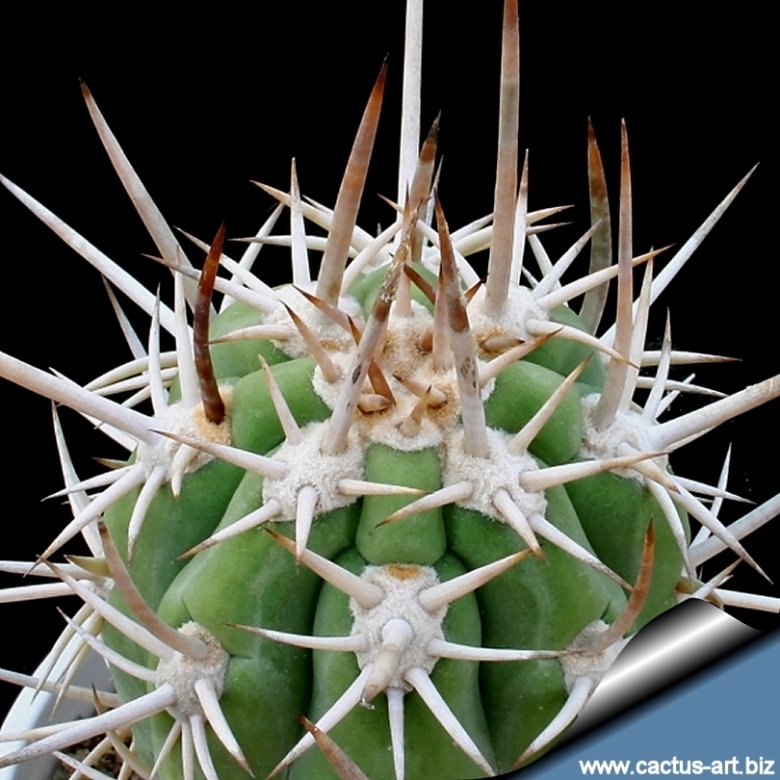
Ribs: 10 to 17 low and broad, separated by narrow intervals, divided into large tubercles even when fully mature.
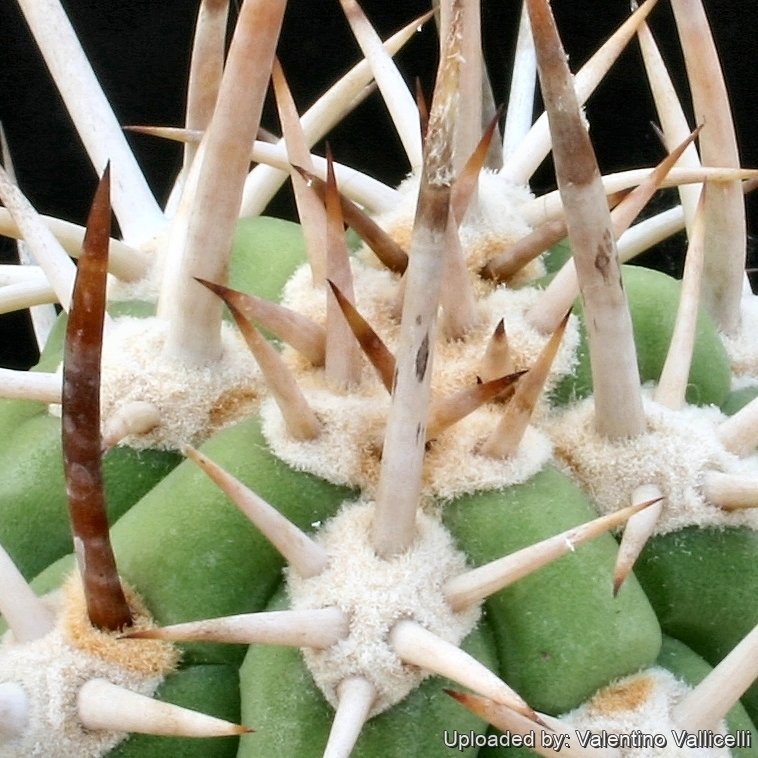
Areoles: Large whitish, 2 cm apart.
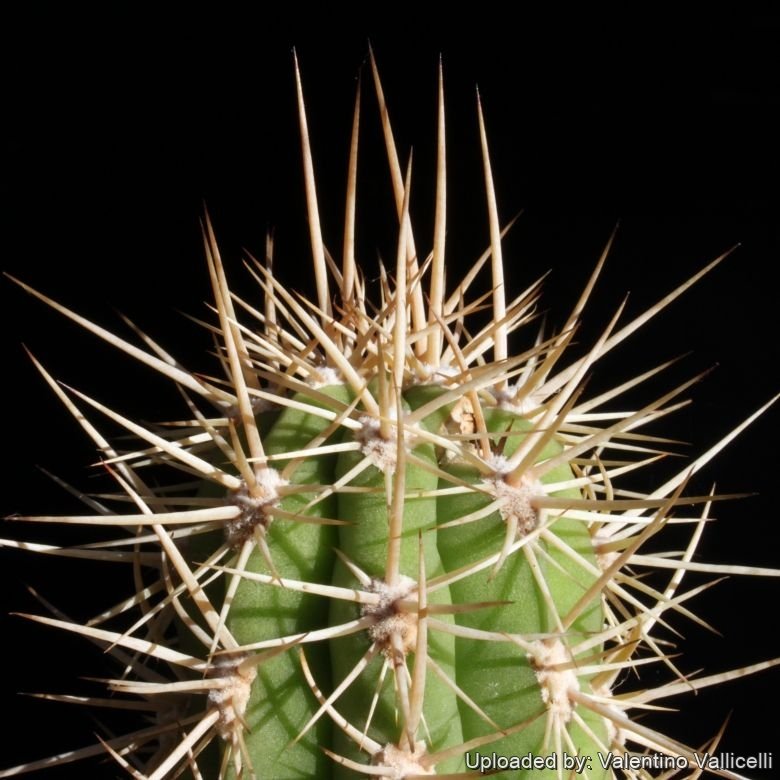
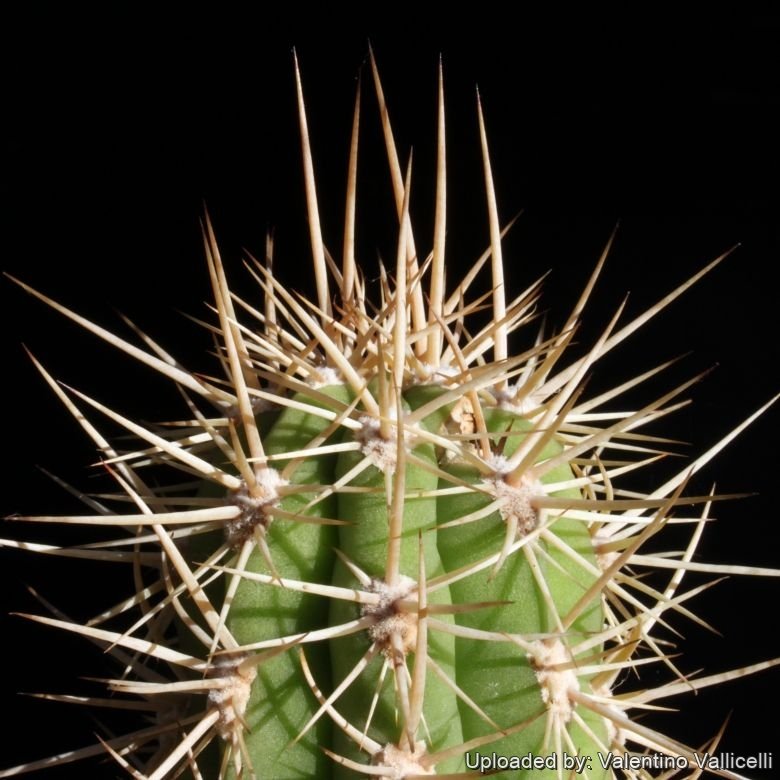
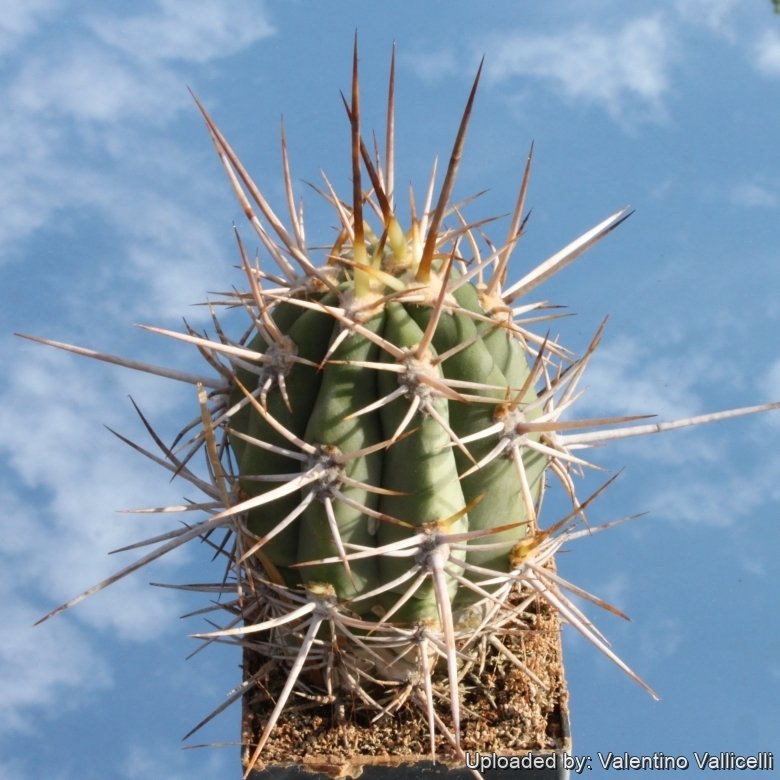
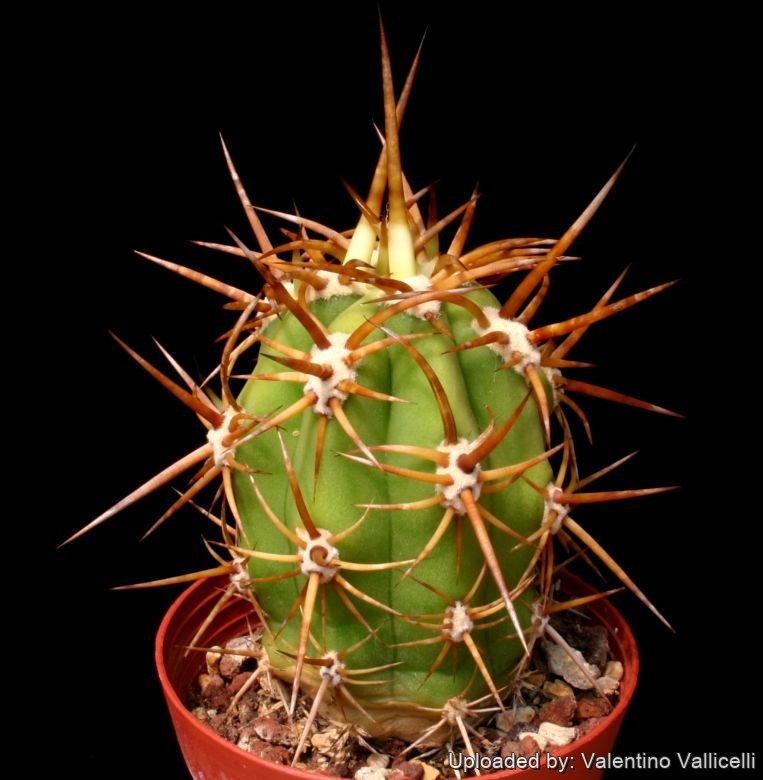
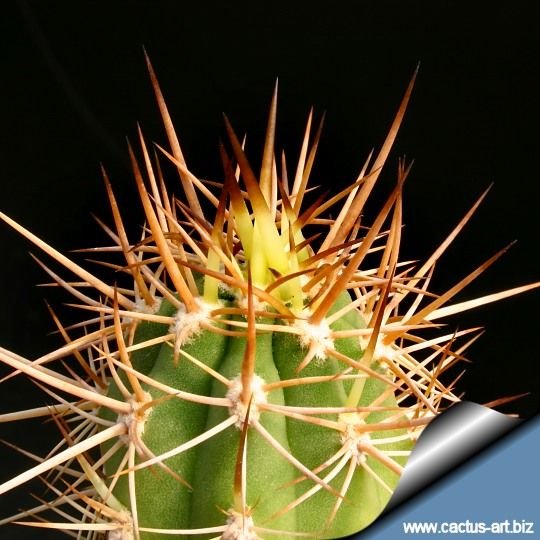
Spines: Yellowish with brown tips, at least when young, greyish later.
Central spines: 1 to 4, porrect, projecting, often stout, usually 5-7 cm long, but some of the longest spines can grow up to 25 centimetres long .
Radial spines: 8 to 12 radials, 1-4 cm long, lightly spreading, often stout.
Flowers: Nocturnal 14 cm. long, outer perianth-segments white but tinged with red or brown; inner perianth-segments white, acuminate. Style green below, cream-coloured above; stigma-lobes about 18 cream-coloured up to 15 mm long.
Fruit: Globular.
Origin and Habitat
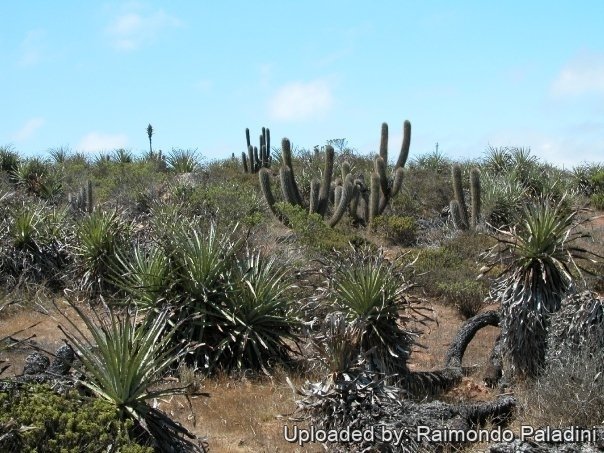
Echinopsis chiloensis occur along the coast and in the coastal cordillera of Chile (North-Central Valley of Chile) in the regions of Maule, O’Higgins, Metropolitana, Valparaíso and Coquimbo, from Talca to Valle del Elqui.
Altitude: 0-2000 metres above sea level.
Habitat: Chilean matorral (sclerophyllous forest) in the upper north-facing hill-slopes that flank the higher Andes. The climate in this area is similar to that of the Southern Californian chaparral. Echinopsis chiloensis has a wide range, is abundant, and even though it has threats these occur only in portions of its distribution. The major threats are land use change due to agriculture of fruit trees and urbanization.
Cultivation and Propagation
Echinopsis chiloensis is very easy to grow and cold hardy as low as -12°C (or less). Need a fertile, well drained soil mix. Water the plants well and allow them to dry before watering again. This species seems to do better with a little more water than most cacti. In fact, its cultivation requirements are really more like ‘normal’ plants than most other cacti. During the growing season fertilize them monthly with a balanced fertilizer
Sun Exposure: Outside full sun, inside needs bright light, and some direct sun. During winter month, put them in a cool luminous place and encourage them to enter winter dormancy by withholding water and fertiliser over the winter as they will etiolate, or become thin, due to lower levels of light.
Pest smd diseases: They are susceptible to fungal diseases if overwatered, but are not nearly as sensitive as many other cacti, especially in warm weather. They tend characteristically towards black rotted spots unless watering is moderate and only in hot weather, if kept damp through cold periods, they will invariably suffer.
Growth rate Echinopsis chiloensis produces noticeable amounts of growth each year if kept well fed and watered throughout the warmest months, particularly if it has been acclimatised to accept full sun. Once this cactus is established it can easily produce 20 cm of growth every year.
Traditional uses: A popular item sold in many regions of the world is the rain stick of Chile, made from the dried skeleton of the stem of Echinopsis chiloensis or Eulychnia acida. The dry stems are harvested in the field, cleaned, and prepared by pushing stout spines through the areolar gaps in the wood. The cylinders of the wood are sealed and filled with various materials, such as volcanic sand or pebbles, that run up and down when the stick is tilted. These are then sold locally and overseas. The trade in rainsticks made from cacti has increased in recent years, giving rise to concern over the impact on the wild populations. Rain sticks are also made from the wood of the cardon, Echinopsis atacamensis subsp. pasacana, in northwestern Argentina.
Propagation: Cutting or from seed. The seeds are quite easy to germinate and grow. Their main requirements consist of high humidity levels, free-draining soil mix, and enough water, light, and nutrition.
Notes
The original name for this cactus was Trichocereus chiloensis. In 1950, Skottsberg pointed that the name was misspelled, and was changed to “chilensis” for “Chile”+“ensis”. The rules of nomenclature now, give priority to the original name, misspelling included, except if the name was changed by the original author. Thus, Friedrich & Rowley retained chiloensis when they included the genus Trichocereus into the genus Echinopsis.
This species is occasionally confused with Trichocereus litoralis.
Bibliography
Major references and further lectures
-
Edward Anderson “The Cactus family” Timber Press, Incorporated, 2001
-
James Cullen, Sabina G. Knees, H. Suzanne Cubey “The European Garden Flora Flowering Plants: A Manual for the Identification of Plants Cultivated in Europe, Both Out-of-Doors and Under Glass” Cambridge University Press, 11/Aug/2011
-
David R Hunt; Nigel P Taylor; Graham Charles; International Cactaceae Systematics Group. “The New Cactus Lexicon” dh books, 2006
-
Friedrich Ritter “Kakteen in Südamerika: Ergebnisse meiner 20jährigen” Volume 2, Argentinien/Bolivien, Volume 2 Selbstverlag, 1980
-
Curt Backeberg “Die Cactaceae: Handbuch der Kakteenkunde,” Volume 2 G. Fischer, 1959
-
N. L. Britton and J. N. Rose “The ‘Cactaceae’, Descriptions and Illustrations of Plants of the ‘Cactus’ Family” volume 2 Carnegie Institution, 1920
-
Riedemann, P. y G. Aldunate. “Flora Nativa de Valor Ornamental; Identificación y Propagación. Chile, Zona Centro.” Edición 2, Chile 2004.
-
Gordon Douglas Rowley “Reunion of the genus Echinopsis”. In: IOS Bulletin. Journal of the International Organization for Succulent Plant Study. Volume 3, Nuber 3, page 94 , 1974
-
Haustein, Erik. “Der Kosmos-Kakteenführer.” Kosmos / Gesellschaft der Naturfreunde., Stuttgart, 1983
-
Walter, H.E., Faundez, L., Guerrero, P. & Saldivia, P. 2013. Echinopsis chiloensis. In: IUCN 2013. “IUCN Red List of Threatened Species”. Version 2013.1. <www.iucnredlist.org>. Downloaded on 31 October 2013.
-
David Yetman “The Great Cacti: Ethnobotany & Biogeography” University of Arizona Press, 2007
From llifle page Cereus chilensis f. eburneus
Description
Echinopsis chiloensis var. eburnea previously known as Trichocereus chiloensis var. eburneus is very much like that of standard Echinopsis chiloensis but shows stouter ivory spines. The fruit and seed are similar to those of the other Varieties. Nowadays this plant is not considered a distinct variety but only one of the variable phenotypes of this this clinal species.
Growth Habits: It is a fiercely spiny cactus that develops into a shrub or small tree.
Stem: Rarely single, usually of several branches, sometimes of many, arising from near the base, starting nearly at right angles to the main trunk but soon erect, up to 8 m tall, stems 10-12 cm in diameter.
Ribs: 10 to 17 low and broad, separated by narrow intervals, divided into large tubercles even when fully mature.
Areoles/Spines: Areoles large whitish, 2 cm apart. Spines ivory, stout, at least when young, greyish later; 1 to 4 centrals, porrect, 5-7 cm (or even 12 or more cm long) 8 to 12 radials, up to 4 cm long.
Flowers: Flowers open during the day, white, 14 cm long, outer perianth-segments white but tinged with red or brown; inner perianth-segments white, acuminate.
Sun Exposure: Outside full sun or afternoon shade, inside needs bright light, and some direct sun.
Origin and Habitat
East of Los Patos, bottom of valley and adjacent areas, Coquimbo, Chile
Altitude: 1500 meters above sea level.
Cultivation and Propagation
Trichocereus chiloensis is very easy to grow and cold hardy as low as -12°C (or less). Need a fertile, well drained soil mix. Water the plants well and allow them to dry before watering again. This species seems to do better with a little more water than most cacti. In fact, its cultivation requirements are really more like ‘normal’ plants than most other cacti. During the growing season fertilize them monthly with a balanced fertilizer
Sun Exposure: Outside full sun, inside needs bright light, and some direct sun. During winter month, put them in a cool luminous place and encourage them to enter winter dormancy by withholding water and fertiliser over the winter as they will etiolate, or become thin, due to lower levels of light.
Pest smd diseases: They are susceptible to fungal diseases if overwatered, but are not nearly as sensitive as many other cacti, especially in warm weather. They tend characteristically towards black rotted spots unless watering is moderate and only in hot weather, if kept damp through cold periods, they will invariably suffer.
Growth rate Trichocereus chiloensis produces noticeable amounts of growth each year if kept well fed and watered throughout the warmest months, particularly if it has been acclimatised to accept full sun. Once this cactus is established it can easily produce 20 cm of growth every year.
Propagation:: Cutting or from seed. The seeds are quite easy to germinate and grow. Their main requirements consist of high humidity levels, free-draining soil mix, and enough water, light, and nutrition.
Notes
The original name for this cactus was Trichocereus chiloensis. In 1950, Skottsberg pointed that the name was misspelled, and was changed to “chilensis” for “Chile”+“ensis”. The rules of nomenclature now, give priority to the original name, misspelling included, except if the name was changed by the original author. Thus, Friedrich & Rowley retained “chiloensis” when they included the genus Trichocereus into the genus Echinopsis.
Bibliography
Major references and further lectures
-
Edward Anderson “The Cactus family” Timber Press, Incorporated, 2001
-
James Cullen, Sabina G. Knees, H. Suzanne Cubey “The European Garden Flora Flowering Plants: A Manual for the Identification of Plants Cultivated in Europe, Both Out-of-Doors and Under Glass” Cambridge University Press, 11/Aug/2011
-
David R Hunt; Nigel P Taylor; Graham Charles; International Cactaceae Systematics Group. “The New Cactus Lexicon” dh books, 2006
-
Friedrich Ritter “Kakteen in Südamerika: Ergebnisse meiner 20jährigen” Volume 2, Argentinien/Bolivien, Volume 2 Selbstverlag, 1980
-
Curt Backeberg “Die Cactaceae: Handbuch der Kakteenkunde,” Volume 2 G. Fischer, 1959
-
N. L. Britton and J. N. Rose “The ‘Cactaceae’, Descriptions and Illustrations of Plants of the ‘Cactus’ Family” volume 2 Carnegie Institution, 1920
-
Riedemann, P. y G. Aldunate. “Flora Nativa de Valor Ornamental; Identificación y Propagación. Chile, Zona Centro.” Edición 2, Chile 2004.
-
Gordon Douglas Rowley “Reunion of the genus Echinopsis”. In: IOS Bulletin. Journal of the International Organization for Succulent Plant Study. Volume 3, Nuber 3, page 94 , 1974
-
Haustein, Erik. “Der Kosmos-Kakteenführer.” Kosmos / Gesellschaft der Naturfreunde., Stuttgart, 1983
-
Walter, H.E., Faundez, L., Guerrero, P. & Saldivia, P. 2013. Echinopsis chiloensis. In: IUCN 2013. “IUCN Red List of Threatened Species”. Version 2013.1. <www.iucnredlist.org>. Downloaded on 31 October 2013.
Source: Cereus chilensis f. eburneus, LLIFLE - Encyclopedia of living forms, CC-BY-SA, retrieved 2026-10-25.
From llifle page Cereus chilensis var. zizkaanus
Description
Growth Habits: T. chiloensis is a fiercely spiny cactus. It develops into a shrub or small tree.
Stem: Rarely single, usually of several branches, sometimes of many, arising from near the base, starting nearly at right angles to the main trunk but soon erect, up to 8 m tall, stems 10-12.5 cm in diameter ; 10 to 17 low and broad ribs, separated by narrow intervals, divided into large tubercles even when fully mature.
Areoles/Spines: Areoles large whitish, 2 cm apart. Spines yellowish with brown tips, at least when young, greyish later; 1 to 4 centrals, porrect, often stout, 5-7 cm (or even 12 cm); 8 to 12 radials, up to 4 cm long.
Flowers: Nocturnal 14 cm. long, outer perianth-segments white but tinged with red or brown; inner perianth-segments white, acuminate.
Origin and Habitat
North-Central Valley of Chile, from Curico to Puenta Colorado.
Habitat: Chilean matorral in the upper hill-slopes that flank the higher Andes. The climate in this area is similar to that of the Southern Californian chaparral.
Cultivation and Propagation
Trichocereus chiloensis is very easy to grow and cold hardy as low as -12°C (or less). Need a fertile, well drained soil mix. Water the plants well and allow them to dry before watering again. This species seems to do better with a little more water than most cacti. In fact, its cultivation requirements are really more like ‘normal’ plants than most other cacti. During the growing season fertilize them monthly with a balanced fertilizer
Sun Exposure: Outside full sun, inside needs bright light, and some direct sun. During winter month, put them in a cool luminous place and encourage them to enter winter dormancy by withholding water and fertiliser over the winter as they will etiolate, or become thin, due to lower levels of light. They are susceptible to fungal diseases if overwatered, but are not nearly as sensitive as many other cacti, especially in warm weather. They tend characteristically towards black rotted spots unless watering is moderate and only in hot weather, if kept damp through cold periods, they will invariably suffer.
Trichocereus chiloensis produces noticeable amounts of growth each year if kept well fed and watered throughout the warmest months, particularly if it has been acclimatised to accept full sun. Once this cactus is established it can easily produce 20cm of growth every year.
Propagation:: Cutting or from seed. The seeds are quite easy to germinate and grow. Their main requirements consist of high humidity levels, free-draining soil mix, and enough water, light, and nutrition
Source: Cereus chilensis var. zizkaanus, LLIFLE - Encyclopedia of living forms, CC-BY-SA, retrieved 2026-10-25.
From llifle page Cereus chiloensis var. panhoplites
Description
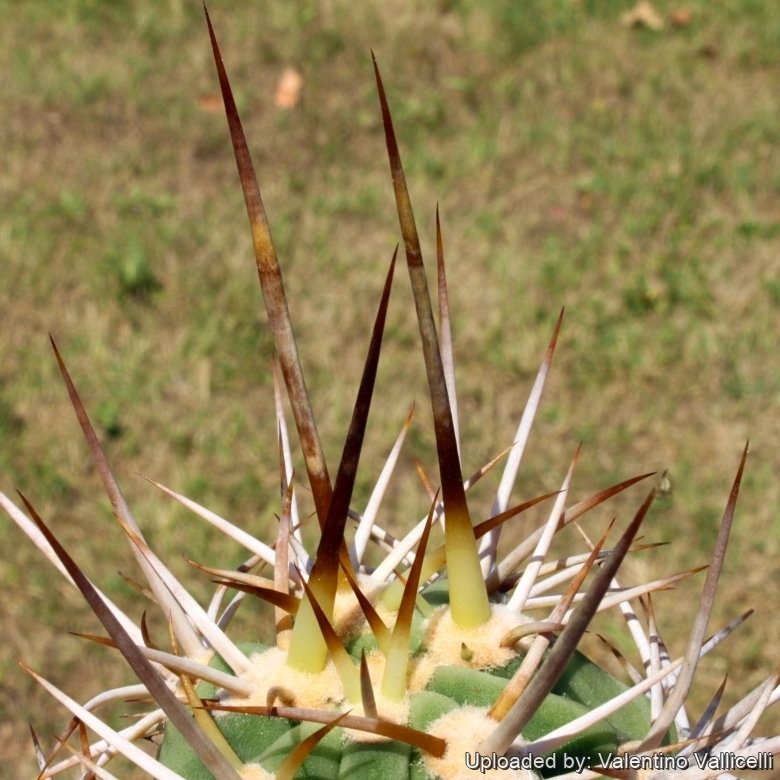
Echinopsis chiloensis var. panhoplites previously known as Trichocereus chiloensis var. panhoplites is very much like that of standard Echinopsis chiloensis but shows young spines almost black and central spine very long. The fruit and seed are similar to those of the other Varieties. Nowadays this plant is not considered a distinct variety but only one of the variable phenotypes of this this clinal species.
Growth Habits: It is a fiercely spiny cactus that develops into a shrub or small tree.
Stem: Rarely single, usually of several branches, sometimes of many, arising from near the base, starting nearly at right angles to the main trunk but soon erect, up to 8 m tall, stems 10-12 cm in diameter.
Ribs: 10 to 17 low and broad, separated by narrow intervals, divided into large tubercles even when fully mature.
Areoles: Large whitish, 2 cm apart.
Spines: Young spines almost black, stout, at least when young, greyish later.
Central spines: 1 to 4 centrals, porrect, 5-12 cm (or even 25 cm long).
Radial spines: 8 to 12 , up to 4 cm long.
Flowers: Flowers open during the day, white, 14 cm long, outer perianth-segments white but tinged with red or brown; inner perianth-segments white, acuminate.
Sun Exposure: Outside full sun or afternoon shade, inside needs bright light, and some direct sun.
Origin and Habitat
Ovalle, Coquimbo, Chile.
Source: Cereus chiloensis var. panhoplites, LLIFLE - Encyclopedia of living forms, CC-BY-SA, retrieved 2026-10-25.
From llifle page Trichocereus chilensis var. borealis
Description
Echinopsis chiloensis var. eburnea previously known as Trichocereus chiloensis var. borealis is a fiercely spiny cactus. In habitat it can produce very long spines, up to 25 cm long, but usually shorter in cultivated specimens. The fruit and seed are similar to those of the other Varieties. Nowadays this plant is not considered a distinct variety but only one of the variable phenotypes of this this clinal species.
Habit: It develops into a shrub or small tree. Rarely single, usually of several branches, sometimes of many, arising from near the base, starting nearly at right angles to the main trunk but soon erect.
Stem: Stout, cylindrical up to 8 m tall, stems 10-12 cm in diameter
Ribs: 10 to 17 low and broad ribs, separated by narrow intervals, divided into large tubercles even when fully mature.
Areoles: Areoles large whitish, 2 cm apart.
Spines: Creamy-white to yellowish with brown tips, at least when young, greyish later.
Central spines: Usually 1 (or sometime up to 4) stout, 5-10 cm (or even 25 cm) long
Radial spines: 8 to 12 1-2 cm long (occasionally up to 5 cm).
Flowers: Flower Nocturnal (opening at the end of the day) 14 cm. long, outer perianth-segments white but tinged with red or brown; inner perianth-segments white, acuminate.
Fruit: Globose green.
Origin and Habitat
Elqui valley, Huanta, 04 Coquimbo, Chile.
Source: Trichocereus chilensis var. borealis, LLIFLE - Encyclopedia of living forms, CC-BY-SA, retrieved 2026-10-25.
Cultivars and forms (5)
Gallery