Publication: Repert. Spec. Nov. Regni Veg. 39: 271. 1936 ( “chrysochele” )
Description
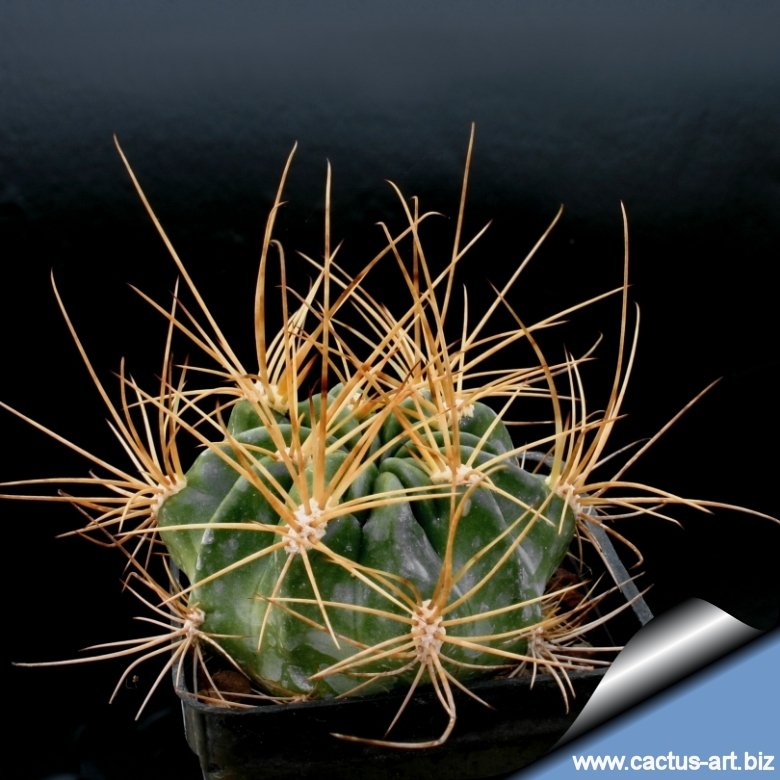
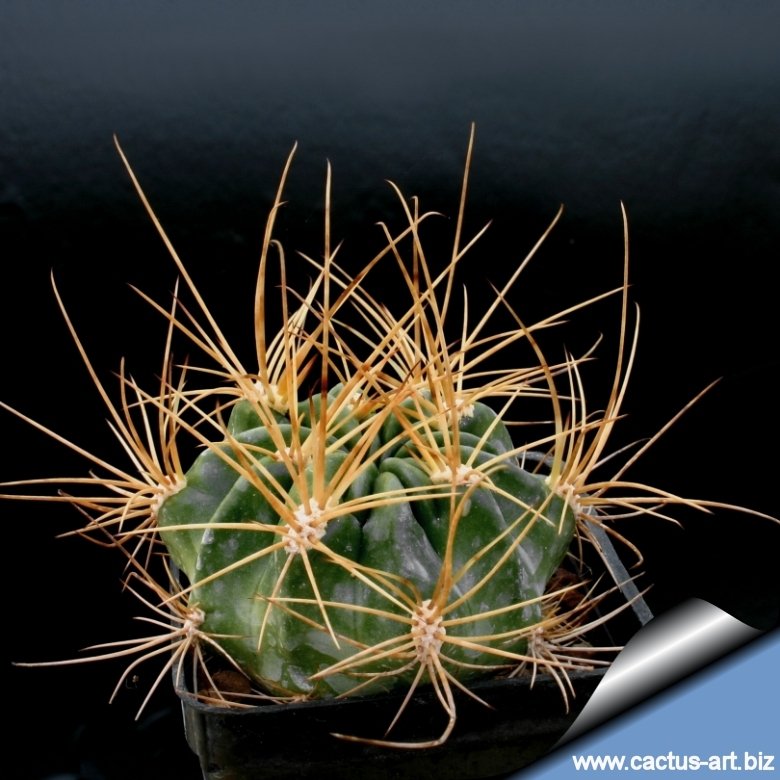
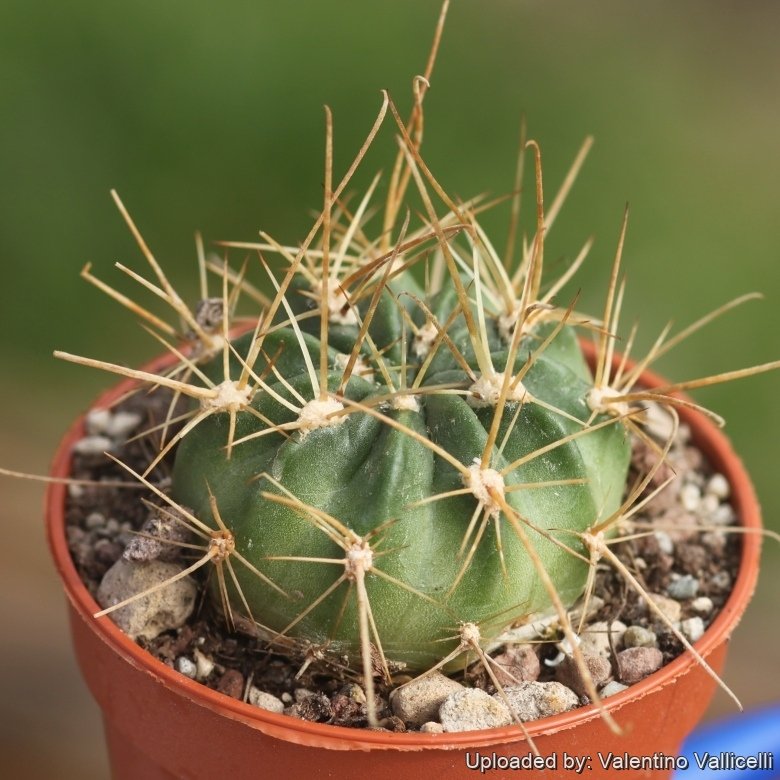
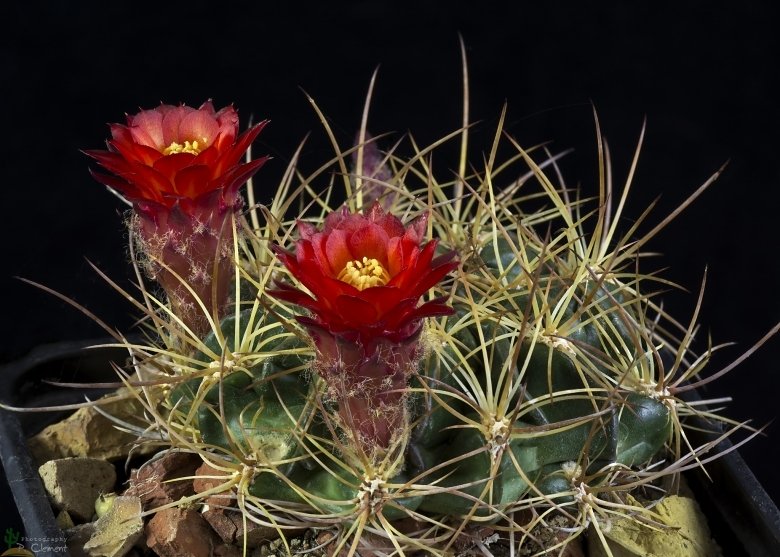
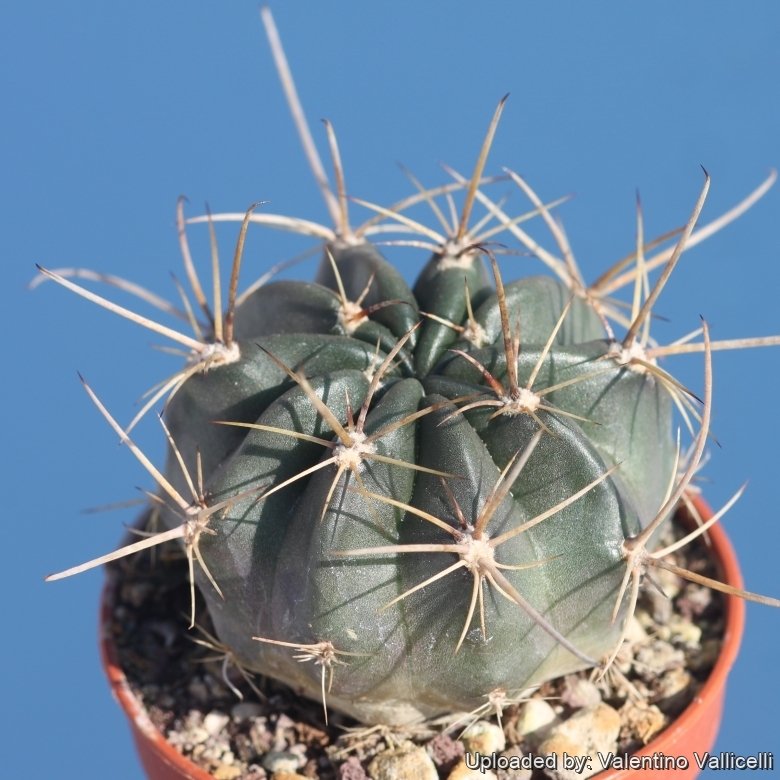
Lobivia chrysochete is a very spiny cactus with a much flattened usually solitary body that attains a diameter of 25 cm (sometime forms small few branched clumps).
Root: This species has a shallow root system
Stems: Flattened globose to globose (but often taller and less flattened in cultivation) green, up to 25 cm broad and appears very like “Soehrensia”.
Ribs: About 20, with chin shaped humps.
Central spines: 3 to 5 thin, 6-8 cm long, needle-like bristly, yellow to brownish.
Radial: Numerous (20-30) similar in colour to the central spines.
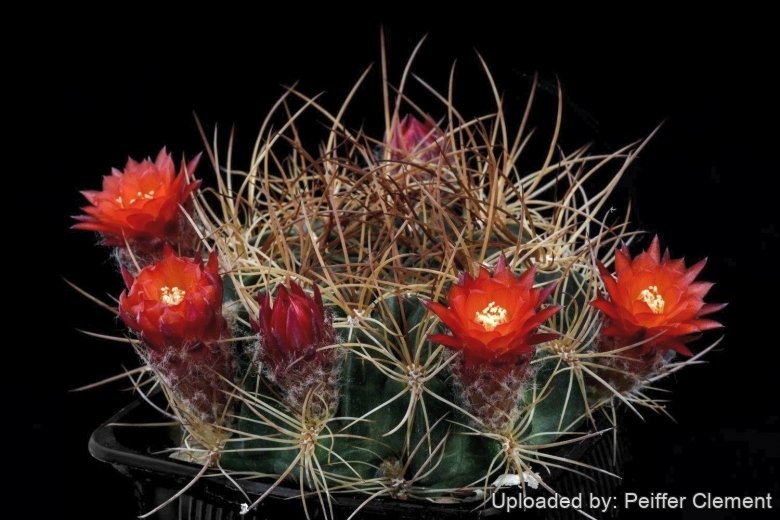
Flowers: 3-4 cm in diameter, widely funnelform, orange to red, shiny, with whitish centres.
Origin and Habitat
Echinopsis chrysochete has a relatively wide range in Southern Bolivia (Chuquisaca and Tarija) and northern Argentina (Jujuy and Salta)
Altitude: 2400-4700 metres above sea level.
Habitat and Ecology: It grows in high-altitude grasslands (puna). There are no known threats to this species.
Note: The indigenous word “Puna” indicate the western region up to 4500 m that extends from the Peru, going throughout Bolivia to the Argentinian North. Delimited at west by a costal chain of high volcanic picks and by the Cordillera mountainous chain to the east. The Argentinian Puna is the natural continuation of the Bolivian highland.
Cultivation and Propagation
Echinopsis chrysochete is an easy to grow succulent, more cold tolerant than most and less fussy regarding soil conditions.
Growth rate: It is a relatively rapidly growing and easily flowering species that will make smzsl clumps given the best conditions.
Soils: It likes very porous standard cactus mix soil.
Repotting: Use pot with good drainage.
Watering: Water regularly in summer, but do not overwater (Rot prone), keep dry in winter.
Fertilization: Feed with a high potassium fertilizer in summer.
Hardiness: Reputedly somewhat resistant to frost if kept on the dry side prior to, and during, cold weather (hardy to -12 C ° C, or less for short periods).
Exposition: Outside bright sunlight or afternoon shade, inside it needs bright light, and some direct sun. Tends to bronze in strong light, which encourages flowering and heavy spine production.
Uses: It is an excellent plant for container growing. It always looks good and stays small. It look fine in a cold greenhouse and frame or outdoor in a rockery.
Pests & diseases: It may be attractive to a variety of insects, but plants in good condition should be nearly pest-free, particularly if they are grown in a mineral potting-mix, with good exposure and ventilation. Nonetheless, there are several pests to watch for:
- Red spiders: they may be effectively rubbed up by misting the vulnerable plants every day.
- Mealy bugs: occasionally they develop aerial into the new growth among the wool with disfiguring results, but the worst types develop underground on the roots and are invisible except by their effects.
- Scales: they are rarely a problem.
It is wise to treat your whole collection with a systemic insecticide twice a year in spring and autumn.
- Rot: it is only a minor problem with cacti if the plants are watered and “aired” correctly. If they are not, fungicides won’t help all that much.
Propagation: Division, direct sow after last frost. Seeds germinate in 7-14 days at 21-27° C in spring, remove gradually the glass cover as soon the plants will be well rooted (ca 1-2 weeks) and keep ventilated, no full sun for young plants! To make a cutting twist off a branch and permit it to dry out a couple of weeks, lay it on the soil and insert the stem end partially into the soil. Try to keep the cutting somewhat upright so that the roots are able to grow downward.
Bibliography
Major references and further lectures
-
Walter Rausch “Lobivia: The Day Flowering Echinopsidinae from a Geographical Distribution Point of View” Vol. 1-3 R. Herzig, 1975
-
David Hunt, Nigel Taylor “The New Cactus Lexicon” DH Books, 2006
-
Edward F. Anderson “The Cactus Family” Timber Press, 2001
-
Lowry, M. 2013. Echinopsis chrysochete. In: IUCN 2013. IUCN Red List of Threatened Species. Version 2013.2. <www.iucnredlist.org>. Downloaded on 09 January 2014.
From llifle page Lobivia chrysochete var. minutiflora
Description
Lobivia chrysochete var. minutiflora is one of the local or morphological form of the very variable Echinopsis chrysochete that shows a large range of natural variability, especially the colour of the flower. L. chrysochete var. minutiflora distinguishes for its smallish flower that expands to only 2,5 cm long.
Origin and Habitat
Salta (Viscachani, Tres Lagunas, Santa Victoria, Salta, Iruya, Cerro Campanario, Pueblo Viejo, Chunca Chanca, Cerro Mandinga, Abra Lizoite, ) Argentina
Altitude range: 3500-4500 metres above sea level.
Haabit and ecology: Lobivia chrysochete var. minutiflora grows among rocks on steep hillsides and ridges.
Cultivation and Propagation
This is an easy to grow succulent, more cold tolerant than most and less fussy regarding soil conditions.
Growth rate: It is a relatively rapidly growing and easily flowering species that will make smzsl clumps given the best conditions.
Soils: It likes very porous standard cactus mix soil.
Repotting: Use pot with good drainage.
Watering: Water regularly in summer, but do not overwater (Rot prone), keep dry in winter.
Fertilization: Feed with a high potassium fertilizer in summer.
Hardiness: Reputedly somewhat resistant to frost if kept on the dry side prior to, and during, cold weather (hardy to -12 C ° C, or less for short periods).
Exposition: Outside bright sunlight or afternoon shade, inside it needs bright light, and some direct sun. Tends to bronze in strong light, which encourages flowering and heavy spine production.
Uses: It is an excellent plant for container growing. It always looks good and stays small. It look fine in a cold greenhouse and frame or outdoor in a rockery.
Pests & diseases: It may be attractive to a variety of insects, but plants in good condition should be nearly pest-free, particularly if they are grown in a mineral potting-mix, with good exposure and ventilation. Nonetheless, there are several pests to watch for:
- Red spiders: they may be effectively rubbed up by misting the vulnerable plants every day.
- Mealy bugs: occasionally they develop aerial into the new growth among the wool with disfiguring results, but the worst types develop underground on the roots and are invisible except by their effects.
- Scales: they are rarely a problem.
It is wise to treat your whole collection with a systemic insecticide twice a year in spring and autumn.
- Rot: it is only a minor problem with cacti if the plants are watered and “aired” correctly. If they are not, fungicides won’t help all that much.
Propagation: Division, direct sow after last frost. Seeds germinate in 7-14 days at 21-27° C in spring, remove gradually the glass cover as soon the plants will be well rooted (ca 1-2 weeks) and keep ventilated, no full sun for young plants! To make a cutting twist off a branch and permit it to dry out a couple of weeks, lay it on the soil and insert the stem end partially into the soil. Try to keep the cutting somewhat upright so that the roots are able to grow downward.
Bibliography
Major references and further lectures
- Walter Rausch “Lobivia: The Day Flowering Echinopsidinae from a Geographical Distribution Point of View”, Volumi 1-3 R. Herzig, 1975
Source: Lobivia chrysochete var. minutiflora, LLIFLE - Encyclopedia of living forms, CC-BY-SA, retrieved 2026-10-25.
From llifle page Lobivia chrysochete var. tenuispina
Description
Lobivia chrysochete var. tenuispina is one of the many geographical or morphological form of Echinopsis chrysochete. Many variant of Echinopsis chrysochete was early classified as different independent species, but nowadays all this plants are considered part of a multiform species, where each form is linked to others by populations of plants with intermediate characteristics. L. chrysochete var. tenuispina shows darker dense spination and colourful golden yellow flowers.
Stems: Solitary (sometime forming few branched clumps), flattened globose to globose. (but often taller and less flattened in cultivation) green, and up to 25 cm broad.
Ribs: About 20, with chin shaped humps.
Central spines: 3 to 5 thin, 6-8 cm long, needle-like bristly, yellow to brownish.
Radial: Numerous (20-30) similar in colour to the central spines.
Flowers: 3-4 cm in diameter, widely funnelform, yellow or orangish with lots of shiny petals aranged almost like a marigold.
Origin and Habitat
Origin and Habitat: Deeper regions around Iscayachi, Mendez, Tarija, Higher Andes of Bolivia.
Altitude ranges: 3300-4000 metres above sea level.
Habitat and ecology: Lobivia chrysochete var. tenuispina grows on rocky outcrops facing south or east and flat areas.
Cultivation and Propagation
Echinopsis chrysochete var. tenuispina is an easy to grow succulent, more cold tolerant than most and less fussy regarding soil conditions.
Growth rate: It is a relatively rapidly growing and easily flowering species that will make smzsl clumps given the best conditions.
Soils: It likes very porous standard cactus mix soil.
Repotting: Use pot with good drainage.
Watering: Water regularly in summer, but do not overwater (Rot prone), keep dry in winter.
Fertilization: Feed with a high potassium fertilizer in summer.
Hardiness: Reputedly somewhat resistant to frost if kept on the dry side prior to, and during, cold weather (hardy to -12 C ° C, or less for short periods).
Exposition: Outside bright sunlight or afternoon shade, inside it needs bright light, and some direct sun. Tends to bronze in strong light, which encourages flowering and heavy spine production.
Uses: It is an excellent plant for container growing. It always looks good and stays small. It look fine in a cold greenhouse and frame or outdoor in a rockery.
Pests & diseases: It may be attractive to a variety of insects, but plants in good condition should be nearly pest-free, particularly if they are grown in a mineral potting-mix, with good exposure and ventilation. Nonetheless, there are several pests to watch for:
- Red spiders: they may be effectively rubbed up by misting the vulnerable plants every day.
- Mealy bugs: occasionally they develop aerial into the new growth among the wool with disfiguring results, but the worst types develop underground on the roots and are invisible except by their effects.
- Scales: they are rarely a problem.
It is wise to treat your whole collection with a systemic insecticide twice a year in spring and autumn.
- Rot: it is only a minor problem with cacti if the plants are watered and “aired” correctly. If they are not, fungicides won’t help all that much.
Propagation: Division, direct sow after last frost. Seeds germinate in 7-14 days at 21-27° C in spring, remove gradually the glass cover as soon the plants will be well rooted (ca 1-2 weeks) and keep ventilated, no full sun for young plants! To make a cutting twist off a branch and permit it to dry out a couple of weeks, lay it on the soil and insert the stem end partially into the soil. Try to keep the cutting somewhat upright so that the roots are able to grow downward.
Bibliography
Major references and further lectures
-
Walter Rausch “Lobivia: The Day Flowering Echinopsidinae from a Geographical Distribution Point of View” Vol. 1-3 R. Herzig, 1975
-
David Hunt, Nigel Taylor “The New Cactus Lexicon” DH Books, 2006 ISBN 0953813444, 9780953813445
-
Edward F. Anderson “The Cactus Family” Timber Press, 2001
Source: Lobivia chrysochete var. tenuispina, LLIFLE - Encyclopedia of living forms, CC-BY-SA, retrieved 2026-10-25.
Gallery