Publication: Blätt. Kakteenf. 1934, Pt. 3, [p. 4] et : Backeb. in Kaktus-ABC [Backeb. & Knuth] 220. 1936 [12 Feb 1936]
Description
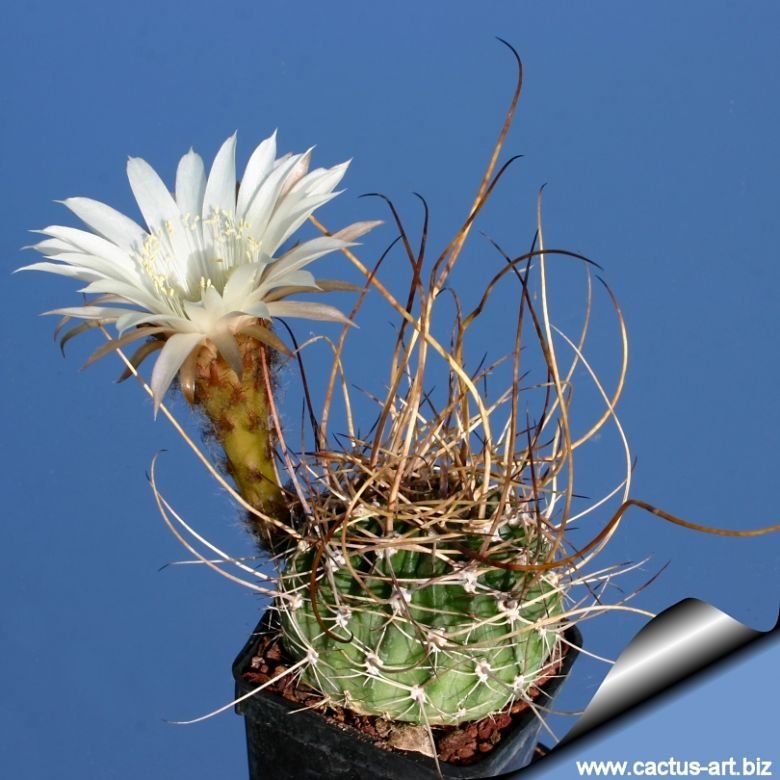
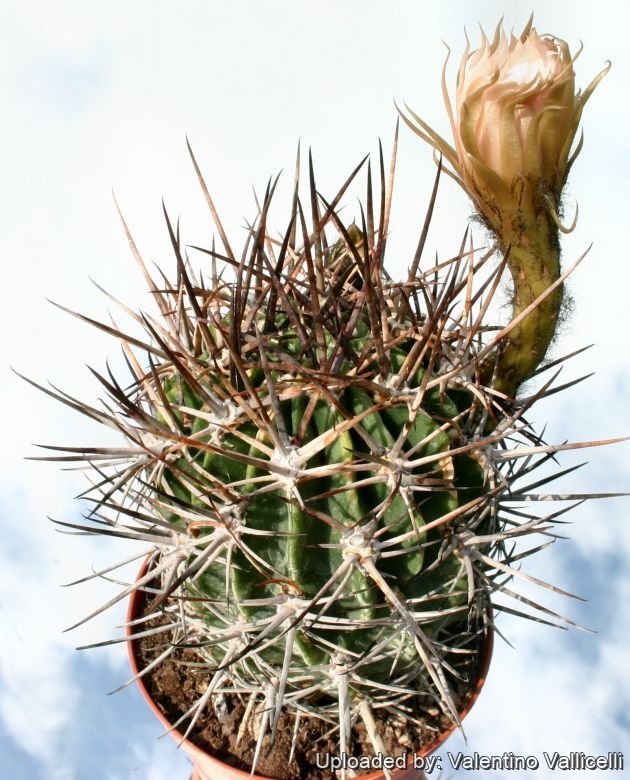
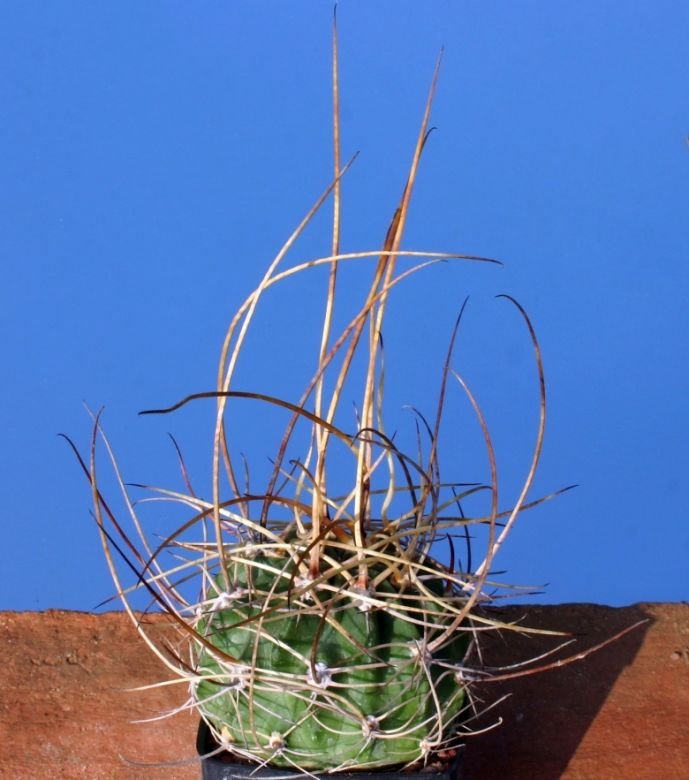
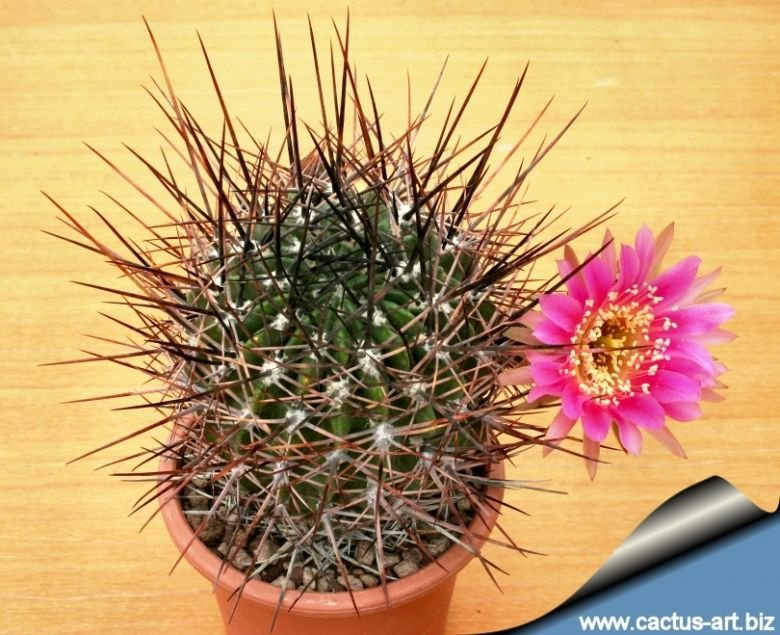
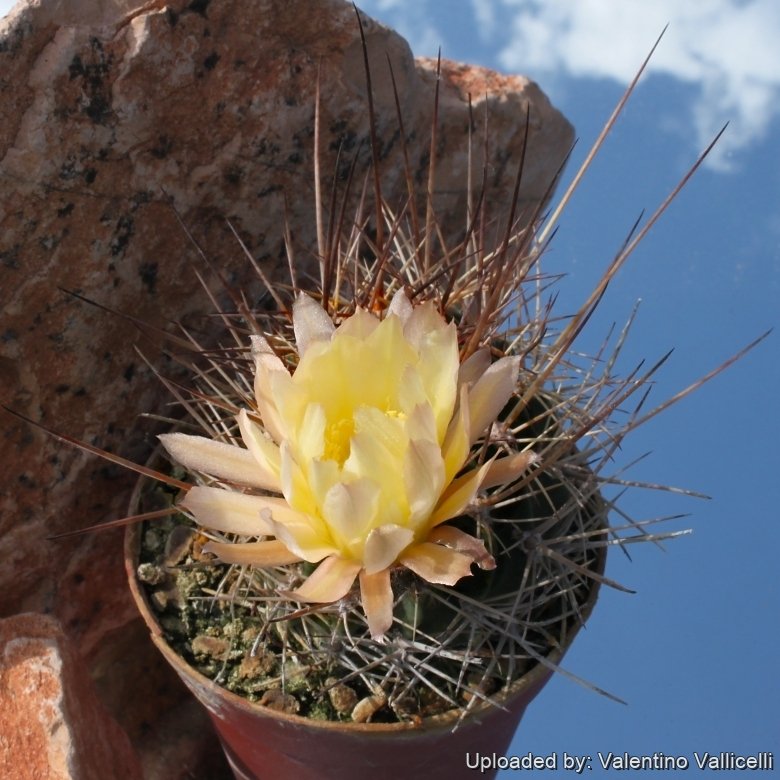
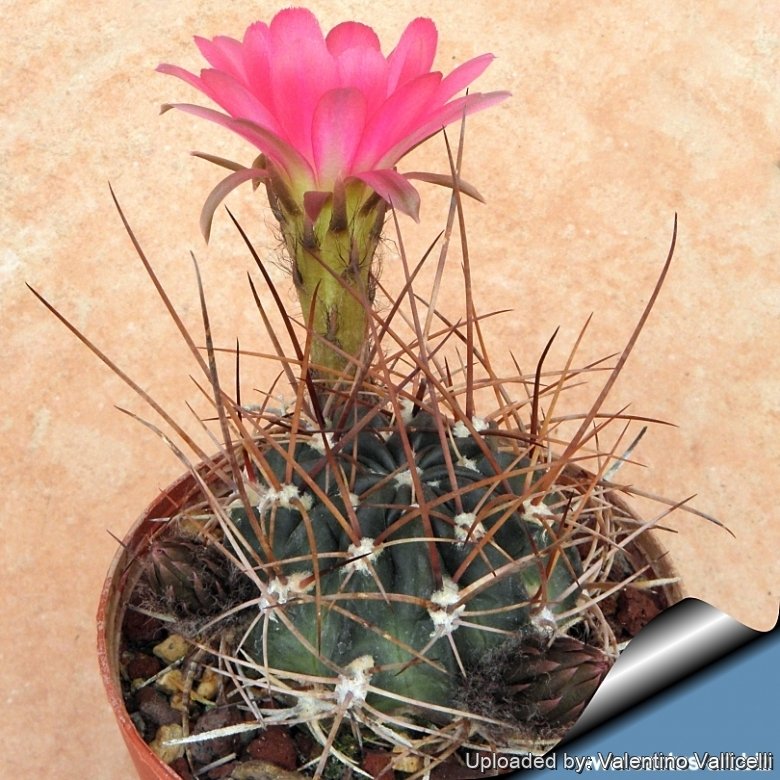
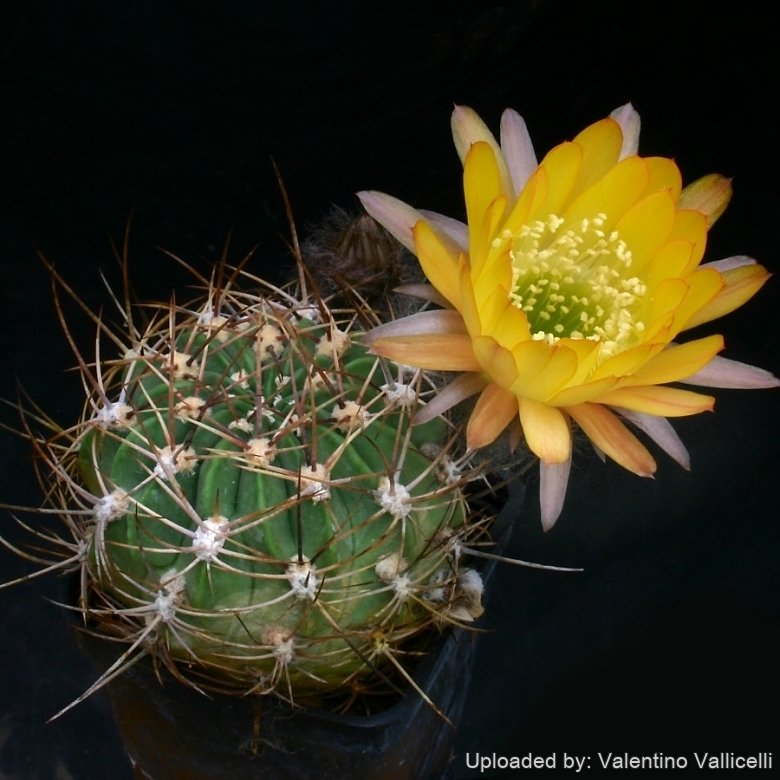
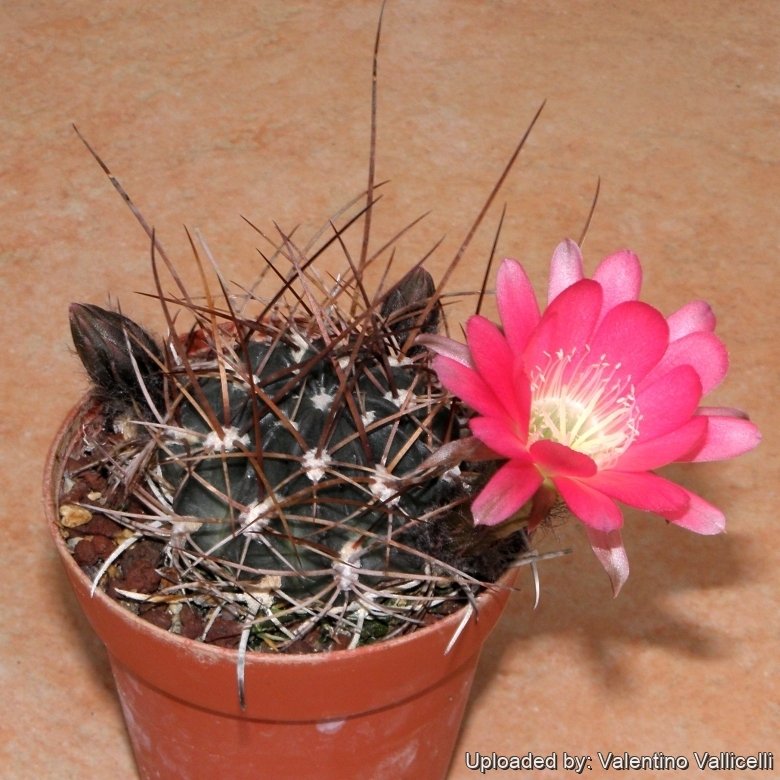
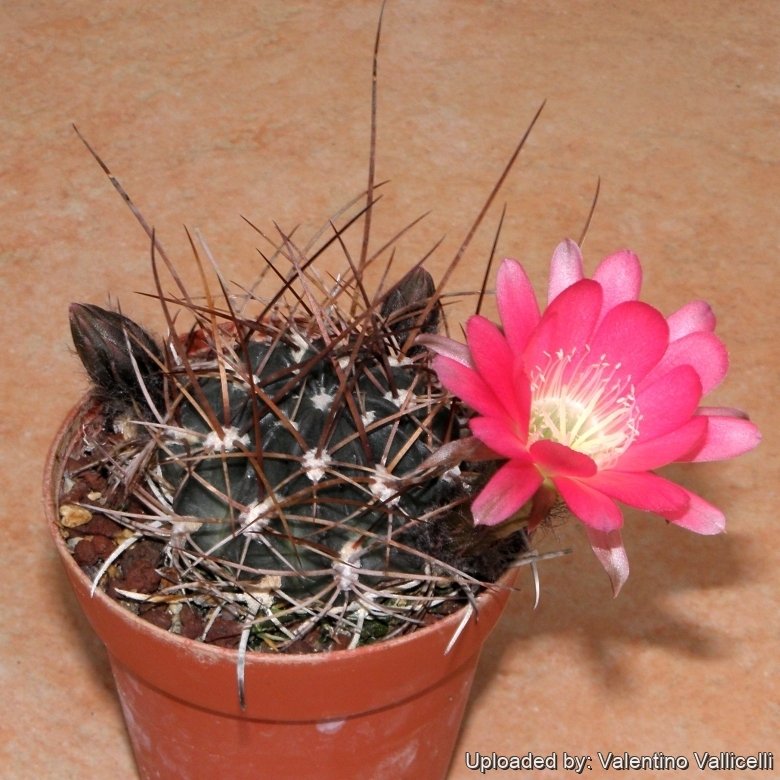
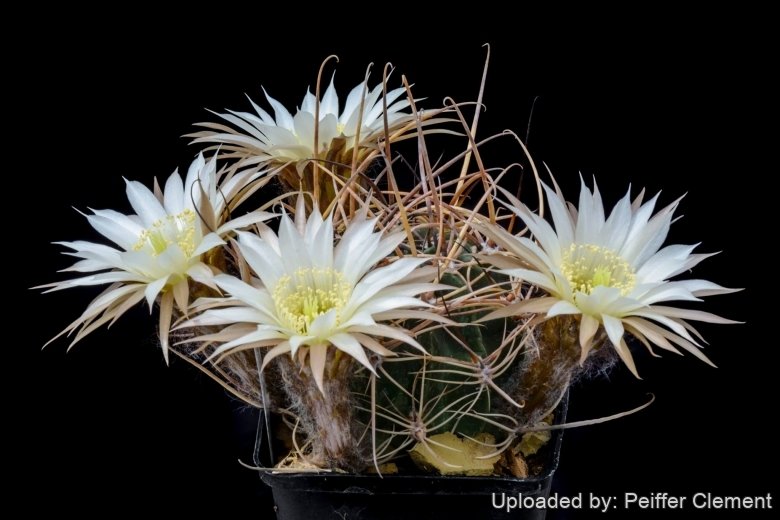
Echinopsis ferox is a very large and spiny cactus, solitary or branched. The body is almost concealed by the spines. This is a very variable species especially in shape and and length of spines and in flowers colour. Since the various forms are connected by intermediates it is extremely difficult to recognize infraspecific taxa.
Stem: Bluish-green, spherical at first and later sort of cylindrical, and it may grow 25 cm tall and 10-40 cm in diameter.
Ribs: 25 to 50 ribs deeply incised between the tubercles, which are approx. 2 cm long.
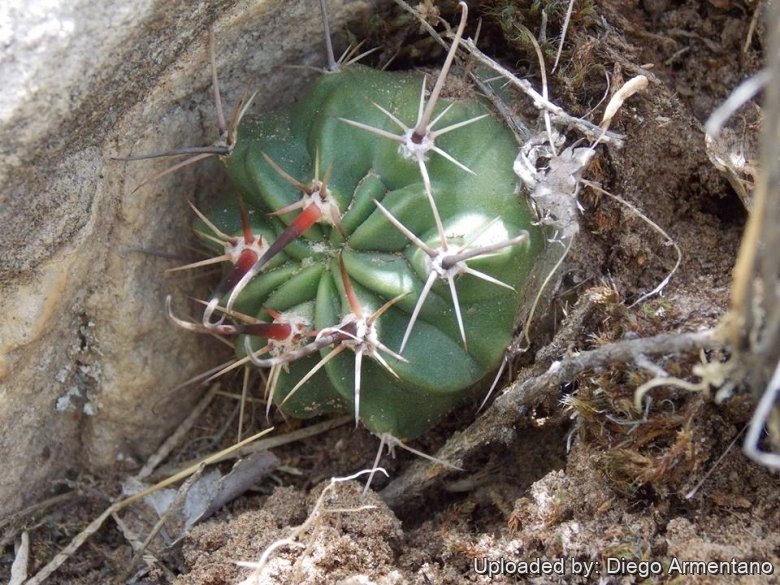
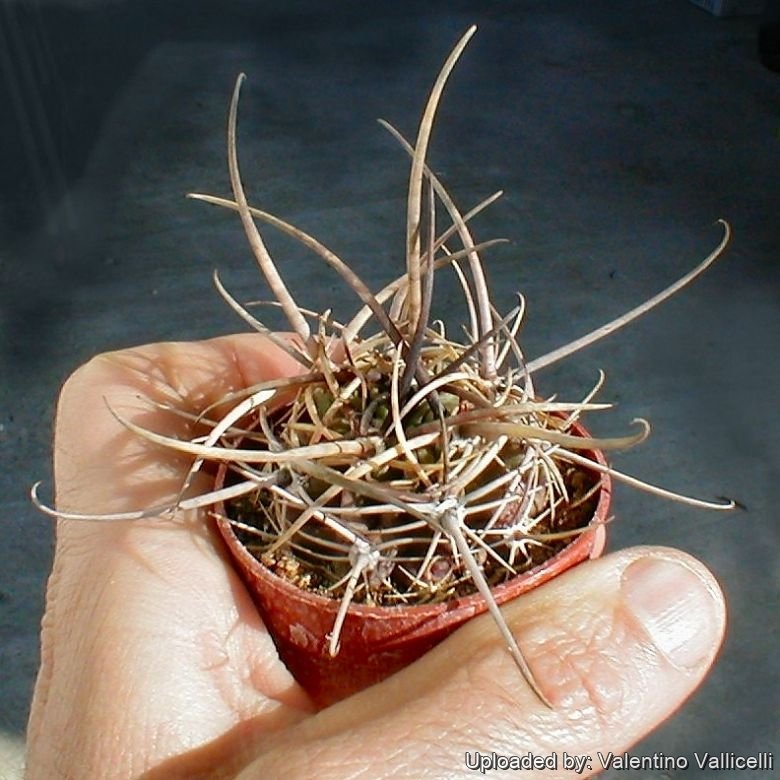
Spines: Radials are hard to tell from the central spines. Each areole bears approx 4 to 15 spines ranging from slender to thick, conical with a wider base, and irregular in length, the longest up to 8 cm or more. They are flexible and curved upward, and those on new parts of the plant have occasionally a hooked tip. Their colour varies from yellowish to brown when young, but later grey.
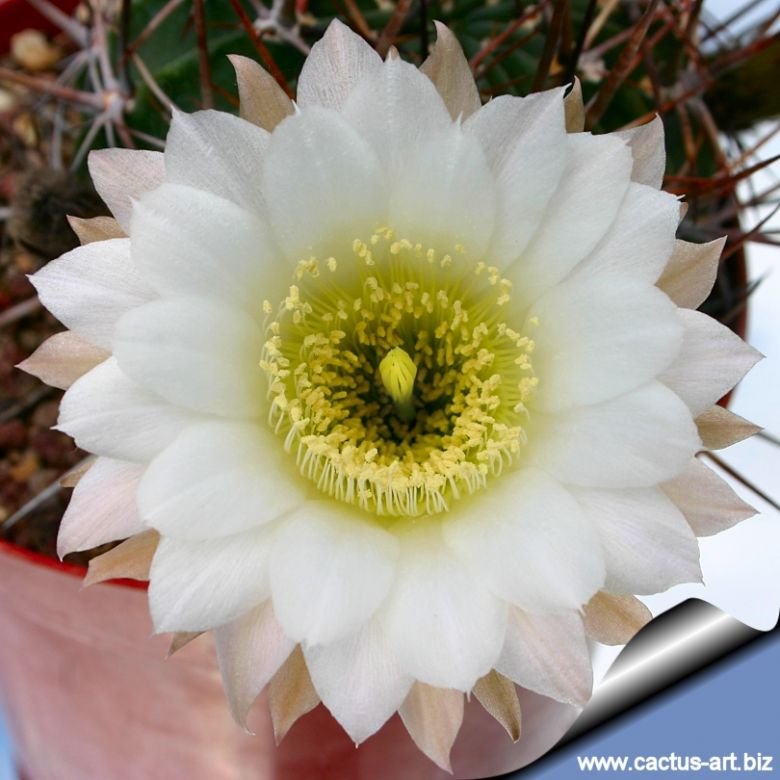
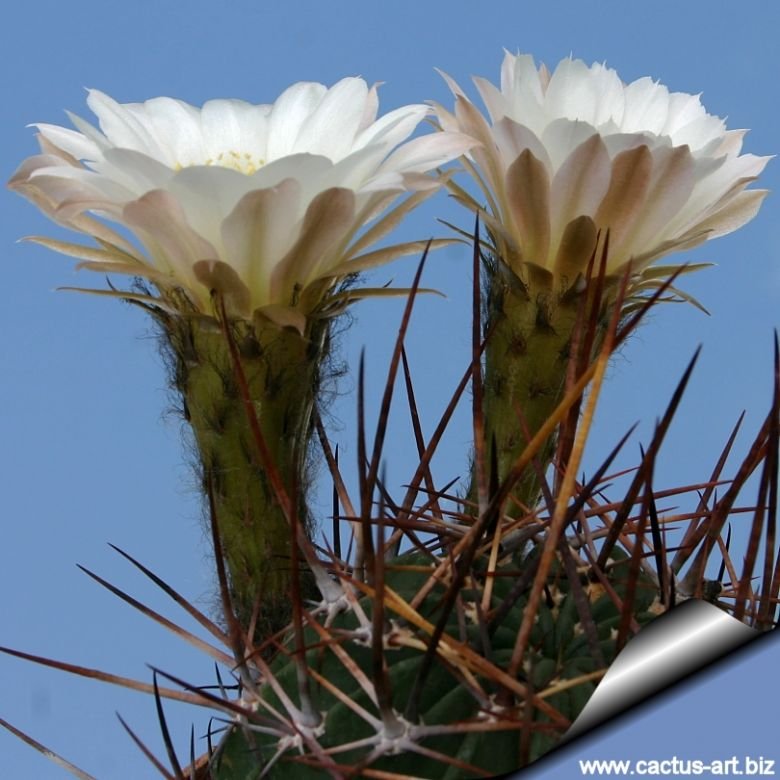
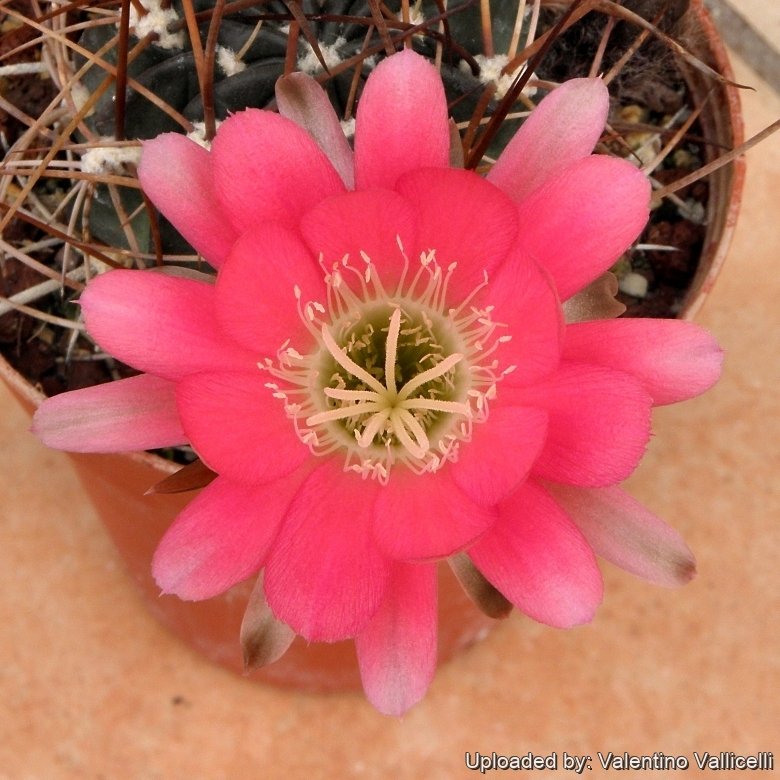
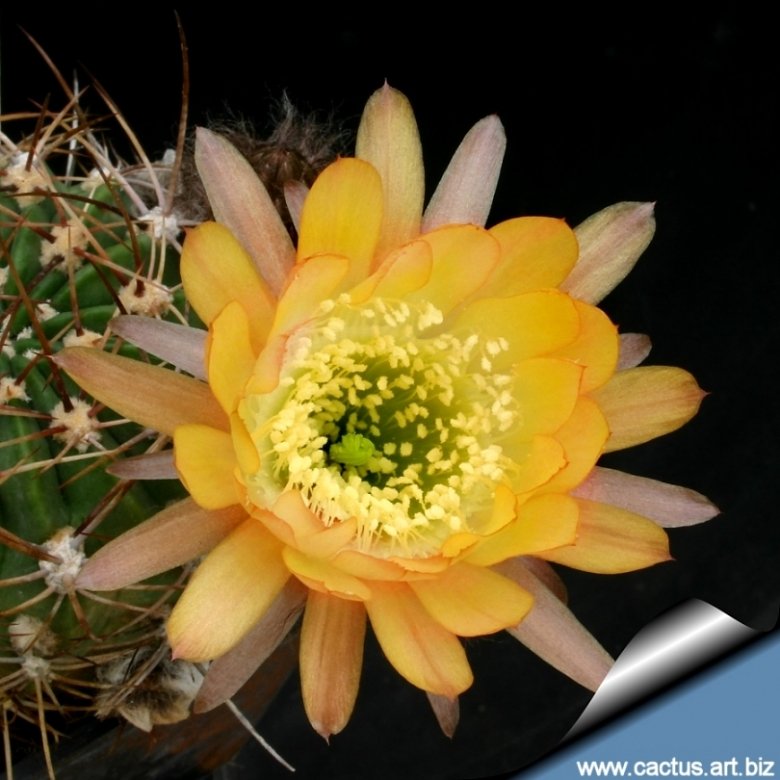
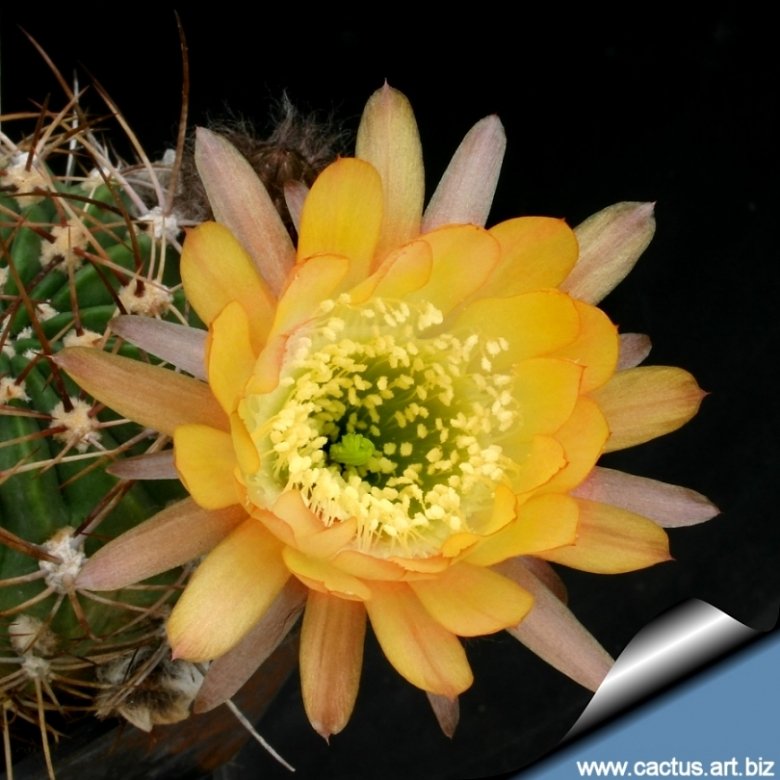
Flowers: Lateral or basal, 7-10 cm. long, funnel-shaped, and have a slender, curved tube covered with long white hairs. Perianth segments are short and white, but can be of almost any colour.
Fruits: Globular, dark green with flowers remnants.
Remarks: The fruit has a whitish mucilaginous pulp and is edible with a fresh and agreeable taste.
Remarks: The flowers, produced very freely, are usually pure white and have long tubes, though in cultivation pink flowers occur quite frequently, but probably the gene pool of plants in cultivation has been polluted.
Origin and Habitat
NW Argentina ( Salta y Jujuy, at about 2000 m), Western Bolivia (department of Oruro. Chuquisca: N Camargo, at about 3000 m) NE Chile: Región I: Altiplano of Tarapacá Province of Iquique at 3.700 y 4.000 metres above sea level.
Altitude range: 1800 to 4000 metres above sea level.
Habitat: Echinopsis ferox occurs in high-altitude grasslands and shrublands on dry hills in fissures in rocks and on gravelly outcrops, mainly on volcanic substrates but also in other stone formations, mostly on N, NE and E faced slopes, with 10 to 30% of inclination in open areas or under scrubs. This species has a wide range, is abundant, occurs in protected areas, and only very localized threats occur.
Cultivation and Propagation
It is a summer-growing species that offers no cultivation difficulty. Water regularly in summer (but do not over-water). It needs good drainage and very porous soil. Keep rather dry in winter. Feed with a high potassium fertilizer in summer. It is quite frost-resistant if kept dry (hardy to -5° C). Outside full sun or afternoon shade; inside it needs bright light, and some direct sun.
Propagation: Direct sow after last frost (it seldom produces offsets)
Bibliography
Major references and further lectures
-
N. L. Britton, J. N. Rose: “The Cactaceae. Descriptions and Illustrations of Plants of the Cactus Family.” Vol I, The Carnegie Institution of Washington, Washington 1919
-
Edward Anderson “The Cactus family” Timber Press, Incorporated, 2001
-
James Cullen, Sabina G. Knees, H. Suzanne Cubey “The European Garden Flora Flowering Plants: A Manual for the Identification of Plants Cultivated in Europe, Both Out-of-Doors and Under Glass” Cambridge University Press, 11/Aug/2011
-
David R Hunt; Nigel P Taylor; Graham Charles; International Cactaceae Systematics Group. “The New Cactus Lexicon” dh books, 2006
-
Curt Backeberg “Die Cactaceae: Handbuch der Kakteenkunde,” Volume 2 G. Fischer, 1959
-
Urs Eggli, Leonard E. Newton “Etymological Dictionary of Succulent Plant Names.” Springer, Berlin/Heidelberg 2010
-
Gordon Douglas Rowley “Reunion of the genus Echinopsis.” In: IOS Bulletin. Journal of the International Organization for Succulent Plant Study. 3(3): 98, 1974.
-
Lowry, M., Demaio, P. & Faundez, L. 2013. Echinopsis ferox. The IUCN Red List of Threatened Species. Version 2014.3. <www.iucnredlist.org>. Downloaded on 04 May 2015.
From llifle page Echinopsis longispina
Description
Very large and spiny cactus, solitary or branched. The body is almost concealed by the spines.
Stem: Bluish-green, spherical at first and later sort cylindrical, and may grow 25 cm tall and 10-40 cm in diameter.
Ribs: 25 to 50 ribs deeply incised between the tubercles, which are approx. 2 cm long.
Spines: Radials are hard to tell from the central spines. Each areole bears approx 4 to 15 spines ranging from slender to thick, conical with a wider base, and irregular in length, the longest up to 8 cm or more. They are flexible and slightly curved upward to almost straight. Their colour varies from yellowish to brown when young but later grey.
Flowers: Lateral or basal, 7-10 cm. long, funnel-shaped, and have a slender, curved tube covered with long white hairs. Perianth segments are short usually creamy-white but can be of almost any colour.
Fruit: Globular, dark green with flowers remnants.
Remarks: The fruit has a whitish mucilaginous pulp and is edible with a fresh and agreeable taste
Origin and Habitat
NW Argentina ( Salta y Jujuy, at about 2000 m), Western Bolivia (departement of Oruro. Chuquisca: N Camargo, at about 3000 m) NE Chile: Región I: Altiplano of Tarapacá Province of Iquique 3.700 y 4.000 m.Habitat: : Growing from fissures in the rocks and on gravely outcrop mainly on volcanic substrates but also in other stone formation from 1800 to 4000 m of altitude, mostly on N, NE and E faced slopes with 10 to 30% of inclination in open areas or under scrubs.
Cultivation and Propagation
It is a summer grower species that offers no cultivation difficulties. Water regularly in summer (but do not overwater ) needs good drainage and very porous, keep rather dry in winter. Feed with a high potassium fertilizer in summer. It is quite frost resistant if kept dry (hardy to -12° C) Need a very bright exposure, full sun is indispensable to keep plant compact with strong spines.
Propagation: Direct sow after last frost, offsets (if available)
Source: Echinopsis longispina, LLIFLE - Encyclopedia of living forms, CC-BY-SA, retrieved 2026-10-25.
Gallery