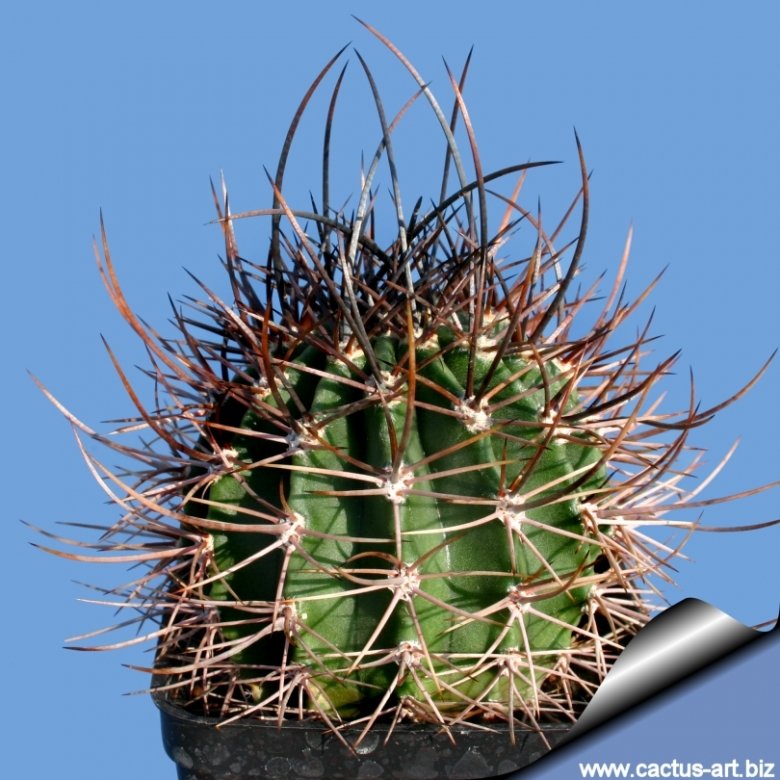
Publication: Repert. Bot. Syst. (Walpers) ii. 324. 1843
Description
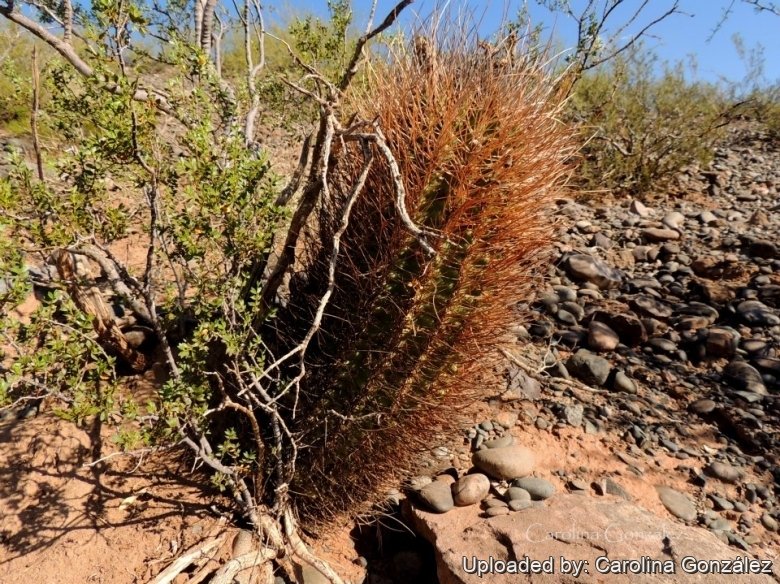
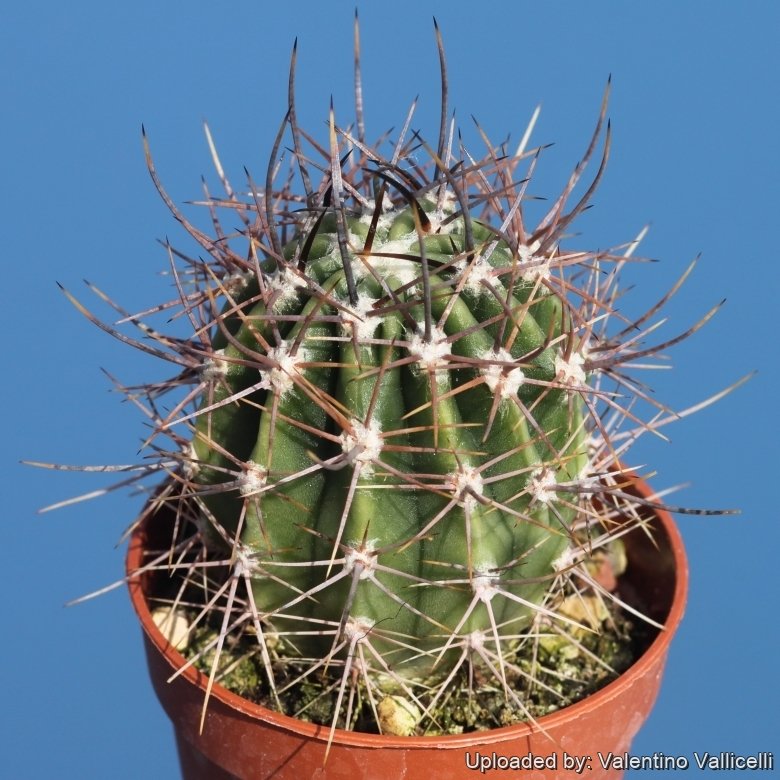
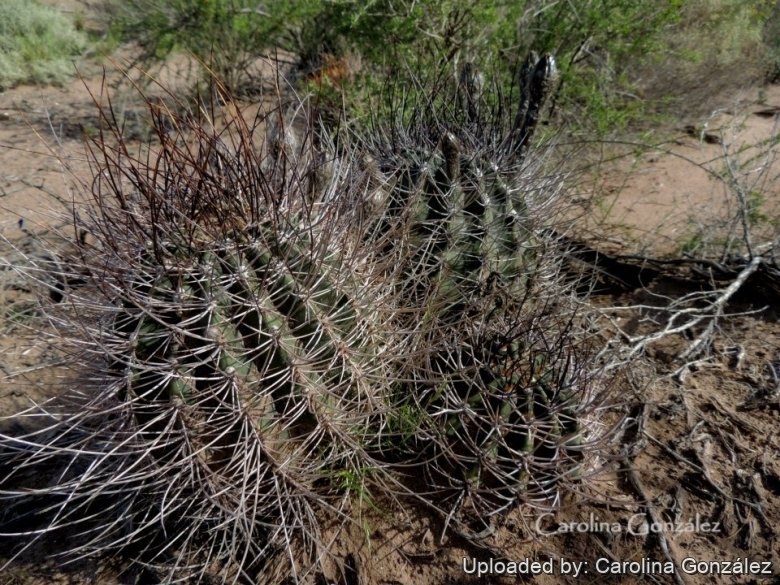
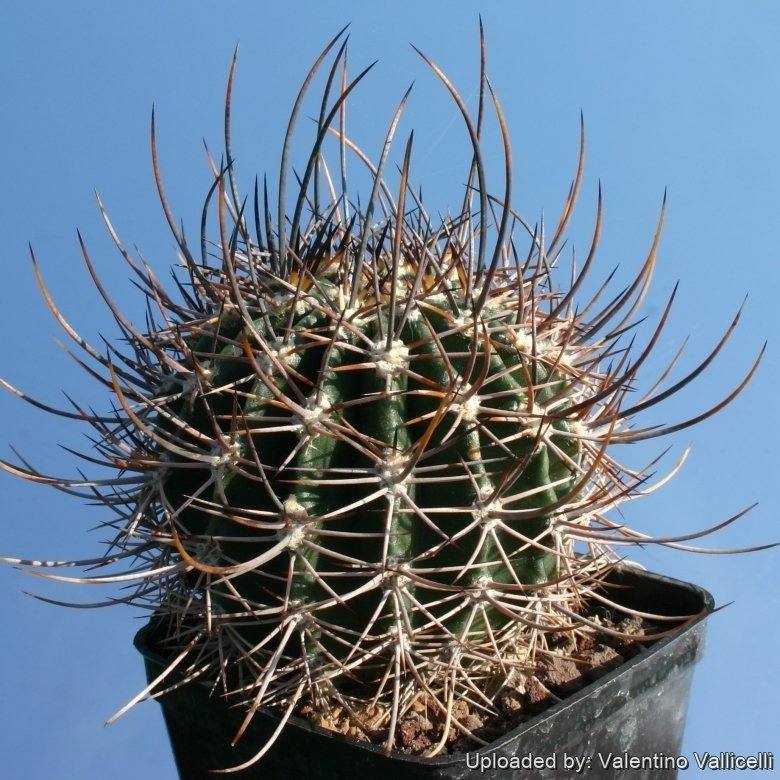
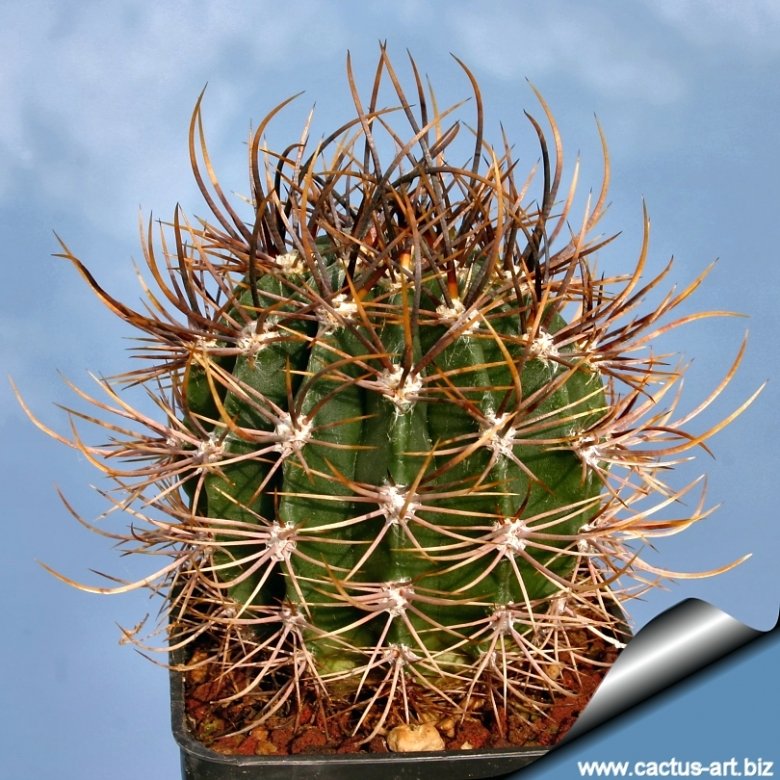
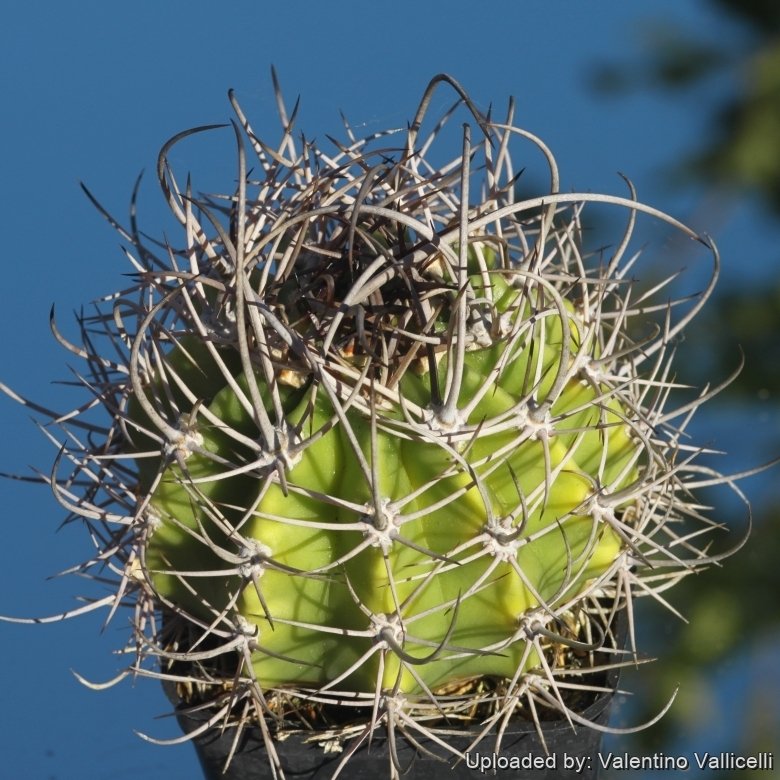
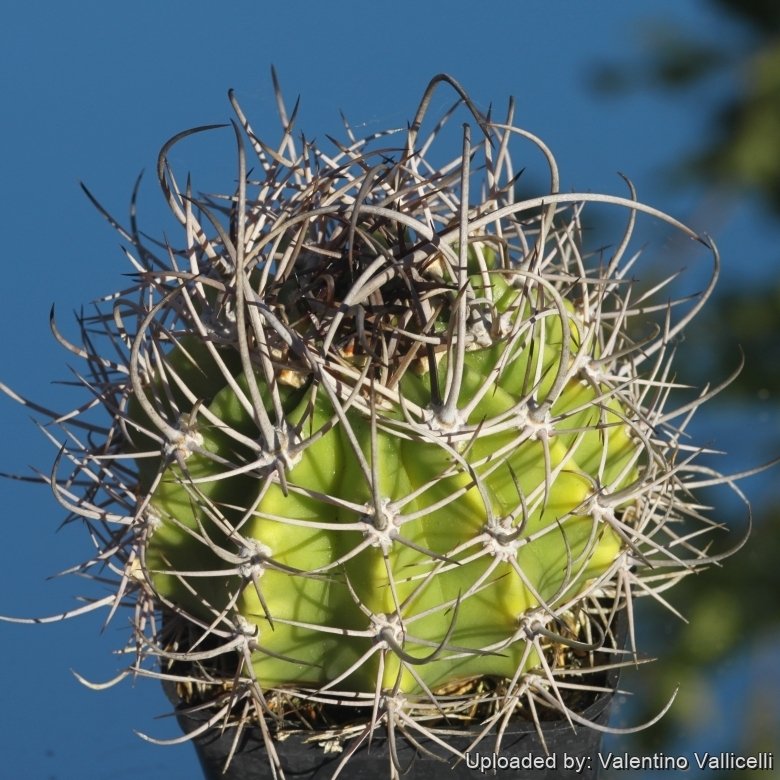
Stems: Globose to elongating grayish-green to brownish , about 15-35 cm high and 10-15 cm in diameter, becoming cylindric eventually up to 1,5 m tall, usually simple or offsetting from the about 10 cm in diameter.
Ribs: 10 to 14, straight, somewhat compressed.
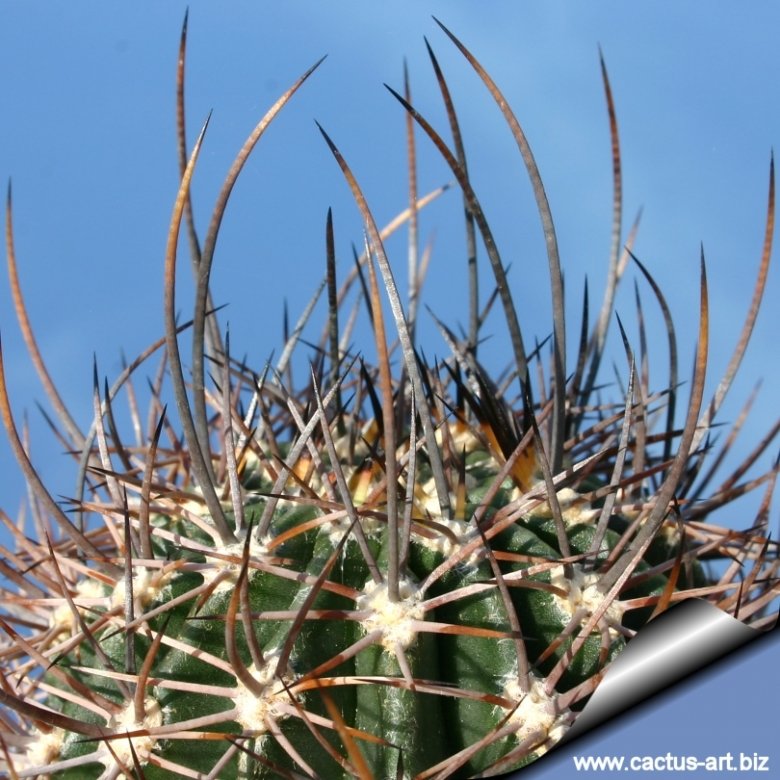
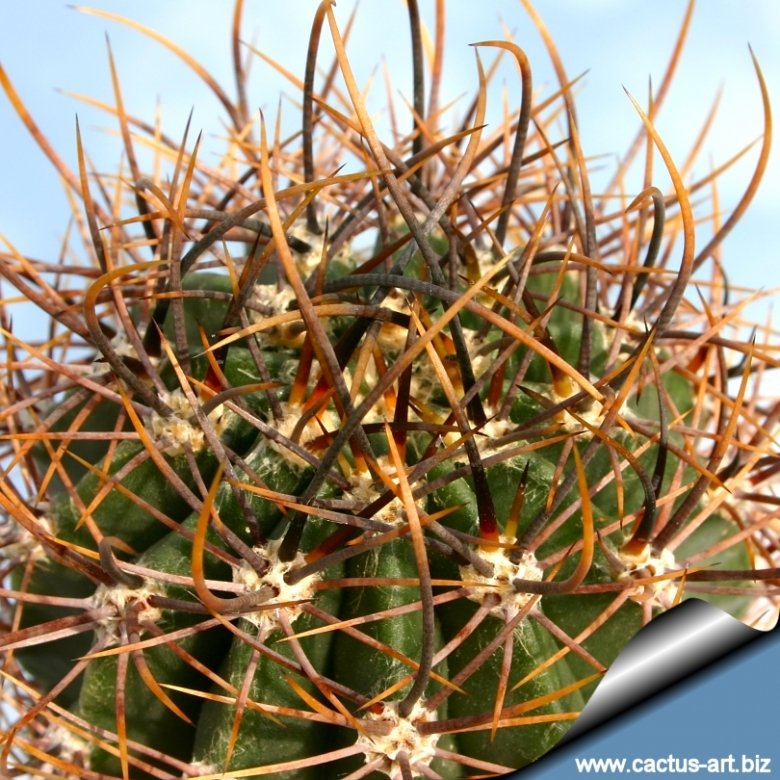
Areoles: Close together, oblong.
Radial spines: 7-8, up to 2 cm long more or less curved, brownish.
Central spine: 1, pointing upwards, curved and sometime almost hooked, elongated, often 10 cm long dark brown.
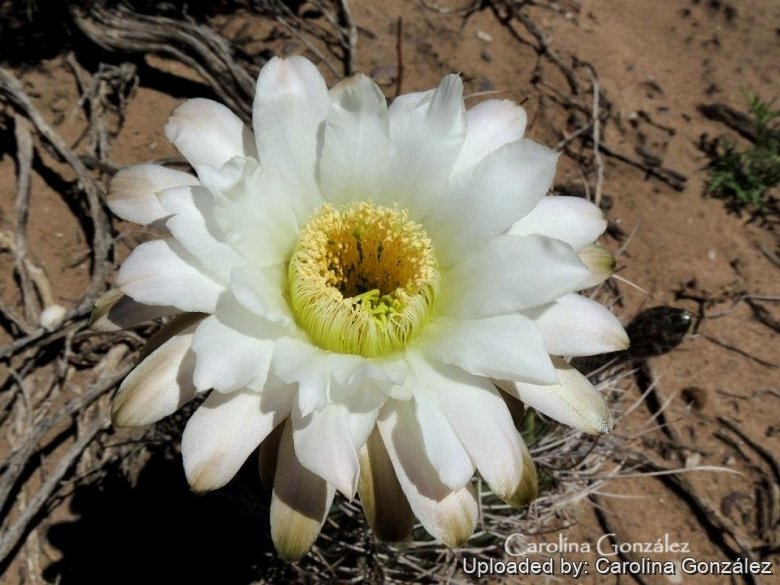
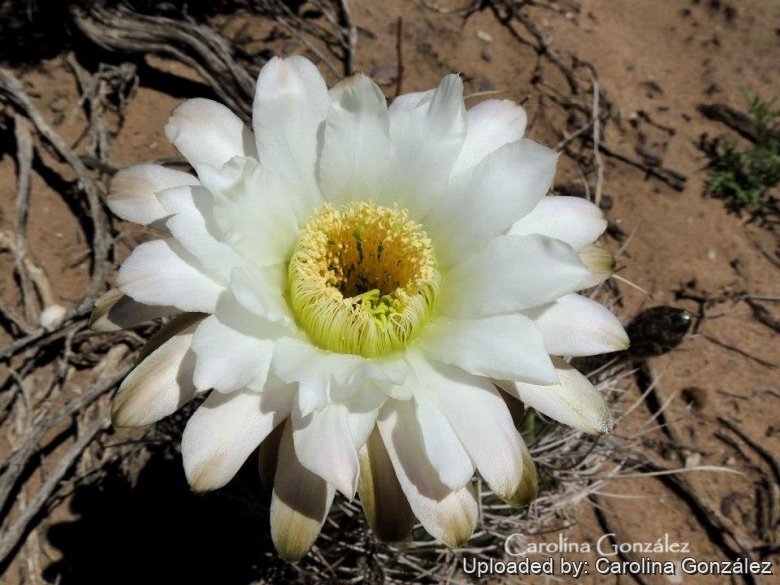
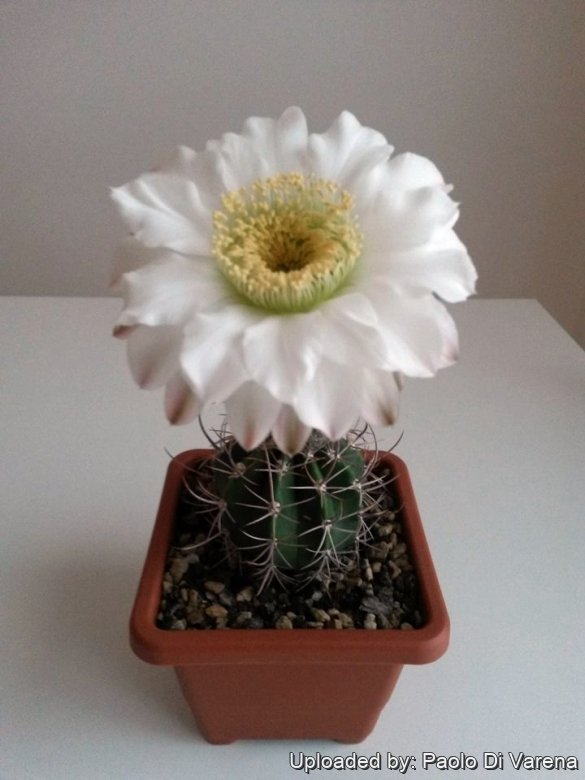
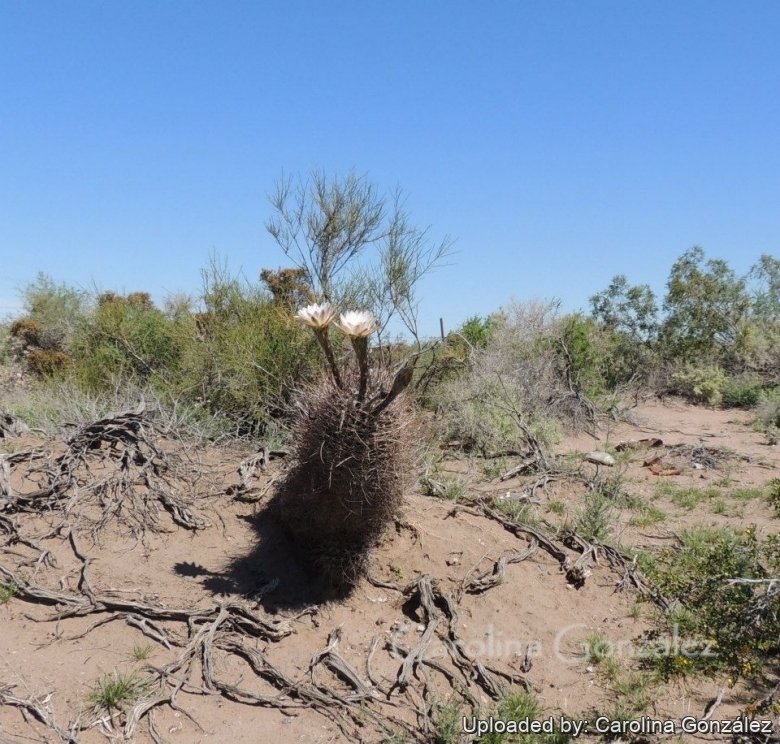
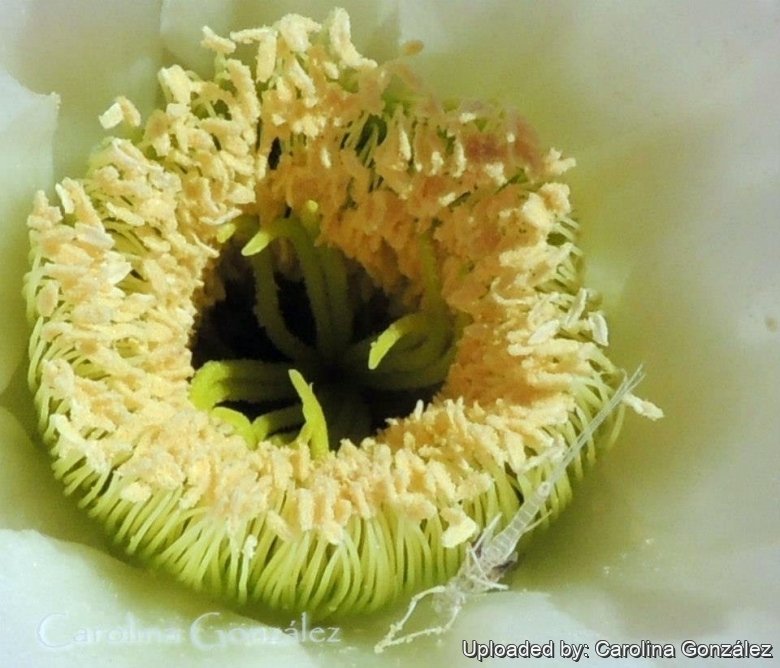
Flowers: White or pale pink, trumpet shaped about 16 cm long; the tube about 3 cm broad at the mouth, dark brown, with scattered areoles bearing small tufts of brown hairs; outer perianth-segments brownish, spreading, 2 cm long, with an acute scarious tip; inner perianth-segments in about 3 series, spreading, the outer ones purplish, the innermost ones nearly white, oblong, acute, about 3 cm long; filaments in many series of many lengths with no separate throat circle, the series at the mouth of the flower-tube erect, 1,5 cm long; style included; stigma-lobes numerous, green.
Blooming season: Spring to summer.
Origin and Habitat
Western Argentina (Buenos Aires, Catamarca, Córdoba, La Pampa, La Rioja, Mendoza, Rio Negro, Salta, San Juan, San Luis, Santiago del Estero, Tucumán)
Type locality: Mendoza.
Altitude range: 0 to 2,300 metres above sea level.
Habitat and Ecology: This species is frequent in shrublands and forests, where it grows on sandy, silty and gravel soils. This cactus is common in some of the locations where it occurs, has no threats and is present within several protected areas.
Cultivation and Propagation
This cactus is kept for the beauty of its form and spination. It is a summer grower species slow but easy to cultivate that, like many cacti of the Peruvian deserts, presents some problems in cultivation. It is in fact somewhat rot prone if kept in a non ventilated place.
Growth rate: It is a relatively rapidly growing and easily flowering species that will make clumps given the best conditions.
Soils: It likes very porous standard cactus mix soil, but can become too elongated if compost is too rich.
Repotting: Use pot with good drainage.
Watering: Water regularly from Spring to Autumn, but do not overwater and let the soil mix dry between waterings (Rot prone), keep dry in winter.
Fertilization: Feed with a high potassium fertilizer in summer.
Hardiness: Reputedly somewhat resistant to frost if kept on the dry side prior to, and during, cold weather (hardy to -12 C ° C, or less for short periods).
Exposition: Outside bright but filtered sunlight or afternoon shade, inside it needs bright light, and some direct sun. Tends to bronze in strong light, which encourages flowering and heavy spine production.
Uses: It is an excellent plant for container growing. It always looks good and stays small. It look fine in a cold greenhouse and frame or outdoor in a rockery.
Pests & diseases: It may be attractive to a variety of insects, but plants in good condition should be nearly pest-free, particularly if they are grown in a mineral potting-mix, with good exposure and ventilation. Nonetheless, there are several pests to watch for:
- Red spiders: Red spiders may be effectively rubbed up by watering the infested plants from above.
- Mealy bugs: Mealy bugs occasionally develop aerial into the new growth among the wool with disfiguring results, but the worst types develop underground on the roots and are invisible except by their effects.
- Scales: Scales are rarely a problem.
It is wise to treat your whole collection with a systemic insecticide twice a year in spring and autumn.
- Rot: Rot is only a minor problem with cacti if the plants are watered and “aired” correctly. If they are not, fungicides won’t help all that much.
Propagation: Seeds (or offsets if available). Seeds germinate in 7-14 days at 21-27° C in spring, remove gradually the glass cover as soon the plants will be well rooted (ca 1-2 weeks) and keep ventilated, no full sun for young plants!
Bibliography
Major references and further lectures
-
Nathaniel Lord Britton, Joseph Nelson Rose “Cactaceae: Descriptions and Illustrations of Plants of the Cactus Family” Courier Dover Publications, 1963
-
James Cullen, Sabina G. Knees, H. Suzanne Cubey “The European Garden Flora Flowering Plants: A Manual for the Identification of Plants Cultivated in Europe, Both Out-of-Doors and Under Glass” Cambridge University Press, 11/Aug./2011
-
David Hunt, Nigel Taylor “The New Cactus Lexicon” DH Books, 2006 ISBN 0953813444, 9780953813445.
-
Edward F. Anderson “The Cactus Family” Timber Press, 2001
-
Clive Innes, Charles Glass “Cacti” Portland House, 01/May/1991
-
Méndez, E., Ortega-Baes, P. & Kiesling, R. 2013. Echinopsis leucantha. The IUCN Red List of Threatened Species. Version 2014.3. <www.iucnredlist.org>. Downloaded on 31 March 2015.
From llifle page Echinopsis melanopotamica
Description
Echinopsis melanopotamica which comes from the Rio Negro region in Southern Argentina represent the southern form of Echinopsis leucantha.
Similar species: It is related both with Echinopsis rhodotricha and Echinopsis ferox. But it is easily recognizable for its cylindrical stem and upper spines bent over the plant apex.
Habit: Plants solitary for a while but eventually may form clumps.
Stem: Globose to oblong, 25-100(130) cm tall.15-25 cm in diameter. Very dark green sometime greyish or purplish.
Ribs: 12-14, obtuse, somewhat compressed up to 1,5 cm tall.
Areoles: Close together, oblong.
Radial spines: About 6-8, orangish-yellow to dark brown, subulate, rigid, with a bulbous base, more or less curved, 1-2 cm long.
Central spines: 1 strong, curved, elongated, usually 3 cm long (but often up to 10 cm long)
Flowers: Funnel-form, up to 16 (or more) cm long, 10 cm in diameter, the tube about 3 cm broad at the mouth, dark brown, with scattered areoles bearing small tufts of brown hairs. Outer perianth segments brownish, spreading, 2 cm long, with an acute scarious tip. Inner perianth segment in about 3 series, spreading, the outer purplish, the inner ones white, oblong, acute approx 3 cm long. Filaments many of unequal length, the series at the mouth of the flower-tube erect up to 1,5 cm long. Stigma lobes numerous creamy-white to green.
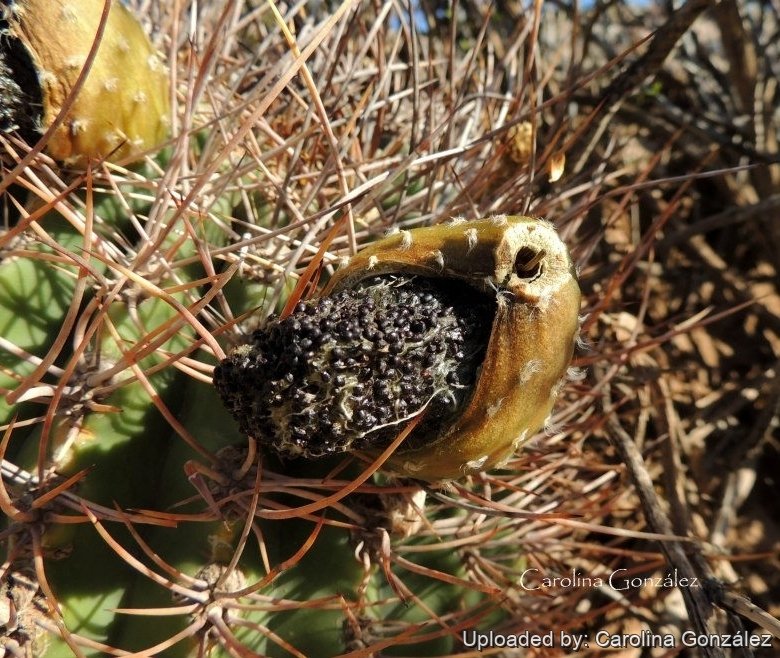
Fruits: Orangish, dehiscent, pulp white.
Seeds: Black, up to 1,5 cm in diameter.
Origin and Habitat
Rio Negro region in Southern Argentina.
Cultivation and Propagation
The Echinopsis melanopotamicus is a summer grower species that offers no cultivation difficulties. Water regularly in summer (but do not overwater ) needs good drainage and very porous soil, keep rather dry in winter. Feed with a high potassium fertilizer in summer. It is quite frost resistant if kept dry (hardy to -10° C). Need a bright exposure, full sun or half shade in summer.
Propagation: Direct sow after last frost, offsets.
Source: Echinopsis melanopotamica, LLIFLE - Encyclopedia of living forms, CC-BY-SA, retrieved 2026-10-25.
Cultivars and forms (1)
Varieties (1)
Gallery