Publication: Repert. Spec. Nov. Regni Veg. 30: 55; et in Repert. Spec. Nov. Regni Veg. Sonderbeih. C, t. 26 (1932).
Description
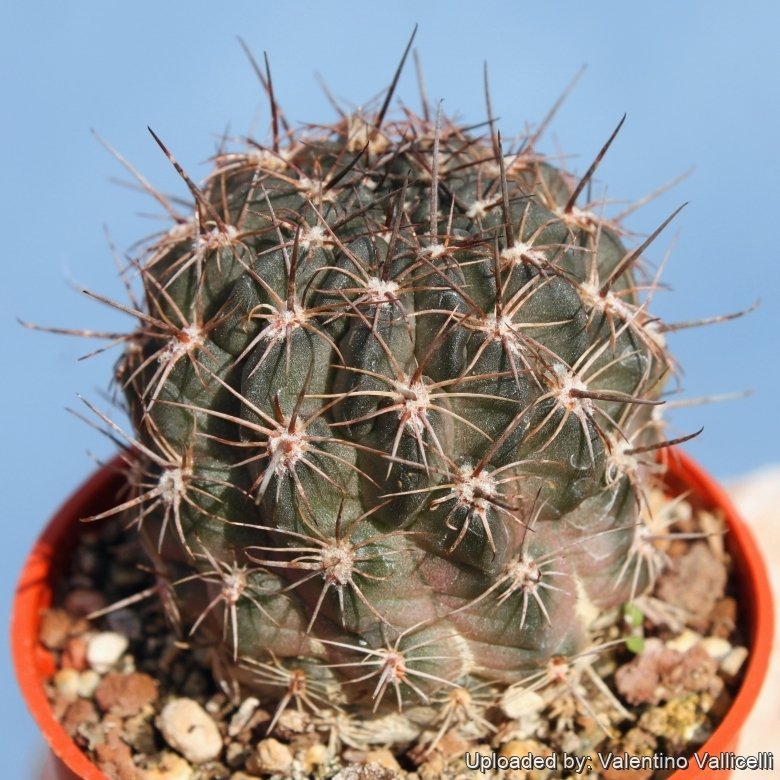
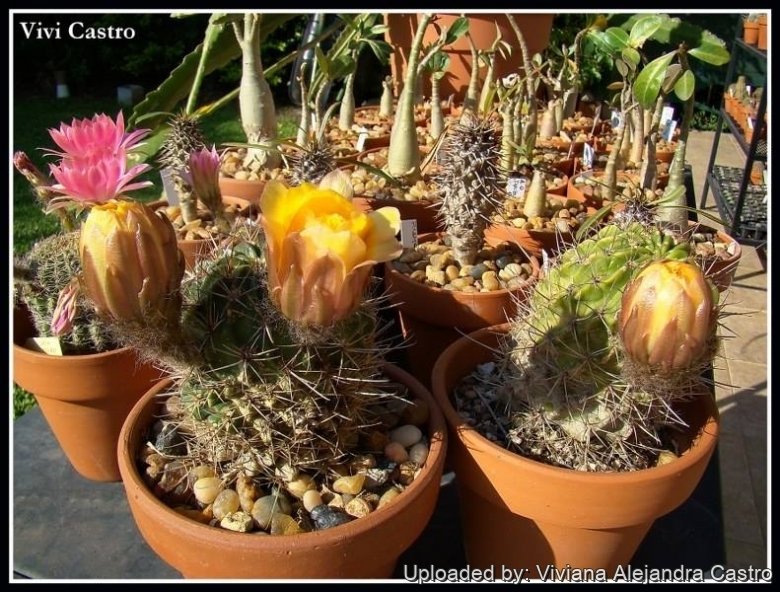
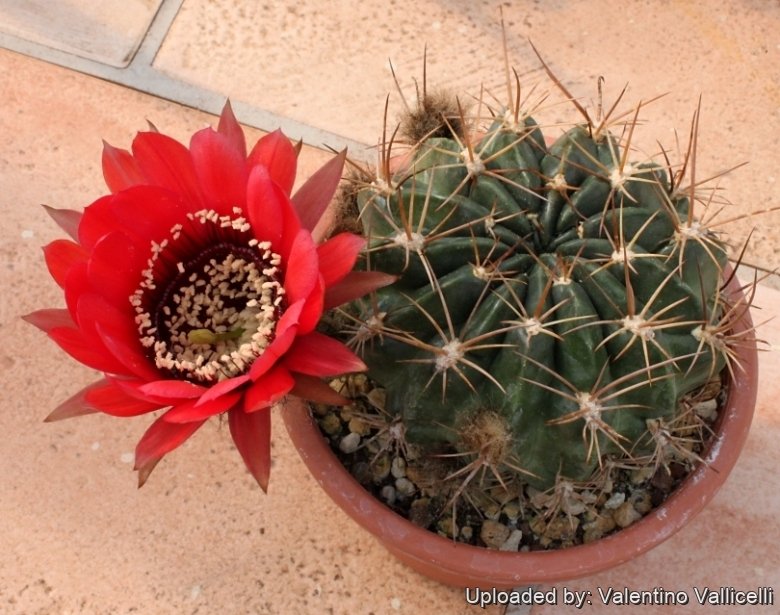
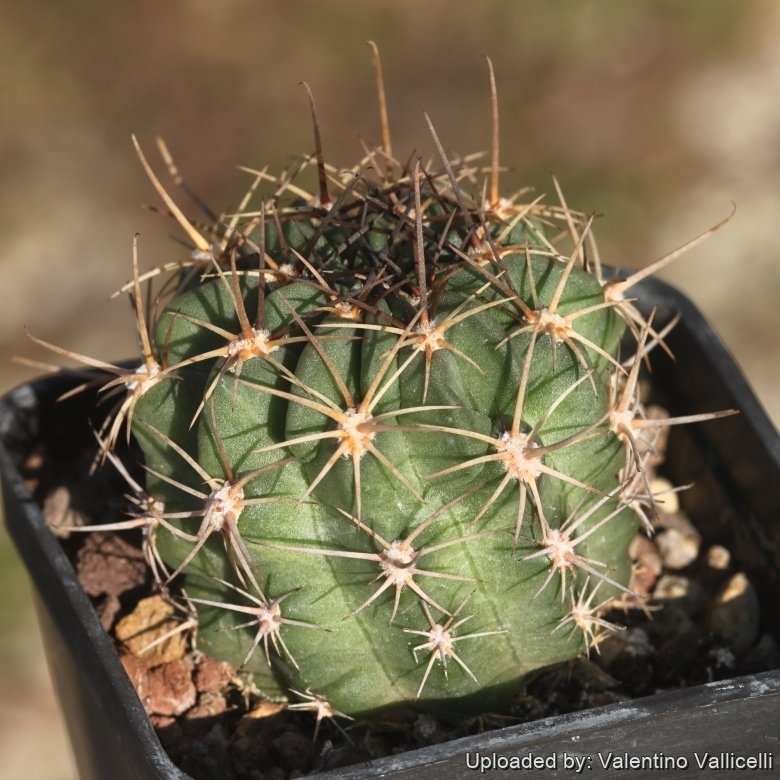
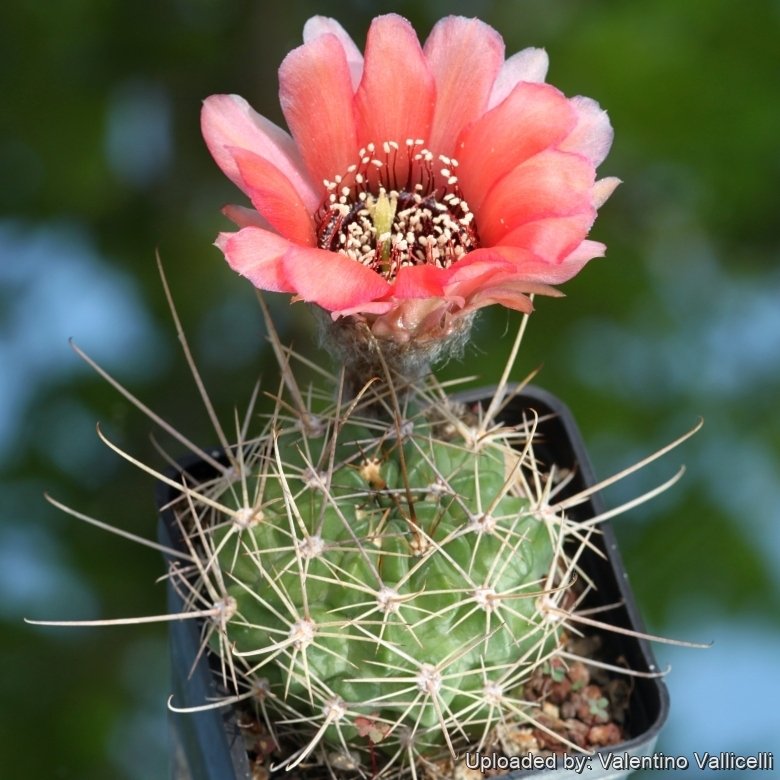
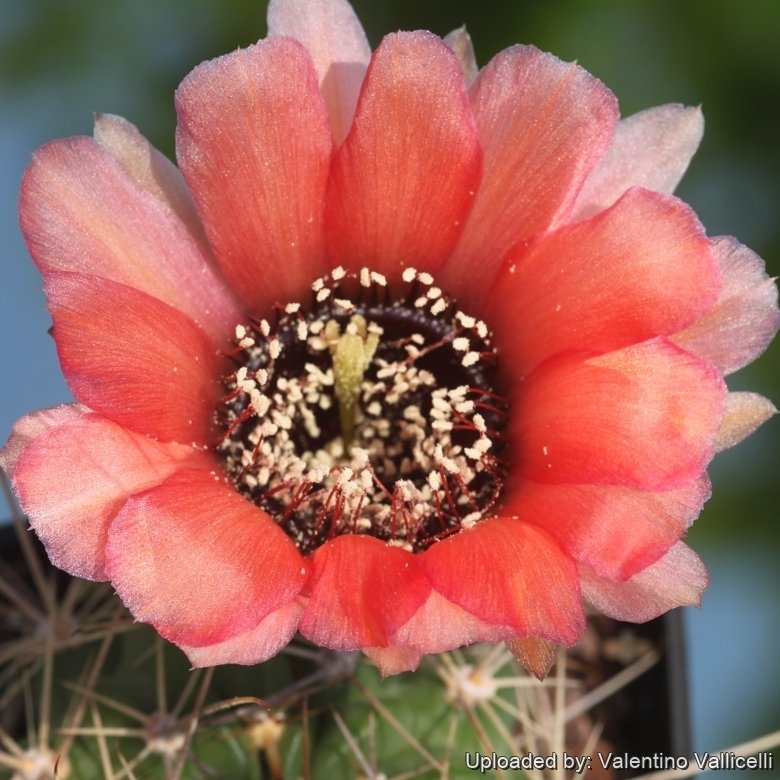
Echinopsis marsoneri (commonly known as Lobivia marsoneri) is a small and very variable cactus that grows solitary or in groups. It has multicoloured and showy blooms.
Stem: Soft, about 5 to 7 cm across, gray-green, green, dark green or tan-green (depending on clones and cultivation conditions), at first spherical, egg-shaped, then elongate as it ages. The crown is slightly depressed and covered with whitish wool
Ribs: 10-14, compressed, running downward and divided into slanting tubercles whose arrangement creates the impression of a wavy line.
Areoles: 3 mm across, with grey-white felt.
Spines: Of different length, usually straight or slightly bent, directed upward, dark brown to blackish in youth, later grey.
Radial spines: Approximately 10 or less, about 1 cm long.
Central spines: 1 to 3, strong, dark, frequently red; the upper spine usually attains a length of 3 cm and is often hooked and thickened basally (but sometime the longest of them may reach the length of 4-6 cm).
Root: Thick taproot.
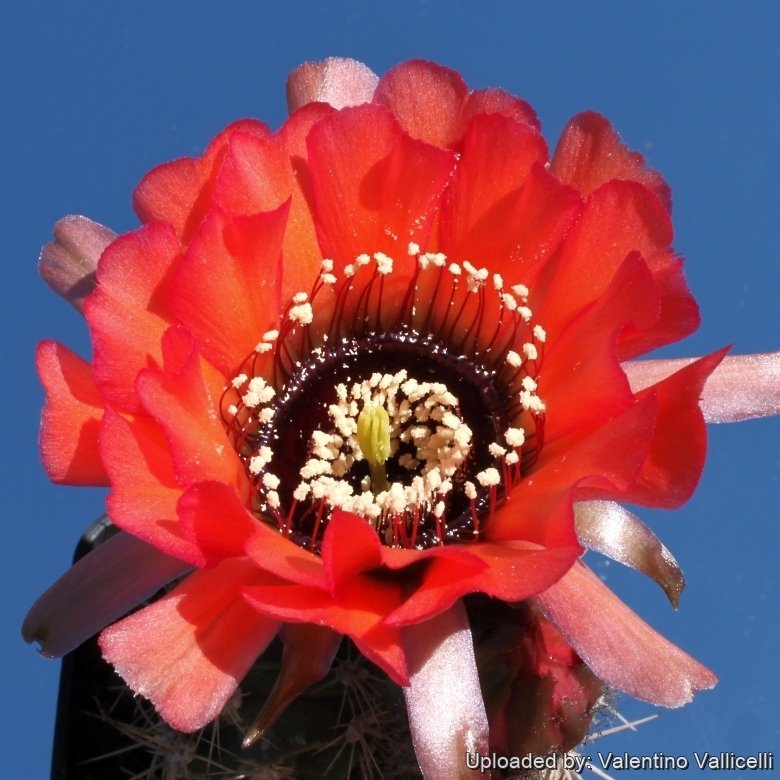
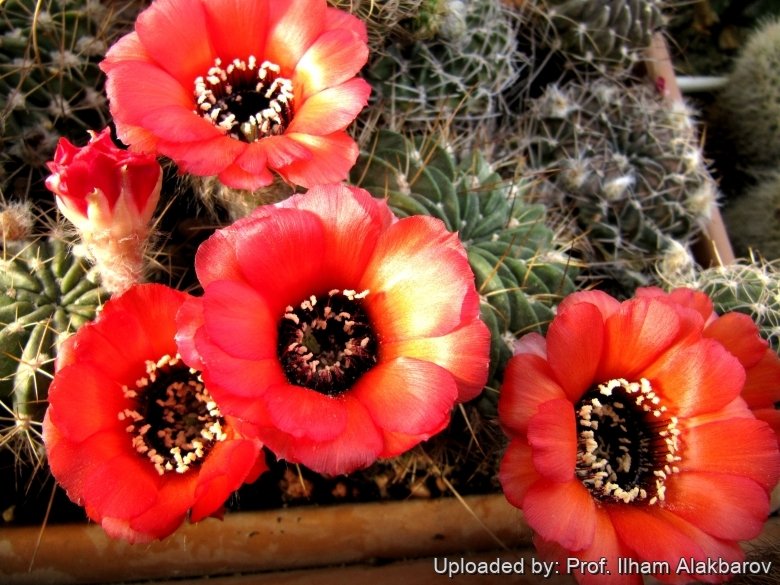
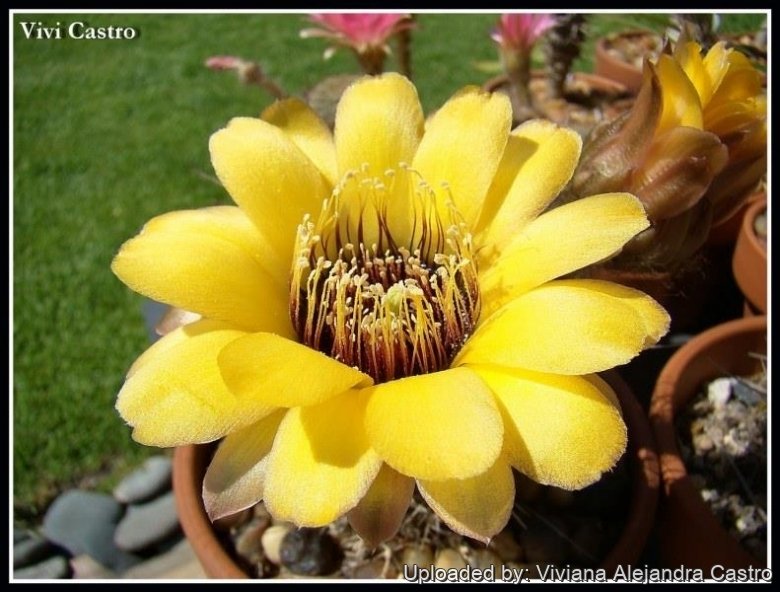
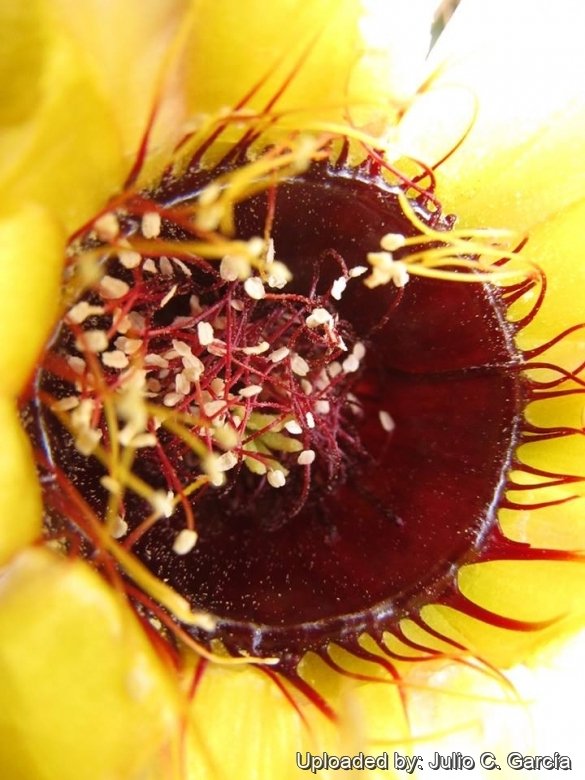
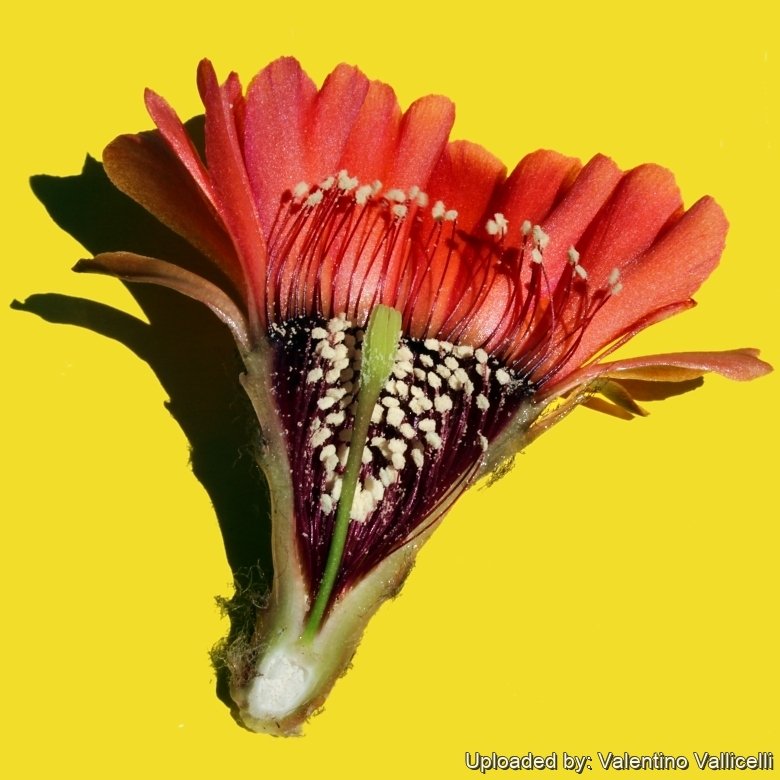
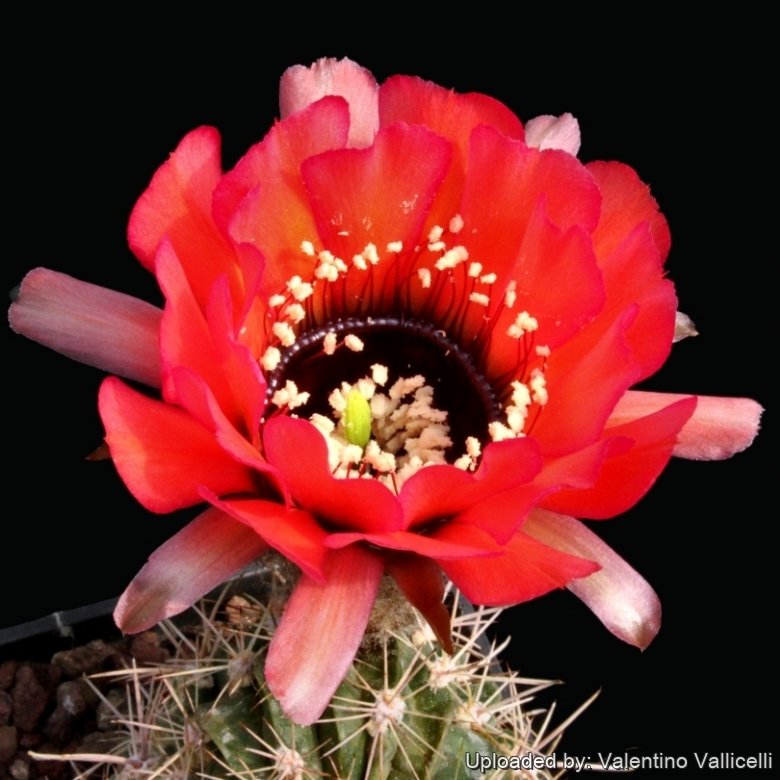
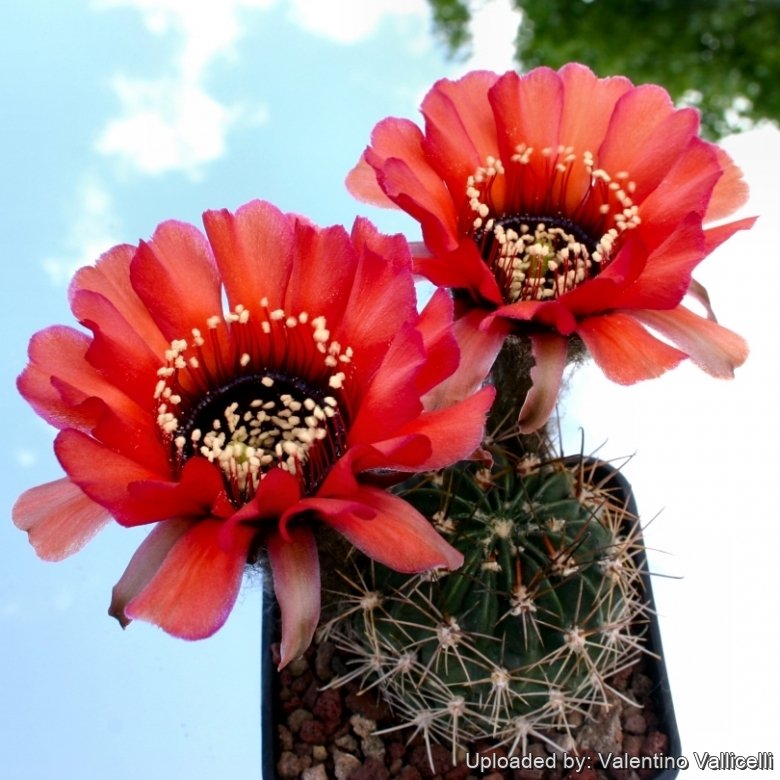
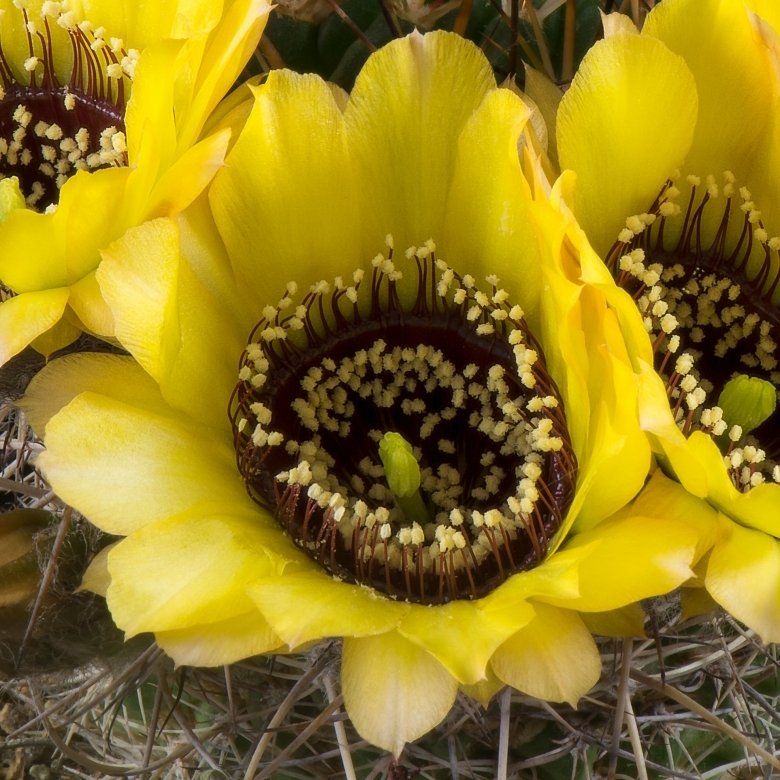
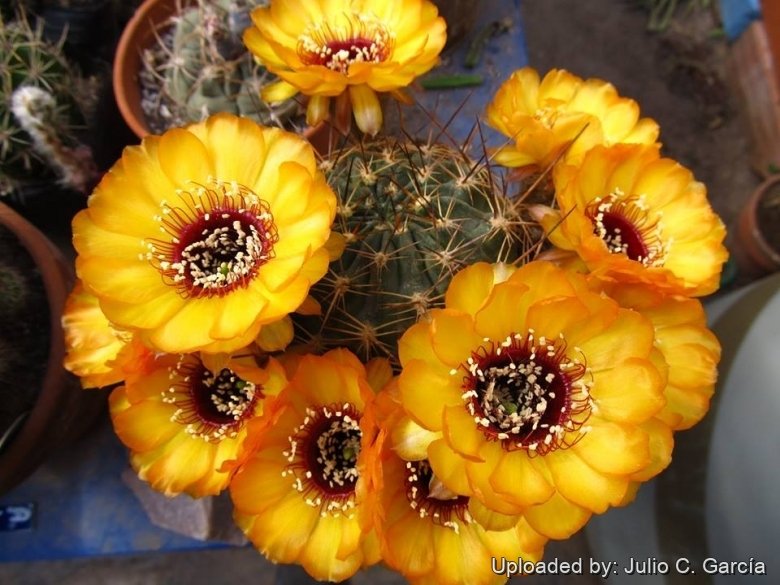
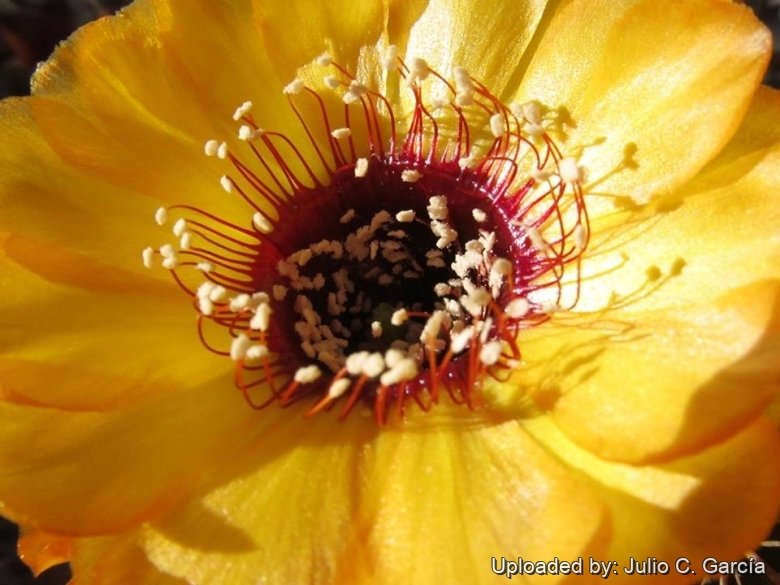
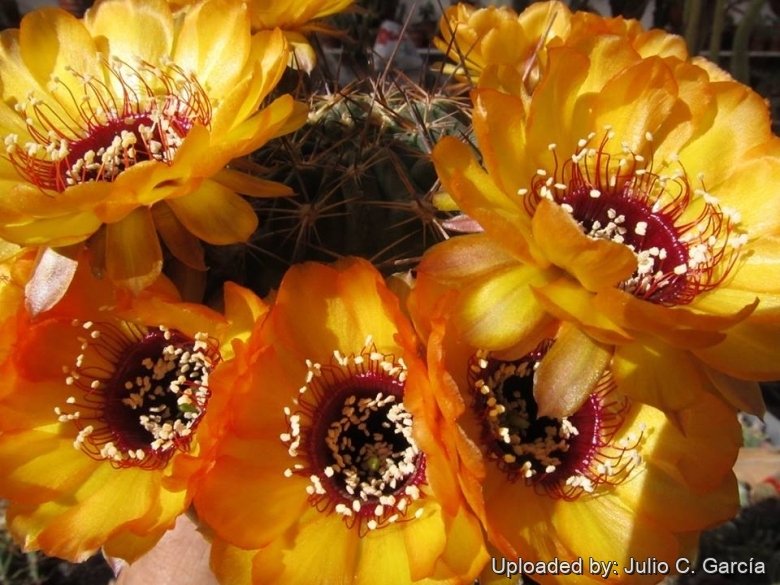
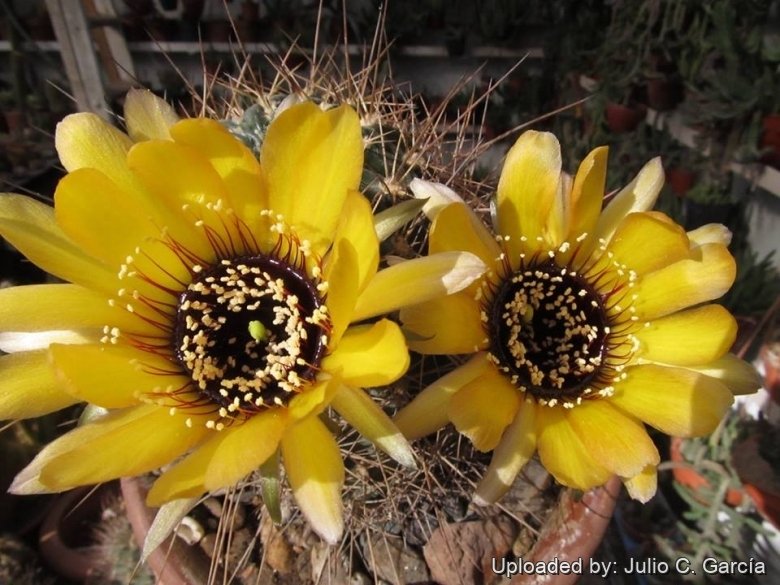
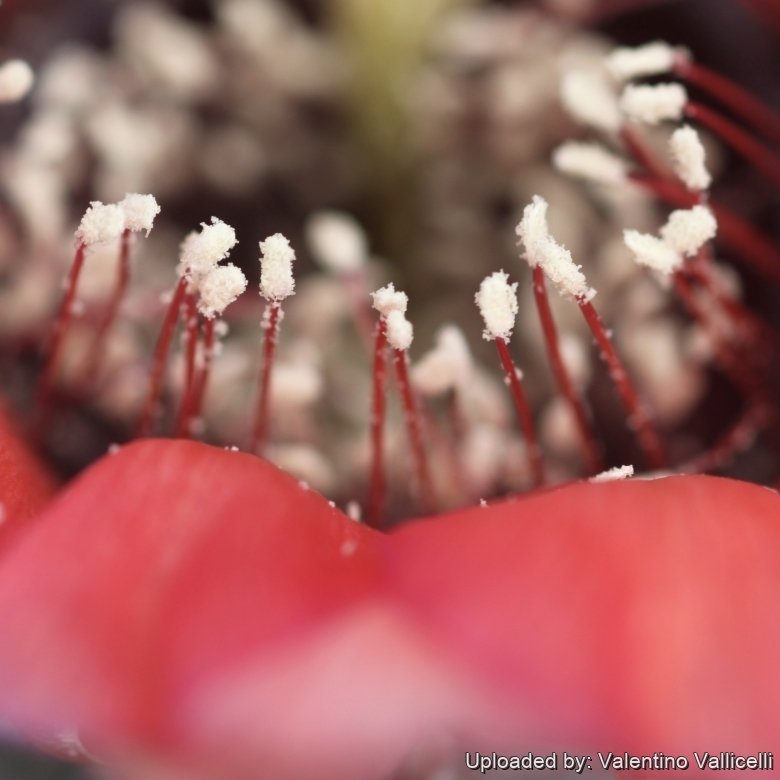
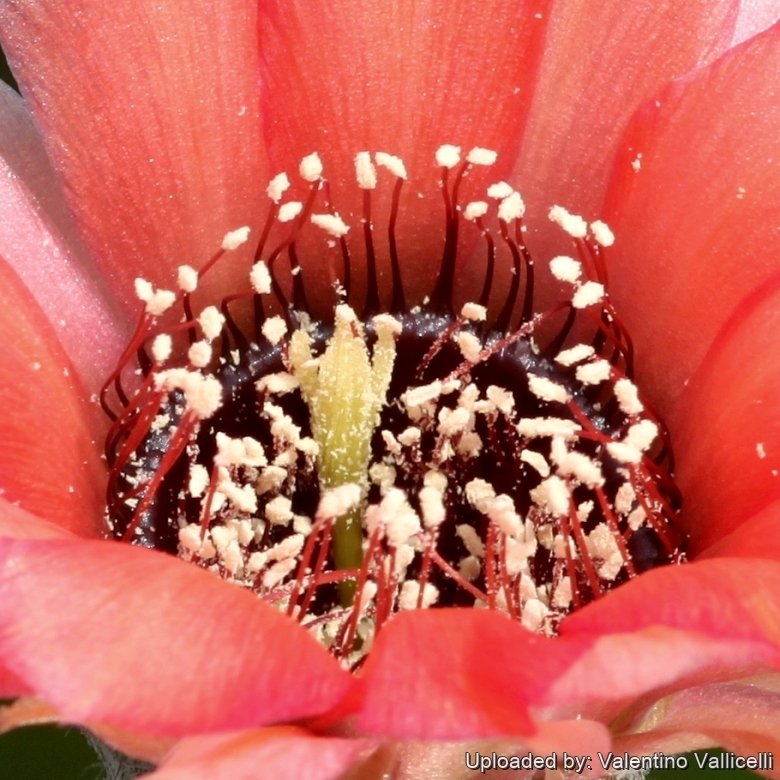
Flowers: Arising from the basal tubercles on the side of the plant, up to 7 cm wide, their colors is very variable, going from yellow to orange, tomato-red, vine-red and also happening through all the imaginable tones of violet. All of them have in common that the hymen (or throat ring of the flower) is always of a very dark purple-violet to black, thickened at the edge and glossy. The stamens are purple, the anthers yellow.
Origin and Habitat
Echinopsis marsoneri has a relatively restricted range in North Argentina (Province of Salta and Jujuy)
Altitude: It grows at around 2800 to 4000 metres in altitude.
Habitat and Ecology: This species grows in rocky areas in the altiplano. It is quite common where it occurs and not subject to any major threat.
Cultivation and Propagation
It is a summer-growing species that offers no cultivation difficulties and regularly shows its small greenish flowers if we provide an adequate winter rest period.
Soil: The substratum must be very porous, slightly acidic, with good drainage.
Repotting: Repotting every 2-3 years. It will need a pot with sufficient depth to allow the tap root. As it is especially prone to rot under-pot in a smaller container filled with very porous compost. Use pot with good drainage.
Watering: Water regularly from March till October (but do not over-water), and keep perfectly dry in winter, at temperatures from 5 to 15 degrees centigrade. In the rest period no high atmospheric humidity!!Care must be taken with watering as they tends to become swollen and untidy in growth habit if given too much water and shade.
Exposition: They require as much sun and light as possible, and pure air availability. Tends to bronze in strong light, which encourages flowering and heavy spine production.
Hardiness: It is quite frost resistant if kept dry (hardy to -5° C or less for short periods of time) Keep drier and cool in winter. The fluctuations of temperature between the day and the night (especially the temperature reduction at night) and fresh soil, greatly contribute to the health of plants. They cannot tolerate stagnant heat.
Fertilization: During the growing season enrich the soil using a fertilizer rich in potassium and phosphorous, but poor in nitrogen, because this chemical element doesn’t help the development of succulent plants, making them too soft and full of water.
Pests & diseases: It may be attractive to a variety of insects, but plants in good condition should be nearly pest-free, particularly if they are grown in a mineral potting-mix, with good exposure and ventilation. Nonetheless, there are several pests to watch for:
- Red spiders: Sensitive to red spider mite. Overhead watering is helpful in controlling mites.
- Mealy bugs: Occasionally mealy bugs they develop aerial into the new growth among the wool with disfiguring results, but the worst types develop underground on the roots and are invisible except by their effects.
- Scales: Scales are rarely a problem.
- Rot: Rot it is only a minor problem with cacti if the plants are watered and “aired” correctly. If they are not, fungicides won’t help all that much.
Propagation: Propagate by seed or shoots. Seeds germinate in 7-14 days at 21-27° C in spring, remove the glass cover gradually as the plants develops and keep ventilated, no full sun for young plants! The seedlings should not be disturbed until they are well rooted, after which they can be planted separately in small pots.
Bibliography
Major references and further lectures
-
Edward Anderson “The Cactus family” Timber Press, Incorporated, 2001
-
James Cullen, Sabina G. Knees, H. Suzanne Cubey “The European Garden Flora Flowering Plants: A Manual for the Identification of Plants Cultivated in Europe, Both Out-of-Doors and Under Glass” Cambridge University Press, 11/Aug/2011
-
David R Hunt; Nigel P Taylor; Graham Charles; International Cactaceae Systematics Group. “The New Cactus Lexicon” dh books, 2006
-
Lowry, M. & Ortega-Baes, P. 2013. Echinopsis marsoneri. In: IUCN 2013. “IUCN Red List of Threatened Species.” Version 2013.2. <www.iucnredlist.org>. Downloaded on 04 January 2014.
From llifle page Andenea gregeri
Description
It is a small cactus that usually grows solitary or in groups.
Stem: Soft, about 5 to 7 cm across, gray-green to dark green, at first spherical, egg-shaped, then elongate as they ages. The crown is slightly depressed and covered with whitish wool
Ribs: 10-14, compressed, running downward and divided into slanting tubercles whose arrangement creates the impression of a wavy line.
Areoles: 3 mm across, with grey-white felt.
Spines: Of different length, usually straight or slightly bent, directed upward, dark brown to blackish in youth, later grey.
Radial spines: Approximately 10 or less, about 1 cm long.
Central spines: 1 to 3, strong, dark, frequently red; the upper spine usually attains a length of 3 cm and is often hooked and thickened basally (but sometime the longest of them may reach the length of 4-6 cm).
Root: Thick taproot.
Flowers: Arising from the basal tubercles on the side of the plant, up to 7 cm wide, their colors is very variable, going from yellow to orange, tomato-red, vine-red and also happening through all the imaginable tones of violet. All of them have in common that the hymen (or throat ring of the flower) is always of a very dark purple-violet to black, thickened at the edge and glossy. The stamens are purple, the anthers yellow.
Origin and Habitat
North Argentina (Province of Salta and Jujuy) at around 3000 m in altitude.
Cultivation and Propagation
It is a summer-growing species that offers no cultivation difficulties. Water regularly in summer (but do not over-water). The fluctuations of temperature between the day and the night (especially the temperature reduction at night) and fresh soil, greatly contribute to the health of plants. They require as much sun and light as possible, and pure air availability. They cannot tolerate stagnant heat. The substratum must be very porous, slightly acidic, with good drainage. They require a deep pot to accommodate a large root system. It is quite frost resistant if kept dry (hardy to -5° C).
Propagation: Propagate by seed or shoots.
Source: Andenea gregeri, LLIFLE - Encyclopedia of living forms, CC-BY-SA, retrieved 2026-10-25.
From llifle page Lobivia chrysantha var. glauca
Cultivation and Propagation
It is a summer-growing species that offers no cultivation difficulties. Water regularly in summer (but do not over-water). The fluctuations of temperature between the day and the night (especially the temperature reduction at night) and fresh soil, greatly contribute to the health of plants. They require as much sun and light as possible, and pure air availability. They cannot tolerate stagnant heat. The substratum must be very porous, slightly acidic, with good drainage. They require a deep pot to accommodate a large root system. It is quite frost resistant if kept dry (hardy to -5° C)
Propagation: Propagate by seed or shoots.
Notes
It’s a hopeless task to cross-pollinate long tubed Echinopsis species and Lobivia (Echinopsis) jajoiana. But nobody has yet had any success in transferring the black throat of Lobivia jajoiana flower to that of an Echinopsis. The attempts to produce a pure white flower with a black throat in Lobivia has also failed.
Source: Lobivia chrysantha var. glauca, LLIFLE - Encyclopedia of living forms, CC-BY-SA, retrieved 2026-10-25.
From llifle page Lobivia chrysantha subs. jajoiana
Description
Echinopsis jajoiana best knowns as Lobivia jajoiana is a very popular small cactus priced for its multicoloured flowers, comprising yellow, orange vine-red and violet. All of them have in common that the hymen (or throat ring of the flower) is always of a very dark purple-violet to black, thickened at the edge and glossy. It grows solitary or in groups.
Stem: Soft, about 5 to 7 cm across, gray-green to dark green, at first spherical, egg-shaped, then elongate as they ages. The crown is slightly depressed and covered with whitish wool.
Ribs: 10-14, compressed, running downward and divided into slanting tubercles whose arrangement creates the impression of a wavy line.
Areoles: 3 mm across, with grey-white felt.
Spines: Of different length, usually straight or slightly bent, directed upward, dark brown to blackish in youth, later grey.
Radial spines: Approximately 10 or less, about 1 cm long.
Central spines: 1 to 3, strong, dark, frequently red; the upper spine usually attains a length of 3 cm and is often hooked and thickened basally (but sometime the longest of them may reach the length of 4-6 cm).
Root: Thick taproot.
Flowers: Arising from the basal tubercles on the side of the plant, up to 7 cm wide, their colors is very variable, going from yellow to orange, tomato-red, vine-red and also happening through all the imaginable tones of violet. All of them have in common that the hymen (or throat ring of the flower) is always of a very dark purple-violet to black, thickened at the edge and glossy. The stamens are purple, the anthers yellow.
Origin and Habitat
Echinopsis jajoiana has a relatively restricted range in North Argentina (Province of Salta and Jujuy)
Altitude: It grows at around 2200 to 4100 metres in altitude.
Habitat and Ecology: This species grows in rocky areas in the altiplano together with Rebutia euanthema, Lobivia sublimiflora and Rebutia pseudodeminuta. It is quite common where it occurs and not subject to any major threat.
Bibliography
Major references and further lectures
-
Edward Anderson “The Cactus family” Timber Press, Incorporated, 2001
-
James Cullen, Sabina G. Knees, H. Suzanne Cubey “The European Garden Flora Flowering Plants: A Manual for the Identification of Plants Cultivated in Europe, Both Out-of-Doors and Under Glass” Cambridge University Press, 11/Aug/2011
-
David R Hunt; Nigel P Taylor; Graham Charles; International Cactaceae Systematics Group. “The New Cactus Lexicon” dh books, 2006
Source: Lobivia chrysantha subs. jajoiana, LLIFLE - Encyclopedia of living forms, CC-BY-SA, retrieved 2026-10-25.
From llifle page Lobivia iridescens
Description
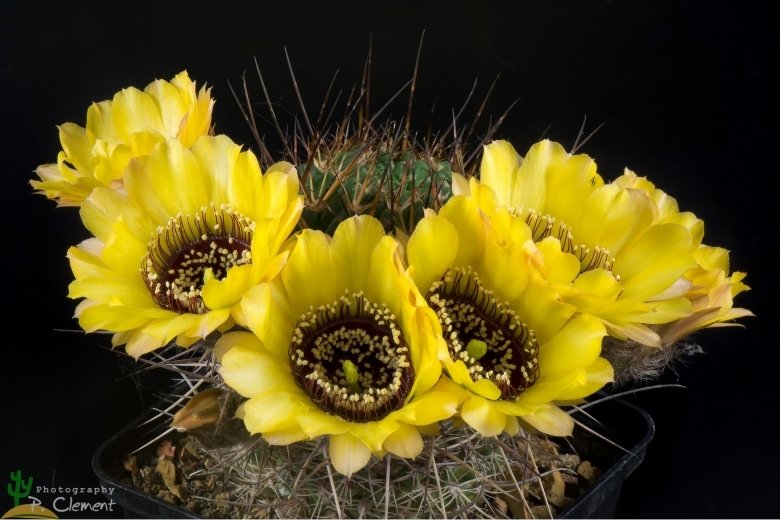
Echinopsis marsoneri var. iridescens| (more often listed under its old name Lobivia iridescens) is a controversial geographical or morphological form of the very variable Lobivia marsoneri with yellow blooms with orange to red to brown throats.
Habit: It is a small cactus that usually grows solitary or in groups.
Stem: Soft, about 5 to 7 cm across, gray-green to dark green, at first spherical, egg-shaped, then elongate as they ages. The crown is slightly depressed and covered with whitish wool
Ribs: 10-14, compressed, running downward and divided into slanting tubercles whose arrangement creates the impression of a wavy line.
Areoles: 3 mm across, with grey-white felt.
Spines: Of different length, usually straight or slightly bent, directed upward, dark brown to blackish in youth, later grey.
Radial spines: Approximately 10 or less, about 1 cm long.
Central spines: 1 to 3, strong, dark, frequently red; the upper spine usually attains a length of 3 cm and is often hooked and thickened basally.
Root: Thick taproot.
Flowers: Arising from the basal tubercles on the side of the plant, up to 7 cm wide, yellow or orangish, but also pink or red. The hymen (or throat ring of the flower) is orange to red to brown, thickened at the edge and glossy.
Origin and Habitat
North Argentina (Province of Jujuy) at around 3000 metres in altitude.
Source: Lobivia iridescens, LLIFLE - Encyclopedia of living forms, CC-BY-SA, retrieved 2026-10-25.
From llifle page Lobivia nigrostoma
Description
Echinopsis jajoiana var. nigrostoma| (Sometimes wrongly spelled “nigristoma”) is best known in cultivation as Lobivia jajoiana var. nigrostoma. Its most noticeable characteristic is the yellow flower with the hymen (or throat ring of the flower) always of a very dark purple-violet to black, thickened at the edge and glossy. Spines are not hooked, needle-like, rather long and not thick. Stems are bluish-green as in the type species.
Habit: It is a small, low growing cactus that grows solitary or sometime in groups.
Stem: Soft, about 5 to 7 cm across, bluish-green, gray-green to dark green, at first spherical, egg-shaped, then elongate as they ages. The crown is slightly depressed and covered with whitish wool
Ribs: 10-14, compressed, running downward and divided into slanting tubercles whose arrangement creates the impression of a wavy line.
Areoles: 3 mm across, with grey-white felt.
Spines: Of different length, usually straight not hooked, directed upward, dark brown to blackish in youth, later grey.
Radial spines: Approximately 10 or less, about 1 cm long.
Central spines: 1 to 3, dark, frequently reddish; the upper spine usually attains a length of 3 cm and is usually not hooked and thickened basally (but sometime the longest of them may reach the length of 4-6 cm).
Root: Thick taproot.
Flowers: Arising from the basal tubercles on the side of the plant, up to 7 cm wide, typically pale to dark golden-yellow, (but also happening on shades of orange or red). All of them have in common that the hymen (or throat ring of the flower) is always of a very dark purple-violet to black, thickened at the edge and glossy. The stamens are purple, the anthers yellow.
Origin and Habitat
Echinopsis jajoiana var. nigrostoma| has a relatively restricted range in North Argentina (Province Jujuy)
Altitude: It grows at around 2400 to 3800 metres in altitude.
Habitat and Ecology: This species grows in rocky areas in the altiplano. It is quite common where it occurs and not subject to any major threat.
Cultivation and Propagation
Echinopsis jajoiana var. nigrostoma| (= Lobivia nigrostoma) is a summer-growing species that offers no cultivation difficulties and regularly shows its small greenish flowers if we provide an adequate winter rest period.
Soil: The substratum must be very porous, slightly acidic, with good drainage.
Repotting: Repotting every 2-3 years. It will need a pot with sufficient depth to allow the tap root. As it is especially prone to rot under-pot in a smaller container filled with very porous compost. Use pot with good drainage.
Watering: Water regularly from March till October (but do not over-water), and keep perfectly dry in winter, at temperatures from 5 to 15 degrees centigrade. In the rest period no high atmospheric humidity!!Care must be taken with watering as they tends to become swollen and untidy in growth habit if given too much water and shade.
Exposition: They require as much sun and light as possible, and pure air availability. Tends to bronze in strong light, which encourages flowering and heavy spine production.
Hardiness: It is quite frost resistant if kept dry (hardy to -5° C or less for short periods of time) Keep drier and cool in winter. The fluctuations of temperature between the day and the night (especially the temperature reduction at night) and fresh soil, greatly contribute to the health of plants. They cannot tolerate stagnant heat.
Fertilization: During the growing season enrich the soil using a fertilizer rich in potassium and phosphorous, but poor in nitrogen, because this chemical element doesn’t help the development of succulent plants, making them too soft and full of water.
Pests & diseases: It may be attractive to a variety of insects, but plants in good condition should be nearly pest-free, particularly if they are grown in a mineral potting-mix, with good exposure and ventilation. Nonetheless, there are several pests to watch for:
- Red spiders: Sensitive to red spider mite. Overhead watering is helpful in controlling mites.
- Mealy bugs: Occasionally mealy bugs they develop aerial into the new growth among the wool with disfiguring results, but the worst types develop underground on the roots and are invisible except by their effects.
- Scales: Scales are rarely a problem.
- Rot: Rot it is only a minor problem with cacti if the plants are watered and “aired” correctly. If they are not, fungicides won’t help all that much.
Propagation: Propagate by seed or shoots. Seeds germinate in 7-14 days at 21-27° C in spring, remove the glass cover gradually as the plants develops and keep ventilated, no full sun for young plants! The seedlings should not be disturbed until they are well rooted, after which they can be planted separately in small pots.
Source: Lobivia nigrostoma, LLIFLE - Encyclopedia of living forms, CC-BY-SA, retrieved 2026-10-25.
From llifle page Echinopsis jajoiana cv. Anemone
Description
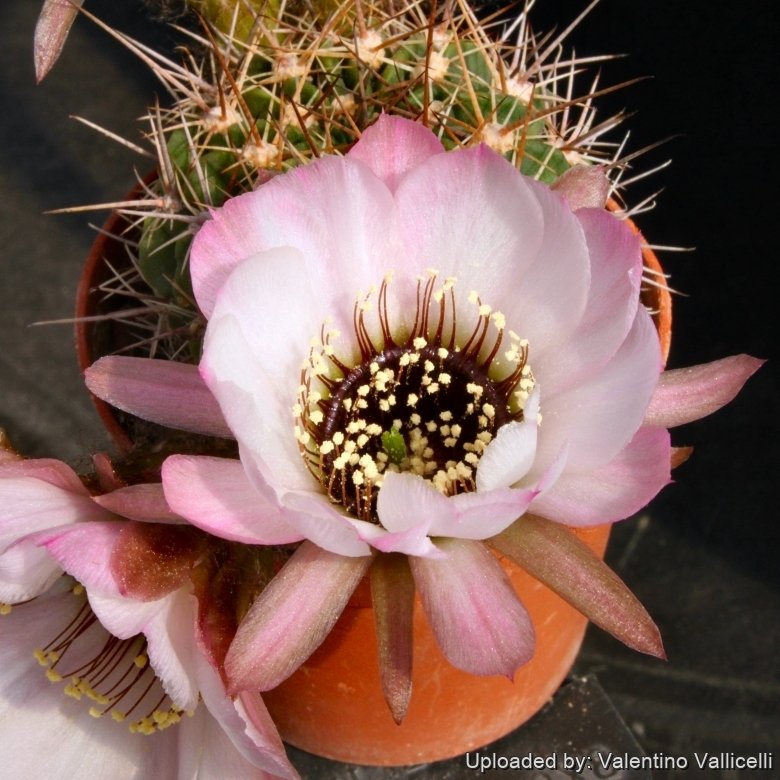
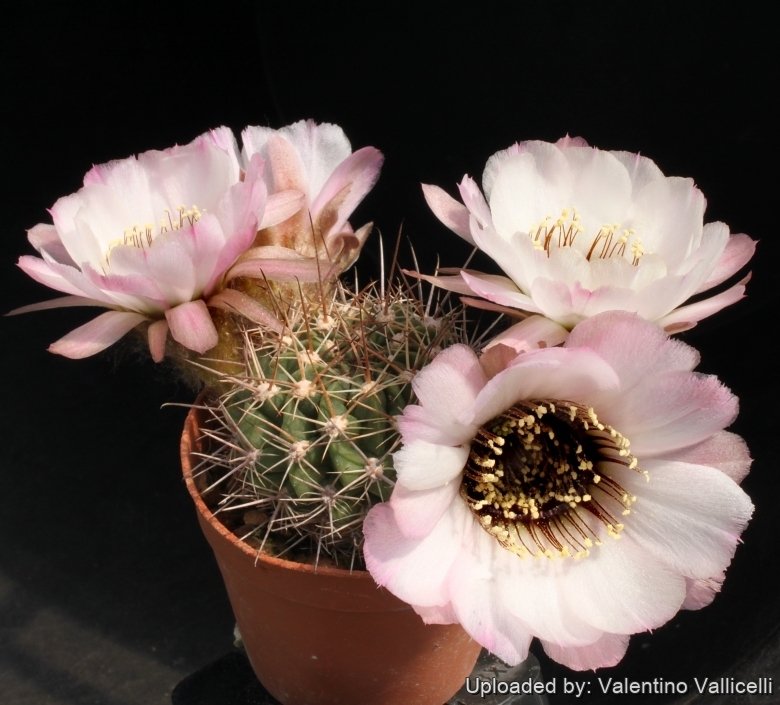
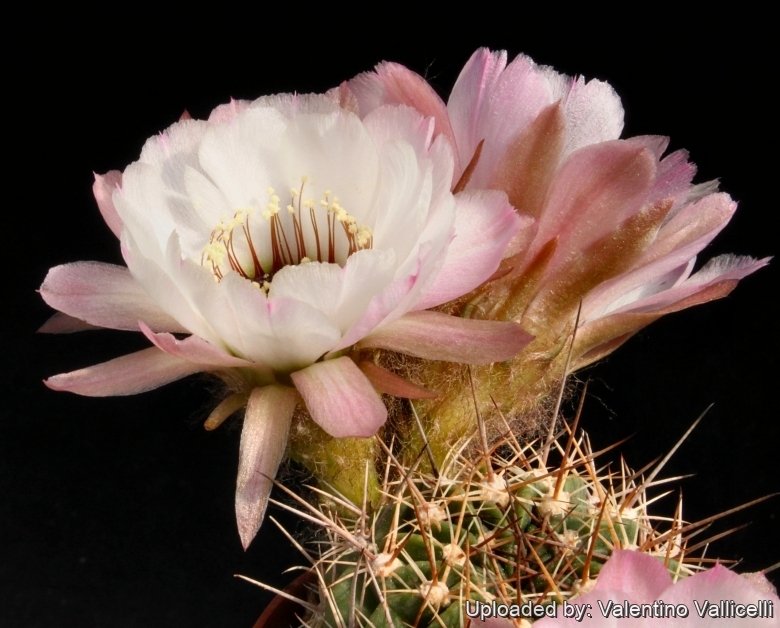
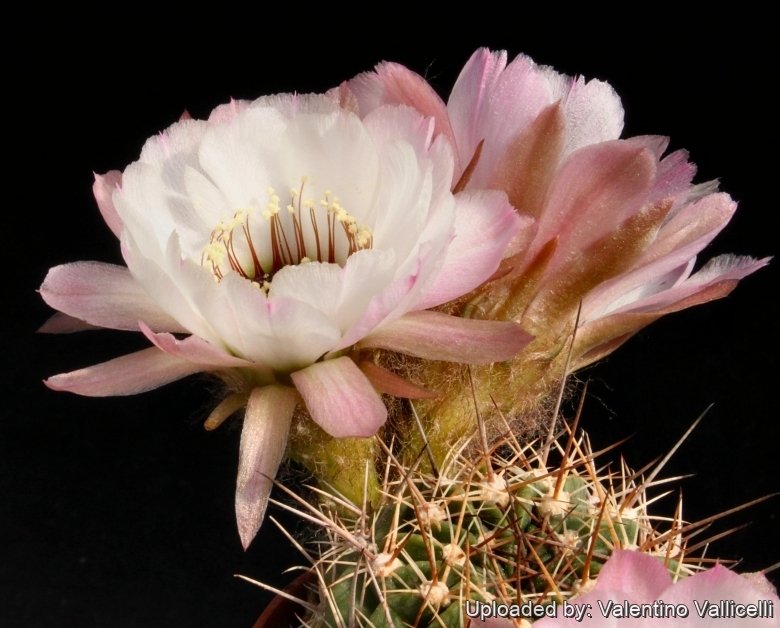
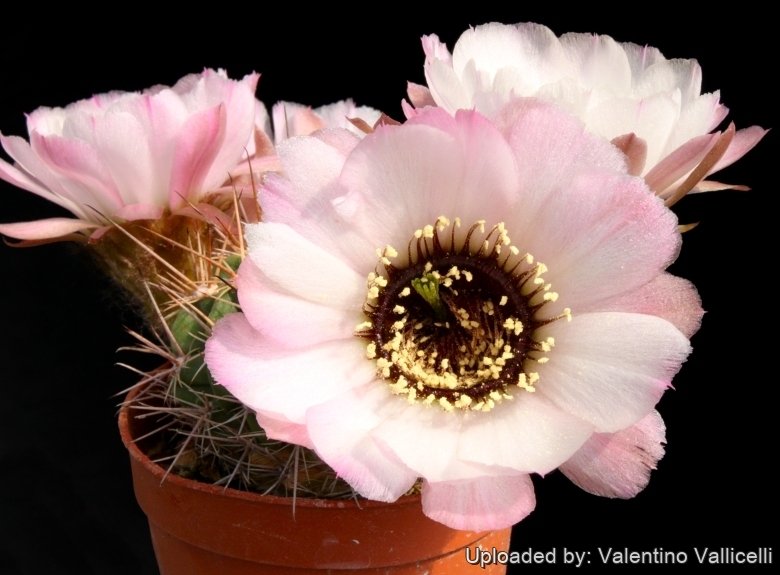
Echinopsis jajoiana cv. Anemone best known as Lobivia jajoiana cv. Anemone is one of best Lobivia cultivars very priced for its unique bicoloured flowers, pale pinkish-white with a contrasting very dark purple-violet to black throat. It is extremely attractive.
Habit: It is a small geophytic cactus that usually grows solitary, but given the best conditions may form small groups.
Stem: Flat globose-spherical, egg-shaped, then elongate as they ages, soft, up to 50-60 mm in diameter, grey-green. The crown is slightly depressed and covered with whitish wool.
Ribs: 10-14 compressed, straight running downward or spiralling and divided into slanting tubercles 10 mm long, chinned and keeled below, whose arrangement creates the impression of a wavy line.
Areoles: Oval, 3-4 mm long, white-tomentose.
Of different length, usually straight or slightly bent, directed upward, dark brown to blackish in youth, later grey.
Radial spines: Approximately 10 or less, about 1 cm long.
Central spines: 1 to 3, strong, dark, frequently red; the upper spine usually attains a length of 3 cm and is often hooked and thickened basally (but sometime the longest of them may reach the length of 4-6 cm).
Root: Thick taproot.
Flowers: Arising from the basal tubercles on the side of the plant, bell-shaped, fragrant, about 50-70 mm long and in diameter, ovary and tube grey/green with violet-brown scales and grey wool, outer perianth segments lanceolate, grey pink with a darker median strip, inner perianth segments spatulate, wavy, very pale pink to almost white with tips suffused with pink, which contrats with the dark purple-violet to black hymen (or throat ring of the flower), which is thickened at the edge and glossy. Filaments black, anthers and pollen pale creamy-yellow. Style and stigma lobes green.
Fruit and seed: As in the other varieties.
Remarks: Similar flower colours has been inherited by some Chamaecereus hybrids too.
Origin and Habitat
Garden origin (Nursery produced cultivar)
Source: Echinopsis jajoiana cv. Anemone, LLIFLE - Encyclopedia of living forms, CC-BY-SA, retrieved 2026-10-25.
From llifle page Lobivia chrysantha var. paucicostata
Origin and Habitat
Jujuy at around 3000 m of altitude.
Source: Lobivia chrysantha var. paucicostata, LLIFLE - Encyclopedia of living forms, CC-BY-SA, retrieved 2026-10-25.
From llifle page Lobivia jajoiana var. aurata
Description
Echinopsis jajoiana var. aurata| best known as Lobivia jajoiana var. aurata is one of the local form of the variable Echinopsis marsoneri . It distinguishes for its more numerous ribs (about 11) and few radial spines (usually less than 4) the flowers are extremely attractive ochre orange to dark purple-red with a purple-violet to black throat. This population is variable.
Habit: It is a small geophytic cactus that usually grows solitary.
Stem: Flat globose-spherical, soft, up to 50 mm in diameter, grey-green, often violet tinged. The crown is slightly depressed and covered with whitish wool
Ribs: 11 compressed, straight running downward or spiralling and divided into slanting tubercles 10 mm long, chinned and keeled below, whose arrangement creates the impression of a wavy line.
Areoles: Oval, 4 mm long, white-tomentose.
Spines: Of different length, usually straight or slightly bent, directed upward, all whitish with brown tips.
Radial spines: 2-3(-4), about 1,5 cm long, thin, somewhat flexible, addpressed and slightly bent downwards.
Central spines: 0-1, strong, pink grey with brown tip up to 2 cm long, slightly curved and thickened basally.
Root: Thick taproot.
Flowers: Arising from the basal tubercles on the side of the plant, bell-shaped, fragrant, about 50 mm long and in diameter, ovary and tube grey/green with violet-brown scales and grey wool, outer perianth segments lanceolate, grey pink with a purple brow median strip, inner perianth segments spatulate, wavy, golden to orange, with a purple-violet to black hymen (or throat ring of the flower), which is thickened at the edge and glossy. Style green, stigma lobes 7 yellow.
Fruit and seed: As in the other varieties.
Origin and Habitat
Argentina, Jujuy, Punta Corral.
Source: Lobivia jajoiana var. aurata, LLIFLE - Encyclopedia of living forms, CC-BY-SA, retrieved 2026-10-25.
From llifle page Lobivia jajoiana var. elegans
Description
Echinopsis jajoiana var. elegans| best known as Lobivia jajoiana var. elegans is one of the local form of the variable Echinopsis marsoneri . It distinguishes for its more numerous ribs (about 10), more numerous radial spines (up to 14) and 1 central spine. The flowers are extremely attractive ochre orange to dark purple-red with a purple-violet to black throat. This population is variable.
Habit: It is a small geophytic cactus that usually grows solitary.
Stem: Soft, up to 60 mm in diameter, grey-green, at first spherical, egg-shaped, then elongate as they ages. The crown is slightly depressed and covered with whitish wool
Ribs: 16 compressed, straight running downward or spiralling and divided into slanting tubercles 8-10 mm long, chinned and keeled below, whose arrangement creates the impression of a wavy line.
Areoles: Oval, 5 mm long, white-tomentose.
Spines: Of different length, usually straight or slightly bent, directed upward, pink white with brown tips, later grey.
Radial spines: 8-14, about 1 cm long, thin, somewhat flexible, slightly
bent, pink white with brown tips.
Central spines: 1, strong, up to 3 cm (but sometimeup 4-6 cm), curved or slightly hooked and thickened basally.
Root: Thick taproot.
Flowers: Arising from the basal tubercles on the side of the plant, about 50 mm long and in diameter, ochre orange to dark purple-red with a purple-violet to black hymen (or throat ring of the flower), which is thickened at the edge and glossy.
Fruit and seed: As in the other varieties.
Origin and Habitat
Argentina, Jujuy, west at high elevations including Tilcara.
Source: Lobivia jajoiana var. elegans, LLIFLE - Encyclopedia of living forms, CC-BY-SA, retrieved 2026-10-25.
From llifle page Echinopsis jajoiana f. cristata
Description
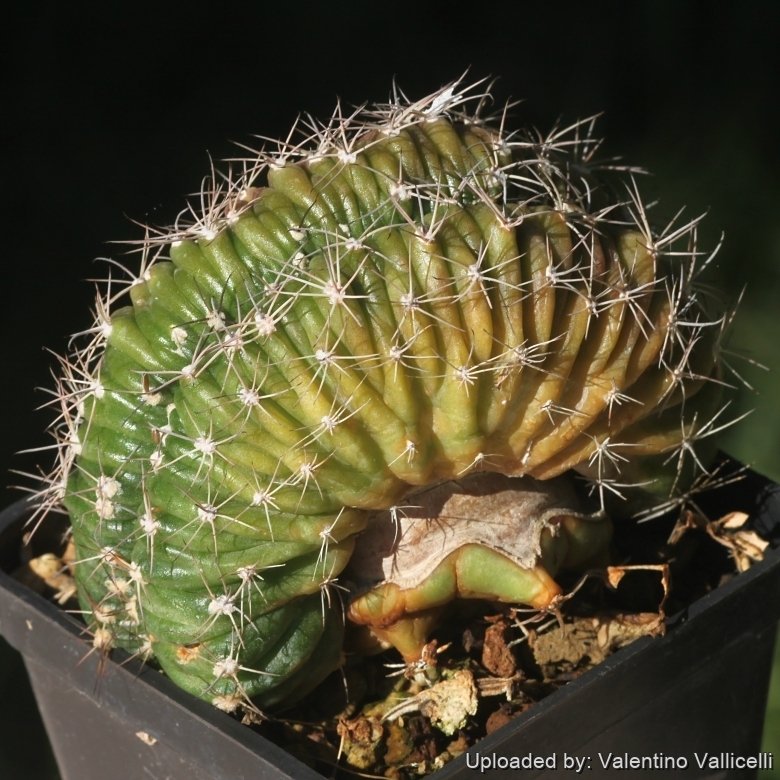
The standard columnar Echinopsis jajoiana (commonly known as Lobivia jajoiana) is a small cactus that usually grows solitary or in groups that is very popular and widely grown for its peculiar dark throated flowers. The beautiful crested form here depicted is still rare in cactus collection.
Stem: Fan shaped, forming tangled mounds with time, soft, about 5 to 7 cm in width, grey-green to dark green. The line meristem is slightly depressed and covered with whitish wool
Ribs: Compressed, running downward.
Areoles: 3 mm across, with grey-white felt.
Spines: Of different length, usually straight or slightly bent, directed upward, dark brown to blackish in youth, later grey.
Radial spines: Approximately 10 or less, about 1 cm long.
Central spines: 1 to 3, strong, dark, frequently red; the upper spine usually attains a length of 3 cm and is often hooked and thickened basally (but often shorter and not hooked).
Root: Thick taproot.
Flowers: Arising from the basal tubercles on the side of the plant, up to 7 cm wide, their colors is very variable, going from yellow to orange, tomato-red, vine-red and also happening through all the imaginable tones of violet. All of them have in common that the hymen (or throat ring of the flower) is always of a very dark purple-violet to black, thickened at the edge and glossy. The stamens are purple, the anthers yellow.
Cultivation and Propagation
It is not too difficult in a greenhouse, although grows quite slowly. It is usually seen as a grafted plant but can grow on its own roots too.
Soil: Use a mineral well permeable soil with little organic matter (peat, humus).
Exposure: They need a good amount of light shade to full sun this help to keep the plants healthy, although slow growth.
Watering: Water sparingly from March till October (weekly during summertime, if the weather is sunny enough), with a little fertilizer added. Less or no water during cold winter months, or when night temperatures remain below 10° to prevent root loss. It is sensitive to overwatering (rot prone).
Fertilization: Feeding may not be necessary at all if the compost is fresh then, feed in summer only if the plant hasn’t been repotted recently. Do not feed the plants from September onwards as this can cause lush growth which can be fatal during the darker cold months.
Hardiness: Keep perfectly dry in winter at temperatures from 5 to 15 degrees centigrade. (but it is relatively cold resistant and hardy to -5° C, or possibly colder for short periods) In the rest period no high atmospheric humidity!! (Temperature Zone: USDA 9-11)
Crested growth: Unlike ‘monstrose’ varieties of plants, where the variation from normal growth is due to genetic mutation, crested growth can occur on normal plants. Sometimes it’s due to variances in light intensity, or damage, but generally the causes are unknown. A crested plant may have some areas growing normally, and a cresting plant that looks like a brain, may revert to normal growth for no apparent reason. If you have any of the crested part left you need to remove the normal growth and leave the crested part behind this will need to be done regularly.
Propagation: Grafting or cuttings. Plants are usually grafted onto column-shaped cacti but proved to be able to produce their own roots if degrafted. Cuttings will take root in a minimum temperature of 20° C (but better in hot weather). Cuttings of healthy shoots can be taken in the spring and summer. Cut the stem with a sharp, sterile knife, leave the cutting in a warm, dry place for a week or weeks (depending on how thick the cutting is) until a callus forms over the wound. Once the callus forms, the cutting may be inserted in a container filled with firmed cactus potting mix topped with a surface layer of coarse grit. They should be placed in the coarse grit only; this prevents the cut end from becoming too wet and allows the roots to penetrate the rich compost underneath. The cuttings should root in 2 to 6 weeks. Large crested piece must be placed on the soil surface without burying the plant base down in the soil.
Source: Echinopsis jajoiana f. cristata, LLIFLE - Encyclopedia of living forms, CC-BY-SA, retrieved 2026-10-25.
Gallery