Publication: Monatsschr. Deutsch. Kakteen-Ges. 3: 272. 1931
Description
Usually simple or rarely basally branched. This species reputedly grows almost completely hidden below the soil (in habitat), and is extremely hard to find unless it is in bloom. Three subspecies are recognized, the nominate form, subsp. haemantha (Rausch) M.Lowry and subsp. rossii (Boed.) G.Navarro.
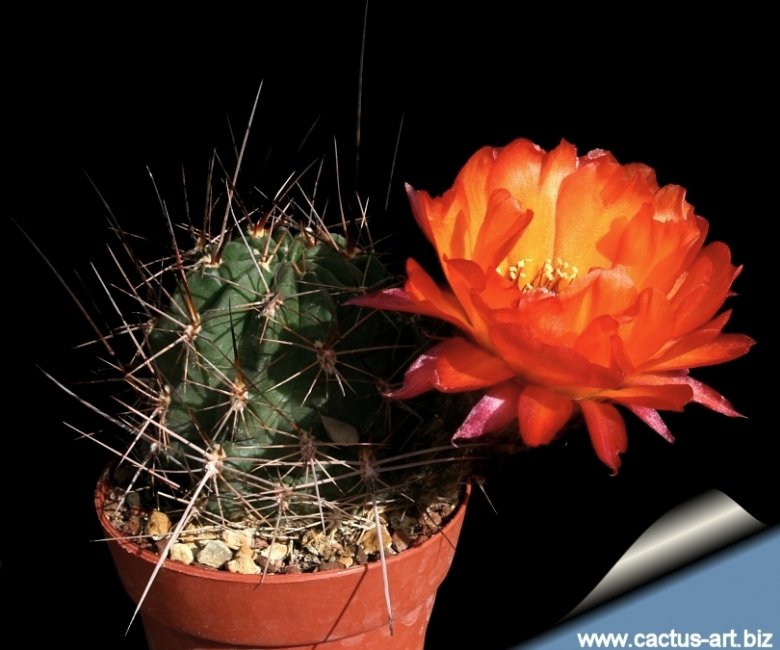
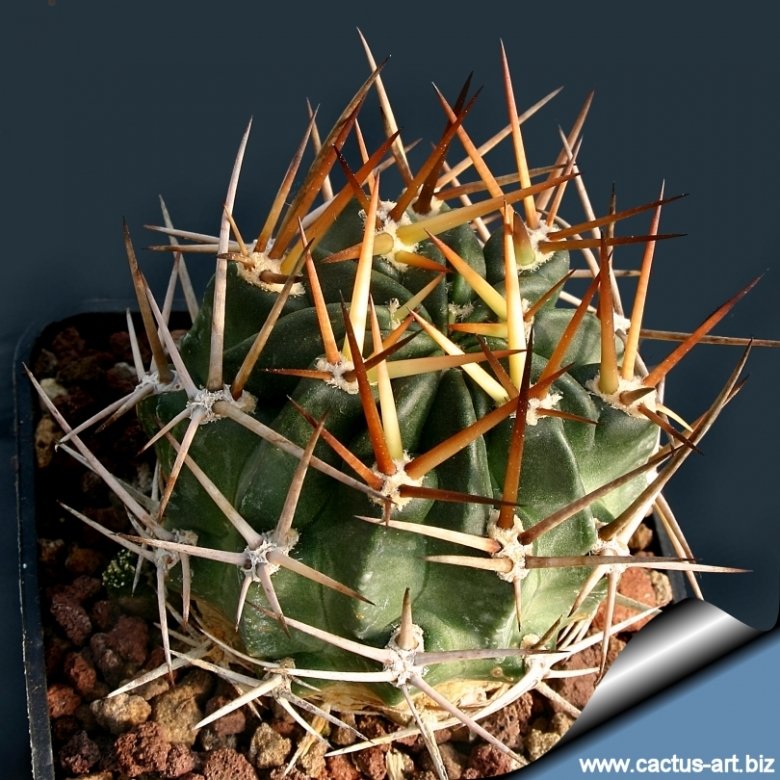
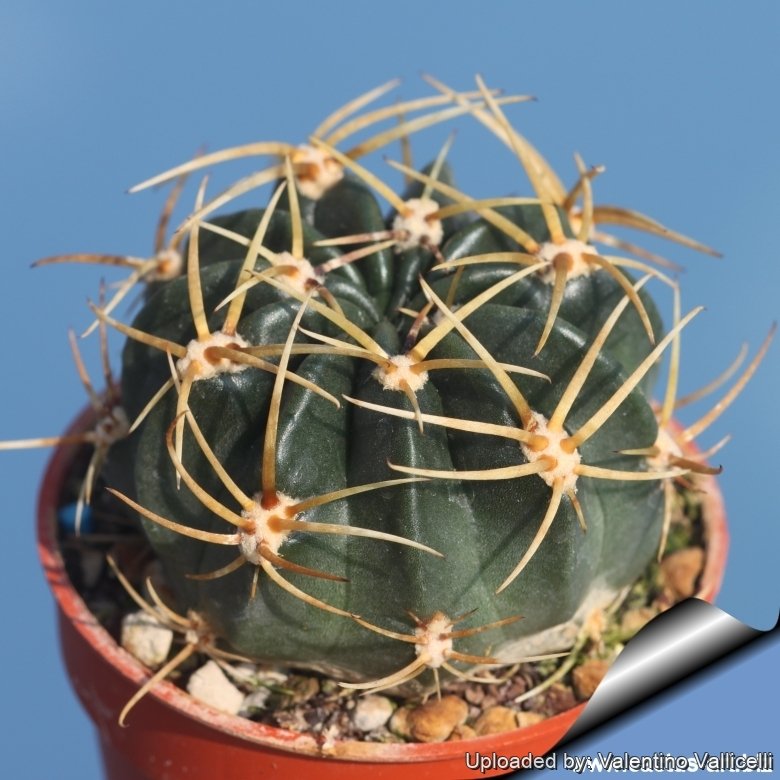
Stem: Globose, dull green, thick and growing mostly underground, but the stem of the plant in cultivation is usually globular or ovoidal and aerial. Dimension: 8-15 cm tall, 4-5 cm in diameter.
Ribs: 16 to 17, straight or spiralled.
Areoles: Oval filled, with grey wool in youth.
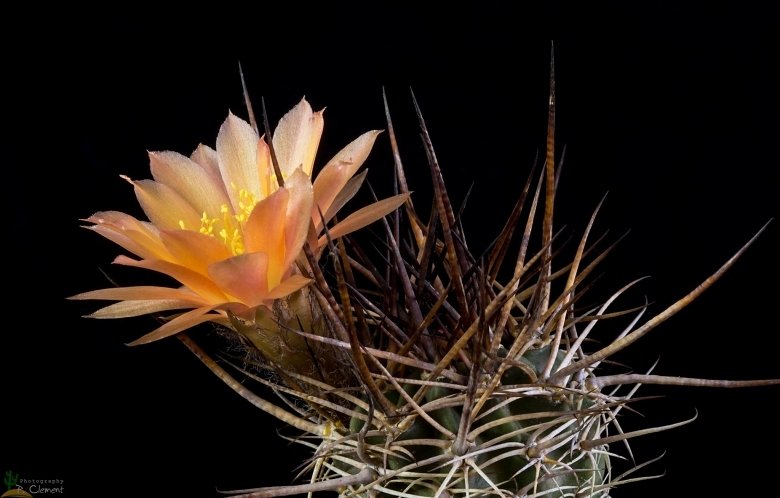
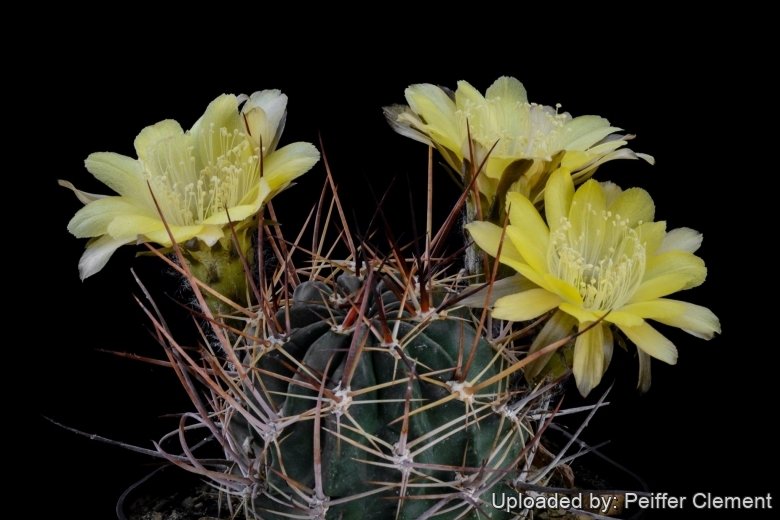
Radial spines: 4 to 7 (or more), flatly spreading, yellow to white with black tips, straight, subulate, dagger‑shaped, up to 3 cm (or more) long, though variable from plant to plant.
Central spines: lacking.
Roots: Long, fat, tuberose taproot.
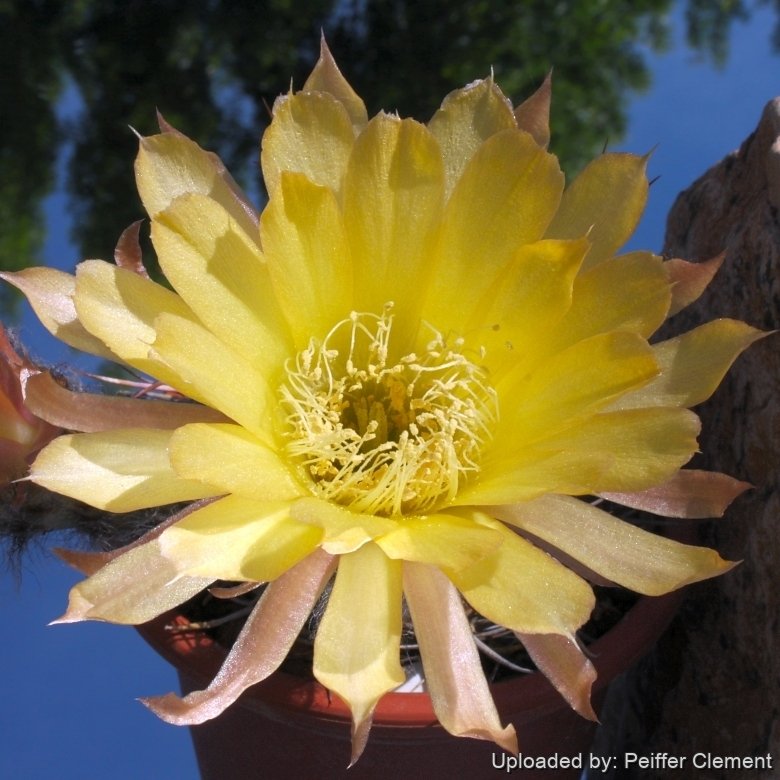
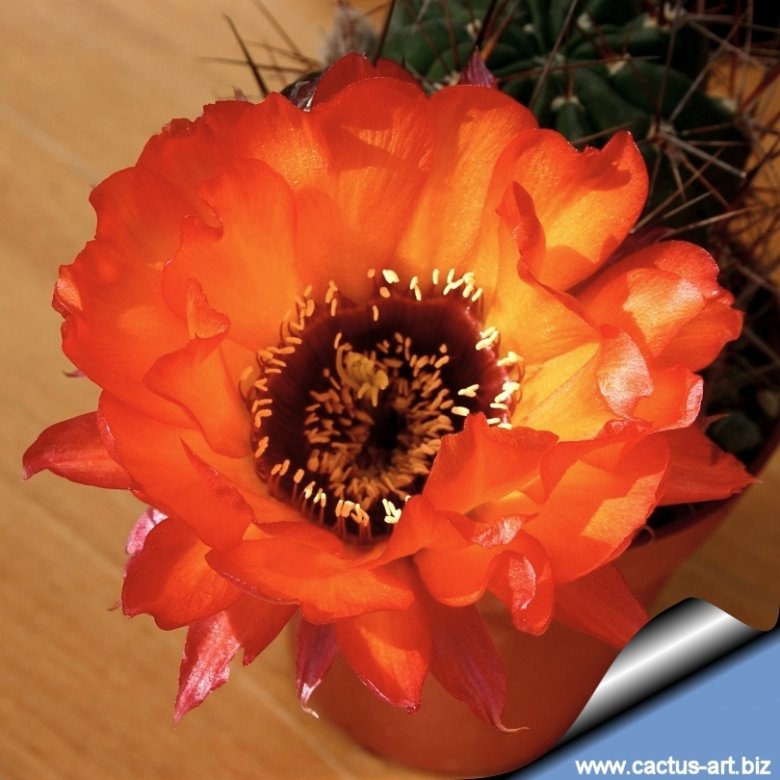
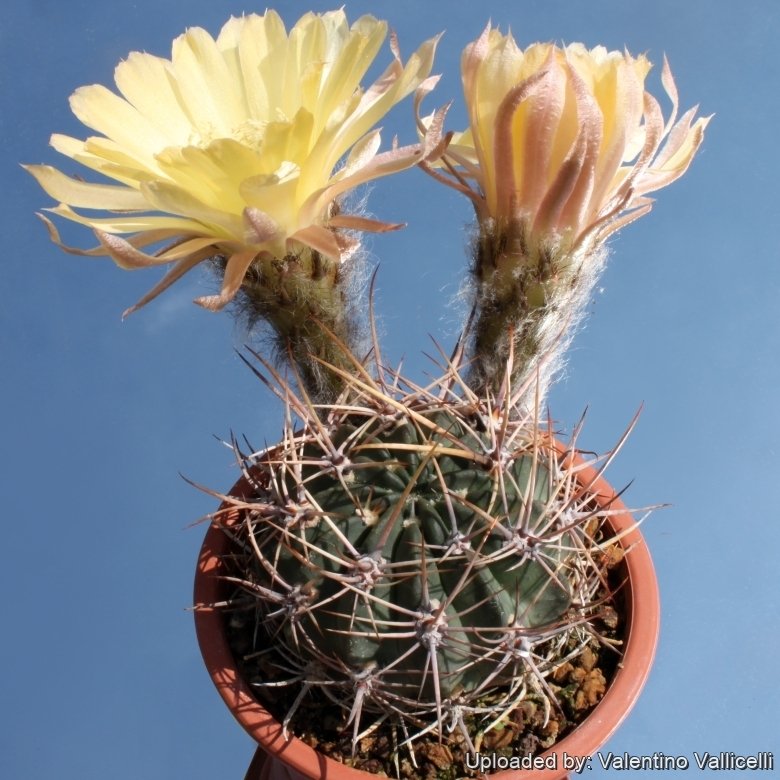
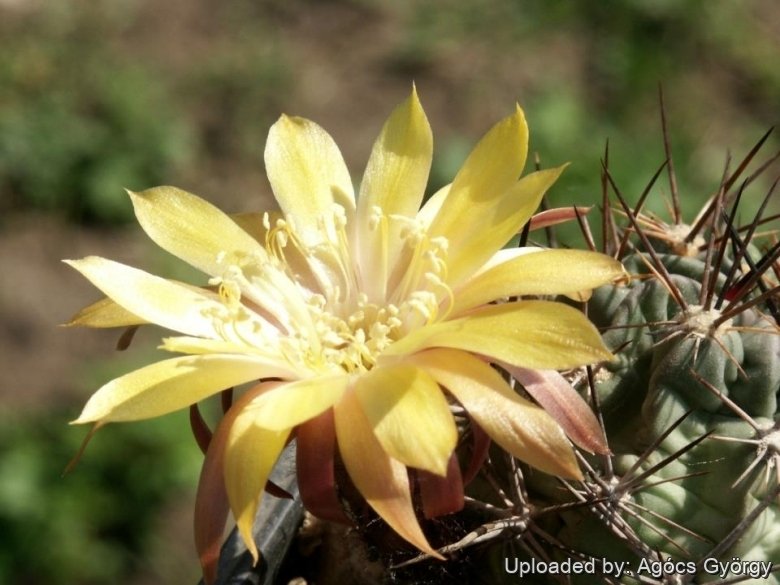
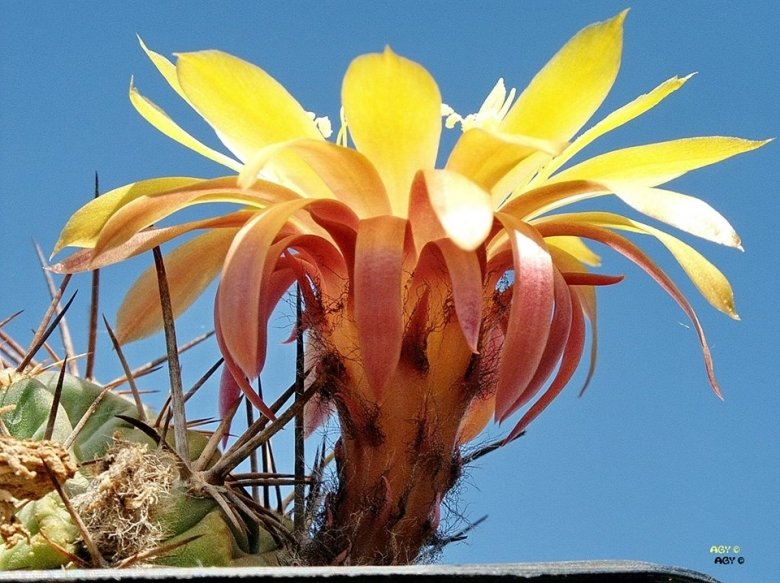
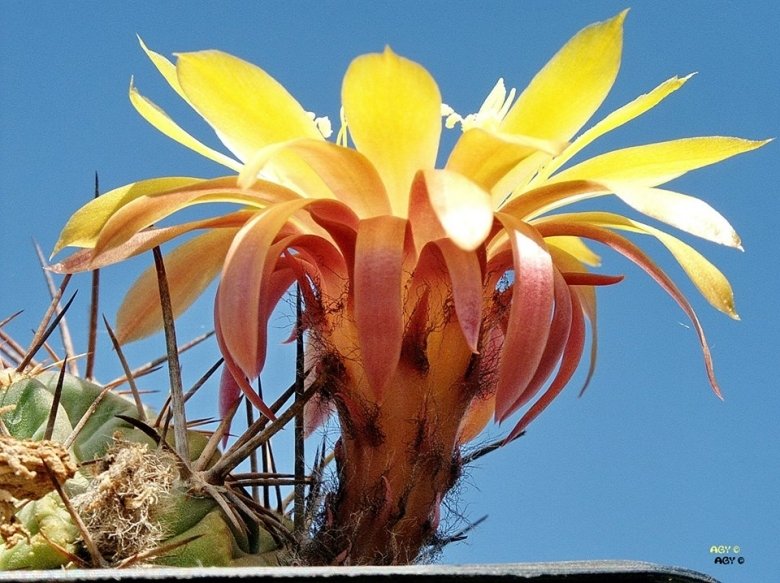
Flower: Diurnal, scented, funnelform, yellow, pink, orange or red, up to 4,5 cm long and in diameter.
Fruits: Green, small, globose, semidry and dehiscent.
Origin and Habitat
Southern Bolivia (Chuquisaca, Potosí and Tarija), northern Argentina (Jujuy).This species is common in the northern subpopulation.
Altitude: (3000-)3400-3800(4100) metres above sea level.
Habitat and Ecology: The species grows in puna on rocky soils. The only threat is urbanization close to the southern subpopulation occurring in Argentina.
Cultivation and Propagation
is a summer-growing species that offers no cultivation difficulties. Water regularly in summer (but do not over-water). It is rot prone, and should be planted in a shallow pot. Like most Echinopsis cultivated for their blossoms, it needs a soil mixture that’s a little richer than for the average cactus, still with excellent drainage. Keep rather dry in winter.
It is quite frost resistant if kept dry (hardy to -5°(-18°) C Outside full sun or afternoon shade, inside it needs bright light, and some direct sun.
Propagation: Sow directly after last frost, offsets (if available).
Bibliography
Major references and further lectures
-
Lowry, M. & Demaio, P. 2013. Echinopsis pugionacantha. The IUCN Red List of Threatened Species. Version 2015.1. <www.iucnredlist.org>. Downloaded on 19 June 2015.
-
David R Hunt; Nigel P Taylor; Graham Charles; International Cactaceae Systematics Group. “The New Cactus Lexicon” dh books, 2006
-
Edward Anderson “The Cactus family” Timber Press, Incorporated, 2001
-
James Cullen, Sabina G. Knees, H. Suzanne Cubey “The European Garden Flora Flowering Plants: A Manual for the Identification of Plants Cultivated in Europe, Both Out-of-Doors and Under Glass” Cambridge University Press, 11/Aug/2011
From llifle page Lobivia culpinensis
Description
Lobivia pugionacantha v. culpinensis (firstly described as Lobivia culpinensis by F.Ritter in 1966) is a local or morphological form of the widespread and variable Echinopsis pugionacantha (syn: Lobivia pugionacantha). It has a globose, dull green, thick stem that grows mostly underground, but the stem of the plant in cultivation is usually globular or ovoidal and aerial. Flowers are diurnal, scented, funnelform, yellow, pink, orange or red, up to 4,5 cm long and in diameter. However the distinguishing characteristics of Lobivia pugionacantha v. culpinensis, appear to fall within the natural variation of Lobivia pugionacantha, and the two plants are not readily distinguishable, if not for the geographical provenance.
Origin and Habitat
Culpina to Salitre, Sud Cinti, Chuquisaca, and Tupiza to Impora, East of Mal Paso, Potosi, Bolivia
Altitude range: 2800-4100. Accompanying cactus species can be Parodia subterranea, Rebutia atrovirens, Oreocereus celsianus, Cumulopuntia rossiana, Echinopsis ferox and Austrocylindropuntia verschaffeltii.
Cultivation and Propagation
Lobivia pugionacantha var. culpinensis is a summer grower species that offers no cultivation difficulties. Water regularly in summer (but do not over-water). It needs a large pot to accommodate a large root system. Use a very draining and porous substrate, since it’s natural habitat is in volcanic soil, it has adapted to more acidic conditions; keep rather dry in winter.
Hardiness: It is quite frost resistant if kept dry (hardy to -5° C). Outside full sun or afternoon shade, inside needs bright light, and some direct sun.
Propagation: Propagate by seed or shoots.
Source: Lobivia culpinensis, LLIFLE - Encyclopedia of living forms, CC-BY-SA, retrieved 2026-10-25.
From llifle page Lobivia pugionacantha var. versicolor
Description
Lobivia pugionacantha var. versicolor is a local or morphological form by Cucho lngenio The plants are varying spined with long and often very strong spines and only yellow flowers.
Origin and Habitat
Lobivia pugionacantha v. versicolor is endemic to Potosi-Khuchu Ingenio, Bolivia.
Altitude range: 3800 metres above sea level.
Bibliography
Major references and further lectures
- Walter Rausch, “Lobivia: The Day Flowering Echinopsidinae from a Geographical Distribution Point of View,” Volumes 1-3, R. Herzig, 1975
Source: Lobivia pugionacantha var. versicolor, LLIFLE - Encyclopedia of living forms, CC-BY-SA, retrieved 2026-10-25.
Cultivars and forms (1)
Subspecies (1)
Gallery