Publication: I.O.S. Bull. 3(3): 98 (1974).
Description
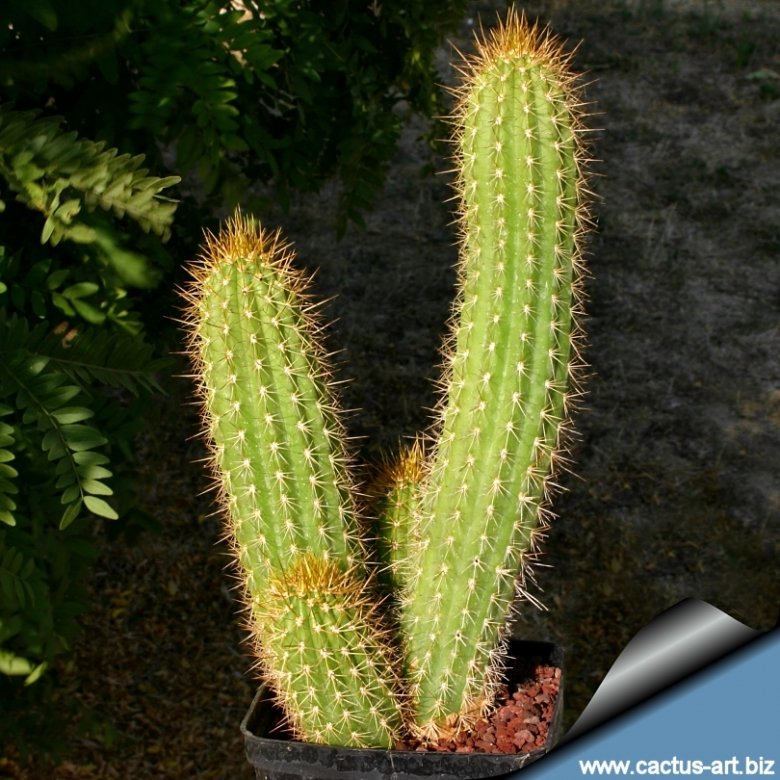
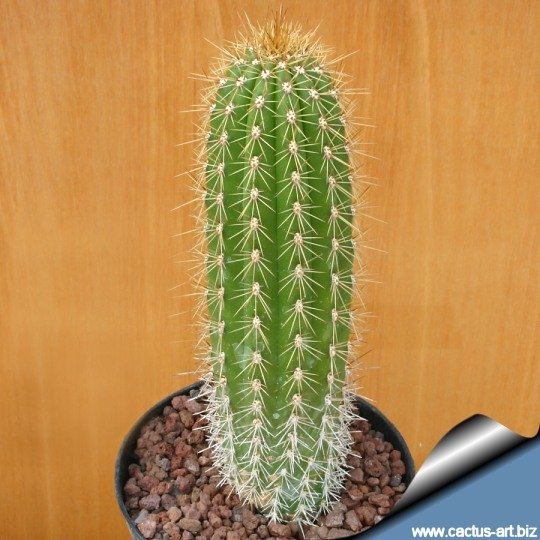
Echinopsis spachiana is a multi-stemmed columnar cactus at first simple, later profusely branching at the base; branches ascending parallel with the main stem.
Stem: Stem upright up to about 2 m tall, but usually smaller, 5 to 6 cm in diameter, columnar.
Ribs: 10 to 15, obtuse, rounded.
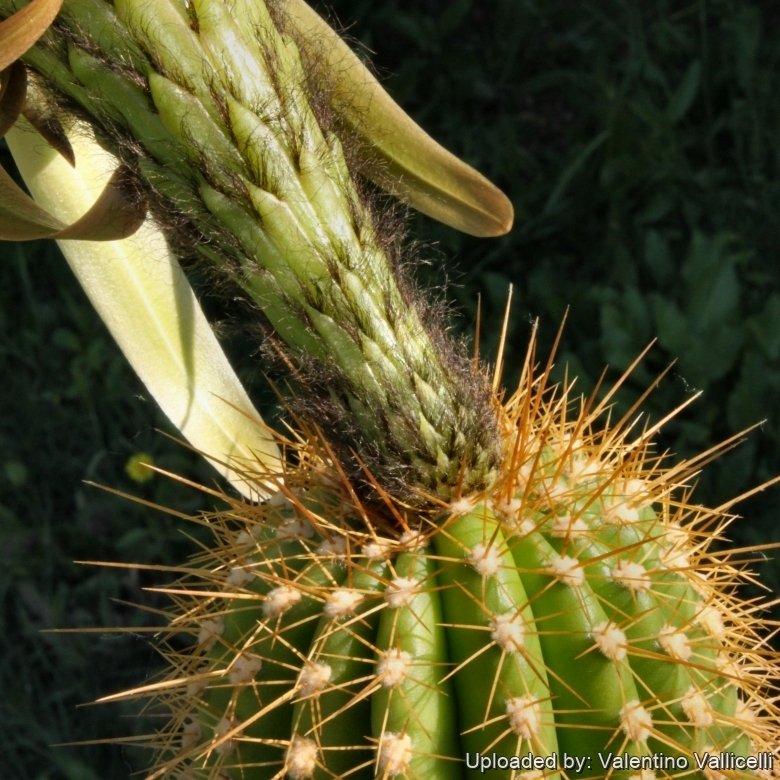
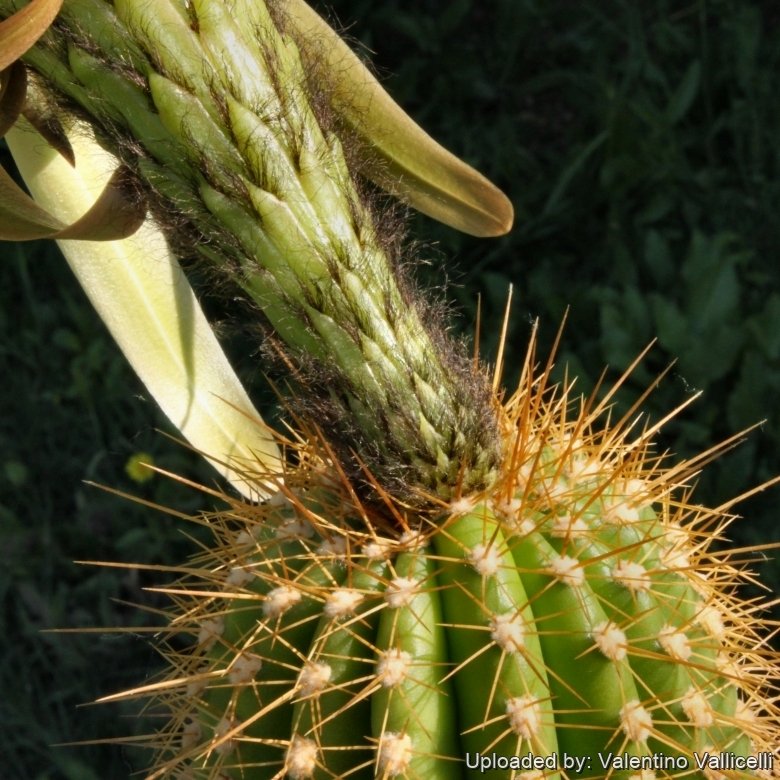
Areoles: About 1 cm apart, large, covered with curly yellow wool, turning white or grey as they age.
Spines: Radial spines 8 to 10, 6 mm to 1 cm long, spreading, stiff, sharp, amber-yellow to brown.
Central spines: 1 to 3 yellowish, 12 mm long, stronger and longer than the radials; all the spines later becoming grey.
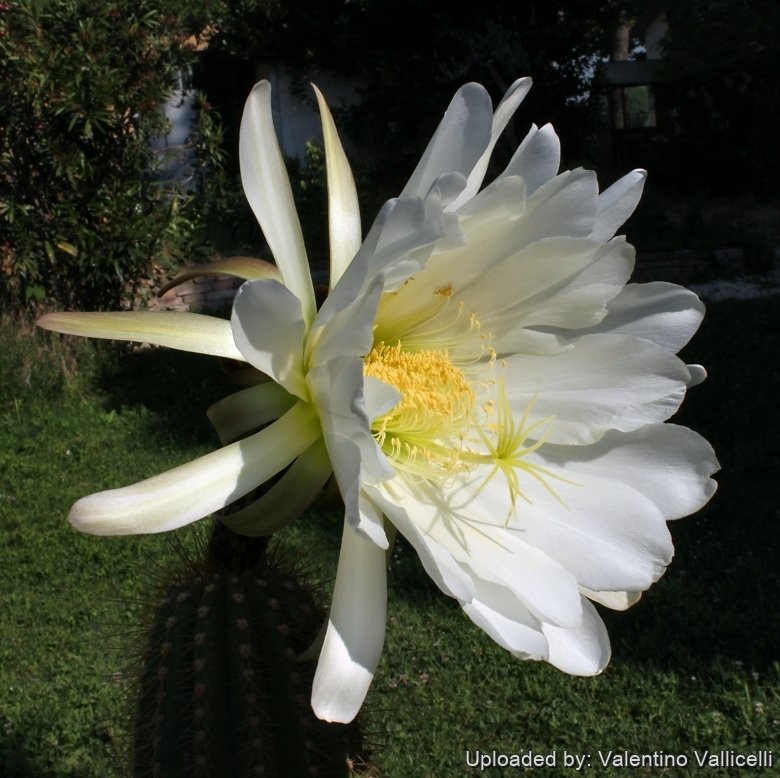
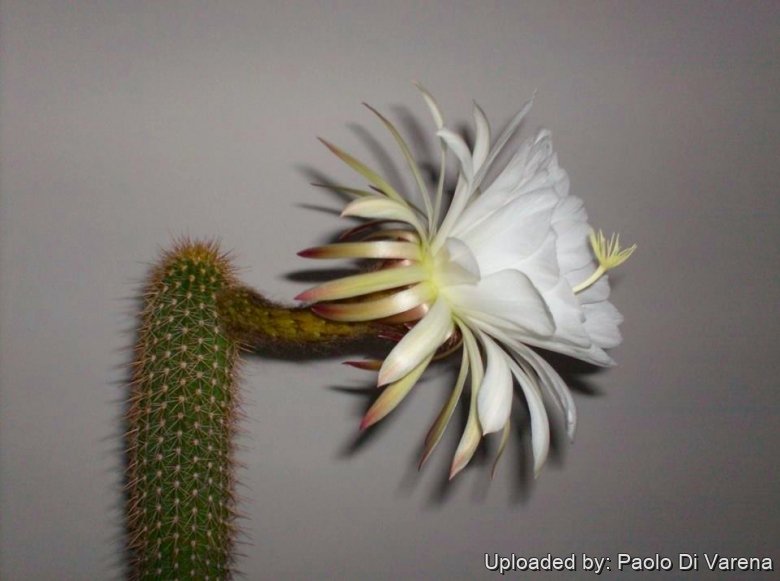
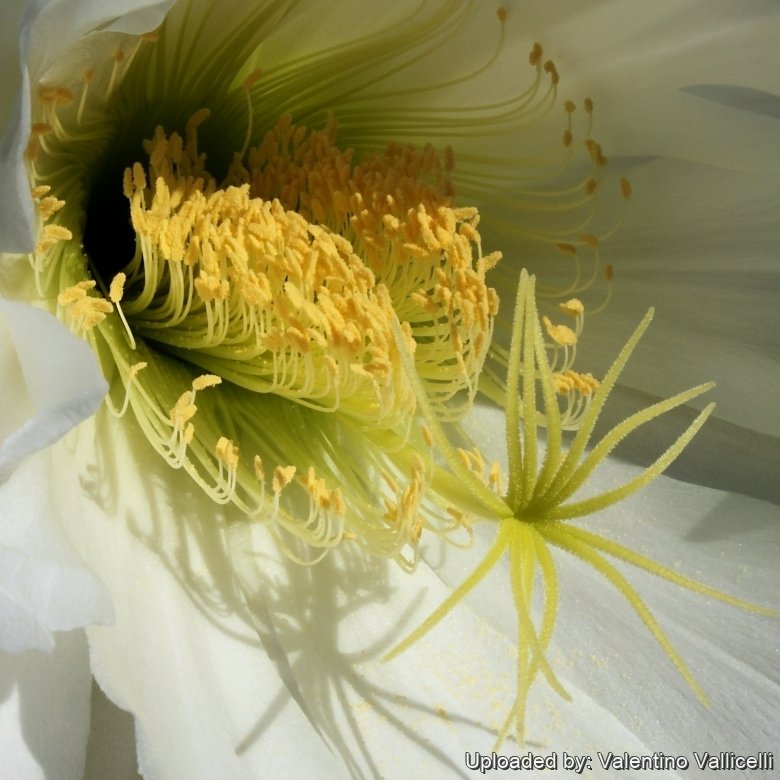
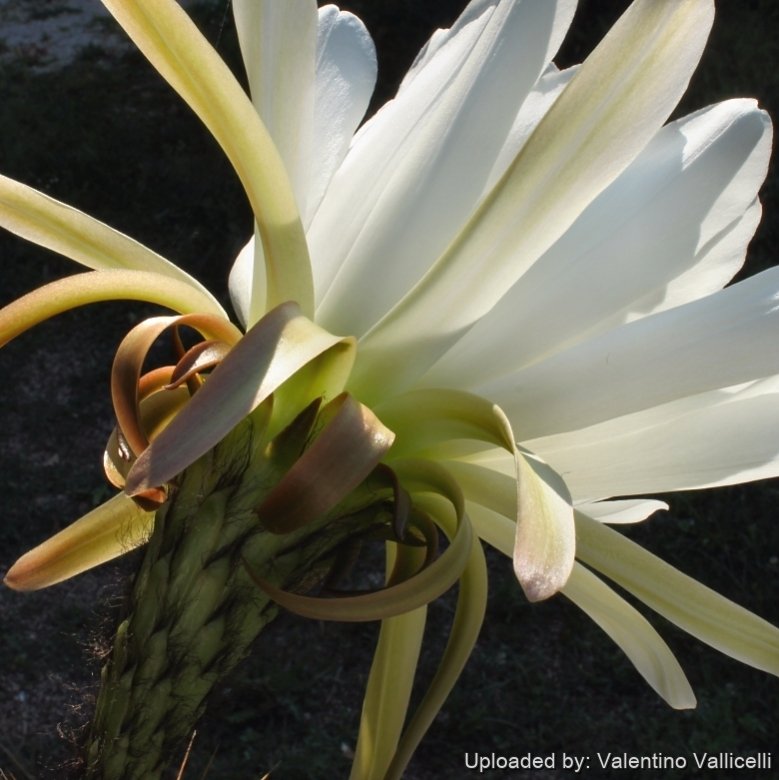
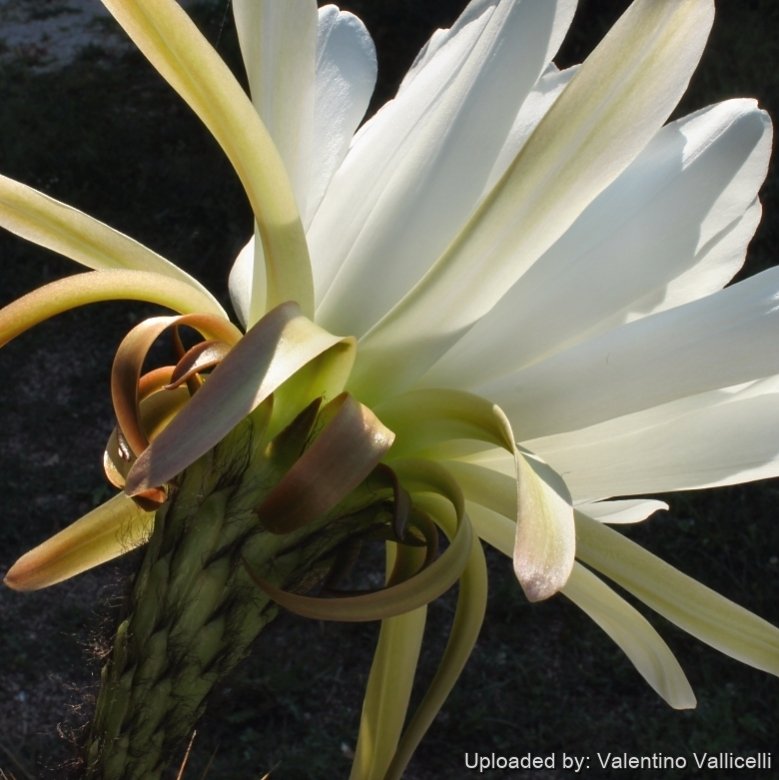
Flower: Nocturnal, white, about 20 cm long and 15 cm in diameter lasting about 24 hours from one sunset to the following one.
Blooming time: Late spring.
Origin and Habitat
Western Argentina, Bolivia.
Cultivation and Propagation
Echinopsis spachiana is a a much decorative frost hardy cactus easily found in cultivation and grows virtually anywhere. It is a summer grower species that offers no cultivation difficulties. It can be overwintered outdoors if sheltered from rain and severe frosts.
Soil: Use a very a particularly draining substratum, as it is very sensitive to rottenness when in presence of humidity and low temperatures and let the soil dry out between waterings, since it’s natural habitat is in volcanic soil, it has adapted to more acidic conditions.
Repotting: Repot in the spring, when their roots become cramped. Generally, they should be repotted every other year in order to provide fresh soil. After repotting, do not water for a week or more. Needs a large pot to accommodate a large root system.
Water: In summer, during the vegetative period, it must be regularly watered, but allowing the substratum to completely dry up before irrigating again (but do not overwater). In winter, it’s to be kept dry. Preferable not to water on overcast days, humid days or cold winter days.
Hardiness: It is a quite frost resistant cactus, hardy to - 10° C (or less if very dry). However in cultivation it is better not to expose it to temperatures lower than -0° C, even if in an aerated and protected location, in order to avoid the formation of anti-aesthetic spots on the epidermis. In presence of high atmospheric humidity avoid any frost as it is particularly sensitive to root rot.
Exposure: Outside full sun or afternoon shade, inside needs bright light, and some direct sun, but, as a former mountain dweller, does not care for extremely high temperatures in summer.
Use: It is suitable for small “desert” gardens, in association with other xerophytes. Where the open air cultivation is not possible due to the climate, it is to be cultivated in pot in order to shelter it in winter.
Grafting stock: Trichocereus spachianus is often used as a rather thick stock.
Propagation: By seeds and by cuttings, provided left drying up well, in summer.
Bibliography
Major references and further lectures
-
Edward Anderson “The Cactus family” Timber Press, Incorporated, 2001
-
James Cullen, Sabina G. Knees, H. Suzanne Cubey “The European Garden Flora Flowering Plants: A Manual for the Identification of Plants Cultivated in Europe, Both Out-of-Doors and Under Glass” Cambridge University Press, 11/Aug/2011
-
David R Hunt; Nigel P Taylor; Graham Charles; International Cactaceae Systematics Group. “The New Cactus Lexicon” dh books, 2006
-
Curt Backeberg “Die Cactaceae: Handbuch der Kakteenkunde,” Volume 2 G. Fischer, 1959
-
H. Peter Loewer “The Evening Garden” Macmillan Pub., 1993
-
N. L. Britton and J. N. Rose “The ‘Cactaceae’, Descriptions and Illustrations of Plants of the ‘Cactus’ Family” volume 2 Carnegie Institution, 1920
-
John Borg “Cacti: a gardener’s handbook for their identification and cultivation” Blandford P., 1970
-
Willy Cullmann, Erich Götz (Dozent Dr.), Gerhard Gröner “The encyclopedia of cacti” Timber Press, 1987
Cultivars and forms (2)
Gallery