Publication: I.O.S. Bull. 3(3): 98 (1974)
Description
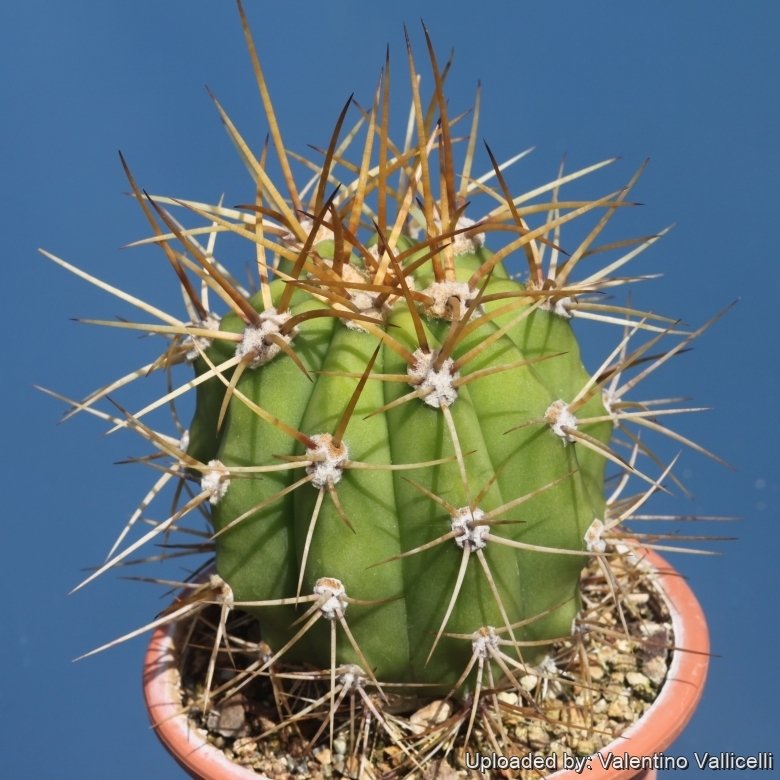
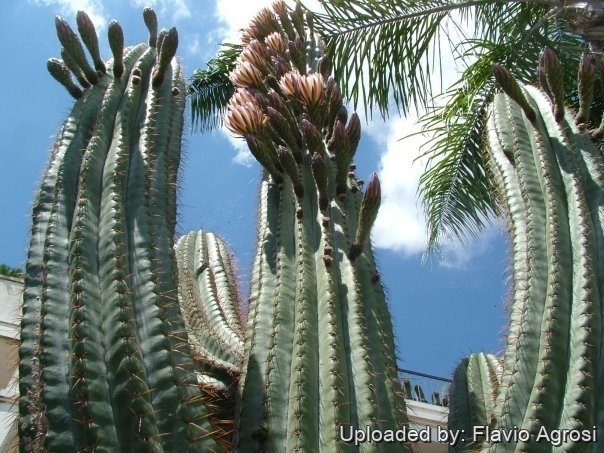
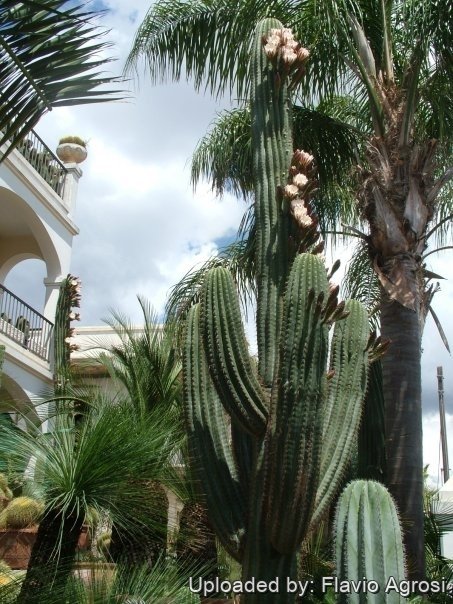
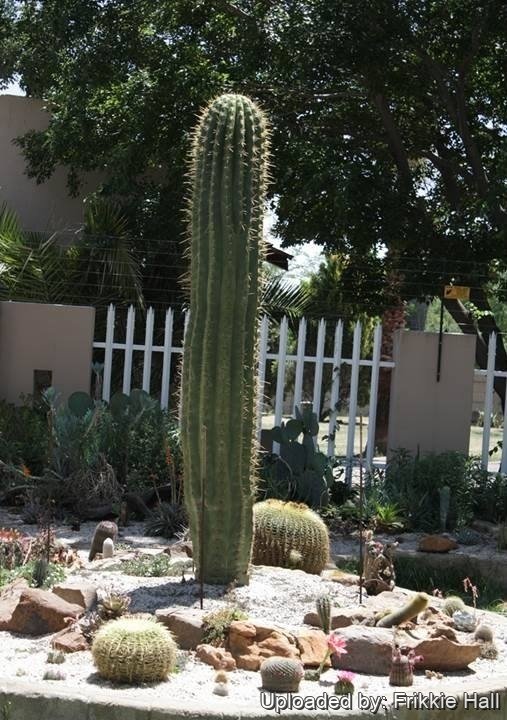
Echinopsis terscheckii best known in cultivation as Trichocereus terscheckii is a huge treelike cactus species, called in Argentina cardon grande. At first columnar, and usually in age with numerous large arms, 10 to 12 meters high.
Similar species: It has frequently been confused with another species, Echinopsis pasacana, of the same region, but it is larger, more branched, with fewer ribs, different spines, and larger flowers.
Stem: Trunk up to 45 cm in diameter, distinct woody, branching well above ground level; branches several cylindrical, columnar, erect, 10 to 20 cm in diameter.
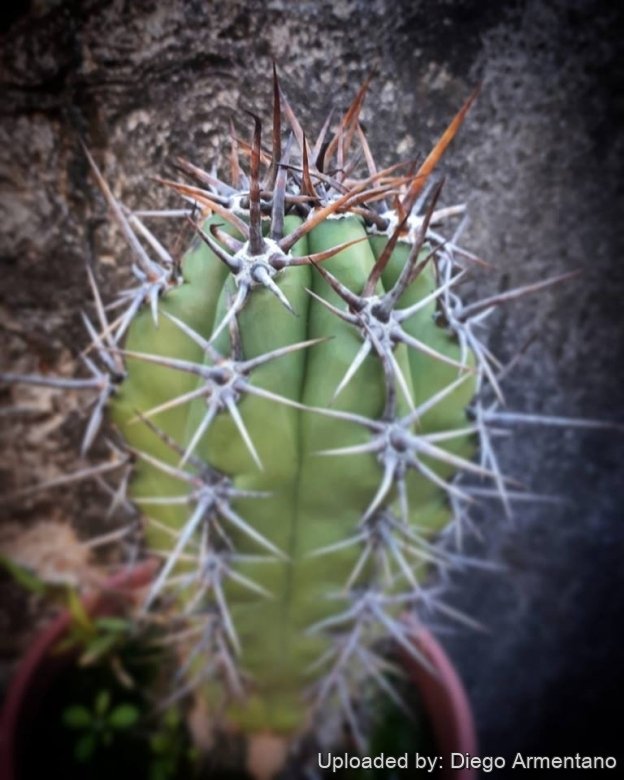
Ribs: 8 to 14(-18), obtuse, prominent, 2 to 4 cm high, obtuse.
Areoles: Large, 1 to 1.5 cm in diameter, brownish felted, 2 to 3 cm apart.
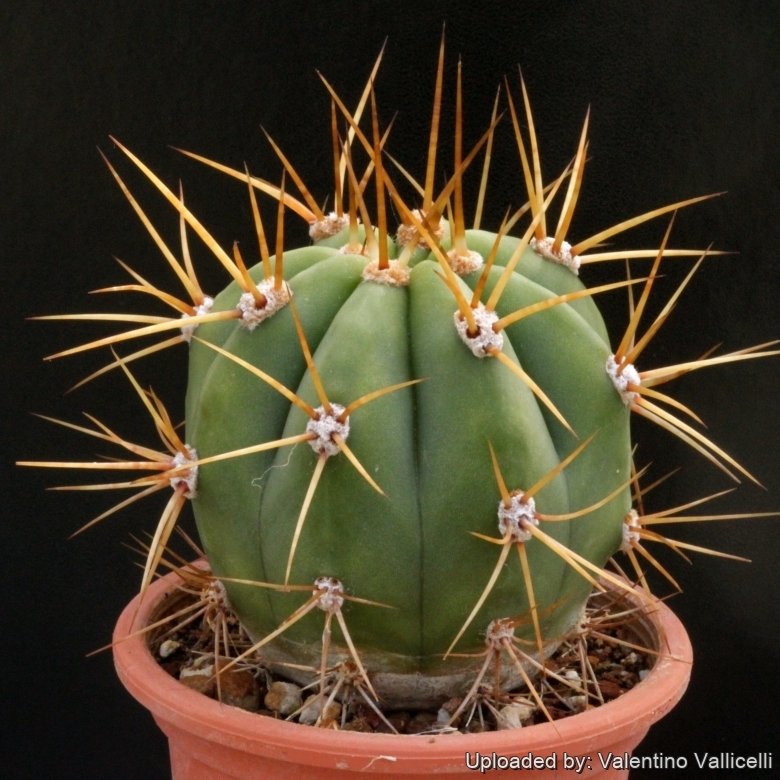
Spines: 8 to 15, often more in older areoles, yellowish to brownish, subulate, yellow, 1-8 cm or more long.
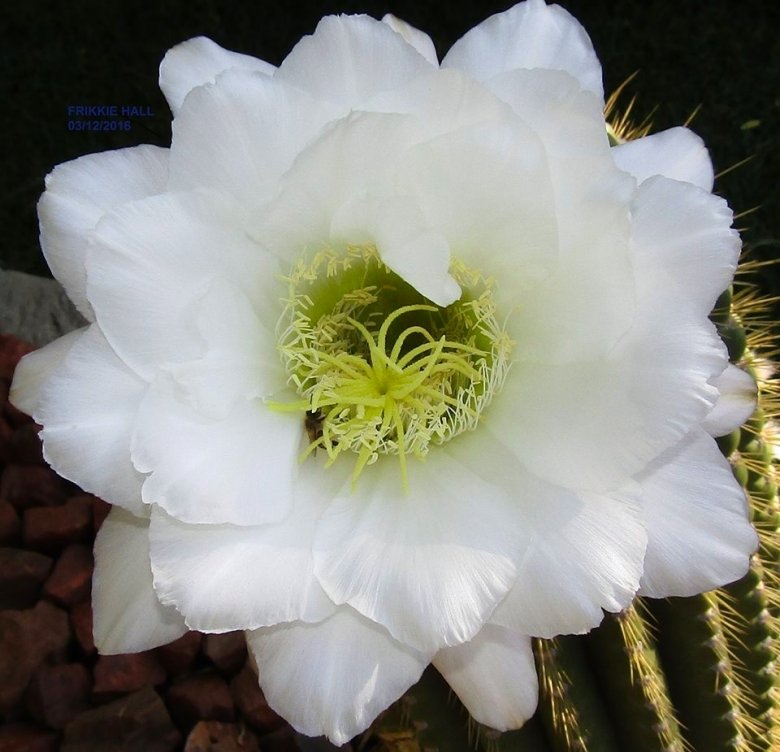
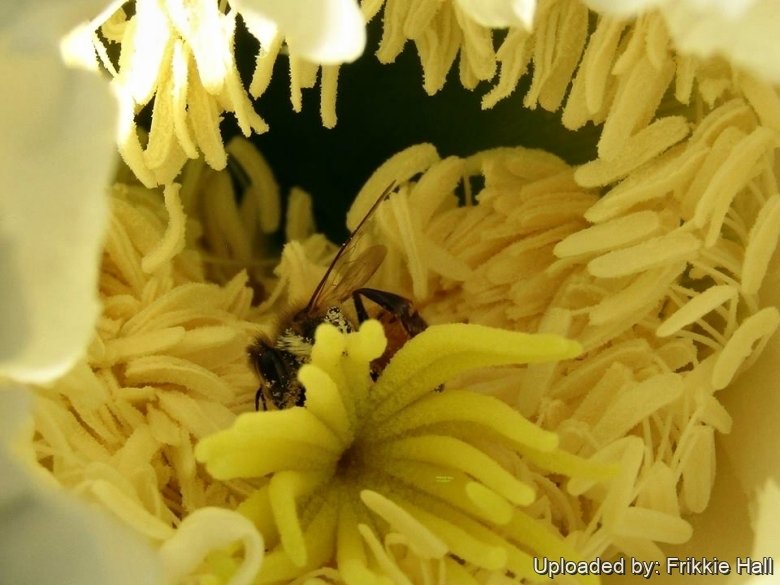
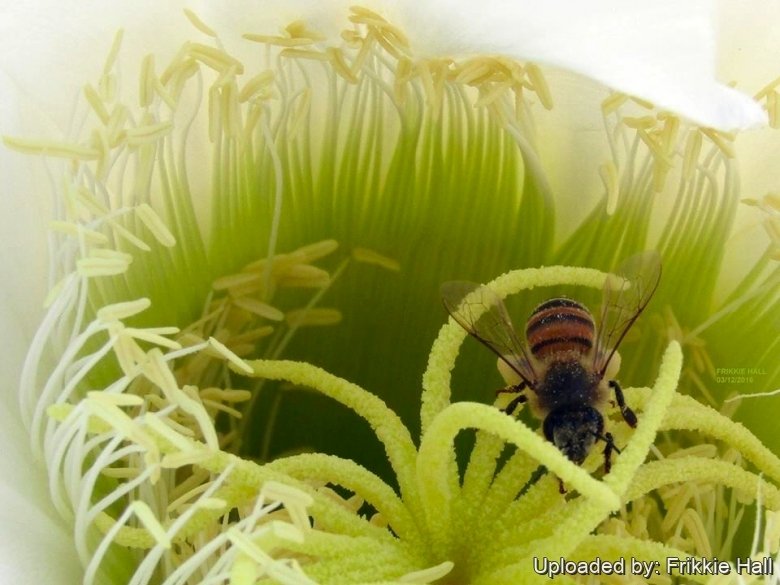
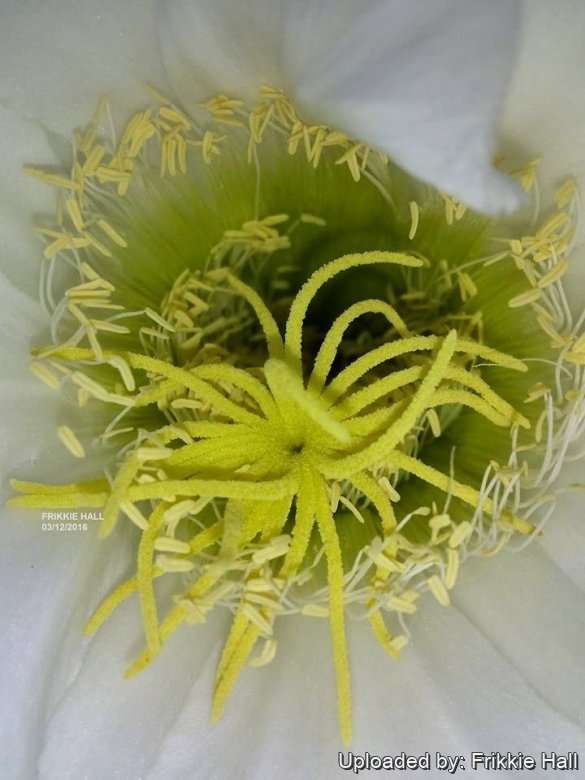
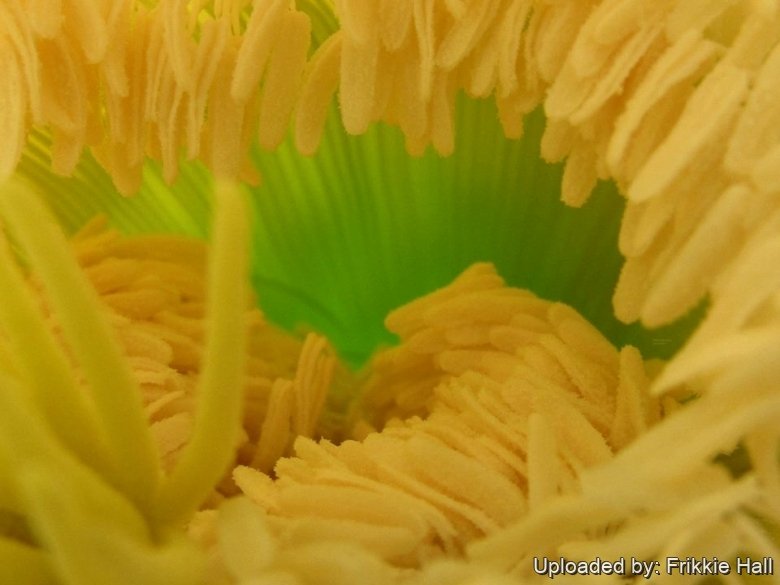
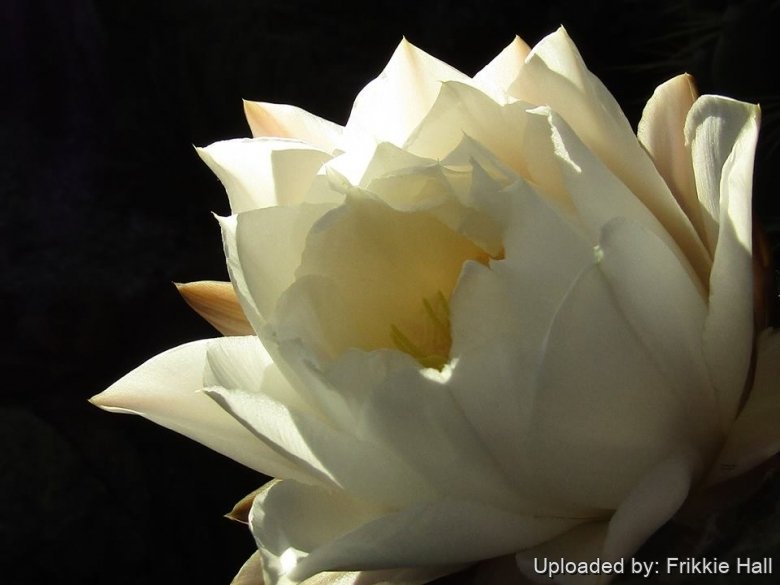
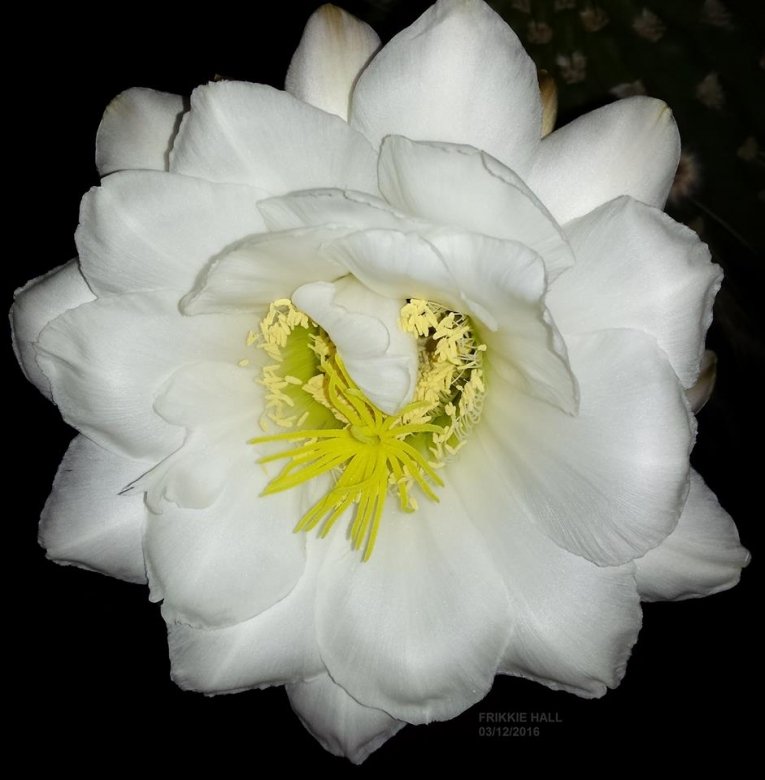
Flowers: Very large, nocturnal, borne laterally, bell shaped to funnelform, white, 15 to 20 cm long, 12.5 cm broad; inner perianth-segments oblong, 7 cm. long, acute, white; outer perianth-segments dark red to greenish, pericarpel green, scales on the pericarpel and flower-tube ovate, mucronate-tipped, their axils filled with long whitish or brown wool. Flowers appear to be pollinated by bats.
Blooming season: The plants flower at various times of the year, but primarily during the rainy season (Summer).
Fruits: Globose or oblong green to blue about 1.3-5 cm in diameter, with acute scales woolly in the axils. Residents of their habitat have reported that the fruits are edible, but inferior to those of the pasacana.
Seeds: Dark-brown to almost black, oval approximately 0.76-1.5 mm long and up to 1.1 mm wide, somewhat warty tessellate.
Origin and Habitat
Echinopsis terscheckii (Trichocereus terscheckii) has a relatively wide range in Argentina (Catamarca, Salta, Jujuy, La Rioja, San Juan and Tucumán provinces) and Bolivia (Tarija)
Altitude range: It grows at altitudes between 800 and 2,000 metres above sea level.
Habitat and Ecology: E. terscheckii grows on different soil types in grasslands, shrublands, semiarid intermediate Chaco forest habitats that receive 400-750 mm annual rainfall on steep hillsides and bajada, sometimes growing in thick stands, with numerous plants approaching 10 m in height and often serving as hosts to ballmosses ( Tillandsia spp.). It can also be found in semitropical deciduous forest, its tops exceeding the surrounding vegetation, an accomplishment apparently essential for its survival. Its lower-elevation limit seems to involve its ability to withstand competition from the Chaco forest. This cactus is locally abundant, but the populations are declining. It is affected by agricultural activities and urbanization, it is also harvested for its wood. Echinopsis terscheckii occupies habitats found at elevations immediately below those at which the Echinopsis pasacana grows. Echinopsis atacamensis, at the lower elevation limit of its distribution, appears to hybridize readily with the larger E. terscheckii. E. terscheckii seems quite promiscuous, and the areas where intergrading occurs demonstrate numerous phenotypes of hybrids living harmoniously with non hybrids. Hybridization occurs also with other members of the genus Echinopsis (Trichocereus), the hybrids producing fertile offspring. The upward-elevation range of T. terscheckii is limited by cold and decreasing rainfall, whereas the lower range of the pasacana is limited by heat and increasing rainfall. This species is present in several protected areas, such as Quebrada de Las Conchas in Salta province.
Cultivation and Propagation
The South American saguaro (Echinopsis terscheckii) tolerate frost quite well and require only minor supplementary watering than than the North American Saguaro Carnegiea gigantea, but make sure that it is not exposed to severe freezing temperatures, or it may die.
Growth rate: Echinopsis terscheckii is a relatively fast-growing plant, especially when compared with Echinopsis atacamensis and can grow from 20 cm to nearly 2.5 m tall and sprouts the fist branches over eight years (given the best conditions).
Soil: It needs a well drained soil mix.
Waterings: Water regularly in summer but allow to dry fully before watering again. During the winter months they should be rather kept dry.
Re-potting: Since it is a big-sized plant, it needs plenty of space for its roots. Repotting should be done every other year, or when the plant has outgrown its pot.
Exposition: Light shade when young, full sun later. Outside it likes strong sunshine, but is tolerant and do well with light shade during the hot Summer months, inside it needs bright light, and some direct sun. Tends to bronze in strong light, which encourages spine production.
Garden uses: Excellent as landscape or patio plant. It is suitable for “desert” gardens, in association with other xerophytes. Where the open air cultivation is not possible due to the climate, it is to be cultivated in pot in order to shelter it in winter. It look fine in a cold greenhouse and frame.
Traditional uses: This species was intensively used for several purposes such as construction materials and art and crafts. The wood appears to rot rather quickly and lacks the characteristics of good lumber. Still, local people are said to fashion rustic furniture from the branches. It also appear to be important fodder for livestock, especially goats, functioning as a time-release food as they drop to the ground over an extended period of time.
Propagation: From stem cuttings (if available) in spring (let them dry till the ends callous well. Then replant them in fresh cactus soil that is ever so slightly moist, and keep it that way till they root) or preferably by seeds. Seeds should be sown in a well-drained soil mix. Surface sowing is the best; seeds germinate in 14-28 days at 20° C.
Bibliography
Major references and further lectures.
-
Nathaniel Lord Britton, Joseph Nelson Rose “Cactaceae: Descriptions and Illustrations of Plants of the Cactus Family” vol. 1 The Carnegie Institution of Washington, Washington 1919
-
Edward Anderson “The Cactus family” Timber Press, Incorporated, 2001
-
James Cullen, Sabina G. Knees, H. Suzanne Cubey “The European Garden Flora Flowering Plants: A Manual for the Identification of Plants Cultivated in Europe, Both Out-of-Doors and Under Glass” Cambridge University Press, 11/Aug/2011
-
David R Hunt; Nigel P Taylor; Graham Charles; International Cactaceae Systematics Group. “The New Cactus Lexicon” dh books, 2006
-
Urs Eggli, Leonard E. Newton: “Etymological Dictionary of Succulent Plant Names” Birkhäuser 2004
-
Ortega-Baes, P. & Lowry, M. 2013. Echinopsis terscheckii. The IUCN Red List of Threatened Species. Version 2014.2. <www.iucnredlist.org>. Downloaded on 11 September 2014.
-
Wikipedia contributors. “Echinopsis terscheckii.” Wikipedia, The Free Encyclopedia. Wikipedia, The Free Encyclopedia, 6 Sep. 2013. Web. 11 Sep. 2014.
-
Gibson, Arthur C. y Park S. Nobel “The Cactus Primer.” Cambridge, Massachusetts: Harvard University Press. 1986
-
Navarro, G. “Catálago ecológico preliminar de las cactáceas de Bolivia.” Lazaroa 17: 33–84. 1996
-
Dr. Pfeiffer: “Beschreibung einiger neuer Cacteen.” In: Allgemeine Gartenzeitung. 5(47): 370 25. November 1837.
-
Gordon Douglas Rowley: “Reunion of the genus Echinopsis.” In: IOS Bulletin. Journal of the International Organization for Succulent Plant Study. 3(3): 98 1974
-
“Checklist of CITES Species” Part 1 CITES species index, 2011
-
David Yetman “The Great Cacti: Ethnobotany & Biogeography” University of Arizona Press, 2007
From llifle page Echinopsis werdermanniana
Description
Echinopsis werdermanniana (Backeberg) Friedrich & Rowley (Trichocereus werdermannianus Backeberg) is a large, handsome cactus that reaches 5(-8) m in height with a thick trunk to 60 cm in diameter and resembles Echinopsis atacamensis in habit, but is more massive and has comparatively few spines. Its fruits should be tasty.
Derivation of specific name: This member of the Cactaceae family was given this name in honour of Prof. Dr. Erich Werdermann.
Stem: Trunks to 1 m high and 65 cm in diameter, branches arising apically, more or less erect up to 15 cm thick very dark green.
Ribs: About 10, later increasing to 14 or more, 2 cm high.
Areoles: 2.5 cm apart.
Spines: The spines looks like a mix of Trichocereus taquimbalensis and Trichocereus terscheckii, hardly distinguishable as radial and central, between 5 and 10 cm long, straw-coloured, yellowish brown or horn coloured.
Central spine: 1 (or 2), robust, awl-like.
Radial spines: 8.
Flowers: Usually emerging from the top of the plant rather than at lower regions of stems. When numerous forming a ring around the apex. White about 20-22 cm long.
Fruits: Spherical 3.5-4 cm in diameter with many white or black hairs.
Seeds: 1.3-1,4 mm large, cap-like, rough.
Taxonomic notes: Trichocereus werdermannianus Backeberg is an old name that is no longer accepted (nomen nudum… not a valid species). Plants corresponding the original type that Backeberg once called Trichocereus werdermannianus are approximately intermediate between Trichocereus taquimbalensis and Trichocereus terscheckii and now generally included within (as a synonym of) Trichocereus terscheckii, suggesting that there is not really a fundamental difference between the two. Regrettably most plants in cultivation under this name seldom match up to the original description, being usually raised from commercial seed which has often been wrongly identified. The plants labeled Trichocereus werdermannianus are usually misidentified Trichocereus taquimbalensis or Trichocereus tacaquirensis.
Origin and Habitat
Bolivia, typus location is in the Charcoma Valley, east of Tupiza but also present around Potosi. It is very likely that Trichocereus taquimbalensis from the region around those aforementioned locations is actually Trichocereus werdermannianus.
Habitat and ecology: Echinopsis werdermanniana grows on hillsides at about 2600-3000 metres elevation together with Oreocereus celsianus.
Cultivation and Propagation
This is a a much decorative frost hardy cactus easily found in cultivation.
Soil: Grow it in a rich and particularly draining substratum, as it is very sensitive to rottenness when in presence of humidity and low temperatures and let the soil dry out between waterings.
Water: In summer, during the vegetative period, it must be regularly watered, but allowing the substratum to completely dry up before irrigating again; in winter, it’s to be kept dry. Preferable not to water on overcast days, humid days or cold winter days.
Hardiness: It is a very frost resistant cactus, hardy to -7°/-12° C. However in cultivation it is better not to expose it to temperatures lower than -5° C, even if in an aerated and protected location, in order to avoid the formation of anti-aesthetic spots on the epidermis. In presence of high atmospheric humidity avoid any frost as it is particularly sensitive to root rot.
Exposure: It need full sun exposures with ample airflow to produce dense hairs, but, as a former mountain dweller, does not care for extremely high temperatures in summer.
Maintenance: Repot in the spring, when their roots become cramped. Generally, they should be repotted every other year in order to provide fresh soil. After repotting, do not water for a week or more.
Use: Excellent as landscape or patio plant. It is suitable for “desert” gardens, in association with other xerophytes. Where the open air cultivation is not possible due to the climate, it is to be cultivated in pot in order to shelter it in winter.
Propagation: By seeds and by cuttings, provided left drying up well, in summer.
Bibliography
Major references and further lectures
-
Backeberg & Knuth, “Kaktus-ABC”, 206, 412. 1935
-
David Yetman “The Great Cacti: Ethnobotany & Biogeography” University of Arizona Press, 2007
-
Edward F. Anderson “The Cactus Family” Timber Press, 2001
-
James Cullen, Sabina G. Knees, H. Suzanne Cubey “The European Garden Flora Flowering Plants: A Manual for the Identification of Plants Cultivated in Europe, Both Out-of-Doors and Under Glass”Cambridge University Press, 11/Aug/2011
-
David Hunt, Nigel Taylor “The New Cactus Lexicon” DH Books, 2006
-
Thomas H. Everett “The New York Botanical Garden Illustrated Encyclopedia of Horticulture”, Volume 10 Taylor & Francis, 1982
-
Urs Eggli, Leonard E. Newton “Etymological Dictionary of Succulent Plant Names” Springer Science & Business Media, 29 June 2013
Source: Echinopsis werdermanniana, LLIFLE - Encyclopedia of living forms, CC-BY-SA, retrieved 2026-10-25.
From llifle page Trichocereus terscheckii f. variegata
Description
Echinopsis terscheckii best known in cultivation as Trichocereus terscheckii is a huge treelike cactus species, called in Argentina cardon grande. At first columnar, and usually in age with numerous large arms, 10 to 12 meters high.
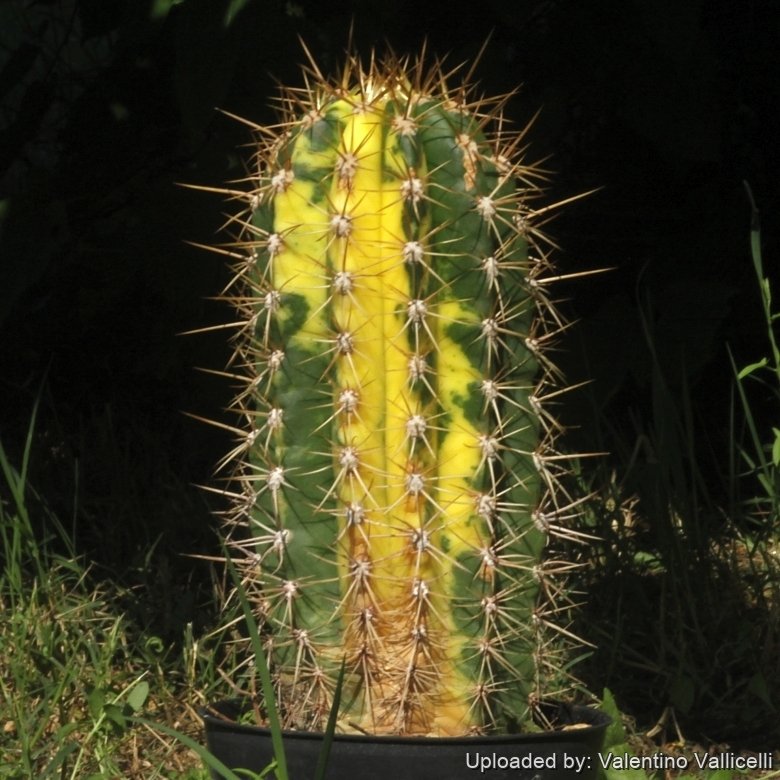
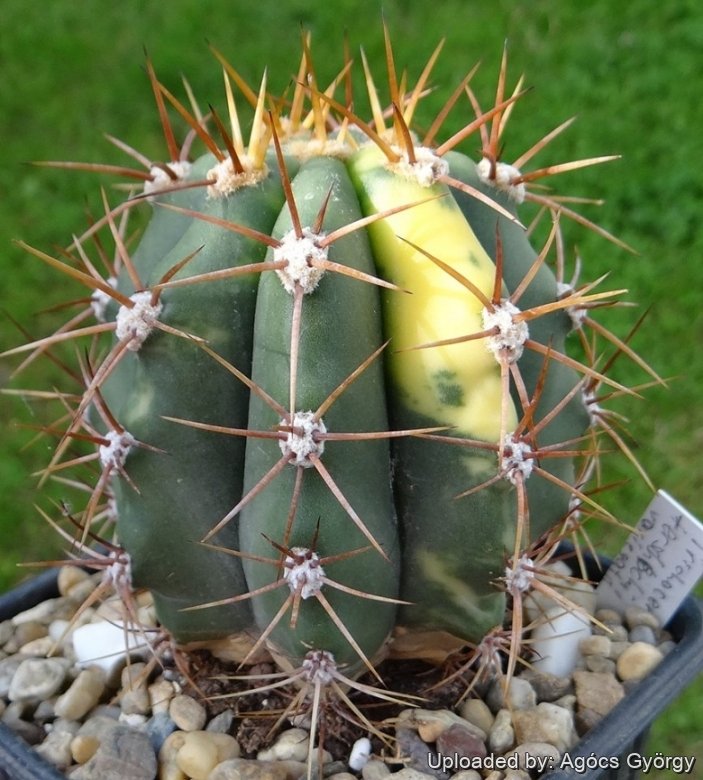
Variegated form: The variegated form (Echinopsis terscheckii f. variegata) has sectors, patches or stripes with distinct shades of yellow. A very few variegated plants sprout unpredictably time by time among normal green seedling and are very rare. Plants with variegated stems are often attractive and - despite to their beauty - are very rare and sought after by collectors. It is a strong growing variegated cactus that will slowly forms tall specimens several metres tall with age.
Stem: Trunk up to 45 cm in diameter, distinct woody, brancing well above ground level; branches several cylindrical, columnar, erect, 10 to 20 cm in diameter.
Ribs: 8 to 14(-18), obtuse, prominent, 2 to 4 cm high, obtuse.
Areoles: Large, 1 to 1.5 cm in diameter, brownish felted, 2 to 3 cm apart.
Spines: 8 to 15, often more in older areoles, yellowish to brownish, subulate, yellow, 1-8 cm or more long.
Flowers: Very large, nocturnal , borne laterally, bell shaped to funnelform, white, 15 to 20 cm long, 12.5 cm broad; inner perianth-segments oblong, 7 cm. long, acute, white; outer perianth-segments dark red to greenish, pericarpel green, scales on the pericarpel and flower-tube ovate, mucronate-tipped, their axils filled with long whitish or brown wool. Flowers appear to be pollinated by bats.
Blooming season: The plants flower at various times of the year, but primarily during the rainy season (Summer).
Fruits: Globose or oblong green to blue about 1.3-5 cm in diameter, with acute scales woolly in the axils. Residents of their habitat have reported that the fruits are edible, but inferior to those of the pasacana.
Seeds: Dark-brown to almost black, oval approximately 0.76-1.5 mm long and up to 1.1 mm wide, somewhat warty tessellate.
Origin and Habitat
Garden origin. The original natural habitat of this species is Argentina (Catamarca, Salta, Jujuy, La Rioja, San Juan and Tucumán provinces) and Bolivia (Tarija) where it grows at altitudes between 800 and 2,000 metres above sea level.
Cultivation and Propagation
Variegated cacti are regarded as choice and difficult in cultivation, but despite that many of them are relatively easy to grow. But be aware that they cannot tolerate prolonged exposure to direct sun light (especially during the hottest summer days), so grow them in half-shade or under filtered sun. They are sometime seen as grafted plants, but some of this colourful plants (those with some chlorophyll) are able to grow on their own roots and are priced by collectors.
Soil: Use mineral well-permeable substratum with little organic matter (peat, humus).
Watering: Water sparingly from March till October, and keep perfectly dry in winter, at temperatures from 5 to 15 degrees centigrade. (In general these plants are more tender and cannot endure freezing temperatures). In the rest period no high atmospheric humidity!!
Propagation: By seeds, grafting or cutting. Because the variegation is due to the presence of two kinds of plant tissue, propagating the plant must be by a vegetative method of propagation that preserves both types of tissue in relation to each other. A most common way way to cultivate this partially de-coloured cultivars is to graft them onto another cactus which has chlorophyll and which will provide sugar to the mutant scion. The chlorophyll containing bottom part of the graft, called the stock, can be any number of different columnar cactus species.
Remarks: Seeds from variegated parents often give raise to some variegated seedlings too.
Source: Trichocereus terscheckii f. variegata, LLIFLE - Encyclopedia of living forms, CC-BY-SA, retrieved 2026-10-25.
Cultivars and forms (1)
Forms (1)
Gallery