Publication: Bradleya 5: 92 (1987)
Description
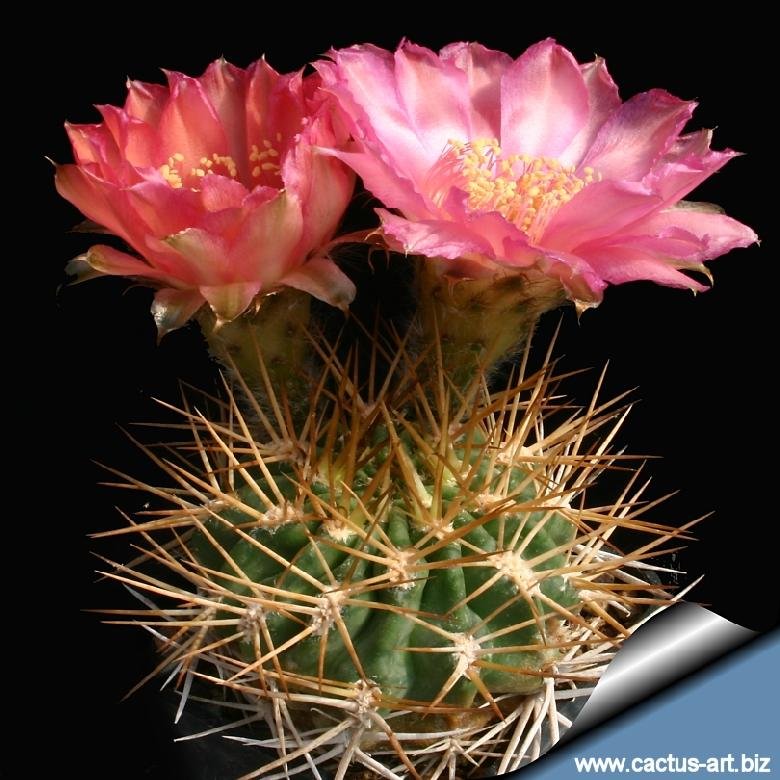
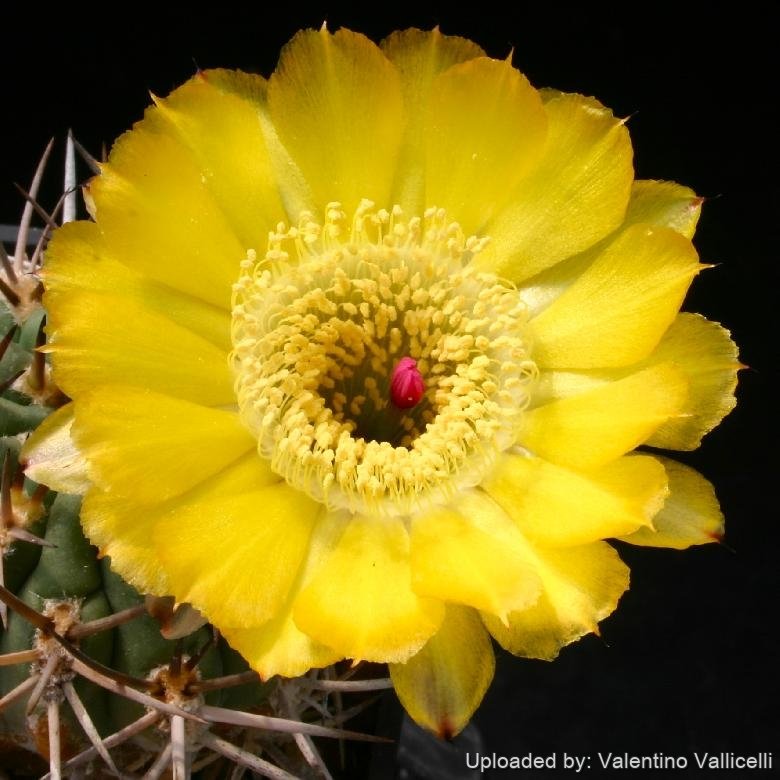
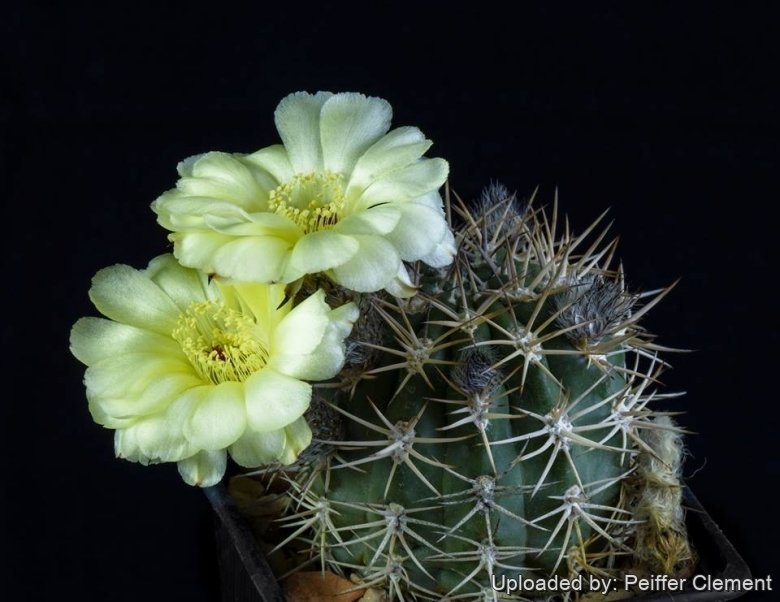
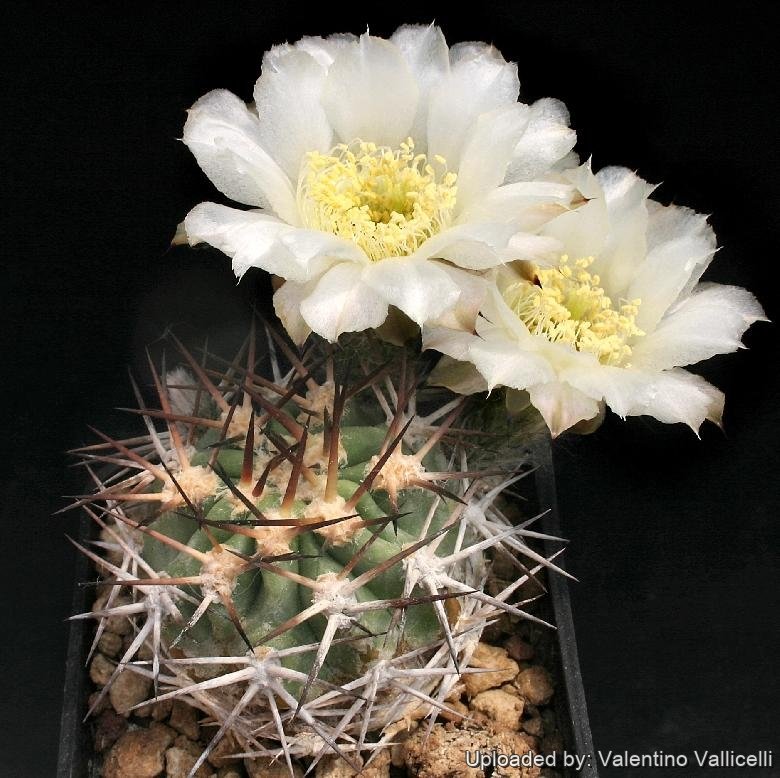
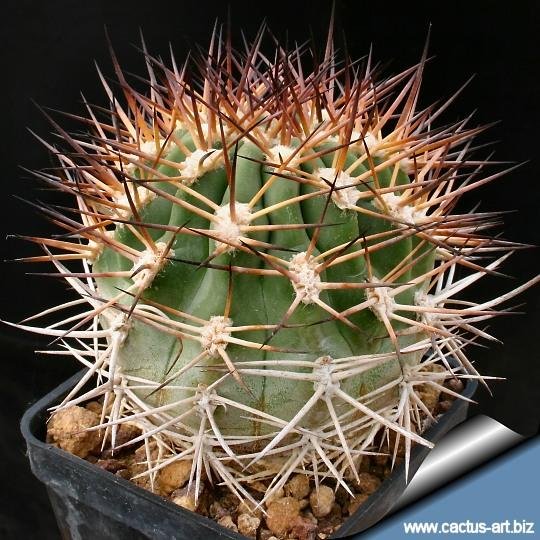
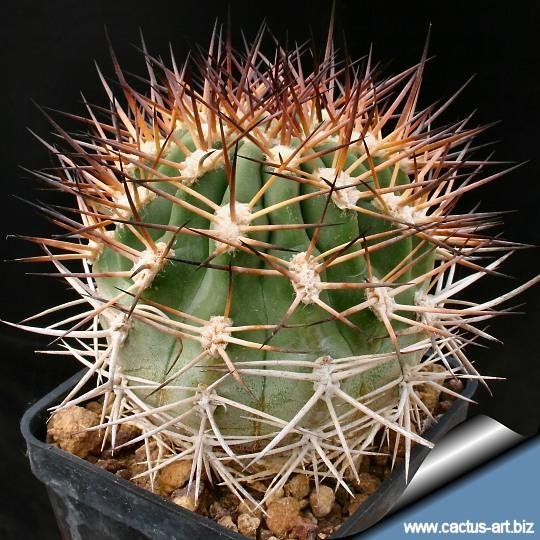
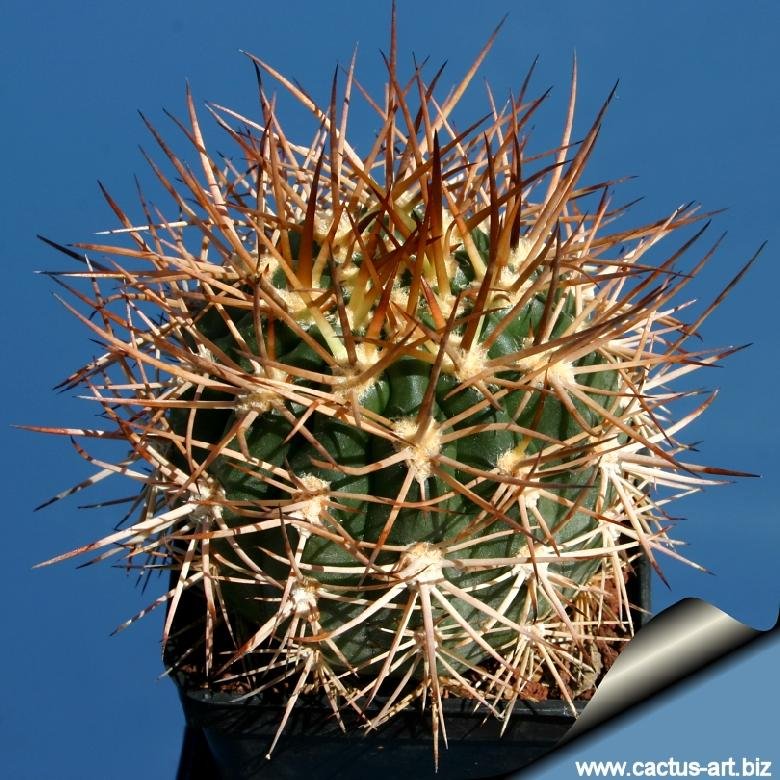
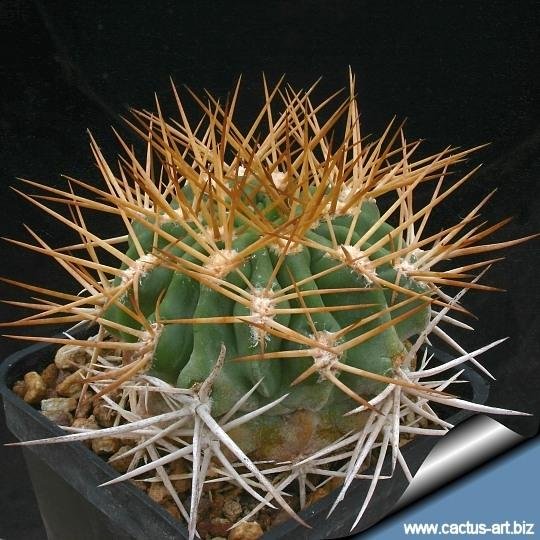
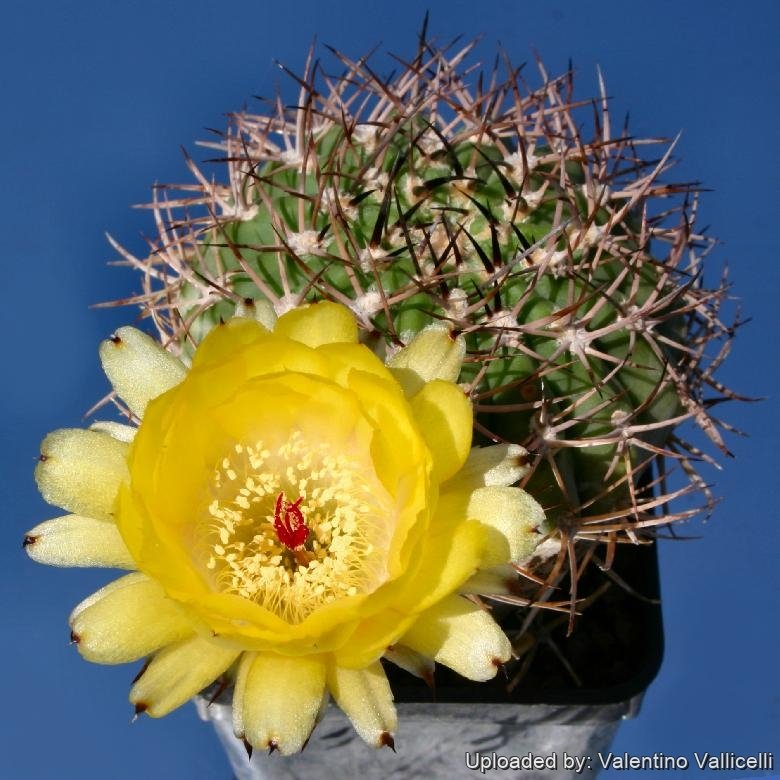
Echinopsis thionantha (best known in cultivation as Acanthocalycium thionanthum) is a highly variable taxon with several forms. The specific name “thionantha” was originally applied to the yellow flowering form, but now comprises plant of variable colour of flowers and spines sizes. There are a number of varieties, but not all are universally recognized.
Habit: It is usually solitary or slowly branching through basal shoots.
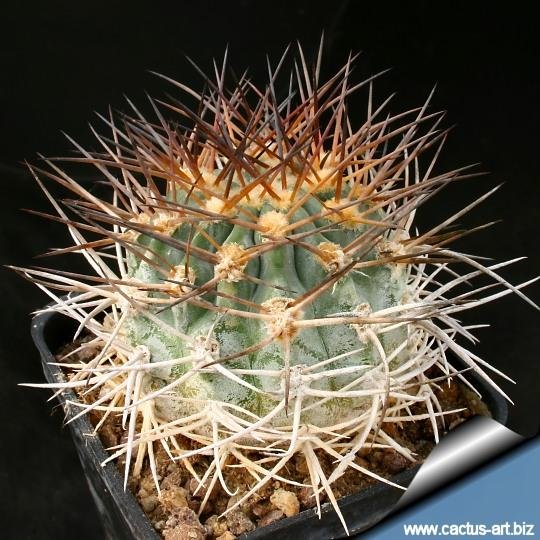
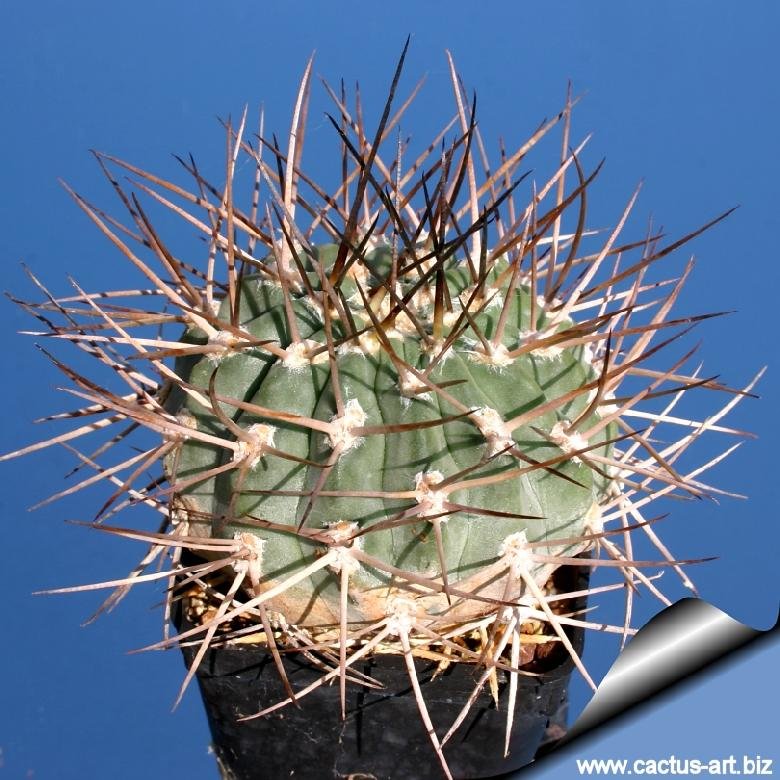
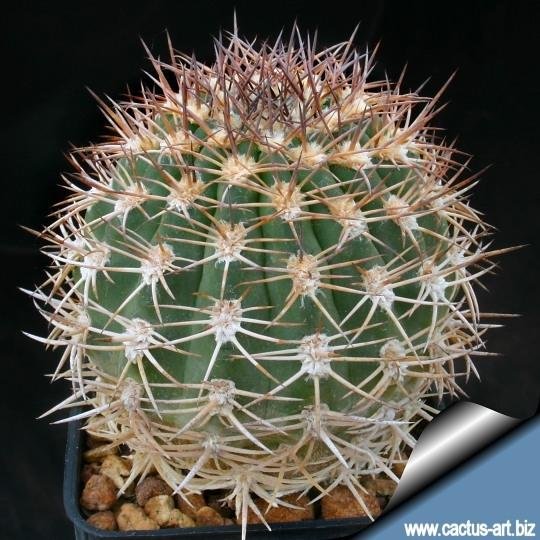
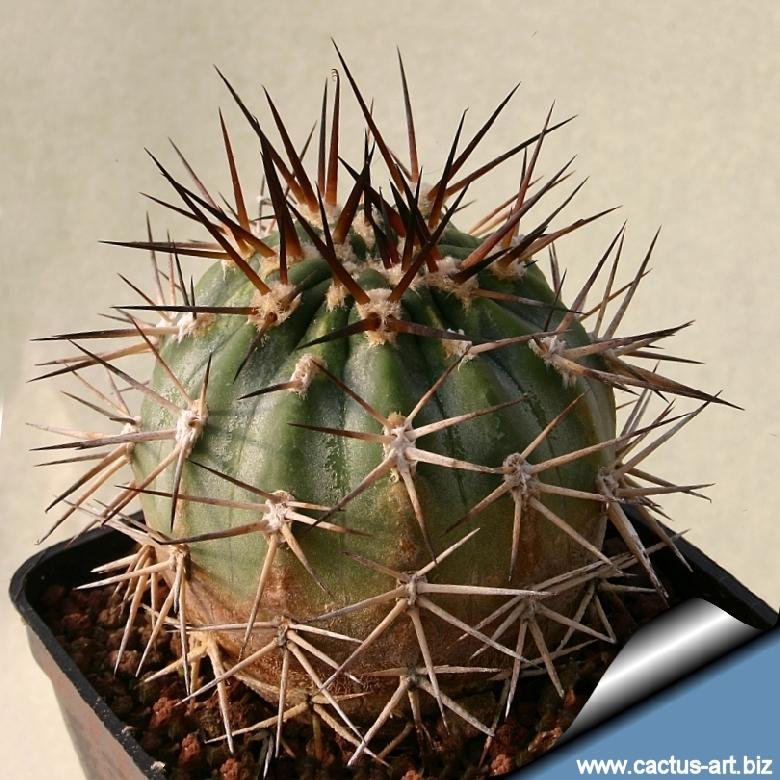
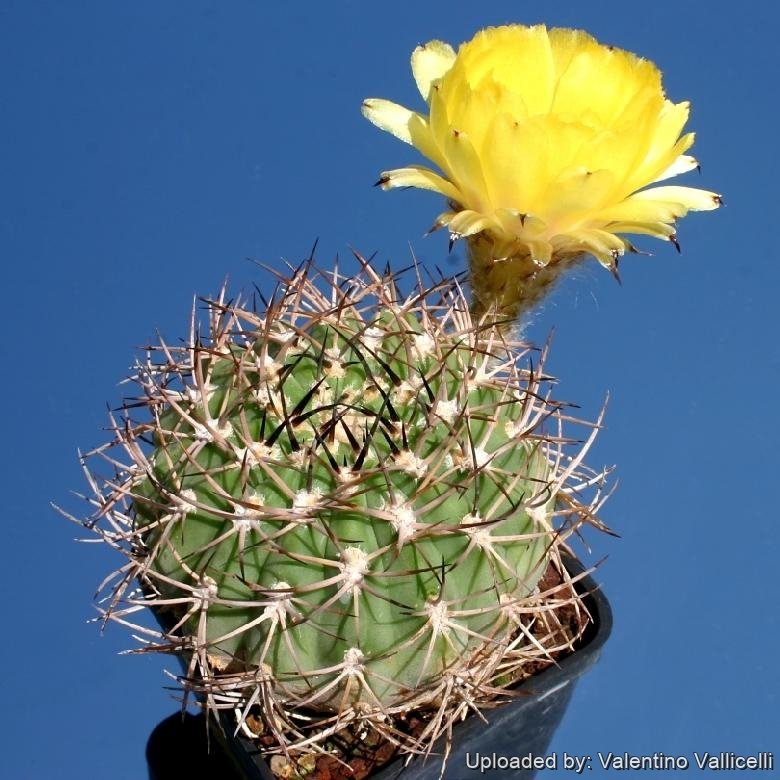
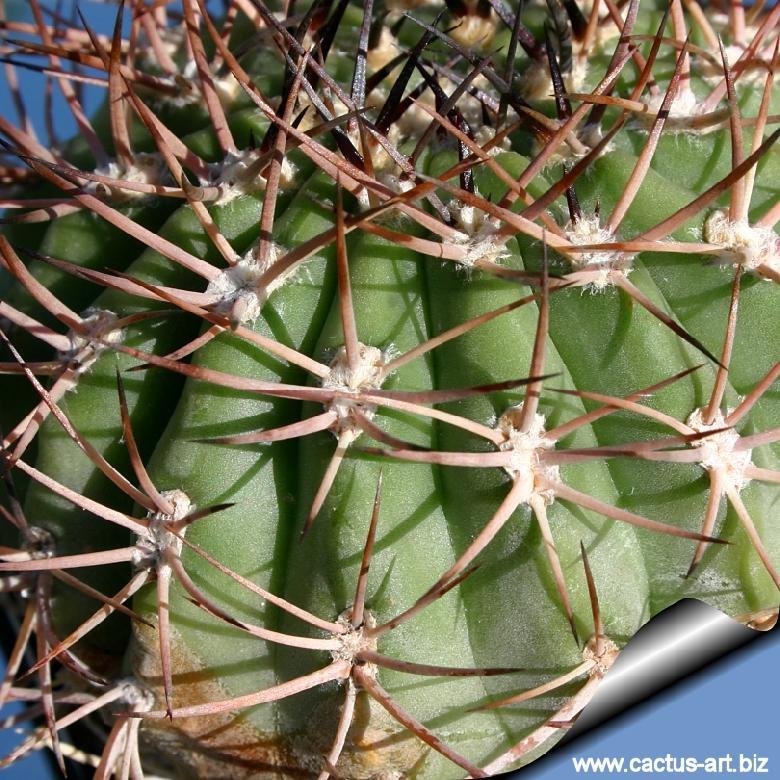
Stem: Spherical, over time it becomes slightly cylindrical, growing to a height of 12 cm or more, and a diameter of 6 to 10 cm. The epidermis is green to dark blue grey, and become a clear powdery-grey in the older part of the stem (like some Copiapoa)
Ribs: About 9-15.
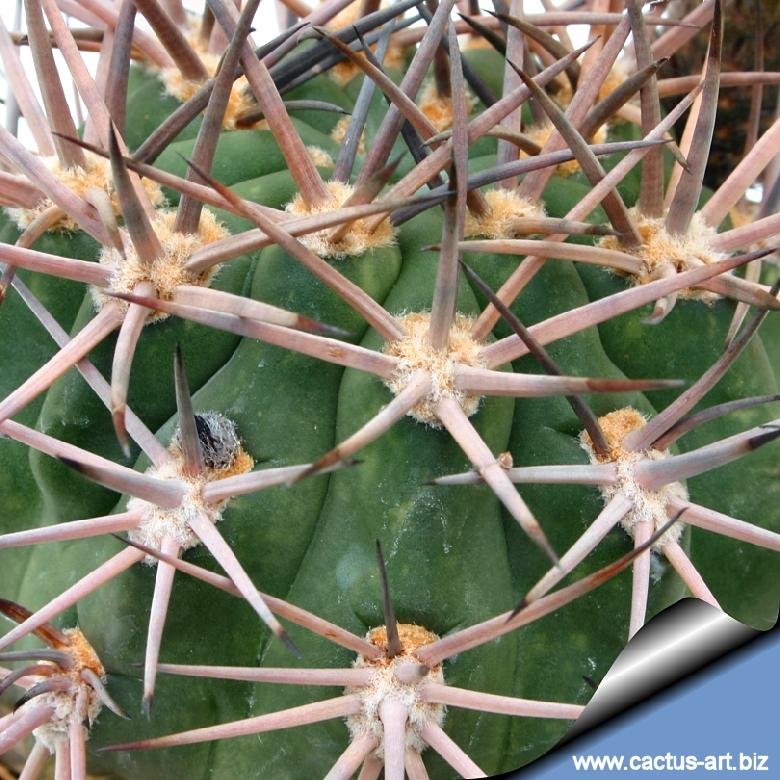
Areoles: At the apex of tubercles, at first are covered with yellowish-brown felt. The flower part of the areola is elongated, while the upper part curves around the sides of the rib, more or less in the shape of a small shield. As the tubercles widen in the course of growth, the areoles become elliptical and almost glabrous.
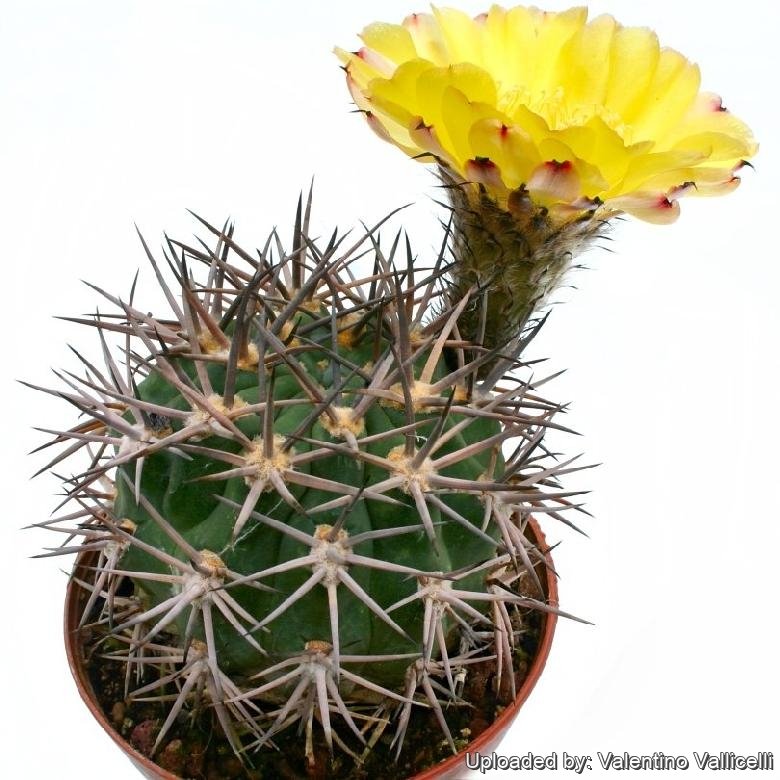
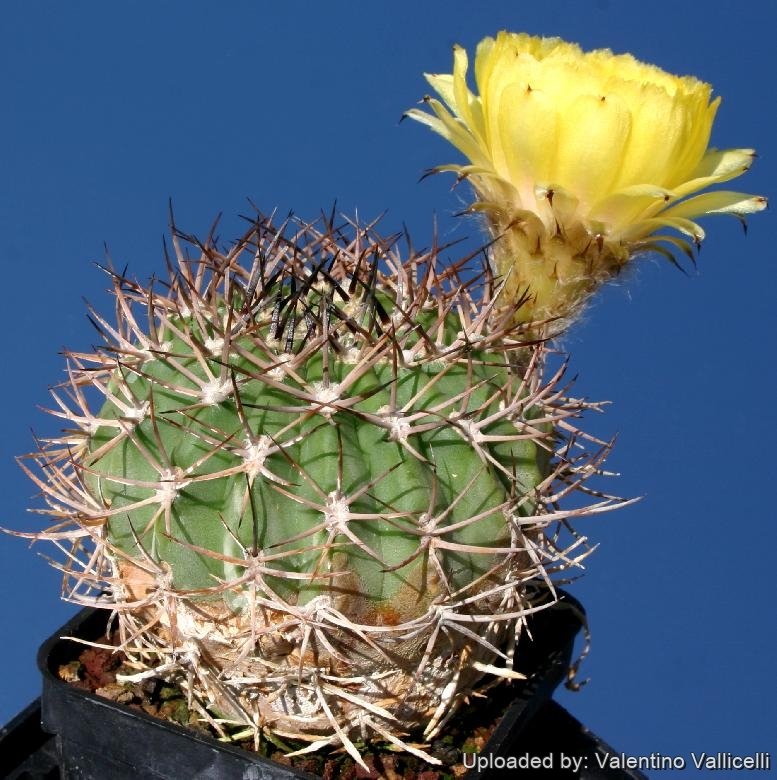
Spines: 5 to 10 radial spines and 1 to 4 central spines, they are all more or less of the same length in a given plant (5-30 mm), but this species appears to be very variable regarding the length colour and number of spines in different populations. They are usually black or light brown at first, becoming grey or whitish-yellow as they age.
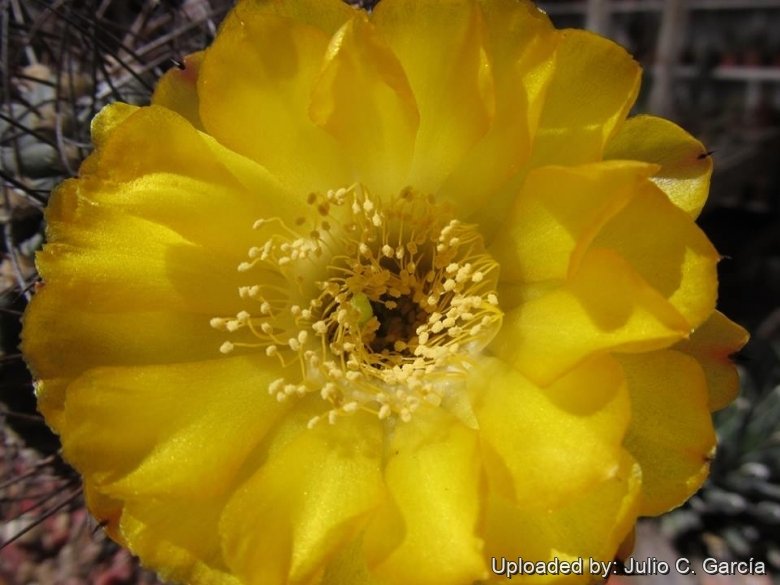
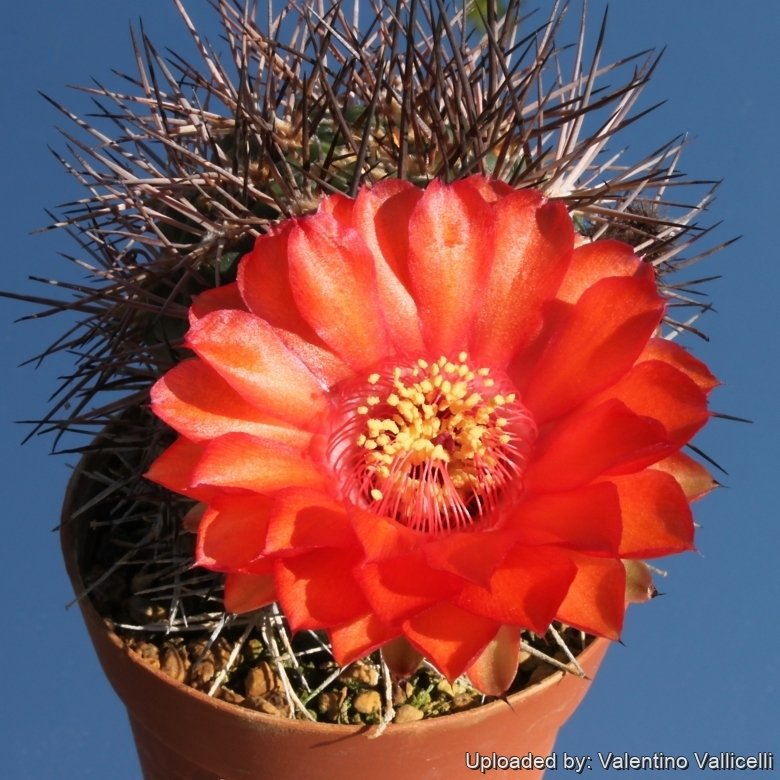
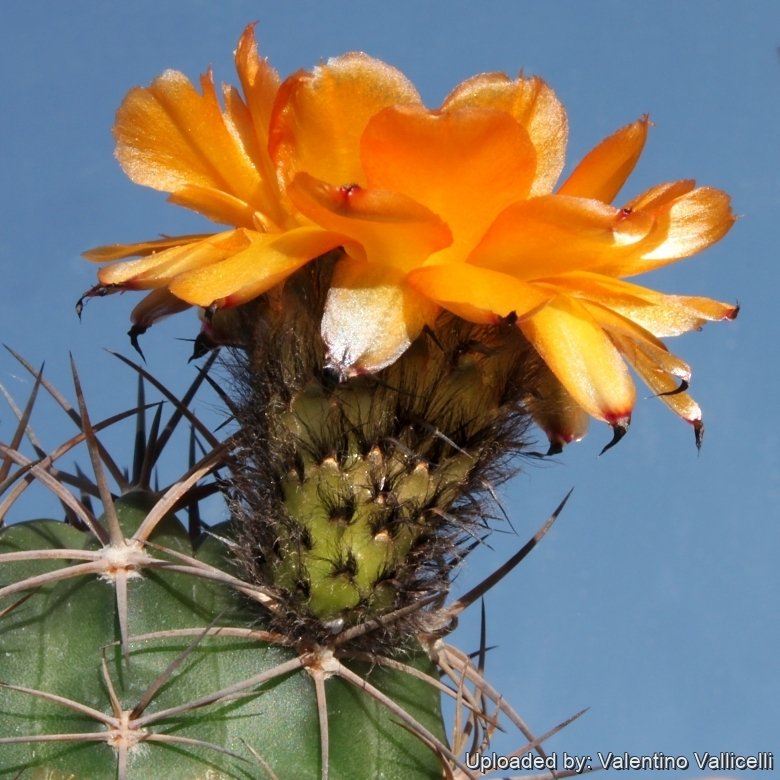
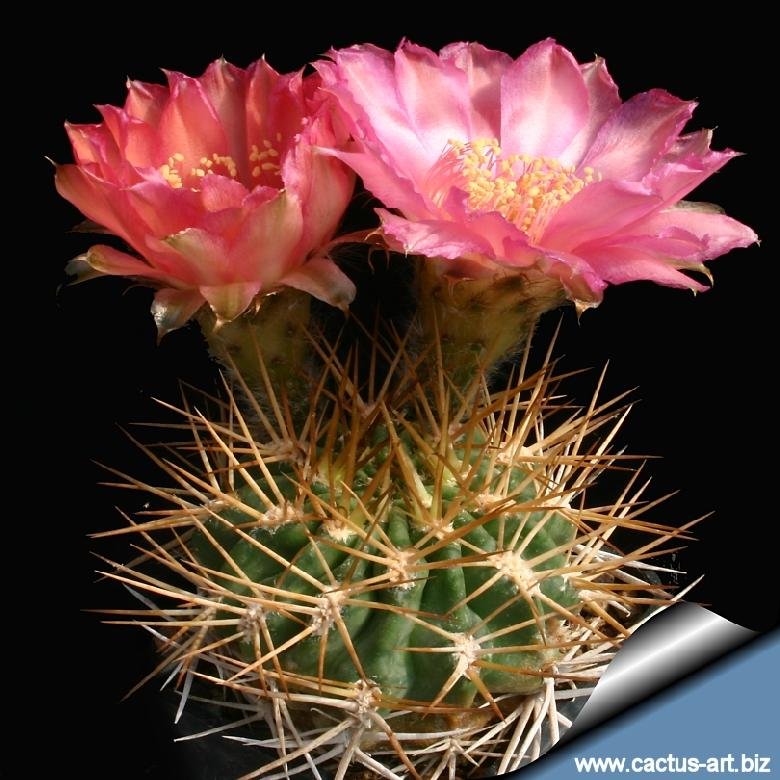
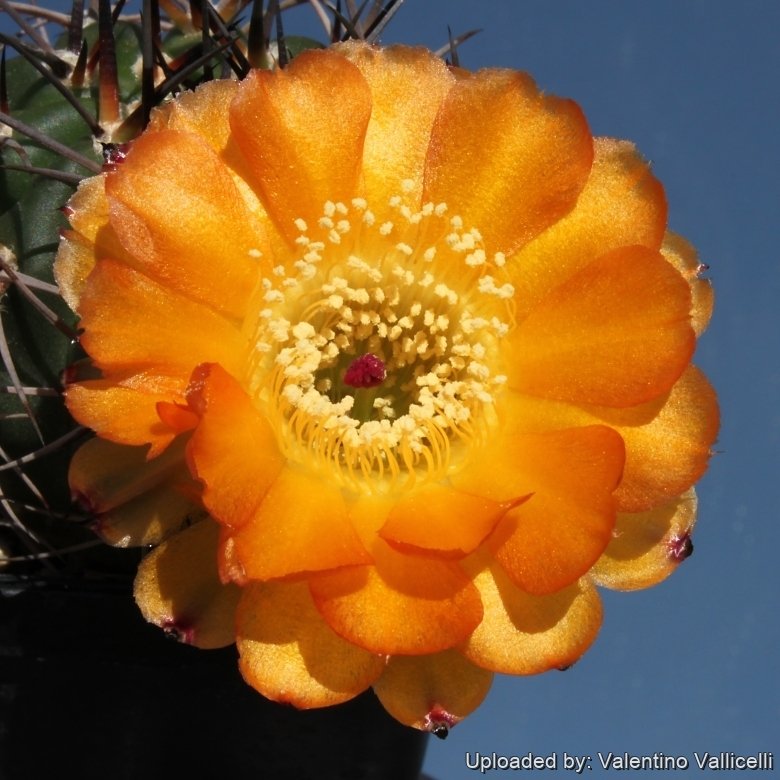
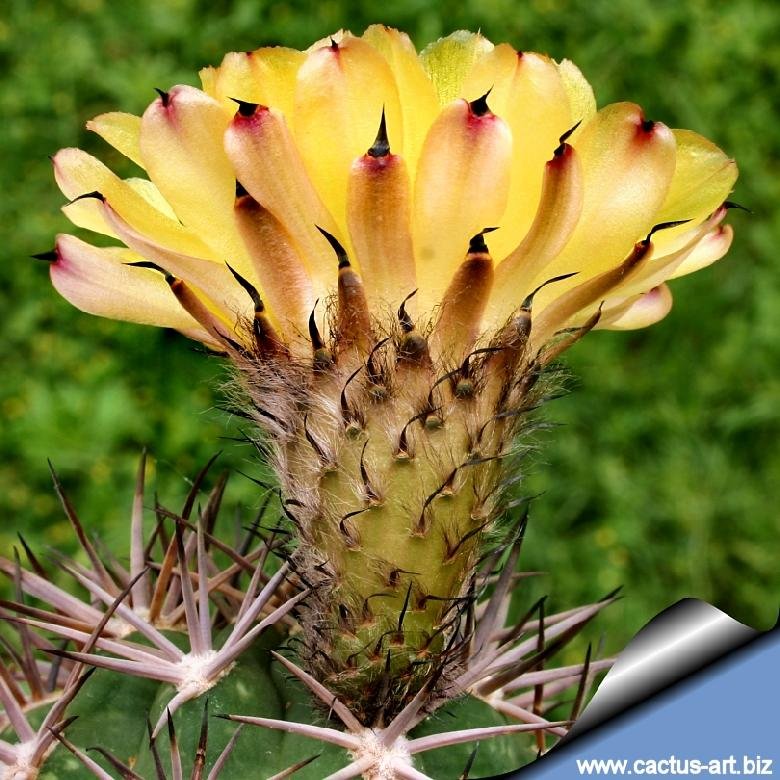
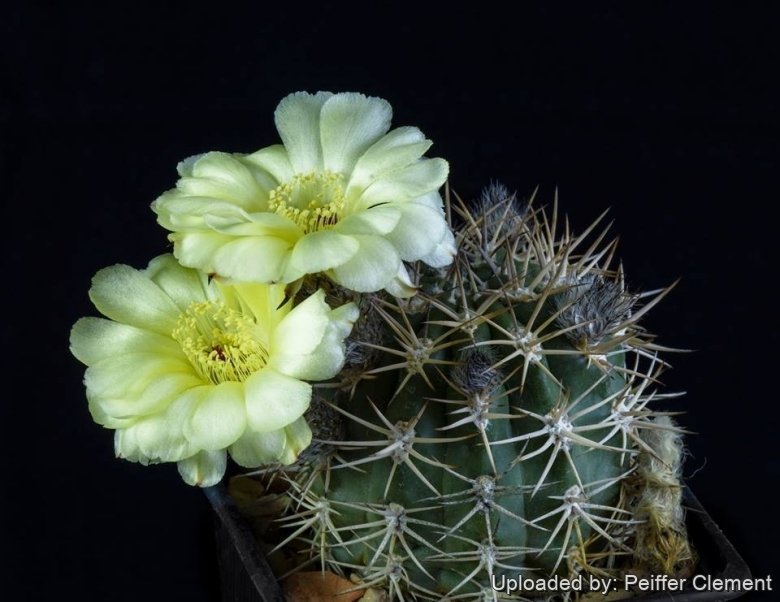
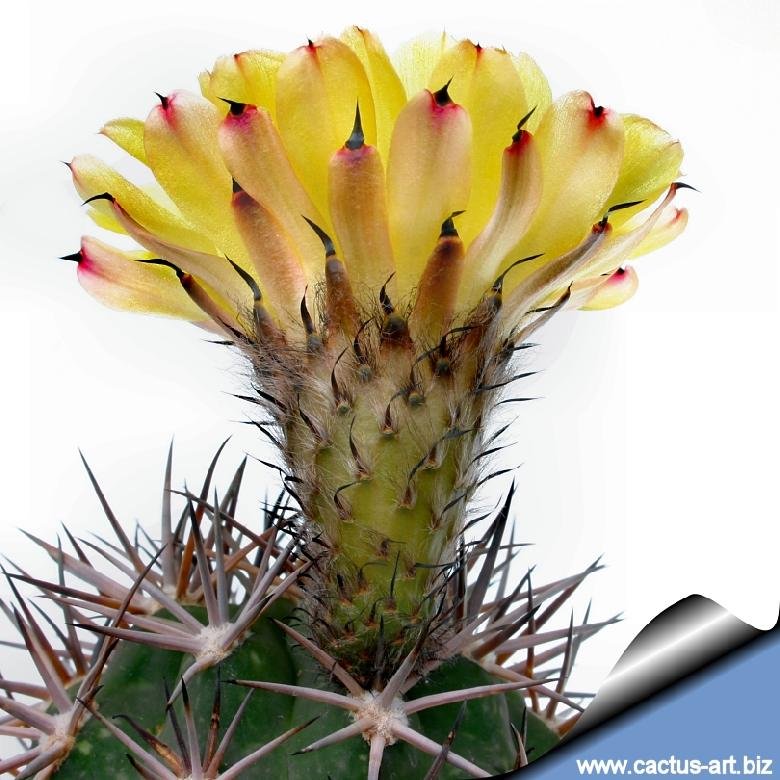
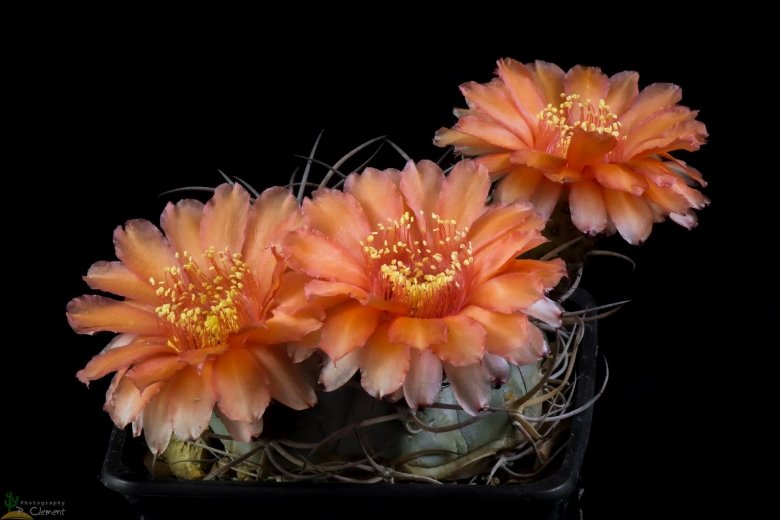
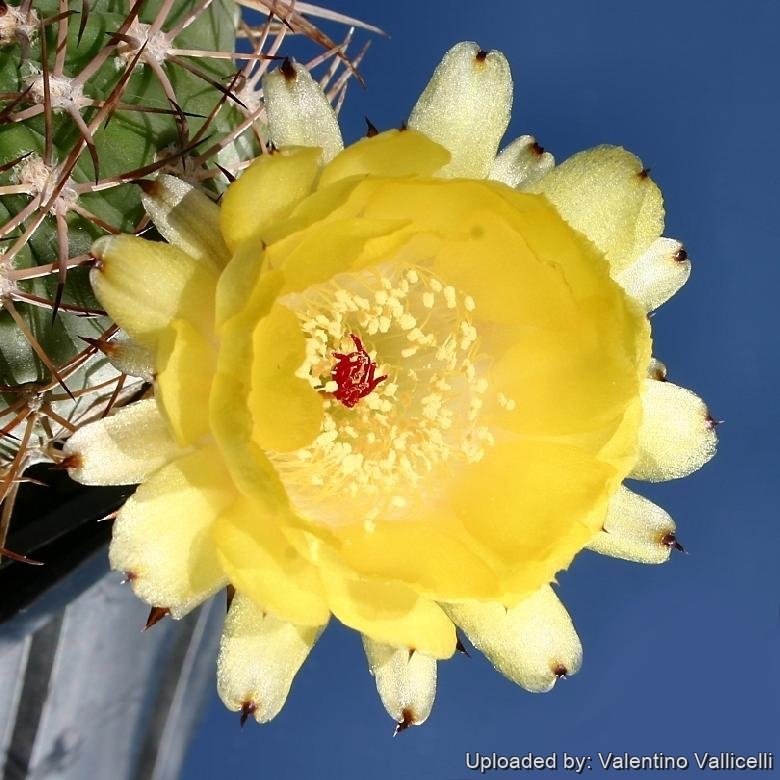
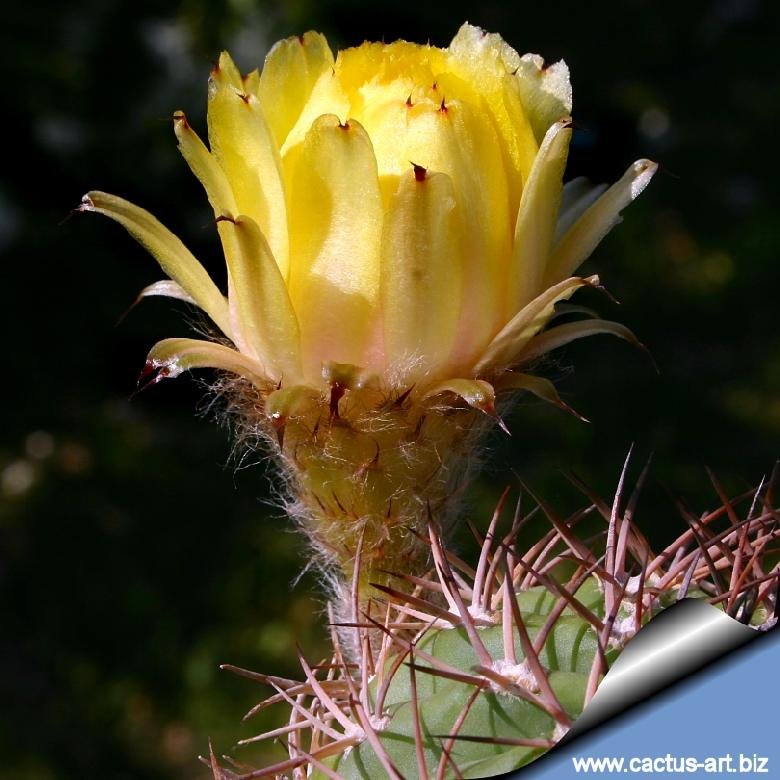
Flowers: Bell-shaped, 5 cm long or less on lateral areoles, and the segments of the perianth are sulphur or lemon-yellow (but also white, orange or red), They have very hairy buds. The floral tubes have brown-white hairs/bristles and dark spine-tipped scales.
Origin and Habitat
Echinopsis thionantha has a wide range in Argentina in the provinces of Catamarca, La Rioja, Salta and Tucumán. A new disjunct location was found in southern Argentina.
Altitude: It occurs at elevations between 1500 and 3000 metres above sea level.
Habitat: Grows on mountain slopes in monte shrubland and prepuna, in rocky soil. The species is locally abundant. The only threat is local collection for ornamental use.
Cultivation and Propagation
Echinopsis thionantha is an easy to grow succulent, more cold tolerant than most and less fussy regarding soil conditions.
Growth rate: It is a relatively rapidly growing and easily flowering species.
Soils: It likes very porous standard cactus mix soil.
Repotting: Use pot with good drainage.
Watering: Water regularly in summer, but do not overwater (Rot prone), keep dry in winter.
Fertilization: Feed with a high potassium fertilizer in summer.
Hardiness: Reputedly somewhat resistant to frost if kept on the dry side prior to, and during, cold weather (hardy to -12 C ° C, or less for short periods).
Exposition: Outside bright but filtered sunlight or afternoon shade, inside it needs bright light, and some direct sun. Tends to bronze in strong light, which encourages flowering and heavy spine production.
Uses: It is an excellent plant for container growing. It always looks good and stays small. It look fine in a cold greenhouse and frame or outdoor in a rockery.
Pests & diseases: It may be attractive to a variety of insects, but plants in good condition should be nearly pest-free, particularly if they are grown in a mineral potting-mix, with good exposure and ventilation. Nonetheless, there are several pests to watch for:
- Red spiders: Sensitive to red spider mite. Overhead watering is helpful in controlling mites.
- Mealy bugs: Occasionally mealy bugs they develop aerial into the new growth among the wool with disfiguring results, but the worst types develop underground on the roots and are invisible except by their effects.
- Scales: Scales are rarely a problem.
- Rot: Rot is only a minor problem with cacti if the plants are watered and “aired” correctly. If they are not, fungicides won’t help all that much.
Propagation: Direct sow after last frost. Seeds germinate in 7-14 days at 21-27° C in spring, remove gradually the glass cover as soon the plants will be well rooted (ca 1-2 weeks) and keep ventilated, no full sun for young plants!
Notes
A full sun exposure is indispensable to keep plant compact with strong and colourful spines. Without sun the stems elongate, remain green and don’t form the characteristic powdery-grey coating.
Bibliography
Major references and further lectures
-
Nathaniel Lord Britton, Joseph Nelson Rose “Cactaceae: Descriptions and Illustrations of Plants of the Cactus Family” Courier Dover Publications, 1963
-
James Cullen, Sabina G. Knees, H. Suzanne Cubey “The European Garden Flora Flowering Plants: A Manual for the Identification of Plants Cultivated in Europe, Both Out-of-Doors and Under Glass” Cambridge University Press, 11/Aug./2011
-
David Hunt, Nigel Taylor “The New Cactus Lexicon” DH Books, 2006
-
Edward F. Anderson “The Cactus Family” Timber Press, 2001
-
Demaio, P., Lowry, M., Ortega-Baes, P., Perea, M. & Trevisson, M. 2013. Echinopsis thionantha. In: IUCN 2013. “IUCN Red List of Threatened Species.” Version 2013.2. <www.iucnredlist.org>. Downloaded on 05 January 2014.
From llifle page Acanthocalycium brevispinum
Description
Usually solitary or slowly branching through basal shoots, but quite variable taxon with several forms.
There are a number of varieties of this highly variable cactus species, but not all are universally recognized.
Stem: Spherical, over time it becomes slightly cylindrical, growing to a height of 12 cm or more, and a diameter of 6 to 10 cm. The epidermis is green to dark blue grey, and become a clear powdery-grey in the older part of the stem (like some Copiapoa)
Ribs: About 9-15.
Areoles: At the apex of tubercles, at first are covered with yellowish-brown felt. The flower part of the areola is elongated, while the upper part curves around the sides of the rib, more or less in the shape of a small shield. As the tubercles widen in the course of growth, the areoles become elliptical and almost glabrous.
Spines: 5 to 10 radial spines and 1 to 4 central spines, they are all more or less of the same length in a given plant (± 0,5 -3 cm.), but this species appears to be very variable regarding the length colour and number of spines in different populations. They are usually black or light brown at first, becoming grey or whitish-yellow as they age. The variety “brevispinum” has comparatively short and strong sharp spines.
Flowers: Bell-shaped, 5 cm. long or less on lateral areoles, and the segments of the perianth are sulphur or lemon-yellow (but also white, orange or red), They have very hairy buds, The floral tubes have brown-white hairs /bristles and dark spine-tipped scales.
Origin and Habitat
Origin: Argentina (Salta) Grows on mountain slopes.
Cultivation and Propagation
It is an easy to grow succulent, more cold tolerant than most and less fussy regarding soil conditions.
Growth rate: It is a relatively rapidly growing and easily flowering species.
Soils: It likes very porous standard cactus mix soil.
Repotting: Use pot with good drainage.
Watering: Water regularly in summer, but do not overwater (Rot prone), keep dry in winter.
Fertilization: Feed with a high potassium fertilizer in summer.
Hardiness: Reputedly somewhat resistant to frost if kept on the dry side prior to, and during, cold weather (hardy to -12 C ° C, or less for short periods).
Exposition: Outside bright sunlight or afternoon shade, inside it needs bright light, and some direct sun, full sun is indispensable to keep plant compact with strong spines.
Uses: It is an excellent plant for container growing. It always looks good and stays small. It look fine in a cold greenhouse and frame or outdoor in a rockery.
Pests & diseases: It may be attractive to a variety of insects, but plants in good condition should be nearly pest-free, particularly if they are grown in a mineral potting-mix, with good exposure and ventilation. Nonetheless, there are several pests to watch for:
- Red spiders: Sensitive to red spider mite. Overhead watering is helpful in controlling mites.
- Mealy bugs: Occasionally mealy bugs they develop aerial into the new growth among the wool with disfiguring results, but the worst types develop underground on the roots and are invisible except by their effects.
- Scales: Scales are rarely a problem.
- Rot: Rot is only a minor problem with cacti if the plants are watered and “aired” correctly. If they are not, fungicides won’t help all that much.
Propagation: Direct sow after last frost. Seeds germinate in 7-14 days at 21-27° C in spring, remove gradually the glass cover as soon the plants will be well rooted (ca 1-2 weeks) and keep ventilated, no full sun for young plants!
Source: Acanthocalycium brevispinum, LLIFLE - Encyclopedia of living forms, CC-BY-SA, retrieved 2026-10-25.
From llifle page Acanthocalycium chionanthum
Description
Usually solitary or slowly branching through basal shoots, but quite variable taxon with several forms.
There are a number of varieties of this highly variable cactus species, but not all are universally recognized.
Stem: Spherical, over time it becomes slightly cylindrical, growing to a height of 12 cm or more, and a diameter of 6 to 10 cm. The epidermis is green to dark blue grey, and become a clear powdery-grey in the older part of the stem (like some Copiapoa)
Ribs: About 9-15.
Areoles: At the apex of tubercles, at first are covered with yellowish-brown felt. The flower part of the areola is elongated, while the upper part curves around the sides of the rib, more or less in the shape of a small shield. As the tubercles widen in the course of growth, the areoles become elliptical and almost glabrous.
Spines: 5 to 10 radial spines and 1 to 4 central spines, they are all more or less of the same length in a given plant (±0,5 -3 cm.), but this species appears to be very variable regarding the length colour and number of spines in different populations. They are usually black or light brown at first, becoming grey or whitish-yellow as they age.
Flowers: Bell-shaped, 5 cm. long or less on lateral areoles, and the segments of the perianth are sulphur or lemon-yellow (but also white, orange or red), They have very hairy buds, The floral tubes have brown-white hairs /bristles and dark spine-tipped scales.
Origin and Habitat
Argentina (Salta) It is often found growing on mountain slopes
Cultivation and Propagation
It is a summer-growing species that offers no cultivation difficulty. Water regularly in summer (but do not over-water). It needs good drainage and very porous soil. Keep rather dry in winter. Feed with a high potassium fertilizer in summer. It is quite frost resistant if kept dry (hardy to -12° C). It needs a very bright exposure. Full sun is indispensable to keep plant compact with strong spines.
Propagation: Direct sow after last frost, offsets (if available).
Source: Acanthocalycium chionanthum, LLIFLE - Encyclopedia of living forms, CC-BY-SA, retrieved 2026-10-25.
From llifle page Lobivia thionantha var. munita
Description
Acanthocalycium thionanthum var. munitum is a local or morphological form of the widespread and variable Acanthocalycium thionanthum (Echinopsis thionantha). The var. munitum differs from the type variety mainly for its fabulous dark orange flowers, but yellow or red flowers have also been referred. The var. munitum is distinguish from var. variiflora (Backbg.) for the longer, harder and curved spines and for the slightly smaller flowers. (var. variiflora is a bit larger in size and the flower are more open and variable in colour). However in habitat there is a gradual series of transitional forms intergrading one into another, and it is almost impossible to tell them apart, if not for the geographical provenance, so now they are all synonymized with Echinopsis thionantha. Moreover the name “minutum” (instead of “munitum”) is often used among growers, creating some confusion.
Stem. Usually solitary, rarely with two or more bodies, round to about 8-10 cm in diameter, and 15-20 cm tall, pale to dark grey-green, glaucous, with a carrot-like central root.
Ribs: About 14.
Spines: About 9, up to 5 cm long curved and intertwined, larger at base, brownish with darker tip.
Flower: About 5 cm long and wide, yellow, orange to red.
Origin and Habitat
Cerro Zorrito, Salta, Argentina
Altitude range: 2200-2700
Source: Lobivia thionantha var. munita, LLIFLE - Encyclopedia of living forms, CC-BY-SA, retrieved 2026-10-25.
From llifle page Acanthocalycium griseum
Description
Usually solitary or slowly branching through basal shoots.
Stem: Spherical in time becomes slightly cylindrical, growing to a height of 12 cm or more, and a diameter of 6 to 10 cm. The epidermis is green to dark blue grey and become clear powdery-grey in the older part of the stem (like some Copiapoa)
Ribs: About 9-15.
Areoles: At the apex of tubercles, at first are covered with yellowish-brown felt. The lower part of the areola is elongated while the upper part curves around the sides of the rib, more or less in the shape of a small shield. As the tubercles widen in the course of growth, the areoles become elliptical and almost glabrous.
Spines: 5 to 10 radial spines and 1 to 4 central spines, they are all more or less of the same length in a given plant (± 0,5 -3 cm.), but this species appears to be very variable about the length colour and number of spines in different population. They usually are black or light brown at first, becoming grey or whitish-yellow as they ages.
Flowers: Bell-shaped 5 cm. long or less on lateral areoles and the segments of the perianth are sulfur- or lemon-yellow (but also white, orange or red), They have very hairy bud, The floral tubes have brown-white hairs /bristles and dark spine-tipped scales,
Origin and Habitat
Argentina (Salta)
Habitat: Mountain slopes
Cultivation and Propagation
Echinopsis grisea is an easy to grow succulent, more cold tolerant than most and less fussy regarding soil conditions.
Growth rate: It is a relatively rapidly growing and easily flowering species.
Soils: It likes very porous standard cactus mix soil.
Repotting: Use pot with good drainage.
Watering: Water regularly in summer, but do not overwater (Rot prone), keep dry in winter.
Fertilization: Feed with a high potassium fertilizer in summer.
Hardiness: Reputedly somewhat resistant to frost if kept on the dry side prior to, and during, cold weather (hardy to -12 C ° C, or less for short periods).
Exposition: Outside bright but filtered sunlight or afternoon shade, inside it needs bright light, and some direct sun. Tends to bronze in strong light, which encourages flowering and heavy spine production.
Uses: It is an excellent plant for container growing. It always looks good and stays small. It look fine in a cold greenhouse and frame or outdoor in a rockery.
Pests & diseases: It may be attractive to a variety of insects, but plants in good condition should be nearly pest-free, particularly if they are grown in a mineral potting-mix, with good exposure and ventilation. Nonetheless, there are several pests to watch for:
- Red spiders: Sensitive to red spider mite. Overhead watering is helpful in controlling mites.
- Mealy bugs: Occasionally mealy bugs they develop aerial into the new growth among the wool with disfiguring results, but the worst types develop underground on the roots and are invisible except by their effects.
- Scales: Scales are rarely a problem.
- Rot: Rot is only a minor problem with cacti if the plants are watered and “aired” correctly. If they are not, fungicides won’t help all that much.
Propagation: Direct sow after last frost. Seeds germinate in 7-14 days at 21-27° C in spring, remove gradually the glass cover as soon the plants will be well rooted (ca 1-2 weeks) and keep ventilated, no full sun for young plants!
Source: Acanthocalycium griseum, LLIFLE - Encyclopedia of living forms, CC-BY-SA, retrieved 2026-10-25.
From llifle page Acanthocalycium thionanthum var. copiapoides
Description
Usually solitary or slowly branching through basal shoots, but quite variable taxon with several forms.
There are a number of varieties of this highly variable cactus species, but not all are universally recognized.
Stem: Spherical, over time it becomes slightly cylindrical, growing to a height of 12 cm or more, and a diameter of 6 to 10 cm. The epidermis is green to dark blue grey, and become a clear powdery-grey in the older part of the stem (like some Copiapoa) The variety “copiapoides” has comparatively clearer grey-blue epidermis .
Ribs: About 9-15.
Areoles: At the apex of tubercles, at first are covered with yellowish-brown felt. The flower part of the areola is elongated, while the upper part curves around the sides of the rib, more or less in the shape of a small shield. As the tubercles widen in the course of growth, the areoles become elliptical and almost glabrous.
Spines: 5 to 10 radial spines and 1 to 4 central spines, they are all more or less of the same length in a given plant (± 0,5 -3 cm.), but this species appears to be very variable regarding the length colour and number of spines in different populations. They are usually black or light brown at first, becoming grey or whitish-yellow as they age
Flowers:: Bell-shaped, 5 cm. long or less on lateral areoles, and the segments of the perianth are sulphur or lemon-yellow (but also white, orange or red), They have very hairy buds, The floral tubes have brown-white hairs /bristles and dark spine-tipped scales.
Origin and Habitat
Argentina (Salta) Grows on mountain slopes.
Cultivation and Propagation
Echinopsis thionantha var. copiapoides is an easy to grow succulent, more cold tolerant than most and less fussy regarding soil conditions.
Growth rate: It is a relatively rapidly growing and easily flowering species.
Soils: It likes very porous standard cactus mix soil.
Repotting: Use pot with good drainage.
Watering: Water regularly in summer, but do not overwater (Rot prone), keep dry in winter.
Fertilization: Feed with a high potassium fertilizer in summer.
Hardiness: Reputedly somewhat resistant to frost if kept on the dry side prior to, and during, cold weather (hardy to -12 C ° C, or less for short periods).
Exposition: Outside bright but filtered sunlight or afternoon shade, inside it needs bright light, and some direct sun. Tends to bronze in strong light, which encourages flowering and heavy spine production.
Uses: It is an excellent plant for container growing. It always looks good and stays small. It look fine in a cold greenhouse and frame or outdoor in a rockery.
Pests & diseases: It may be attractive to a variety of insects, but plants in good condition should be nearly pest-free, particularly if they are grown in a mineral potting-mix, with good exposure and ventilation. Nonetheless, there are several pests to watch for:
- Red spiders: Sensitive to red spider mite. Overhead watering is helpful in controlling mites.
- Mealy bugs: Occasionally mealy bugs they develop aerial into the new growth among the wool with disfiguring results, but the worst types develop underground on the roots and are invisible except by their effects.
- Scales: Scales are rarely a problem.
- Rot: Rot is only a minor problem with cacti if the plants are watered and “aired” correctly. If they are not, fungicides won’t help all that much.
Propagation: Direct sow after last frost. Seeds germinate in 7-14 days at 21-27° C in spring, remove gradually the glass cover as soon the plants will be well rooted (ca 1-2 weeks) and keep ventilated, no full sun for young plants!
Source: Acanthocalycium thionanthum var. copiapoides, LLIFLE - Encyclopedia of living forms, CC-BY-SA, retrieved 2026-10-25.
Gallery