Description
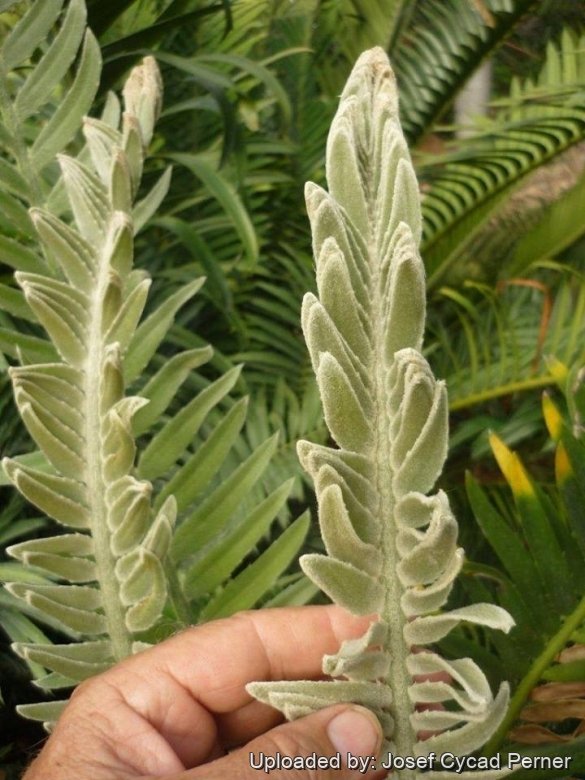
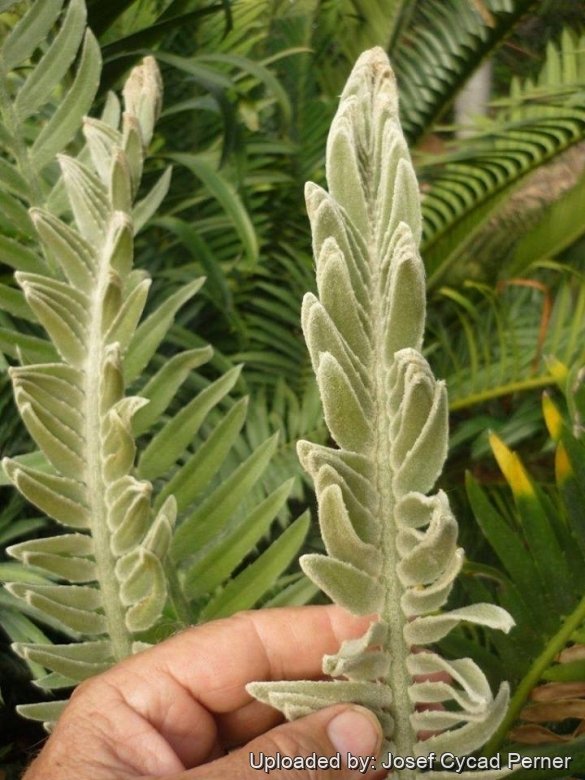
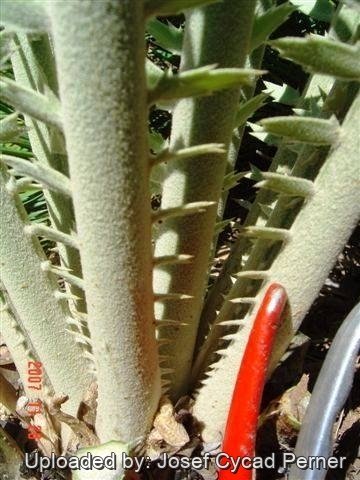
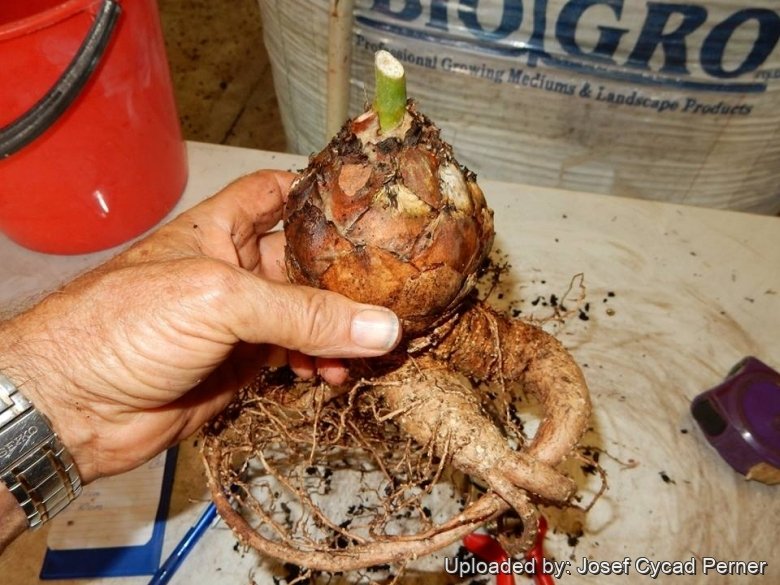
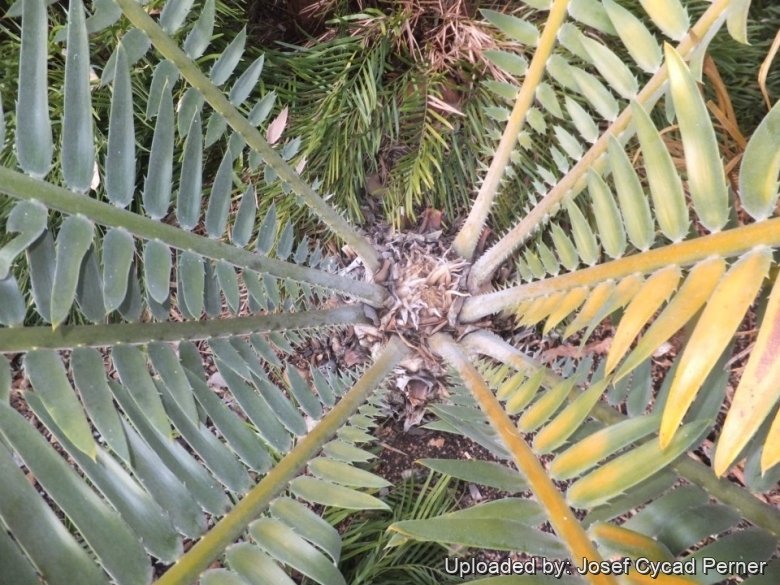
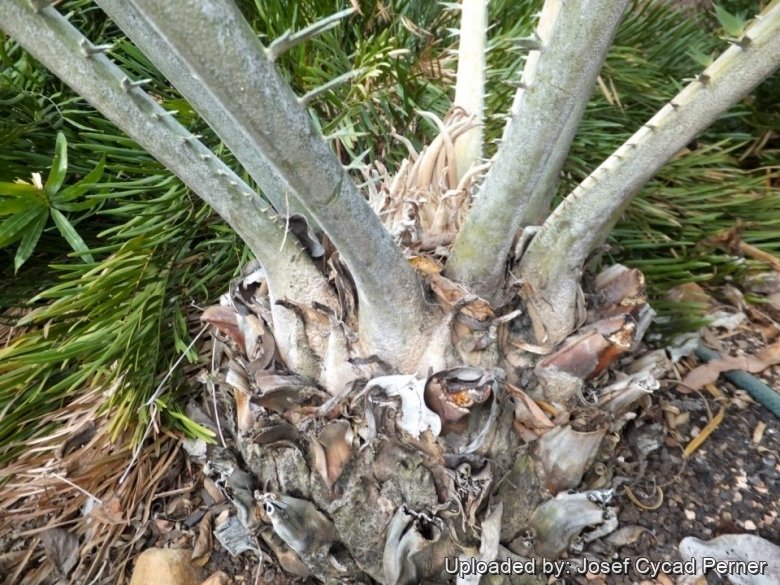
The extremely rare Encephalartos septentrionalis ‘Sudan silver’ is considered a new species separated from Encephalartos septentrionalis. This plant has beautiful silvery, blue/green leaves while E. septentrionalis has green leaves. It is a medium sized cycad usually with a subterranean trunks or with a very short trunk. Plants will grow in full sun or filtered sun. Small plants take several years before strong growth and multiple leaves appear, this cycad is very attractive. In cultivation, this plant can develop a deep tap root, and may be semi-deciduous. The dead leaves hang down and form a skirt (if not removed).
Trunk: 30-200 cm in height, branching at the base.
Leaves: Numerous in a obliquely erect although straggly crown, mature leaves can reach 1 meter in length and are a light green colour while younger ones are silvery-blue.
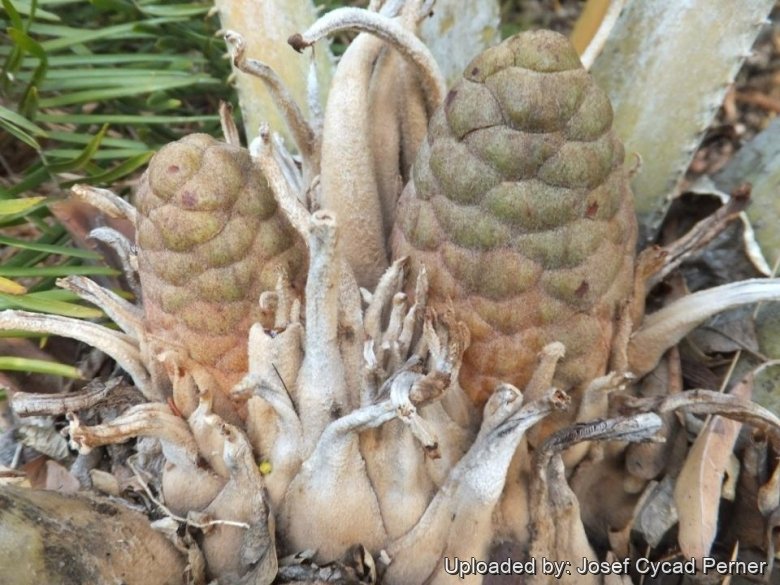
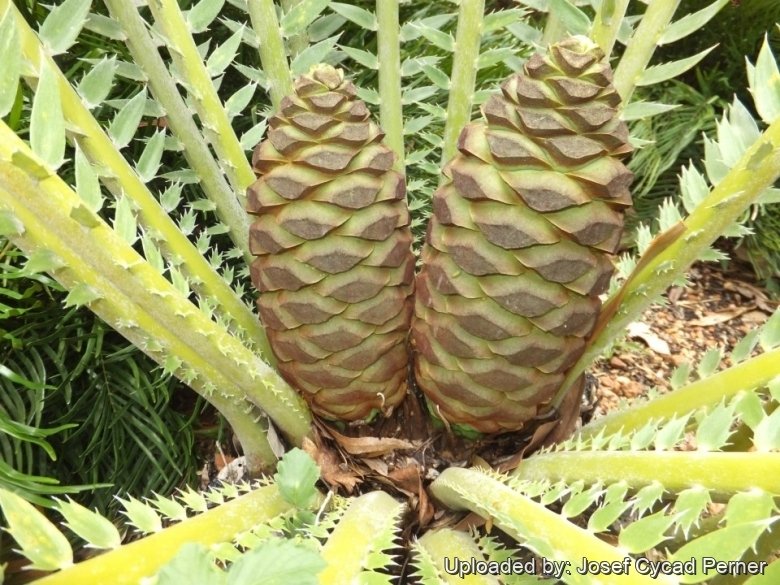
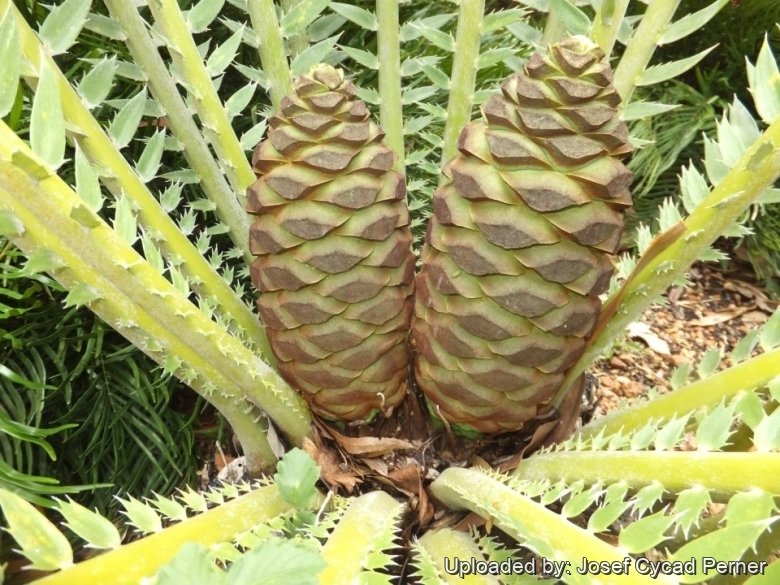
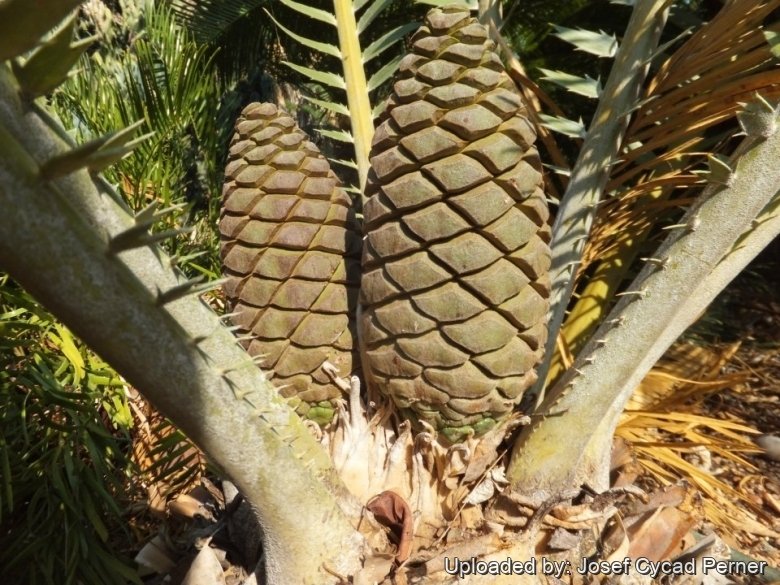
Male and female cones: Green at first becoming yellowish brown at maturity
Seeds: Seeds are oblong, angular and dark red.
Origin and Habitat
Plants collected by Joe Perner from Habitat location near Moyo, Northern Uganda on the Sudan Border.
Cultivation and Propagation
Encephalartos septentrionalis ‘Sudan Silver’ is an adaptable plant well suited to warm temperate and subtropical climates. Its beauty and ease of horticulture make it one of the finest cycads for use in the garden. As a garden plant, this cycad will usually hold one or two crowns of leaves, all in good condition. As a seedling, it often loses its previous year’s leaves before the new leaves emerge. The seedlings need plenty of room for the tap root to develop and require very good drainage. It can be grown in full sun without its leaves burning.
Growth rate: It is a long lived slow growing plant taking 15 to 20 years for one of these to produce a cone, so patience is a must.
Soils: It prefer well drained, gritty soil.
Waterings: In cultivation prefers plenty of water, especially in dry weather for optimal growth. But it is eventually drought resistant. Keep rather dry in winter.
Fertilization: Naturally undemanding for nutrients, it responds very well to regular applications of fertilizer. Growth can be greatly improved through the application of fertilizers. Most growers find that a fertilizer having an even NPK (Nitrogen, Phosphorus, Potassium) balance, and supplemental trace elements, provides a good start for cycads.
Exposure: It will grow in partial shade, however best results are obtained growing the seedlings in full sun.
Hardiness: They do best in a tropical or sub-tropical climate and should be kept totally dry in winter at or around 10°C but may tolerate light frost for short periods if dry, however heavy frosts would probably be fatal.
Propagation: It may be propagated by seeds. They are among the easiest plants to germinate.
Gallery