Publication: Cact. Journ. Brit. v. 9, fig. sub nomine Morawetzia Doelziana (1936); et inBlatter Kakteenforsch. 1937, No. 1, p. [8].
Description
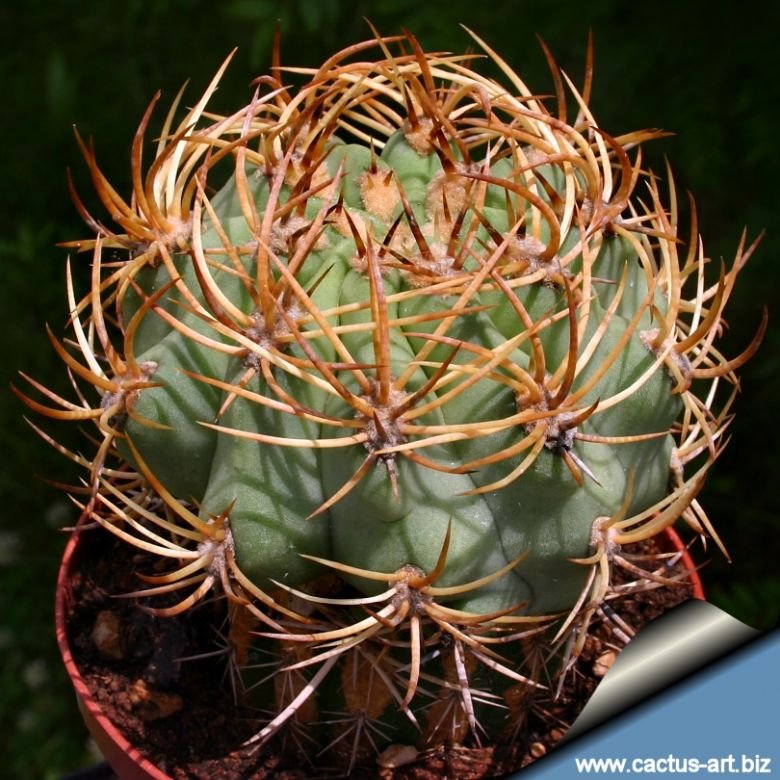
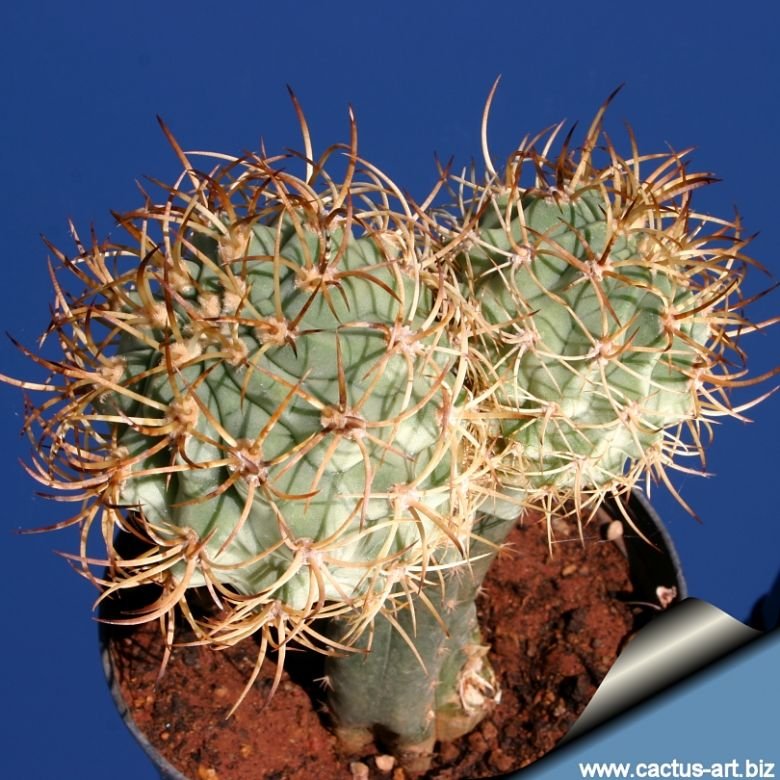
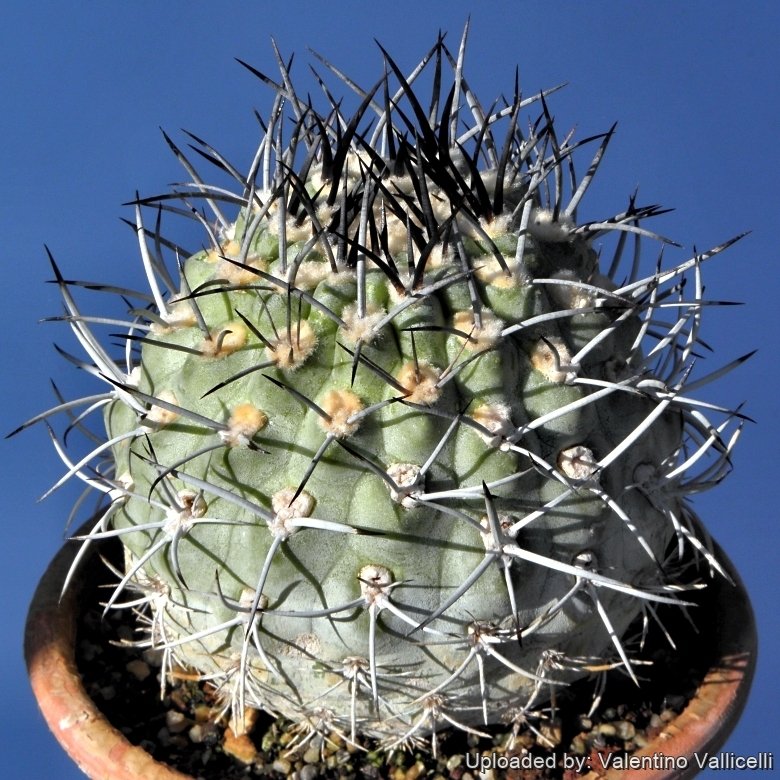
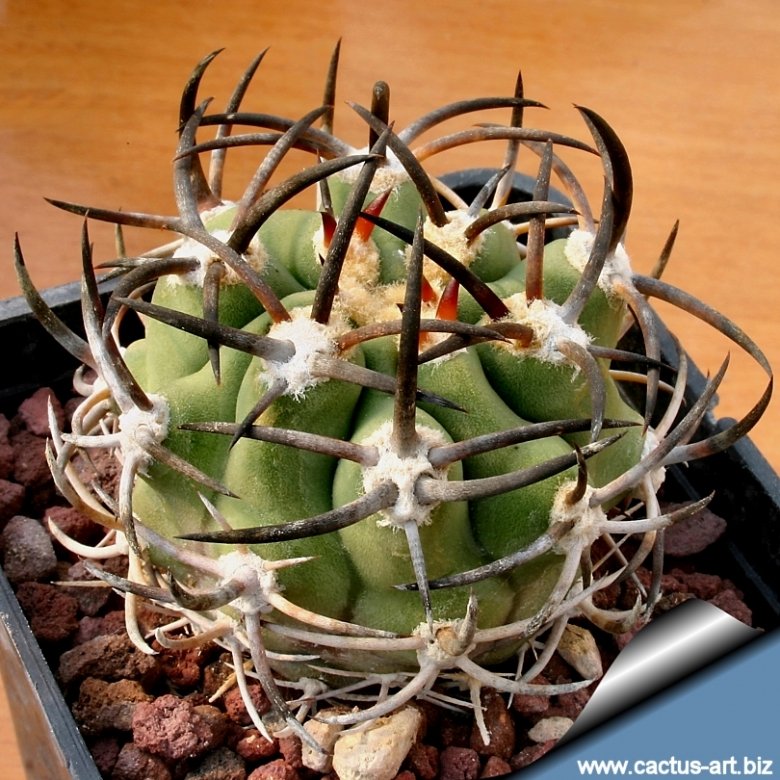
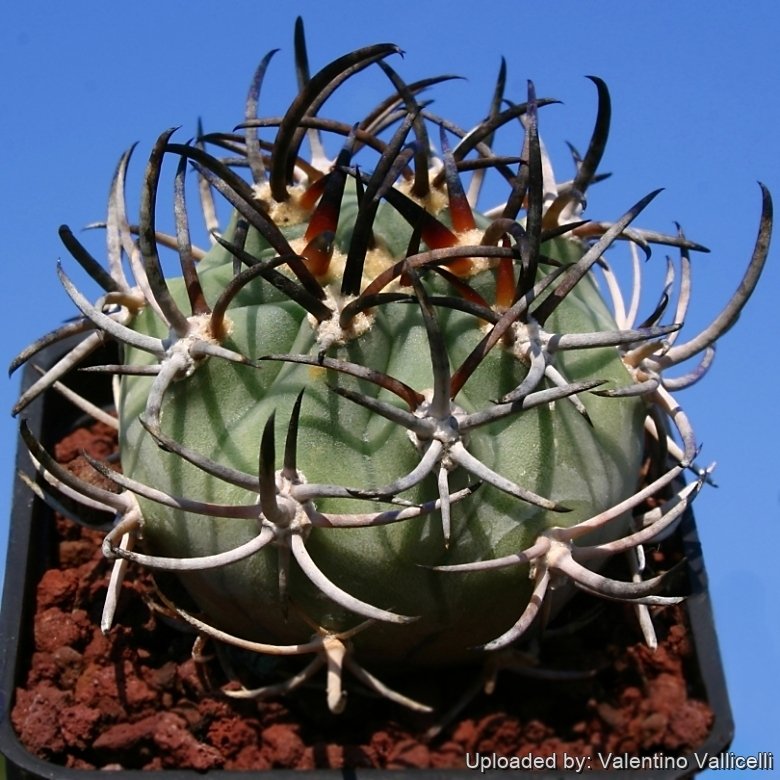
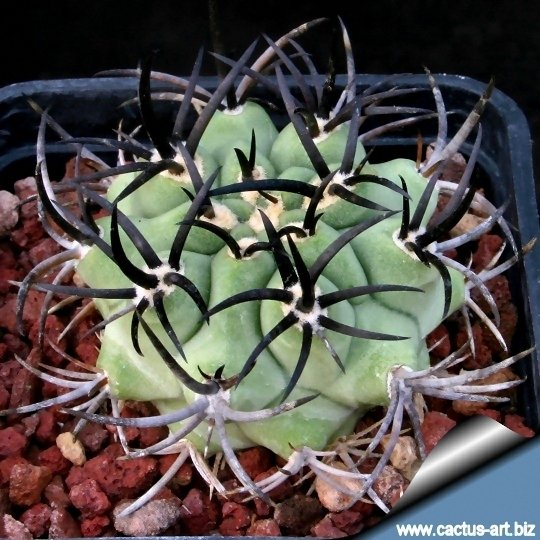
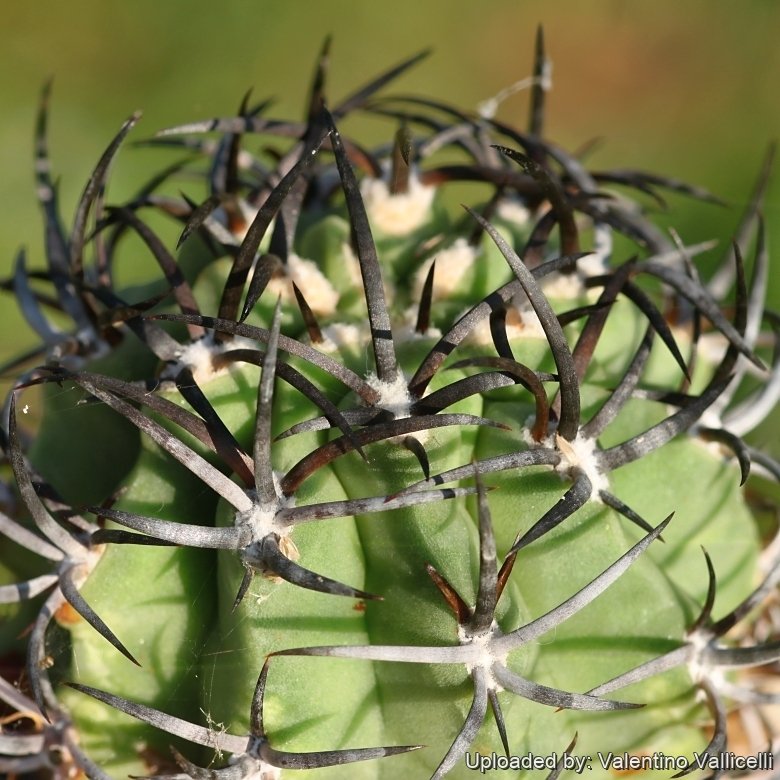
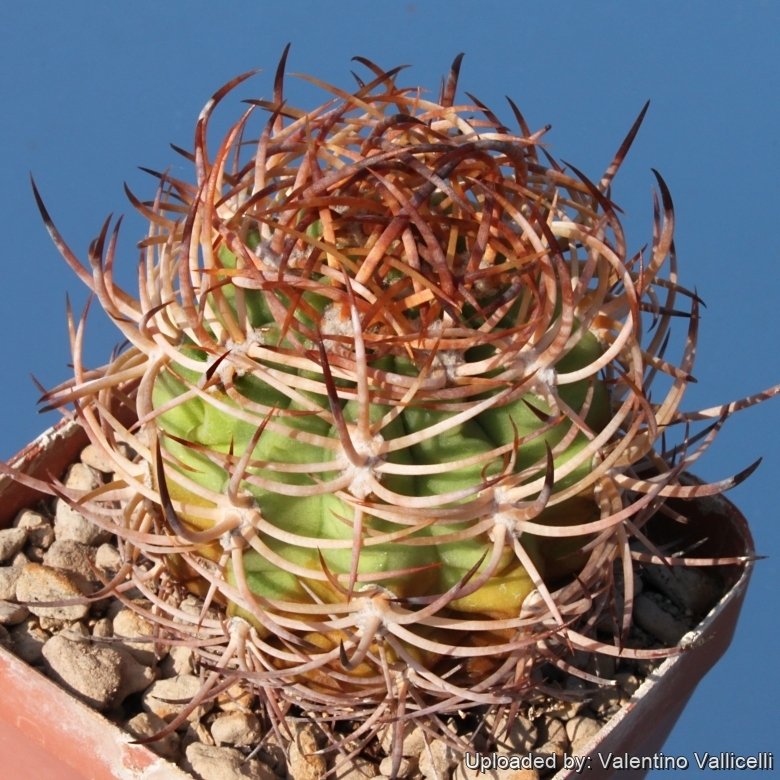
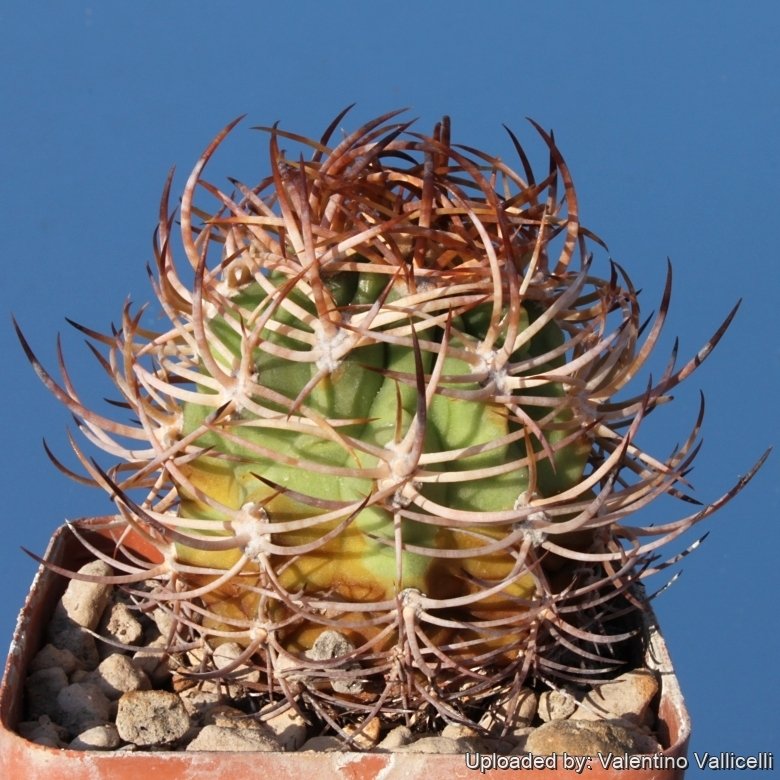
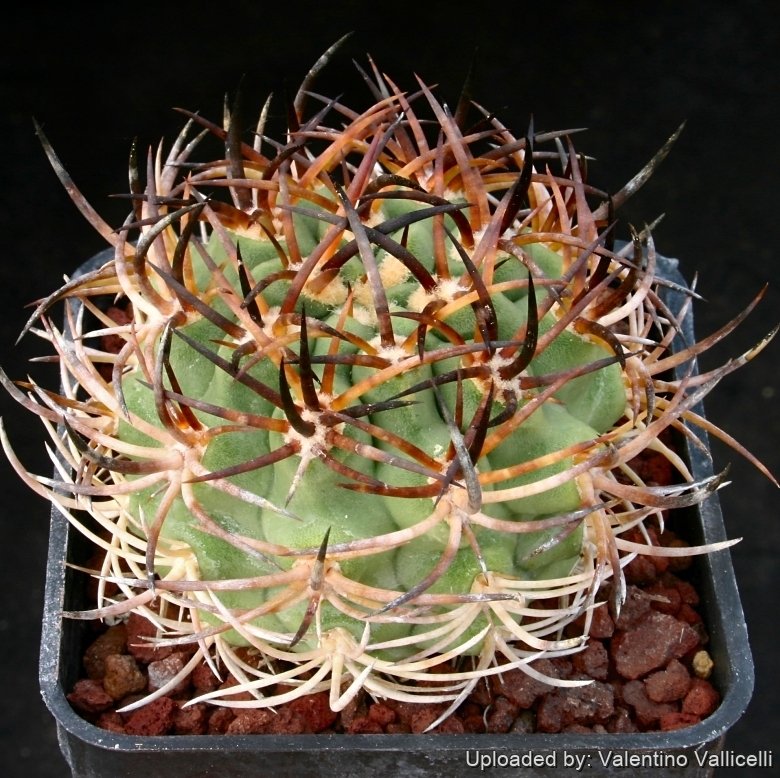
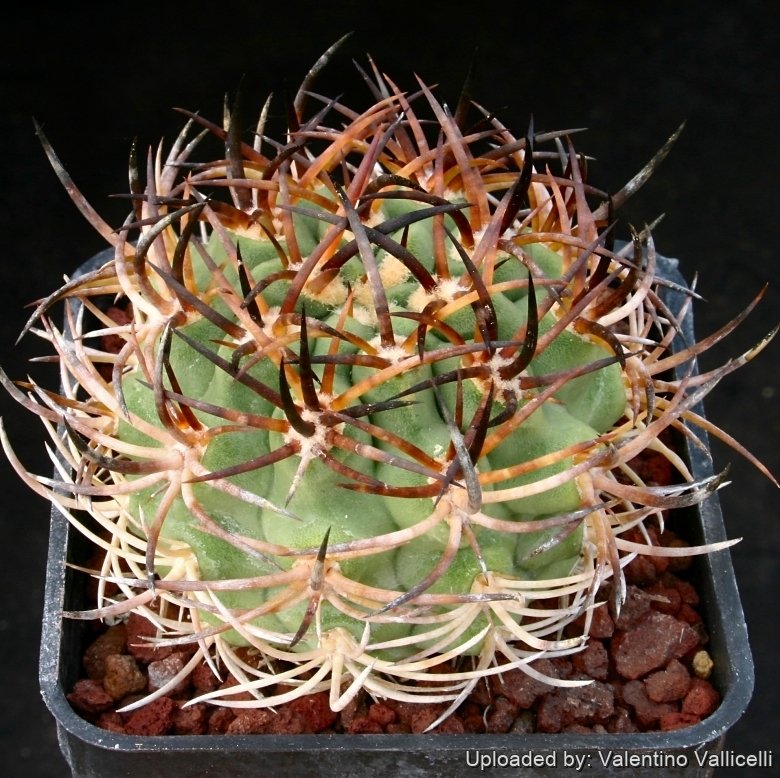
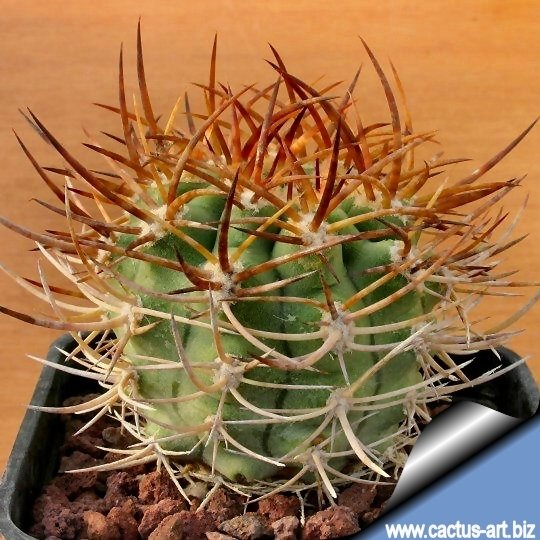
Eriosyce aurata is a very large and very spiny barrel cactus with numerous ribs.This fascinating plant is known by Chileans under the name of “sandillon” and resembles in habit and fruit to some of the giant species of Echinocactus in Mexico.
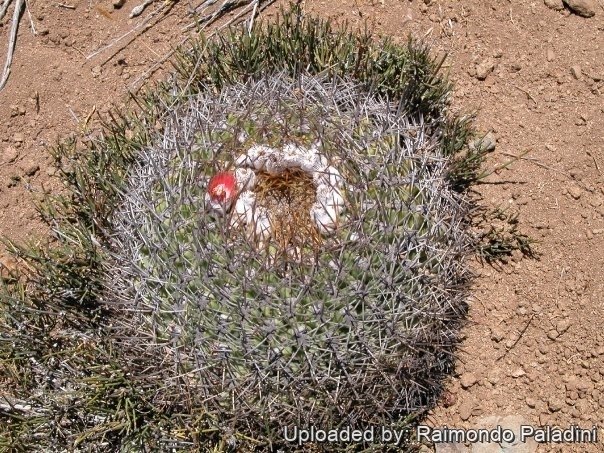
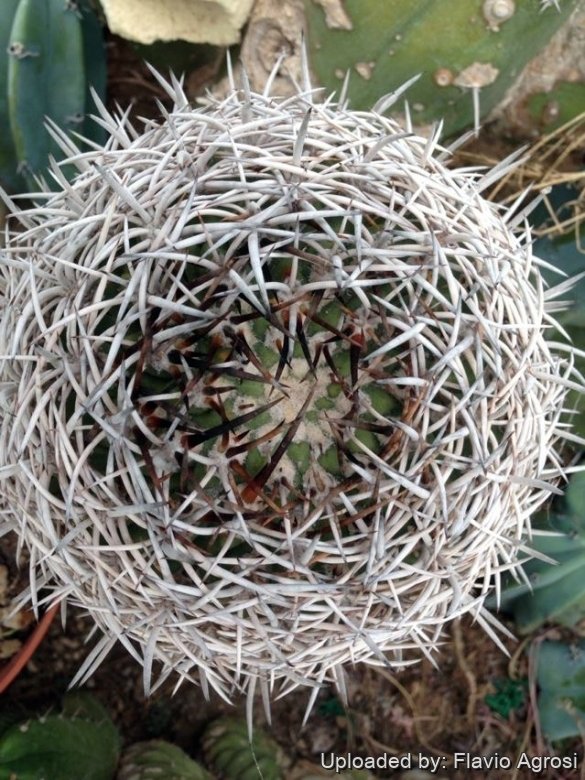
Stem: Spherical with abundant white wool on top up to 50 cm in diameter. Adult specimens become columnar, reaching over 90 cm in height.
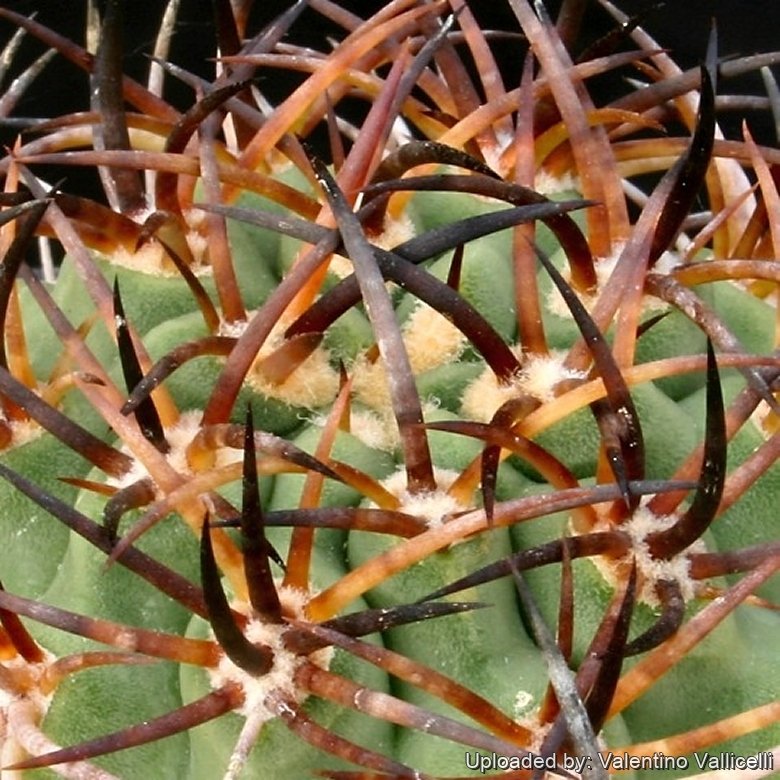
Ribs: Around 30-35 ribs.
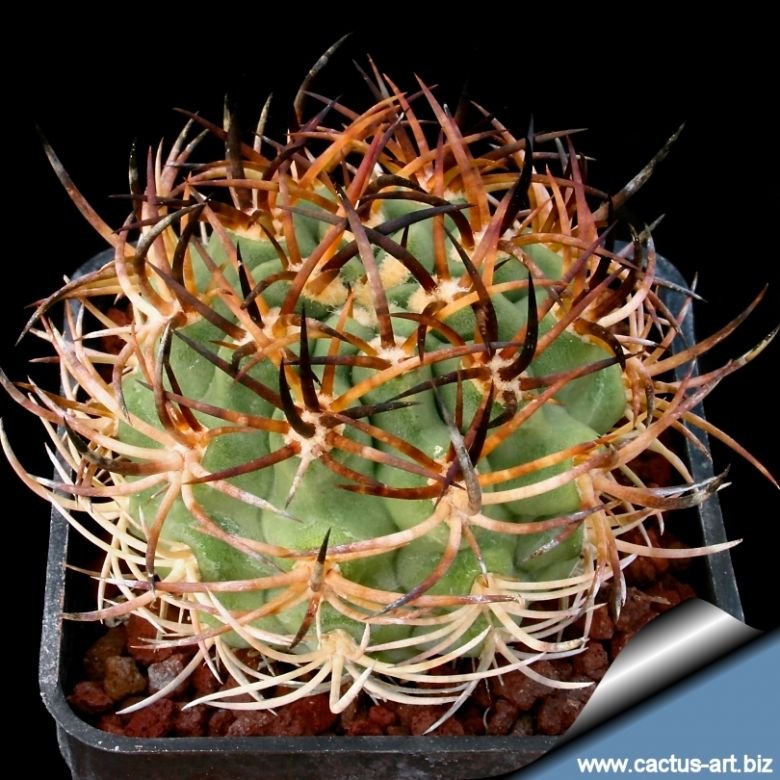
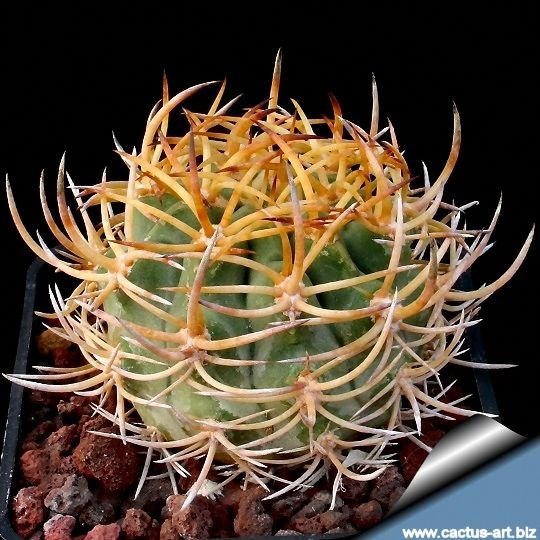
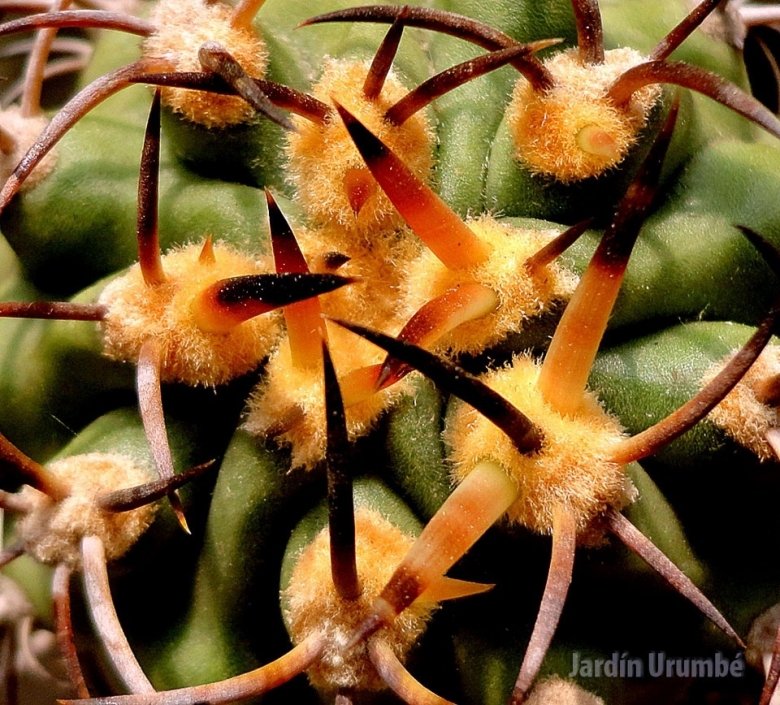
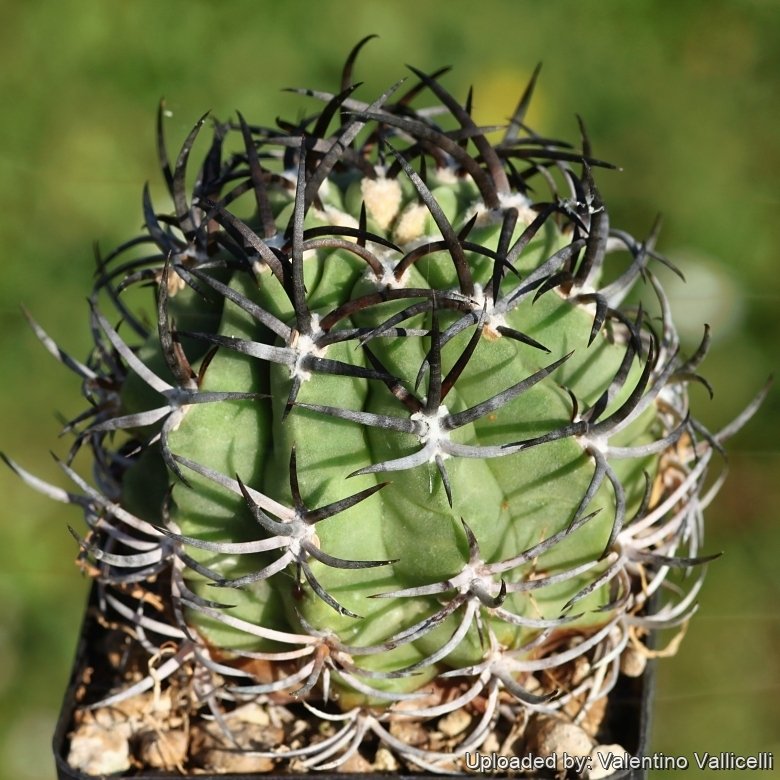
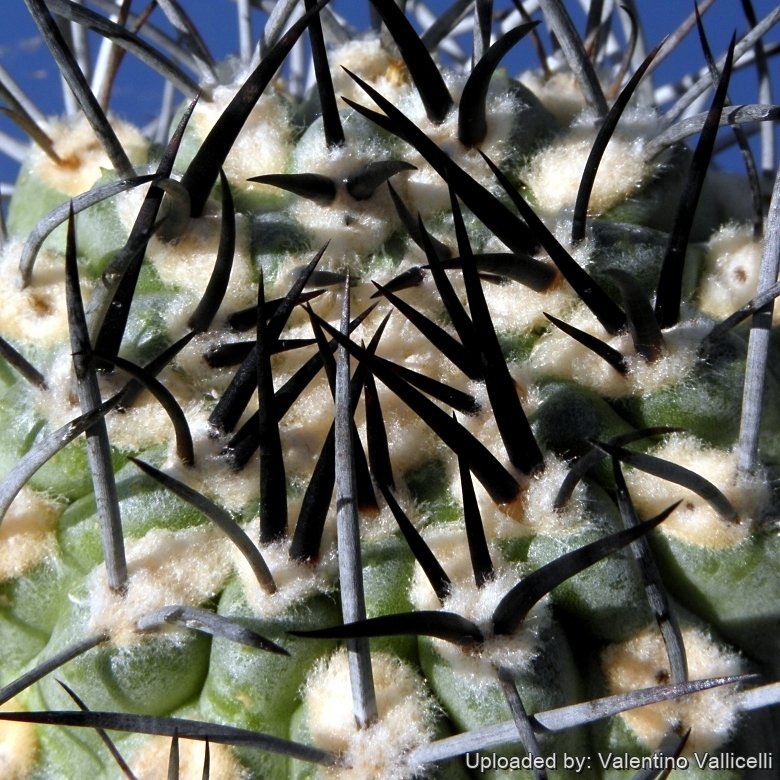
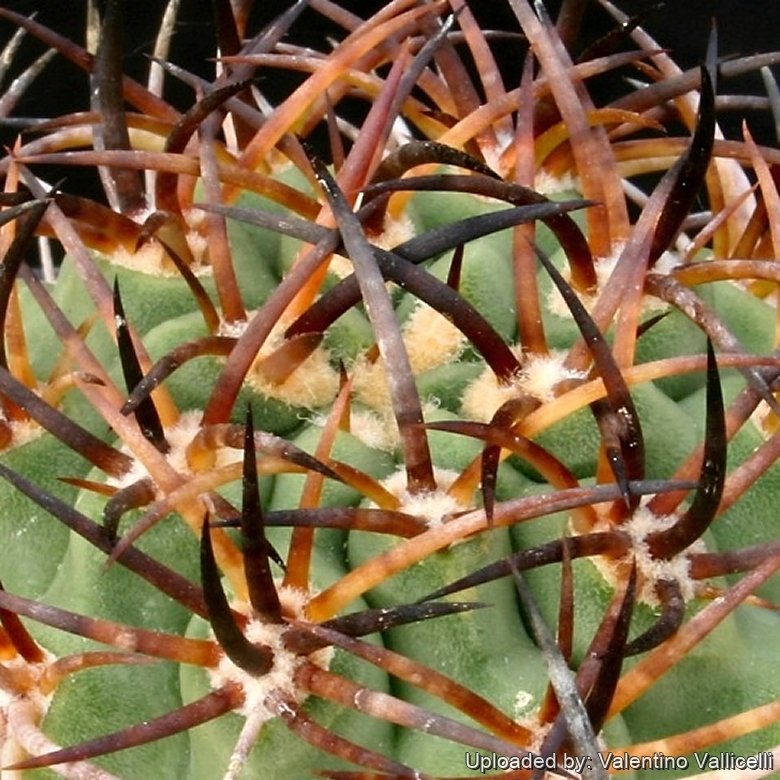
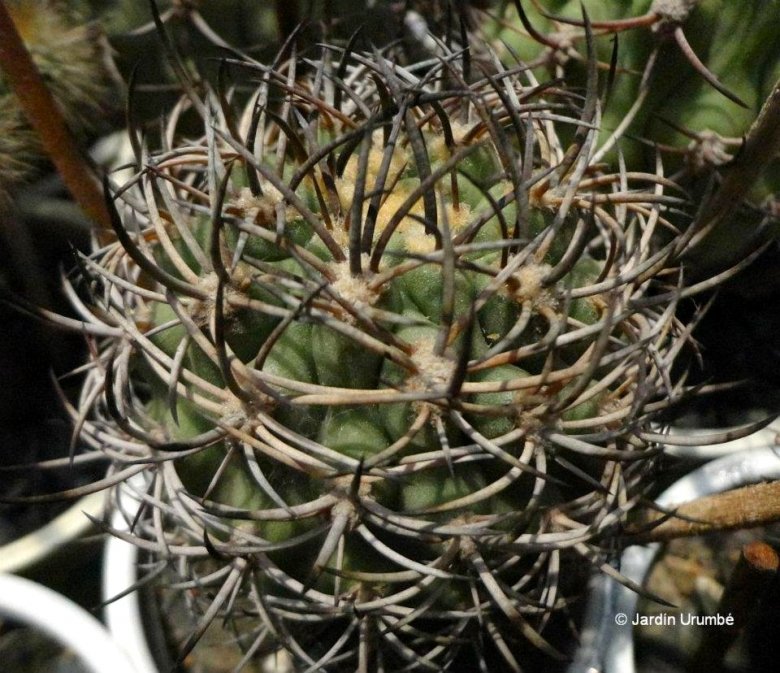
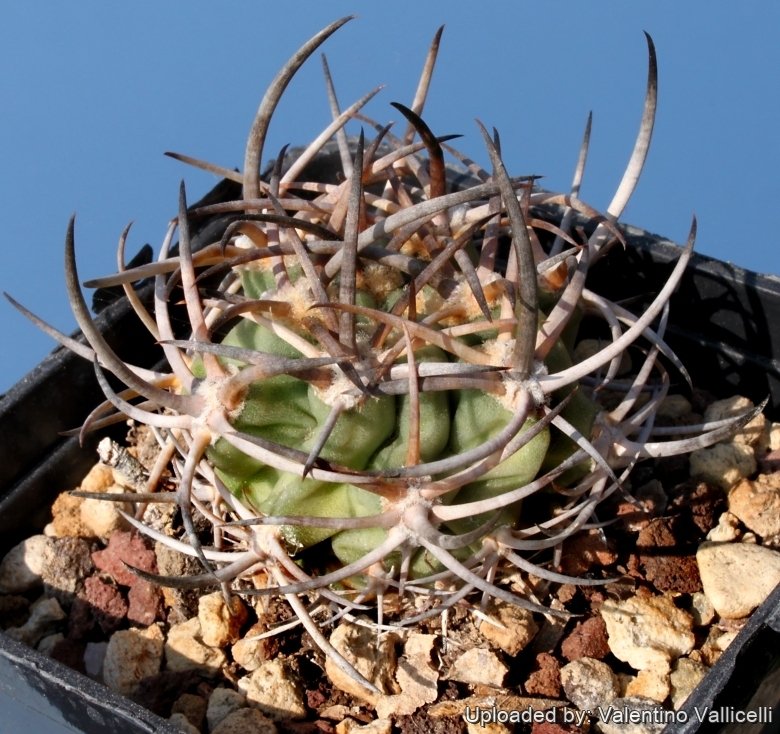
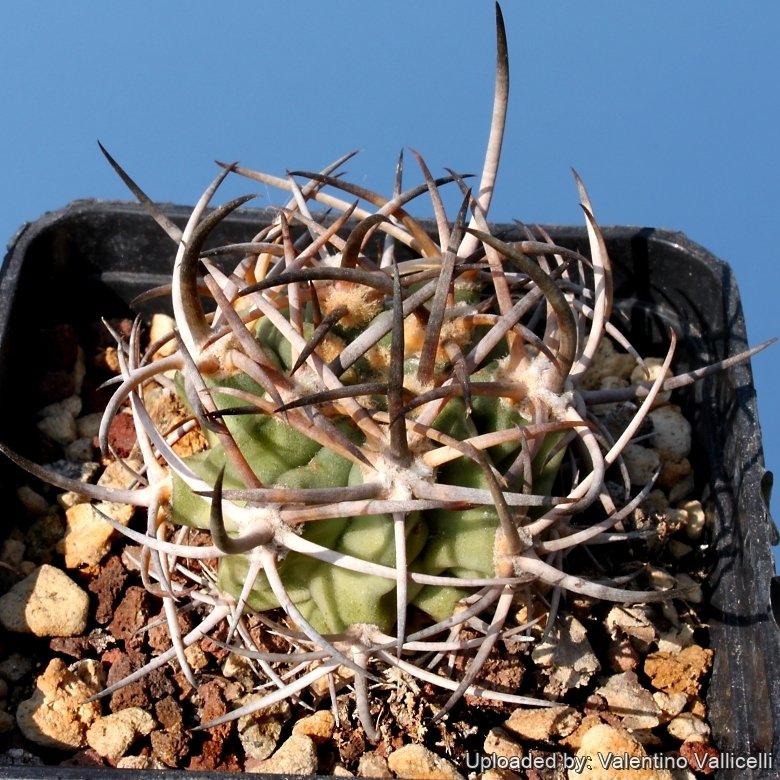
Spines: Spines colour is variable yellow, amber yellow, fox red or almost black. Juvenile specimens have 1 central spine and 8 radial, but the number increase as they get older and areoles can have over 20 spines on mature specimens.
Flowers: Red campanulate or funnel-shaped 5 cm long, from the apex of plant, with a white hairy floral tube. There might be over 50 flowers on a mature specimen (only mature specimens bloom). Ovary densely matted with matted wool.
Fruits: Oblong, becoming dry, dehiscing by a basal pore, very spiny above.
Seeds: Rather large, dull, black-pitted with a sub-basal hilum.
Origin and Habitat
This species is endemic to Chile, where it is found in the regions of Atacama, Valparaíso and Metropolitana. Eriosyce aurata has a very wide range and occurs in many locations and within several protected areas such as National Park Fray Jorge and National Reserve Las Chinchillas. It is locally abundant and frequent.
Altitude range: 100 to 3,000 metres above sea level.
Habitat and Ecology: Eriosyce aurata is found in desert scrub and sclerophyllous scrub, on rocky north-facing slopes in the andean pre-cordillera. The major threat is illegal collection, the species has very high extraction rates. It suffers from vandalism.
Cultivation and Propagation
It is a very slow growing and extremely rot prone species if kept in a non ventilated place.
Soils: Require a very fast mineral draining drying soil (70-80% grit and 20-30% of land soil).
Watering Needs: Extremely root prone, needs good drainage, waterings should be rather infrequent in summer (do not overwater), to keep the plant compact and not become excessively elongated and unnatural in appearance. Keep dry in winter, or when night temperatures remain below 10° C.
Exposure: Requires strong sun exposure to develop good spinal growth (maximum brightness, sunlight accepted), but tolerate light shade.
Hardiness: Good heat tolerance. Hardy to at least -5°C for a short period but cannot tolerate long standing freezing temperature, and for an healthy cultivation ensure a minimum temperature of 5° C. Assure a good ventilation. USDA Hardiness Zone 9b and 11.
Propagation: Usually propagated from Seeds. (seldom produces offsets). The seedling growth is rapid. But the seedling are often grafted because the plants on their own roots (especially the bigger ones) are extremely prone to root rot. In fact the best and older specimens are the grafted ones.
Bibliography
Major references and further lectures
-
James Cullen, Sabina G. Knees, H. Suzanne Cubey “The European Garden Flora Flowering Plants: A Manual for the Identification of Plants Cultivated in Europe, Both Out-of-Doors and Under Glass” Cambridge University Press, 11/Aug./2011
-
David Hunt, Nigel Taylor “The New Cactus Lexicon” DH Books, 2006
-
Edward F. Anderson “The Cactus Family” Timber Press, 2001
-
Guerrero, P., Faundez, L., Saldivia, P. & Walter, H.E. 2013. Eriosyce aurata. The IUCN Red List of Threatened Species 2013: e.T151903A574579. http://dx.doi.org/10.2305/IUCN.UK.2013-1.RLTS.T151903A574579.en. Downloaded on 24 May 2016.
From llifle page Echinocactus ceratistes
Description
Eriosyce ceratistes is a large barrel-shaped cactus with many ribs and very spiny. Most of the plants in habitat are single headed unless they are damaged.
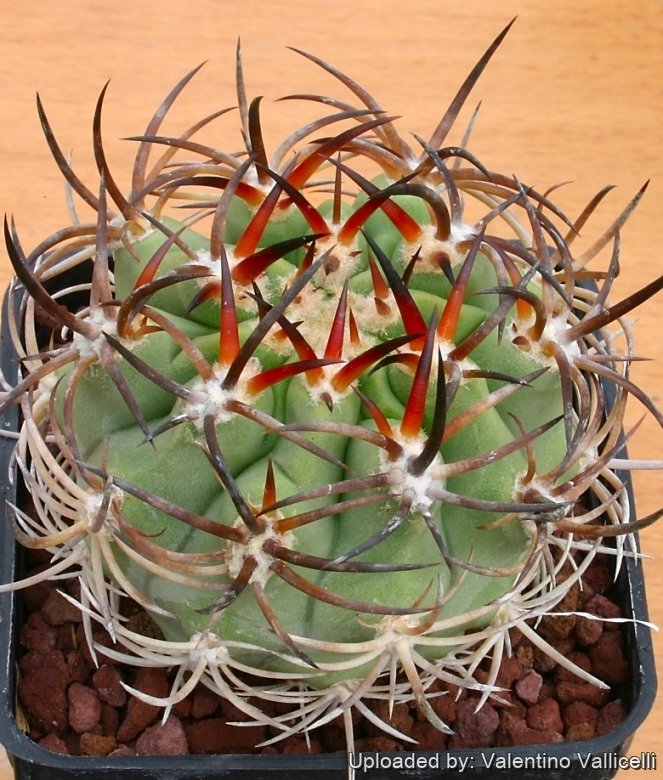
Stem: Solitary, emerald-blue, spherical fattened with abundant white wool on top, up to 50 cm in diameter (usually 20 to 30 cm) when very old become shortly columnar, reaching over 90 cm in height (but usually less).
Ribs: Adult specimens have around 21-35 ribs, but fewer in young plant, while in old ones sometime more.
Areoles: Large, approx 3 cm apart.
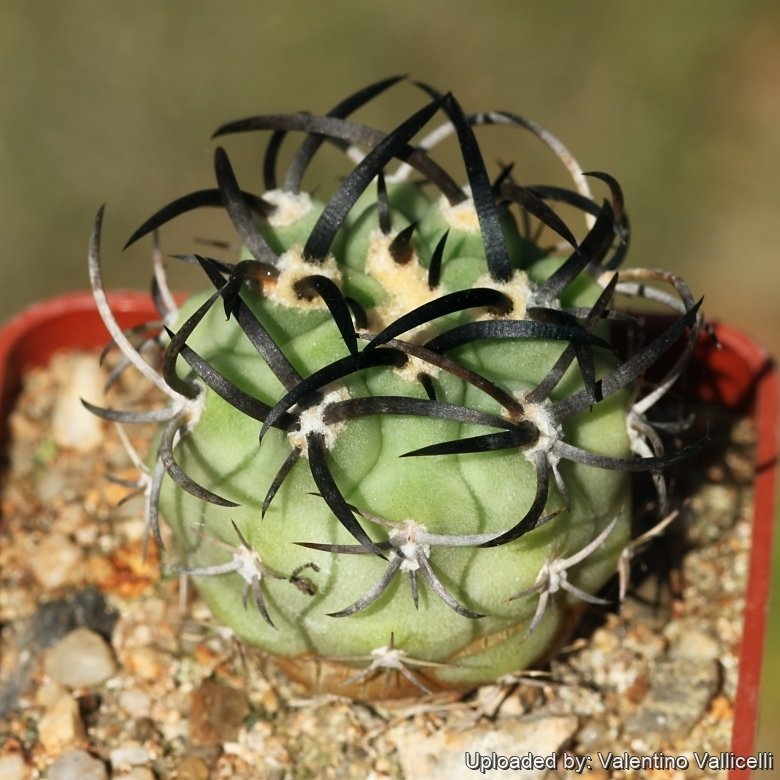
Spines: 11-20 nearly equal 2,5-3,5 cm long, horn-shaped, subulated, straight or slightly curved. The colour is brown to almost black (often pale-brownish or yellowish when very young). Juvenile specimens have 1 central spine and 8 radial, but the number increase as they get older and areoles can have over 20 spines on mature specimens.
Flowers: Red campanulate or funnel-shaped 5 cm long, with a white hairy floral tube. Inner perianth-segments 1,5 cm long. The flower open for 3-4 hours and then whitening. There might be over 50 flowers on a mature specimen (only mature specimens bloom).
Fruits: 4 cm long.
Seeds: 3 mm long.
Origin and Habitat
Chile (Coquimbo), at medium elevations in the Andes.
Habitat: They grow only in the mountain at an altitude of 100-2000 meters or more.
Cultivation and Propagation
Slow growing, extremely rot prone if kept in a non ventilated place. Requires a very fast-draining drying soil. Water regularly in summer, but do not overwater.
Needs a full sun exposure (or light shade) Good heat tolerance. Hardy to at least -5°C.
Propagation: Usually propagated from Seeds. (seldom produces offsets), but as this species is very sensitive to root rot the young seedlings are frequently grafted on a strong stock.
Bibliography
Major references and further lectures
-
James Cullen, Sabina G. Knees, H. Suzanne Cubey “The European Garden Flora Flowering Plants: A Manual for the Identification of Plants Cultivated in Europe, Both Out-of-Doors and Under Glass” Cambridge University Press, 11/Aug./2011
-
David Hunt, Nigel Taylor “The New Cactus Lexicon” DH Books, 2006
-
Edward F. Anderson “The Cactus Family” Timber Press, 2001
Source: Echinocactus ceratistes, LLIFLE - Encyclopedia of living forms, CC-BY-SA, retrieved 2026-10-25.
From llifle page Echinocactus sandillon
Description
Spherical cactus with abundant white wool on top up to 50 cm in diameter . Adult specimens have around 30-35 ribs and become columnar, reaching over 90 cm in height. Spines colour is variable yellow, amber yellow, fox red or almost black. Juvenile specimens have 1 central spine and 8 radial, but the number increase as they get older and areoles can have over 20 spines on mature specimens. Flowers are red campanulate or funnel-shaped 5 cm long, with a white hairy floral tube. There might be over 50 flowers on a mature specimen (only mature specimens bloom).
Origin and Habitat
Chile (Coquimbo), at medium elevations in the Andes.
Cultivation and Propagation
Slow growing, extremely rot prone if kept in a non ventilated place. Require a very fast draining drying soil, water regularly in summer, but do not overwater.
Needs a full sun exposure (or light shade) Good heat tolerance. Hardy to at least -5°C
Propagation: Usually propagated from Seeds. (seldom produces offsets)
Source: Echinocactus sandillon, LLIFLE - Encyclopedia of living forms, CC-BY-SA, retrieved 2026-10-25.
From llifle page Eriosyce algarrobensis
Description
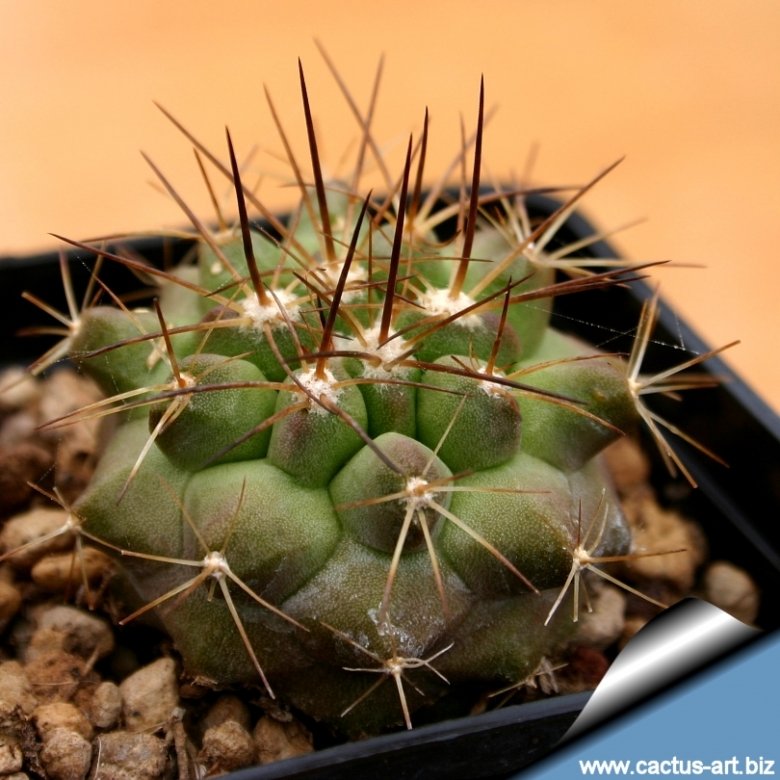
Eriosyce algarrobensis is a globular, solitary species that produces splendid grey-brown spines bent toward the stem and upward. It is generally included within (as a synonym of) Eriosyce aurata, suggesting that there is not really a fundamental difference between the two. The key difference by which this species was separated, namely: its much smaller size (less than 15 cm thick), larger areoles, more numerous radial spines and different seeds, appears to fall within the natural variation of Eriosyce aurata and it should be synonymized with the latter. It is at most a race of Eriosyce aurata, but it still has a value for a collector because they identify plants with particular characters.
The following description is mainly based on Eriosyce algarrobensis F.Ritter 1980 (Collector’s number referred here is FR 1456 südlich der Mine ALGARROBO, Depart. Huasco. ).
Stem: Green, globular, 8-15 cm thick.
Ribs: 15-27, crenate, 8-15 mm high, depending on age, notched, thickened at the humps.
Areoles: 10-20 mm long, 4-7 mm wide, very close (a few mm) from each other,
sunken into the notches, pale brownish, becoming gray.
Spines: Subulate, at first grey brown, becoming grey.
Radial spines: 12-18, 10-35 mm long, curved toward the stem and semi-spreading.
Central spines: 2-7, 2-4 mm long, not clearly separated from radials, in juvenile (not flowering) specimens 2-3, increasing to 5-7 later, and bent upward.
Flower buds: Heavily wrapped in white wool and pale, hardly stinging bristles 10-15 mm long.
Seeds: Dull black, bag-shaped, little keeled on the back, ca. 1,8 mm long, 1,6 mm wide, 1,2 mm thick.
Origin and Habitat
South of Mina Algarrobo, Depart. Huasco, 03 Atacama, Chile.
Bibliography
Major references and further lectures
- Friedrich Ritter “Kakteen in Südamerika: Ergebnisse meiner 20jährigen Band 3 - Chile”, Friedrich Ritter Selbsverlag 1980
Source: Eriosyce algarrobensis, LLIFLE - Encyclopedia of living forms, CC-BY-SA, retrieved 2026-10-25.
From llifle page Eriosyce ausseliana
Description
It is a very large and very spiny barrel cactus with numerous ribs.This fascinating plant is known by Chileans under the name of “sandillon” and resembles in habit and fruit to some of the giant species of Echinocactus in Mexico.
Stem: Spherical with abundant white wool on top up to 50 cm in diameter. Adult specimens become columnar, reaching over 90 cm in height.
Ribs: Around 30-35 ribs
Spines: Spines colour is variable yellow, amber yellow, fox red or almost black. Juvenile specimens have 1 central spine and 8 radial, but the number increase as they get older and areoles can have over 20 spines on mature specimens.
Flowers: Red campanulate or funnel-shaped 5 cm long, from the apex of plant, with a white hairy floral tube. There might be over 50 flowers on a mature specimen (only mature specimens bloom). Ovary densely matted with matted wool.
Fruits: Oblong, becoming dry, dehiscing by a basal pore, very spiny above.
Seeds: Rather large, dull, black-pitted with a sub-basal hilum.
Cultivation and Propagation
Slow growing, extremely rot prone if kept in a non ventilated place. Require a very fast draining drying soil, water regularly in summer, but do not overwater.
Needs a full sun exposure (or light shade) Good heat tolerance. Hardy to at least -5°C.
Propagation: Usually propagated from Seeds. (seldom produces offsets) But the seedling are often grafted because the plants on their own roots (especially the bigger ones) are extremely prone to root rot. In fact the best and older specimens are the grafted ones.
Source: Eriosyce ausseliana, LLIFLE - Encyclopedia of living forms, CC-BY-SA, retrieved 2026-10-25.
From llifle page Eriosyce ceratistes var. combarbalensis
Origin and Habitat
Sierra Combarbala, East Coquimbo, Chile
Source: Eriosyce ceratistes var. combarbalensis, LLIFLE - Encyclopedia of living forms, CC-BY-SA, retrieved 2026-10-25.
From llifle page Eriosyce sp. nova JS252 Illapel, 04 Coquimbo, Chile
Description
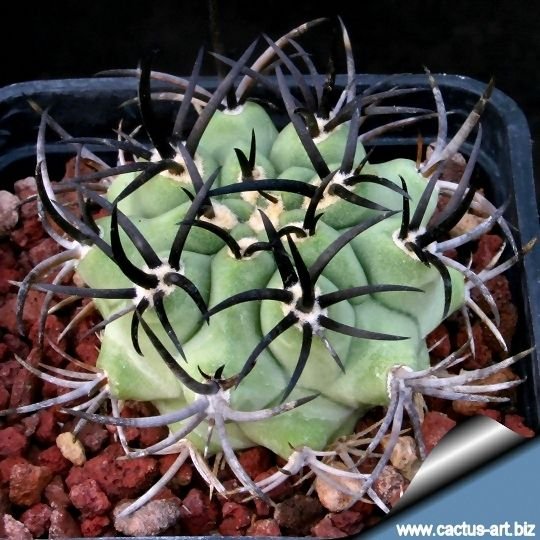
Eriosyce sp. nova JS252 Illapel, 04 Coquimbo, Chile is a local or morphological form of the very variable Eriosyce aurata. It is quite similar to the standard variety but with very strong brown, dark bluish-pink or almost black spines. However, with the exclusion of the spines, it is quite similar to the latter and not easily separable by any important character from the other aurata. The spines take a grey-brown colouring with time. It is cold hardy.
Habit: It is a very large and very spiny barrel cactus with numerous ribs. This fascinating plant is known by Chileans under the name of “sandillon” and resembles in habit and fruit to some of the giant species of Echinocactus in Mexico.
Stem: Spherical with abundant white wool on top up to 50 cm in diameter. Adult specimens become columnar, reaching over 90 cm in height.
Ribs: Around 30-35 ribs
Spines: Very strong brown to dark bluish-pink or almost black. Juvenile specimens have 1 central spine and 8 radial, but the number increase as they get older and areoles can have over 20 spines on mature specimens.
Flowers: Red campanulate or funnel-shaped 5 cm long, from the apex of plant, with a white hairy floral tube. There might be over 50 flowers on a mature specimen (only mature specimens bloom). Ovary densely matted with matted wool.
Fruits: Oblong, becoming dry, dehiscing by a basal pore, very spiny above.
Seeds: Rather large, dull, black-pitted with a sub-basal hilum.
Origin and Habitat
Illapel, 04 Coquimbo, Chile
Source: Eriosyce sp. nova JS252 Illapel, 04 Coquimbo, Chile, LLIFLE - Encyclopedia of living forms, CC-BY-SA, retrieved 2026-10-25.
Gallery