Publication: Eriosyce (Cactac.) gen. revis. & ampl. (Succ. Pl. Res., 1) 118 (1994)
Description
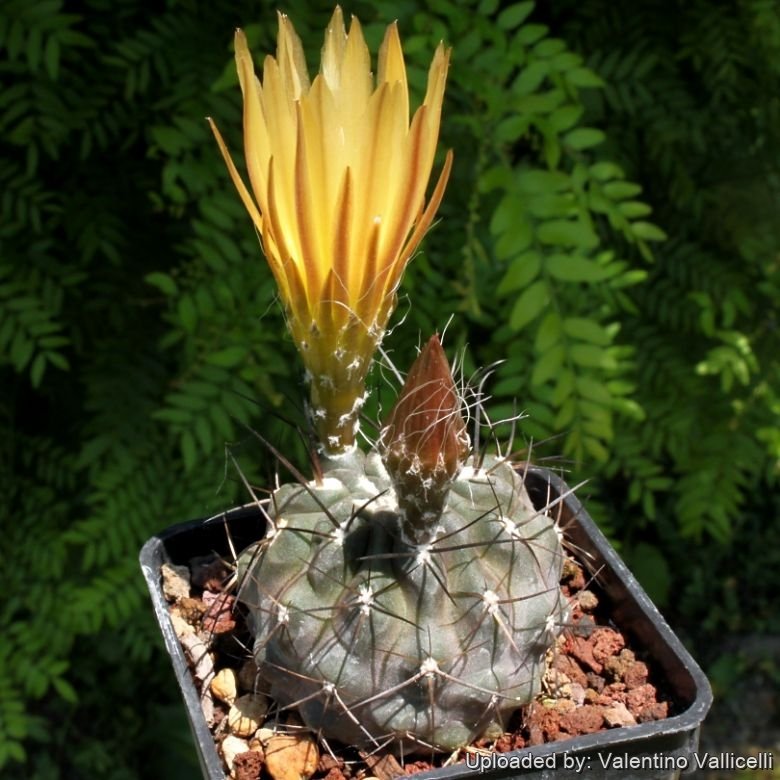
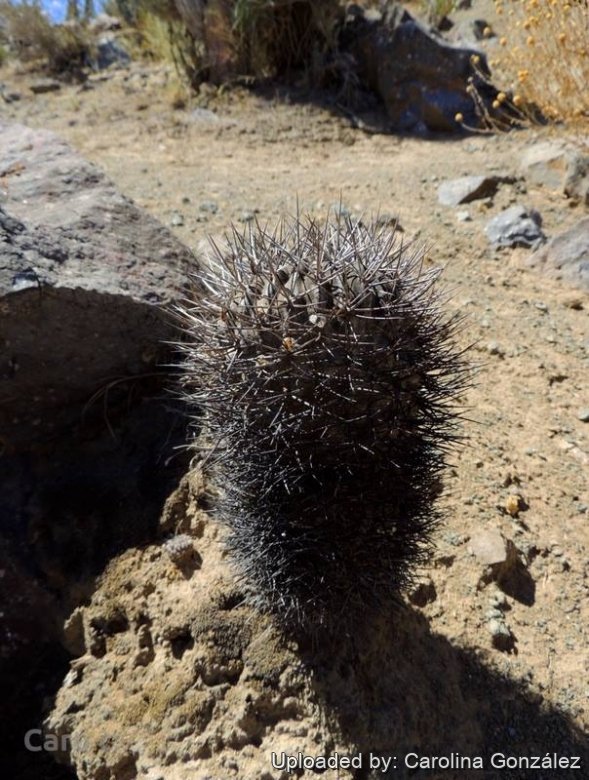
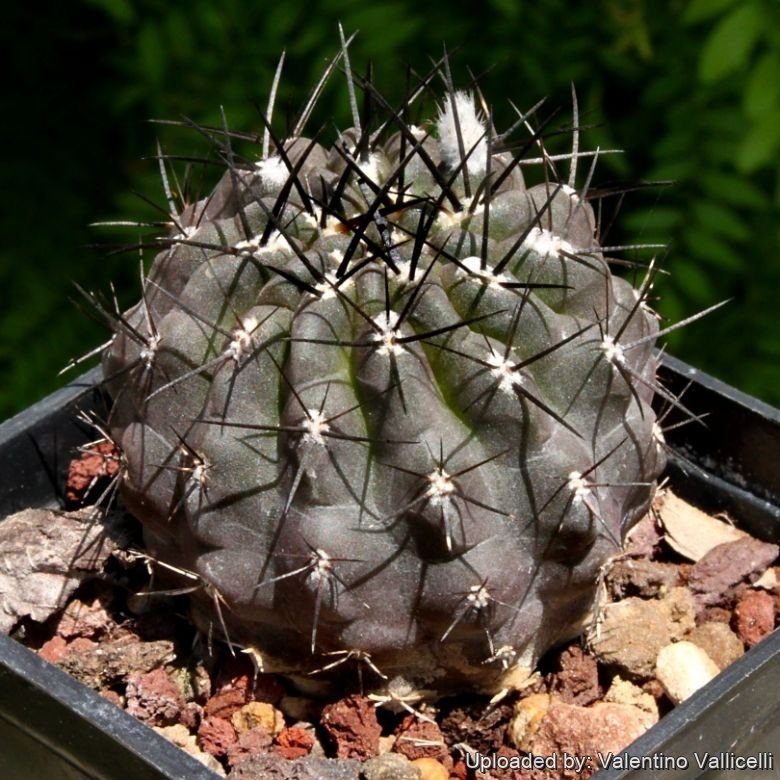
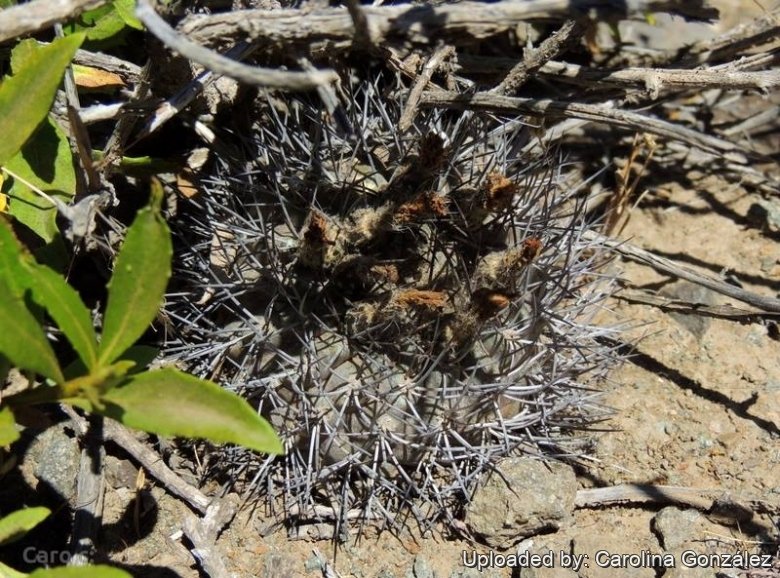
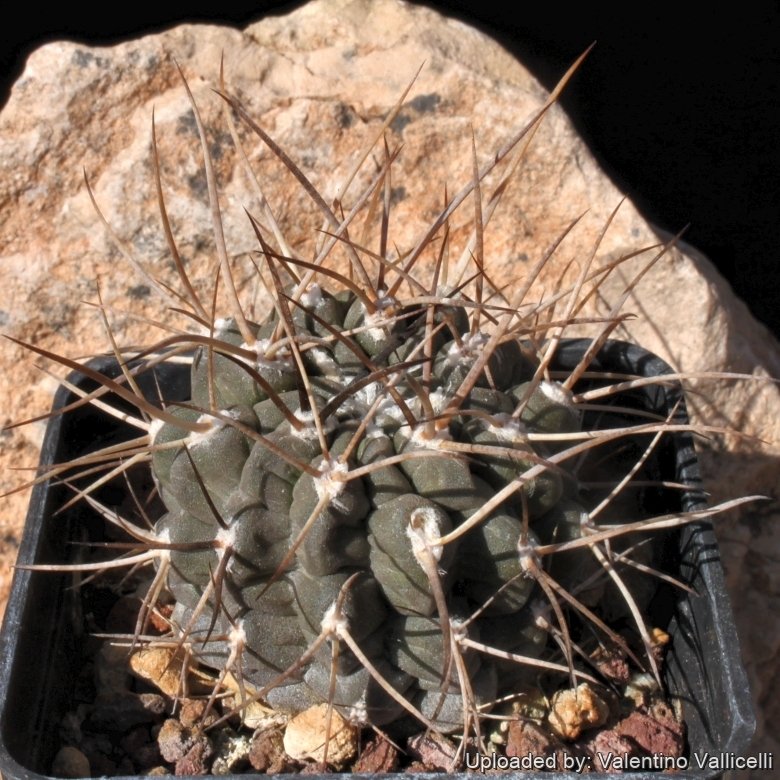
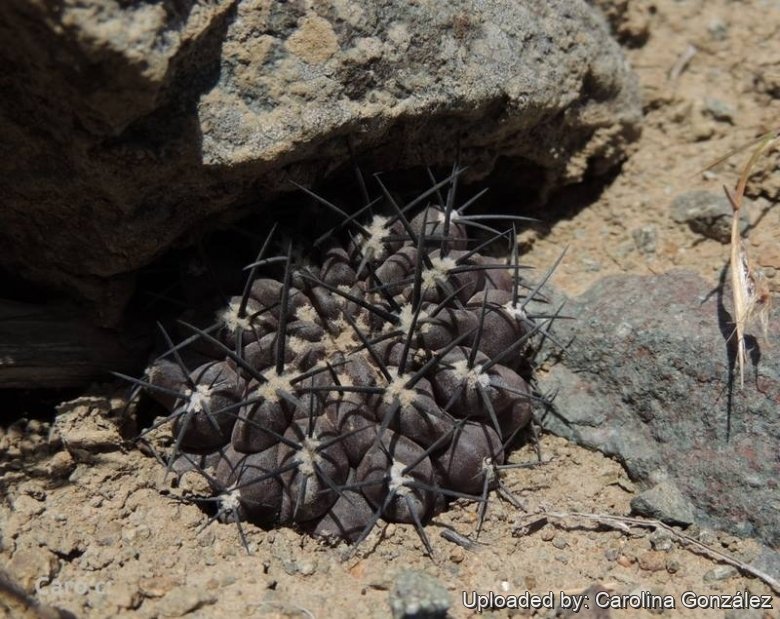
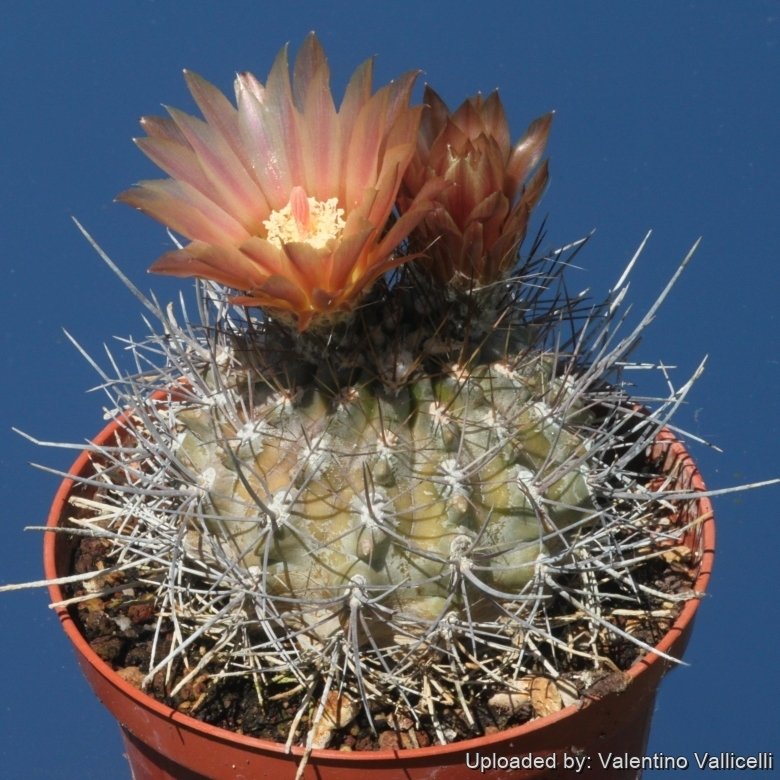
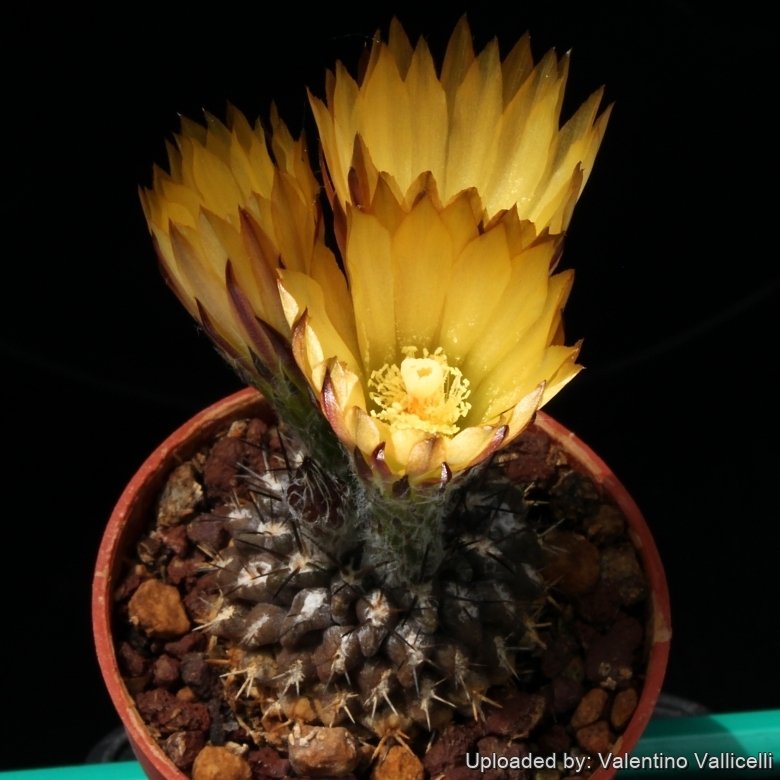
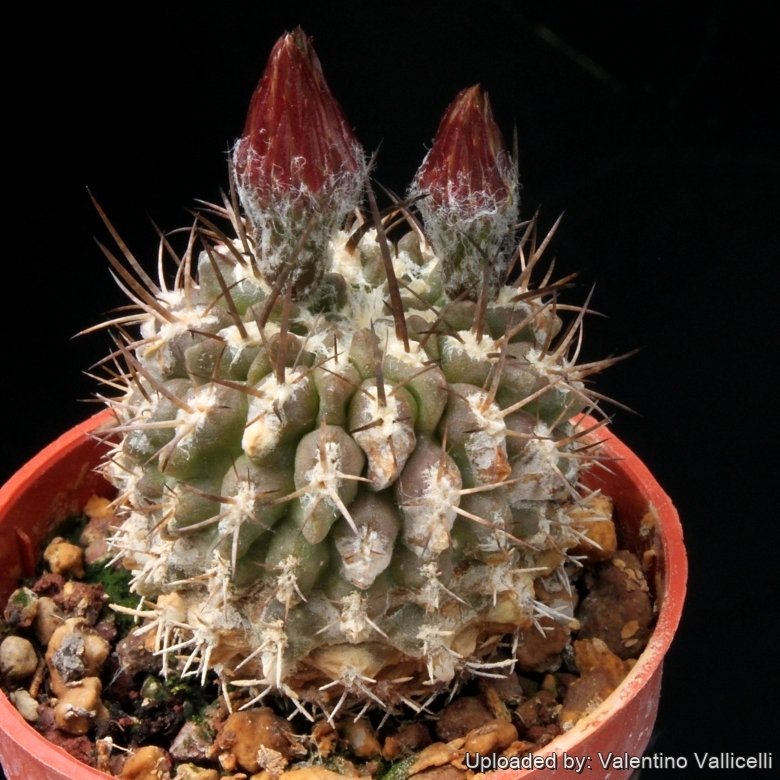
Eriosyce heinrichiana, also widely known by the old scientific name Horridocactus heinrichianus, is a tiny geophytic, spiny (or spineless) cactus rising barely above ground level, usually solitary or sometime branching and slowly growing up to 10 cm in diameter. Individual plants of this species shows a certain degree of variability depending on origin. Eriosyce heinrichiana comprises two controversial varieties: v. intermedia with stems occasionally elongate and v. setosiflora with stems not elongate.
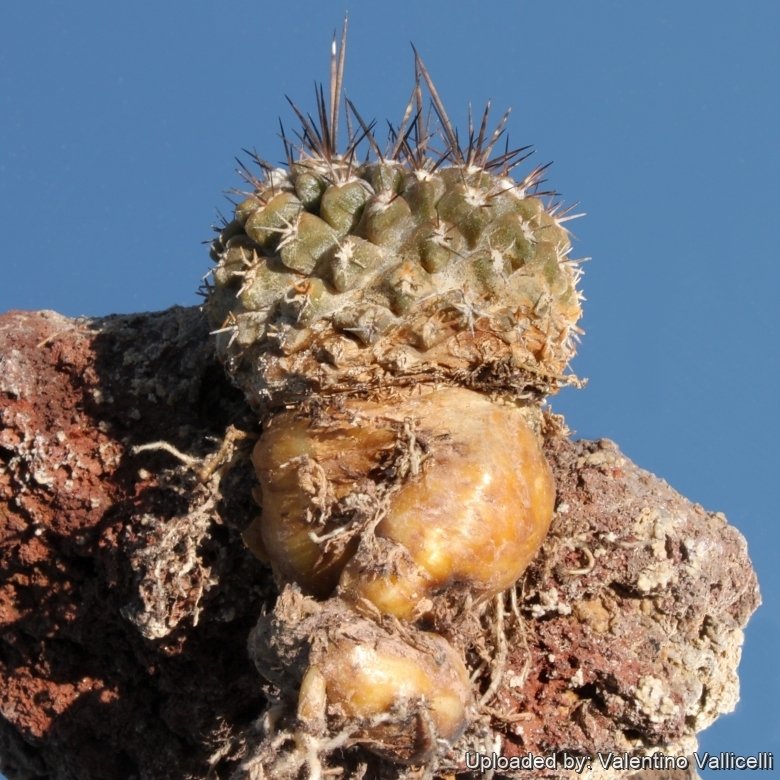
Roots: Fibrous, arising from a large taproot which is narrowed into a necks where joining the stems.
Stem: 4-10 cm in diameter, hemispherical to spherical, flattened at the apex, but often elongate in cultivation, dull olive-green, brownish to blackish green.
Ribs: 14-22, Noticeably tubercled with pronounced chinlike protrusions.
Spines: 1-14 (sometimes absent.) stiff, needle-like, straight or more or less curved and not easily distinguished as centrals or radials, creamy white, brown or black and darker at the tips, turning grey as they ages.
Central spines: 1-4, slightly stronger 3-15 mm long.
Radial spines: Weaker 6-10,3-12 mm long.
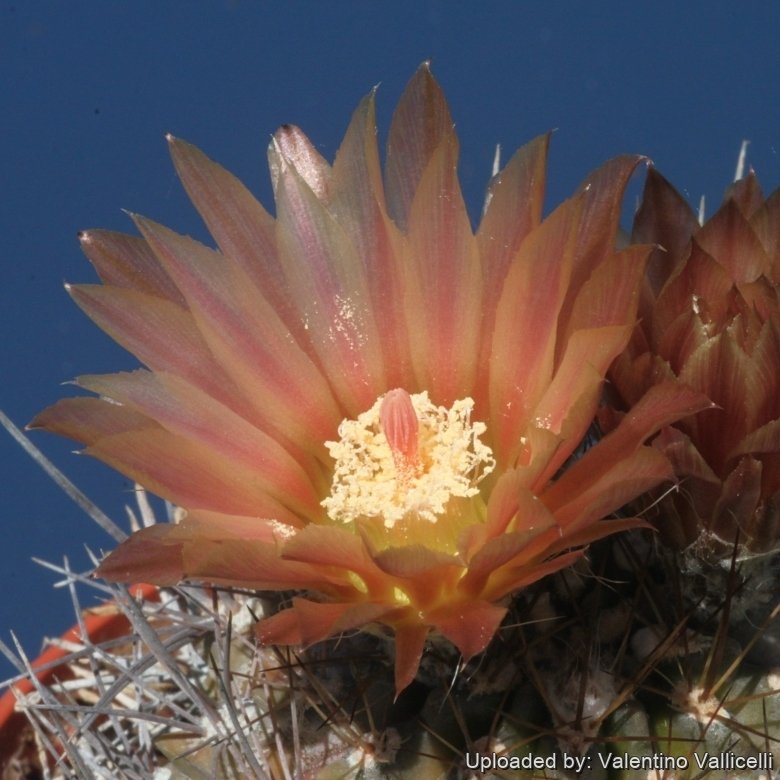
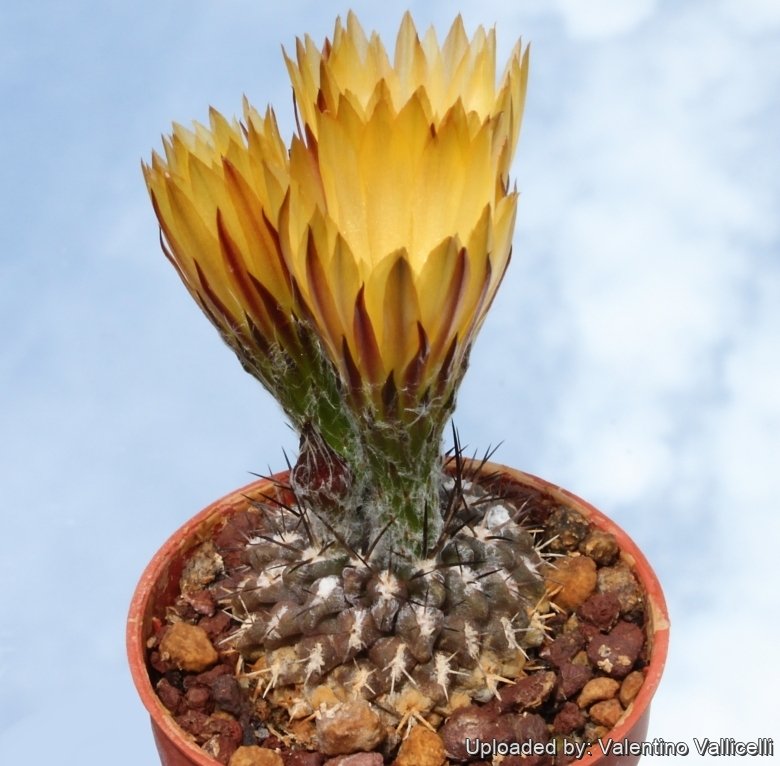
Flowers: Diurnal, 3-5 cm long and broad, closely packed apically from young areoles, funnel-form, the colour is creamy yellow to reddish often with red/brownish midveins. Pericarpel and floral tube with bracts, wool and sparsely bristly.
Fruits: Oval, to 1,5 cm long, red, fleshy, thin walled and splitting open at maturity by basal pores
Origin and Habitat
Lower Choros valley from Huasco south to Quebrada Las Palmas west of Trapiche and adjacent areas, Region 03 Atacama, Chile (extent of occurrence about 16,000 km2).
Altitude: 0-1000 metres above sea level.
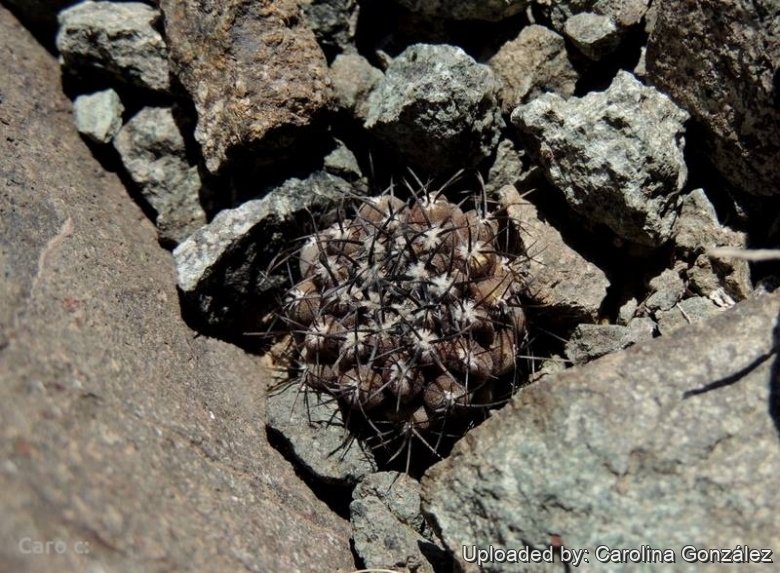
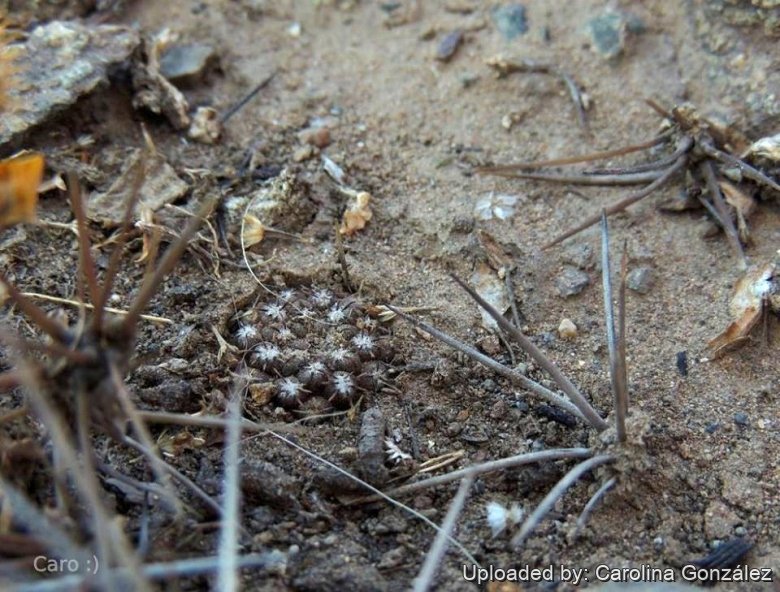
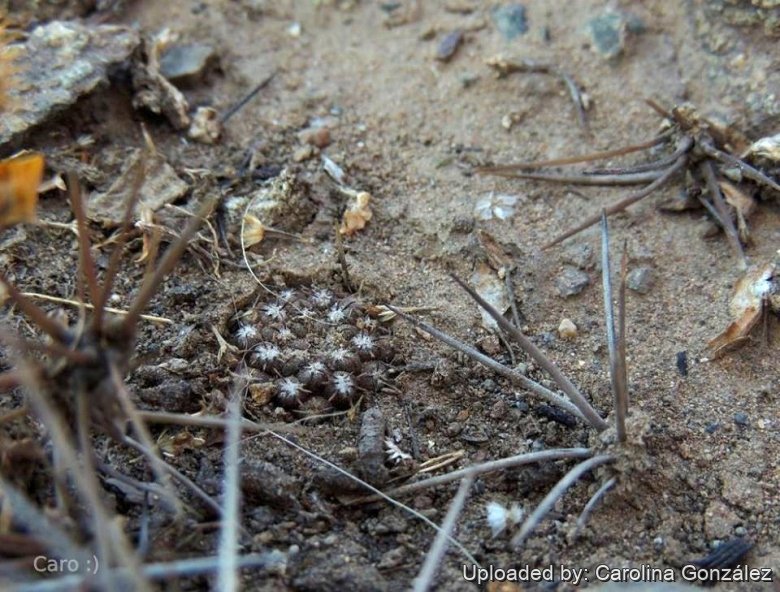
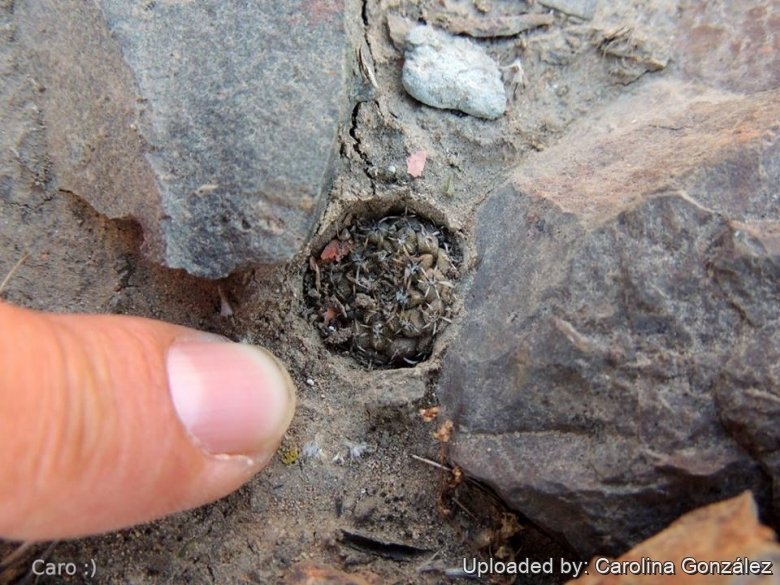
Habitat: It grows on rocky soil in thorny scrub, mostly in coastal areas where very little else grows. It’s a very drought tolerant species. Despite the lack of rain where it lives, the extreme aridity is attenuated by the frequent, often dense, coastal fogs. The fog tends to concentrate in the form of a cloud band at an estimated height of 500 to 850 metres. It shows a recurrent pattern; usually it is overcast in the early mornings, the clouds dissipating during the late morning and returning during the late afternoons. The plant grows often buried in the ground and is almost impossible to spot without the flowers. Eriosyce heinrichiana is abundant and the population seems to be stable, it is only affected by localized threats that are not leading to a continuing decline of the population, and it is found within protected areas.
Cultivation and Propagation
Eriosyce heinrichiana is a slow growing but relatively easy to grow species, providing they are kept dry during autumn and winter and rot prone if kept in a non ventilated place.
Soils: Require a very fast mineral draining drying soil (70-80% grit and 20-30% of land soil). To prevent rottenness it is also advisable to surround its root neck by very rough sand or grit, this help a fast water drainage and an appropriate air circulation.
Watering Needs: Root prone it needs good drainage, waterings should regular in summer (do not overwater), to keep the plant compact and not become excessively elongated and unnatural in appearance. During the winter quiescent period, or when night temperatures remain below 10° C, it must be strictly kept dry since it is very sensitive to any moisture excesses.
Fertilization: During the beautiful season it’s good to enrich the soil using a fertilizer rich in potassium and phosphorous, but poor in nitrogen, because this chemical element doesn’t help the development of succulent plants, making them too soft and full of water.
Exposure: Requires strong sun exposure to develop good spinal growth (maximum brightness, sunlight accepted), but tolerate light shade. Some light shadow my be useful in the hottest summer days.
Frost Tolerance: Hardy to at least -5°C for a short period but cannot tolerate long standing freezing temperature, and for an healthy cultivation ensure a minimum temperature of 5° C. Assure a good ventilation. USDA Hardiness Zone 9b and 11.
Heat tolerance: Good heat tolerance, but in warmer climates it should be protected from excessive heat and too much sun sun in summer.
Maintenance: Repot in the spring, when its roots become cramped. Generally, it should be repotted every other year in order to provide fresh soil. After repotting, do not water for a week or more.
Propagation: Usually propagated from Seeds. (seldom produces offsets). Sow the seeds in spring in a well-aerated compost at a temperatures of 22-24°C . Stand the pots in water, moisten thoroughly and drain. Scatter and press lightly the seed onto the top of the compost. But do not cover the small seeds with compost. Secure a polythene bag around the pot or cover the container with glass or and place in a warm shaded place. If possible, germinate in a propagator. Some seedlings may appear within a week or 10 days others will take longer. At lower temperatures, germination usually takes considerably longer. Once germination has taken place, remove gradually the glass or plastic and move into a good light but not in direct sun. If the young plants are exposed to too much sun, or the compost dries out, they may stop growing and often turn red; once they stop, it is often difficult to persuade them to start growing again. Never let the pots dry out-but don’t saturate them either. A sodden compost is as harmful as a dry one. The seedling growth is rapid. But the seedling are often grafted because the plants on their own roots (especially the bigger ones) are extremely prone to root rot. In fact the best and older specimens are the grafted ones.
Bibliography
Major references and further lectures
-
Edward Anderson “The Cactus family” Timber Press, Incorporated, 2001
-
James Cullen, Sabina G. Knees, H. Suzanne Cubey “The European Garden Flora Flowering Plants: A Manual for the Identification of Plants Cultivated in Europe, Both Out-of-Doors and Under Glass” Cambridge University Press, 11/Aug/2011
-
David R Hunt; Nigel P Taylor; Graham Charles; International Cactaceae Systematics Group. “The New Cactus Lexicon” dh books, 2006
-
Fred Kattermann “Eriosyce (Cactaceae): The Genus Revised and Amplified” David Hunt, 1994
-
Faundez, L., Guerrero, P., Saldivia, P. & Walter, H.E. 2013. Eriosyce heinrichiana. In: IUCN 2013. “IUCN Red List of Threatened Species.” Version 2013.2. <www.iucnredlist.org>. Downloaded on 15 January 2014.
From llifle page Neochilenia chorosensis
Description
Eriosyce heinrichiana f. chorosensis|, also known by the old scientific name Pyrrhocactus chorosensis, is a local or morphological form of the variable Eriosyce heinrichiana characterized by large open red flowers on a small dark body. Plant of this taxon are mostly spineless, but may be spiny too, and shows a certain degree of variability depending on origin. The otherwise similar features of “heinrichina” and “chorosensis”, namely size and form of stems, spines, flowers, fruit, etc., prove, that is impossible to differentiate between these taxa.
Habit: It is a tiny geophytic cactus rising barely above ground level, usually solitary or sometime branching.
Roots: Fibrous, arising from a large taproot which is narrowed into a necks where joining the stems.
Stem: 4-10 cm in diameter, hemispherical to spherical, flattened at the apex, but often elongate in cultivation, dull olive-green, brownish to blackish green often with purple sheen.
Ribs: 14-22, noticeably tubercled with pronounced chin-like protrusions.
Spines: Mostly absent, or (if present) 1 to 14, stiff, needle-like, variable from very short (less than 3 mm long) to 15 mm long (depending on individuals), straight or more or less curved and not easily distinguished as centrals or radials, creamy white, brown or black and darker at the tips, turning grey as they ages. Central spines (if present) 1-4, slightly stronger 3-15 mm long.
Flowers: Diurnal, 3-5 cm long and broad, closely packed apically from young areoles, funnel-form, the colour is reddish often with red/brownish midveins. Pericarpel and floral tube with bracts, wool and sparsely bristly.
Fruits: Oval, to 1,5 cm long, red, fleshy, thin walled and splitting open at maturity by basal pores.
Origin and Habitat
Choros Valley north of la Serena and on the Hills near the El Tofo mine, region 04 Coquimbo, Chile
Source: Neochilenia chorosensis, LLIFLE - Encyclopedia of living forms, CC-BY-SA, retrieved 2026-10-25.
From llifle page Neochilenia dimorpha
Description
Pyrrhocactus dimorphus Ritter. is a local or morphological form of the widespread and variable Eriosyce heinrichiana. It is a tiny geophytic, cactus rising barely above ground level, usually solitary or sometime branching and slowly growing up to 6 cm in diameter. The specific name “Dimorphus” (= two bodies), refers to the two distinct stem forms, the juvenile form and the adult plant, the two so totally different that be difficult to realise they are one and same plant. However the distinguishing characteristics of Pyrrhocactus dimorphus, appear to fall within the natural variation of Eriosyce heinrichiana and it should be synonymized with the latter, but it still has a value for a collector because they identify plants with particular characters.
Root: It has a tuberous carrot-like root from which arises a contracted neck, ending in an enlarged top-shaped plant body.
Stem: Hemispherical to spherical, 2-6 cm diameter, almost black.
Ribs: Divided in tubercles , later flattish.
Areoles. White felty.
Spines: Dimorphous. This species is one of those Eriosyce which pass a short-spined youth stage in which they are already floriferous. Most of the plants after several years develop long spines, giving the plant a completely different fiercely spiny appearance.
Spines of juvenile specimens: 6-10, small, inconspicuous, 2-5 mm long, all radial, spreading sideways or flattened close to the plant, from black to nearly white.
Spines of mature specimens: Radials 8-12, up to 2 cm long, black to yellowish, the upper radials sometimes longer and bent. Central spines 1-3, black to brown, sometimes light brown to yellow and bent to the side.
Flower: Up to 3.5 cm. long, wide funnel-shaped, the underside with white wool and some fine yellow bristles. Petals pale to brownish-yellow, at the edge whiter.
Fruits: About 1.5 cm. long, red, hairy.
Seeds: Dark brown.
Origin and Habitat
Chile (Coquimbo).
Cultivation and Propagation
Pyrrhocactus dimorphus is a slow growing but relatively easy to grow species, providing they are kept dry during autumn and winter and rot prone if kept in a non ventilated place.
Soils: Require a very fast mineral draining drying soil (70-80% grit and 20-30% of land soil). To prevent rottenness it is also advisable to surround its root neck by very rough sand or grit, this help a fast water drainage and an appropriate air circulation.
Watering Needs: Root prone it needs good drainage, waterings should regular in summer (do not overwater), to keep the plant compact and not become excessively elongated and unnatural in appearance. During the winter quiescent period, or when night temperatures remain below 10° C, it must be strictly kept dry since it is very sensitive to any moisture excesses.
Fertilization: During the beautiful season it’s good to enrich the soil using a fertilizer rich in potassium and phosphorous, but poor in nitrogen, because this chemical element doesn’t help the development of succulent plants, making them too soft and full of water.
Exposure: Requires strong sun exposure to develop good spinal growth (maximum brightness, sunlight accepted), but tolerate light shade. Some light shadow my be useful in the hottest summer days.
Frost Tolerance: Hardy to at least -5°C for a short period but cannot tolerate long standing freezing temperature, and for an healthy cultivation ensure a minimum temperature of 5° C. Assure a good ventilation. USDA Hardiness Zone 9b and 11.
Heat tolerance: Good heat tolerance, but in warmer climates it should be protected from excessive heat and too much sun sun in summer.
Maintenance: Repot in the spring, when its roots become cramped. Generally, it should be repotted every other year in order to provide fresh soil. After repotting, do not water for a week or more.
Propagation: Usually propagated from Seeds. (seldom produces offsets). Sow the seeds in spring in a well-aerated compost at a temperatures of 22-24°C . Stand the pots in water, moisten thoroughly and drain. Scatter and press lightly the seed onto the top of the compost. But do not cover the small seeds with compost. Secure a polythene bag around the pot or cover the container with glass or and place in a warm shaded place. If possible, germinate in a propagator. Some seedlings may appear within a week or 10 days others will take longer. At lower temperatures, germination usually takes considerably longer. Once germination has taken place, remove gradually the glass or plastic and move into a good light but not in direct sun. If the young plants are exposed to too much sun, or the compost dries out, they may stop growing and often turn red; once they stop, it is often difficult to persuade them to start growing again. Never let the pots dry out-but don’t saturate them either. A sodden compost is as harmful as a dry one. The seedling growth is rapid. But the seedling are often grafted because the plants on their own roots (especially the bigger ones) are extremely prone to root rot. In fact the best and older specimens are the grafted ones.
Bibliography
Major references and further lectures
- “The National Cactus and Succulent Journal: The Official Journal of the National Cactus & Succulent Society”, Volumes 19-22 National Cactus and Succulent Society, 1964
Source: Neochilenia dimorpha, LLIFLE - Encyclopedia of living forms, CC-BY-SA, retrieved 2026-10-25.
From llifle page Neochilenia deherdtiana
Description
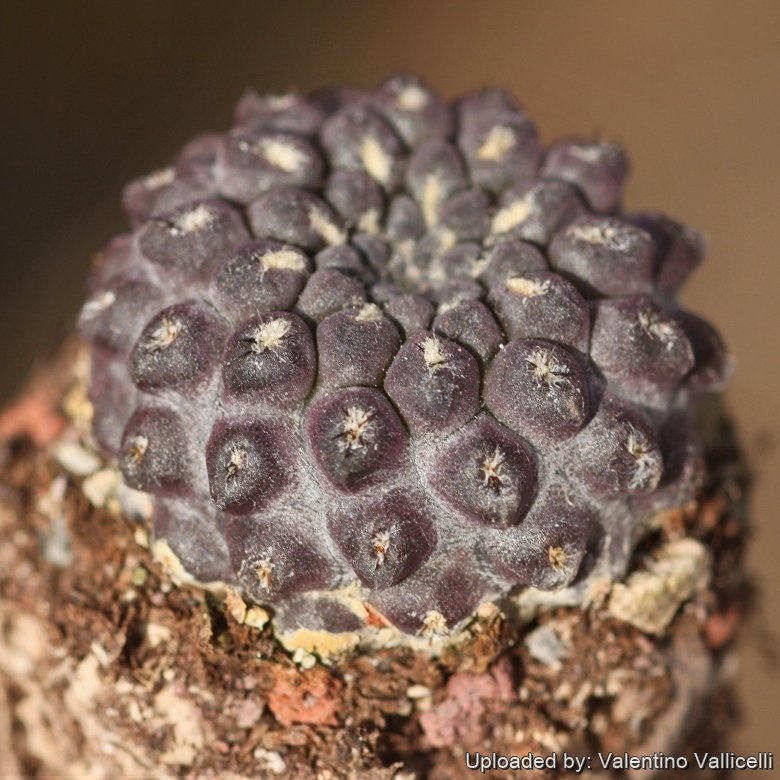
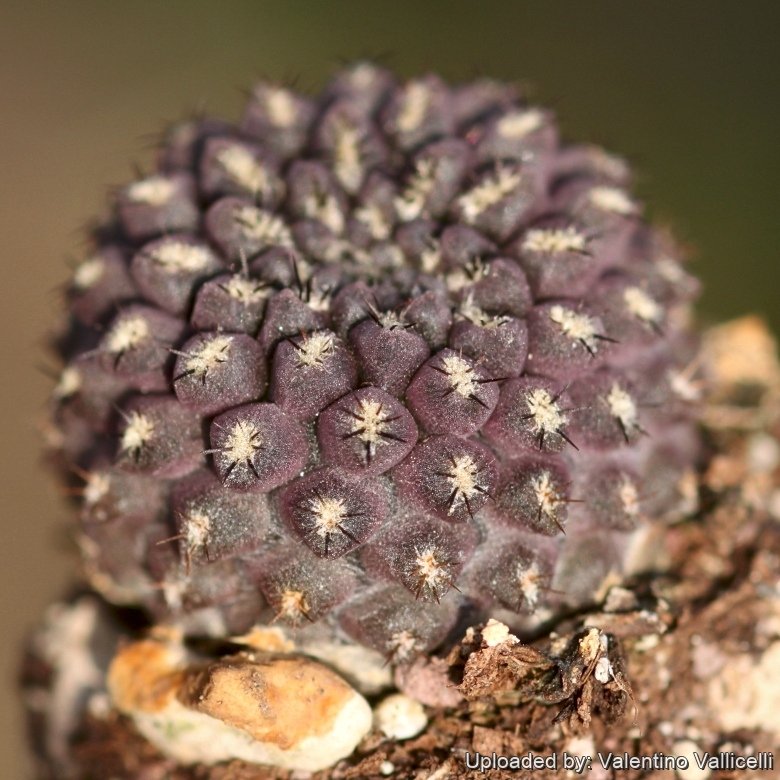
Eriosyce heinrichianadeherdtiana| is a compact slow growing forms of Eriosyce heinrichiana that distinguishes for the dark maroon/mauve stems whit fewer tuberculate ribs. However it look similar to other varieties of Eriosyce heinrichiana which are linked one to each others by populations of plants with intermediate characteristics.
Habit: It is a tiny geophytic cactus rising barely above ground level (in habitat), usually solitary or sometime branching.
Roots: Fibrous, arising from a large taproot which is narrowed into a necks where joining the stems.
Stem: Spherical to somewhat clavate in cultivation, flattened at the apex, up to 8 cm tall (but usually less than 4 cm) and 4-5 cm in diameter, dull olive-green, dark maroon/mauve to blackish.
Areoles: Elongate, with yellowish or white felt.
Ribs: About 12, noticeably tubercled with pronounced chinlike protrusions.
Spines: About 7 stiff, needle-like, straight or more or less curved and not easily distinguished as centrals or radials, creamy white, brown or black and darker at the tips, turning grey as they ages.
Flowers: Diurnal, 3-4 cm long and broad, closely packed apically from young areoles, funnel-form, the colour is creamy yellow to reddish often with red/brownish midveins. Pericarpel and floral tube with bracts, wool and sparsely bristly.
Blooming season: Flowers are produced in early summer and remain open for about four days.
Fruits: Oval, to 1,5 cm long, red, fleshy, thin walled and splitting open at maturity by basal pores.
Seeds: Round black.
Origin and Habitat
El Trapiche and adjacent ares, Region , 04 Coquimbo, Chile
Altitude: 300-400 (-800 ?) metres above sea level.
Cultivation and Propagation
Eriosyce heinrichianadeherdtiana| (syn: Eriosyce heinrichiana) is a slow growing but relatively easy to grow species, providing they are kept dry during autumn and winter and rot prone if kept in a non ventilated place.
Soils: Require a very fast mineral draining drying soil (70-80% grit and 20-30% of land soil). To prevent rottenness it is also advisable to surround its root neck by very rough sand or grit, this help a fast water drainage and an appropriate air circulation.
Watering Needs: Root prone it needs good drainage, waterings should regular in summer (do not overwater), to keep the plant compact and not become excessively elongated and unnatural in appearance. During the winter quiescent period, or when night temperatures remain below 10° C, it must be strictly kept dry since it is very sensitive to any moisture excesses.
Fertilization: During the beautiful season it’s good to enrich the soil using a fertilizer rich in potassium and phosphorous, but poor in nitrogen, because this chemical element doesn’t help the development of succulent plants, making them too soft and full of water.
Exposure: Requires strong sun exposure to develop good spinal growth (maximum brightness, sunlight accepted), but tolerate light shade. Some light shadow my be useful in the hottest summer days.
Frost Tolerance: Hardy to at least -5°C for a short period but cannot tolerate long standing freezing temperature, and for an healthy cultivation ensure a minimum temperature of 5° C. Assure a good ventilation. USDA Hardiness Zone 9b and 11.
Heat tolerance: Good heat tolerance, but in warmer climates it should be protected from excessive heat and too much sun sun in summer.
Maintenance: Repot in the spring, when its roots become cramped. Generally, it should be repotted every other year in order to provide fresh soil. After repotting, do not water for a week or more.
Propagation: Usually propagated from Seeds. (seldom produces offsets). Sow the seeds in spring in a well-aerated compost at a temperatures of 22-24°C . Stand the pots in water, moisten thoroughly and drain. Scatter and press lightly the seed onto the top of the compost. But do not cover the small seeds with compost. Secure a polythene bag around the pot or cover the container with glass or and place in a warm shaded place. If possible, germinate in a propagator. Some seedlings may appear within a week or 10 days others will take longer. At lower temperatures, germination usually takes considerably longer. Once germination has taken place, remove gradually the glass or plastic and move into a good light but not in direct sun. If the young plants are exposed to too much sun, or the compost dries out, they may stop growing and often turn red; once they stop, it is often difficult to persuade them to start growing again. Never let the pots dry out-but don’t saturate them either. A sodden compost is as harmful as a dry one. The seedling growth is rapid. But the seedling are often grafted because the plants on their own roots (especially the bigger ones) are extremely prone to root rot. In fact the best and older specimens are the grafted ones.
Bibliography
Major references and further lectures
-
Edward Anderson “The Cactus family” Timber Press, Incorporated, 2001
-
James Cullen, Sabina G. Knees, H. Suzanne Cubey “The European Garden Flora Flowering Plants: A Manual for the Identification of Plants Cultivated in Europe, Both Out-of-Doors and Under Glass” Cambridge University Press, 11/Aug/2011
-
David R Hunt; Nigel P Taylor; Graham Charles; International Cactaceae Systematics Group. “The New Cactus Lexicon” dh books, 2006
-
Fred Kattermann “Eriosyce (Cactaceae): The Genus Revised and Amplified” David Hunt, 1994
Source: Neochilenia deherdtiana, LLIFLE - Encyclopedia of living forms, CC-BY-SA, retrieved 2026-10-25.
From llifle page Neoporteria ritteri
Description
It is a small geophytic cactus with a dark body and very short pectinated spines.
Stem: Flattened, globose to short cylindrical, brown or grey-greenish with a reddish-violet nuance. 2-4 cm in diameter but in culture it grows slowly more than 7 cm tall and about 7 cm in diameter.
Ribs: Several, spiralling and disappearing into tubercles.
Radial spines: 6-10(-14) short, about 2-3(-5) mm long, more or less pectinated, needle like, straight to somewhat curved against to the stem yellow-orangish to dark reddish-brow that turn to grey as they age.
Central spines: 0-1(-2). Thick, erect up to 10 mm long.
Roots: It has a large, conical taproot.
Flowers: Born on young areoles, 3-5 cm wide, cream white to dirty orangish or reddish with darker midline. The flowers have a beautiful silky shine, the tube is covered in thin brown hairs.
Fruits: Elongate, dehiscing by a basal pore.
Origin and Habitat
Chile, Atacama, Huasco (Around Carrizal Bajo at west of Canto del Agua )
Habitat: Grows in some extremely arid areas in the Atacama desert, in superficial soils covered with quartz, and then the sand sustain the roots or in rocky quebradas deep seated in rock crevices. They cohabit with Eriosyce napina ssp. Challensis
Cultivation and Propagation
It is a summer-growing species of relatively easy cultivation. It has a thick taproot and is susceptible to over-watering if kept in a non ventilated place. , sometimes it is grafted to avoid root rot problems. Likes warmth (recommended minimum winter temperature 5° C) But plant kept perfectly dry can easily survive to winter night temperatures below 0° C. Sun Exposure: Suited for sunny-brightly exposure; can tolerate light shade. Good heat tolerance.
Cultural Practices: Suited for airy exposures. Needs deep pot and gritty mineral substrate with a very good drainage to accommodate its tap root. Water regularly in summer, keep dry in winter.
Propagation: Usually propagated from Seeds. (seldom produces offsets) or graft. Seeds can be sown in the spring or summer. The seedlings should not be disturbed until they are well rooted after which they can be planted separately in small pots.
Source: Neoporteria ritteri, LLIFLE - Encyclopedia of living forms, CC-BY-SA, retrieved 2026-10-25.
Cultivars and forms (1)
Varieties (1)
Gallery