Publication: Eriosyce (Cactac.) gen. revis. & ampl. (Succ. Pl. Res., 1) 119 (1994).
Description
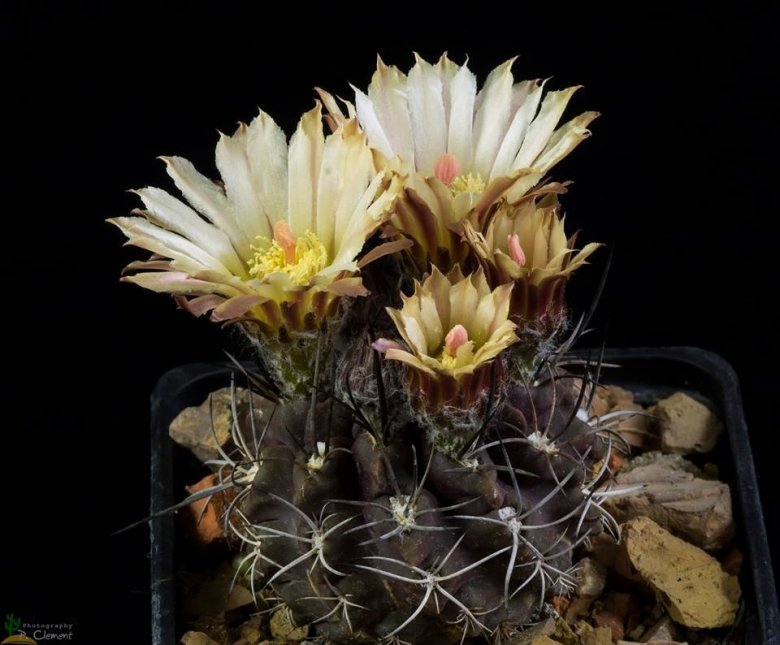
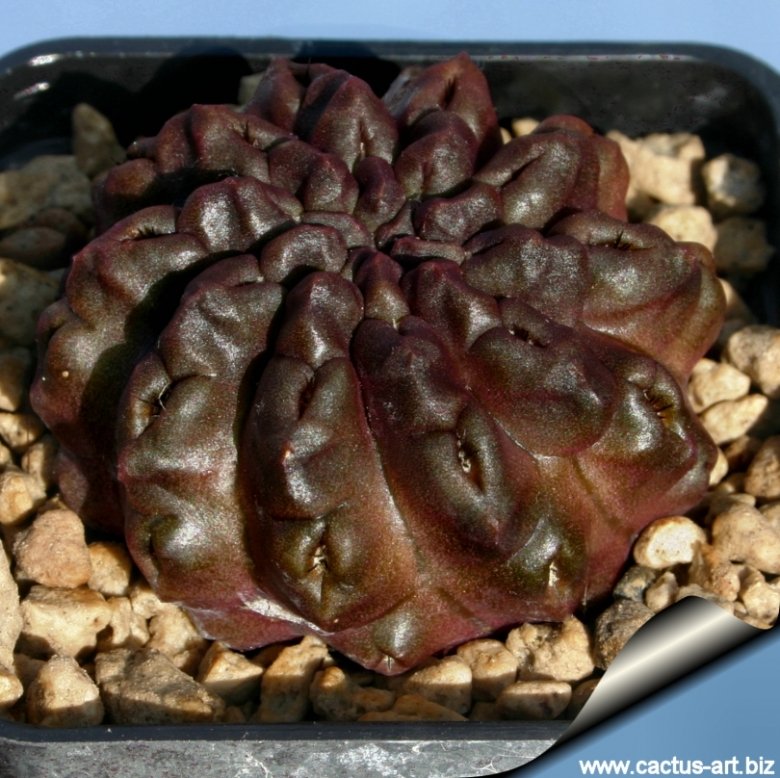
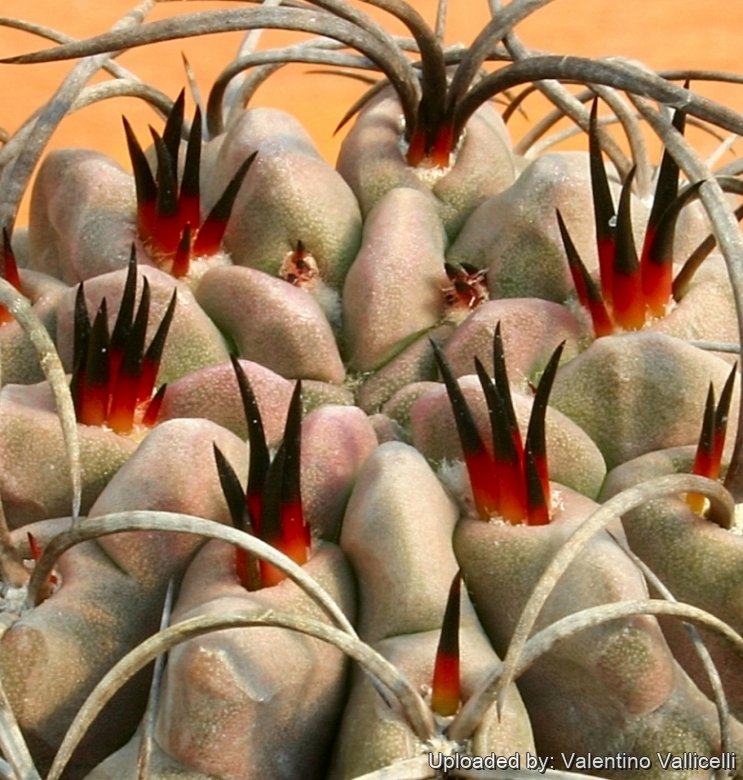
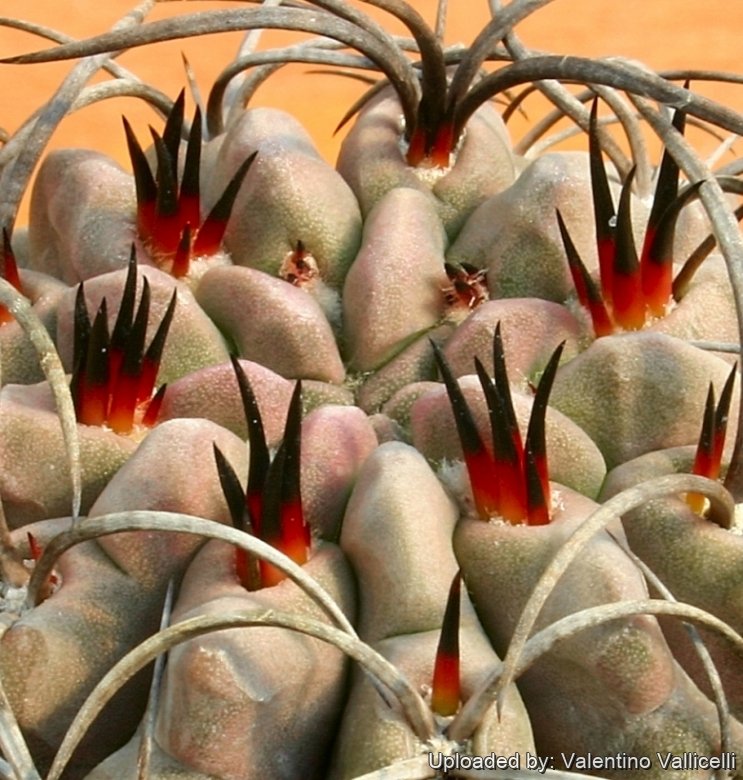
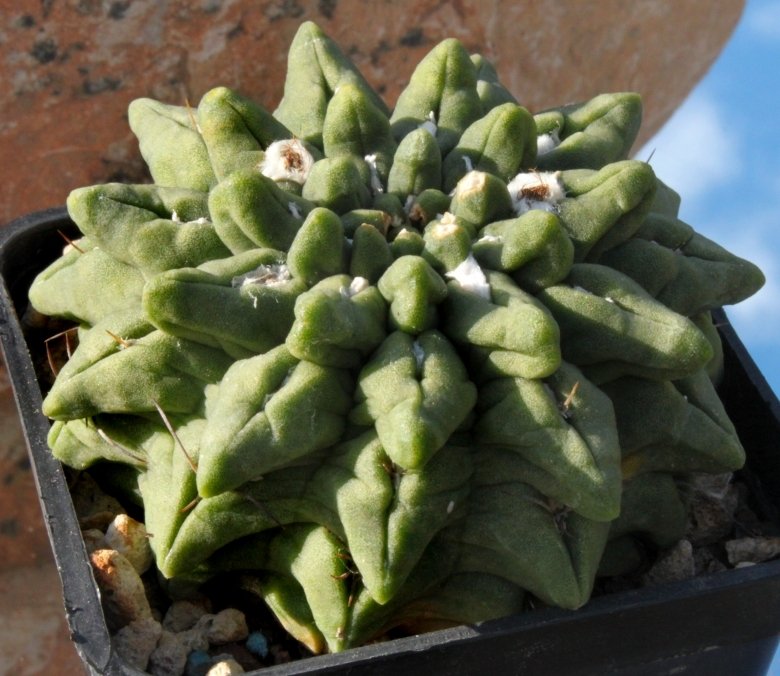
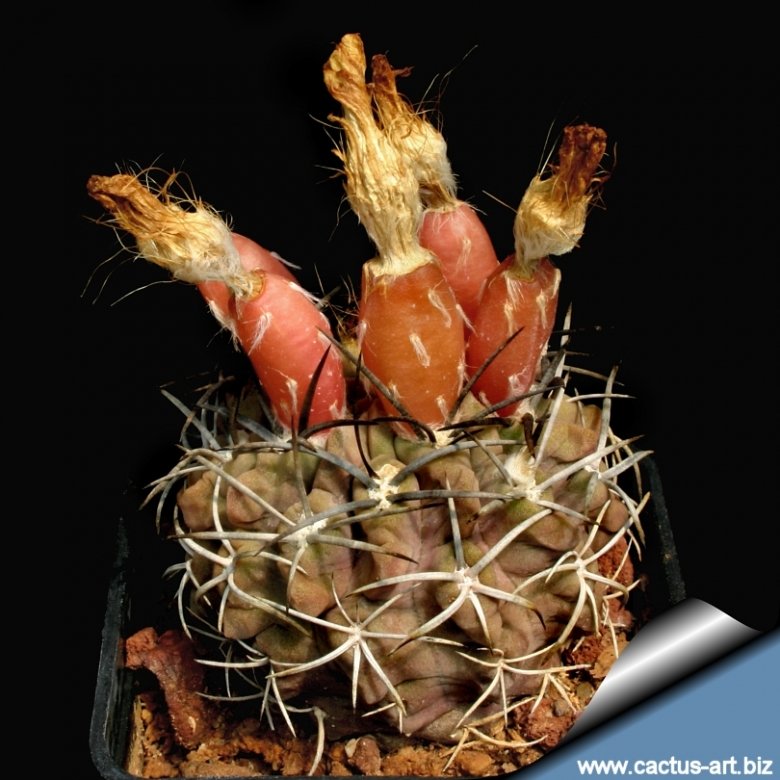
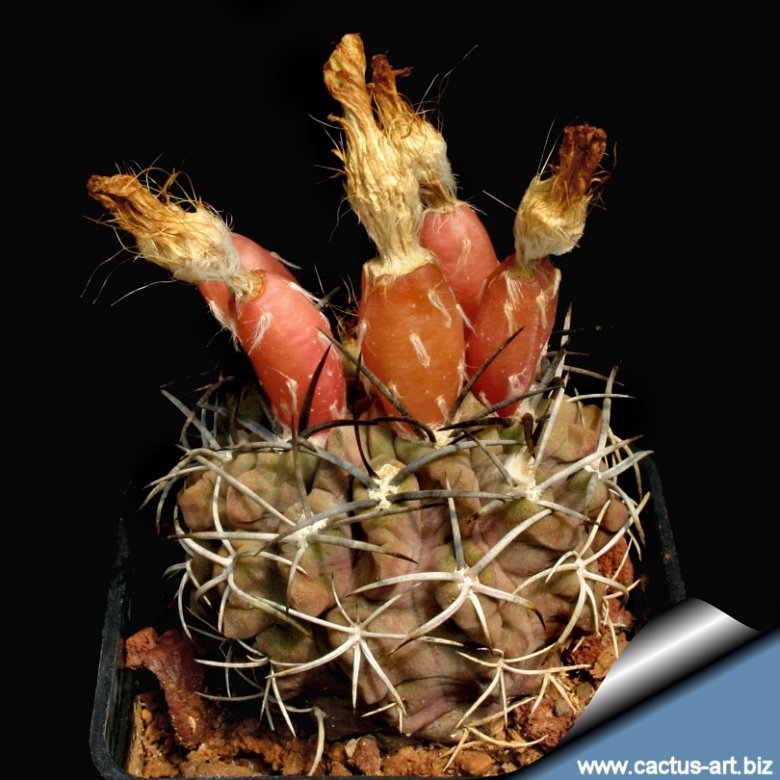
Small-growing plant with low, spineless (or spiny), dark purple to almost black stem.
Stem: Flat, solitary, mostly underground, slowly clumping as it ages, 5 cm in diameter; generally 8 to 10, up to 14 tuberculate ribs. The unusual colouring ranges from pale pinkish-grey to a deep purple (or almost black)
Root: Tuberous root.
Spines: Spineless or spiny, 0 or 1 central spine, 2 -10 (or more) mm long; 4 to 8 usually shorter radials, 1-11 mm long. All the spines tend to fall as the plant ages. The spineless form is more popular with collectors
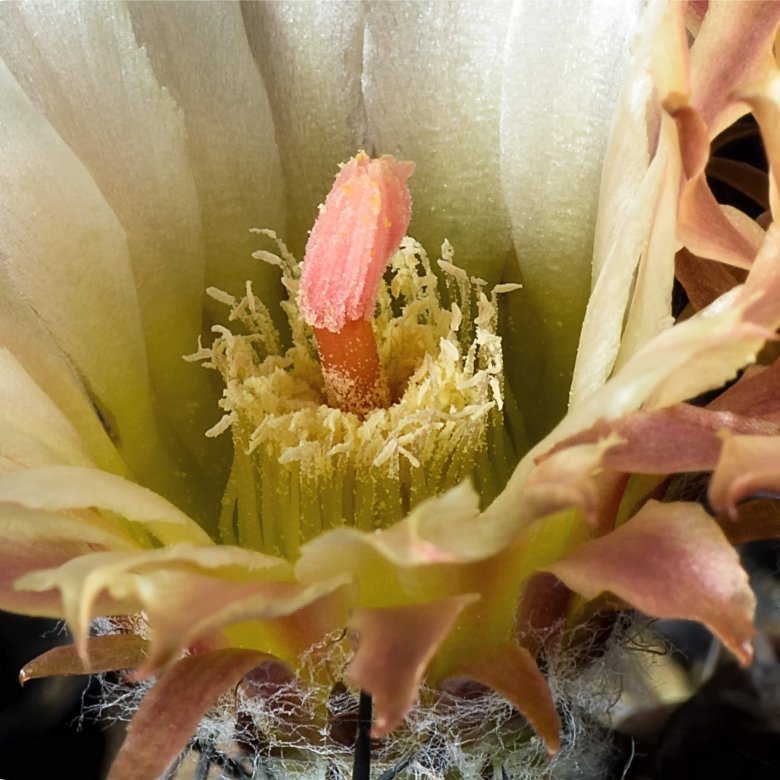
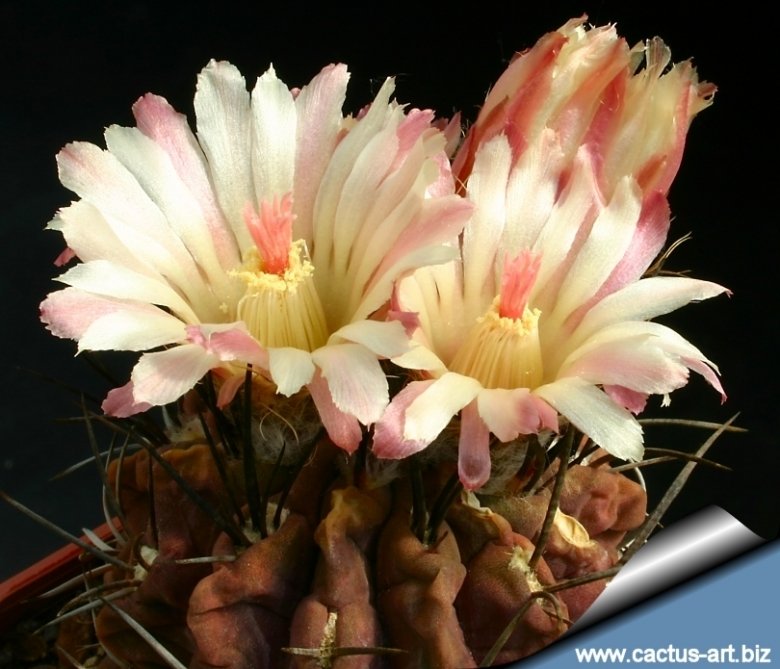
Flowers: Large, silky, whitish, yellowish to pinkish orange, 3.5 cm in diameter.
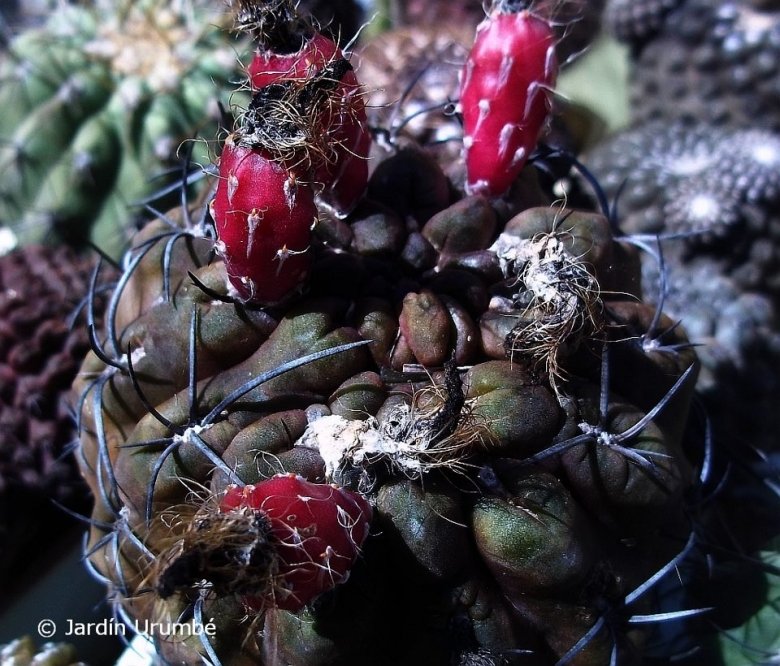
Fruits: Red, showy in winter.
Origin and Habitat
Northern Chile (Antofagasta).
Cultivation and Propagation
It is a summer-growing species. Water regularly in summer, but do not over-water (rot prone). It needs good drainage and very a porous potting soil Keep dry in winter. Feed with a high potassium fertilizer in summer. Full sun to light shade
Propagation: Seeds (seldom produces offsets)
Notes
The plants labelled as E. occulta are quite variable in spines and body colour. When it comes to buying plants of this species we often have built up an image of what it should look like from a limited number of pictures in a book. This will not prepare us for the variability that can occur in nature, and among cultivated specimens. Some taxa are quite uniform in appearance, while others like E. occulta can confuse the most experienced cactophile.
Gallery