Publication: Cact. Succ. J. (Los Angeles) 83(6): 265 (264-269; photogrs. 1-7). 2012 [dt. 2011; issued 9 Jan 2012]
Description
Escobaria abdita is a fascinating little, very cryptic, geophytic plant with a swollen subterranean root. The plant bears a resemblance both to Escobaria minima (spines) and Escobaria missouriensis (flowers).
Stem: Solitary 2-3 cm in diameter, but often more in cultivation.
Root: Napiform, succulent, solitary or few branched approximatively 10 cm long.
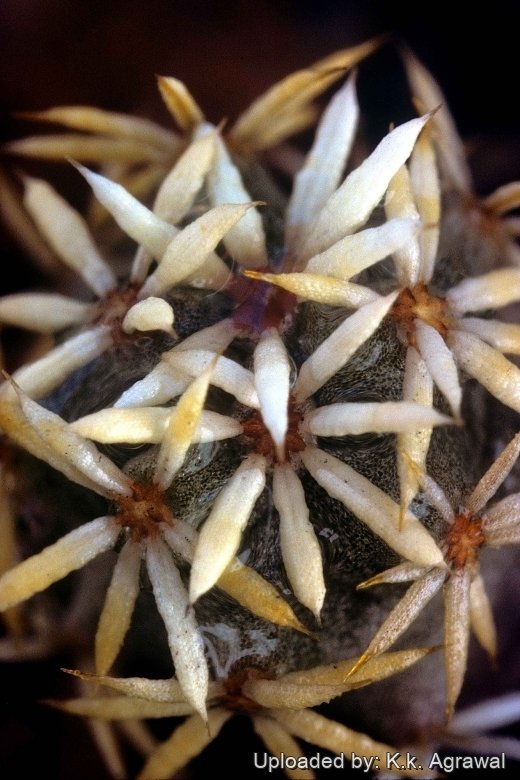
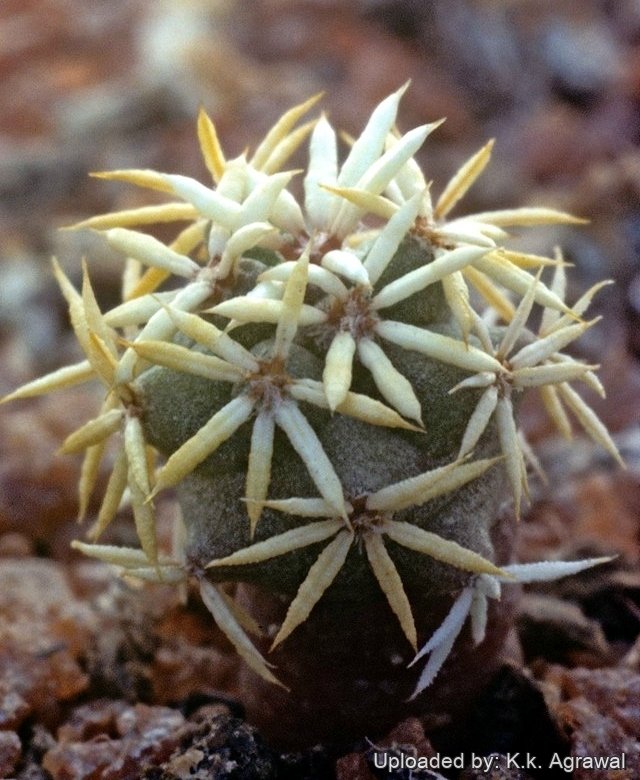
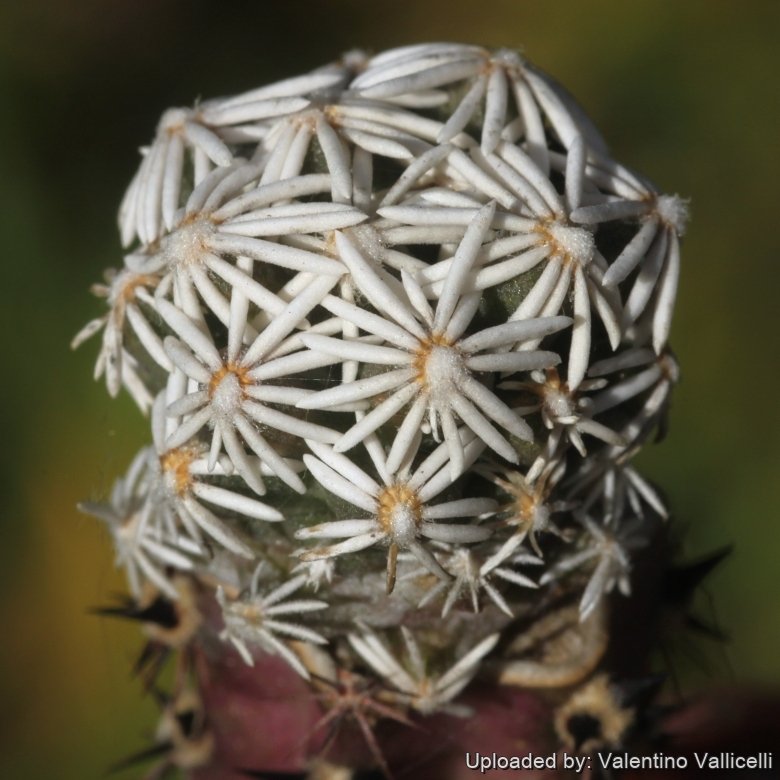
Radial spines: Short, ivory to chalk-white, finger-like more or less spindle-shaped, round and four-layered in cross-section in a characteristic radial-pectinate arrangement.
Central spines: None.
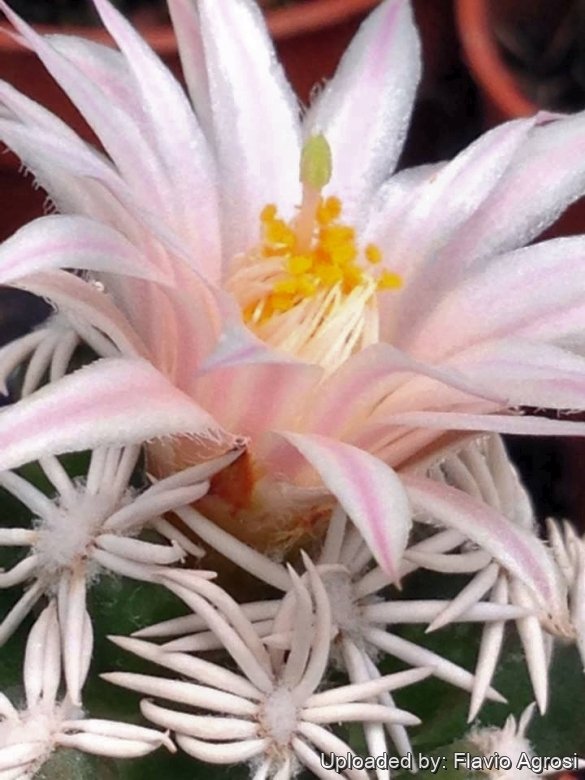
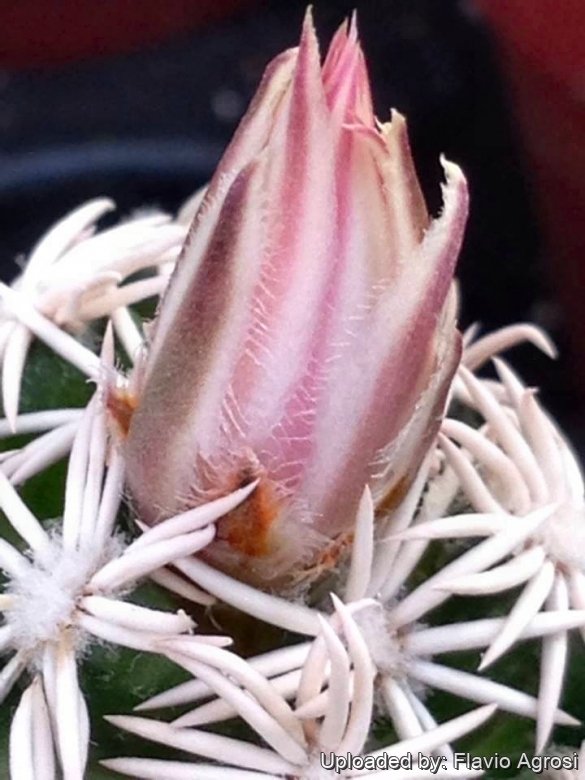
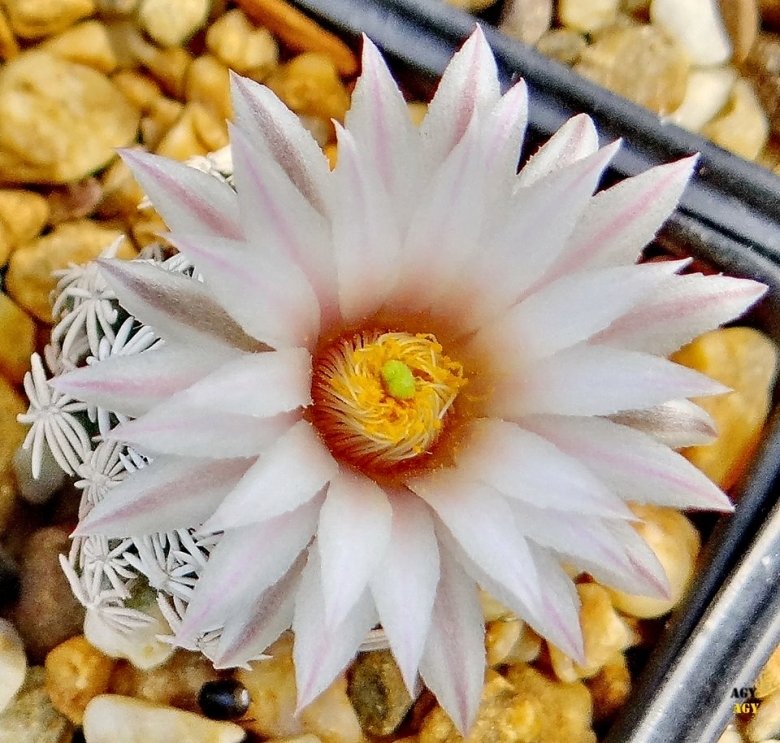
Flowers: 35-45mm long and 30-35mm wide, on the newest areoles on the plant apex, small whitish with light pink or brownish stripes on the tepals. Style green; Anthers yellow.
Fruit: 6-8 mm long and 5-7mm in diameter, as it mature it dry up into a very thin translucent, parchment-like structure.
Origin and Habitat
South of El Oro a small town about 12 km east of Monclova, Coahuila (Mexico, Northern America)
Type Locality: Basin east of the settlement El Oro, 1100 m a. s. l.
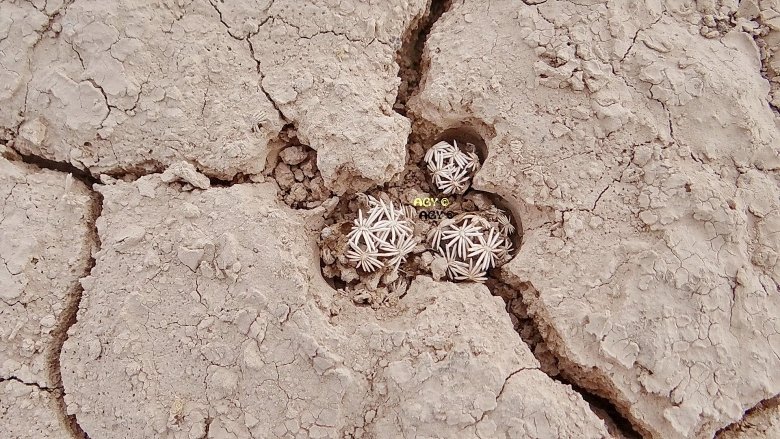
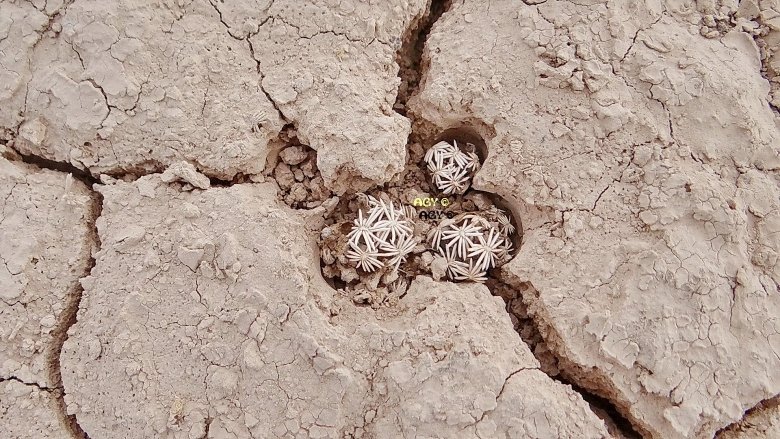
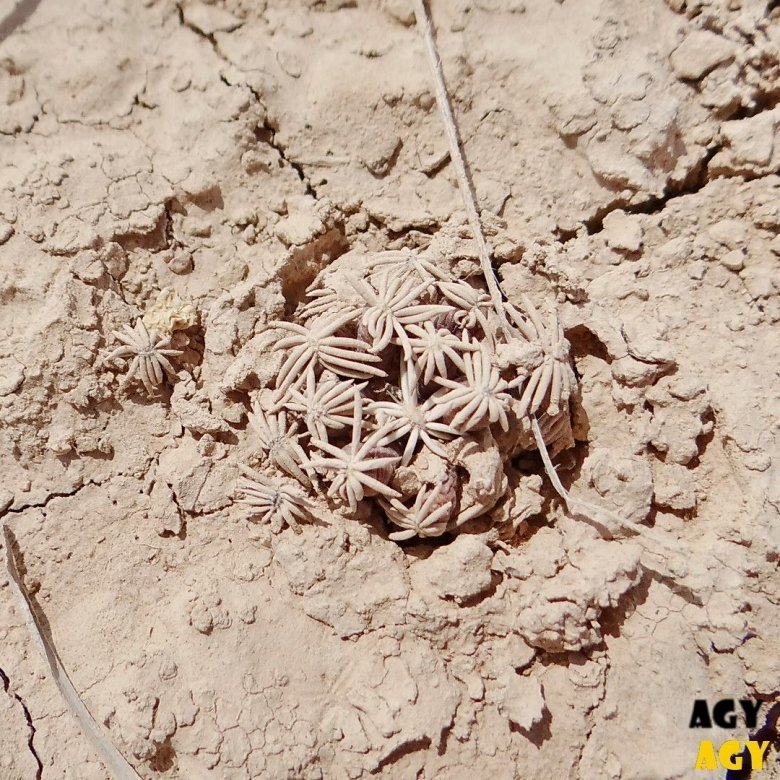
Habitat: They grow in a very dry environment in a flat depression seasonally flooded and almost deprived of any visible vegetation.
Ecology: During the long extreme drought, characteristic of this area practically throughout the year, the stems of Escobaria abdita retract and drive under the ground so the plants comes to be partially or completely buried, covered with dust and unnoticeable. It is only in wet periods that these plants become visible as they absorb moisture and swell. The stems enlarge and bloom some weeks after the rain.
Cultivation and Propagation
Slow-growing, not easy at all to cultivate as it need full sun and a very porous draining substrate (rot prone). Water regularly in summer, but do not over-water. It prefers a completely dry place during winter with much drainage. A cool greenhouse would be perfect.
Propagation: Seed, cuttings and grafting.
Bibliography
Major references and further lectures
-
Edward Anderson “The Cactus family” Timber Press, Incorporated, 2001
-
James Cullen, Sabina G. Knees, H. Suzanne Cubey “The European Garden Flora Flowering Plants: A Manual for the Identification of Plants Cultivated in Europe, Both Out-of-Doors and Under Glass” Cambridge University Press, 11/Aug/2011
-
David R Hunt; Nigel P Taylor; Graham Charles; International Cactaceae Systematics Group. “The New Cactus Lexicon” dh books, 2006Jackie M. Poole, William R. Carr, Dana M. Price, Jason R. Singhurst “Rare plants of Texas: a field guide” Texas A&M University Press, 30/Dec/2007
Gallery