Publication: Cactaceae (Britton & Rose) 4: 55 (fig. 52). 1923
Description
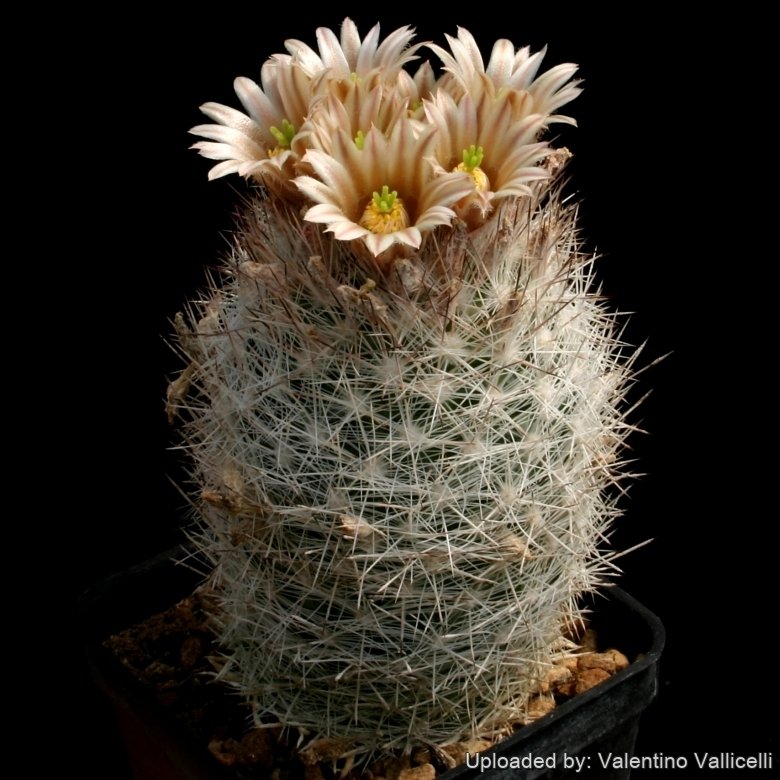
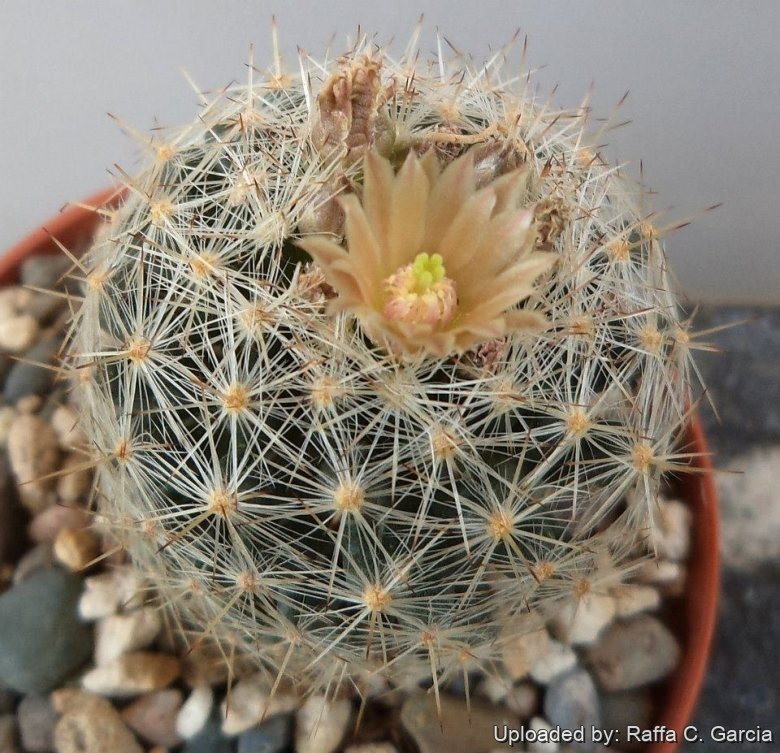
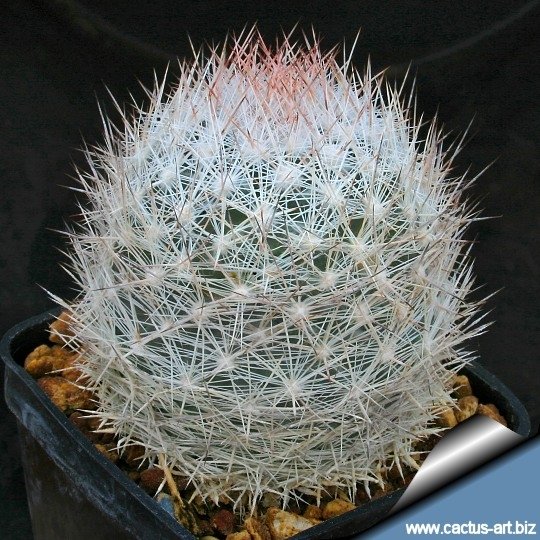
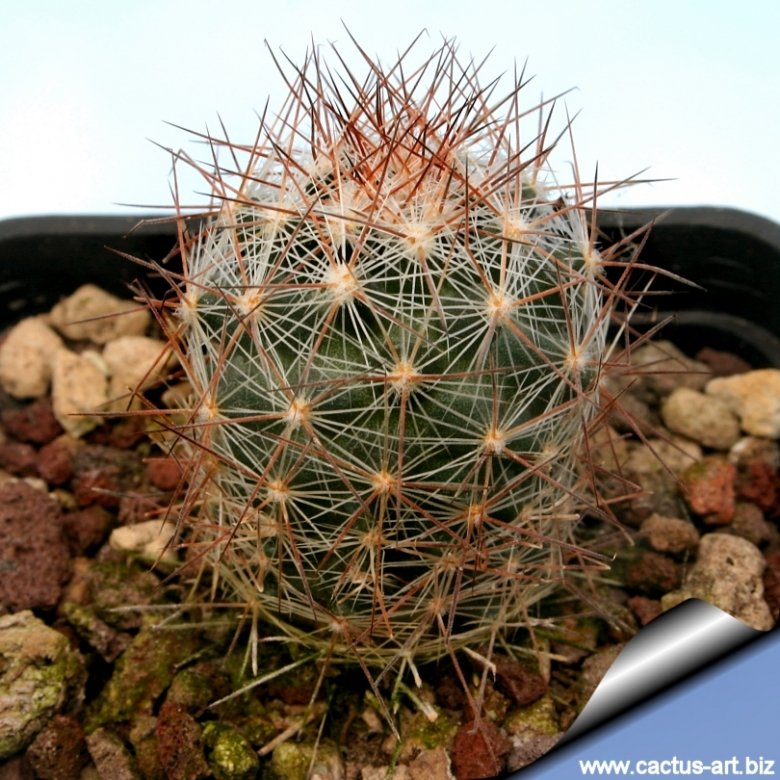
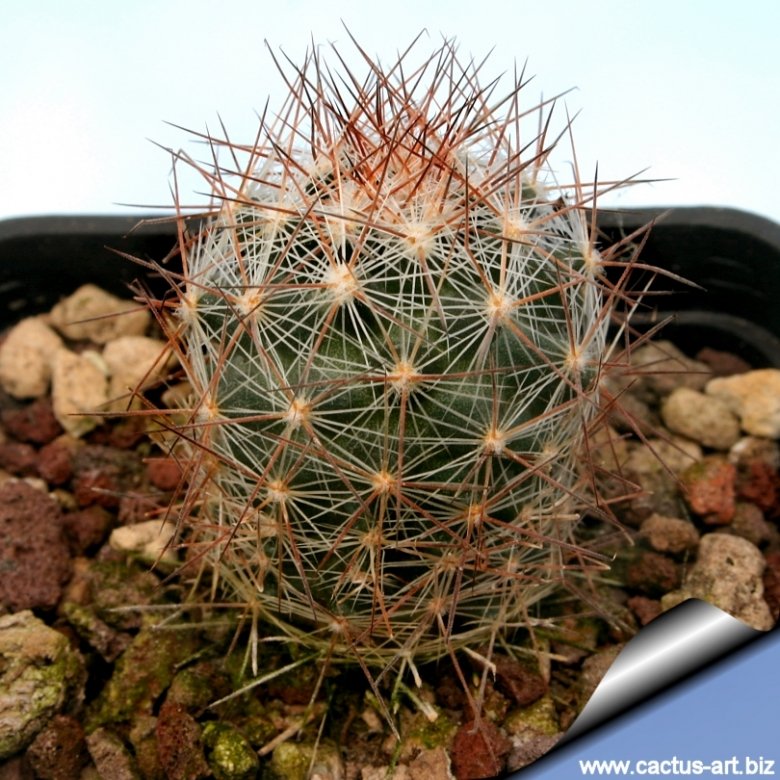
Escobaria dasyacantha is small nipple Cactus forming solitary (or rarely with 2-5 branches) condensed upright cylinders densely covered with white spines with darker tip. Two subspecies are recognized, the nominate form and subsp. chaffeyi (Britton & Rose) N.P.Taylor.
Stems: Spheric, becoming short cylindric in age, 4.5-15 tall 3-6 cm in diameter.
Tubercles: 7-8 long, 3-5 mm in diameter, moderately soft.
Spines: Pure white to brown bristly with pink, red-brown to nearly black tips 26-42 per areole; radial spines 21-31 per areole 6-10 mm long; subcentral spines several, appressed; central spines (4-9 per areole, spreading, straight, longest spines 12-17 mm.
Roots: Diffuse or whit a short taproot.
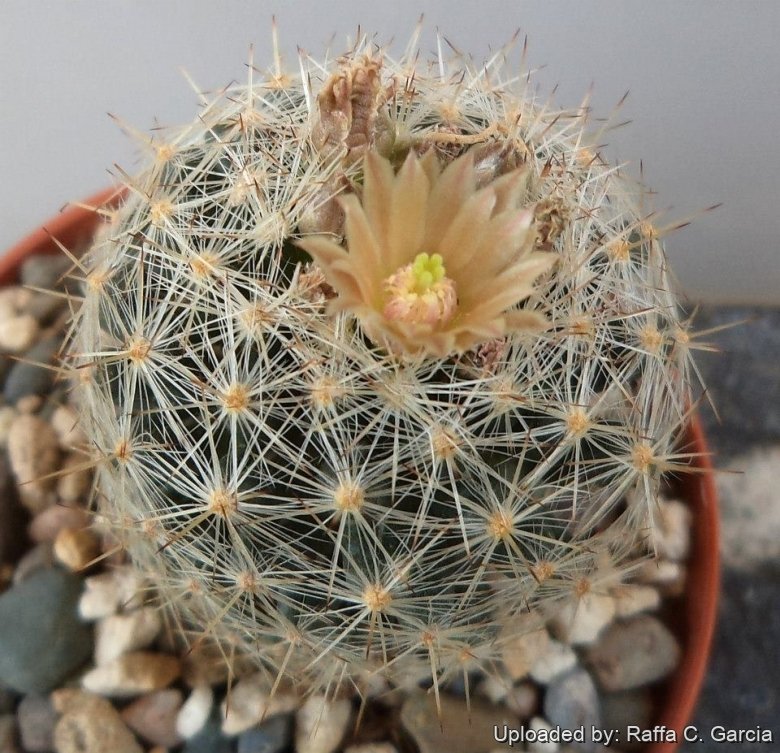
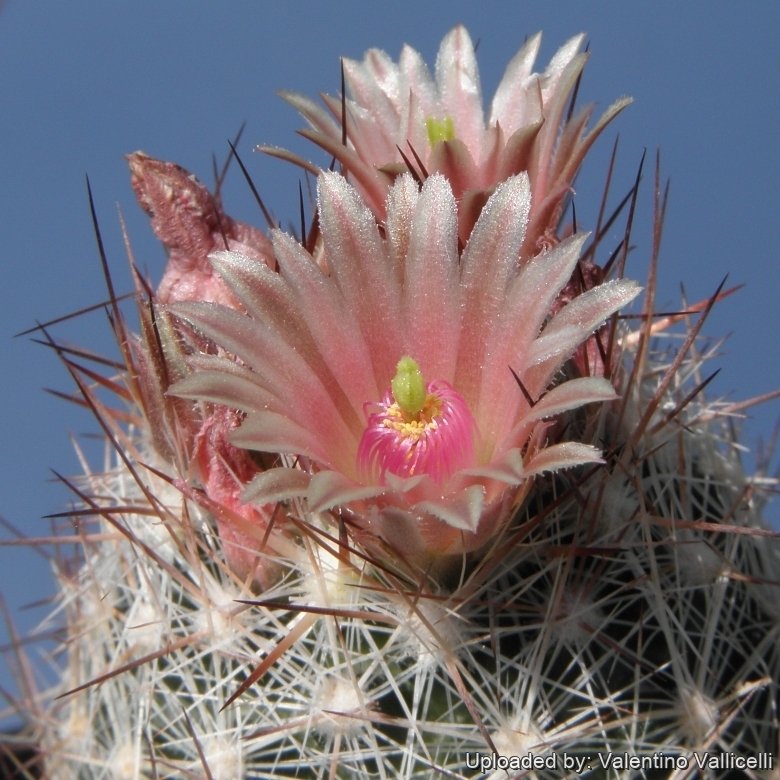
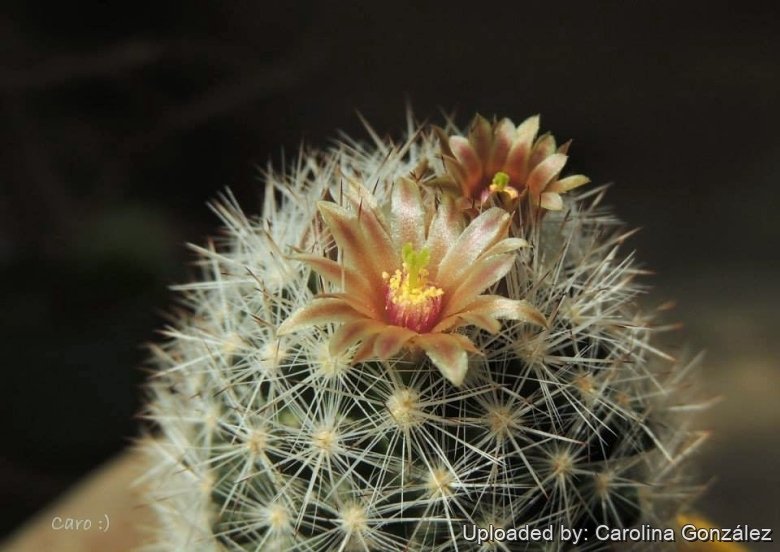
Flowers: Nearly apical, 15-30 mm, outer tepals pinkish conspicuously fringed with darker pinkish to brown or brownish green midstripes. Stigma lobes are greenish.
Blooming season (in Habitat): March-July.
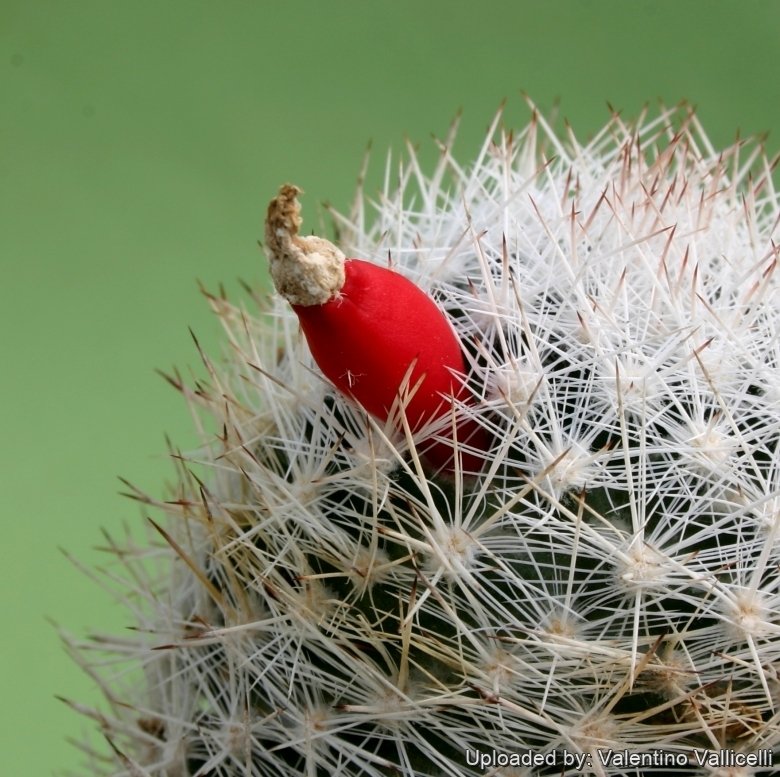
Fruits: Bright red, club-shaped, cylindric, or narrowly ellipsoid, 13-35mm long not very succulent; floral remnant strongly persistent.
Remarks: This species is frequently misidentified with other similar Escobarias, the ripe fruits, with strongly persistent floral remnant provide the only simple way to distinguish Escobaria dasyacantha from duncanii, while the black fresh seeds of Escobaria dasyacantha and related species usually provide immediate distinction from Escobaria tuberculosa, Escobaria sneedii, and Escobaria vivipara, which have differently shaped, bright reddish brown fresh seeds. In addition, the greenish stigma lobes of Escobaria dasyacantha, Escobaria duncanii, Escobaria chaffeyi, Escobaria pottsiana, and certain Mexican taxa contrast with the violet or white stigma lobes of Escobaria vivipara, Escobaria sneedii, Escobaria alversonii, and Escobaria hesteri.
Origin and Habitat
Escobaria dasyacantha has a wide range and is fund in USA (southern New Mexico, west Texas) and Mexico (Chihuahua, Coahuila, Zacatecas). The species is scattered and uncommon.
Altitude range: 600-2000 metres above sea level.
Habitat: Escobaria dasyacantha occurs in grasslands, desert creosote (Larrea tridentata) shrublands, mesquite (Prosopis sp.) shrublands, and open oak woodlands, over igneous soils and perhaps limestone, gravely bajadas, silty flats in the Chihuahuan Desert and on both plains and hills at moderate elevations. The species is sometimes collected by hobbyists and unscrupulous retailers. However, collection is not a major problem and population trend is stable.
Cultivation and Propagation
Easy to cultivate in a very gritty substrate with much drainage. Water regularly in summer, but do not overwater (very rot prone), it prefer a completely dry place during winter . An unheated greenhoouse would be perfect. It can survive low temperatures (appr. -12 C). Full sun to light shade.
Propagation: Seeds (no dormancy requirement, they germinate best at 25°C in spring ) or usually by offsets (readily available), or occasionally grafted.
Bibliography
Major references and further lectures
-
Terry, M., Heil, K., Gómez-Hinostrosa, C. & Corral-Díaz, R. 2013. Escobaria dasyacantha. The IUCN Red List of Threatened Species. Version 2014.3. <www.iucnredlist.org>. Downloaded on 01 February 2015.
-
David R Hunt; Nigel P Taylor; Graham Charles; International Cactaceae Systematics Group. “The New Cactus Lexicon” dh books, 2006
-
Edward Anderson “The Cactus family” Timber Press, Incorporated, 2001
-
James Cullen, Sabina G. Knees, H. Suzanne Cubey “The European Garden Flora Flowering Plants: A Manual for the Identification of Plants Cultivated in Europe, Both Out-of-Doors and Under Glass” Cambridge University Press, 11/August /2011
-
Ulises Guzmán, Salvador Arias, Patricia Dávila “Catálogo de cactáceas mexicanas.” Universidad Nacional Autónoma de México Mexiko-Stadt 2003
-
Urs Eggli, Leonard E. Newton “Etymological Dictionary of Succulent Plant Names” Birkhäuser 2004
Cultivars and forms (2)
Subspecies (1)
Varieties (1)
Gallery