Publication: Cact. Succ. J. Gr. Brit. 40(1): 13 (1978) Remarks: sp. nov. for Cactus mammillaris sensu Nuttall (Gen. N. Amer. Pl. 1: 295. 1818), non Linnaeus (1753)
Description
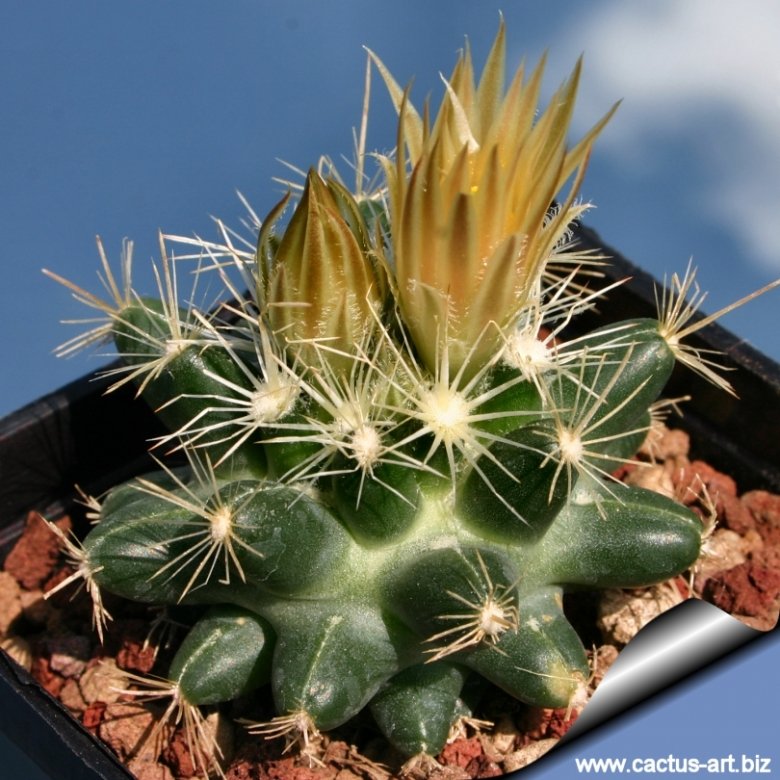
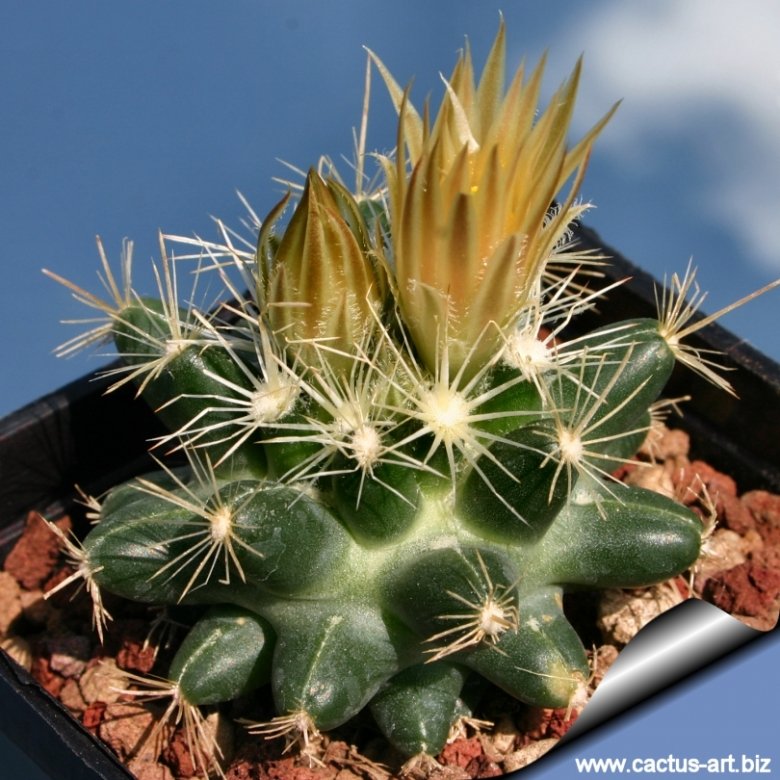
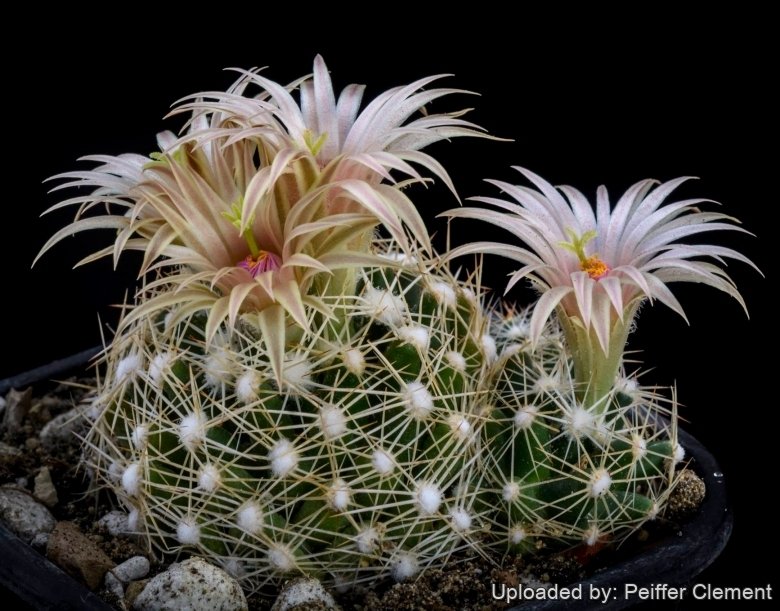
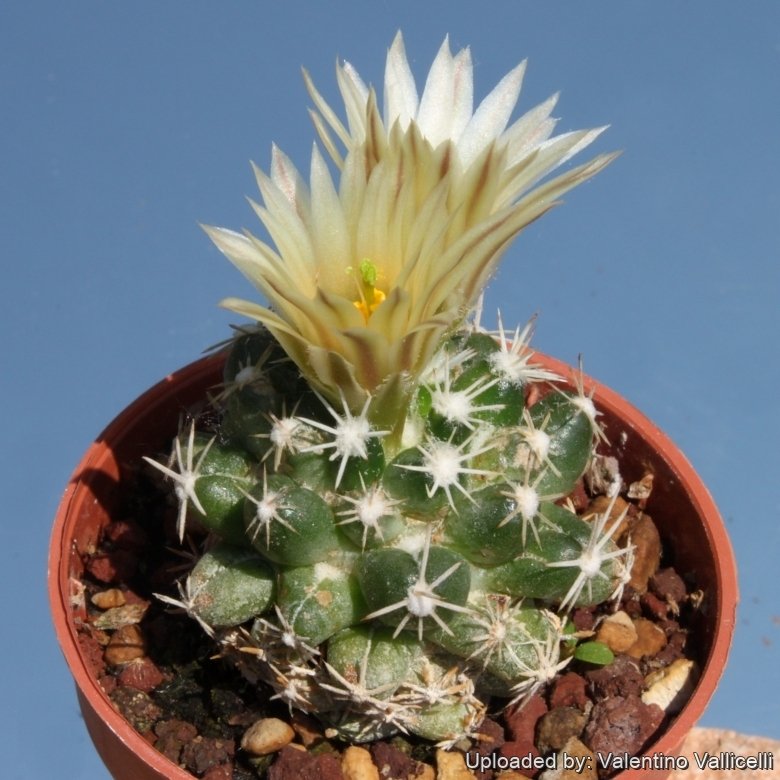
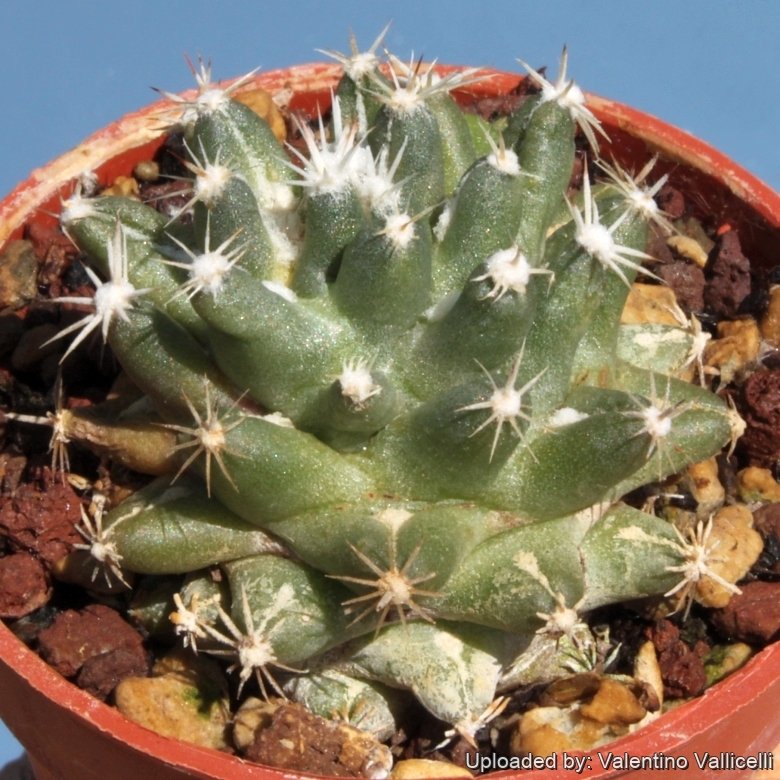
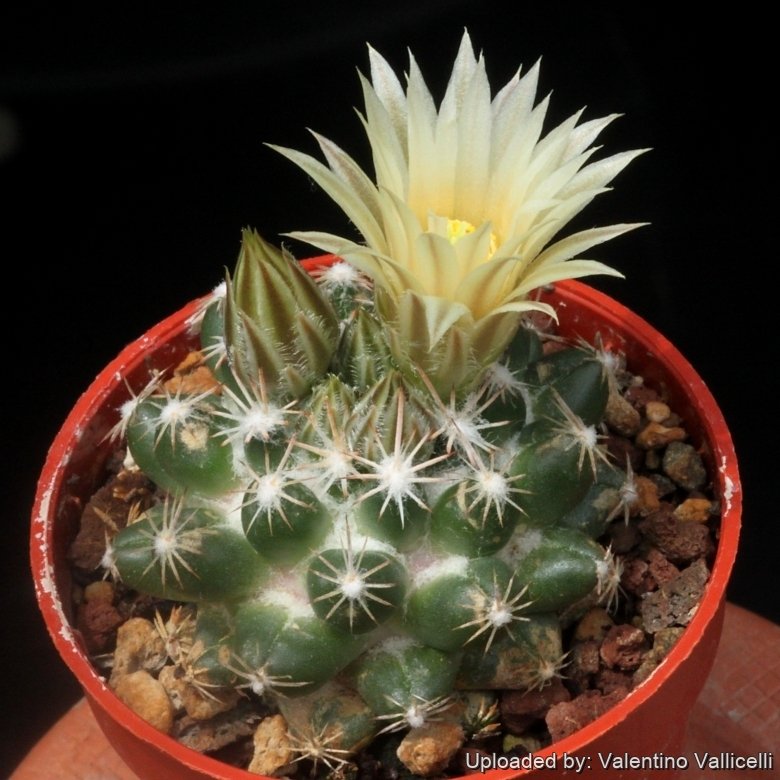
Escobaria missouriensis (a.k.a. Neobesseya missouriensis) is a low growing winter hardy cactus species. This is one of the most variable species in the genus and has lots of unnecessary synonyms ( like many other cacti) and comprises a multitude of different regional forms as well as various cryptic allied species. But where each form is linked to others by populations of plants with intermediate characteristics.
Habit: Unbranched or profusely branched (eastern populations) and occasionally forming clumps up to 30 cm in diameter.
Roots: Diffuse or short taproots, sometimes adventitious from bases of branches.
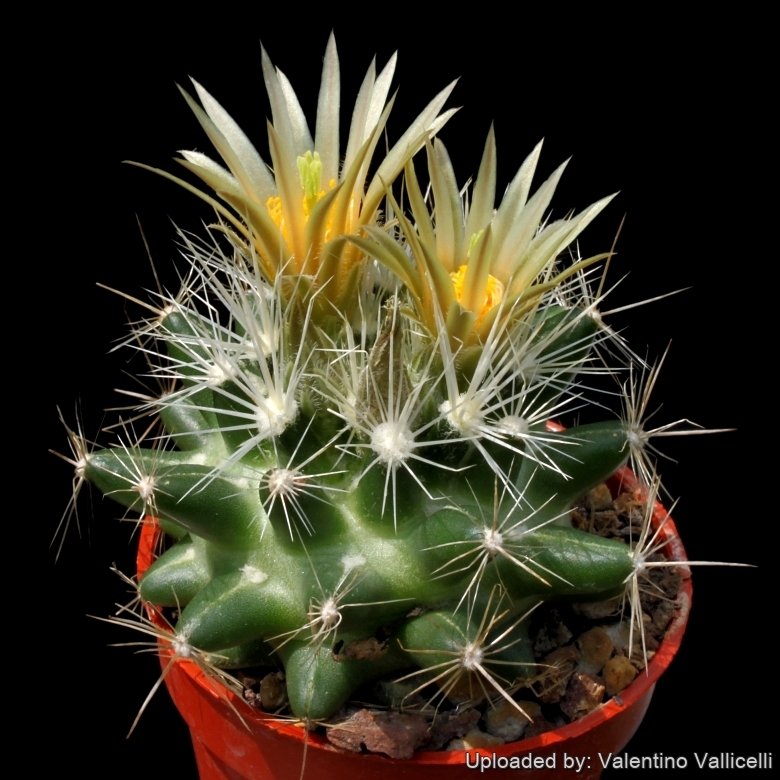
Stems: Deep-seated in substrate, becoming flat-topped and nearly subterranean in winter, 2-8 wide, 1-10 cm tall.
Tubercles: 5-21 soft; areolar glands absent.
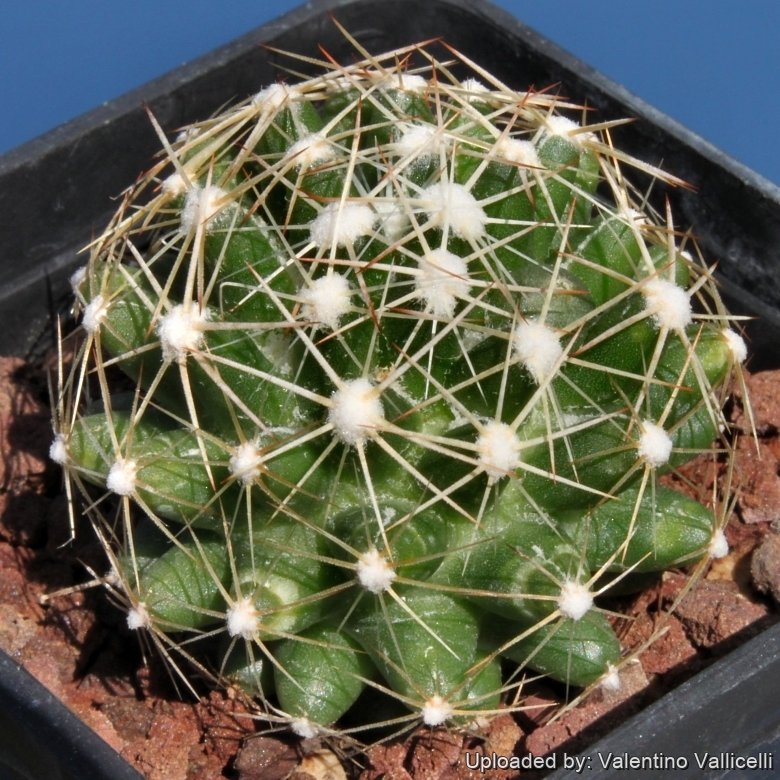
Areoles: With short white wool, not obscuring the basal portion of the spine.
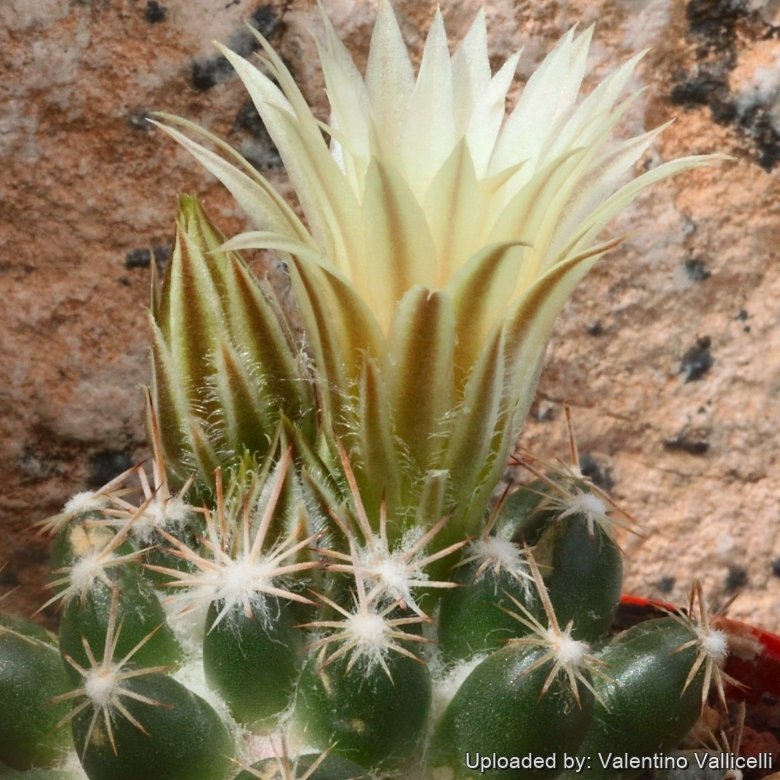
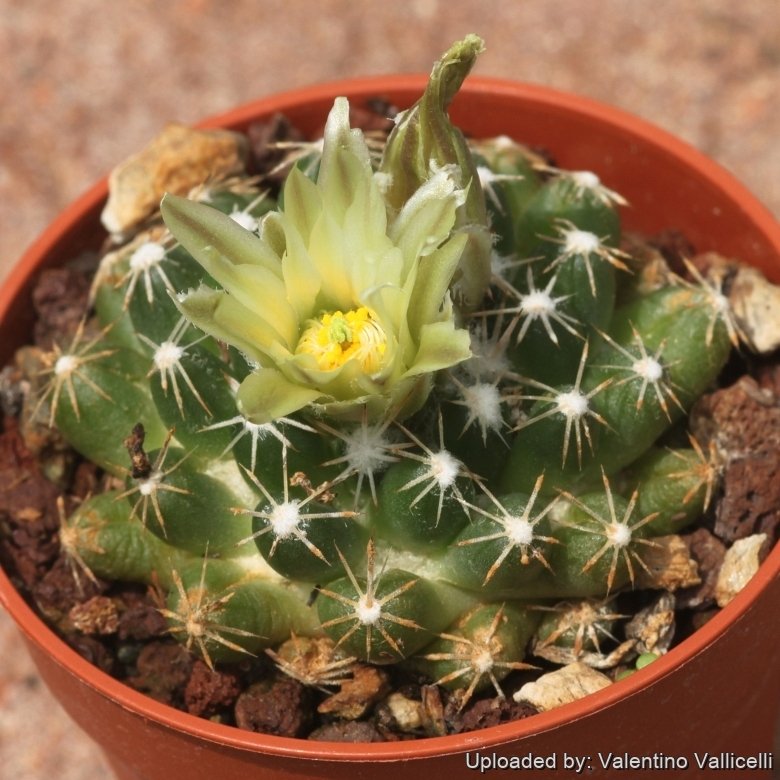
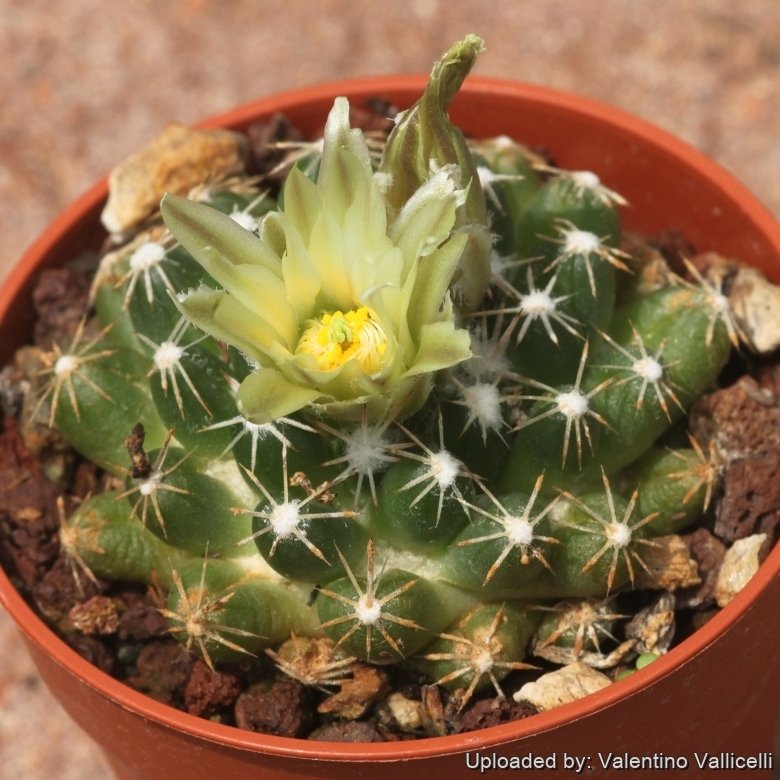
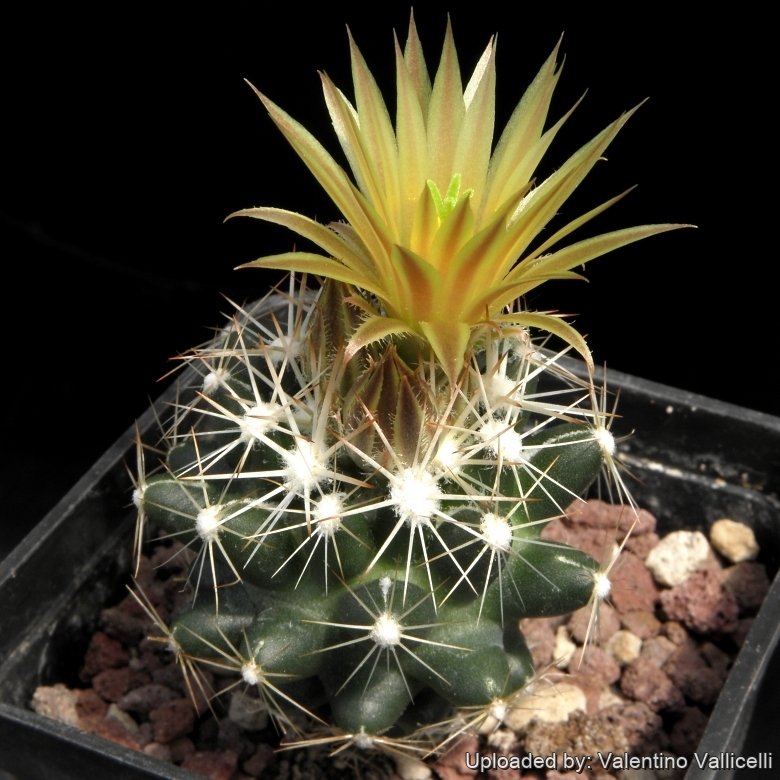
Spines: 6-21 per areole, slightly pubescent, bright white, pale grey, or pale tan, weathering to grey or yellowish brown, dark brownish orange to pale brown or pale greyish pink tips present on all or only the largest plants.
Radial spines: 6-20 per areole, moderately to tightly appressed, 4-16 mm
Central spines: 0(-3) per areole, if 1, erect, if 2, ascending-spreading, 8-20 mm long.
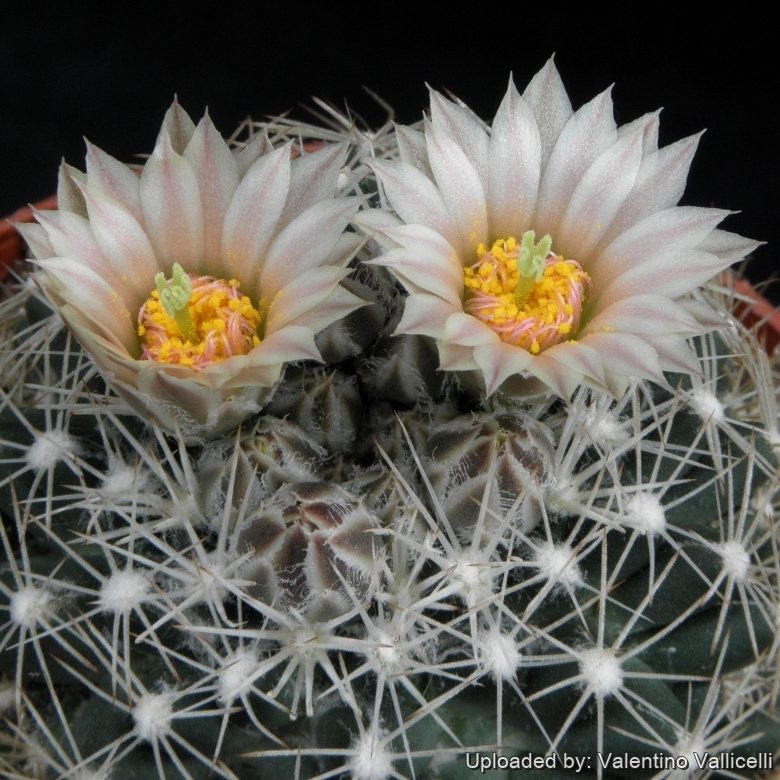
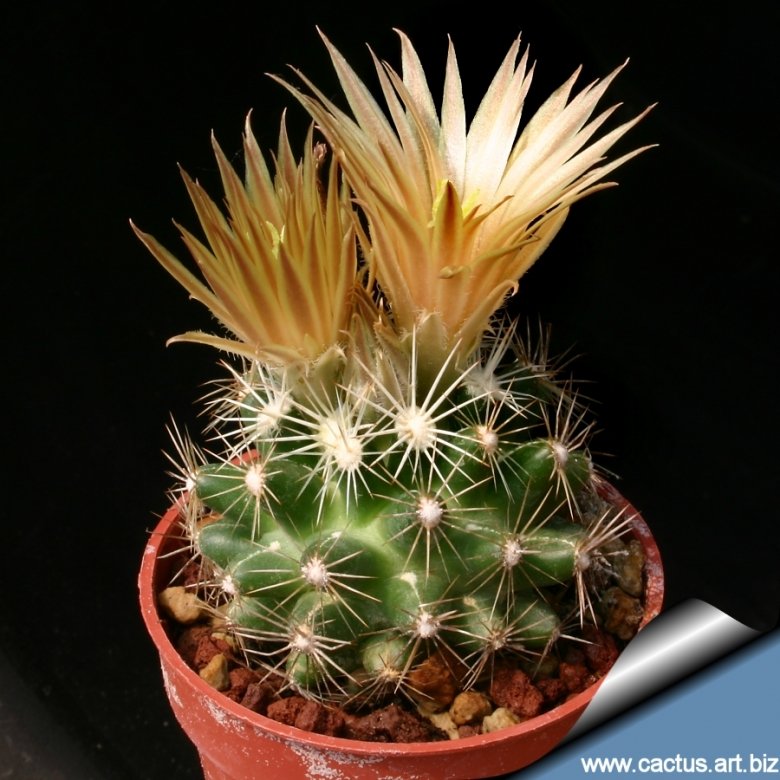
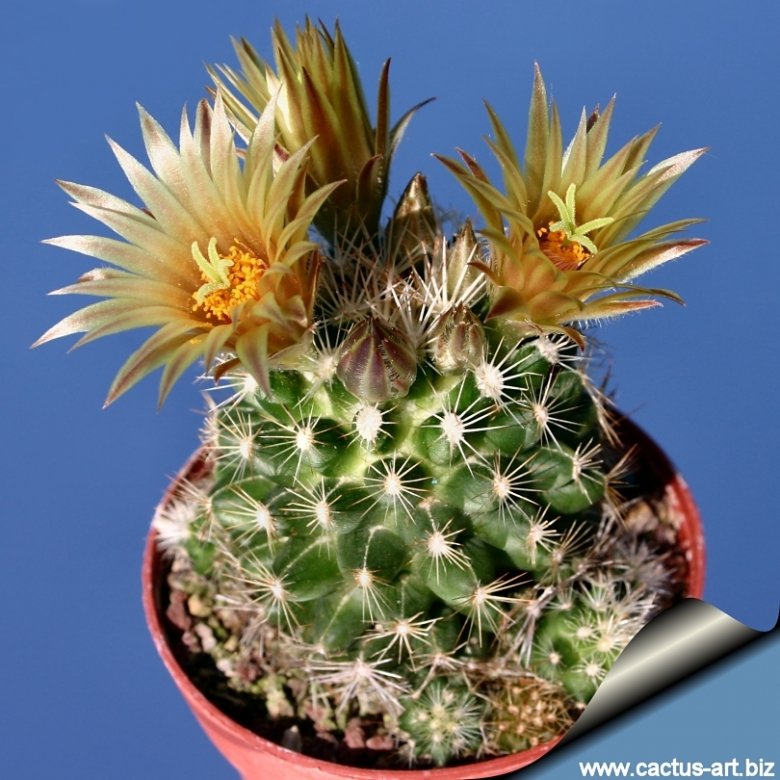
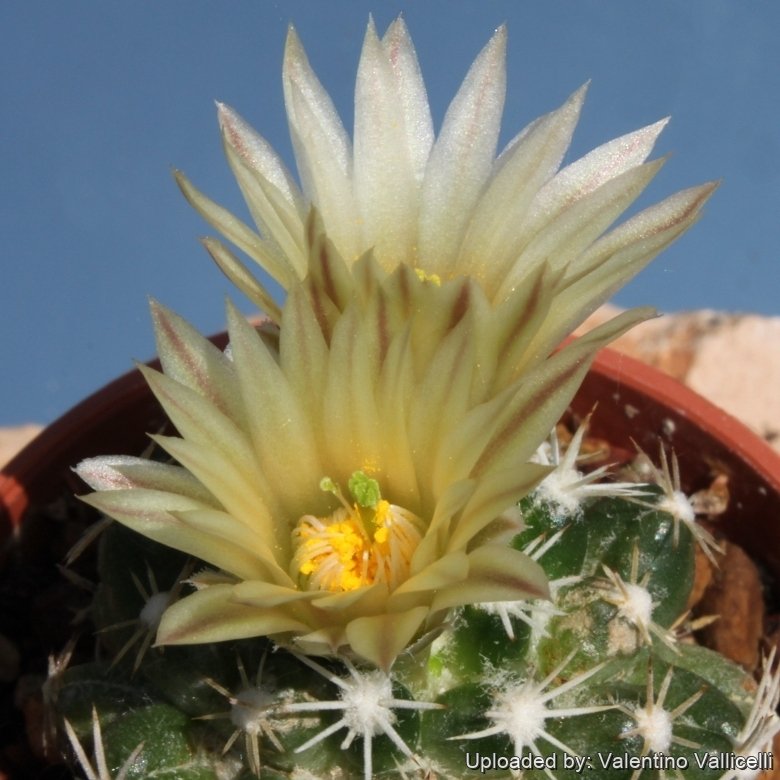
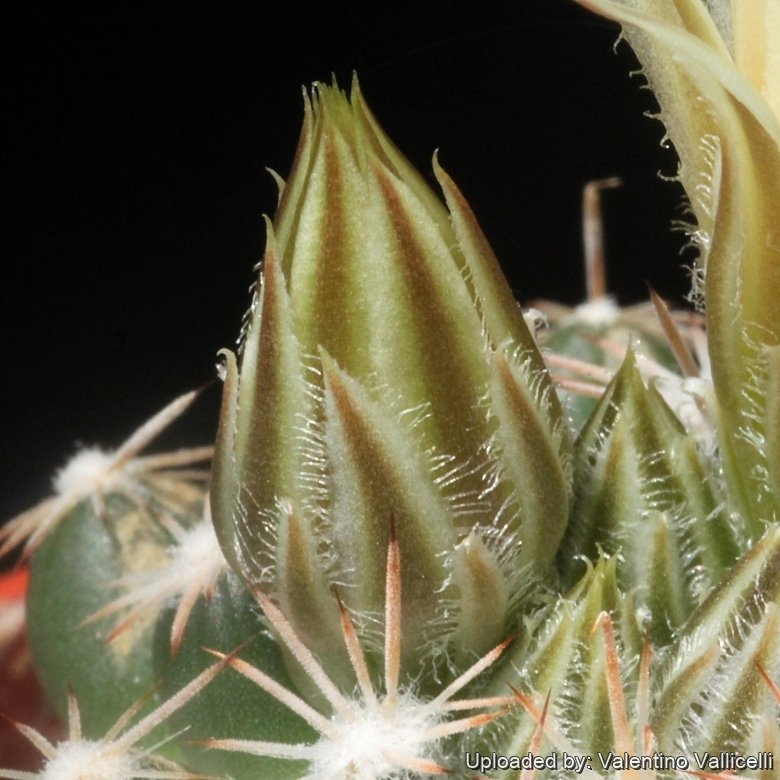
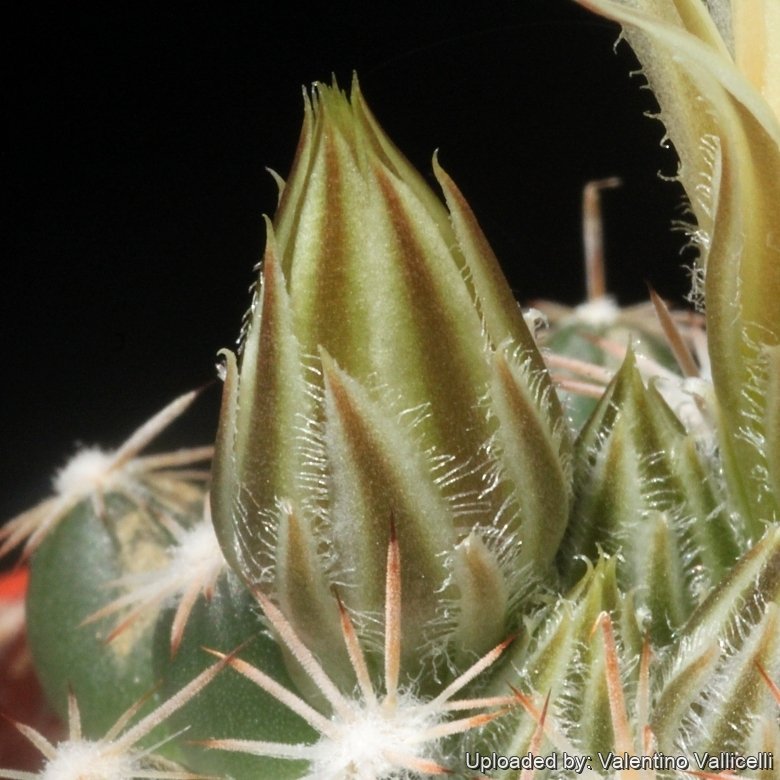
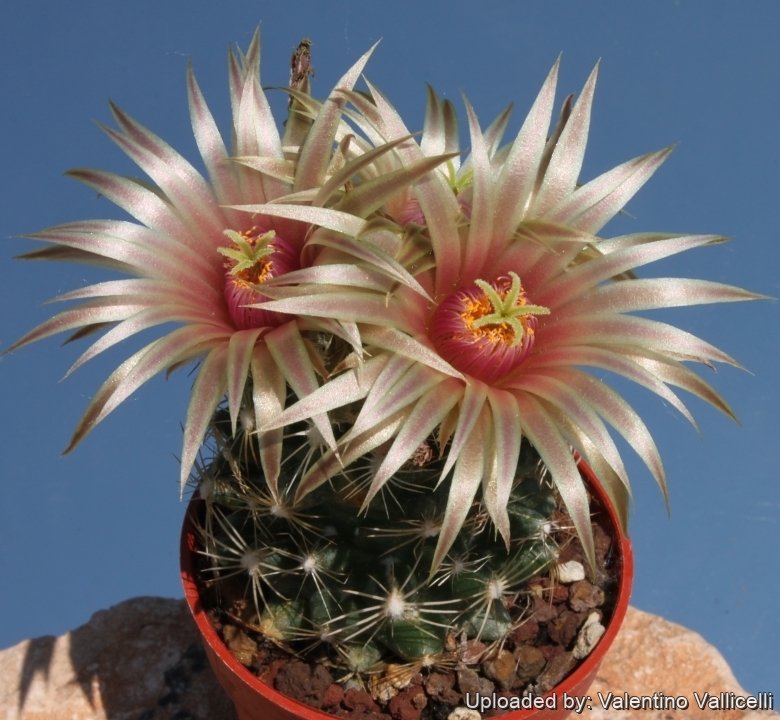
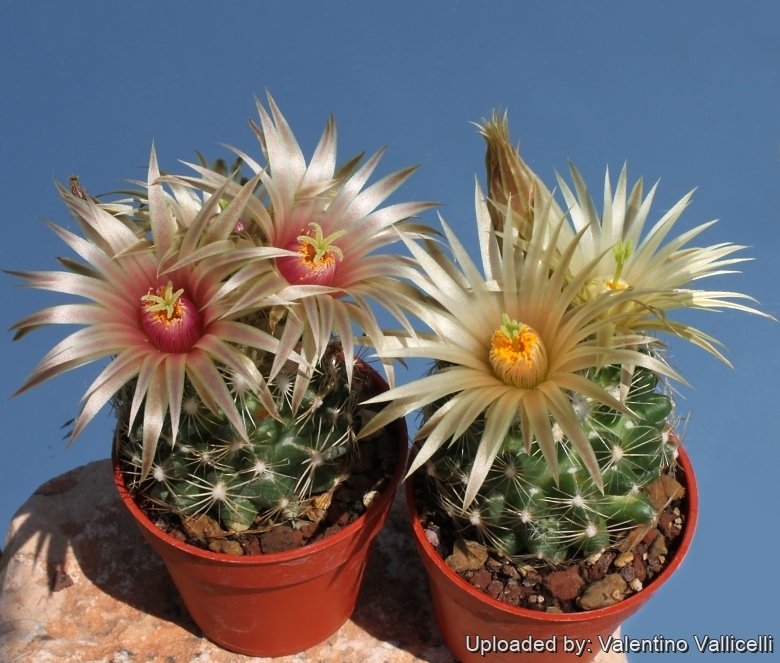
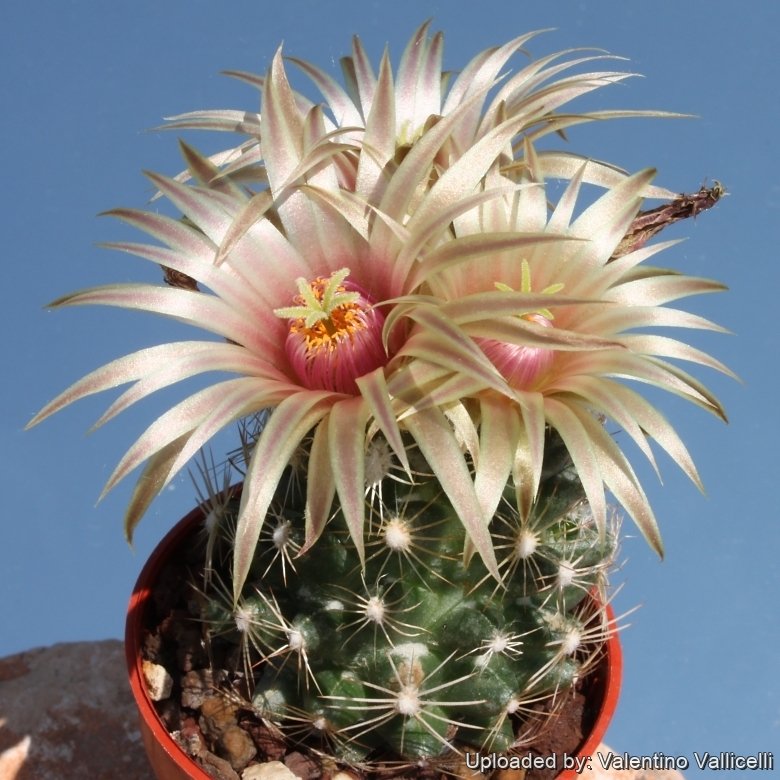
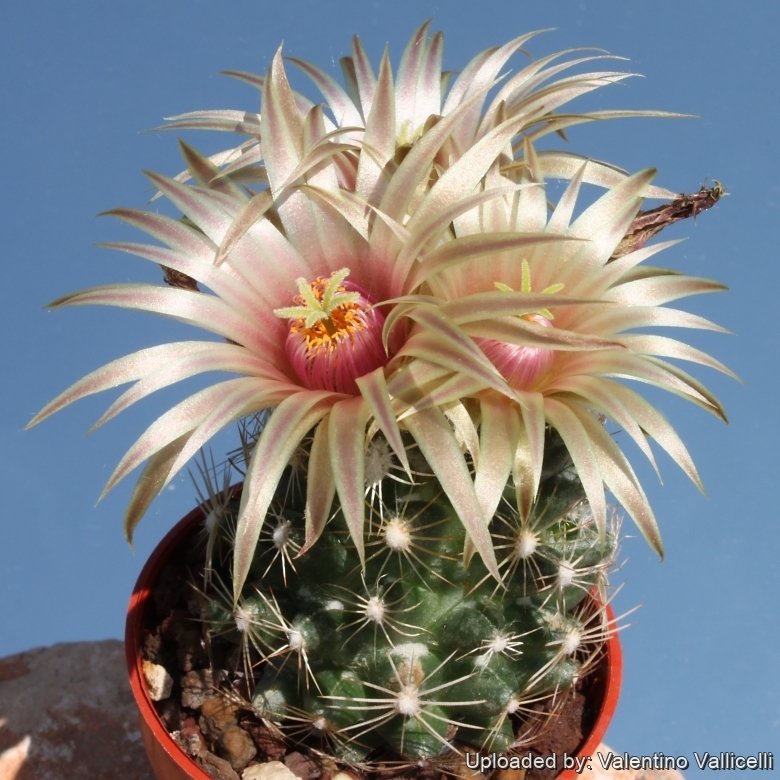
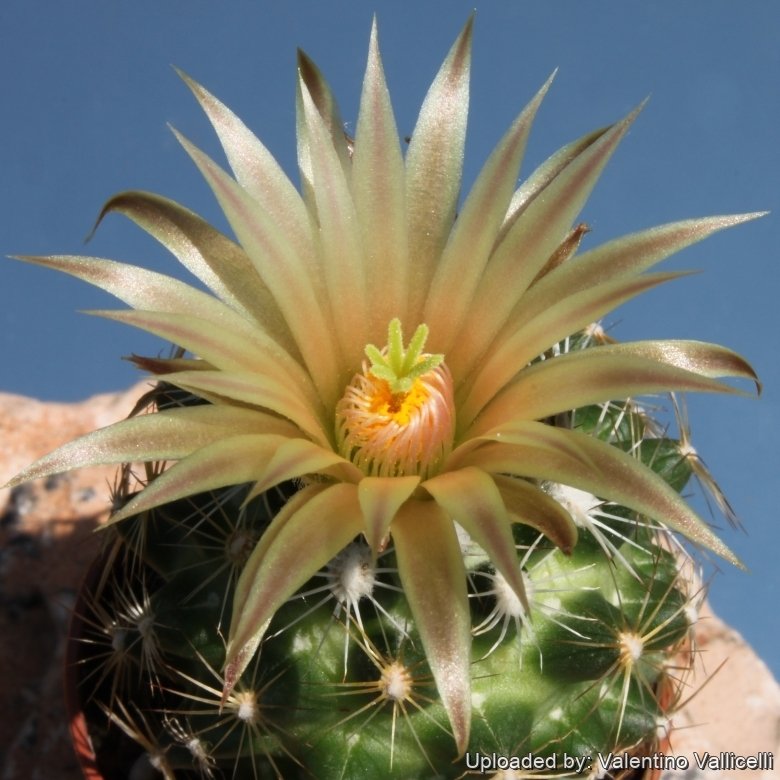
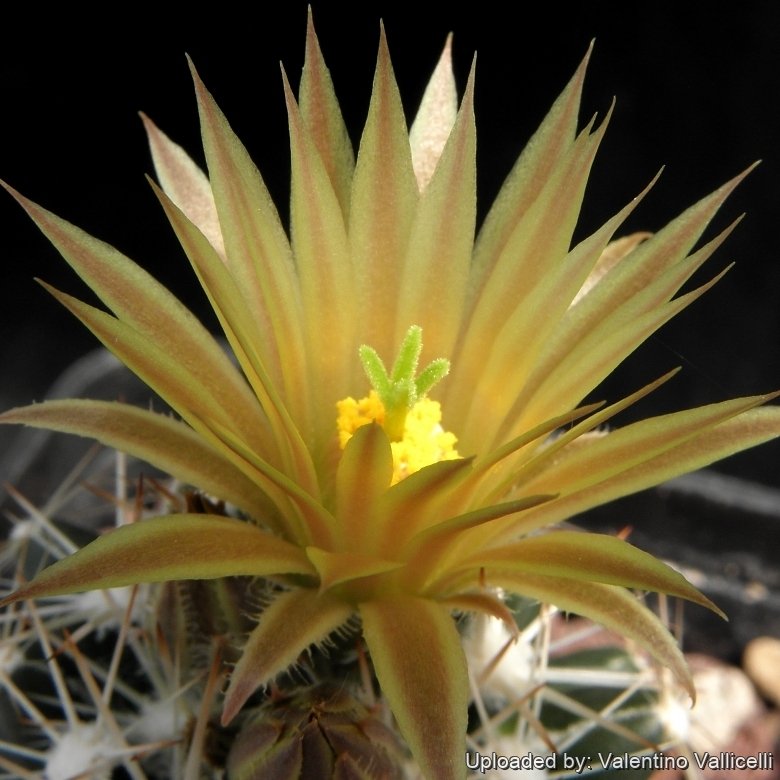
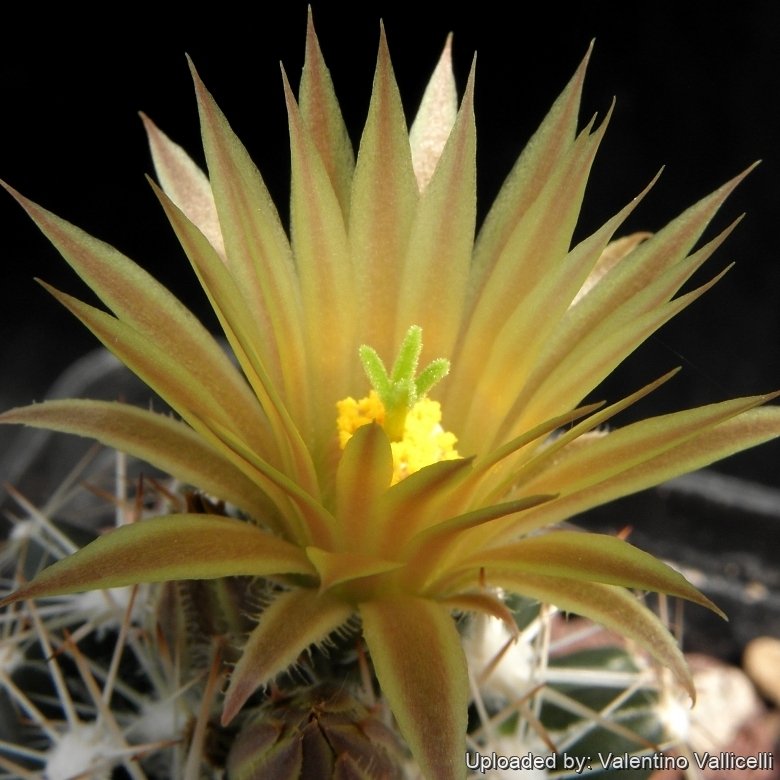
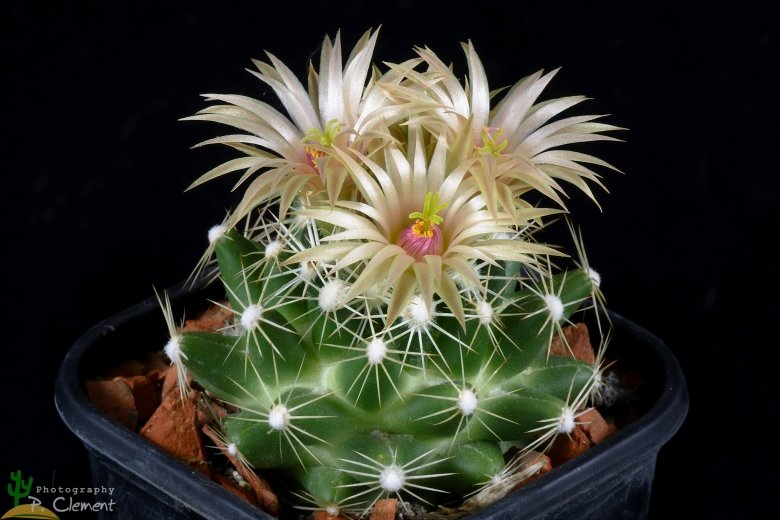
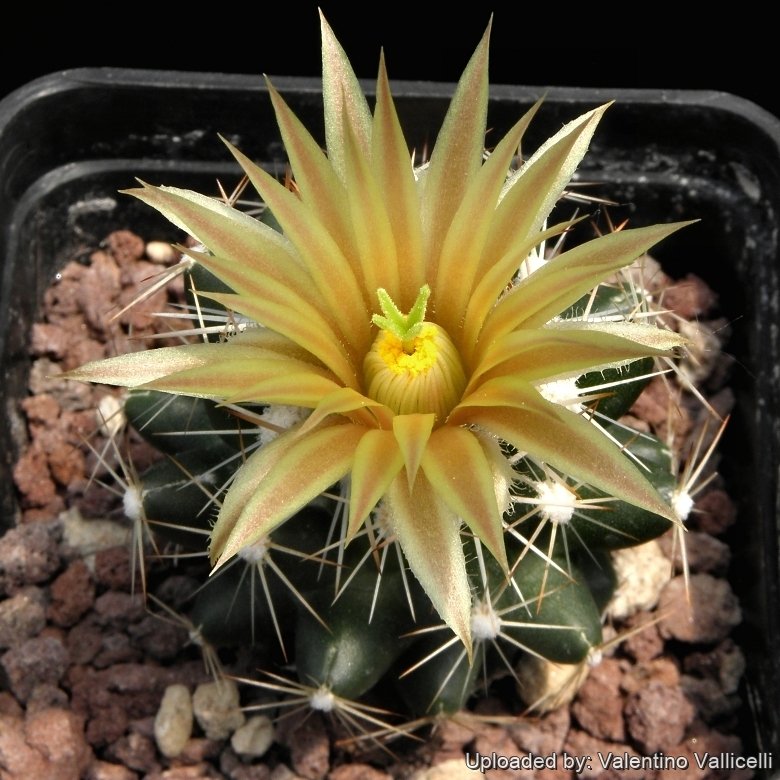
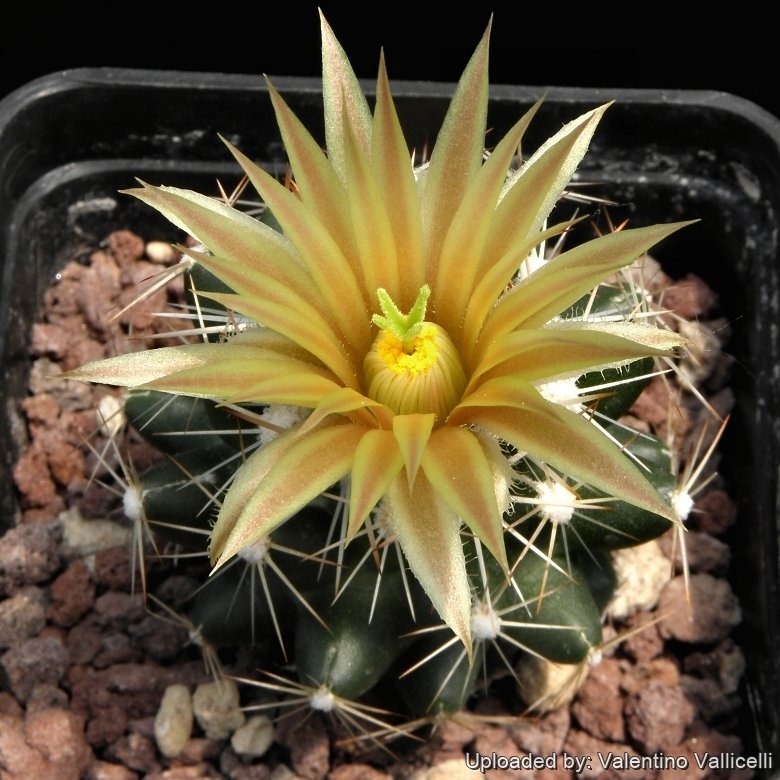
Flowers: Nearly apical, 18-50 mm long, 15-50 mm wide tepals, fringed (rarely entire), pale greenish yellow to yellow-green, with midstripes of green or rose-pink to pale brown.
Filaments: Brighter pink than inner tepals, pinkish with greenish white bases, or uniformly whitish.
Anthers: Bright yellow.
Stigma lobes: 3-7, green or yellowish, 1-5 mm.
Fruits: Bright orange-red to scarlet when mature, spheric to ellipsoid, 5-10 mm, slightly succulent but not juicy, floral remnant weakly persistent, often lost through weathering.
Remarks: At first glance it seems very much like Escobaria vivipara but the strange copper flower colour and brightly coloured fruit will quickly distinguish it. Though not exactly showy, the straw-yellow, brown, or amber flowers are quite appealing, as are the bright red fruit that persist from late summer to spring. It is variable over its huge range, and worth obtaining in various forms.
Origin and Habitat
This cactus has a very wide distribution, and is very common in some areas in the U.S.A.: (Arizona, Colorado, Kansas, Montana, Nebraska., New Mexico, North Dakota., Oklahoma, South Dakota, Texas, Utah and Wyoming) and northern Mexico (Nuevo Leon)
The missouriensis variety ranges from Idaho to North Dakota, south on the Great Plains to Nebraska, and in the Rocky Mountains and Colorado Plateaus to New Mexico and Arizona
Habitat: Found on dry plains, short-grass prairies and rocky shallow uplands, often on limestone soils and under ponderosa pine and in Pinyon-juniper woodland, or Quercus gambelii, loamy places, often restricted to sedimentary rocks.
Cultivation and Propagation
This plant is extremely frost hardy, adapted to dry soils and is quite susceptible to over-watering if kept in a non ventilated place. It comes from an area of summer rainfall.
Growth rate: Slow-growing.
Soil: Grow it in an open mineral, sandy-gritty cactus compost and provide a very good drainage.
Exposure: It is suited for sunny-brightly exposure, but can tolerate light shade. However it will do its best only with lots of sun and become stressed with inadequate light which could result in poor growth and unnatural shape. It has a good heat tolerance.
Watering: Water sparingly and keep it completely dry during winter. Mature individuals easily rot and die especially after transplanting so be extremely cautious with watering. Keep dry in winter or when night temperatures remain below 10° C. Water it less than average if in bigger pots. (but for outdoors cultivation it is very resistant to wet conditions, too).
Fertilization: Feed them once during the growing season with a fertilizer specifically formulated for cactus and succulents (high potash fertilizer with a dilute low nitrogen), including all micro nutrients and trace elements diluted to ½ the strength recommended on the label. They thrive in poor soils and need a limited supplies of fertilizer to avoid the plants developing excess vegetation, which is easily attacked by fungal diseases.
Special need: It is suited for airy exposures. Provide very good ventilation. Nearly all problems occur as a result of overwatering and poor ventilation, especially when weather conditions are dull and cool or very humid. They must have very dry atmosphere.
Hardiness: Very cold resistant, but the frost resistance varies a lot from clone to clone. It can easily be grown outdoors in areas with minimum winter temperatures of -15 -25° (but northern populations are resistant to -35 -45°C). In cultivation it is best to avoid severe freezing temperatures.
Pests & diseases: These cacti may be attractive to a variety of insects, but plants in good condition should be nearly pest-free, particularly if they are grown in a mineral potting-mix, with good exposure and ventilation. Nonetheless, there are several pests to watch for:
- Red spiders: Red spiders may be effectively rubbed up by misting the plants from above.
- Mealy bugs: Mealy bugs occasionally develop aerial into the new leaves and flowers with disfiguring results, but the worst types develop underground on the roots and are invisible except by their effects.
- Scales, thrips and aphids: These insects are rarely a problem.
- Rot: Rot is only a minor problem if the plants are watered and “aired” correctly. If they are not, fungicides won’t help all that much.
Propagation: Usually propagated from seeds (seldom produces offsets) or graft. The seeds (no dormancy requirement, they germinate best at 25°C) can be sown in pots of fine, well-drained sandy soil, any time during the spring when temperatures are warm. Cover the seeds with a fine layer of grit and water from below with a fungicide to prevent damping off. For the 1-2 weeks cover the pots with a sheet of glass/clear perspex to keep the humidity levels high. Remove the glass and replace it with light shade-cloth and mist once or twice a day for the next two weeks after which most seeds should have germinated. From then on mistings can be reduced to every second and then every third day as the little plants grow. The seedlings should not be disturbed until they are well rooted after which they can be planted separately in small pots. Sometimes it is grafted to avoid root rot problems as plants grafted on an hardy stock are easy to grow and no special skill is required.
Notes
The closest relatives of Escobaria missouriensis are Escobaria asperispina of Mexico and Escobaria cubensis of Cuba. Those species collectively composed the segregate genus Neobesseya, now rarely accepted.
Bibliography
Major references and further lectures
-
Edward Anderson “The Cactus family” Timber Press, Incorporated, 2001
-
James Cullen, Sabina G. Knees, H. Suzanne Cubey “The European Garden Flora Flowering Plants: A Manual for the Identification of Plants Cultivated in Europe, Both Out-of-Doors and Under Glass” Cambridge University Press, 11/Aug/2011
-
David R Hunt; Nigel P Taylor; Graham Charles; International Cactaceae Systematics Group. “The New Cactus Lexicon” dh books, 2006
-
Jackie M. Poole, William R. Carr, Dana M. Price, Jason R. Singhurst “Rare plants of Texas: a field guide” Texas A&M University Press, 30/Dec/2007
From llifle page Neobesseya arizonica
Description
The Escobaria missouriensis ssp.navajoensis is a interesting type of Escobaria missouriensis but tiny.
Stem: Flattened only a 1-3 cm broad, so it’s a very small species.
Flowers: Yellow, small (2-3 cm).
Spines: Very short.
Origin and Habitat
Navajo desert, Woodruff, northeastern part of Arizona, USA
Altitude: 1600-1800m
Habitat: They grows almost buried in the ground among rocks and are invisible except when they are plumped up from recent rain.
Cultivation and Propagation
This plant is extremely xerophytic, adapted to very dry soils and is quite susceptible to over-watering if kept in a non ventilated place. It comes from an area of summer rainfall.
Growth rate: Slow-growing.
Soil: Grow it in an open mineral, sandy-gritty cactus compost and provide a very good drainage.
Exposure: It is suited for sunny-brightly exposure, but can tolerate light shade. However it will do its best only with lots of sun and become stressed with inadequate light which could result in poor growth and unnatural shape. It has a good heat tolerance.
Watering: Water sparingly and keep it completely dry during winter. Mature individuals easily rot and die especially after transplanting so be extremely cautious with watering. Keep dry in winter or when night temperatures remain below 10° C. Water it less than average if in bigger pots. (but for outdoors cultivation it is very resistant to wet conditions, too).
Fertilization: Feed them once during the growing season with a fertilizer specifically formulated for cactus and succulents (high potash fertilizer with a dilute low nitrogen), including all micro nutrients and trace elements diluted to ½ the strength recommended on the label. They thrive in poor soils and need a limited supplies of fertilizer to avoid the plants developing excess vegetation, which is easily attacked by fungal diseases.
Special need: It is suited for airy exposures. Provide very good ventilation. Nearly all problems occur as a result of overwatering and poor ventilation, especially when weather conditions are dull and cool or very humid. They must have very dry atmosphere.
Hardiness: Very cold resistant and often snow-covered. It can easily be grown outdoors and safe easily to -23° C but in cultivation it is best to avoid severe freezing temperatures.
Pests & diseases: These cacti may be attractive to a variety of insects, but plants in good condition should be nearly pest-free, particularly if they are grown in a mineral potting-mix, with good exposure and ventilation. Nonetheless, there are several pests to watch for:
- Red spiders: Red spiders may be effectively rubbed up by misting the plants from above.
- Mealy bugs: Mealy bugs occasionally develop aerial into the new leaves and flowers with disfiguring results, but the worst types develop underground on the roots and are invisible except by their effects.
- Scales, thrips and aphids: These insects are rarely a problem.
- Rot: Rot is only a minor problem if the plants are watered and “aired” correctly. If they are not, fungicides won’t help all that much.
Propagation: Usually propagated from seeds (seldom produces offsets) or graft. The seeds (no dormancy requirement, they germinate best at 25°C) can be sown in pots of fine, well-drained sandy soil, any time during the spring when temperatures are warm. Cover the seeds with a fine layer of grit and water from below with a fungicide to prevent damping off. For the 1-2 weeks cover the pots with a sheet of glass/clear perspex to keep the humidity levels high. Remove the glass and replace it with light shade-cloth and mist once or twice a day for the next two weeks after which most seeds should have germinated. From then on mistings can be reduced to every second and then every third day as the little plants grow. The seedlings should not be disturbed until they are well rooted after which they can be planted separately in small pots. Sometimes it is grafted to avoid root rot problems as plants grafted on an hardy stock are easy to grow and no special skill is required.
Source: Neobesseya arizonica, LLIFLE - Encyclopedia of living forms, CC-BY-SA, retrieved 2026-10-25.
From llifle page Coryphantha missouriensis var. caespitosa
Description
Escobaria missouriensis var. caespitosa is one of the many form of the variable Escobaria missouriensis that may forms clumps up to 30 cm in diameter. It is not easily separable by any character from the the other Escobaria missouriensis.
Roots: Diffuse or short taproots, sometimes adventitious from bases of branches.
Stems: Deep-seated in substrate, becoming flat-topped and nearly subterranean in winter, 2-8 wide × 1-10 cm tall;
Tubercles: 5-21 soft; areolar glands absent;
Areoles: With short white wool, not obscuring the basal portion of the spine.
Spines: 6-21 per areole, slightly pubescent, bright white, pale grey, or pale tan, weathering to grey or yellowish brown, dark brownish orange to pale brown or pale greyish pink tips present on all or only the largest plants;
Radial spines: 6-20 per areole, moderately to tightly appressed, 4-16 mm
Central spines: 0(-3) per areole, if 1, erect, if 2, ascending-spreading, 8-20 mm long.
Flowers: Nearly apical, 18-50 mm long, 15-50 mm wide tepals, fringed (rarely entire), pale greenish yellow to yellow-green, with midstripes of green or rose-pink to pale brown
Filaments: Brighter pink than inner tepals, pinkish with greenish white bases, or uniformly whitish;
Anthers: Bright yellow;
Stigma lobes: 3-7, green or yellowish, 1-5 mm.
Fruits: Bright orange-red to scarlet when mature, spheric to ellipsoid, 5-10 mm, slightly succulent but not juicy, floral remnant weakly persistent, often lost through weathering.
Remarks: At first glance it seems very much like Escobaria vivipara but the strange copper flower colour and brightly coloured fruit will quickly distinguish it. Though not exactly showy, the straw-yellow, brown, or amber flowers are quite appealing, as are the bright red fruit that persist from late summer to spring. It is variable over its huge range, and worth obtaining in various forms.
Origin and Habitat
Kansas, Oklahoma, Colorado and Texas, USA
Source: Coryphantha missouriensis var. caespitosa, LLIFLE - Encyclopedia of living forms, CC-BY-SA, retrieved 2026-10-25.
From llifle page Coryphantha wissmannii
Description
Escobaria wissmannii is one of the local or morphological form of the widespread Escobaria missouriensis that has lots of unnecessary synonyms (like many other cacti) and comprises a multitude of different regional forms as well as various cryptic allied species. But where each form is linked to others by populations of plants with intermediate characteristics. Escobaria wissmannii is nothing else than the Texan population which is not easily separable by any character from the the other Escobaria missouriensis, if not for the geographical provenance.
Habit: Unbranched or profusely branched (eastern populations) and occasionally forming clumps up to 30 cm in diameter.
Roots: Diffuse or short taproots, sometimes adventitious from bases of branches.
Stems: Deep-seated in substrate, becoming flat-topped and nearly subterranean in winter, 2-8 wide, 1-10 cm tall.
Tubercles: 5-21 soft; areolar glands absent.
Areoles: With short white wool, not obscuring the basal portion of the spine.
Spines: 6-21 per areole, slightly pubescent, bright white, pale grey, or pale tan, weathering to grey or yellowish brown, dark brownish orange to pale brown or pale greyish pink tips present on all or only the largest plants.
Radial spines: 6-20 per areole, moderately to tightly appressed, 4-16 mm
Central spines: 0(-3) per areole, if 1, erect, if 2, ascending-spreading, 8-20 mm long.
Flowers: Nearly apical, 18-50 mm long, 15-50 mm wide tepals, fringed (rarely entire), pale greenish yellow to yellow-green, with midstripes of green or rose-pink to pale brown.
Filaments: Brighter pink than inner tepals, pinkish with greenish white bases, or uniformly whitish.
Anthers: Bright yellow.
Stigma lobes: 3-7, green or yellowish, 1-5 mm.
Blooming season: Flowers in summer during the day.
Fruits: Bright orange-red to scarlet when mature, spheric to egg-shaped, up to 3 cm long and 5-10 mm in diameter, slightly succulent but not juicy, floral remnant weakly persistent, often lost through weathering. Edible, said tu be pleasantly sour.
Origin and Habitat
Texas
Bibliography
Major references and further lectures
-
Edward Anderson “The Cactus family” Timber Press, Incorporated, 2001
-
James Cullen, Sabina G. Knees, H. Suzanne Cubey “The European Garden Flora Flowering Plants: A Manual for the Identification of Plants Cultivated in Europe, Both Out-of-Doors and Under Glass” Cambridge University Press, 11/Aug/2011
-
David R Hunt; Nigel P Taylor; Graham Charles; International Cactaceae Systematics Group. “The New Cactus Lexicon” dh books, 2006
-
Jackie M. Poole, William R. Carr, Dana M. Price, Jason R. Singhurst “Rare plants of Texas: a field guide” Texas A&M University Press, 30/Dec/2007
-
Jeff Nugent “Permaculture Plants: Agaves and Cacti” permacultureplants, 1999
Source: Coryphantha wissmannii, LLIFLE - Encyclopedia of living forms, CC-BY-SA, retrieved 2026-10-25.
Cultivars and forms (2)
Subspecies (1)
Varieties (1)
Gallery