Publication: Cactaceae (Britton & Rose) 2: 61, fig. 87-91. 1920
Description
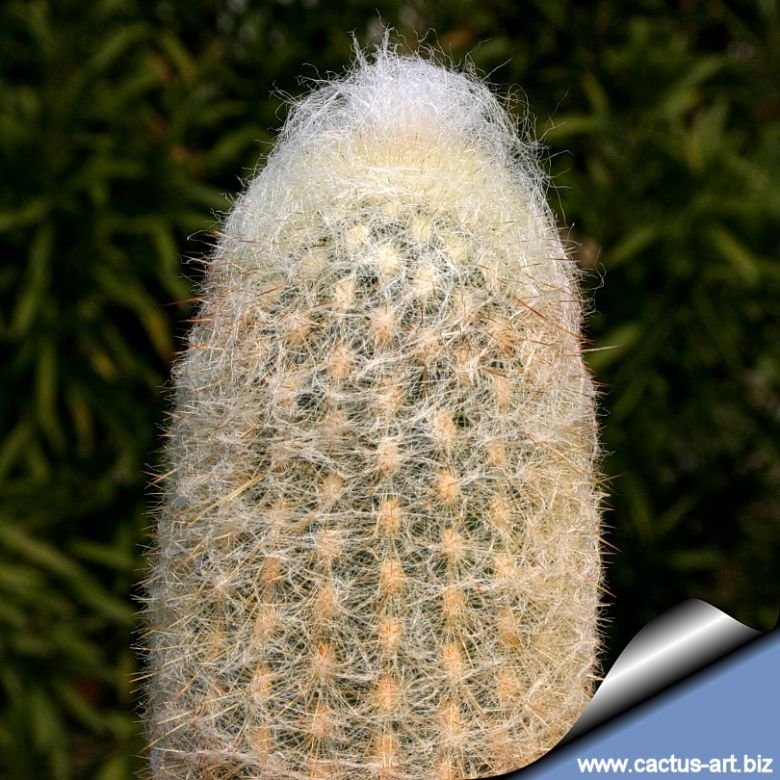
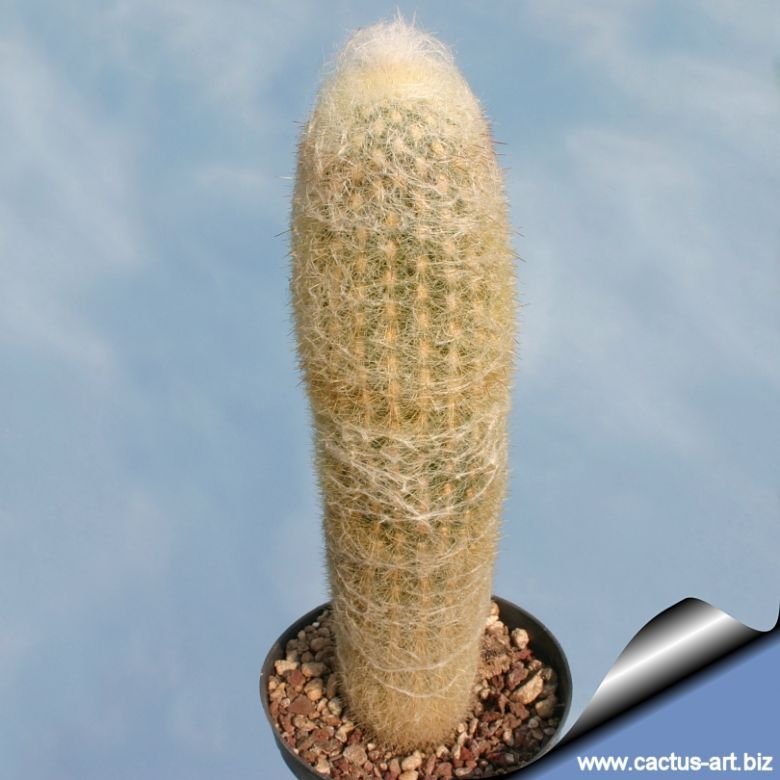
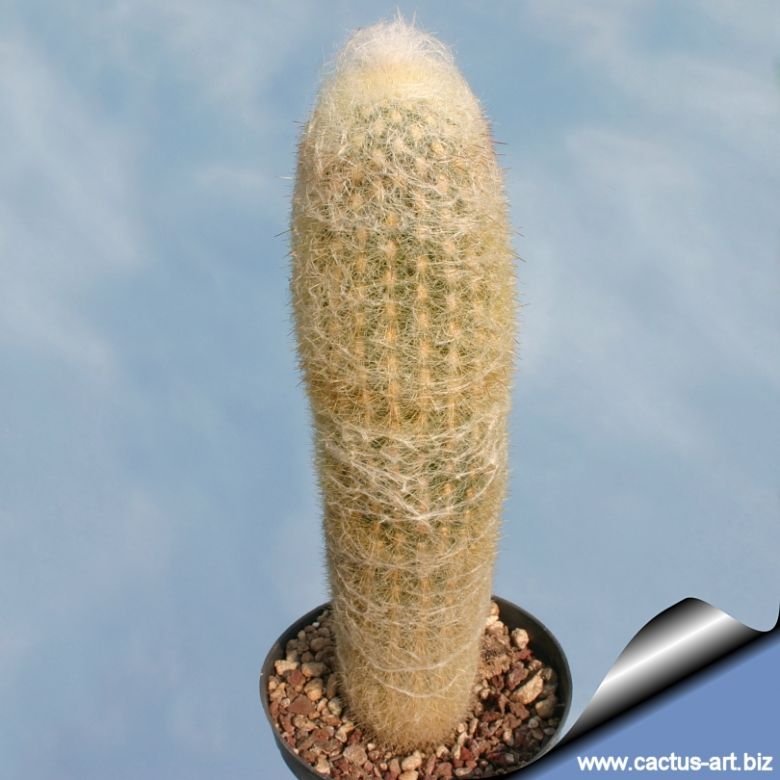
Espostoa lanata (a.k.a. Peruvian Old Man Cactus) is a slow growing tree shaped cactus branching at the top with age, 1,5 to 7 m tall. Like Cephalocereus senilis (the Old Man of Mexico) it is a densely hairy species, covered by a warm woolly coat and well adapted to high altitudes, the main difference is the presence of sharp spines on Espostoa. It is wide spread in in habitat and quite variable in size and spines for this reason it has received several names.
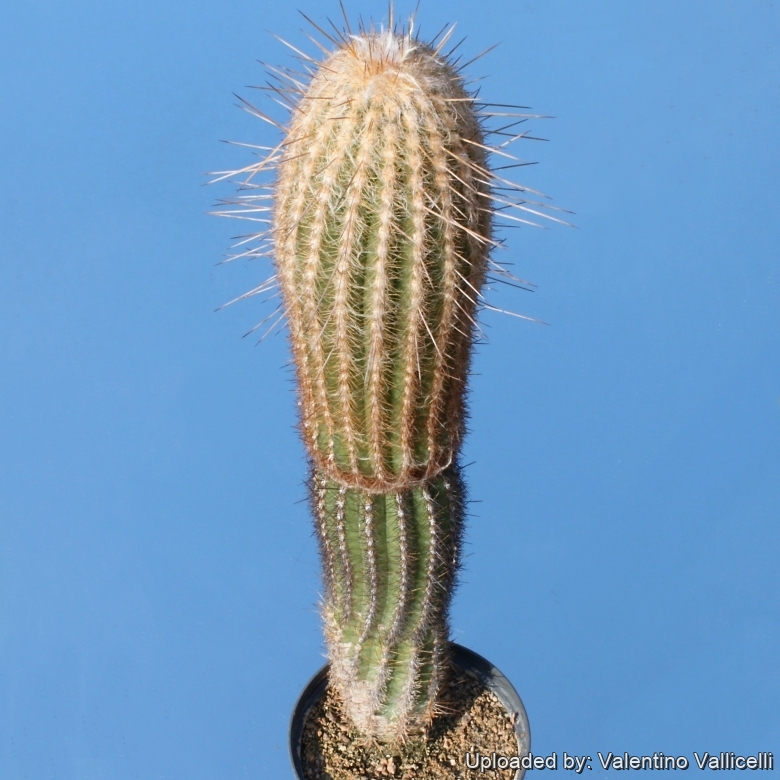
Stems: Cylindrical, erect or spreading, 6-10 cm in diameter from a short trunk (approx 1 m tall up to 20 cm in diameter).
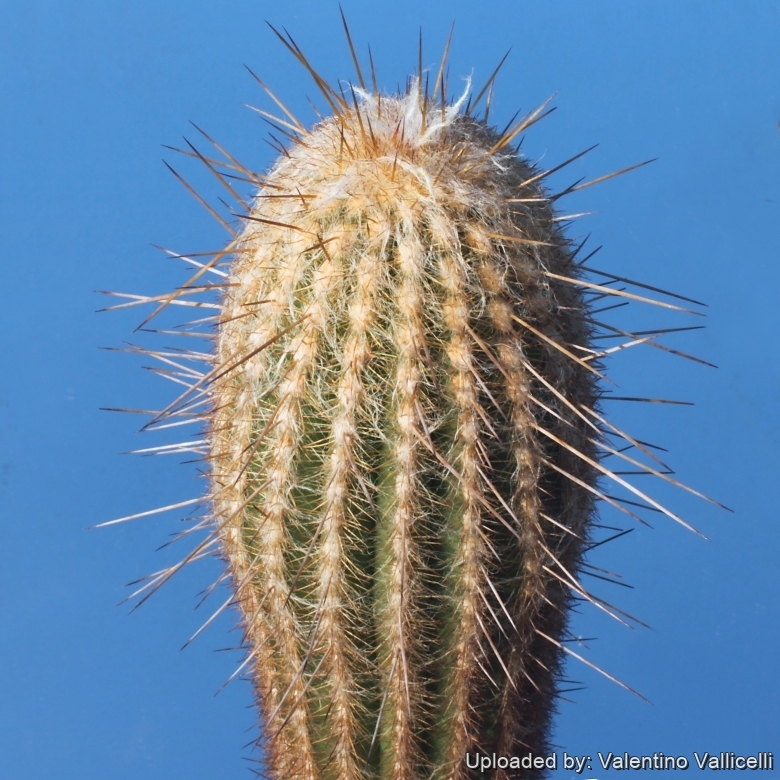
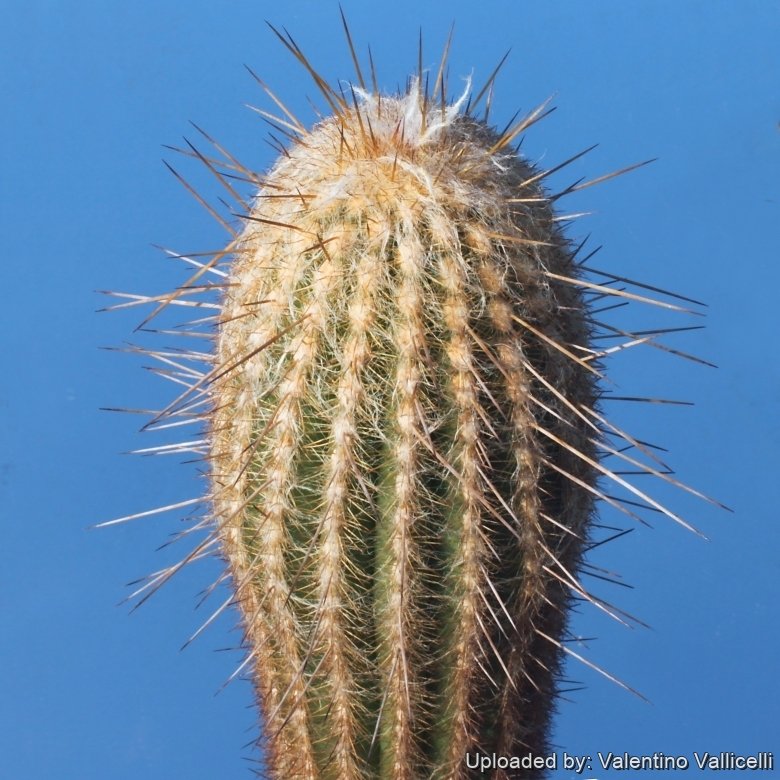
Ribs: 18-25, low rounded, separated by linear furrows, approx 5-8 mm tall.
Areoles: Elliptical, closely set, 7-10 mm apart, almost concealed by white or yellowish hairs and spines. The hairs are neatly brushed, cunningly concealing the sharp spines that are a trap to the unwary.
Central spines: Absent or sometime1, 1-2.5 cm long.
Radial spines: 30-40 acicular, spreading, reddish or yellowish brown, turning grey as they age, 3-8 mm long.
Flowers: The flowers arises from a lateral pseudocephalium up to 1 m long, 4-5 ribs wide, with brown or grey spines and wool contrasting with the snow-white spines on the rest of the body. The flowers are nocturnal, funnelform, nearly hidden by the wool, up to 5,5 cm long and 3,5 cm in diameter, white to purple. Small scales on the ovary and flowers tube, have long silky, caducous, hairs.
Blooming season: Late spring, early summer.
Fruits: Top shaped, near spherical approx 2,5 cm in long and in diameter, purplish-red, very juicy, sweet and edible. The colourful fruit project from the woolly mass of the lateral cephalium and are a startling sight.
Seeds: Very small, black and shining.
Origin and Habitat
Southern Ecuador, northern Peru
Habitat: Mainly on the west slopes of the Andes
Cultivation and Propagation
Espostoa lanata is a summer-growing and easy cactus to grow. It makes great potted specimens.
Growth rate: Espostoa produces noticeable amounts of growth each year if kept well fed and watered throughout the warmest months, particularly if it has been acclimatised to accept full sun. Once this cactus is established it can easily produce 20 cm of growth every year. Most plants will offset readily, and clumps can be produced in a few years. It will fill a large pot in time however, so space is needed if it is to show of its best.
Soils: It likes very porous standard cactus mix soil with little organic matter (peat, humus).
Repotting: Repotting every 2-3 years. Needs lots and lots of space to grow, use large container filled with very porous compost. Use pot with good drainage.
Watering: Water the plants well and allow them to dry before watering again. This species seems to do better with a little more water than most cacti.
Fertilization: During the growing season fertilize them monthly with a balanced fertilizer.
Sun Exposure: Outside full sun, inside needs bright light, and some direct sun. During winter month, put them in a cool luminous place and encourage them to enter winter dormancy by withholding water and fertiliser over the winter as they will etiolate, or become thin, due to lower levels of light.
Hardiness: It is easy to grow and cold hardy as low as -12°C (or less).
Pest & diseases: They are susceptible to fungal diseases if overwatered, but are not nearly as sensitive as many other cacti, especially in warm weather. If kept damp through cold periods, they will invariably suffer.
Propagation: Cutting or from seed. The seeds are quite easy to germinate and grow. Their main requirements consist of high humidity levels, free-draining soil mix, and enough water, light, and nutrition.
Uses: Woolly hairs of the cephalia have been used for pillow filling in Peru.
Notes
Espostoa is considered by some authors a monotypic genus, by others it include 4 species.
Bibliography
Major references and further lectures
-
James Cullen, Sabina G. Knees, H. Suzanne Cubey “The European Garden Flora Flowering Plants: A Manual for the Identification of Plants Cultivated in Europe, Both Out-of-Doors and Under Glass” Cambridge University Press, 11/Aug./2011
-
David Hunt, Nigel Taylor “The New Cactus Lexicon” DH Books, 2006
-
Edward F. Anderson “The Cactus Family” Timber Press, 2001
From llifle page Espostoa superba
Origin and Habitat
Cajamarca (Peru, Western South America, Southern America)
Source: Espostoa superba, LLIFLE - Encyclopedia of living forms, CC-BY-SA, retrieved 2026-10-25.