Publication: Taxon 55(2): 412. 2006 [22 Jun 2006] (replaced synonym: Monadenium ellenbeckii N.E.Br. 1911)
Description
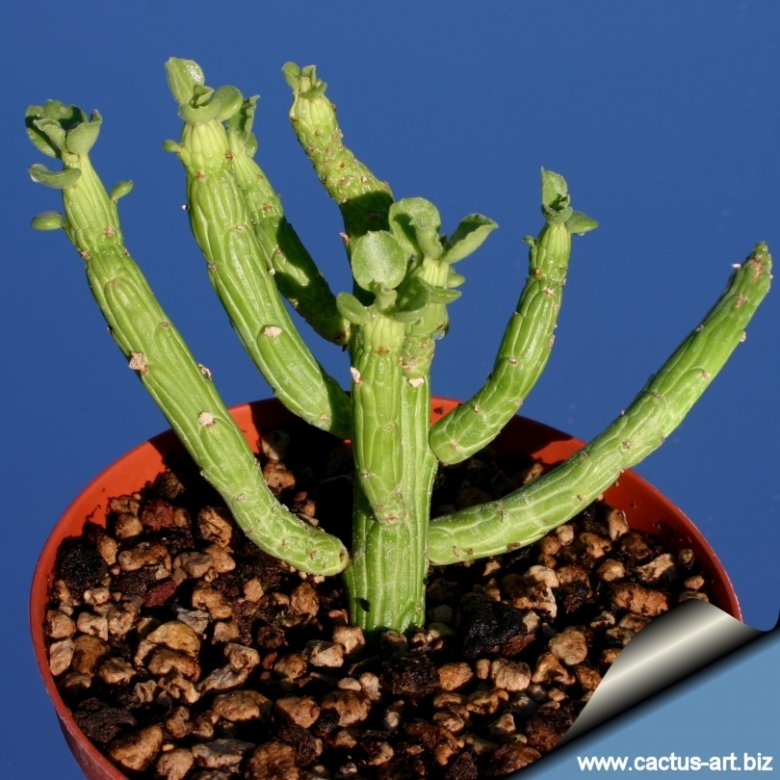
Monadenium ellenbeckii is a low-growing shrubby succulent perennial herb with fleshy, serpent-like stems that emerge from a central base
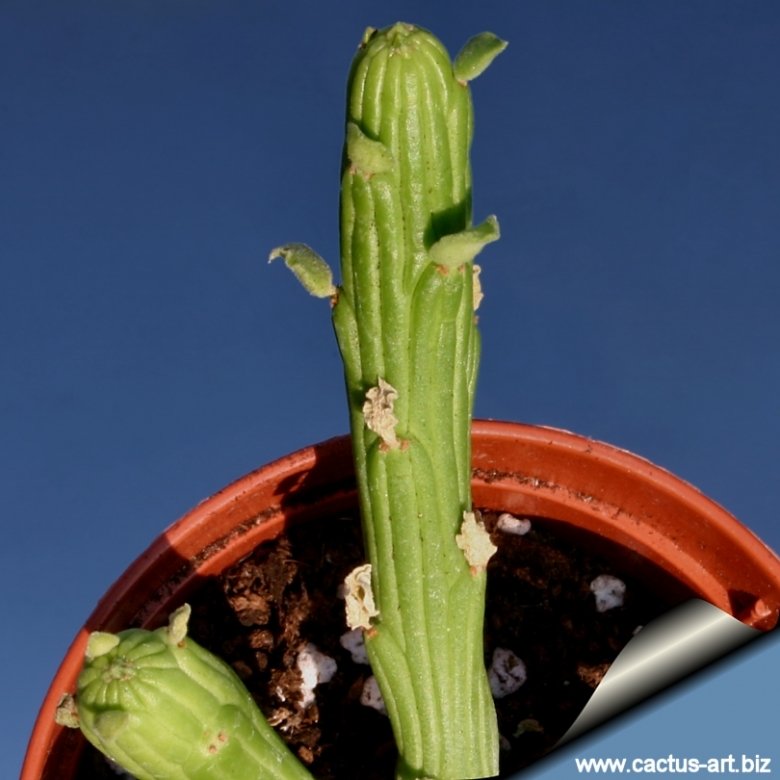
Stems: Thin bright/light green, fleshy, columnar or creeping, and shortly rhizomatous. Several to 50 cm or up to 1,5 m long when supported, few branches, up to 15 mm Ø, with 4 longitudinal groves below.
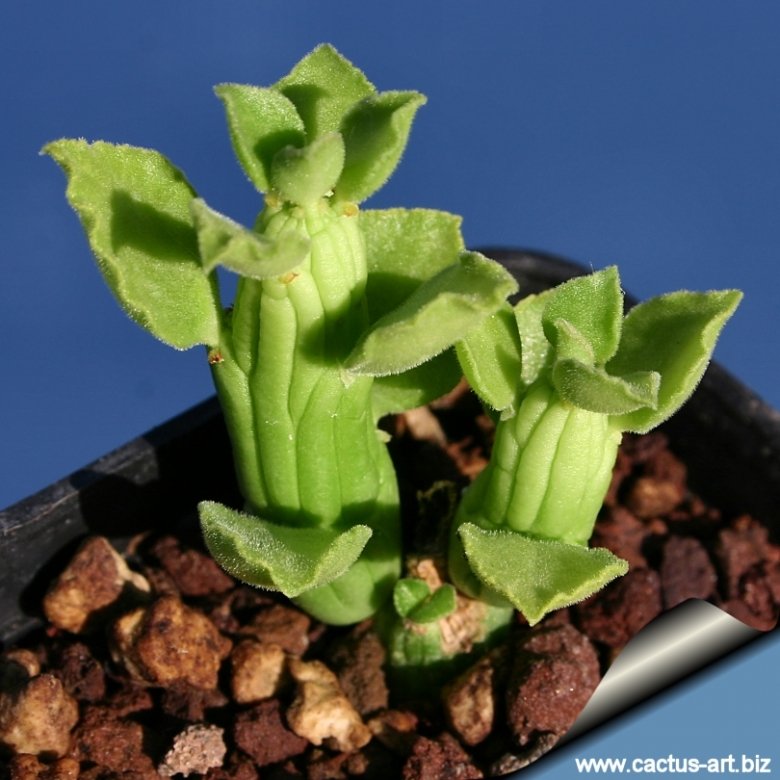
Leaves: Scar-like, forming occasionally, weakly attached at the branch tips, sessile obovate, ovate to 10 x 8 mm, fleshy minutely puberulous.
Flowers: Yellow-green, 1 to 2 forked flower-like cymes which can become pink-toned in full sun, 1-1,5 cm across, peduncles to 5 mm.
Blooming season: Summer.
Origin and Habitat
Ethiopia, Somalia, and northern Kenya.
Habitat: Rocky slopes with open shrubs – 1200-1750 m. Most of their habitat, though dry, is tropical in temperature, lacking the extremes of cold and utter aridity that mark the domains of some of the most specialized forms of succulent plants.
Cultivation and Propagation
On the whole it adapts to cultivation without much difficulty. It spreads by underground shoots and with time forms large clumps, therefore requiring a broader pot. It responds to half-sun or bright filtered light, and does well under a shade tree or under a patio. Generally, any quick-draining succulent soil mix will suit it, and the snake-like stem will do well with water about once a week in the warmer months. It needs to be kept drier in winter and whenever not growing actively (about every three-four weeks or so, depending on temperatures). However, this species seems to hate being wet for any extended period, and can rot easily (especially in winter) if overwatered. Monadenium ellenbeckii, due to its African origin, cannot tolerate freezing temperatures, and should be protected from cold (but should be able to handle 7 degrees C very easily).
Propagation: Cuttings, seeds