Publication: Fl. Pl. South Africa 1934, xiv. t. 530.
Description
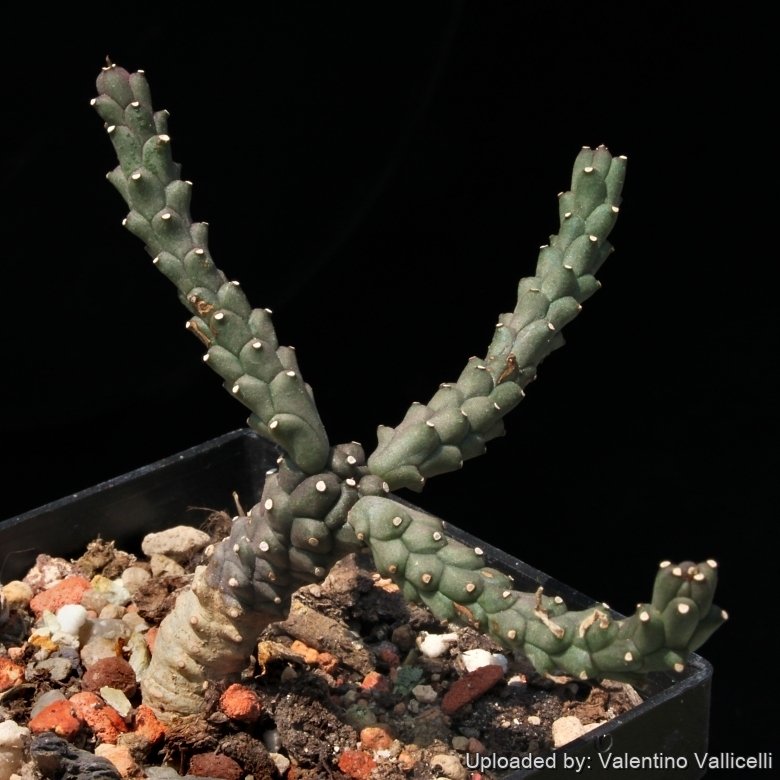
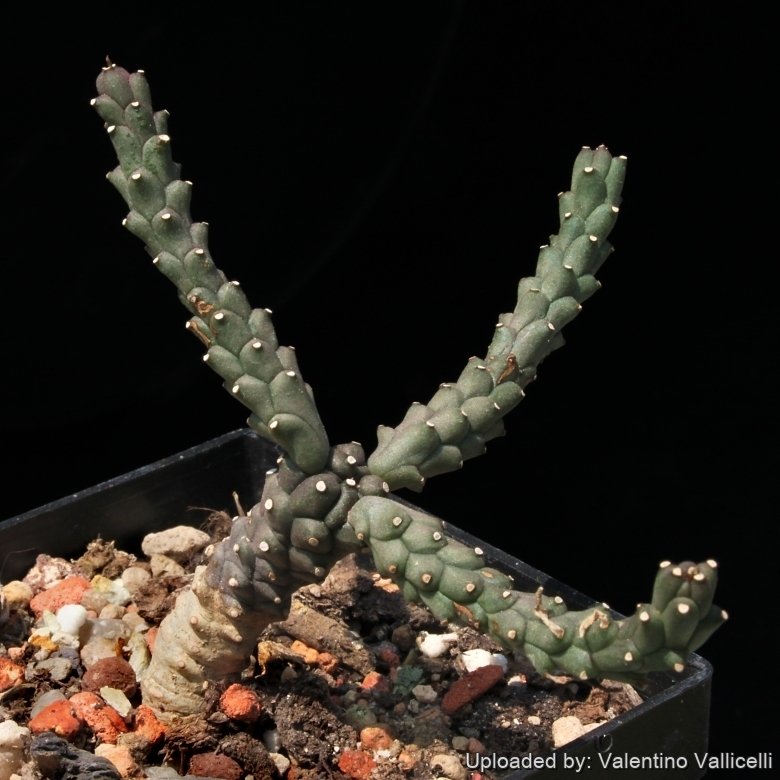
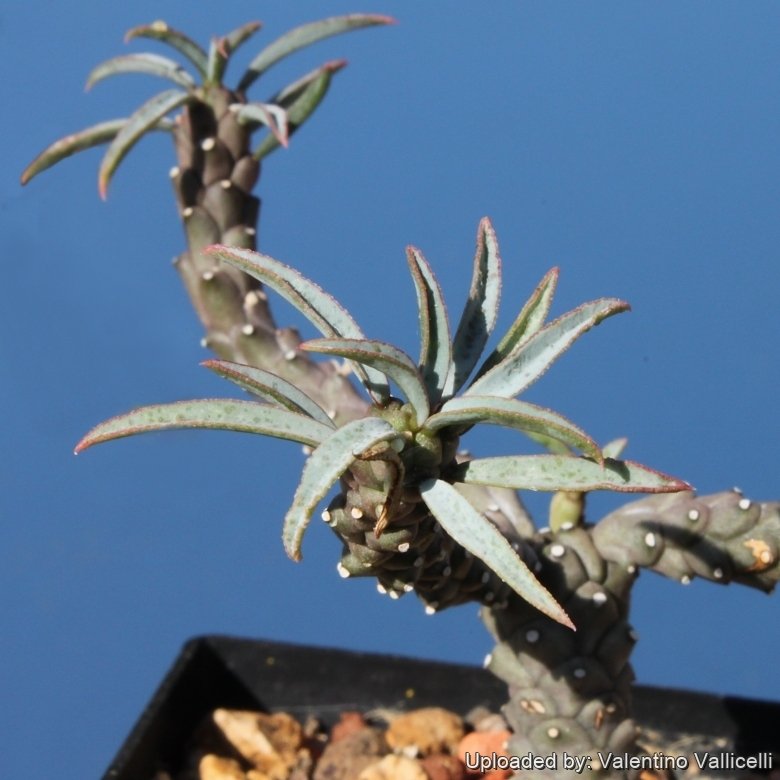
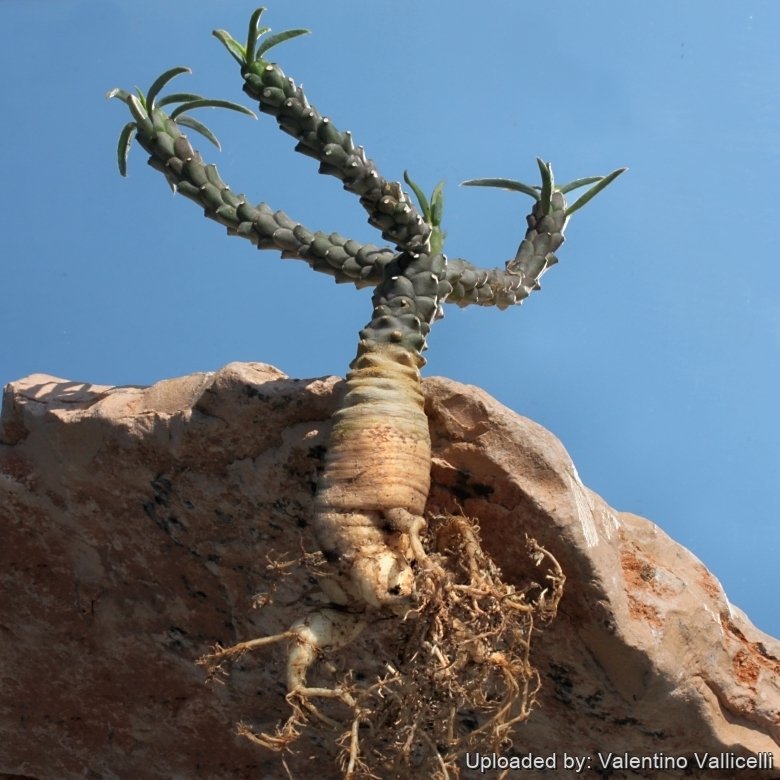
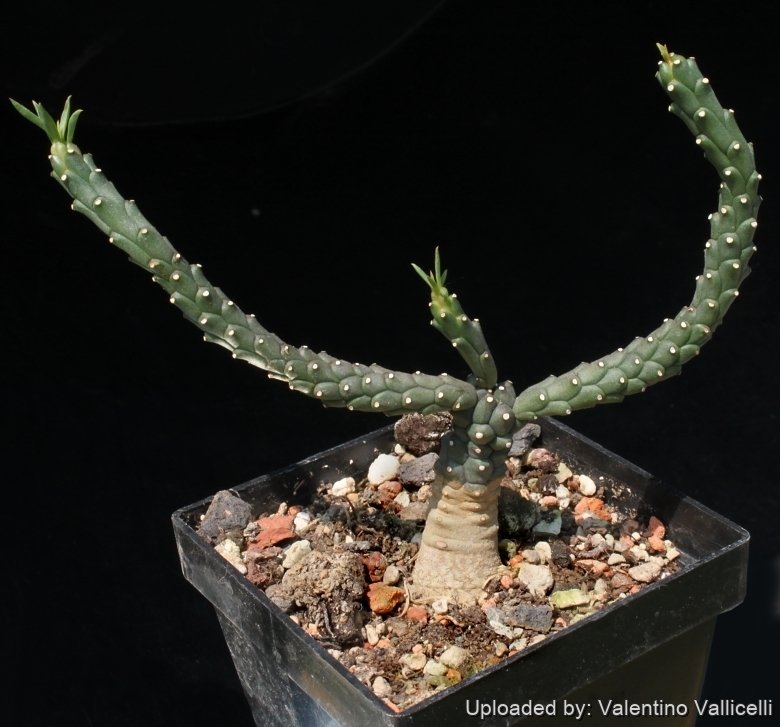
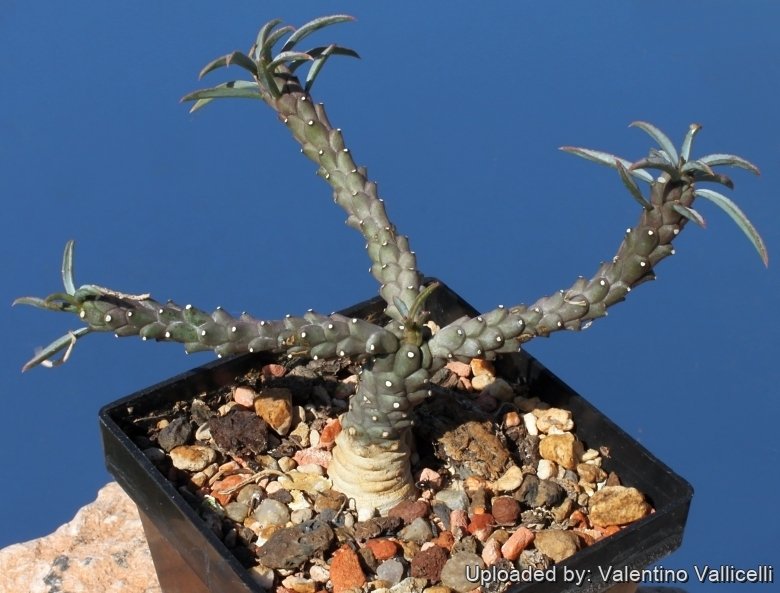
Euphorbia duseimata is a small medusa-type shrublet up to 6 cm tall with tuberous stems merging into roots that grows in deep. In cultivation plants attain larger size and can grow up to 30 cm tall. It is closely related to Euphorbia fusca.
Roots: Tuberose about 2,5 cm in diameter more or less cylindrical, tapering at the base into a thin taproot of up to 2 m length.
Stem: The main portion of the stem is partly underground, diameter 2 cm, height 7 cm. The branches are few, spineless, deciduous (usually 6 to 9) produced at ground level and grows to 6-10 cm long and about 5 to 20(-40) mm in diameter . They are covered by prominent spiralling tubercles up to 1 mm tall.
Flowers: Solitary cyathia on the stem and branche apexes, peduncles 5 to 8 mm long, involucre cup-shaped, 4 mm deep, 3 mm in diameter, 5 glands, these elliptic, 2 to 2.5 mm across, outer margin entire or with 2 to 4 processes, these up to 1 mm long, teeth-like, greenish white, slightly red spotted.
Remarks: It is closely related to Euphorbia fusca and is similar to Euphorbia bergii these without thickened central body.
Origin and Habitat
Rep. South Africa (North West, Free State, Northern Cape), Botswana, Zimbabwe
Habitat: Grows in deep sandy soils, in the savannah; at 900 to 1372 m altitude.
Gallery