Publication: Darstell. Beschr. Offiz. Gew. 4: 34d verso. (1863).
Description
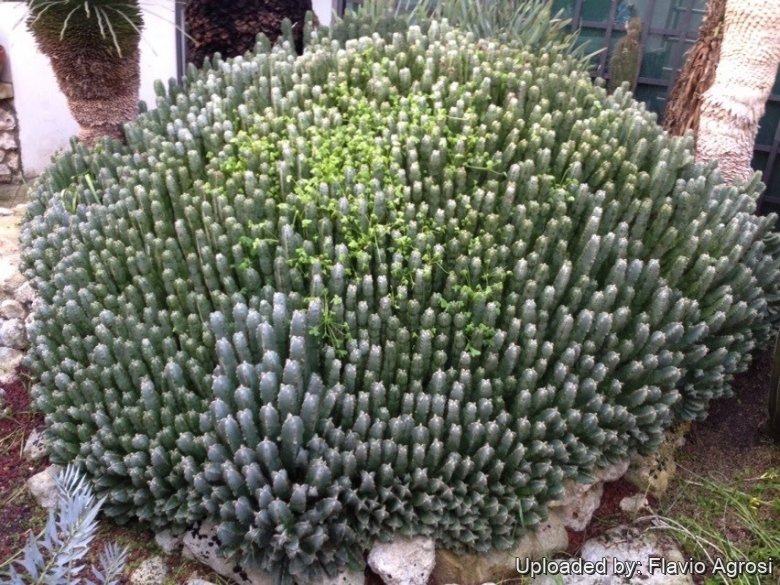
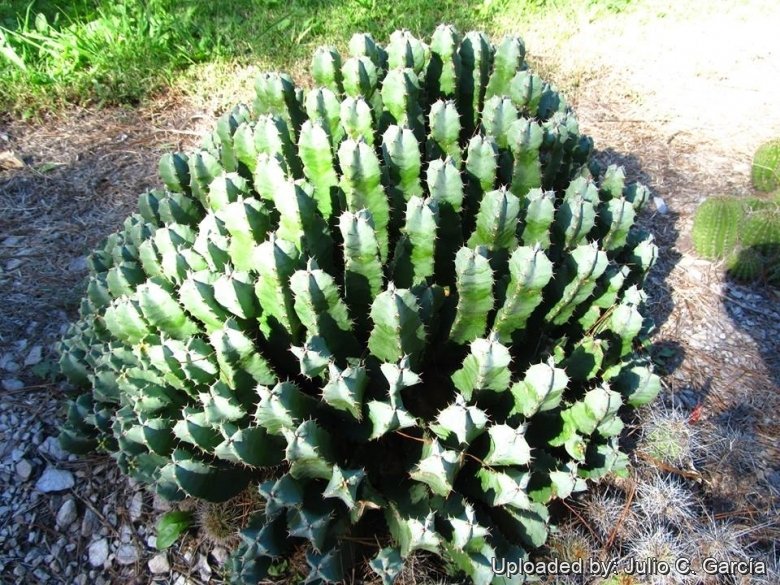
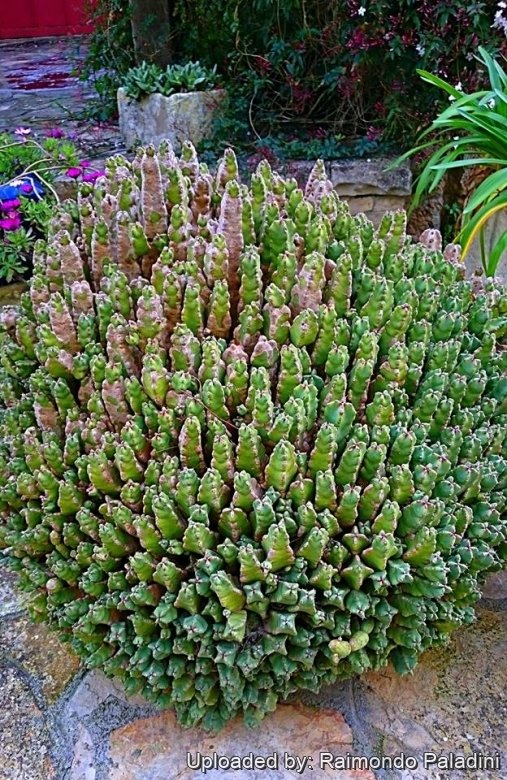
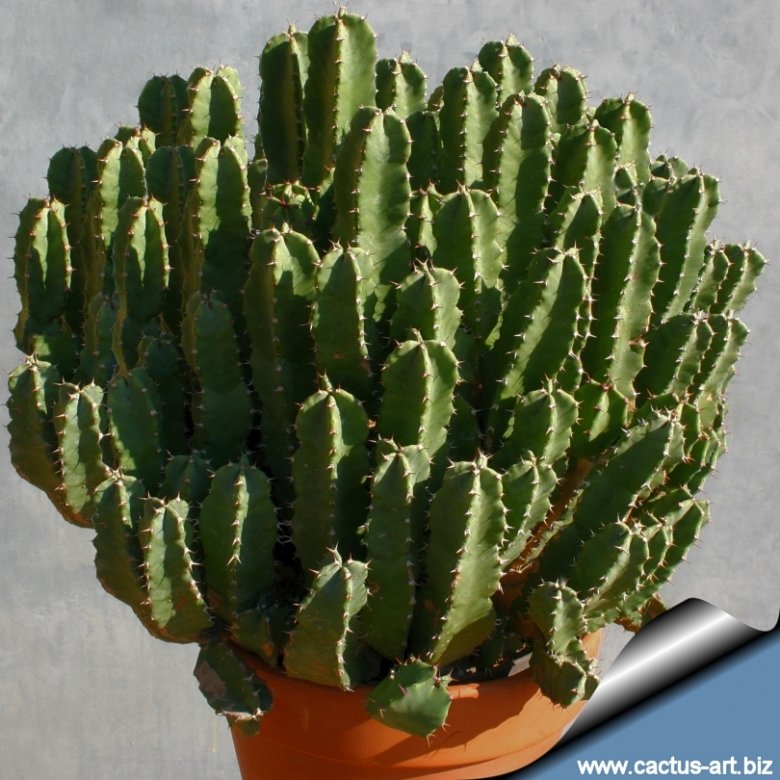
Euphorbia resinifera is a dense succulent shrub growing to 60 cm tall, forming multi-stemmed cushion-shaped clumps up to 2 m wide.
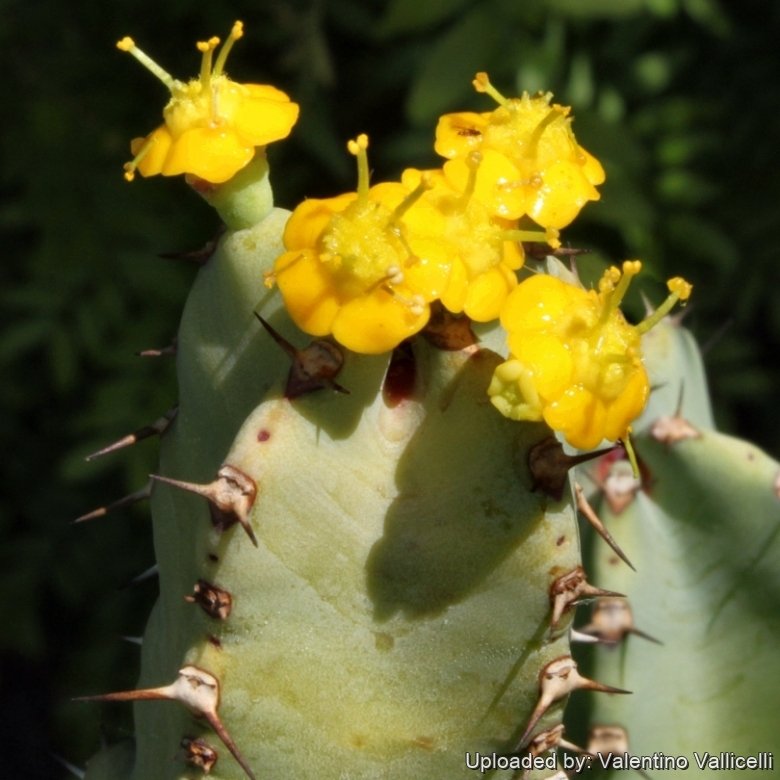
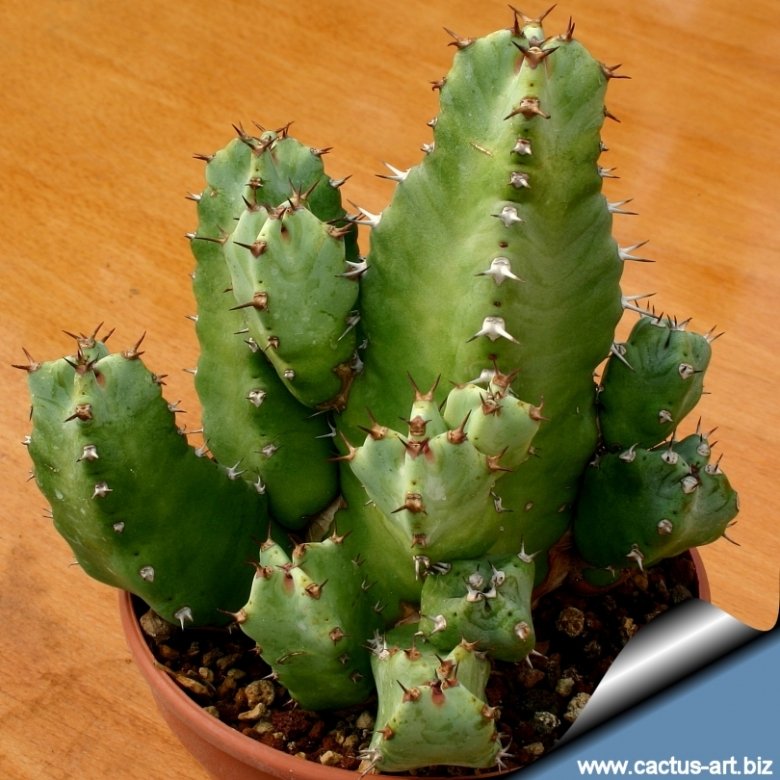
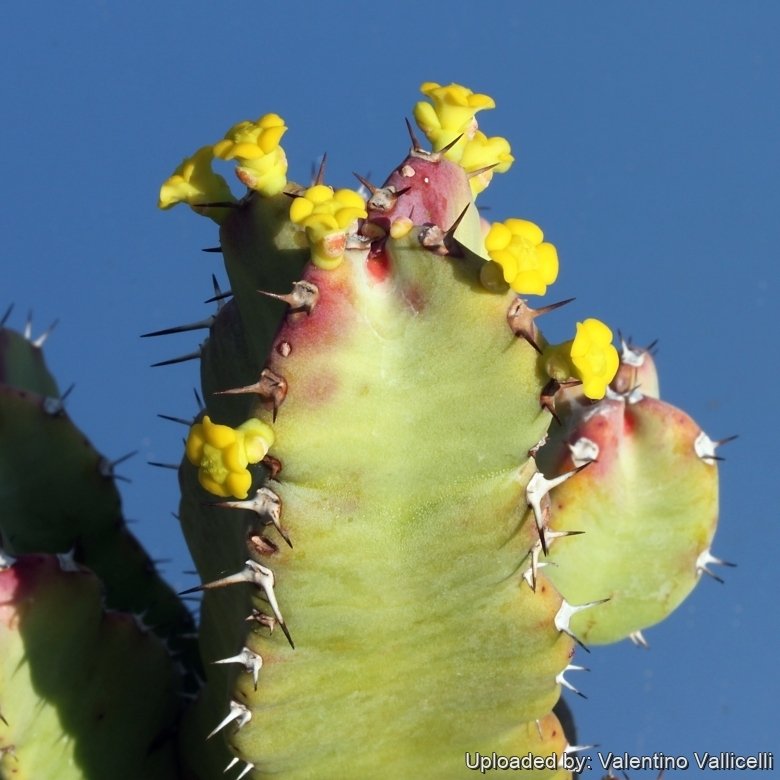
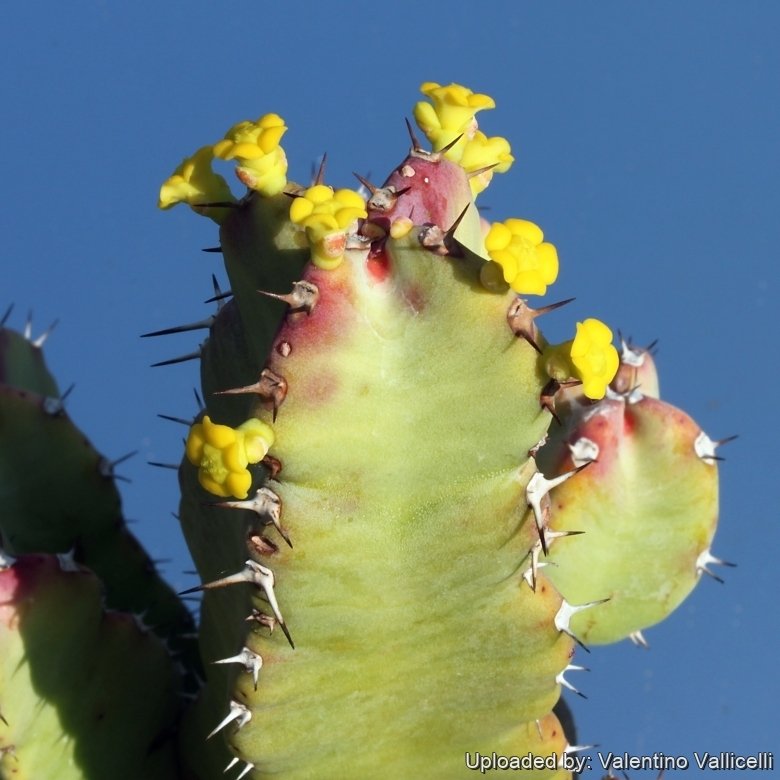
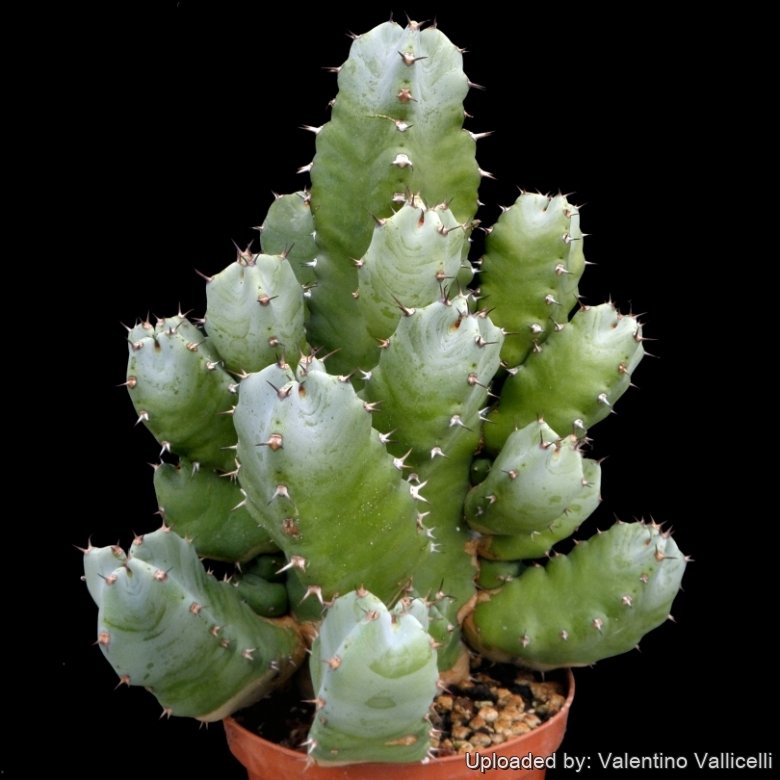
Stems: Erect, succulent, 4 sided (almost square) that look superficially like a cactus. Light green to glaucous blue color, depending upon light.
Spines: Brown and short, but sharp in pairs of 6 mm spines on the angles of the ribs, spaced about 1 cm apart up the stem.
Origin and Habitat
It is native to Morocco, where it occurs on the slopes of the Atlas Mountains in the surroundings of Marrakesh.
Cultivation and Propagation
Commonly sold at garden outlet centres they are some of the easiest and care-free Euphorbias to grow, both in pots and in the ground in areas with a mild climate, but they can even be grown indoors. They grow well in a very draining mineral potting substrate, but they aren’t picky about soil. During the summer they enjoy average feeding and watering. When dormant, plants are relatively cold tolerant. They will rapidly mound, branch and spread. These are widely adaptable, able to take full sun that helps the plants to keep their compact growth-form, but different clones vary in their tolerance of full sunshine
Warning: As with all other Euphorbias when a plant get damaged it exudes a thick white milky sap known as latex. This latex (resin) is poisonous contains some of the most potent irritants known. The very high irritant activity of the latex may be ascribed to resiniferatoxin (A potent toxin). The latex is particularly dangerous for the eyes, skin and mucous membranes. It can produce burning pain in bones. Pains in limbs and paralytic weakness in the joints. Important respiratory and skin symptoms, terrible burning pains. So pay extreme attention not to get any in your eyes or mouth. Cultivated plants must be handled carefully.
Notes
This is probably the oldest known succulent plant of all, having been discovered by an eastern king about 25BC, and may have been the plant which was originally named Euphorbia.
Bibliography
Major references and further lectures.
-
Urs Eggli “Illustrated Handbook of Succulent Plants: Dicotyledons” Springer Science & Business Media, 2002
-
Hermann Jacobsen “Abromeitiella to Euphorbia” Blandford Press, 1960
Cultivars and forms (3)
Varieties (1)
Gallery