Description
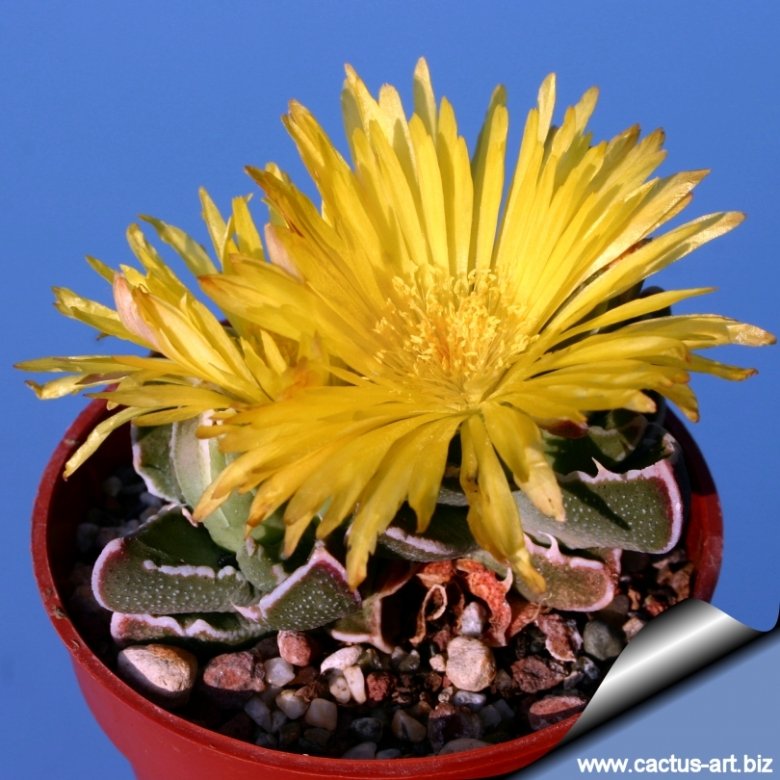
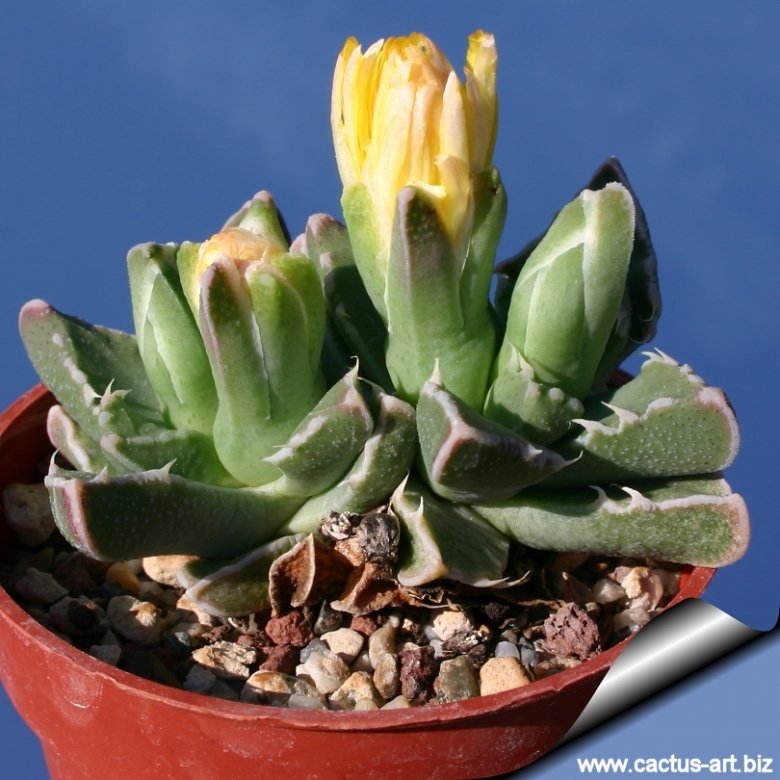
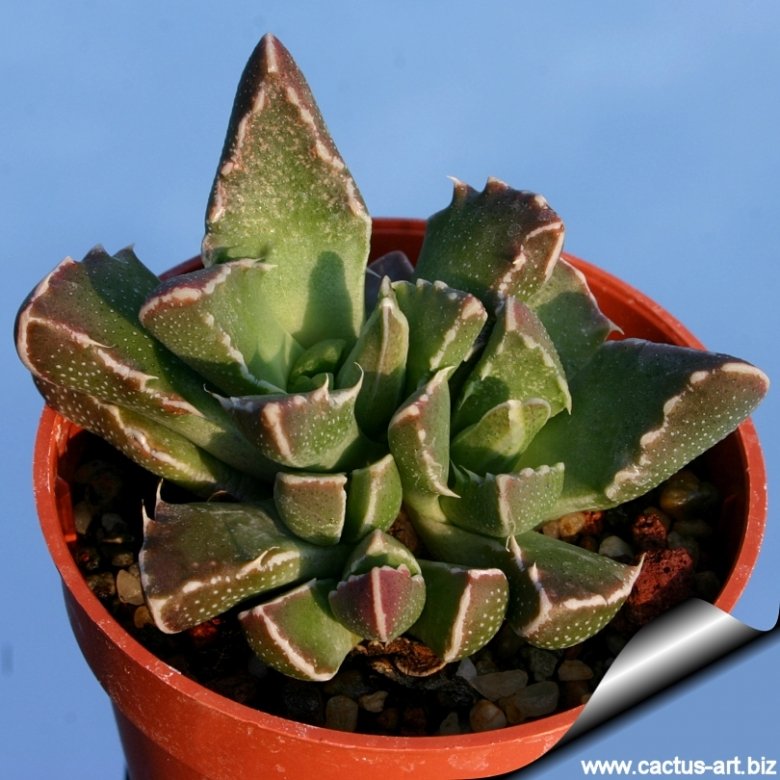
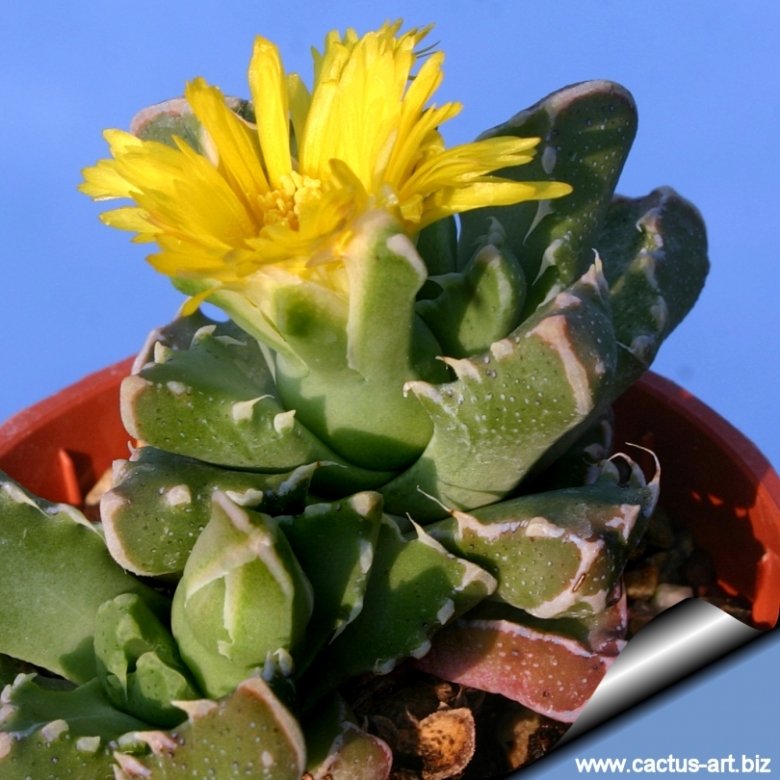
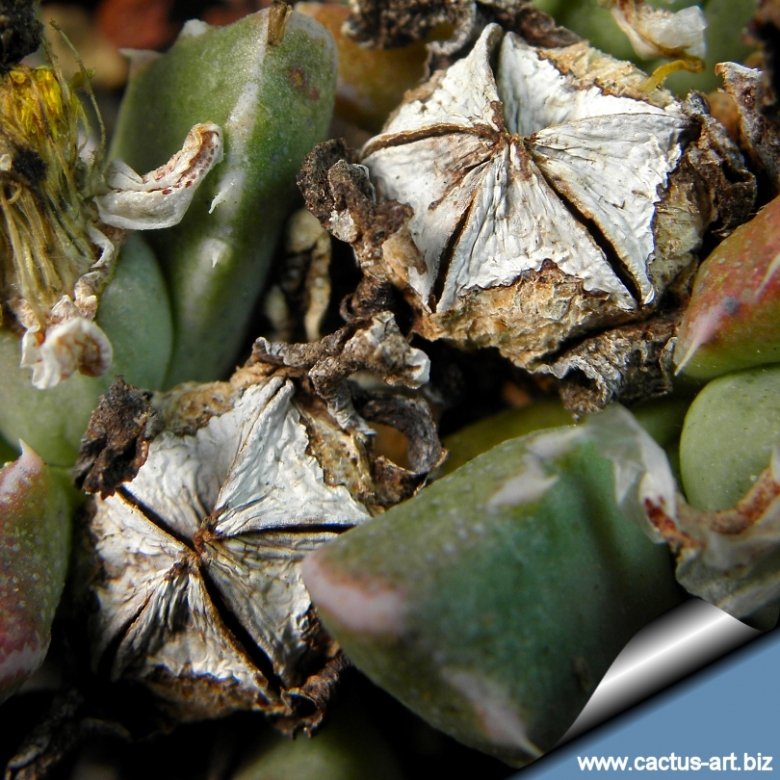
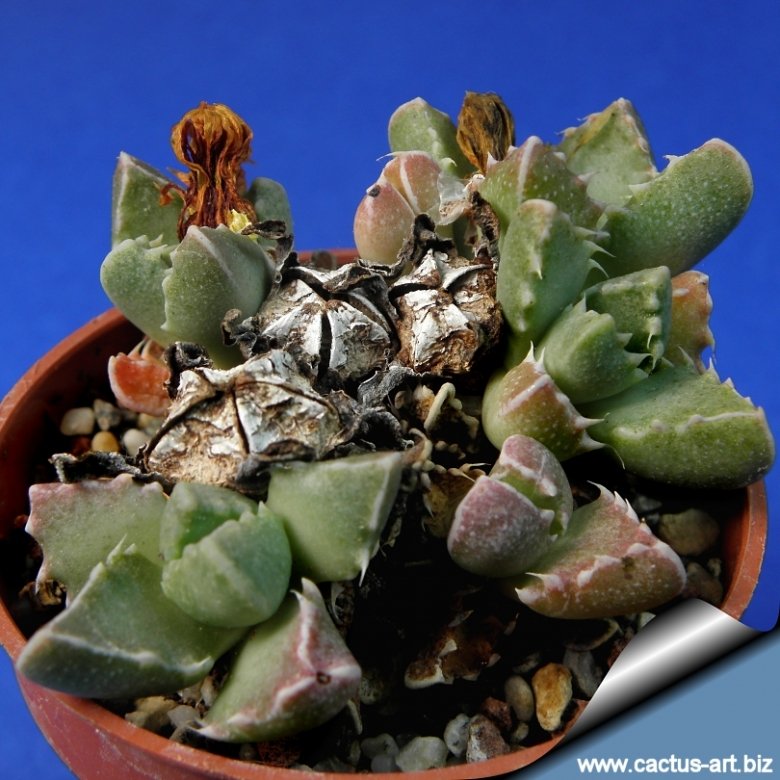
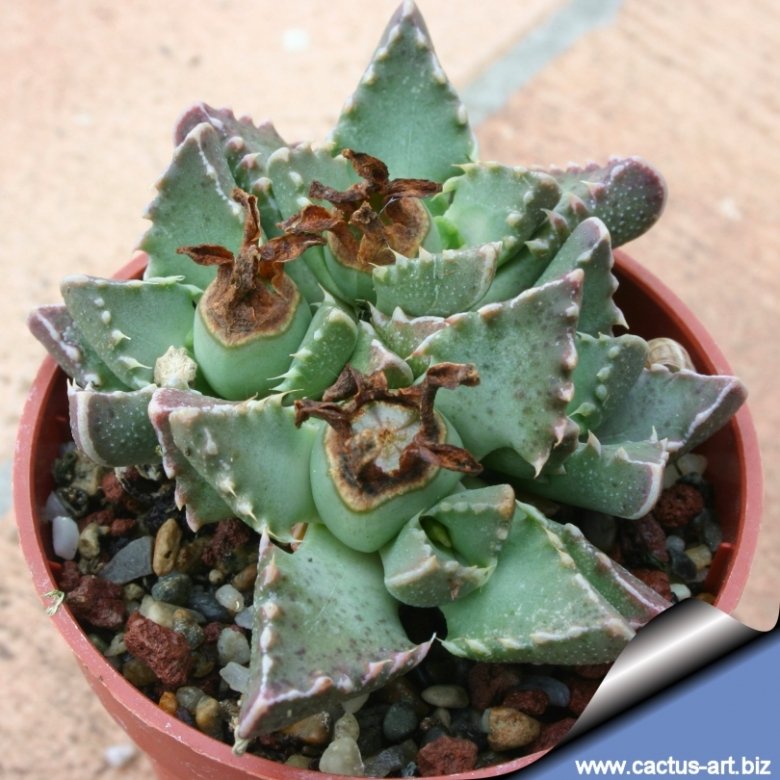
Faucaria. sp. PB1787 is dwarf form, with brownish-green leaves that forms small low and exceptionally compact clumps.
Stem: Virtually stemless (but can builds short woody stems with age).
Leaves: Up to 2 cm long and 1 cm wide pale olive green to brownish-green often with a reddish tinge. In opposite pairs, all pairs growing at right angles to the next adjacent, usually with 2 to 3 pairs to a branch. They are thick, green triangular in the top view, pointed,. The margin is white with few (2 to 4) short teeth. The upper surface is almost smooth with tiny white dots over the upper surface and scattered in white speckles in the lower, keeled surface.
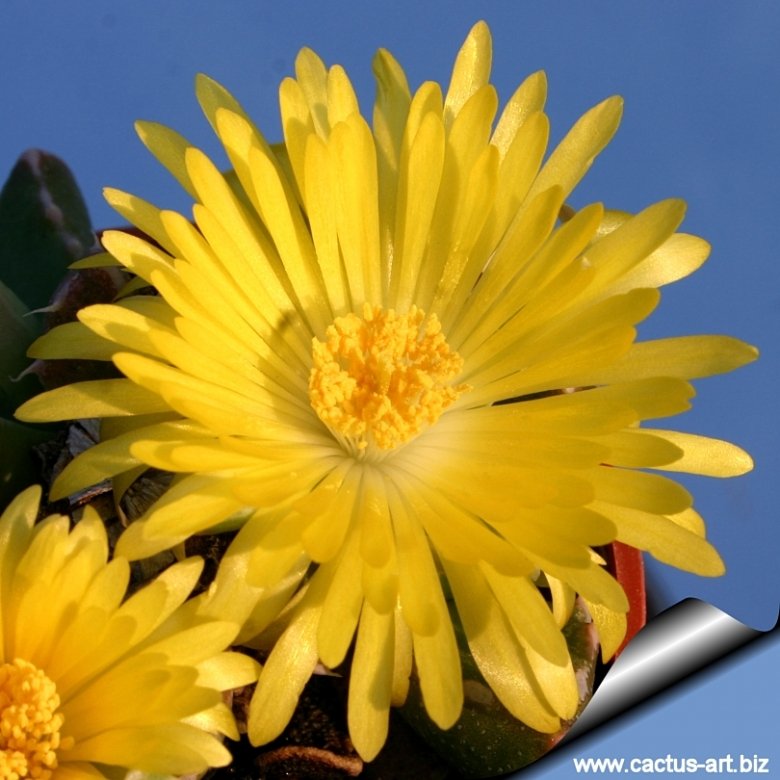
Flowers: Golden-yellow yellow, 3-4 cm wide, attractive daisy like, appearing from the centre of the rosette.
Blooming season: Autumn. They need full sun to open, open around noon and close at night.
Origin and Habitat
21 km East Pearston, South Africa (Cape Province: Bedford)
Cultivation and Propagation
Faucaria are la good choice for anyone wanting to start growing succulents. They are quite hardy and can take a short period of light frost and in very dry warm regions these succulents make very impressive out door ground covers. They need full sun to light shade with a well-drained soil mix, but can tolerate a wide variety of soil types and growing locations as long as there is plenty of sun. The plants are well watered during the growing season and allowed to dry thoroughly before watering again and will tolerate some over watering, but the challenge is to help them keep their compact form and prevent elongation of the stem. During the winter months, the plants should be kept very dry, only watering enough to keep the leaves from shrivelling.
As house plants they tend to grow in fair weather and rest when temperatures are too hot or too cool.
Propagation: Faucaria is very easy to start from seed. Seeds germinate in 7-14 days at 21°C. Although they will start from cuttings, it is quite difficult to get them to root. If they start to rot there is usually part of the plant that can be removed and possibly rooted.
Gallery