Publication: Cactaceae (Britton & Rose) 3: 127. 1922 [12 Oct 1922]
Description
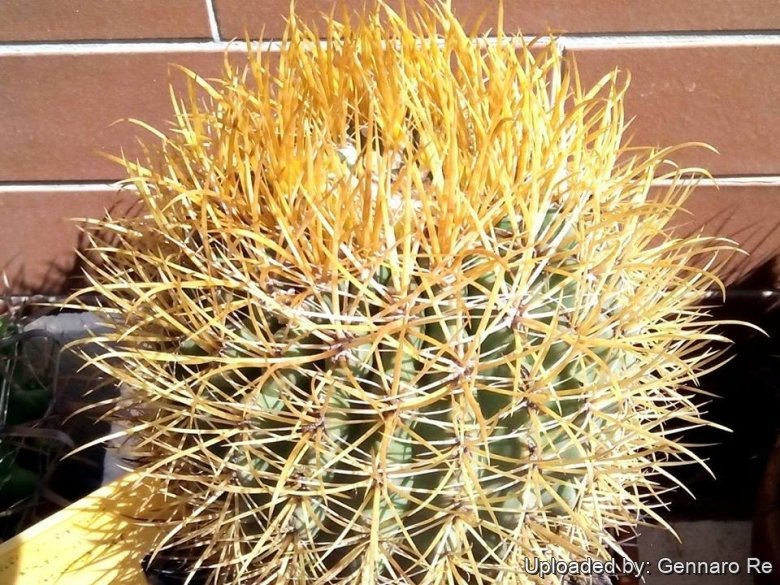
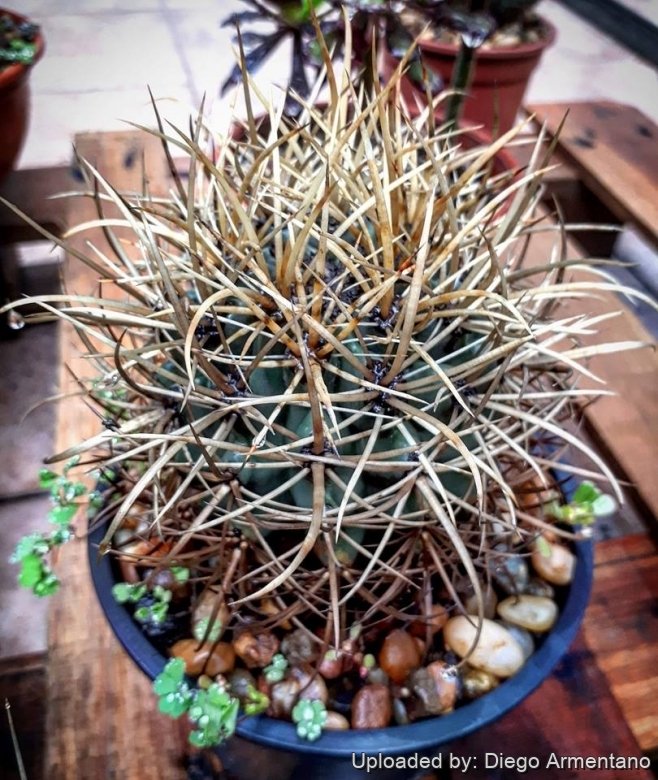
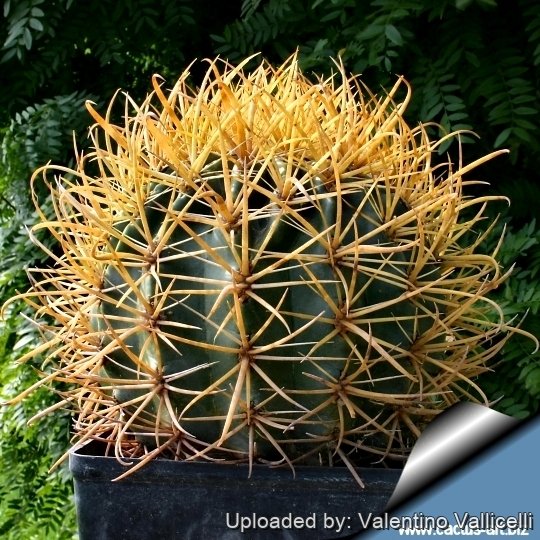
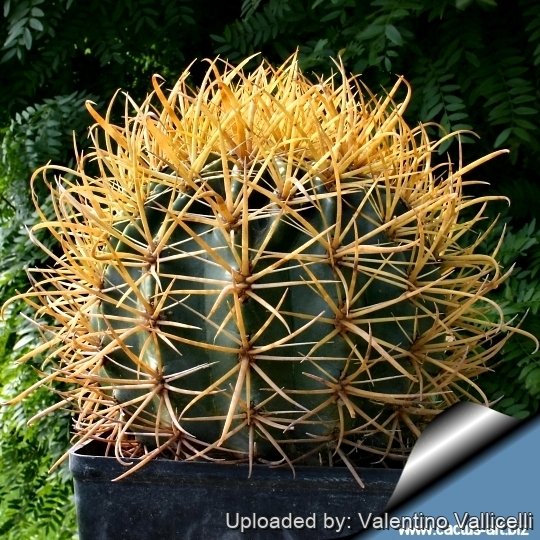
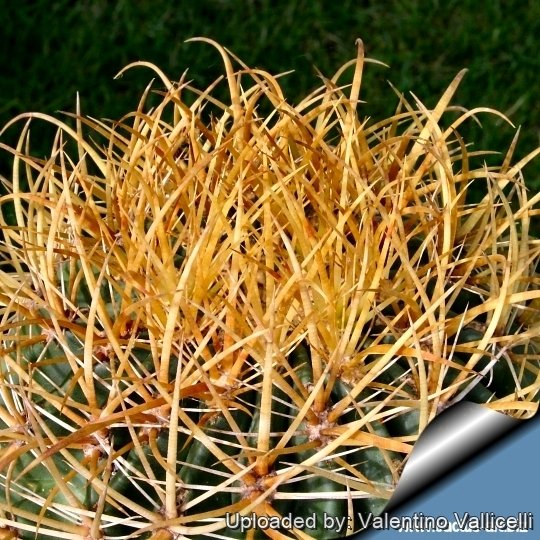
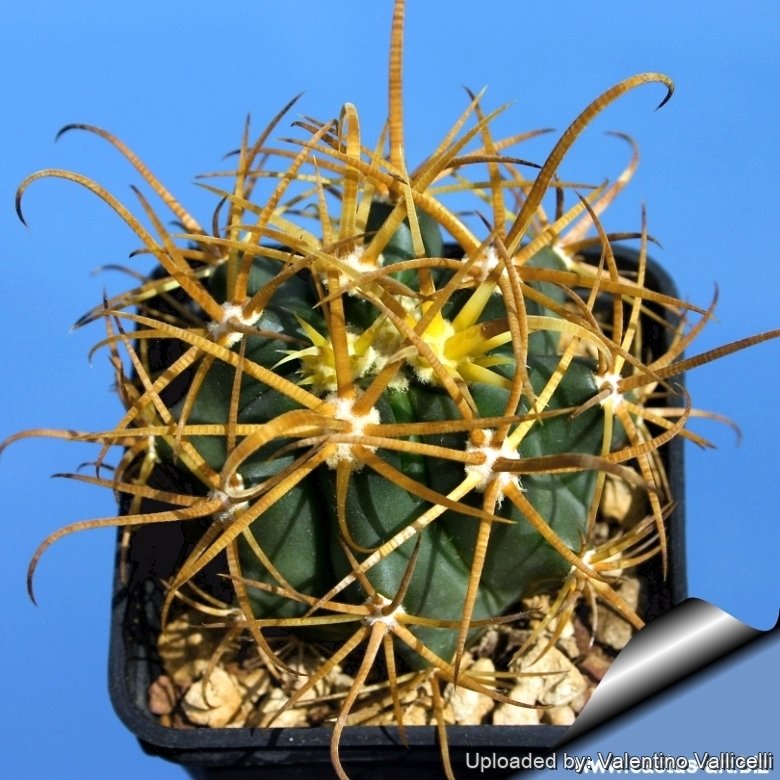
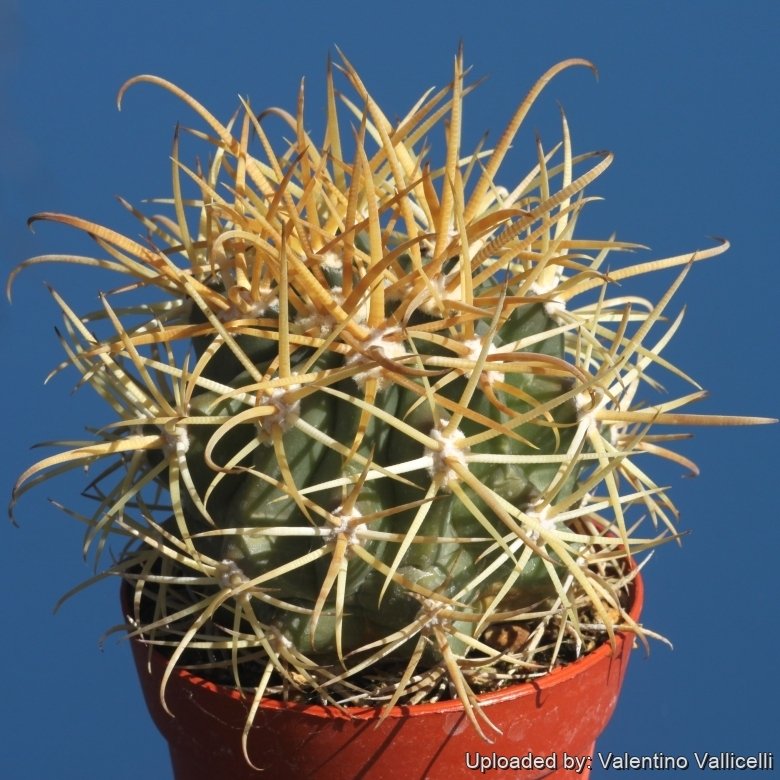
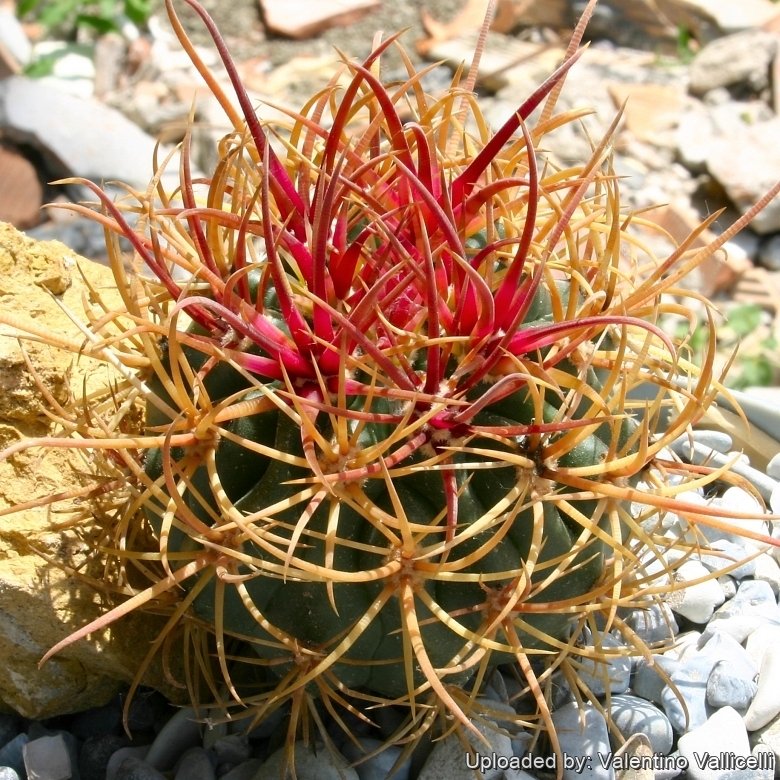
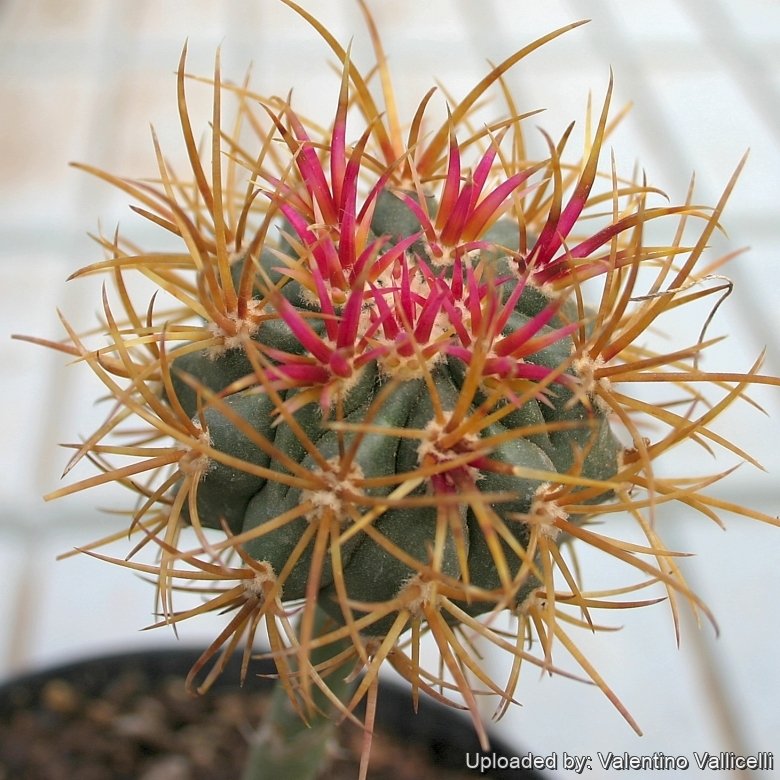
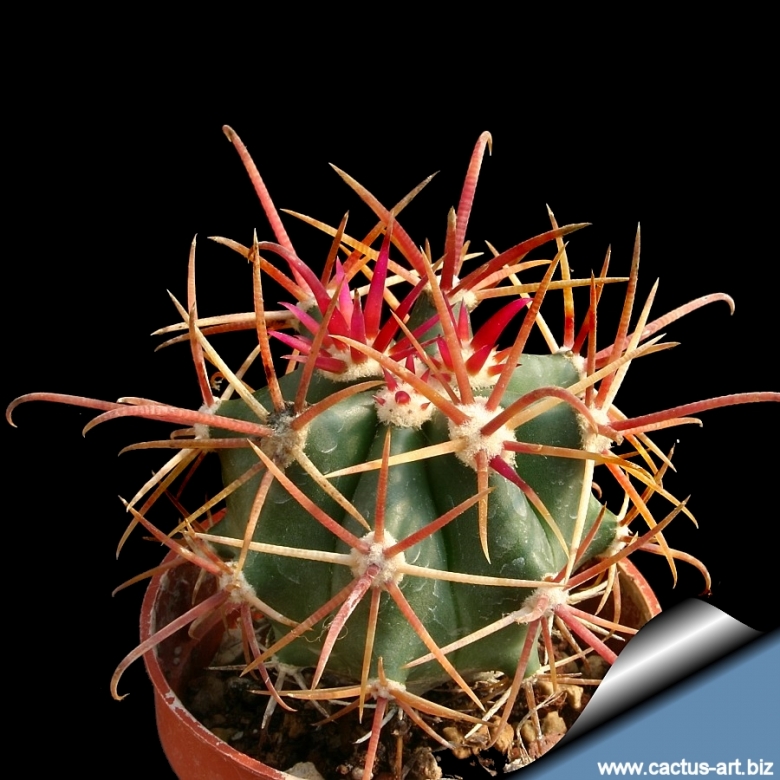
Ferocactus chrysacanthus is a small sized solitary or rarely cespitose barrel cactus with up to 6 heads. The plant is very densely spined (one of the spiniest of the Ferocacti) and because of that, will tolerate full sun.
Stem: Usually simple, globose to cylindrical, dull greyish green.
up to 30(-40) cm in diameter, 90(-100) cm tall.
Ribs: 13 to 22 , tubercled.
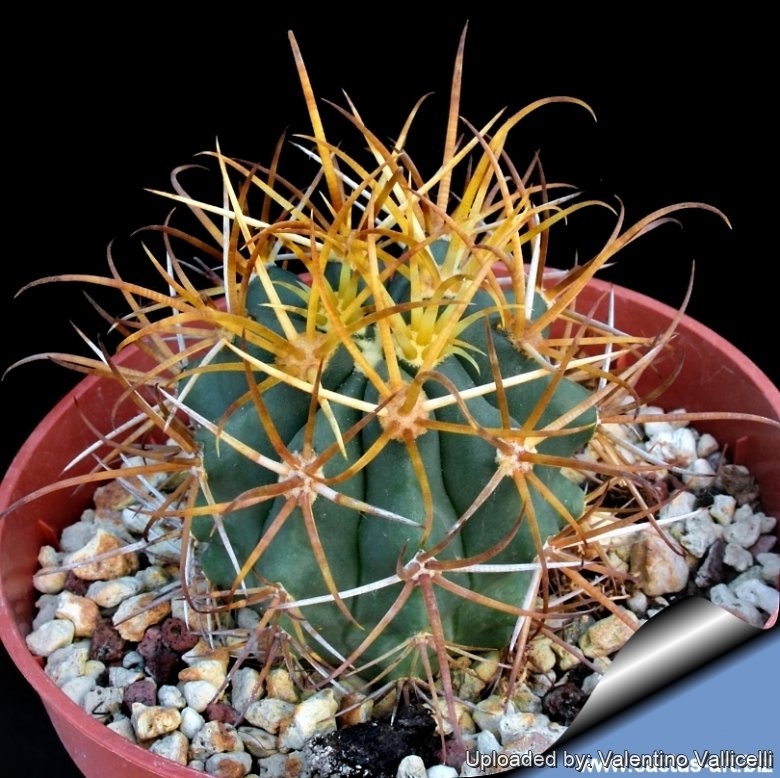
Central spines: 4 to 10 all thick up to 10,5 cm long, twisted and more or less hooked golden yellow (it sometimes occurs with red spines)
Radial spines: 4 to 12 ( or more) up to 5 cm long, slender and white.
Flowers: Near the center of the plant, typically yellow or brownish yellow, but also orange, 2,5 cm long, 4,5-5 cm in diameter when fully open. The inside petals are yellow or orange, the outside ones are brownish. Scale naked on the axil, closed set and imbricated, the lower one rounded ang green, the upper ones more oval brownish, the margin some time ragged. Outer perianth-segments stiff. Pinkish-brown, inner perianth-segments 2 cm long, yellow with reddish-mid-stripesand toothed margin.
Blooming season: Summer.
Fruits: Yellow 3 cm long.
Seeds: Up to 2,5 mm wide, net-patterned and black.
Origin and Habitat
Mexico (Baja California: Only occurs naturally on the island of Cedros, off the west coast of northern Baja California and possibly on a neighboring island, West San Benitos, with some reports of it on the adjacent peninsula.)
Habitat: with a balanced and relatively high average temperature, low rainfall but relatively high humidity and specific soil composition (these conditions are difficult to imitate in cultivation, and make this species relatively problematic to grow.
Cultivation and Propagation
Use very draining soil, water during the aestival growth cycle (this plant need plenty of water) But it’s necessary to avoid wetting the bodies of these plants while they are in sunlight. A wet cactus in the sun light can cause sun burning which can lead to scars or even fungal infections and death. Needs full sun. Keep dry at 10°C in winter, but it can tolerate sporadic light frost.
Propagation: Seeds are the only way of reproducing. The seeds germinate readily.
Remarks: It is often recommended to graft young seedlings on Eriocereus jusbertii. But plants can grow on their own roots for ages if watered carefully.
Bibliography
Najor references and further lectures
-
James Cullen, Sabina G. Knees, H. Suzanne Cubey “The European Garden Flora Flowering Plants: A Manual for the Identification of Plants Cultivated in Europe, Both Out-of-Doors and Under Glass” Cambridge University Press, 11/Aug/2011
-
Curt Backeberg “Die Cactaceae: Handbuch der Kakteenkunde” Vol. 4 G. Fischer, 1960
-
David Hunt, Nigel Taylor “The New Cactus Lexicon” DH Books, 2006
-
Nathaniel Lord Britton, Joseph Nelson Rose “Cactaceae: Descriptions and Illustrations of Plants of the Cactus Family” Courier Dover Publications, 1963
-
John Borg “Cacti: a gardener’s handbook for their identification and cultivation” Blandford P., 1970
-
Carnegie Institution of Washington Publication, Vol. 248, 3 Carnegie Institution of Washington, 1922
-
Forrest Shreve, Ira Loren Wiggins “Vegetation and flora of the Sonoran Desert” Vol. 2” Stanford University Press, 1964.
-
Hiroshi Hirao “Colour encyclopaedia of cacti”Seibundo Shinkosha, 1979
From llifle page Echinocactus rubrispinus
Description
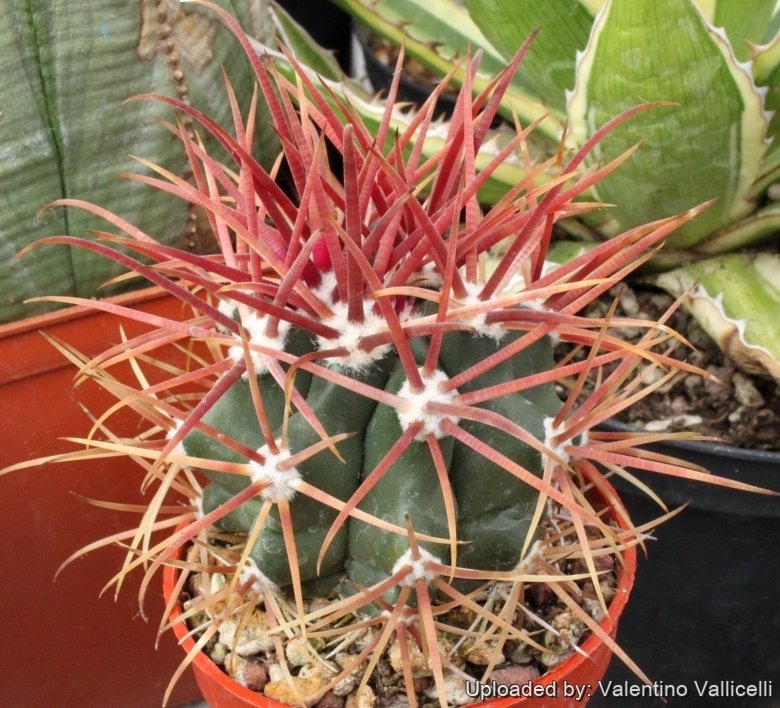
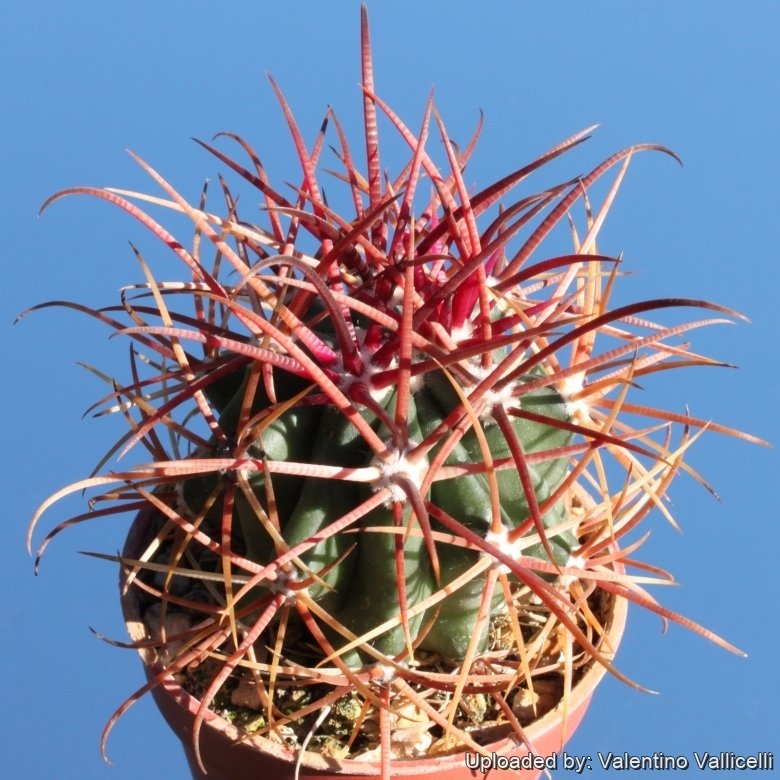
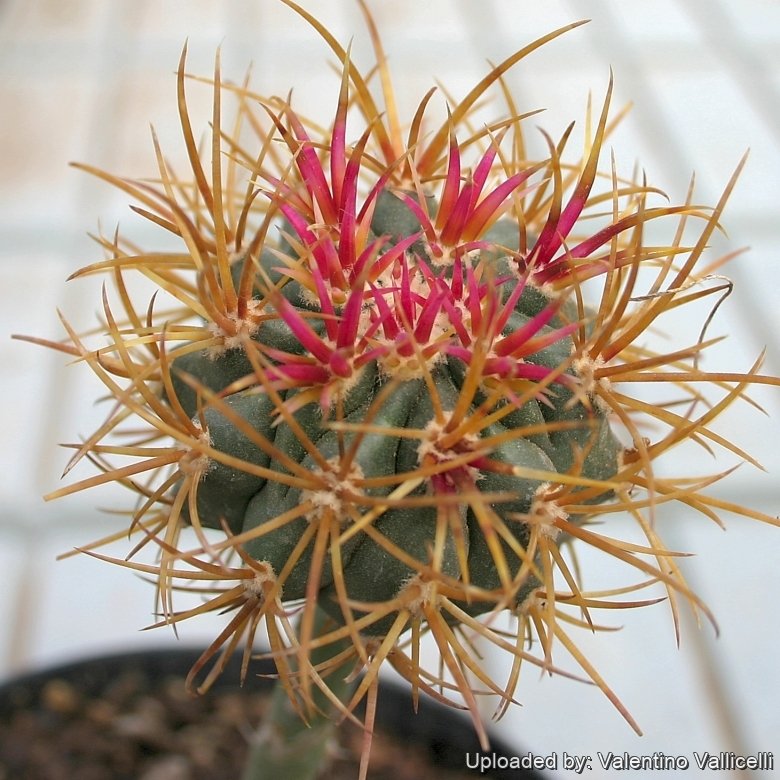
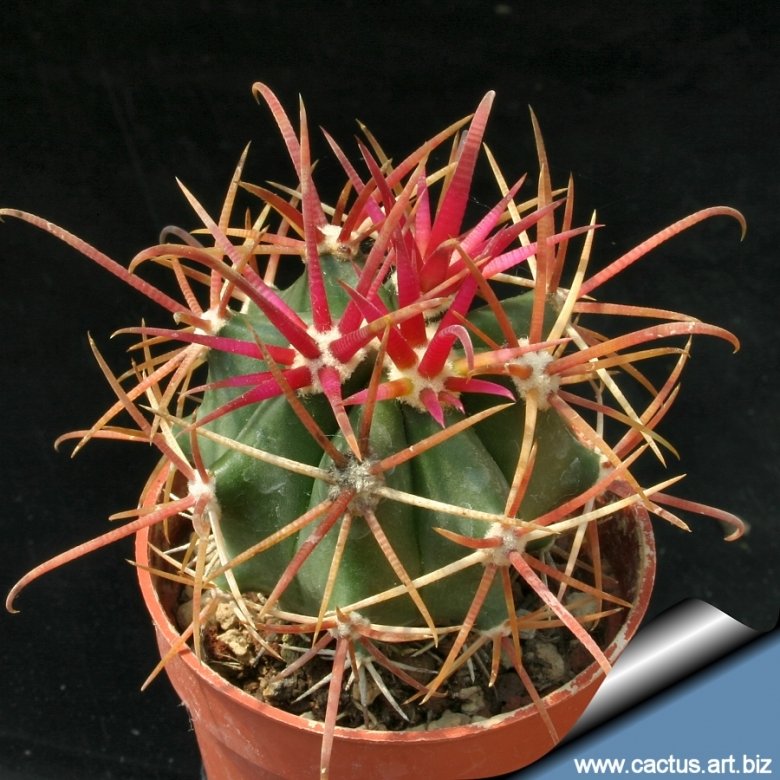
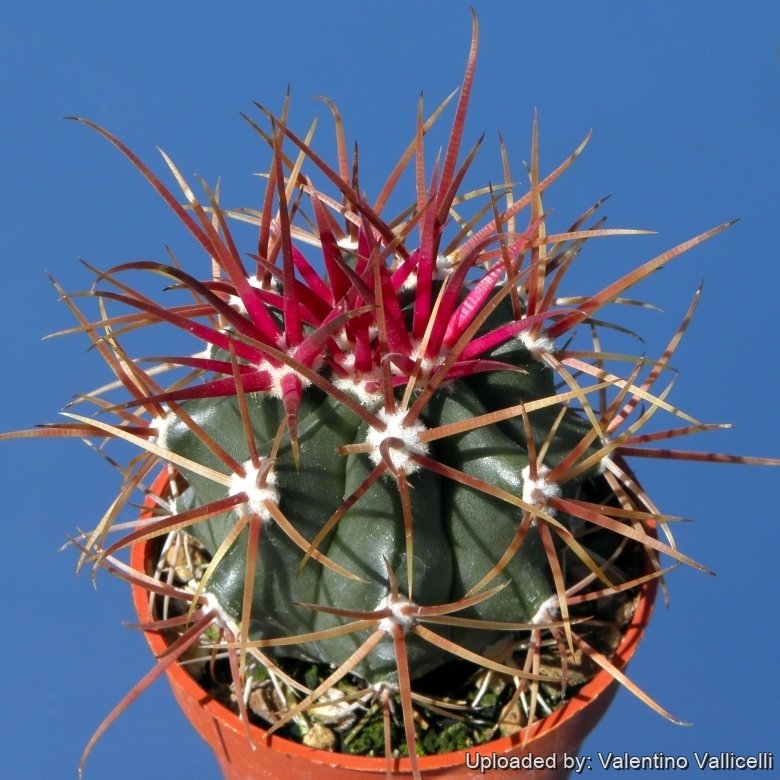
Ferocactus chrysacanthus f. rubrispinus has distinctive bright red spines, and can be easily tell apart from the standard Ferocactus chrysacanthus with characteristic golden, denser and shorter yellow spines. Though some of this rare red spined specimens can be found in habitat, most of the “rubrispinus” found in cultivation are (presumably) horticultural hybrids selected for their spine colours. The plant is very densely spined (one of the spiniest of the Ferocacti) and because of that, will tolerate full sun.
Stem: Usually simple, globose to cylindrical, dull greyish green.
up to 30(-40) cm in diameter, 90(-100) cm tall.
Ribs: 13 to 22 , tubercled.
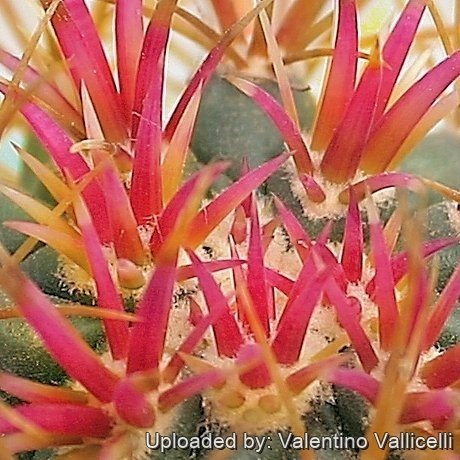
Central spines: 4 to 10 all thick up to 10,5 cm long, twisted and more or less hooked bright red in the new growth then hardening to a clearer orangish-red or amber colour.
Radial spines: 4 to 12 ( or more) up to 5 cm long, slender and white.
Flowers: Near the center of the plant, typically yellow or brownish yellow, but also orange, 2,5 cm long, 4,5-5 cm in diameter when fully open. The inside petals are yellow or orange, the outside ones are brownish. Scale naked on the axil, closed set and imbricated, the lower one rounded ang green, the upper ones more oval brownish, the margin some time ragged. Outer perianth-segments stiff. Pinkish-brown, inner perianth-segments 2 cm long, yellow with reddish-mid-stripesand toothed margin.
Blooming season: Summer.
Fruits: Yellow 3 cm long.
Seeds: Up to 2,5 mm wide, net-patterned and black.
Origin and Habitat
Locality not stated.(probably it is an hybrid form)
Cultivation and Propagation
They are summer-growing and pretty easy plants thought slow to start. They are suited for any rich, well drained soil such us clay, pumice, lava grit, and only a little peat or leaf-mould. If potted, repot them preferably in the spring, if their roots become cramped. Generally, they should be repotted every other year in order to provide fresh soil. However, this doesn’t necessarily mean they’ll need larger containers. Fill about a quarter of the pot with broken crocks, gravel, etc. to promote good drainage. After repotting, do not water for a week or more. Water regularly during the aestival growth cycle (this plant need plenty of water, but do not overwater and let their soil dry out between waterings), and also needs to be avoided wetting the body of this plant while it is in sunlight. A wet cactus in the sun light can cause sun burning which can lead to scars or even fungal infections and death, keep rather dry in winter. No water should ever be allowed to stand around the roots. Feed with a high potassium fertilizer in summer.
Exposure: Outside they need a bright exposure, full sun or half shade in summer if the location is exceedingly hot or bright, inside needs bright light, and some direct sun. It can tolerate moderate shade, and a plant that has been growing in shade should be slowly hardened off before placing it in full sun as the plant will be severely scorched if moved too suddenly from shade into sun.
Frost Tolerance: Light frost protection required for safe cultivation, but can tolerate sporadic light frost. This plants need a period of cool rest in winter to produce flowers abundantly.
Diseases and pests: Watch for infestations of mealybug, scale insects and spider mite.
Plant in good conditions will start to bloom when reach the diameter of only 12-18 cm.
Propagation: Seeds are the only way of reproducing, but young seedlings are often grafted on Eriocereus jusbertii or Pereschiops to speed the growth rate. However plant can grow on their own roots for ages if watered carefully.
Bibliography
Major references and further lectures
-
James Cullen, Sabina G. Knees, H. Suzanne Cubey “The European Garden Flora Flowering Plants: A Manual for the Identification of Plants Cultivated in Europe, Both Out-of-Doors and Under Glass” Cambridge University Press, 11/Aug/2011
-
Curt Backeberg “Die Cactaceae: Handbuch der Kakteenkunde” Vol. 4 G. Fischer, 1960
-
David Hunt, Nigel Taylor “The New Cactus Lexicon” DH Books, 2006
-
Nathaniel Lord Britton, Joseph Nelson Rose “Cactaceae: Descriptions and Illustrations of Plants of the Cactus Family” Courier Dover Publications, 1963
-
John Borg “Cacti: a gardener’s handbook for their identification and cultivation” Blandford P., 1970
-
Carnegie Institution of Washington Publication, Vol. 248, 3 Carnegie Institution of Washington, 1922
-
Forrest Shreve, Ira Loren Wiggins “Vegetation and flora of the Sonoran Desert” Vol. 2” Stanford University Press, 1964.
-
Hiroshi Hirao “Colour encyclopaedia of cacti”Seibundo Shinkosha, 1979
Source: Echinocactus rubrispinus, LLIFLE - Encyclopedia of living forms, CC-BY-SA, retrieved 2026-10-25.
Cultivars and forms (3)
Varieties (1)
Forms (1)
Cultivars (1)
Gallery