Publication: Cactography 1926(1): 5.
Description
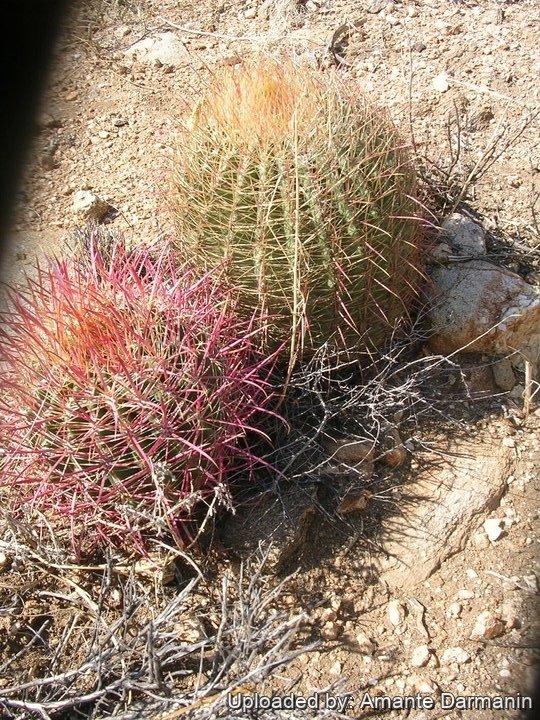
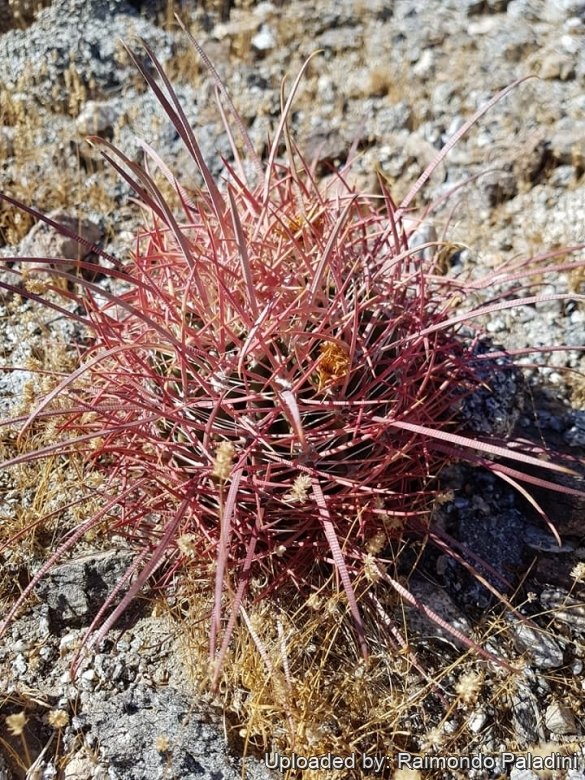
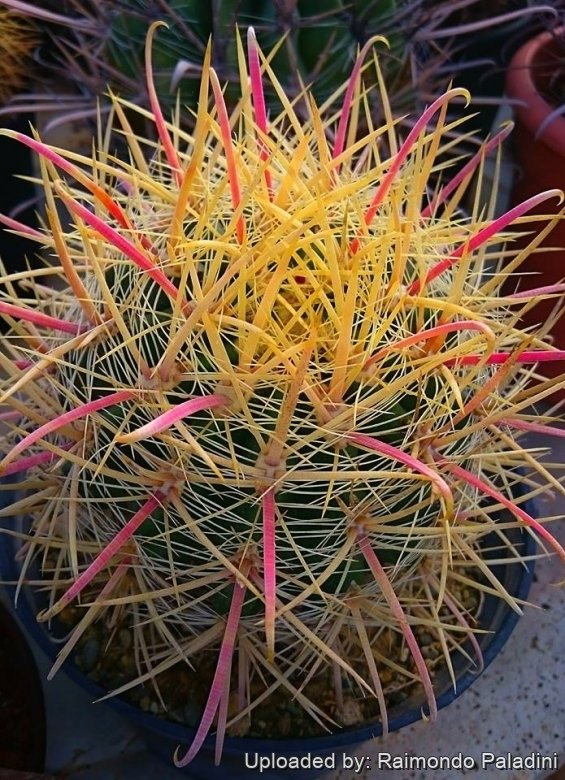
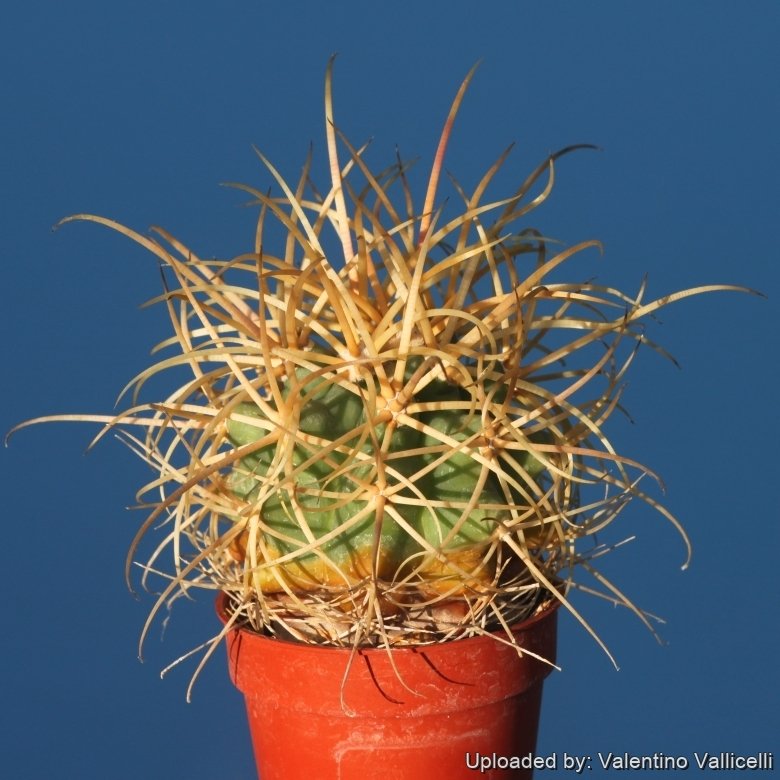
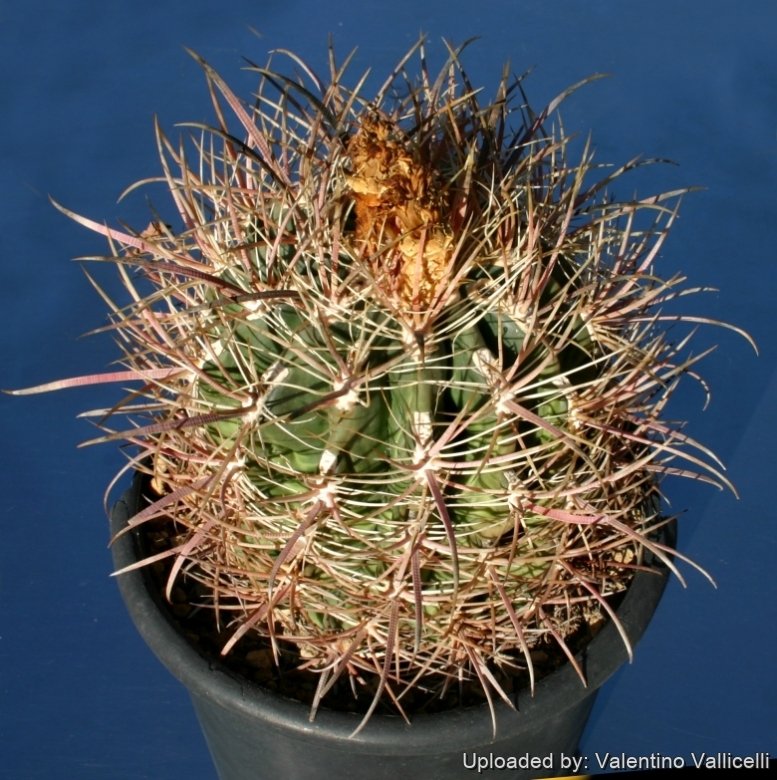
Ferocactus cylindraceus = (Ferocactus acanthodes) is a colourful barrel cactus usually unbranched, forming a single moderately tall column. Four subspecies are recognized, the nominate form, subsp. eastwoodiae (L.D.Benson) N.P.Taylor, subsp. lecontei (Engelm.) N.P.Taylor and subsp. tortulispinus (Gates) N.P.Taylor.
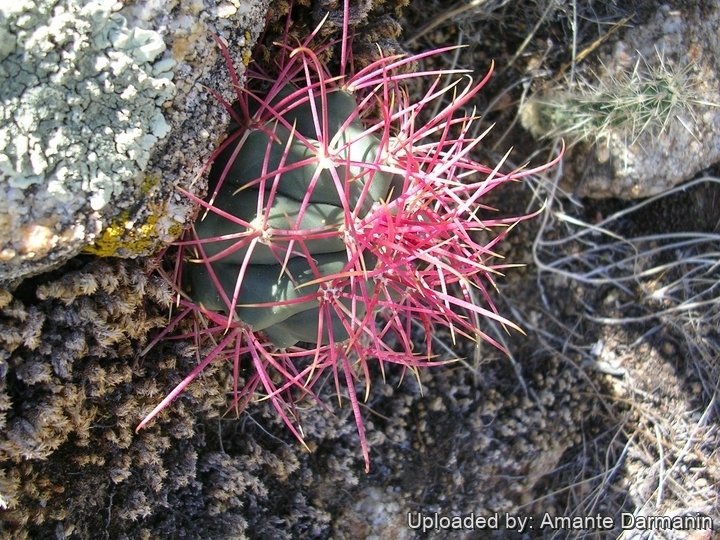
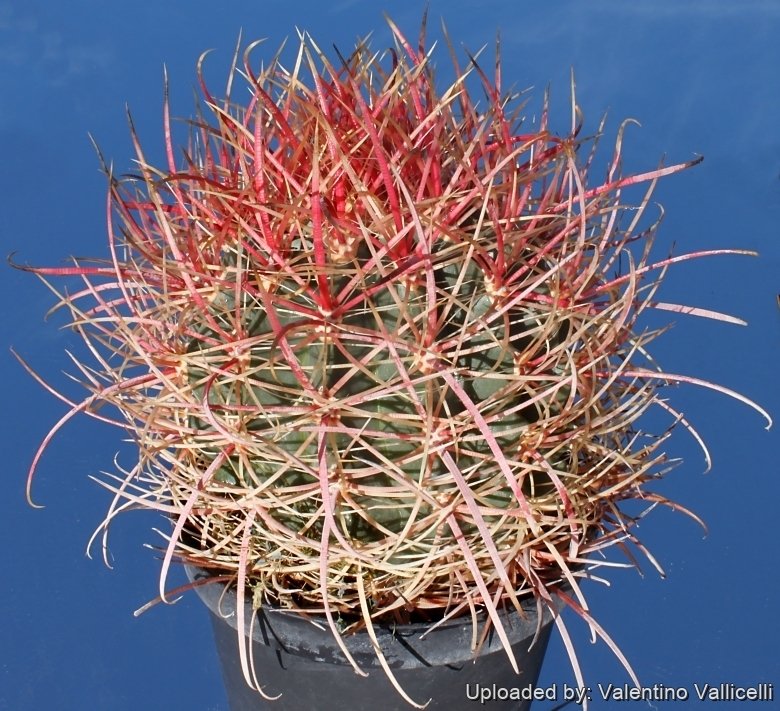
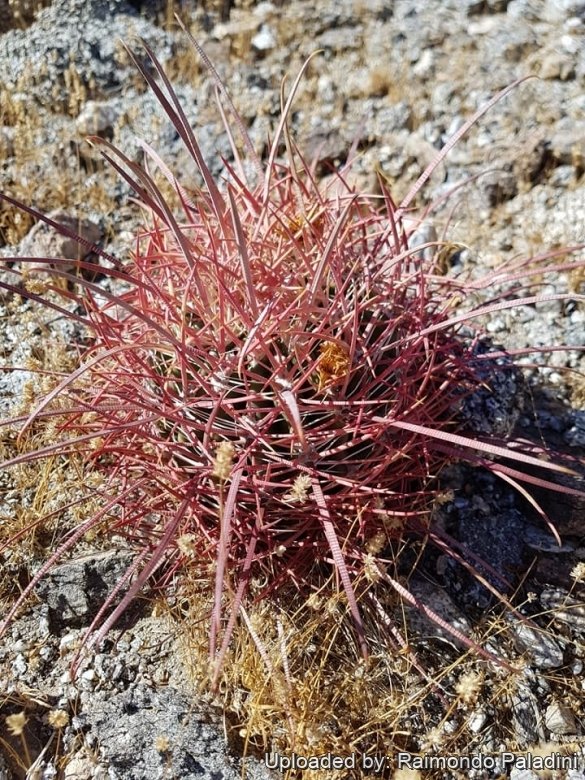
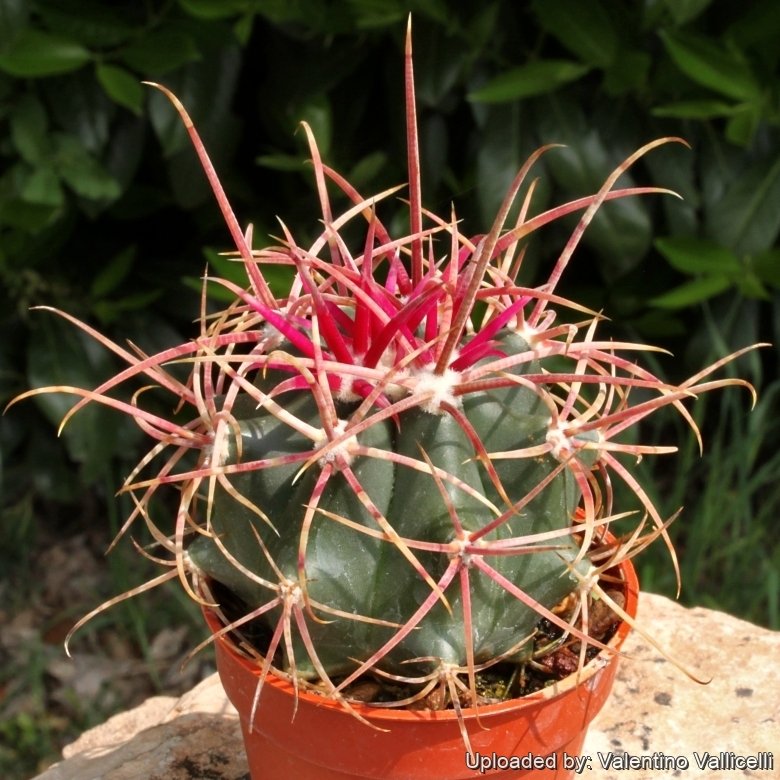
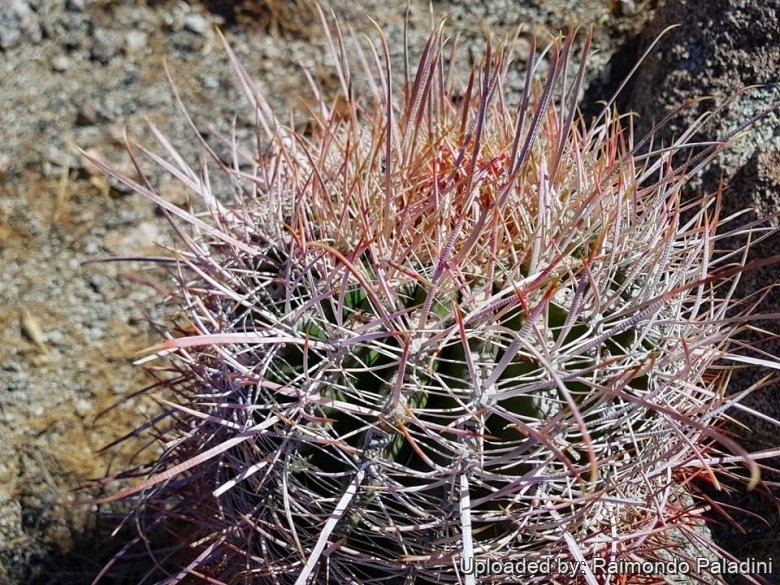
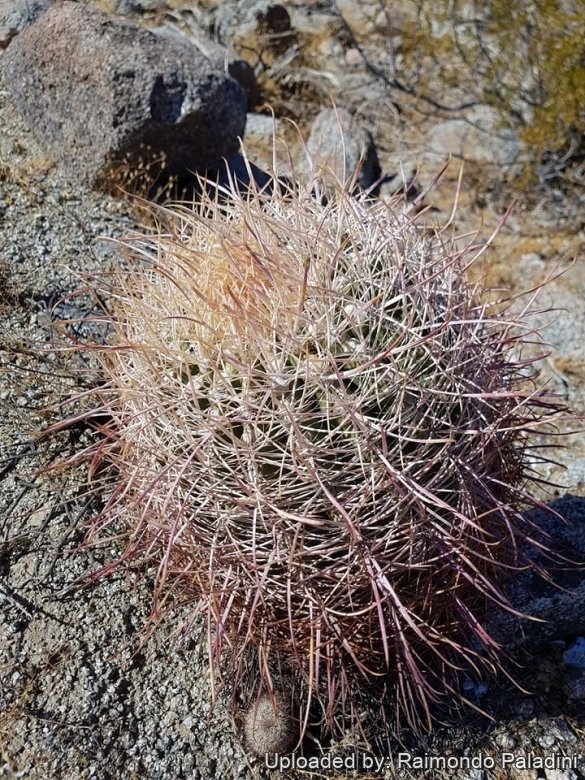
Stem: Green, spherical becoming columnar up to 2 m tall and 30 cm in diameter.
Ribs: 2,5 cm high and tuberculate.
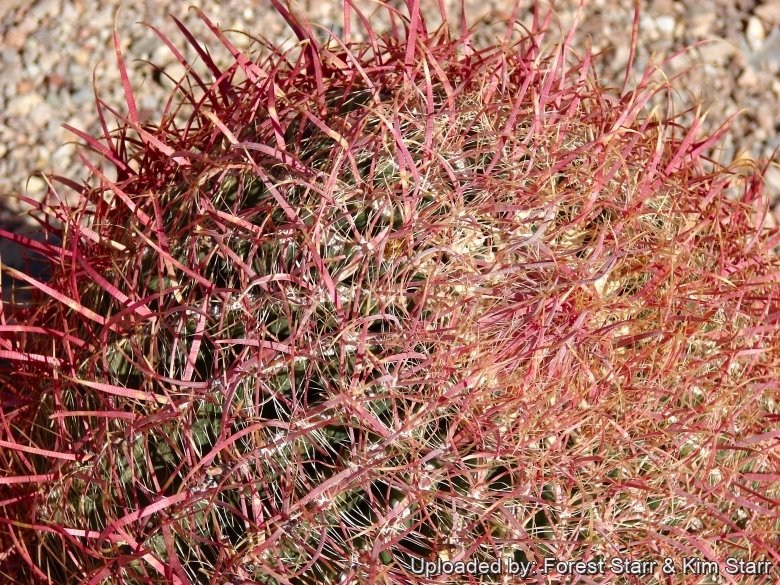
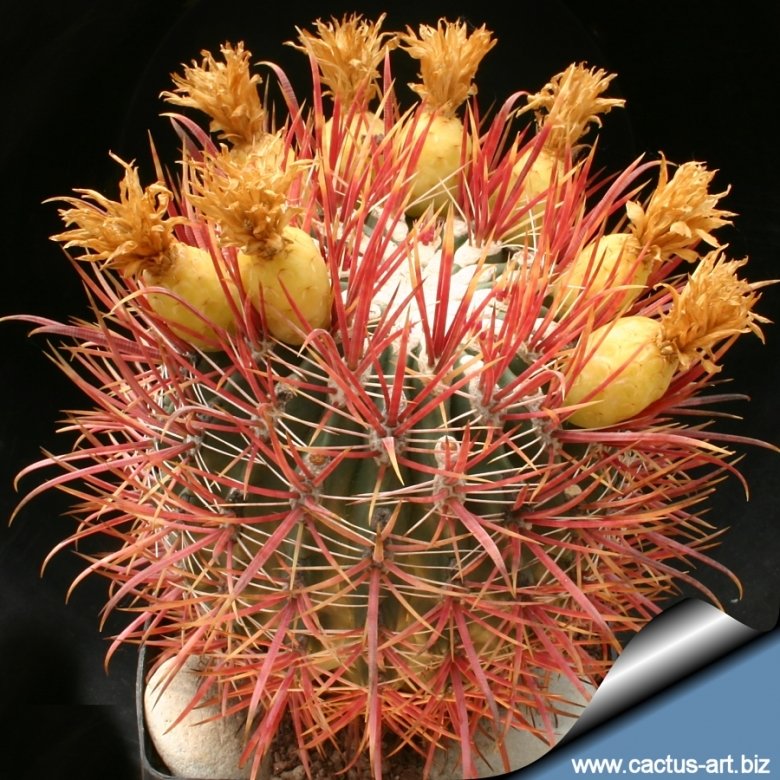
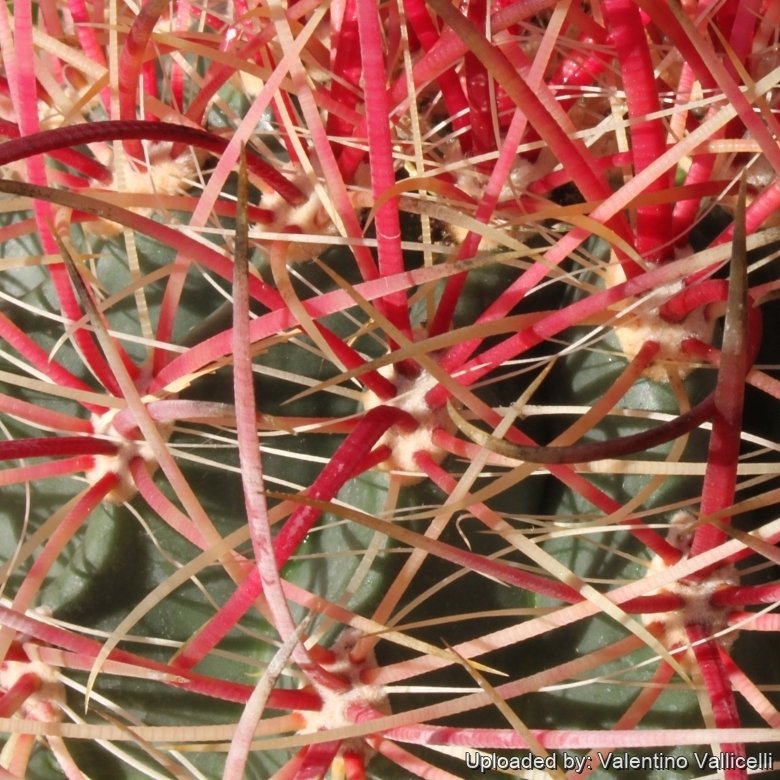
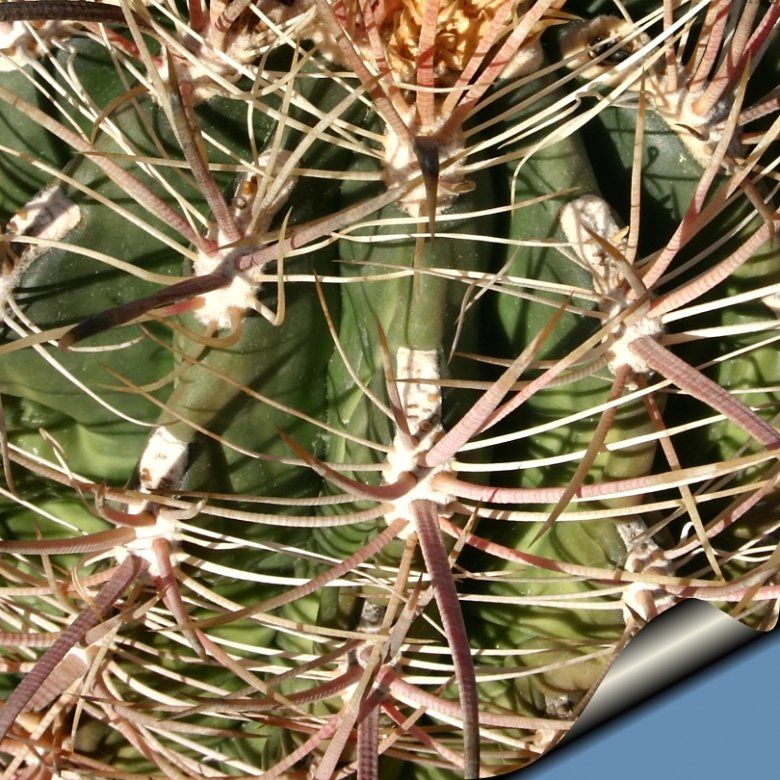
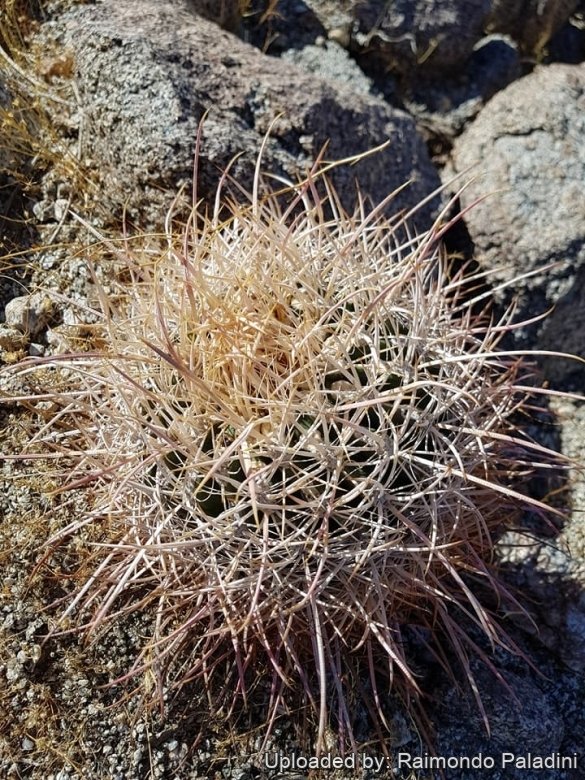
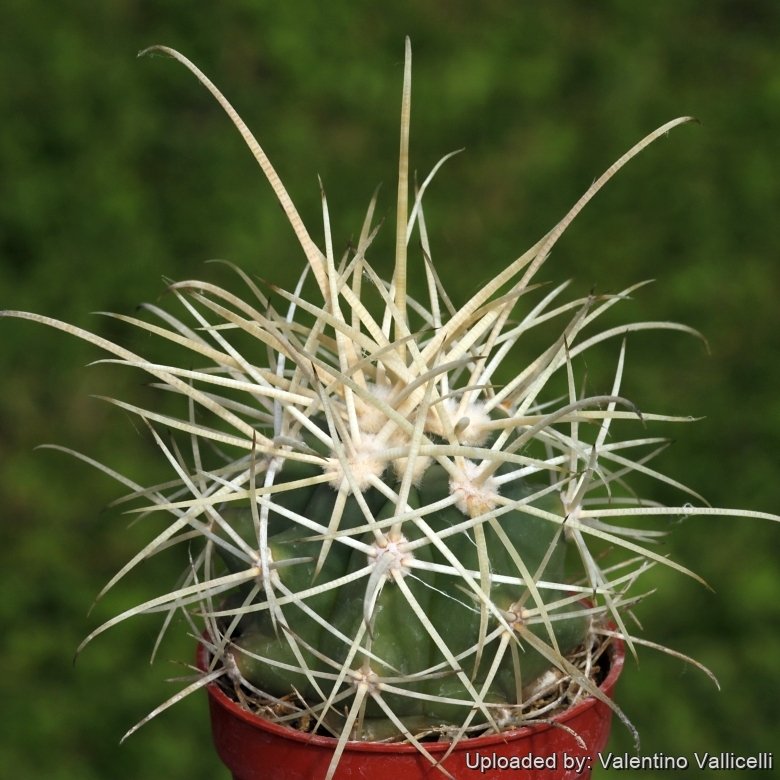
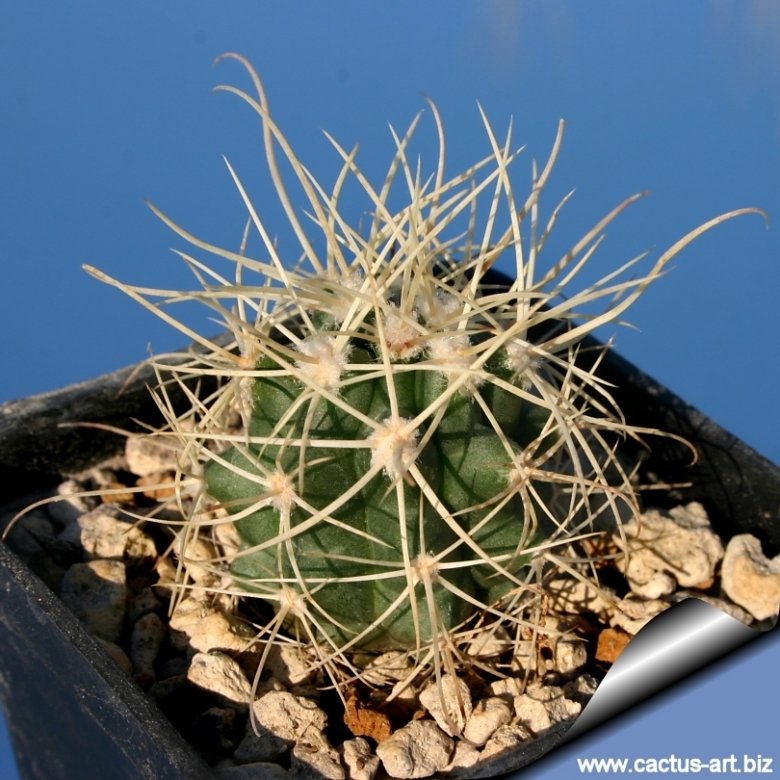
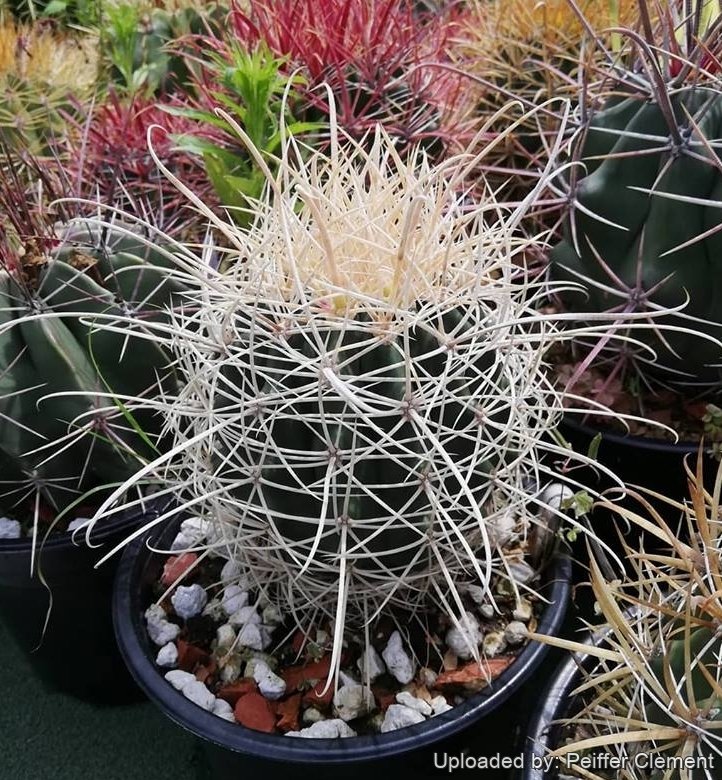
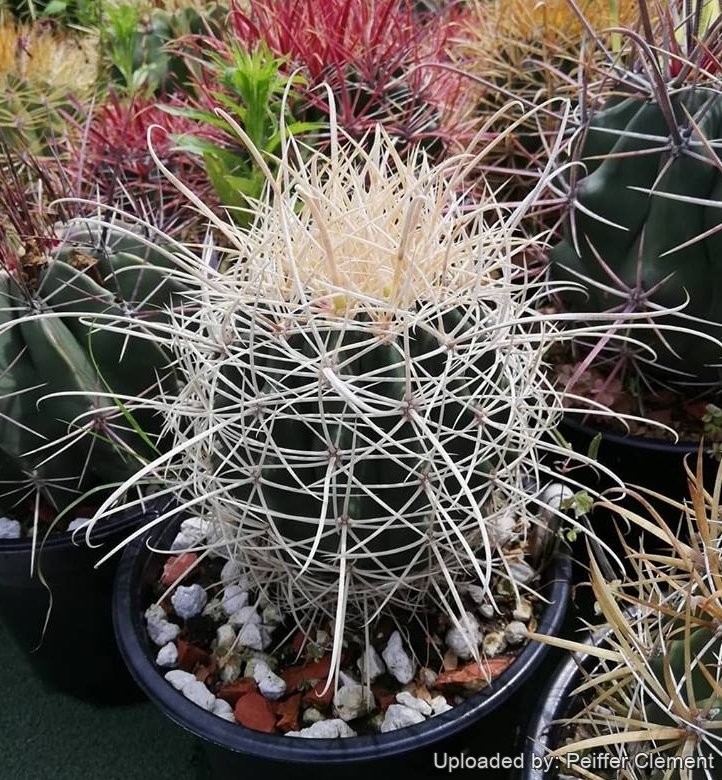
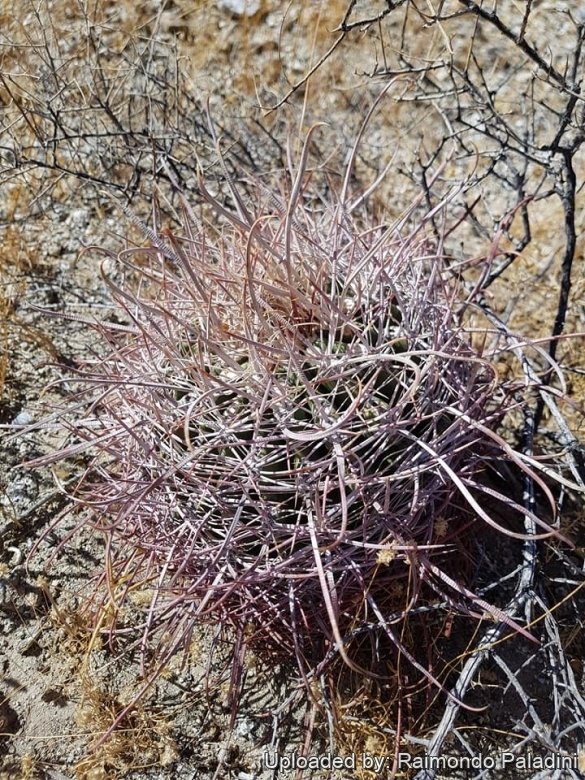
Central spines: A large central spine and three auxiliary centrals form a crucifix shape. The primary central is 7-15 long, angles down and is slightly to moderately hooked, sometimes to 90 degrees. The other centrals are from 5 to 7,5 cm long. The centrals are noticeably ring ridged and flattened, with a flat upper surface and rounded lower surface. Spines can be very light grey to red and yellow, but darken to black with age.
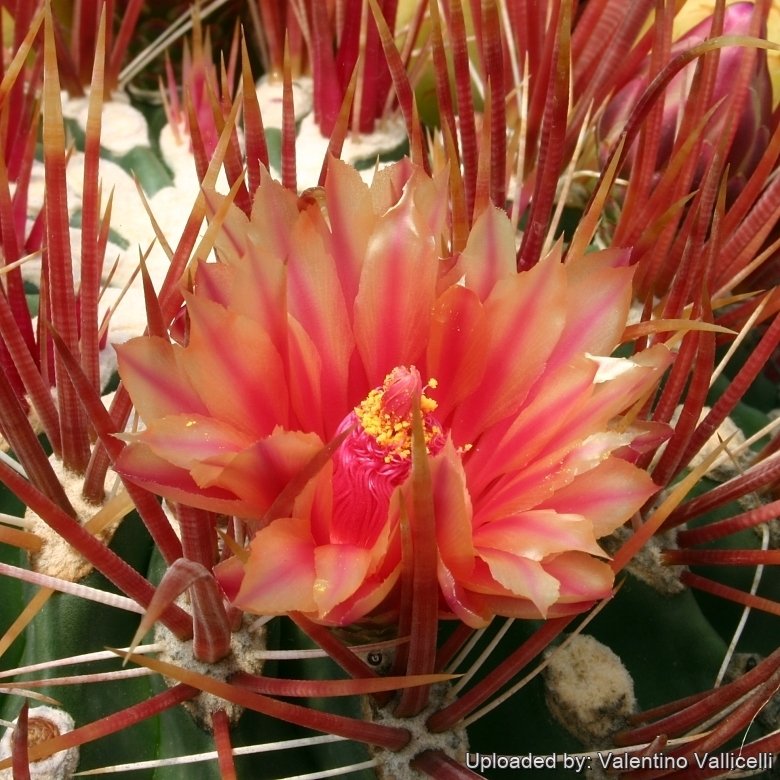
Flowers: Yellow tinged with red appear in May and June at the crown of the plant, 4 to 6 cm.
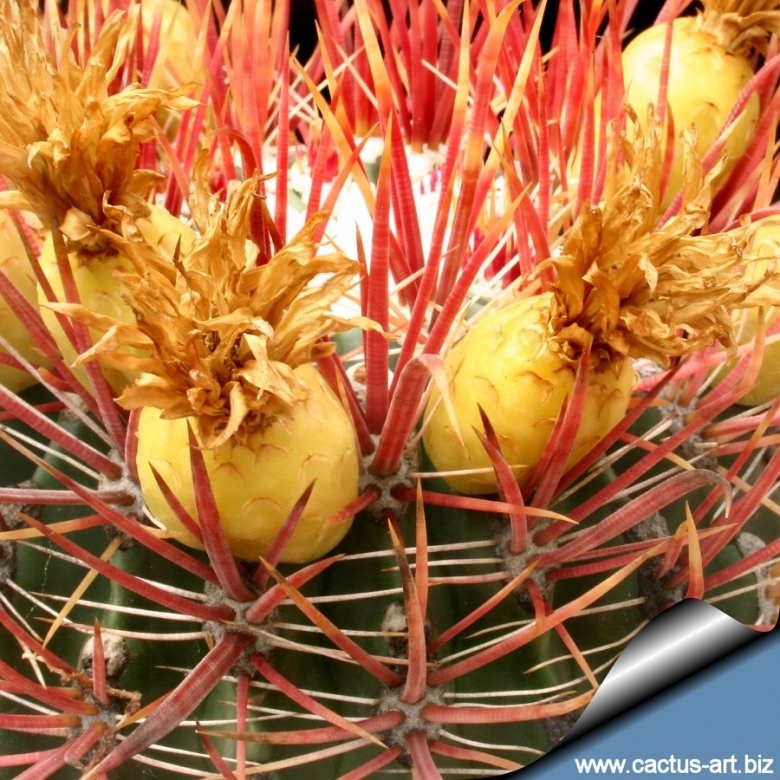
Fruit: Fleshy, covered with scales, yellow or yellowish green, 5 cm long, 2,5 cm in diameter.
Remarks: The flowers on all subspecies are yellow, occasionally with a red tint.
Origin and Habitat
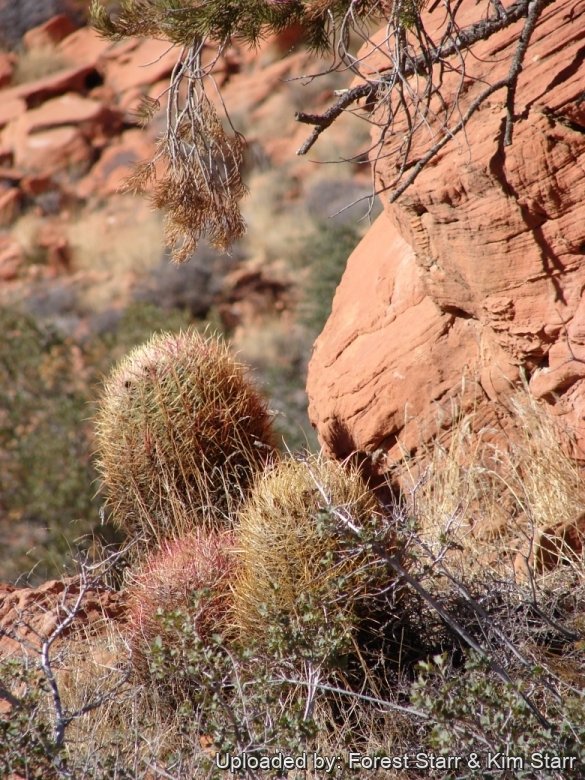
The various variety of Ferocactus cylindraceus (= Ferocactus acanthodes) are spread in the southern of United States (central and western Arizona, southeastern California Nevada, and Utah) and southwards into Mexico (Baja California and Sonora) .
Altitude range: From sea level to 1750 metres.
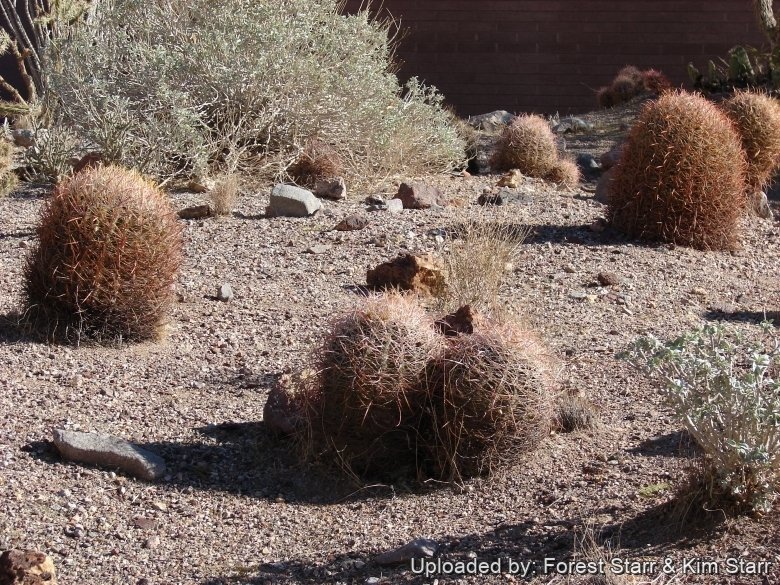
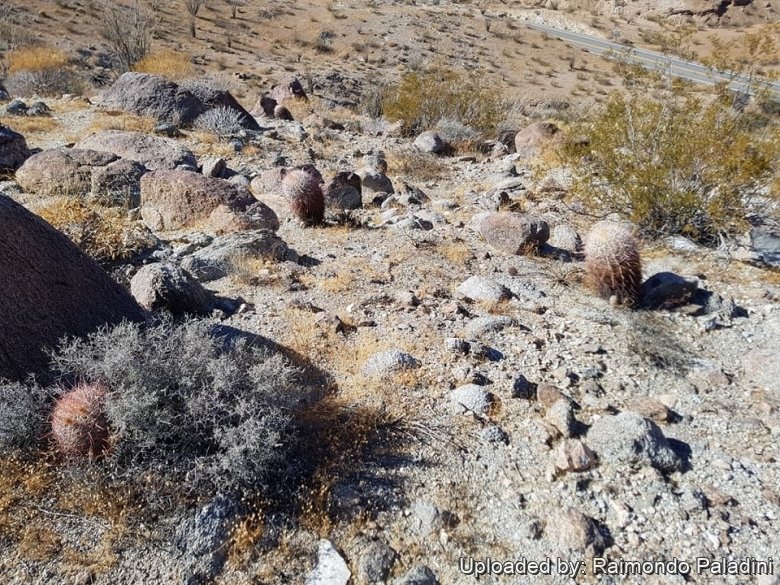
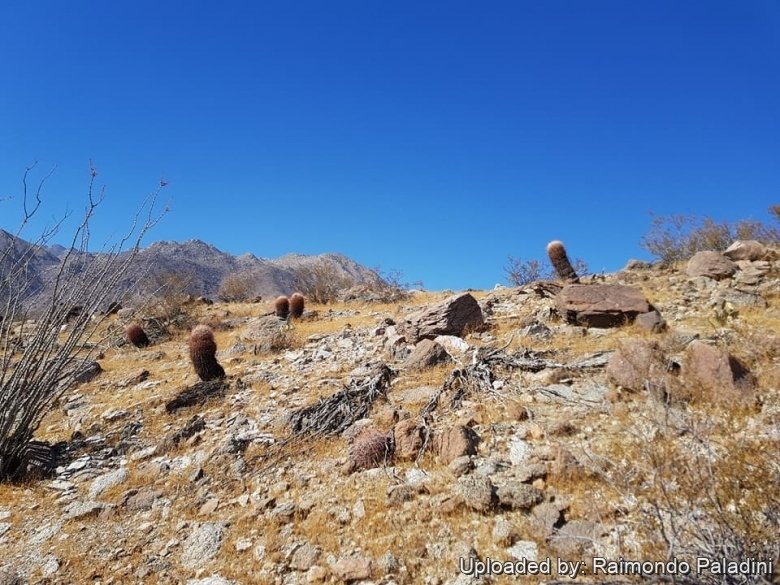
Habitat: This cactus is locally abundant in arid gravelly or rocky foothills, canyon walls, fans and wash margins, sometimes on the plains among creosote bush scrub, it also utilizes slopes and acid igneous rock lands. The species is limited in its northwards range by frost conditions. To reduce the damage by frost the plant is found on south facing slopes and it leans to the south to protect the sensitive growing tip by placing it for best exposure to the sun. The dense shading of the growing tip by spines, fruit, flowers remnants and pubescence allow this species a further northward range and higher elevations than Ferocactus wislizenii or Ferocactus covillei. Ferocactus cylindraceus is widespread and abundant, grows mostly in rocky areas, with little threat with no evidence of directional population trend. In some coastal areas tourist development is an issue.
Cultivation and Propagation
Ferocactus cylindraceus are summer-growing and pretty easy plants.
Growing rate: Thought slow to start the speed when they reach about five cm in diameter. Plant in good conditions will start to bloom when reach the diameter of only 15-18 cm.
Soil: They are suited for any rich, well drained soil such us clay, pumice, lava grit, and only a little peat or leaf-mould.
Repotting: If potted, repot them preferably in the spring, if their roots become cramped. Generally, they should be repotted every other year in order to provide fresh soil. However, this doesn’t necessarily mean they’ll need larger containers. Fill about a quarter of the pot with broken crocks, gravel, etc. to promote good drainage. After repotting, do not water for a week or more.
Watering: Water regularly during the aestival growth cycle (this plant need plenty of water, but do not overwater and let their soil dry out between waterings), and also needs to be avoided wetting the body of this plant while it is in sunlight. A wet cactus in the sun light can cause sun burning which can lead to scars or even fungal infections and death, keep rather dry in winter. No water should ever be allowed to stand around the roots.
Fertilization: Feed with a high potassium fertilizer in summer.
Exposure: Outside they need a bright exposure, full sun or half shade in summer if the location is exceedingly hot or bright, inside needs bright light, and some direct sun. It can tolerate moderate shade, and a plant that has been growing in shade should be slowly hardened off before placing it in full sun as the plant will be severely scorched if moved too suddenly from shade into sun.
Frost Tolerance: Light frost protection required for safe cultivation, but can tolerate sporadic light frost. This plants need a period of cool rest in winter to produce flowers abundantly.
Diseases and pests: Watch for infestations of mealybug, scale insects and spider mite.
Use and Trade: In the past the Seris indian used to eat the seeds. There is a minor fruit use.
Propagation: Seeds are the only way of reproducing. Seed Collecting: Permit fruit to ripen. Fruit must be significantly overripe before harvesting seed; clean and dry seeds.
Bibliography
Major references and further lectures
1)Forest & Kim Starr Ferocactus cylindraceus (Barrel cactus). Plants of Hawaii. <http://www.starrenvironmental.com\>. Downloaded on 22 August 2014.
-
David Hunt, Nigel Taylor “The New Cactus Lexicon” DH Books, 2006
-
Edward F. Anderson “The Cactus Family” Timber Press, 2001
-
Park S. Nobel “Environmental Biology of Agaves and Cacti” Cambridge University Press, 16/ott/2003
-
Lyman D. Benson “The Native Cacti of California” Stanford University Press, 01/set/1988
-
Nathaniel Lord Britton, Joseph Nelson Rose “The Cactaceae: Descriptions and Illustrations of Plants of the Cactus Family” Volume 3, 1922
-
James Cullen, Sabina G. Knees, H. Suzanne Cubey “The European Garden Flora Flowering Plants: A Manual for the Identification of Plants Cultivated in Europe, Both Out-of-Doors and Under Glass” Cambridge University Press, 11/Aug./2011
-
Burquez Montijo, A. & Felger, R.S. 2013. Ferocactus cylindraceus. The IUCN Red List of Threatened Species. Version 2014.2. <www.iucnredlist.org>. Downloaded on 24 August 2014.
From llifle page Echinocactus acanthodes
Description
Ferocactus acanthodes (syn: Ferocactus cylindraceus) is a colourful barrel cactus usually unbranched, forming a single moderately tall column.
Stem: Green, spherical becoming columnar up to 2 m tall and 30 cm in diameter.
Ribs: 2,5 cm high and tuberculate.
Central spines: A large central spine and three auxiliary centrals form a crucifix shape, The primary central is 7-15 long, angles down and is slightly to moderately hooked, sometimes to 90 degrees. The other centrals are from 5 to 7,5 cm long. The centrals are noticeably ring ridged and flattened, with a flat upper surface and rounded lower surface. Spines can be very light grey to red and yellow, but darken to black with age.
Flowers: Yellow tinged with red appear in May and June at the crown of the plant, 4 to 6 cm.
Fruit: Fleshy, covered with scales, yellow or yellowish green, 5 cm long, 2,5 cm in diameter.
Remarks: The flowers on all subspecies are yellow, occasionally with a red tint.
Origin and Habitat
The various variety of Ferocactus acanthodes (= Ferocactus cylindraceus) are spread across central and western Arizona, southeastern California and southwards into Baja California and Sonora, Mexico.
Altitude: 600 to 1250 metres above sea level.
Habitat: This cactus is locally abundant in arid gravelly or rocky foothills, canyon walls, fans and wash margins among creosote bush scrub, it also utilizes slopes and acid igneous rock lands. The species is limited in its northwards range by frost conditions. To reduce the damage by frost the plant is found on south facing slopes and it leans to the south to protect the sensitive growing tip by placing it for best exposure to the sun. The dense shading of the growing tip by spines, fruit, flowers remnants and pubescence allow this species a further northward range and higher elevations than Ferocactus wislizenii or Ferocactus covillei.
Cultivation and Propagation
It is a summer-growing and pretty easy plant thought slow to start. It makes great potted specimens, and is a great cactus for beginning collectors.
Growth rate: It is a slow growing species. Plant in good conditions will start to bloom when reach the diameter of only 15-18 cm.
Soil: It grows well in a rich, well drained soil such us clay, pumice, lava grit, and only a little peat or leaf-mould, but it isn’t picky about soil.
Repotting: If potted, repot them preferably in the spring, if their roots become cramped. Generally, they should be repotted every other year in order to provide fresh soil. However, this doesn’t necessarily mean they’ll need larger containers. Fill about a quarter of the pot with broken crocks, gravel, etc. to promote good drainage. After repotting, do not water for a week or more. Use pot with good drainage. Eventually, as the plant becomes mature grow it slowly, and adopt a new repotting period, using intervals of every 2 - 3 years. Additionally grow it under drier conditions or with stronger sunlight.
Watering: Water regularly during the summer so long as the plant pot is allowed to drain and not sit in a tray of water (It rots easily, especially if over wet), and also needs to be avoided wetting the body of this plant while it is in sunlight. A wet cactus in the sun light can cause sun burning which can lead to scars or even fungal infections and death.. Let dry between watering. During hot weather you may need to water the plants more frequently so long as the plant is actively growing. From late September watering should be reduced to force the plant to go in to a state of semi dormancy, by October you should be back in to the winter watering regime. If the soil is allowed to be dry for too long root loss could follow but equally the same result would occur if the plants are both wet and cold. From March onward the plant will begin to grow and watering should be increased gradually until late May when the plant should be in full growth
Fertilization: Feed with a high potassium fertilizer in summer. Feeding may not be necessary at all if the compost is fresh then, feed in summer only if the plant hasn’t been repotted recently. Do not feed the plants from September onward as this can cause lush growth which can be fatal during the darker cold months.
Hardiness: When dormant, the plant is very cold tolerant (down to nearly -5° C or less), but when left out it is more sensitive to frost. However warmth throughout the year will increase the grower’s success (at minimum temperatures above 5 degrees centigrade during rest season). During the summer it is best to keep the plants outside where the temperature can rise to over 30 C with no harm to the plant. This plants need a period of cool rest in winter to produce flowers abundantly.
Exposure: They do need a lot of light to develop their typical spination, but different clones vary in their tolerance of full sunshine. However some protection in light shade is recommended during the hottest hours in summer. It can tolerate moderate shade, and a plant that has been growing in shade should be slowly hardened off before placing it in full sun as the plant will be severely scorched if moved too suddenly from shade into sun. If kept too dark they may become overly lush and greener and could be prone to rotting due to over watering.
Uses: It is an excellent plant for container growing. It always looks good and stays small. It looks fine in a cold greenhouse and frame.
Diseases and pests: Watch for infestations of mealybugs, scale insects and spider mite. Rot is only a minor problem with cacti if the plants are watered and “aired” correctly. If they are not, fungicides won’t help all that much.
Propagation: Seeds are the only way of reproducing, remembering that seedlings dislike strong light and dry conditions and need to be repotted frequently. Seed Collecting: Permit fruit to ripen. Fruit must be significantly overripe before harvesting seed; clean and dry seeds.
Notes
N. P. Taylor (in Cact. Succ. J. Gr. Brit. 41: 91-92. 1979) rejected the name Ferocactus acanthodes (”… I propose that Ferocactus acanthodes (Lem.) B. & R. be placed on the list of nomina rejicienda, as provided for under Art. 69”). [Since Taylor’s proposal was not published in the journal Taxon, the then Committee for Spermatophyta of the International Association for Plant Taxonomy has not addressed this problem.]
Bibliography
Major references and further lectures
-
James Cullen, Sabina G. Knees, H. Suzanne Cubey “The European Garden Flora Flowering Plants: A Manual for the Identification of Plants Cultivated in Europe, Both Out-of-Doors and Under Glass” Cambridge University Press, 11/Aug./2011
-
David Hunt, Nigel Taylor “The New Cactus Lexicon” DH Books, 2006 ISBN 0953813444, 9780953813445.
-
Edward F. Anderson “The Cactus Family” Timber Press, 2001
-
Park S. Nobel “Environmental Biology of Agaves and Cacti” Cambridge University Press, 16/ott/2003
-
Lyman D. Benson “The Native Cacti of California” Stanford University Press, 01/set/1988
-
Nathaniel Lord Britton, Joseph Nelson Rose “The Cactaceae: Descriptions and Illustrations of Plants of the Cactus Family” Volume 3, 1922
Source: Echinocactus acanthodes, LLIFLE - Encyclopedia of living forms, CC-BY-SA, retrieved 2026-10-25.
From llifle page Echinocactus acanthodes var. rostii
Description
Ferocactus rostii (a.k.a. Golden Spined Barrel Cactus) along with Ferocactus lecontei, and Ferocactus tortulispinus is one of the old controversial geographical forms of the variable Ferocactus acanthodes = (FeroSN’>10113’ alt=‘10102’>Cactus cylindraceus#SN#13859’>Fero[[Cactus cylindraceusSN’ style=‘border:none;’>). Ferocactus rostii is closely set with interlocking spine clusters, which almost conceal the body of the plant and whitish to golden in maturity, it is similar to Ferocactus acanthodes, but the stem is thinner, taller and the spines are more curved. However it look very similar to other varieties of Ferocactus cylindraceus which are linked one to each others by populations of plants with intermediate characteristics. Nowadays all them are thought to belong to a unique polymorphic species. Such variations has led to establishment of several unnecessary names for this species.
Habit: It is a is a colourful barrel cactus usually unbranded, forming a slender tall column, although occasionally it forms a cluster of of 8 to 10 heads
Stem: Green, spherical becoming columnar up to 3 m tall and 30 cm in diameter.
Ribs: 16 to 22, rather low (hardly 1 cm high), obtuse, somewhat tubercled.
Areoles: Large, white-felted, closely set.
Spines: About 12, sometimes fewer, 3 or 4 central forming a crucifix shape, those on the lower part of the plant more or less spreading, those at or near the top erect, somewhat flexible, flattened, annulate, pungent, either straight or curved at apex, perhaps never hooked, usually yellow but sometimes reddish on young plants but also turning yellow in age.
Radial bristles: Sometimes wanting but when present 2 to 8, white or yellowish.
Flowers: Dark yellow at the crown of the plant, 4 to 6 cm in diameter.
Blooming season: Spring ( in habitat May and June).
Fruit: Fleshy, covered with scales, red, 5 cm long, 2,5 cm in diameter.
Remarks: The flowers on all subspecies are yellow, occasionally with a red tint.
Origin and Habitat
Texas and California, USA.
Cultivation and Propagation
Ferocactus acanthodes var. rostii are summer-growing and pretty easy plants.
Growing rate: Thought slow to start they speed when they reach about five cm in diameter. Plants in good conditions will start to bloom when reach the diameter of only 15-18 cm.
Soil: They are suited for any rich, well drained soil such us clay, pumice, lava grit, and only a little peat or leaf-mould.
Repotting: If potted, repot them preferably in the spring, if their roots become cramped. Generally, they should be repotted every other year in order to provide fresh soil. However, this doesn’t necessarily mean they’ll need larger containers. Fill about a quarter of the pot with broken crocks, gravel, etc. to promote good drainage. After repotting, do not water for a week or more.
Watering: Water regularly during the aestival growth cycle (this plant need plenty of water, but do not overwater and let their soil dry out between waterings), and also needs to be avoided wetting the body of this plant while it is in sunlight. A wet cactus in the sun light can cause sun burning which can lead to scars or even fungal infections and death, keep rather dry in winter. No water should ever be allowed to stand around the roots.
Fertilization: Feed with a high potassium fertilizer in summer.
Exposure: Outside they need a bright exposure, full sun or half shade in summer if the location is exceedingly hot or bright, inside needs bright light, and some direct sun. It can tolerate moderate shade, and a plant that has been growing in shade should be slowly hardened off before placing it in full sun as the plant will be severely scorched if moved too suddenly from shade into sun.
Frost Tolerance: Light frost protection required for safe cultivation, but can tolerate sporadic light frost. This plants need a period of cool rest in winter to produce flowers abundantly.
Diseases and pests: Watch for infestations of mealybug, scale insects and spider mite.
Propagation: Seeds are the only way of reproducing. Seed Collecting: Permit fruit to ripen. Fruit must be significantly overripe before harvesting seed; clean and dry seeds.
Bibliography
Major references and further lectures
-
James Cullen, Sabina G. Knees, H. Suzanne Cubey “The European Garden Flora Flowering Plants: A Manual for the Identification of Plants Cultivated in Europe, Both Out-of-Doors and Under Glass” Cambridge University Press, 11/Aug./2011
-
David Hunt, Nigel Taylor “The New Cactus Lexicon” DH Books, 2006 ISBN 0953813444, 9780953813445.
-
Edward F. Anderson “The Cactus Family” Timber Press, 2001
-
Nathaniel Lord Britton, Joseph Nelson Rose “Cactaceae: Descriptions and Illustrations of Plants of the Cactus Family” Courier Dover Publications, 1963
Source: Echinocactus acanthodes var. rostii, LLIFLE - Encyclopedia of living forms, CC-BY-SA, retrieved 2026-10-25.
From llifle page Echinocactus hertrichii
Description
The plant is usually unbranched forming a single column up to 2m tall and 30cm in diameter. The ribs are 2.5cm high and tuberculate.
Spines: A large central spine and three auxiliary centrals form a crucifix shape, The primary central is 5 to 7cm, angles down and is slightly to moderately hooked, sometimes to 90 degrees. The other centrals are from 5 to 7.5 cm long. The centrals are noticeably annularly ridged and flattened with a flat upper surface and rounded lower surface. Spines can be very light grey to red and yellow but darken to black with age.
Flowers: Yellow flowers tinged with red appear in May and June at the crown of the plant, 4 to 6cm. The fruit with scales is fleshy, yellow or yellowish green 5cm long, 2.5cm in diameter
Origin and Habitat
The various variety of F. acanthodes are spread across central and western Arizona, southeastern California and southwards into Baja California and Sonora, Mexico
Cultivation and Propagation
Ferocactus acanthodes are summer-growing and pretty easy plants.
Growing rate: Thought slow to start the speed when they reach about five cm in diameter. Plant in good conditions will start to bloom when reach the diameter of only 15-18 cm.
Soil: They are suited for any rich, well drained soil such us clay, pumice, lava grit, and only a little peat or leaf-mould.
Repotting: If potted, repot them preferably in the spring, if their roots become cramped. Generally, they should be repotted every other year in order to provide fresh soil. However, this doesn’t necessarily mean they’ll need larger containers. Fill about a quarter of the pot with broken crocks, gravel, etc. to promote good drainage. After repotting, do not water for a week or more.
Watering: Water regularly during the aestival growth cycle (this plant need plenty of water, but do not overwater and let their soil dry out between waterings), and also needs to be avoided wetting the body of this plant while it is in sunlight. A wet cactus in the sun light can cause sun burning which can lead to scars or even fungal infections and death, keep rather dry in winter. No water should ever be allowed to stand around the roots.
Fertilization: Feed with a high potassium fertilizer in summer.
Exposure: Outside they need a bright exposure, full sun or half shade in summer if the location is exceedingly hot or bright, inside needs bright light, and some direct sun. It can tolerate moderate shade, and a plant that has been growing in shade should be slowly hardened off before placing it in full sun as the plant will be severely scorched if moved too suddenly from shade into sun.
Frost Tolerance: Light frost protection required for safe cultivation, but can tolerate sporadic light frost. This plants need a period of cool rest in winter to produce flowers abundantly.
Diseases and pests: Watch for infestations of mealybug, scale insects and spider mite.
Propagation: Seeds are the only way of reproducing. Seed Collecting: Permit fruit to ripen. Fruit must be significantly overripe before harvesting seed; clean and dry seeds.
Source: Echinocactus hertrichii, LLIFLE - Encyclopedia of living forms, CC-BY-SA, retrieved 2026-10-25.
From llifle page Ferocactus acanthodes f. variegatus
Description
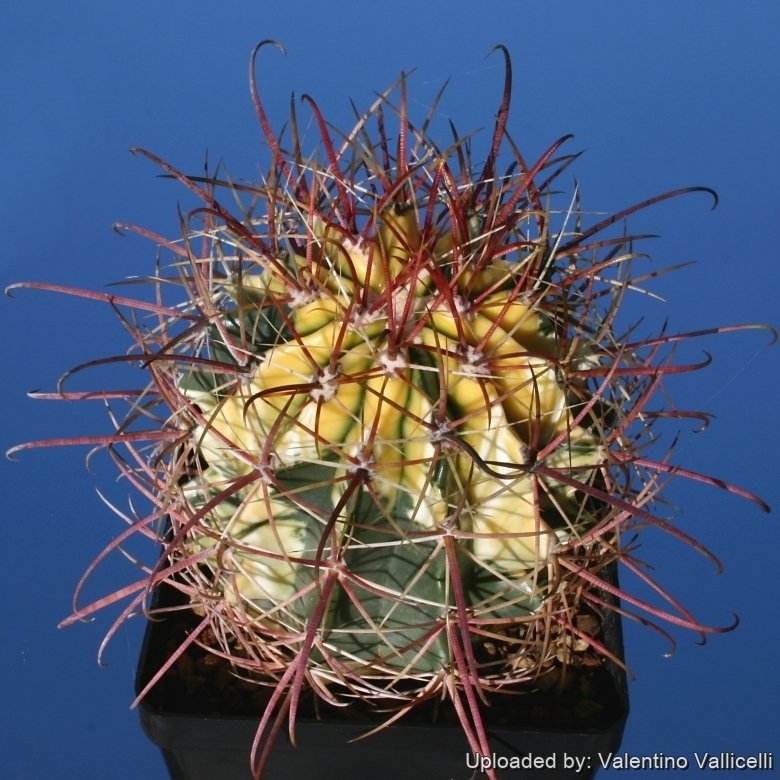
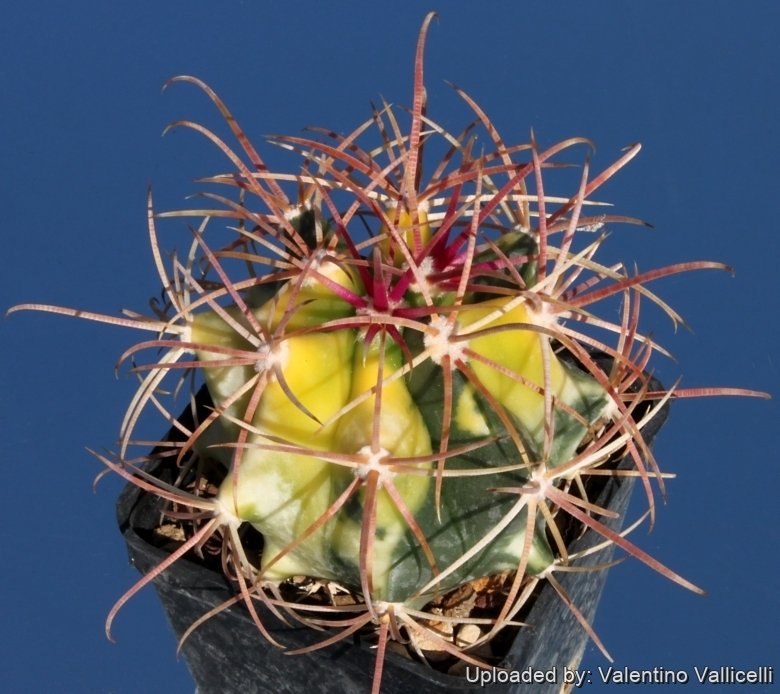
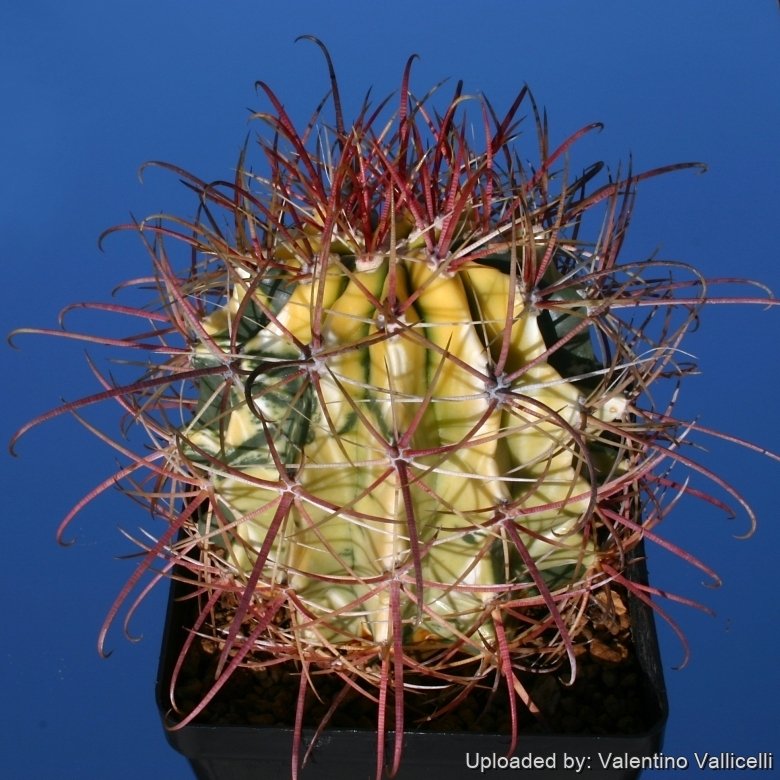
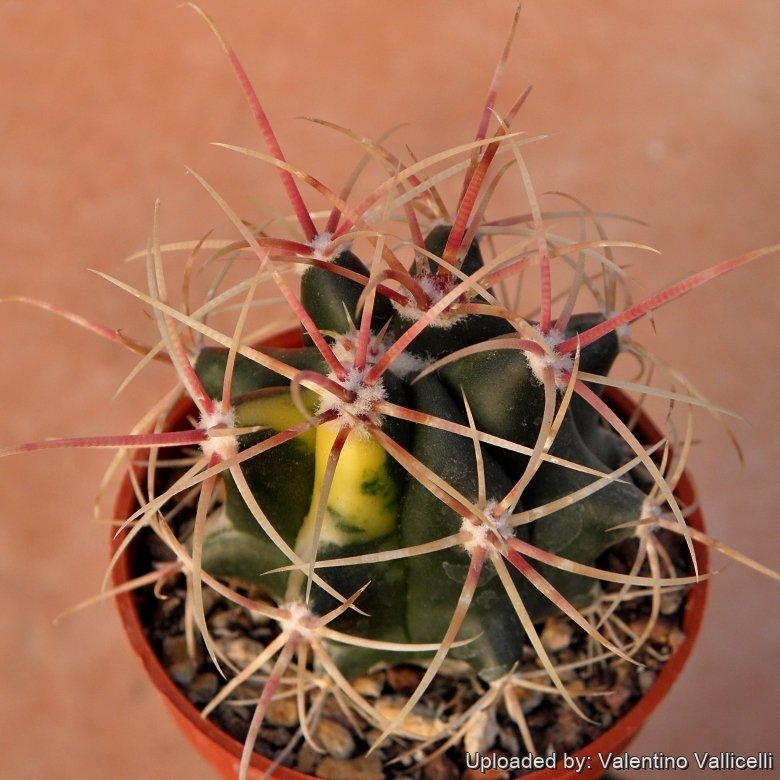
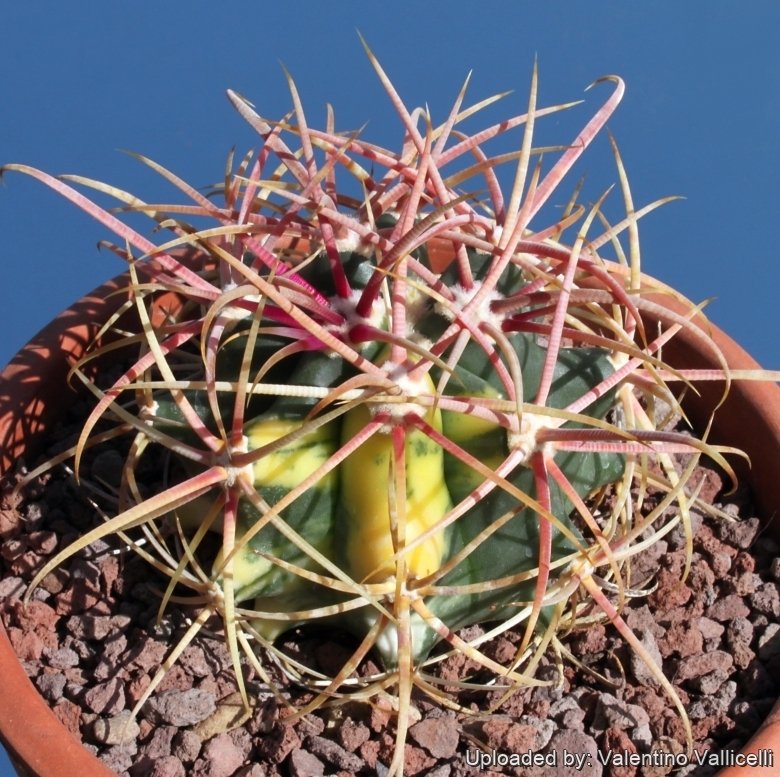
The standard Ferocactus acanthodes (Ferocactus cylindraceus) is a barrel cactus usually unbranched with bright red spines. The variegated form (Ferocactus acanthodes f. variegata) has sectors, patches, shades or stripes with yellow colours, even distinct shades of green. Plants with variegated stems are often attractive and highly prized. A very few variegated plants sprout unpredictably time by time among normal green seedling and are very rare. Variegated plants are also found in habitat even though with low frequency, but these plants are particularly sensitive and rarely survive in the harsh environment of their native land.
Stem: Green and yellow, spherical becoming columnar with tim column up to 2 m tall and 30 cm in diameter.
Ribs: 2,5 cm high and tuberculate.
Central spines: A large central spine and three auxiliary centrals form a crucifix shape, The primary central is 7-15 long, angles down and is slightly to moderately hooked, sometimes to 90 degrees. The other centrals are from 5 to 7,5 cm long. The centrals are noticeably ring ridged and flattened, with a flat upper surface and rounded lower surface. Spines can be very light grey to red and yellow, but darken to black with age.
Flowers: Yellow tinged with red appear in May and June at the crown of the plant, 4 to 6cm. The fruit with scales is fleshy, yellow or yellowish green, 5 cm long, 2,5 cm in diameter. The flowers on all subspecies are yellow, occasionally with a red tint.
Remarks: Variegated Ferocacti can be found (although not commonly) in cultivation and some of these variegated plants have a place in most collections. All variegates are mutants. Something has gone wrong with the cellular structure of the growth tip (apical meristem) of the plant. As a result of this mutation, chlorophyll is missing from some or all layers of the plant epidermis. The odd variegate appears in many seedling batches in a small percentage and are generally separated from normal plants. Variegated plants grow slower and are generally smaller than non-variegates of the same species. Coloured areas are also generally weaker, and more susceptible to fungus, sunburn and other defects. A large well grown variegate Ferocactus is truly an achievement. These are harder to grow well than they appear.
Origin and Habitat
Garden origin (Nursery produced cultivar)
Cultivation and Propagation
Variegated cacti are regarded as choice and difficult in cultivation, but despite that many of them are relatively easy to grow. But be aware that they cannot tolerate prolonged exposure to direct sun light (especially during the hottest summer days), so grow them in half-shade or under filtered sun. They are sometime seen as grafted plants, but some of this colourful plants (those with some chlorophyll) are able to grow on their own roots and are priced by collectors.
Soil: Use mineral well-permeable substratum with little organic matter (peat, humus).
Watering: Water sparingly from March till October, and keep perfectly dry in winter, at temperatures from 5 to 15 degrees centigrade. (In general these plants are more tender and cannot endure freezing temperatures). In the rest period no high atmospheric humidity!!
Propagation: Seeds are the only way of reproducing. Seeds from variegated parents often give raise to some variegated seedlings too.
Notes
Ferocactus acanthodes is highly variable and has numerous synonyms.
Source: Ferocactus acanthodes f. variegatus, LLIFLE - Encyclopedia of living forms, CC-BY-SA, retrieved 2026-10-25.
From llifle page Ferocactus acanthodes f. albispinus
Description
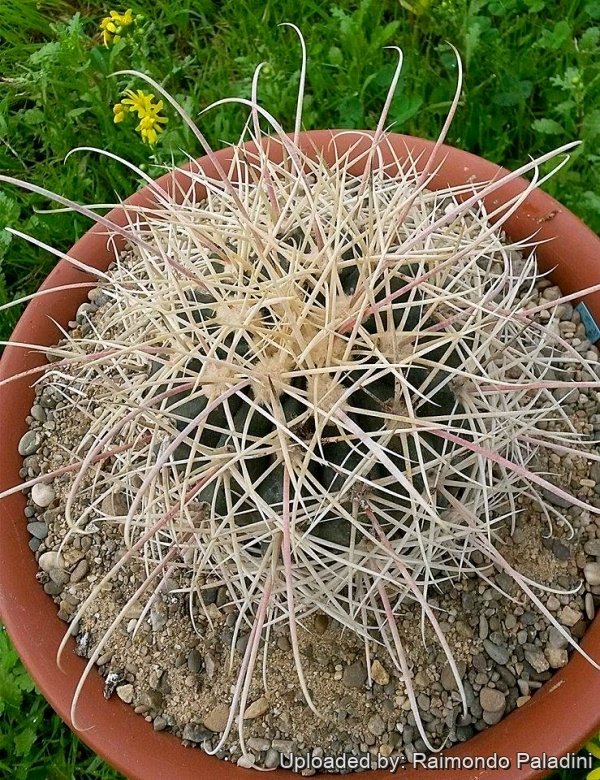
This is the rare white spined form of Ferocactus acanthodes. The plant is usually unbranched, forming a single column up to 2 (3) m tall and 30cm in diameter. The ribs are 2.5cm high and tuberculate.
Spines: A large central spine and three auxiliary centrals form a crucifix shape, The primary central is 7-15, angles down and is slightly to moderately hooked, sometimes to 90 degrees. The other centrals are from 5 to 7.5 cm long. The centrals are noticeably ring ridged and flattened, with a flat upper surface and rounded lower surface. Spines are pure white to very light grey (often shaded with pink, but only in the new growth).
Flowers: Yellow flowers tinged with red appear in May and June at the crown of the plant, 4 to 6cm. The fruit with scales is fleshy, yellow or yellowish green 5cm long, 2.5cm in diameter.
The flowers on all subspecies are yellow.
Origin and Habitat
Garden origin.
Source: Ferocactus acanthodes f. albispinus, LLIFLE - Encyclopedia of living forms, CC-BY-SA, retrieved 2026-10-25.
Cultivars and forms (7)
Subspecies (3)
Gallery