Publication: Cactaceae (Britton & Rose) 3: 126, fig. 132. 1922 [12 Oct 1922]
Description
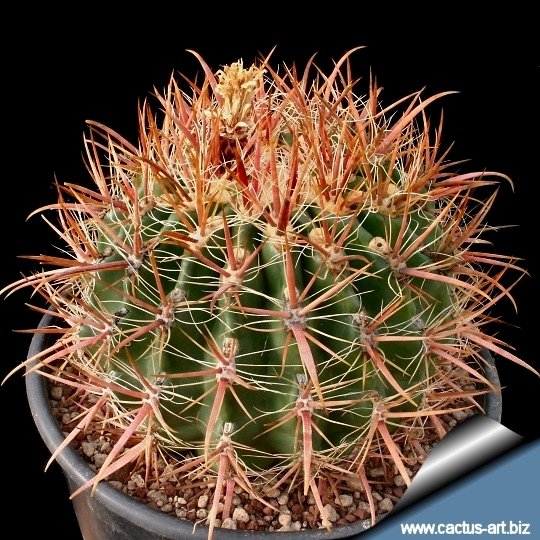
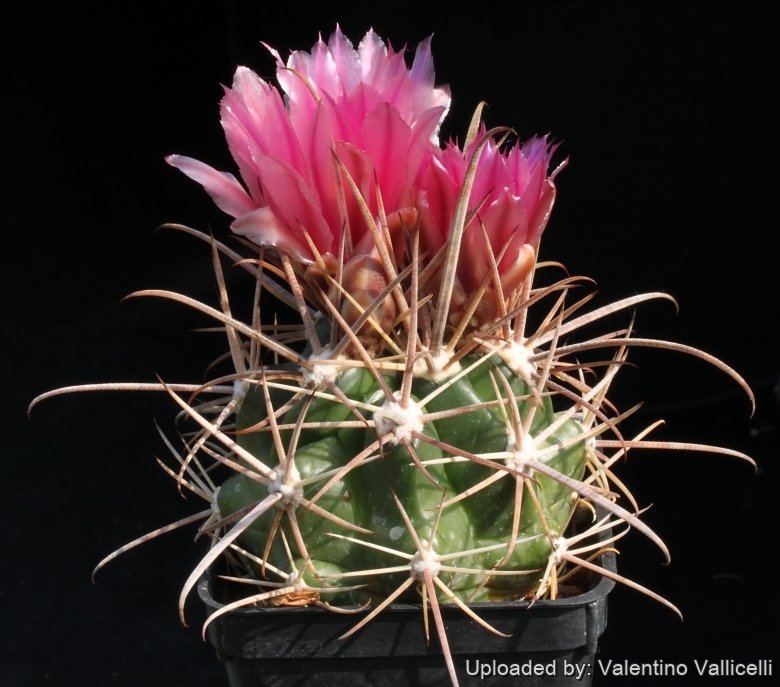
Ferocactus fordii is a single stemmed small barrel cactus although it does offset occasionally. It is similar but a bit smaller than Ferocactus viridescens. Two subspecies are recognized, the nominate form and subsp. borealis N.P.Taylor.
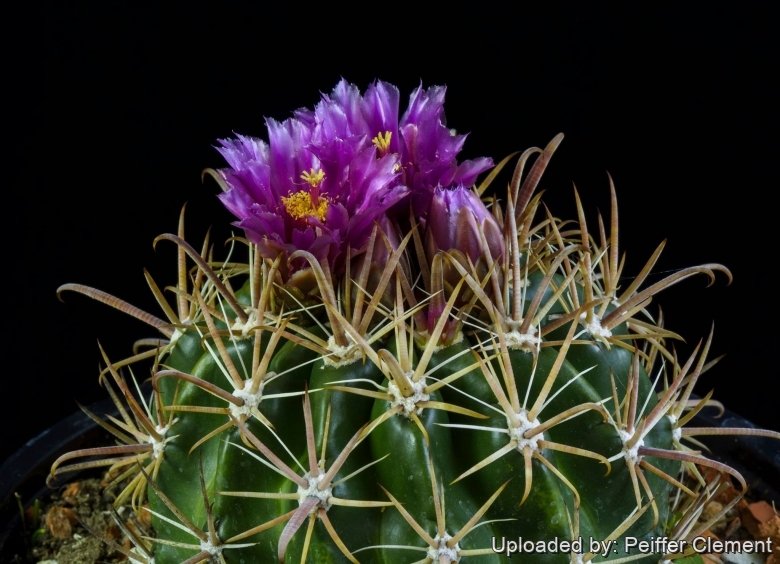
Stem: Flattened globular slowly becoming shortly elongated, 40 cm tall, 30 cm in diameter (but usually less than 20 cm in diameter and slightly more tall), depressed in the centre. Epidermis grey-green.
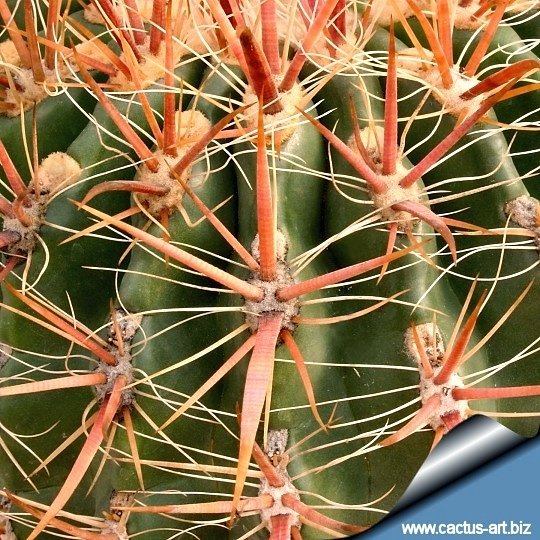
Ribs: ± 21 ribs.
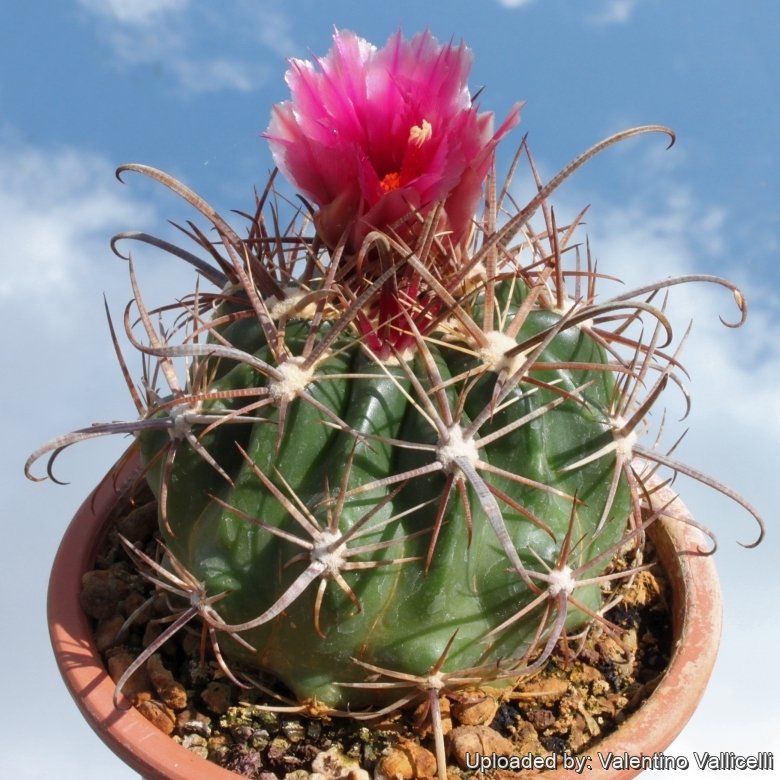
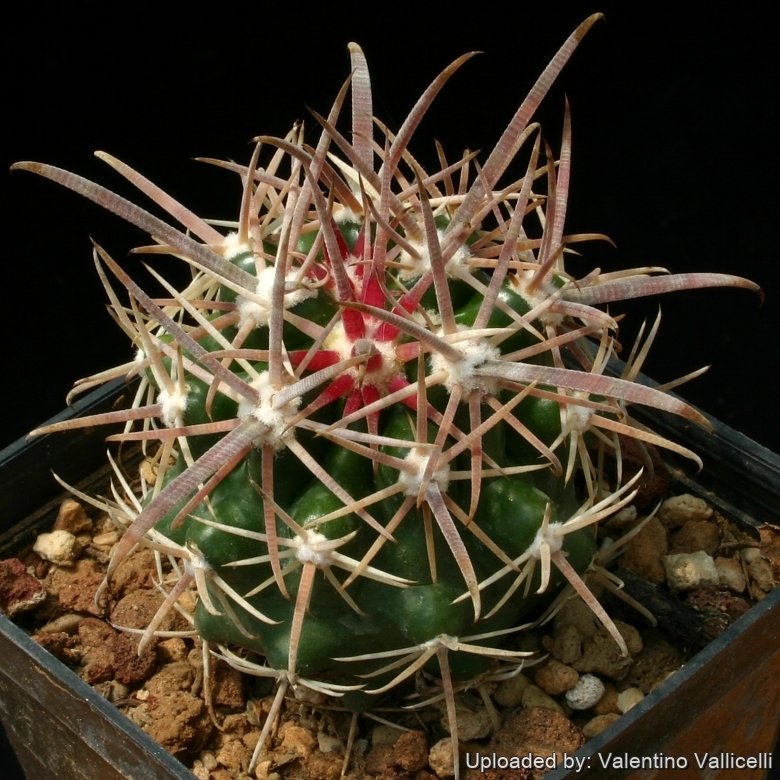
Central spines: 4, 2-4 cm long, of which the lowermost longer, ringed, wide, flattened and bent downward, grey-red to brownish.
Radial spines: Approx 15 whitish.
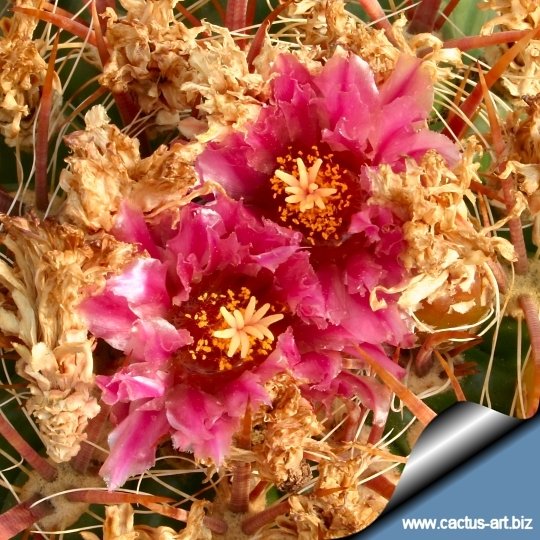
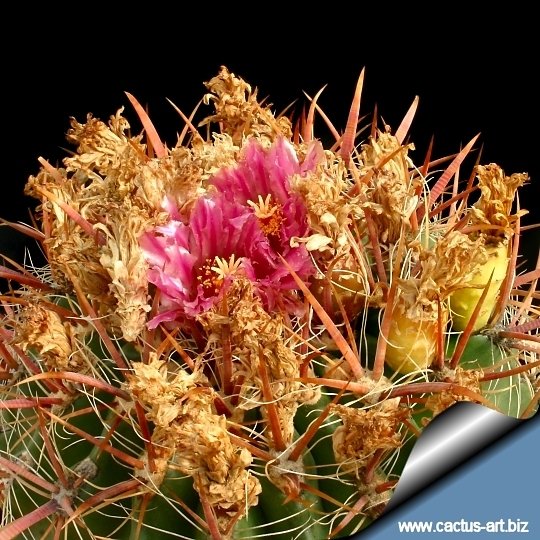
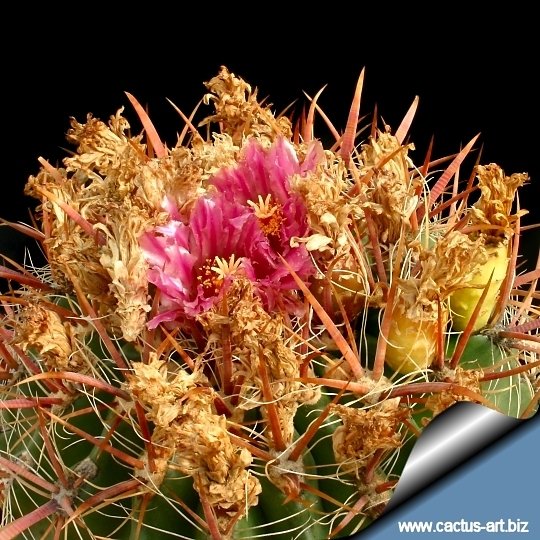
Flowers: Diurnal, purple to pale pink (or orange) up to 4 cm long and whide. Perianth segments linear-lanceolate.
Blooming season: Summer.
Origin and Habitat
Ferocactus fordii has a relatively restricted range in the Pacific coast of Baja California and Baja California Sur, Mexico, Northern America. (extent of occurrence of approximately 10,000 km2) There are only two known disjunct subpopulations.
Altitude range: It occurs at elevations from 0 to 1,200 metres above sea level.
Habitat and Ecology: The species occurs in the Sonoran desert scrubin flat sandy areas, and in coastal sand dunes and flat grassy areas. It is heavily collected illegally and is affected by several threats, such as urban development, industrial activities, and fish camps which cause a continuing decline in habitat quality and the extent of the species range.
Cultivation and Propagation
Slow growing to start but does well under cultivation. Suited for any rich, well drained soil in full sun throughout the year. Water during the aestival growth cycle (this plant need plenty of water) But needs to be avoided wetting the bodies of these plants while they are in sunlight. A wet cactus in the sun light can cause sun burning which can lead to scars or even fungal infections and death. In winter keep completely dry at 10°C, but can tolerate sporadic light frost. Plant in good conditions will start to bloom when reach the diameter of only 7-8 cm.
Propagation: Seeds are the only way of reproducing.
Notes
The plants in circulation and labelled Ferocactus fordii are now named var. borealis, which means northerly. To see the proper Ferocactus fordii is quite a sight since it has much longer spines. It is not (or very rare) in cultivation and it is tough to grow when young. Ferocactus fordii v. botralis occurs one third of the way down the Baja peninsula, near the coast and near the road. It is fully grown at 20 cm in diameter. The real Ferocactus fordii proper has much longer central spines.
Some beautiful hybrids have been created between the monotypic genus Leuchtenbergia and some member of the Ferocactus genus. This hybrid are known with the name Ferobergia. One the best and free flowering Ferobergia is the one involving as mother plant Ferocactus fordii
Bibliography
Major references and further lectures
-
David Hunt, Nigel Taylor “The New Cactus Lexicon” DH Books, 2006
-
Edward F. Anderson “The Cactus Family” Timber Press, 2001
-
León de la Luz, J.L., Hernández, H.M. & Gómez-Hinostrosa, C. 2013. Ferocactus fordii. The IUCN Red List of Threatened Species. Version 2014.3. <www.iucnredlist.org>. Downloaded on 28 April 2015.
-
Stuart Max Walters “The European Garden Flora: Dicotyledons (Part I)” Cambridge University Press, 1989
Cultivars and forms (2)
Subspecies (1)
Varieties (1)
Gallery