Publication: Cactaceae (Britton & Rose) 3: 143. 1922 [12 Oct 1922]
Description
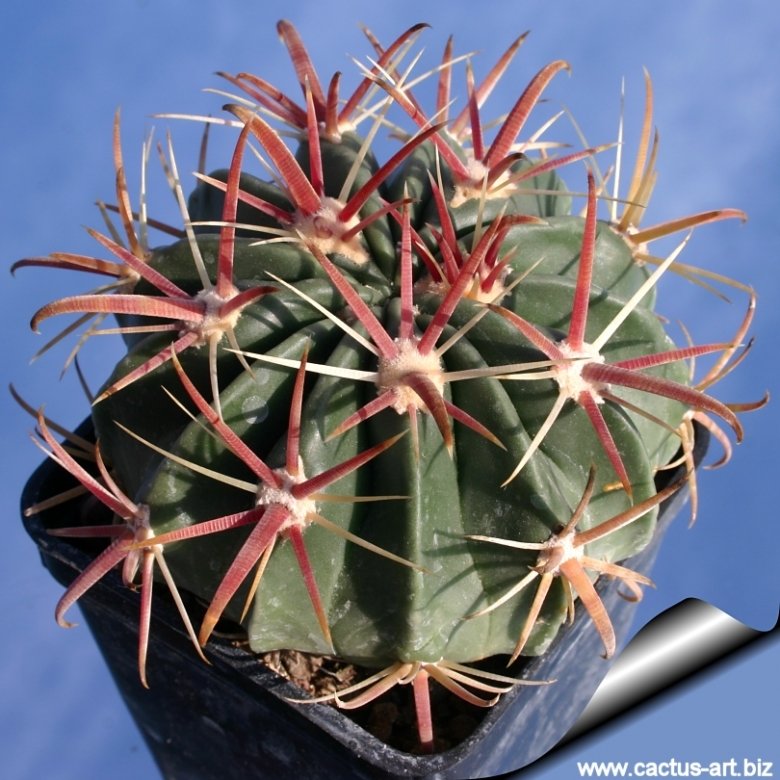
Ferocactus latispinus is a modest-sized barrel cactus and probably the best-known of the ferocacti, and if you want only one from this group, this is the one to choose. Three subspecies are recognized, the nominate form and subsp. greenwoodii (Glass) N.P.Taylor and subsp. spiralis (Karw. ex Pfeiff.) N.P.Taylor.
Habit: It is a perennial stem succulent, which normally remains a solitary plant, without dividing or producing offsets.
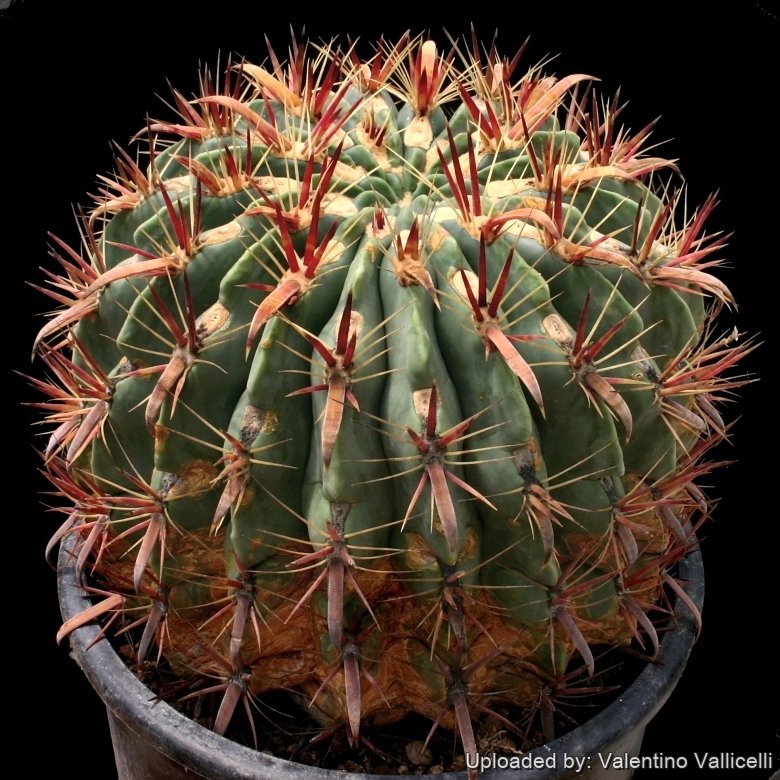
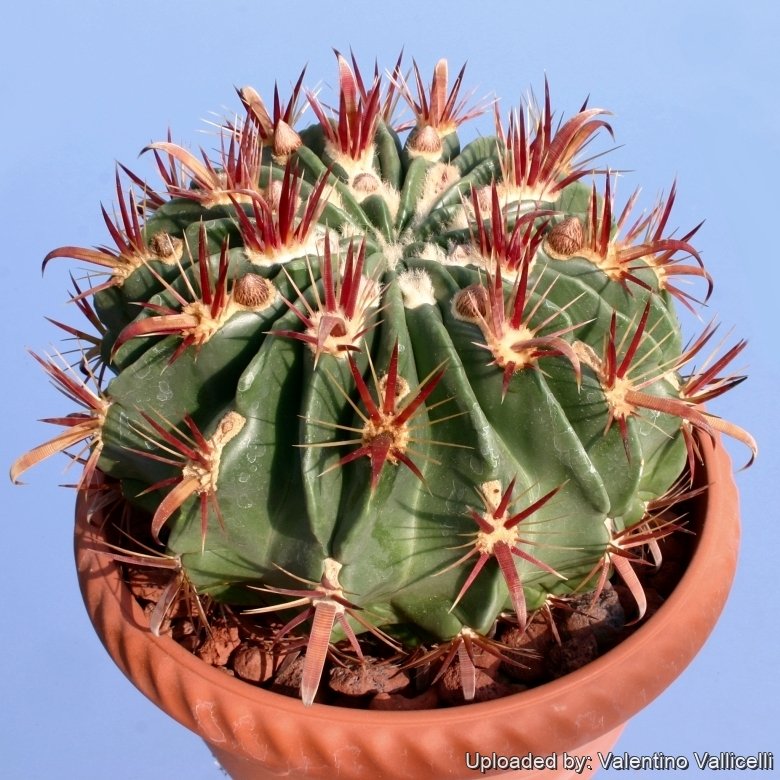
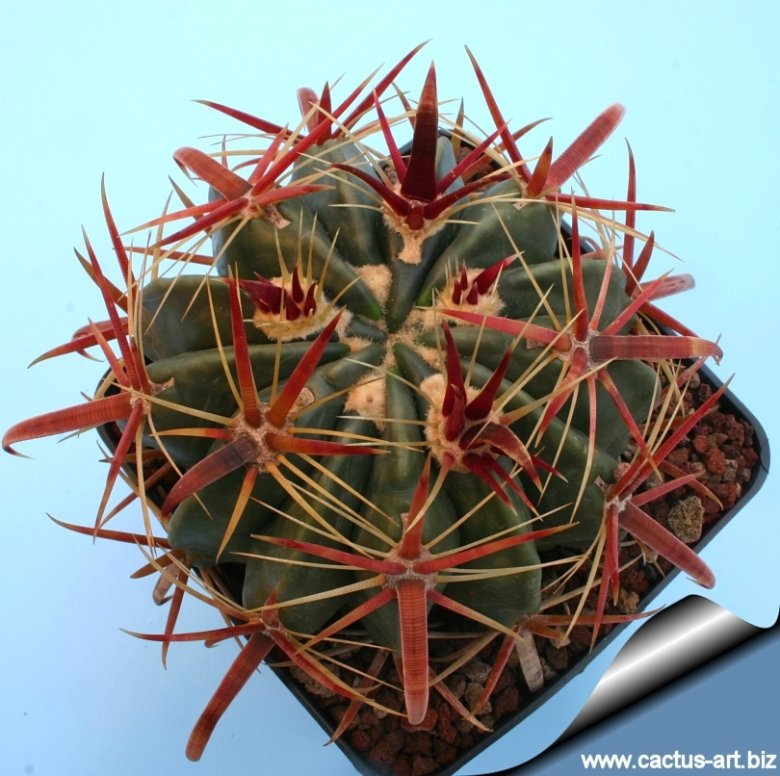
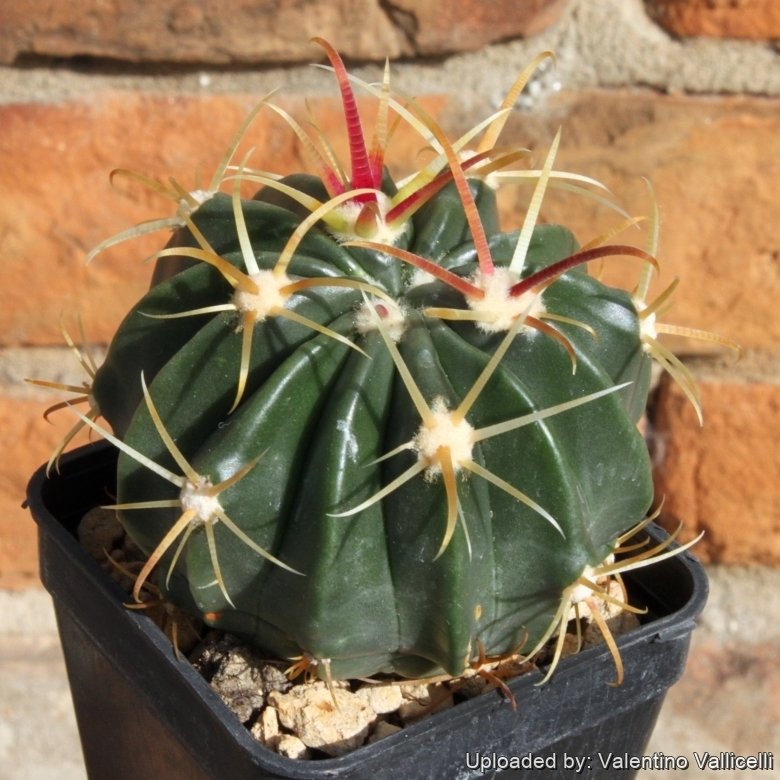
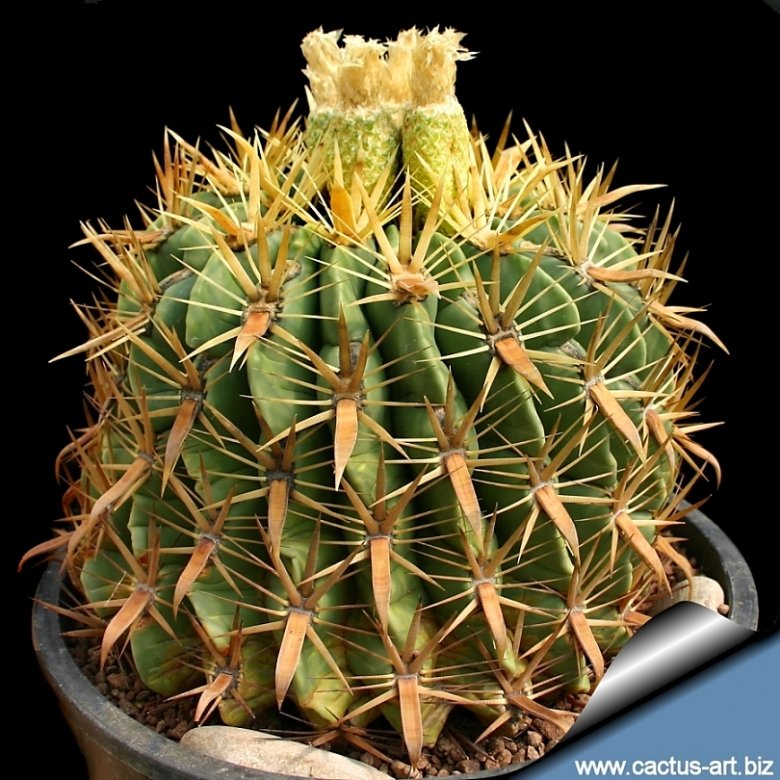
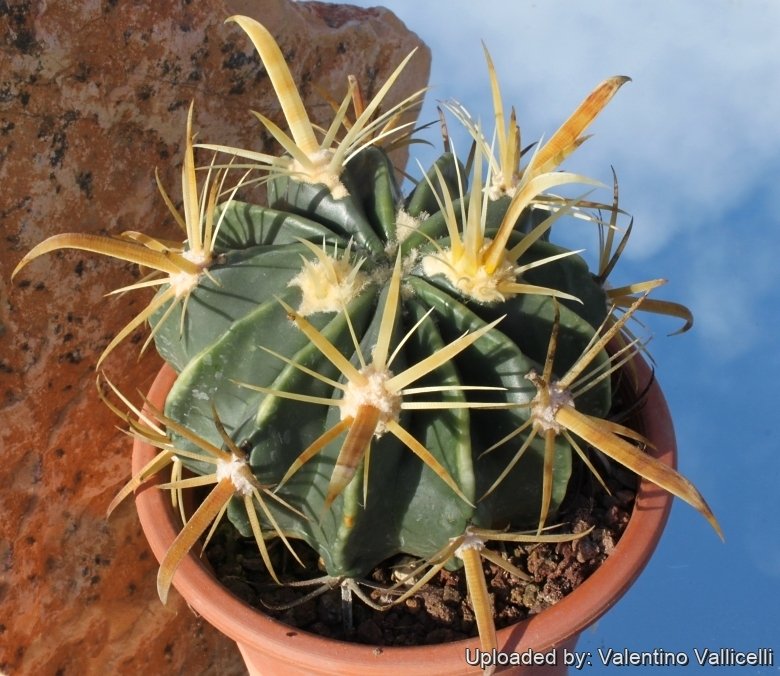
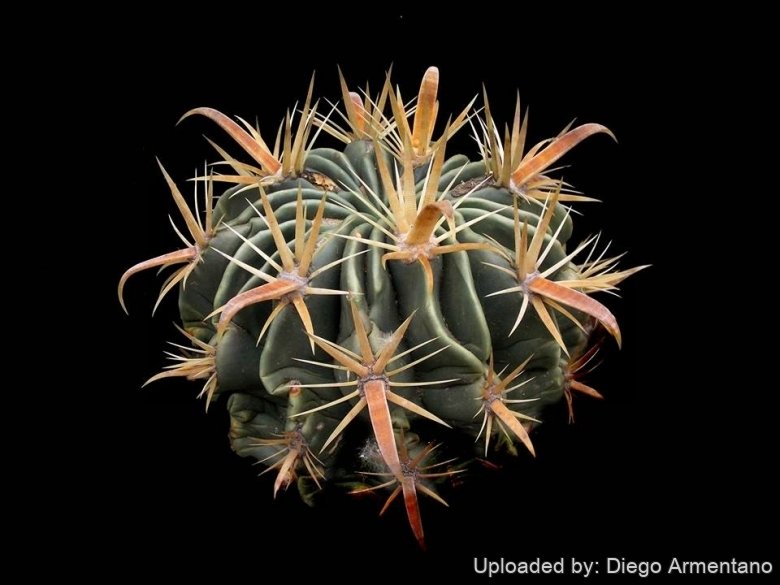
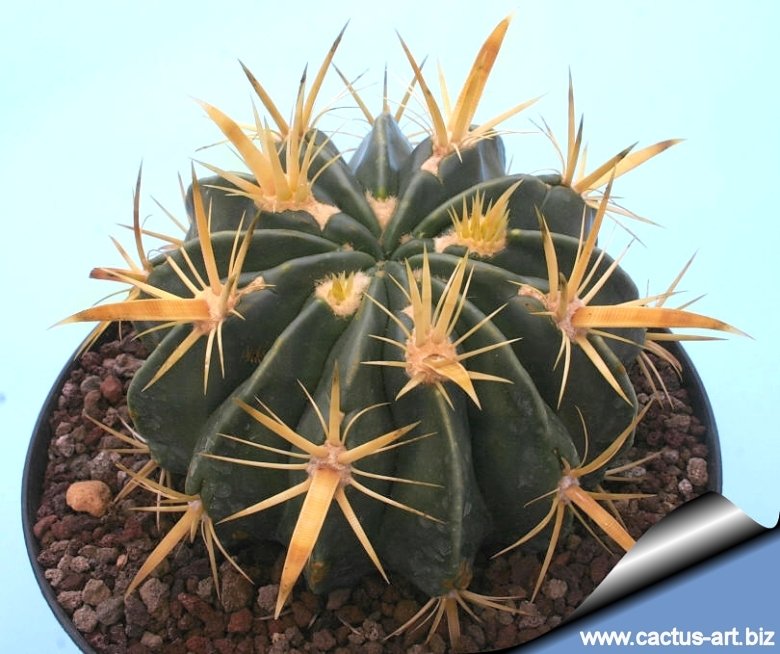
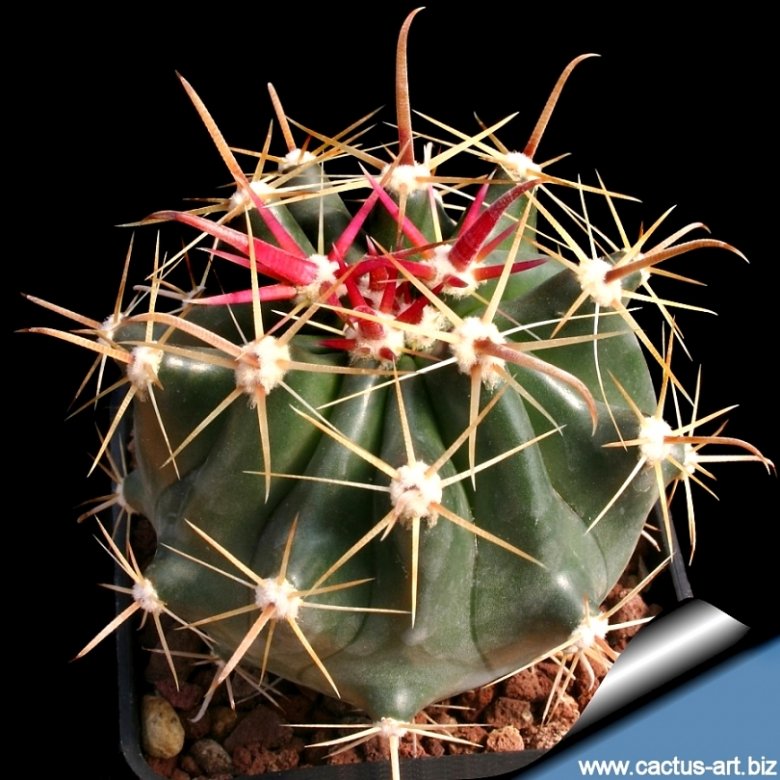
Stem: Light green to blue-green, hemispherical or flat-topped, 25 to 45 cm in diameter, 10-35(-40) cm tall, most often wider than tall.
Ribs: 13 to 23 ribs (but usually 21), sharp and prominent.
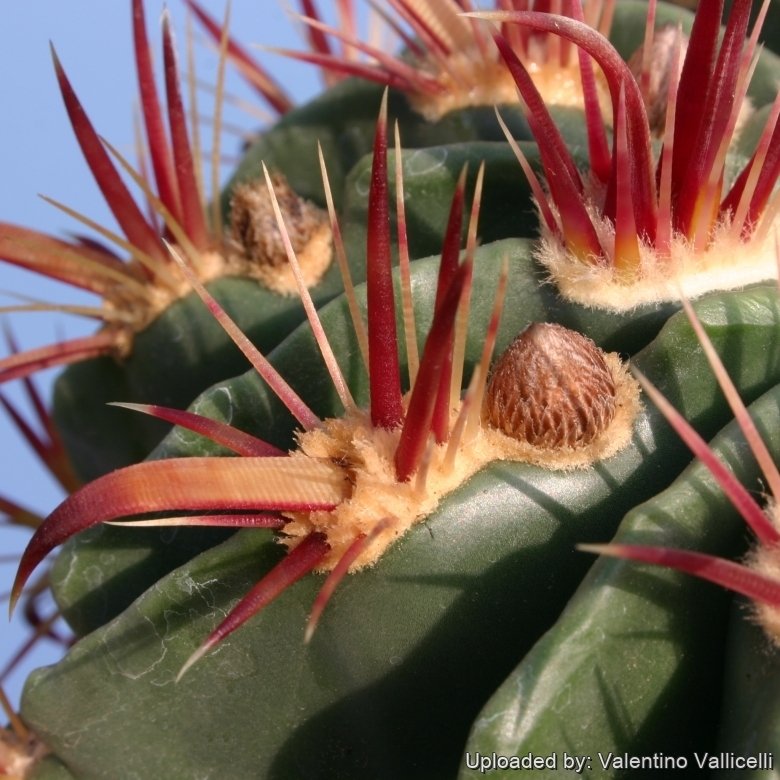
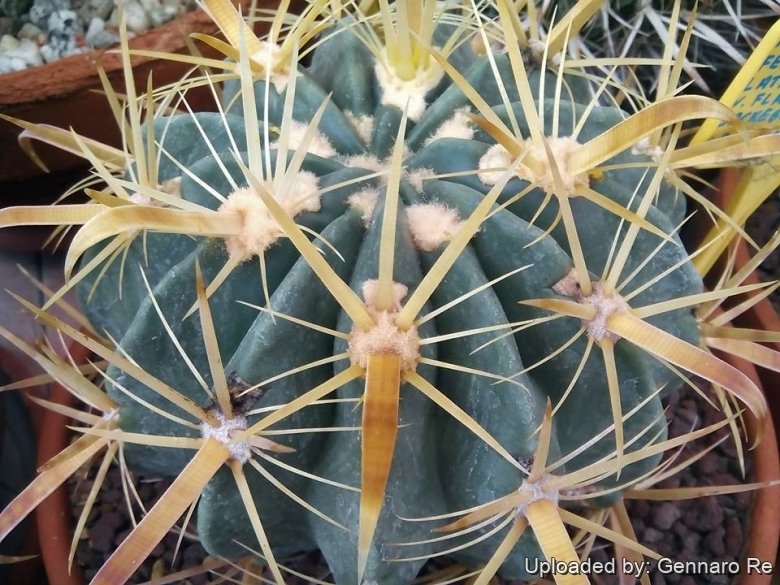
Areoles: Large on bumps along the ribs with grey to blackish felt.
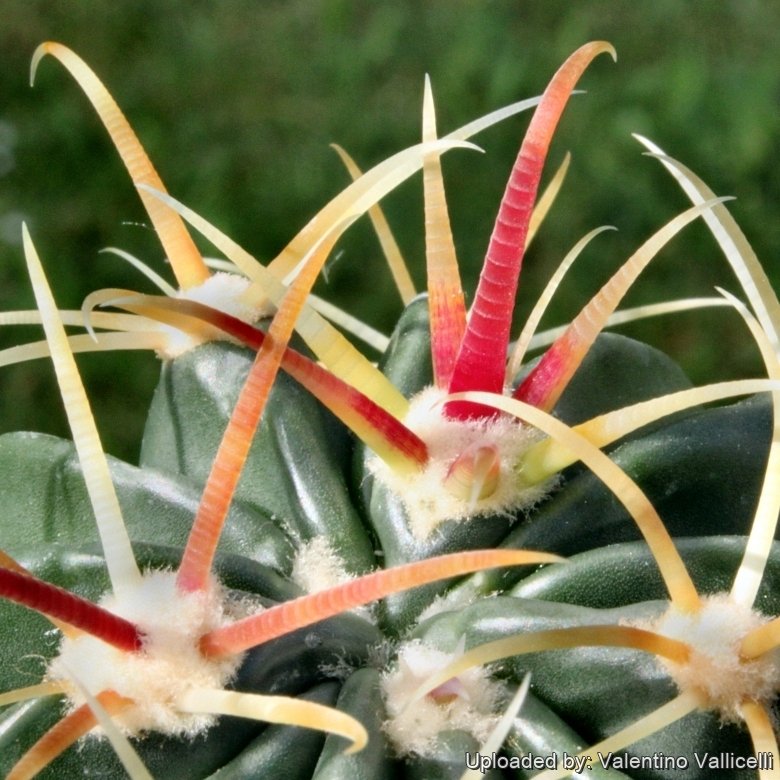
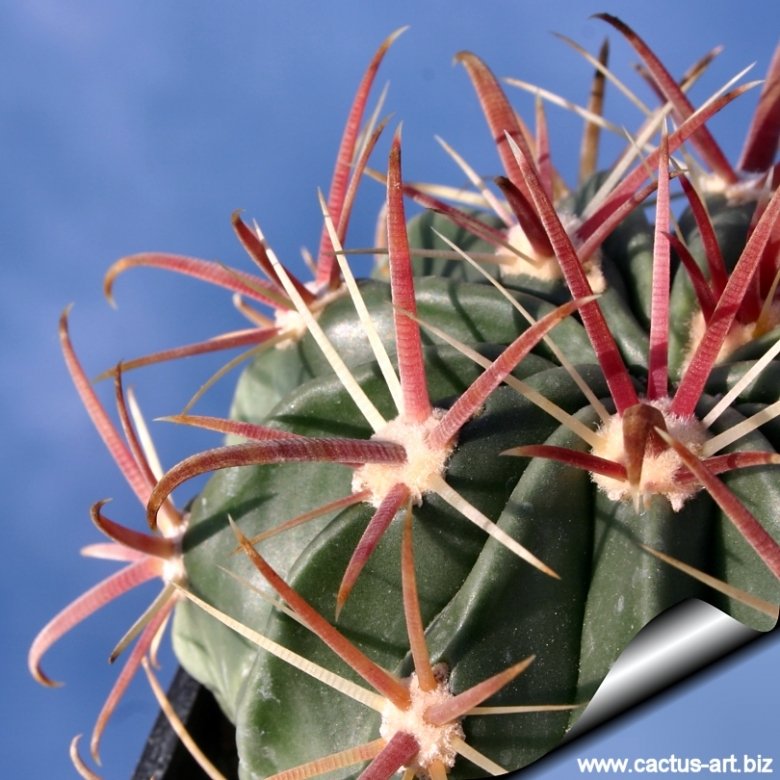
Radial spines: (6-)9-12(-15) up to 2,5 cm long, spreading out, smaller, annulate, finely needle-like, straight that have almost no width at all, translucent white, yellow, pink or reddish.
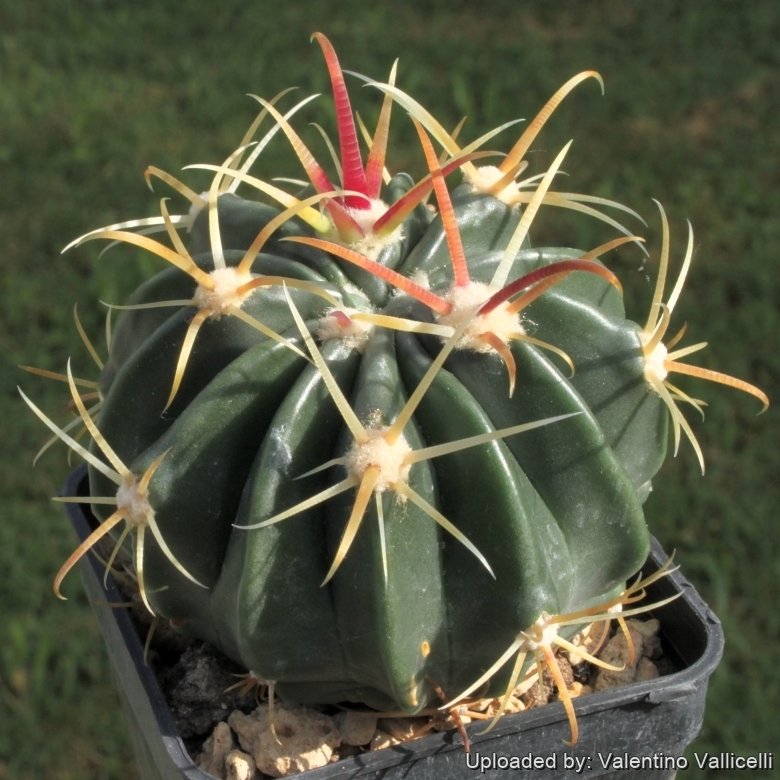
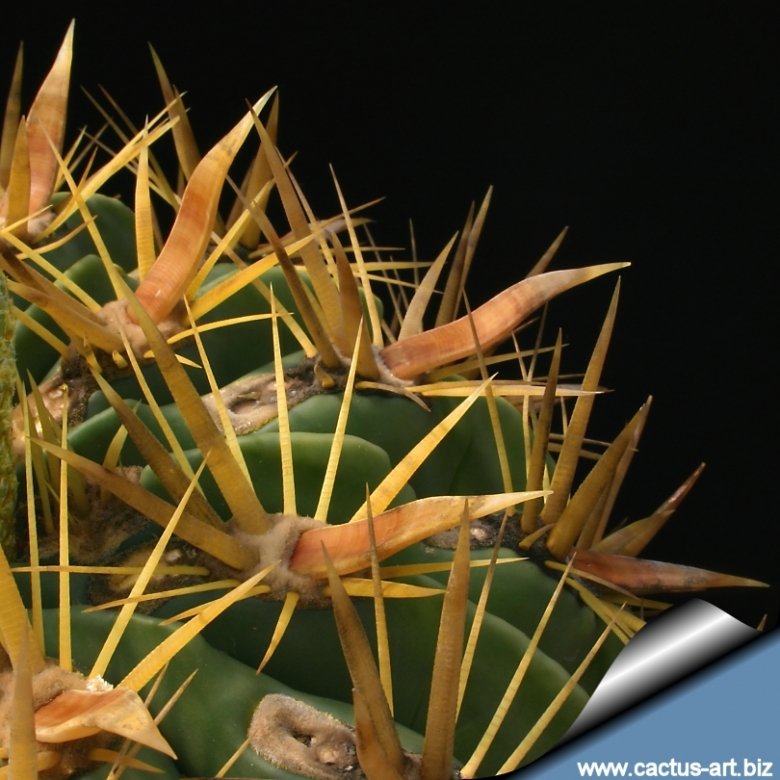
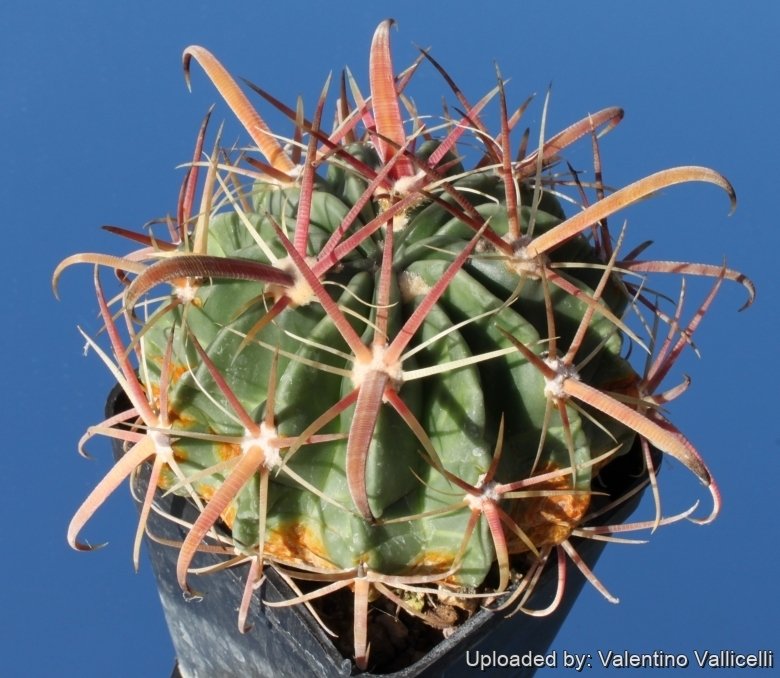
Central spines: 4 (or more) large, transversely striated, more highly coloured than radials of which the lowest one is conspicuously wider, thick and flat (4-9 mm broad), up to 4(-7,5) cm long apically bent downward or hooked and lie flat against the body (near straight in Ferocactus latispinus var. greenwoody). This prominent spine is usually red or grey-red, but may be amber-coloured or yellow (Ferocactus latispinusvar. flavispinus). The other central spines are still stout, but much narrower and not curved.
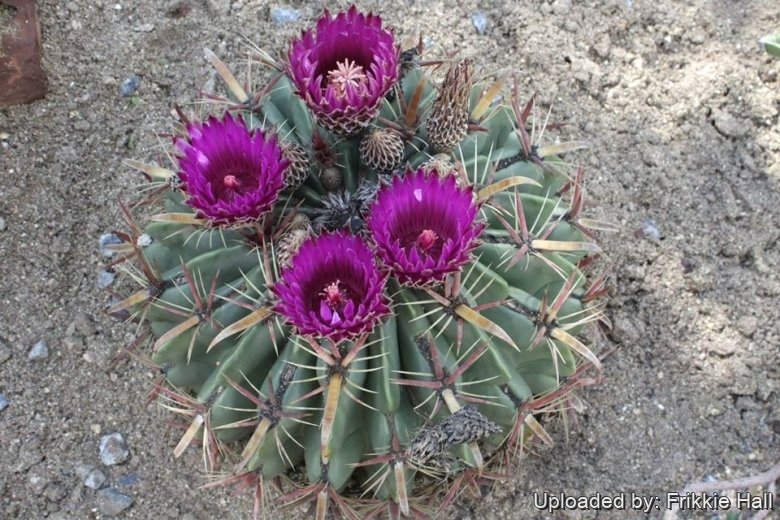
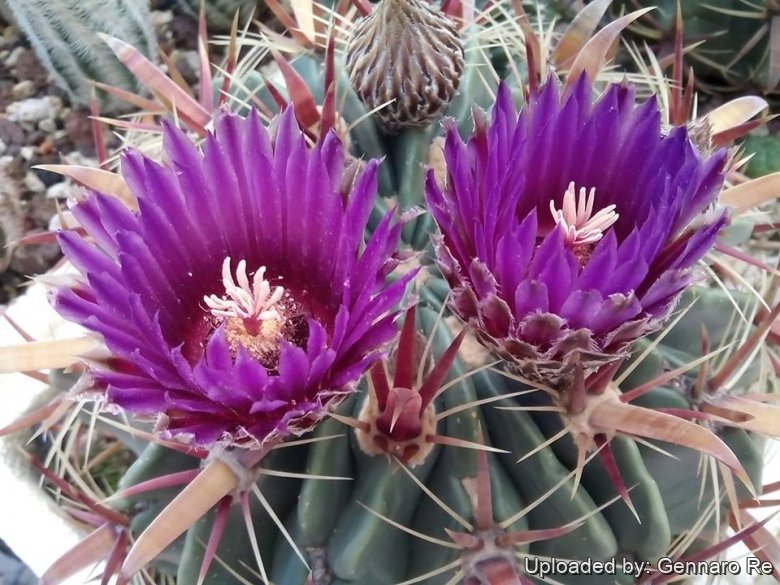
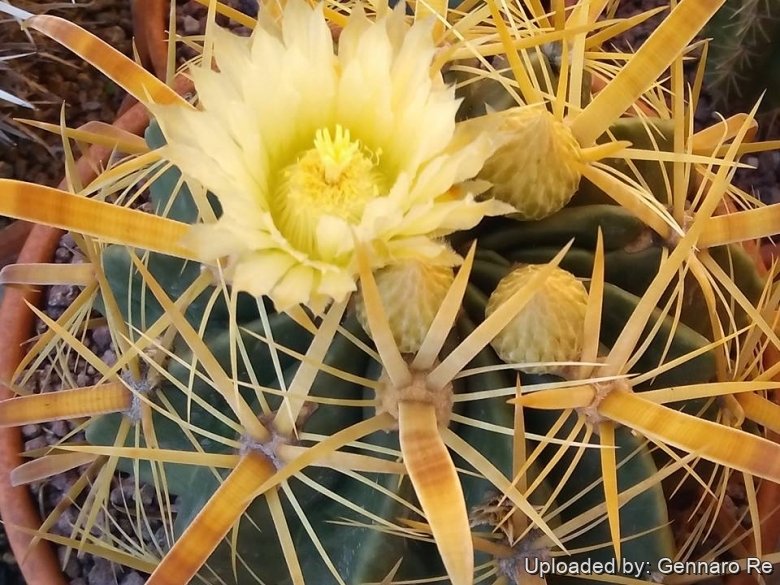
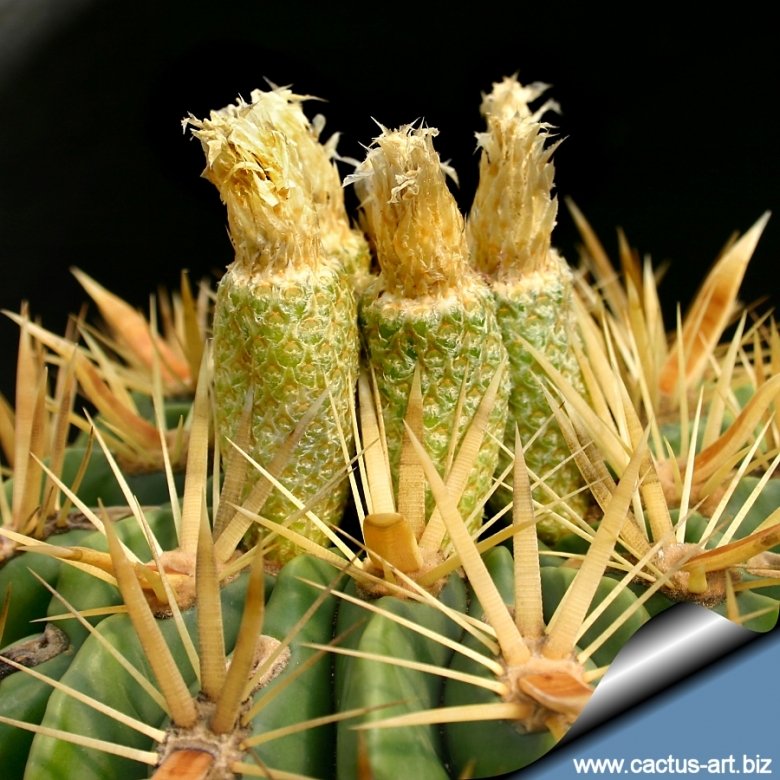
Flowers: Campanulate, beautiful “glassy” rich-rose, purple, mauve, purple-blue or, sometime, straw-yellow, and fragrant up to 2,5-3,5(-6) cm long and about 3 cm broad. Perianth segments narrowly oblong, acute. Scales on the ovary closely imbricated, thin and papery, ovate with thin ciliate margins. Scales on flower tube similar similar to those on the ovary but longer.
Blooming time: Late autumn to early winter, usually in October, but it usually flowers only if the weather is warm and sunny ( need a fair amount of bright sunlight to form) Unlike most of the others, which usually need to reach relatively large size this species blooms very early, many young plants will bloom when they reach only 10 cm in diameter. It might be noted that this is not true of the closely related Ferocactus latispinus ssp. spiralis (syn. Ferocactus recurvus);
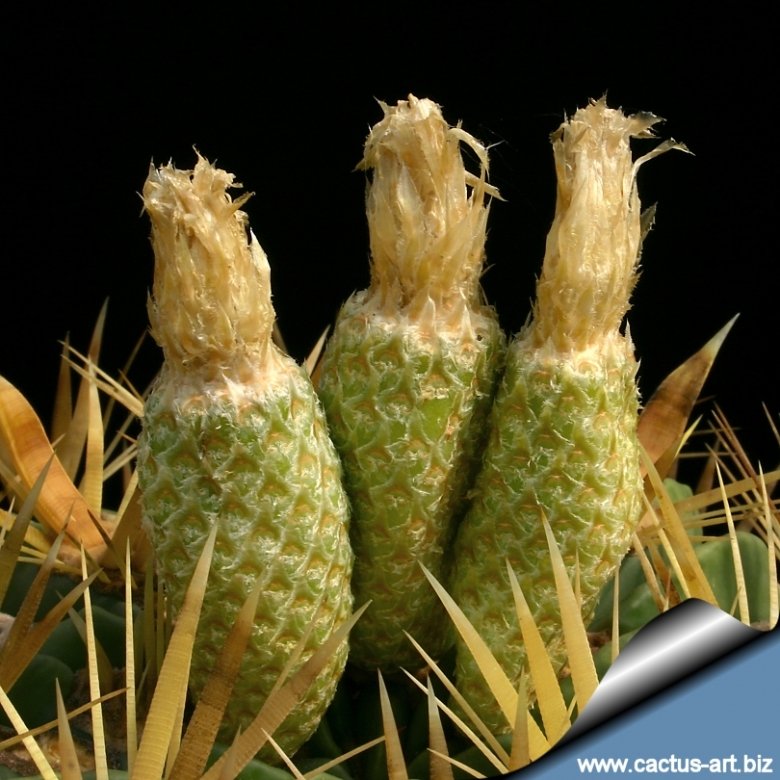
Fruit: Sperical to elongate about 2,5-8 cm long. 1,8-2,5 cm broad, clothed in tapering scales.
Seeds: Dark-brown, reniform, slightly pitted, 1,2-1,5 mm long.
Origin and Habitat
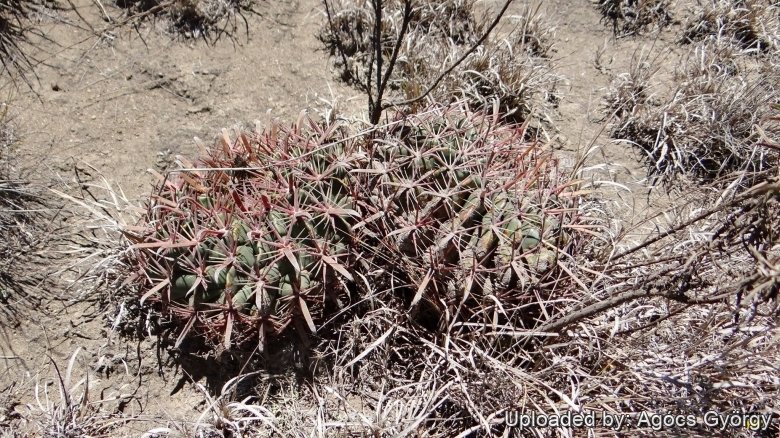
This species has an extensive distribution in central and southern Mexico ( Durango, through Zacatecas, Aguascalientes, east to the western parts of San Luis Potosí, Hidalgo and Puebla, as well as to eastern Jalisco, Guanajuato, Querétaro and Mexico State. ). This cactus has widespread and abundant subpopulations.
Altitude range: This species grows at elevations of 600 to 2,600 metres above sea level.
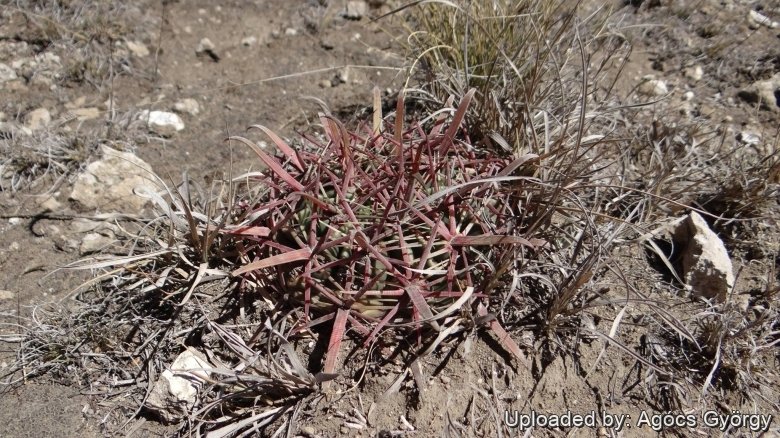
Habitat: Ferocactus latispinus is common in dryer areas and grasslands of central Mexico and in a variety of xerophyllous scrub types, grassland, and open Quercus forest (in Oaxaca) where it is usually found growing on silty flats and plains. It may also occur on rocky hillsides. The range of this species is north of that of closely related Ferocactus latispinus ssp. spiralis (syn. Ferocactus recurvus). It grows in association with other plant species, including: Echinocactus horizonthalonius, Coryphantha clava, Coryphantha pallida, Stenocereus marginatus, Echinocereus cinerascens, Ferocactus histrix, Hechtia podantha, Agave salmiana, Agave kerchovei, Agave parryi, Agave potatorum, Myrtillocactus geometrizans, Opuntia scheeri, Opuntia imbricata, Opuntia lasiacantha, Opuntia spinulifera, Opuntia robusta, Coryphantha erecta, Echinofossulocactus anfractuosus, Neolloydia conoidea, Echinocactus platyacanthus, Heliabravoa chende, Echeveria secunda, Jatropha spathulata, Schinus molle, Arbutus glandulosa, Dodonaea viscosa, Selaginella lepidophylla, Dasylirion acrotrichum and Yucca filifera. Goats disperse viable seeds of this and other species. Local collecting for national ornamental plant trade affects subpopulations near villages and towns. Livestock and goats degrade the vegetation where this species occurs. The plants are collected locally for medicinal use and consumed raw or as a candy.
Cultivation and Propagation
Ferocactus latispinus is a relatively easy species. Slow growing to start but does well under cultivation.
Growth rate: TSlow growing to start but does well under cultivation.
Soil: Grow it in a rich and particularly draining substratum, as it is very sensitive to rottenness when in presence of humidity and low temperatures and let the soil dry out between waterings.
Repotting: Repot in the spring, when their roots become cramped. Generally, they should be repotted every other year in order to provide fresh soil. After repotting, do not water for a week or more. Use pot with good drainage.
Fertilization: It grows much faster with a low nitrogen content fertilizer in spring and summer.
Watering: Water during the aestival growth cycle from March till October, the thin, fibrous roots suffer if there is humidity, therefore the plant should be watered only when the surrounding terrain is dry. But needs to be avoided wetting the bodies of these plants while they are in sunlight. A wet cactus in the sun light can cause sun burning which can lead to scars or even fungal infections and death. Keep dry as soon as the temperature starts dropping in October and keep it perfectly dry in winter at temperatures from 5 to 15 degrees centigrade. Preferable not to water on overcast days, humid days or cold winter days.
Hardiness: They need to be kept in a cool place during winter rest and can tolerate sporadic light frost if kept on the dry side prior to, and during, cold weather with little danger of being killed. However in cultivation it is better not to expose it to temperatures lower than 5° C, even if in an aerated and protected location. It tends to rot in winter during the resting phase, if kept wet. In the rest period no high atmospheric humidity!! Outdoors this plant is very adaptable, as long as you avoid excessive humidity in the winter months.
Sun Exposure: It need full sun exposures with ample airflow for best appearance.
Uses: The “Candy cactus” is used to make sweets. The middle is cored out and soaked in sugar, then chopped up and eaten.
Warning: The spines that hook around can grab you if you get too close.
Pests & diseases: It may be attractive to a variety of insects, but plants in good condition should be nearly pest-free, particularly if they are grown in a mineral potting-mix, with good exposure and ventilation. Nonetheless, there are several pests to watch for:
- Red spiders: Red spiders may be effectively rubbed up by watering the infested plants from above.
- Mealy bugs: Mealy bugs occasionally develop aerial into the new growth among the wool with disfiguring results, but the worst types develop underground on the roots and are invisible except by their effects.
- Scales: Scales are rarely a problem.
- Rot: Rot is only a minor problem with cacti if the plants are watered and “aired” correctly. If they are not, fungicides won’t help all that much. To prevent rottenness it is also advisable to surround its root neck by very rough sand or grit, this help a fast water drainage.
Propagation: Almost exclusively by seed. The seeds can be sown in pots of fine, well-drained sandy soil, any time during the spring when temperatures are warm. The seedlings should not be disturbed until they are well rooted after which they can be planted separately in small pots.
Notes
This species usually flowers only if the weather is warm and sunny ( need a fair amount of bright sunlight to form) It blooms very early, many young plants will bloom when they reach 10 cm in diameter.
Bibliography
Major references and further lectures
-
Edward Anderson “The Cactus family” Timber Press, Incorporated, 2001
-
James Cullen, Sabina G. Knees, H. Suzanne Cubey “The European Garden Flora Flowering Plants: A Manual for the Identification of Plants Cultivated in Europe, Both Out-of-Doors and Under Glass” Cambridge University Press, 11/Aug/2011
-
David R Hunt; Nigel P Taylor; Graham Charles; International Cactaceae Systematics Group. “The New Cactus Lexicon” dh books, 2006
-
N. L. Britton, J. N. Rose “The Cactaceae. Descriptions and Illustrations of Plants of the Cactus Family” Volume II, The Carnegie Institution of Washington, Washington 1920
-
George Edmund Lindsay, J. Hugo Cota “The taxonomy and ecology of the genus Ferocactus: explorations in the USA and Mexico” Tireless Termites Press, 1996
-
Curt Backeberg “Die Cactaceae, Handbuch der Kakteenkunde:Volume 5, Cereoideae (Boreocactinae)” 1961
-
Hiroshi Hirao “Colour encyclopaedia of cacti” Seibundo Shinkosha, 1979
-
Willy, Cullmann Erich Götz, Gerhard Gröner: Kakteen: Kultur, Vermehrung und Pflege. Lexikon der Gattungen und Arten. Ulmer, Stuttgart edn 5.1984
-
William Davidson “The illustrated directory of house plants: a practical guide to growing over 500 plants for the home” Salamander, 01/Nov/1990
-
Michael Taborsky, Barbara Taborsky “Advances in Ethology”, Volume 32 Parey, 1997
-
Brian Lamb “Letts guide to cacti of the world” Letts, 17/Oct/1991
-
Sánchez , E., Guadalupe Martínez, J., Bárcenas Luna, R., Hernández, H.M., Gómez-Hinostrosa, C. & Cházaro, M. 2013. Ferocactus latispinus. The IUCN Red List of Threatened Species 2013: e.T151750A557418. http://dx.doi.org/10.2305/IUCN.UK.2013-1.RLTS.T151750A557418.en. Downloaded on 25 April 2016.
-
Arias, M.S., Gama, S. and Guzmán, U. 1997. Flora del Valle de Tehuacán-Cuicatlán. Fasículo 14. Cactaceae A.L. Juss. Instituto de Biología, UNAM, Mexico.
-
Baraza, E. & A. Valiente-Banuet. “Seed dispersal by domestic goats in a semiarid thornscrub of Mexico.” Journal of Arid Environments 72: 1973-1976. 2008.
-
Canales-Martínez, M., T. Hernández-Delgado, J. Caballero-Nieto, A. Romo de Vivar-Romo, A. Durán-Díaz, R. Lira-Saade. “Análisis cuantitativo del conocimiento tradicional de las plantas medicinales de San Rafael, Coxcatlán, Valle de Tehuacán-Cuicatlán, México.” Acta Botánica Mexicana 75: 21-24. 2006
-
González-Insuasti, S. & J. Caballero. “Managing plant resources: how intensive can it be?” Human Ecology 35: 303-314. 2007
-
Hernández, H.M., Gómez-Hinostrosa, C. and Goettsch, B. “Checklist of Chihuahuan Desert Cactaceae.” Harvard Papers in Botany 9(1): 51-68. 2004
-
Méndez-Larios, I., Lira, R., Godínez-Alvarez, H., Dávila, P. and Ortiz, E. “Proposal for the establishment of the core zones in the Biosphere Reserve of Tehuacán-Cuicatlán, Mexico.” Biodiversity and Conservation 15: 1627-1659. 2006
From llifle page Bisnaga cornigera
Description
Ferocactus corniger and Ferocactus latispinus are synonyms although the wide variety of features in the same species makes it possible to find plants with certain superficial dissimilarities. Ferocactus corniger has very broad flat central spines that - with their prominent red colouring - have earned this plant the name of Devil’s Tongue.
Stem: It is globular and solitary attaining a height of about 30 cm in cultivation, although wild specimens may be considerably larger. The plant bodies is greyish to olive green in colour.
Ribs: About eight or so when young and more, up to twenty in number, as the plant grows older, quite prominent and with deep folds between them with the edges ending in a sharp ridge.
Areoles: Deeply recessed into notches at intervals of about 2,5 cm.
Origin and Habitat
This species has an extensive distribution in the dryer areas of central and southern Mexico (Coahuila, Nuevo Leon, and south)
Cultivation and Propagation
Slow growing to start but does well under cultivation. Use very draining soil, water during the aestival growth cycle (this plant need plenty of water) But needs to be avoided wetting the bodies of these plants while they are in sunlight. A wet cactus in the sun light can cause sun burning which can lead to scars or even fungal infections and death.
Needs full sun. Keep dry at 10°C in winter, but can tolerate sporadic light frost.
Propagation: Seeds are the only way of reproducing.
Uses: The “Candy cactus” is used to make sweets. The middle is cored out and soaked in sugar, then chopped up and eaten.
Bibliography
Major references and further lectures
-
Edward Anderson “The Cactus family” Timber Press, Incorporated, 2001
-
James Cullen, Sabina G. Knees, H. Suzanne Cubey “The European Garden Flora Flowering Plants: A Manual for the Identification of Plants Cultivated in Europe, Both Out-of-Doors and Under Glass” Cambridge University Press, 11/Aug/2011
-
David R Hunt; Nigel P Taylor; Graham Charles; International Cactaceae Systematics Group. “The New Cactus Lexicon” dh books, 2006
-
N. L. Britton, J. N. Rose “The Cactaceae. Descriptions and Illustrations of Plants of the Cactus Family” Volume II, The Carnegie Institution of Washington, Washington 1920
-
George Edmund Lindsay, J. Hugo Cota “The taxonomy and ecology of the genus Ferocactus: explorations in the USA and Mexico” Tireless Termites Press, 1996
-
Curt Backeberg “Die Cactaceae, Handbuch der Kakteenkunde:Volume 5, Cereoideae (Boreocactinae)” 1961
-
Hiroshi Hirao “Colour encyclopaedia of cacti” Seibundo Shinkosha, 1979
-
Willy, Cullmann Erich Götz, Gerhard Gröner: Kakteen: Kultur, Vermehrung und Pflege. Lexikon der Gattungen und Arten. Ulmer, Stuttgart edn 5.1984
-
William Davidson “The illustrated directory of house plants: a practical guide to growing over 500 plants for the home” Salamander, 01/Nov/1990
-
Michael Taborsky, Barbara Taborsky “Advances in Ethology”, Volume 32 Parey, 1997
-
Brian Lamb “Letts guide to cacti of the world” Letts, 17/Oct/1991
Source: Bisnaga cornigera, LLIFLE - Encyclopedia of living forms, CC-BY-SA, retrieved 2026-10-25.
From llifle page Echinocactus cornigerus var. flavispinus
Description
The standard Ferocactus latispinus is a modest-sized ball-shaped or flat-topped barrel cactus, which normally remains a solitary plant, without dividing or producing offsets. The var. flavispinus differs only for the spines colour which is yellow instead of reddish-brown.
Stem: Flattened to spherical (in cultivation), diameter 25 to 45 cm, 35 cm tall, most often wider than tall.
Ribs: 13 to 23 ribs, sharp.
Areoles: Large, grey to blackish.
Central spines: 4 large, large, of which the lowest one is conspicuously wider, thick and flat, apically bent downward and hooked up to 4 cm long and lie flat against the body. This prominent spine is yellow coloured. The other central spines are still stout, but much narrower and not curved.
Radial spines: 6-12 up to 2,5 cm long, spreading out, smaller, translucent yellow straight that have almost no width at all.
Flowers: Beautiful “glassy” straw-yellow (or pink-purple), up to 6cm long and 3cm broad.
Blooming time: Late autumn to early winter, usually in October
Cultivation and Propagation
Slow growing to start but does well under cultivation. Use very draining soil, water during the aestival growth cycle (this plant need plenty of water) But needs to be avoided wetting the bodies of these plants while they are in sunlight. A wet cactus in the sun light can cause sun burning which can lead to scars or even fungal infections and death.
Needs full sun. Keep dry at 10°C in winter, but can tolerate sporadic light frost.
Propagation: Seeds are the only way of reproducing.
Warning: The spines that hook around can graph you if you get too close.
Source: Echinocactus cornigerus var. flavispinus, LLIFLE - Encyclopedia of living forms, CC-BY-SA, retrieved 2026-10-25.
From llifle page Ferocactus cylindraceus var. greenwoodiae
Description
Ball-shaped or flat-topped barrel cactus.
Stem: Flattened to spherical (in cultivation), diameter up to 16 cm, 10 cm tall.
Ribs: ± 13, sharp areoles, large with grey to blackish felt.
Radial spines: 4-5, translucent, cream-yellow up to 2,5 cm long, straight spreading out the central spines, they have almost no width at all.
Central spines: 1, thick apically bent downward, amber-coloured to grey-red (bright red when very young), up to 4cm long.
Flowers: Beautiful “glassy” straw-yellow, up to 6 cm long and 3 cm broad.
Blooming time: Late autumn to early winter but usually only if the weather is warm and sunny ( need a fair amount of bright sunlight to form) This species blooms very early, many young plants will bloom when they reach 10 cm in diameter.
Origin and Habitat
Ferocactus latispinus var. greenwoodii it is only found between Oaxaca city and Tehuantepec in the valleys of Totolapan and Nejapa.
Habitat: It is common in dryer areas and grassland. It may also occur on rocky hillsides.
Cultivation and Propagation
Slow growing to start but does well under cultivation. Use very draining soil, water during the aestival growth cycle (this plant need plenty of water) But needs to be avoided wetting the bodies of these plants while they are in sunlight. A wet cactus in the sun light can cause sun burning which can lead to scars or even fungal infections and death.
Needs full sun. Keep dry at 10°C in winter, but can tolerate sporadic light frost.
Propagation: Seeds are the only way of reproducing.
Uses: The “Candy cactus” is used to make sweets. The middle is cored out and soaked in sugar, then chopped up and eaten.
Warning: The spines that hook around can graph you if you get too close.
Source: Ferocactus cylindraceus var. greenwoodiae, LLIFLE - Encyclopedia of living forms, CC-BY-SA, retrieved 2026-10-25.
Cultivars and forms (8)
Varieties (5)
Gallery