Publication: Pterocymbium 235 (4 June 1844)
Description
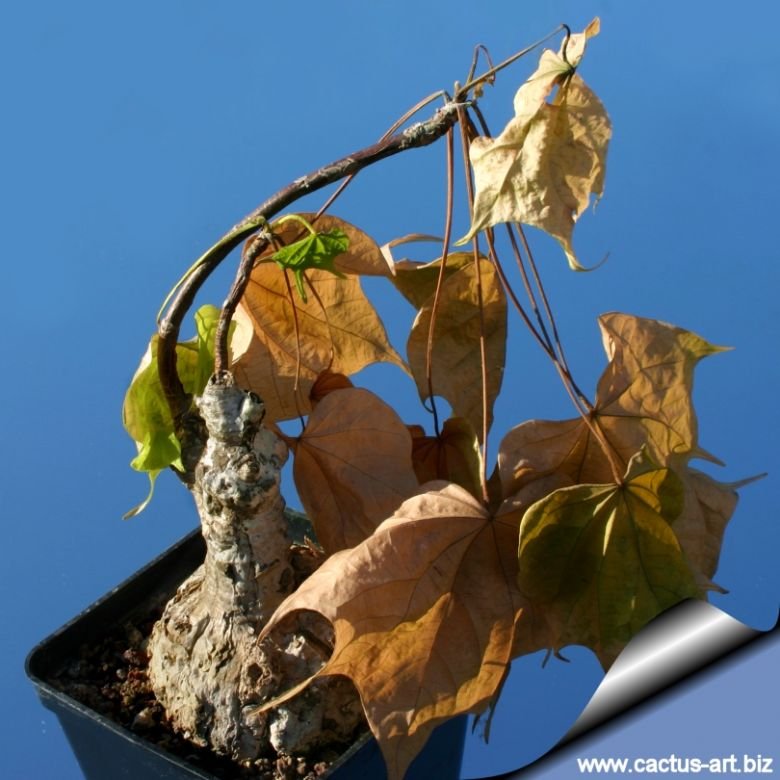
It is a small-medium deciduous tree that tend to be a little slim by age. It may grow to a up to 15 meters high.
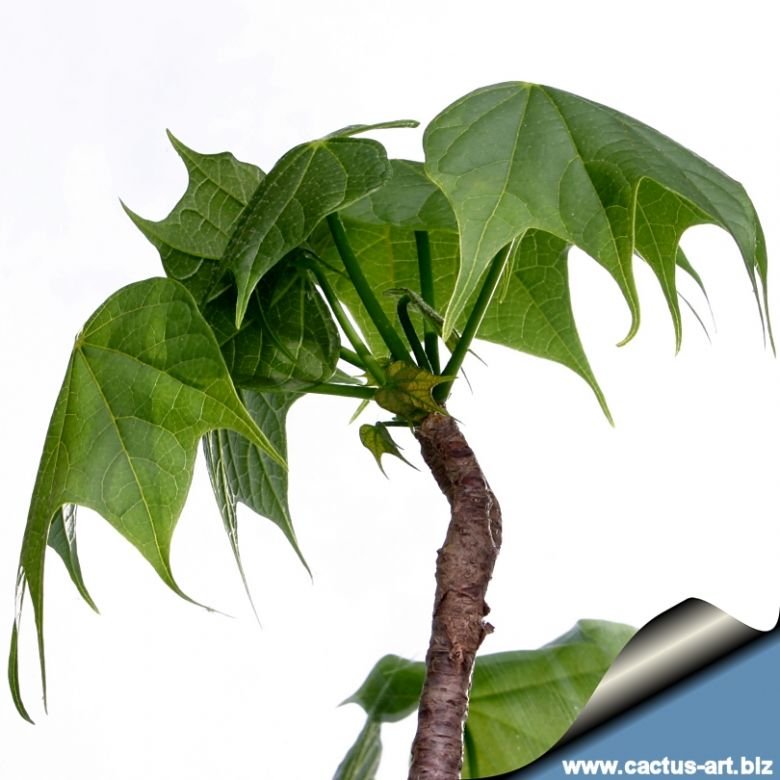
Stem: The trunk and branches are straight, sometimes ridged. Several short branches forming a compact and well-balanced crown. The bark is ash coloured ; young shoots covered in grey pubescence.
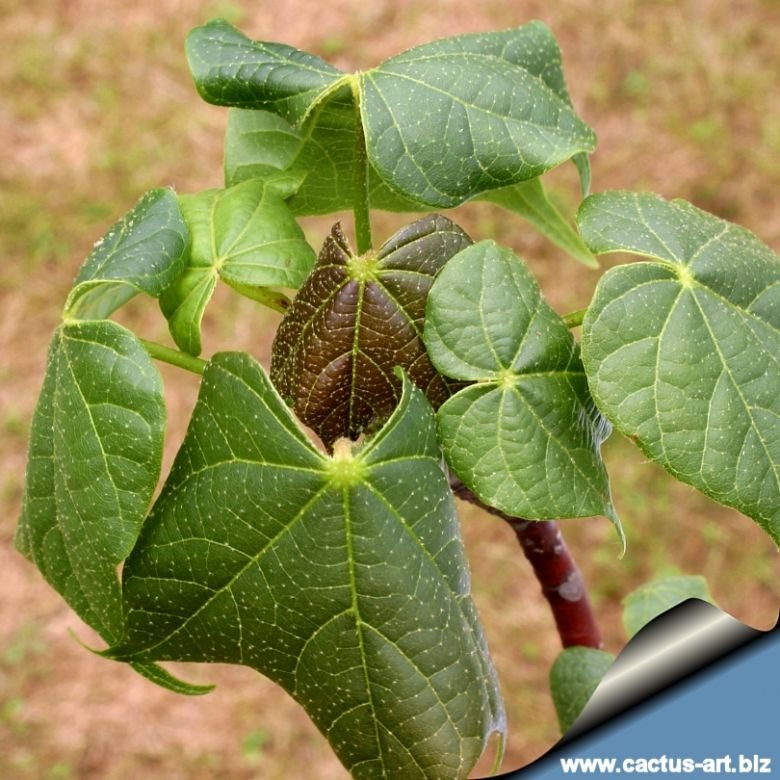
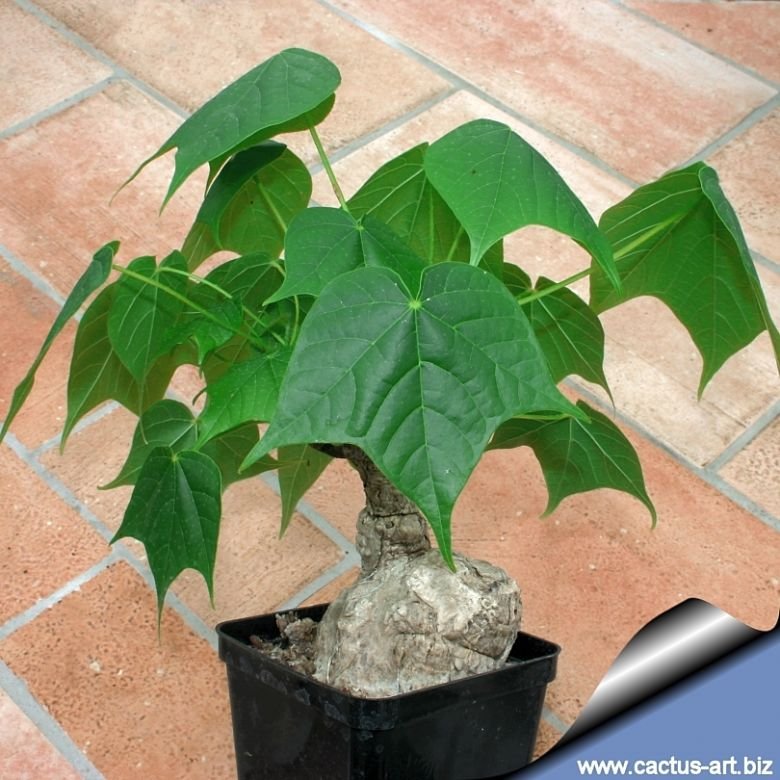
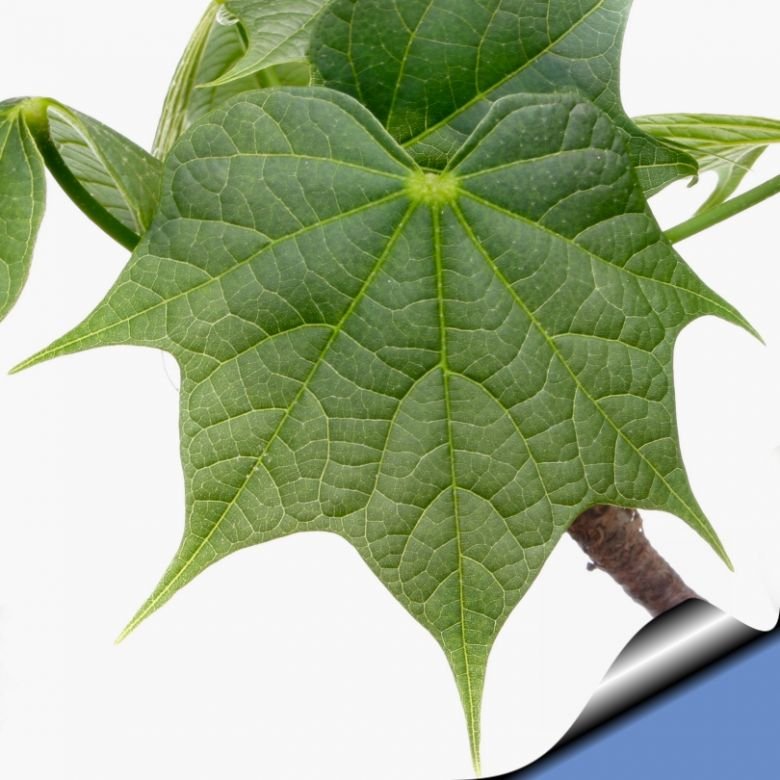
Leaves: Crowded towards the end of branches; simple, lamina usually palmately 3-5-lobed, almost heart-shaped, 10-20 cm long, 12-25 cm broad; stipules lanceolate., petiole 7-25 cm long. the foliage is almost odouless.
Flowers: The flowers are red-orange pubescent , each about an inch long, tubular, no petals, calyx with 5 triangular teeth. on short, terminal panicles
Blooming season: March-May and appears before the leaves.
Fruits: It is a follicle, membranous, deceptively leaf-like but nothing like the tree’s real leaves.
Seeds: Yellow, wrinkled or smooth, ovoid, apptrox 1 cm long, usually just 1 or 2 , borne along the edges of the open, leaf-like fruit.
Uses: Hindus and Ceylonese regard it as a sacred plant. Branches yield fibre of inferior quality and branches with young leaves are used in India as fodder.
Origin and Habitat
Origin: Southern Yunnan, Myanmar, Thailand, Vietnam, Ceylon (Sri Lanka), south west India eastwards to Burma, Bangla Desh,
Habitat: It is mostly a jungle species that grows on limestone or on other well drained soil with (usually) large water availability and some sun, but it can endure long periods of dryness. It is rarely cultivated in urban gardens in tropical areas.
Cultivation and Propagation
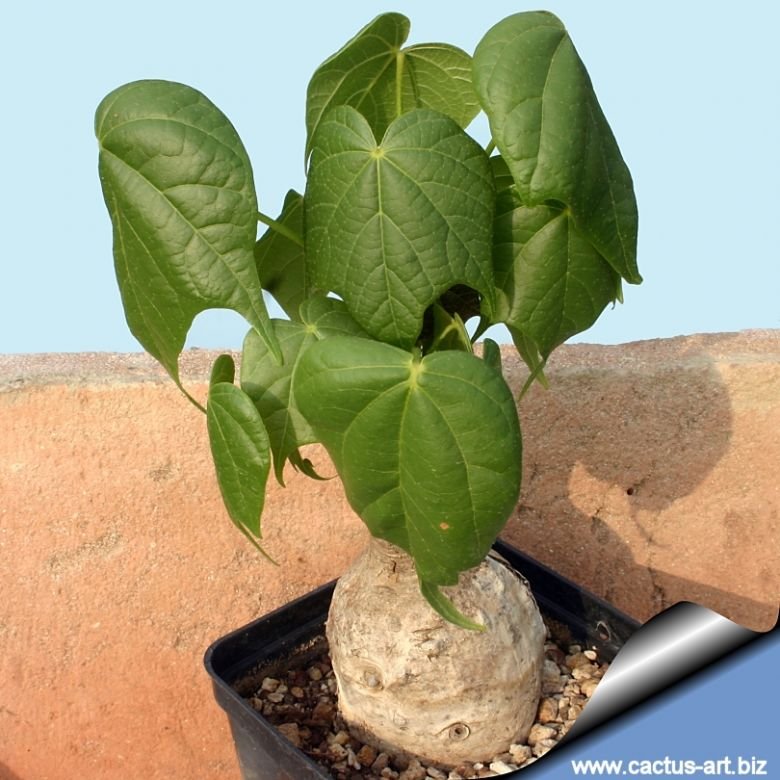
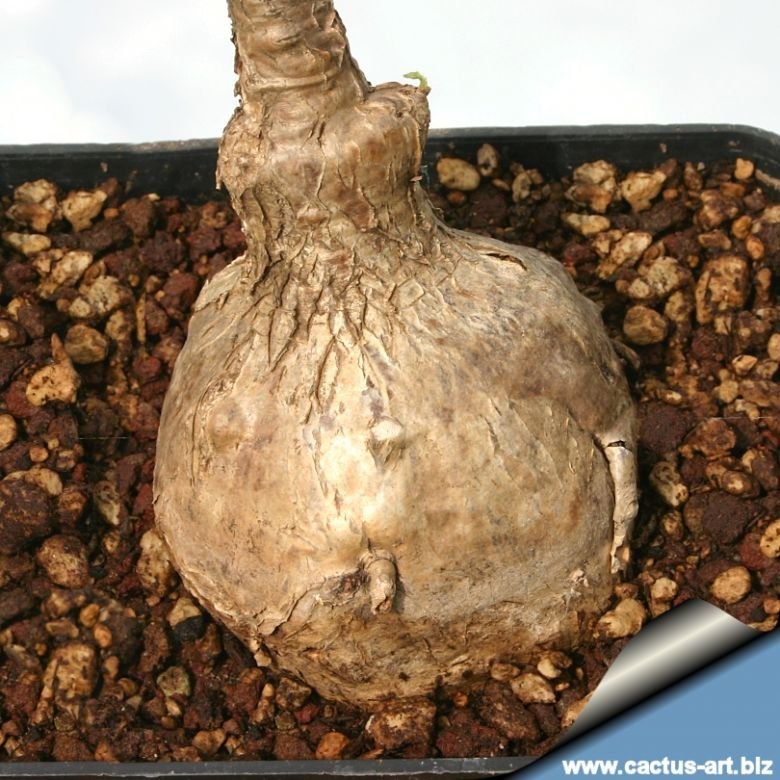
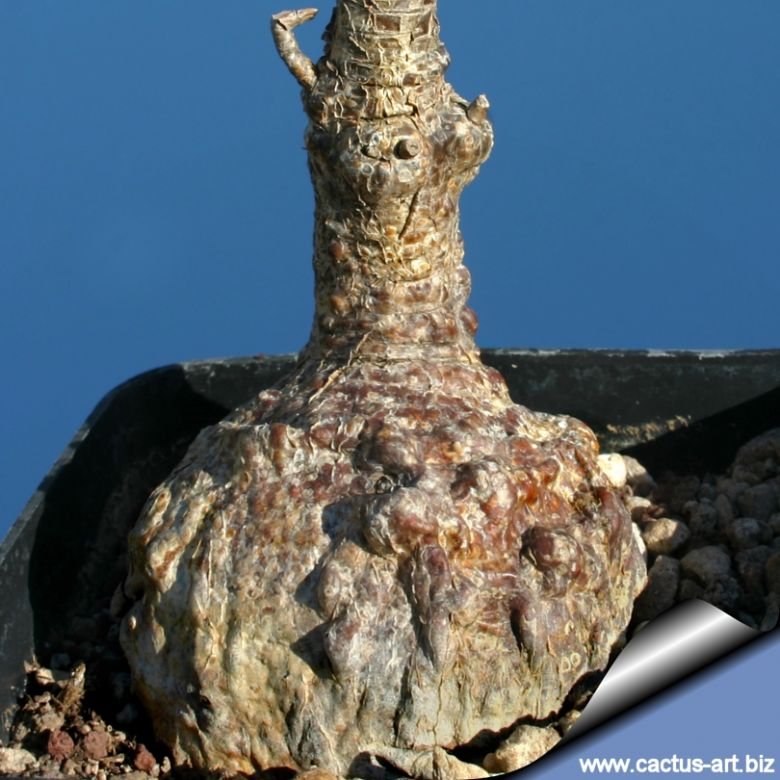
It is easy to grow and puts on a fanciful display, but it takes years to develop and is not a plant for the impatient gardener. It needs a well-drained soil (e.g. use a mixture for cactus + normal potting soil) with the caudex planted largely above the soil surface. It needs regular watering during the active growing season without too much water. Let the soil become rather dry before watering again. Reduce watering gradually when the leaves dries out in autumn, or else the caudex may rot. Restore normal watering frequency when the leaves starts growing again in spring. Give it plenty of sun, but keep the caudex bulb shaded. Protect from heat in summer. A clay pot is best. It should be overwintered in the greenhouse at temperatures over 12°C (avoid letting temperatures drop lower than 5° C). In the pot they are leafless for about six months.
Propagation: It can be raised either from stem cuttings and from fresh seeds.
Notes
Often his plant has been confused with Gyrocarpus americanus / Gyrocarpus jacquinii, but it’s leaves are almost flat, and it have no smell. (while the leaves of Gyrocarpus gives off a pronounced odour of dung), but these two species are surprisingly similar, although from different families, the growth rate, dormancy, and foliage are almost identical and it is really difficult to tell the two apart when not in flower.
Gallery