Publication: Cactaceae (Britton & Rose) 3: 210. 1922 [12 Oct 1922]
Description
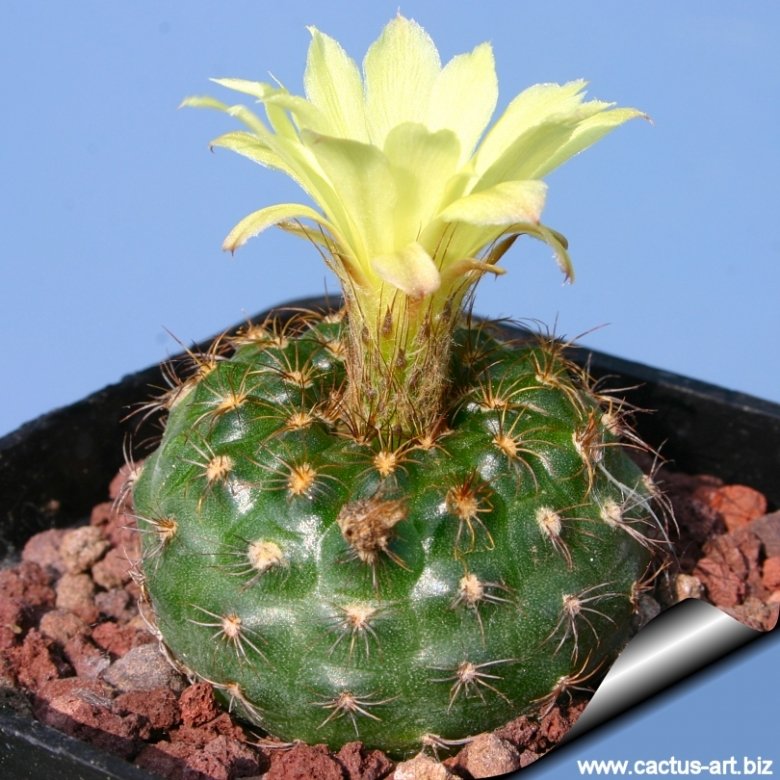
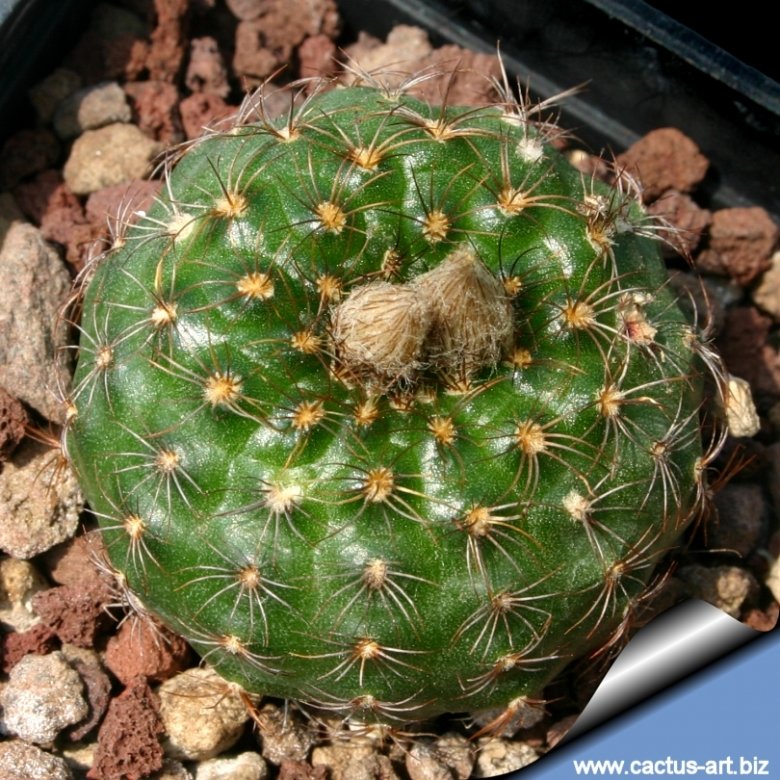
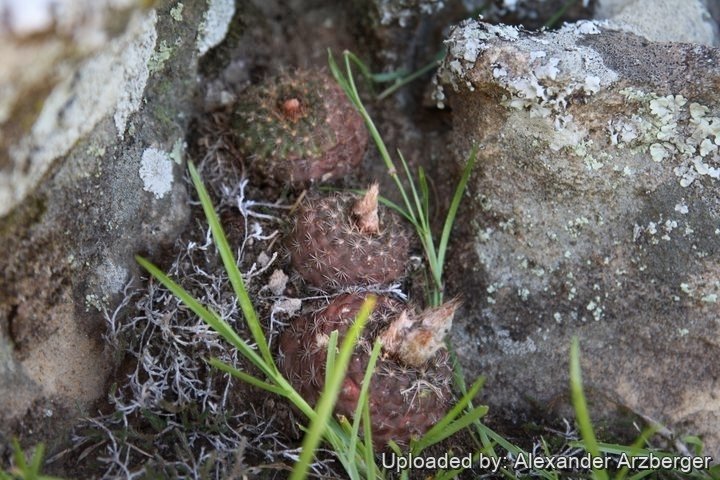
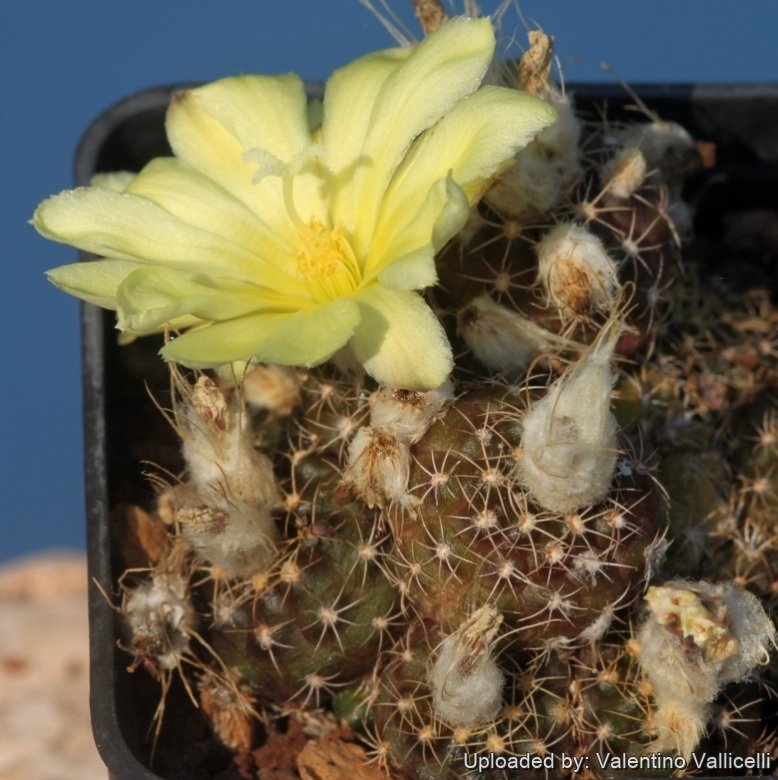
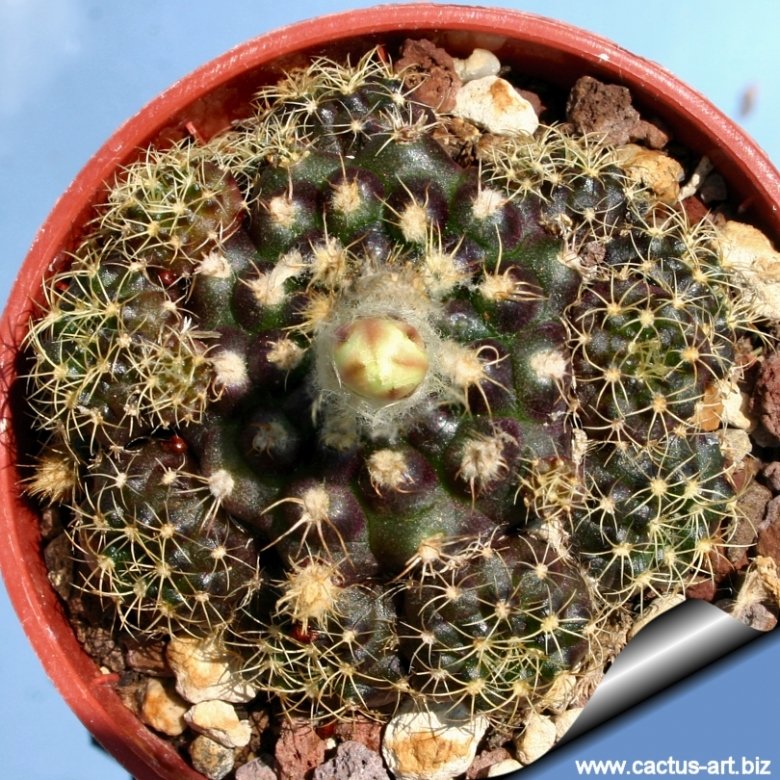
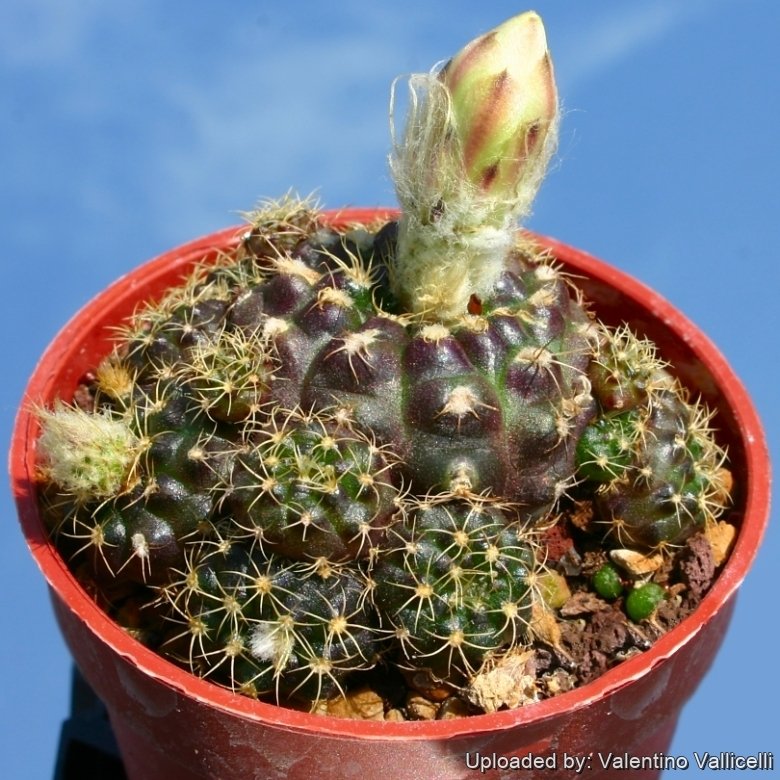
Frailea schilinzkyana is a very small cactus that remains solitary or (occasiaonally) somewhat cespitose.
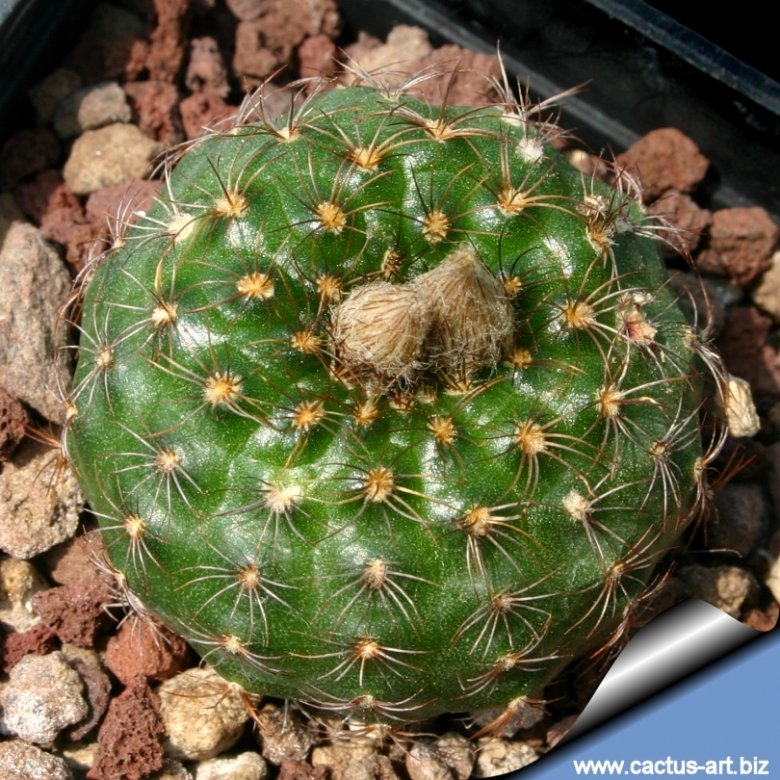
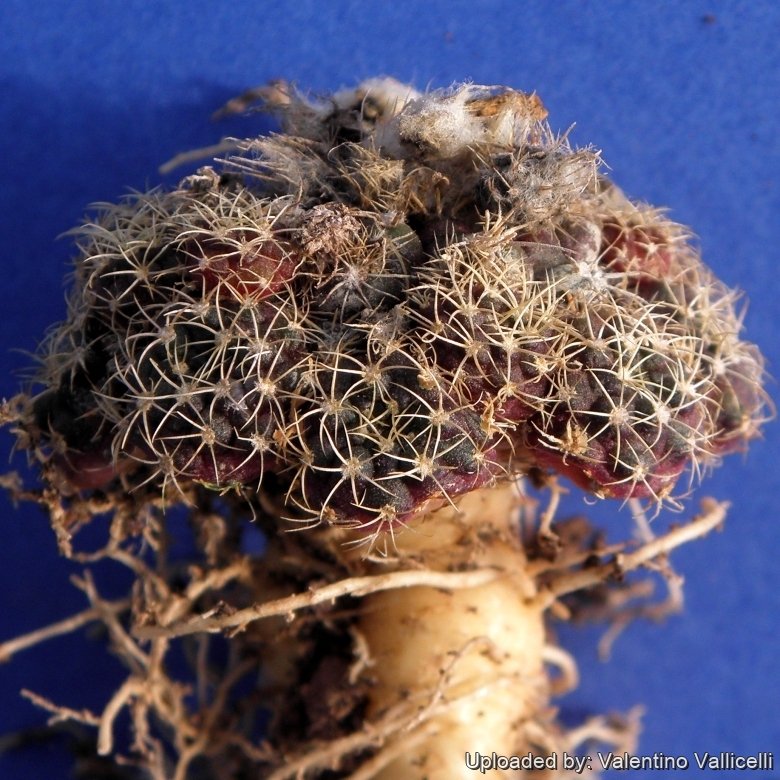
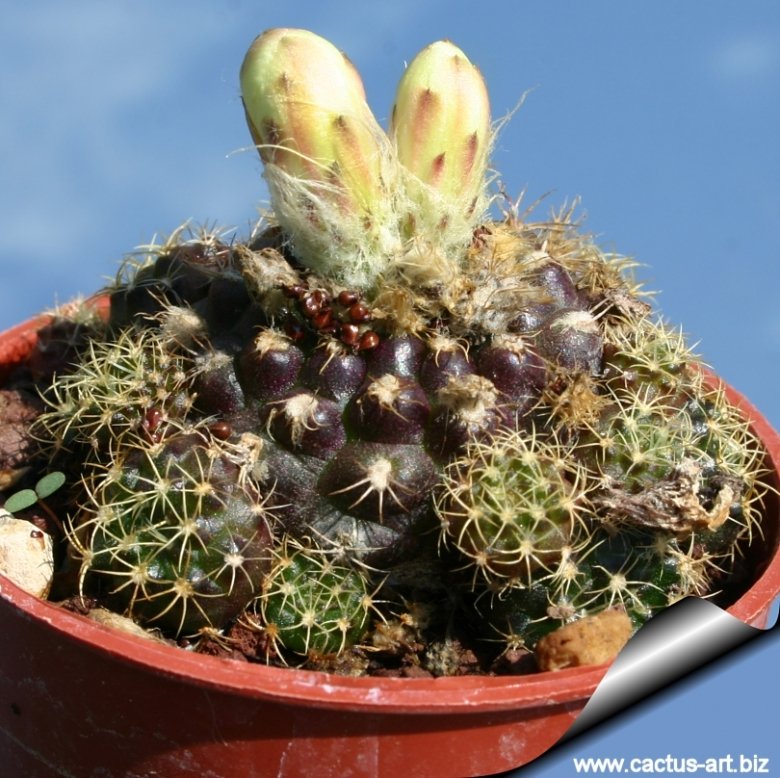
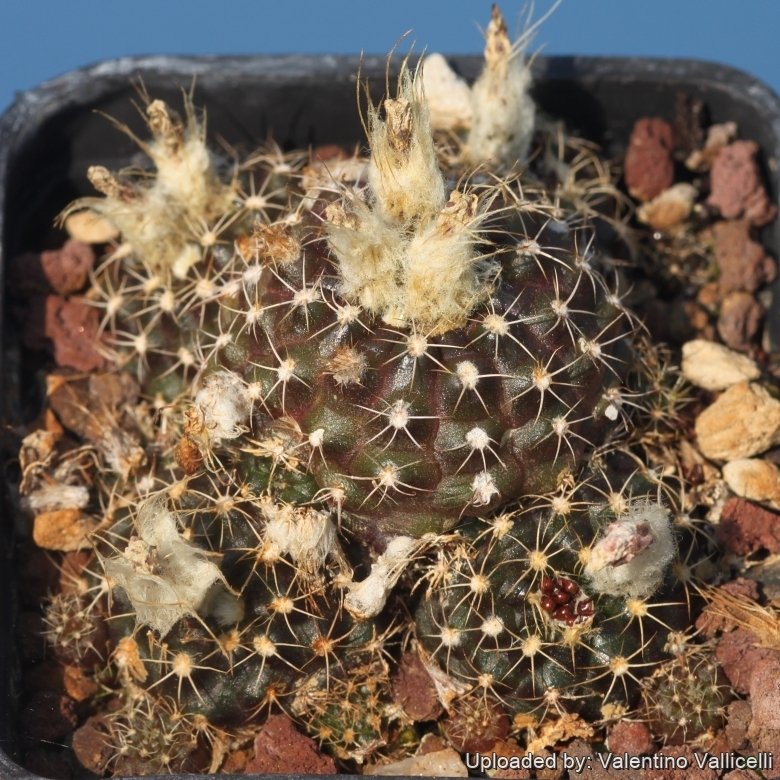
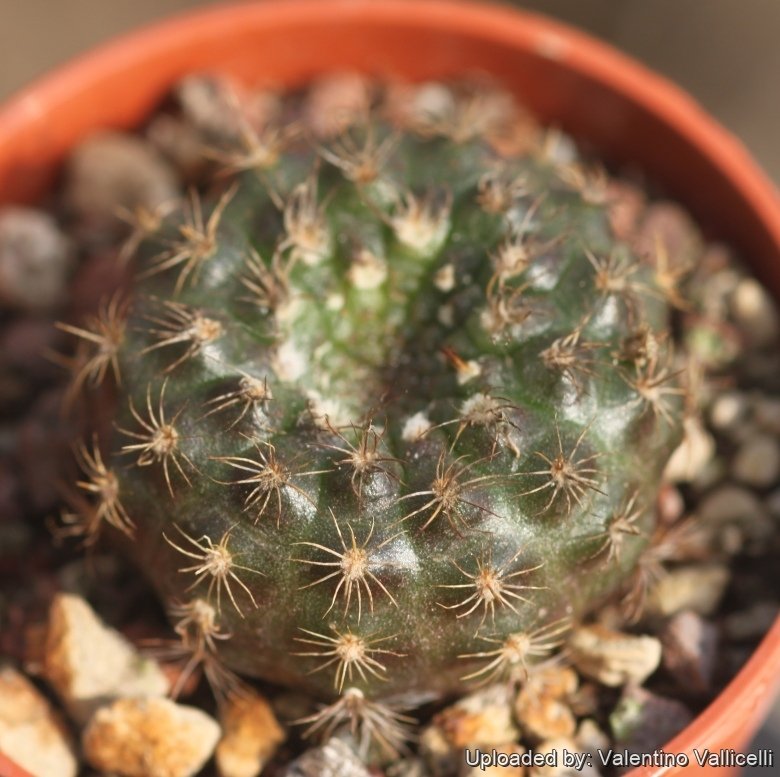
Stem: It is diminutive in size, about 3 cm in diameter, depressed globular and somewhat flattened and umbilicate above, (wider than taller). Medium dark brownish green
Ribs: 10 to 13, but very indistinct, more or less spiraled, strongly tubercled
Areoles: Placed on the upper side of the tubercles.
Radial spines: About 12 to 14 short (2 to 3 mm long) which vary from yellow to dark tannish-brow n or blackish in colour, more or less appressed and reflexed.
Central spines: Solitary, stouter than the radials.
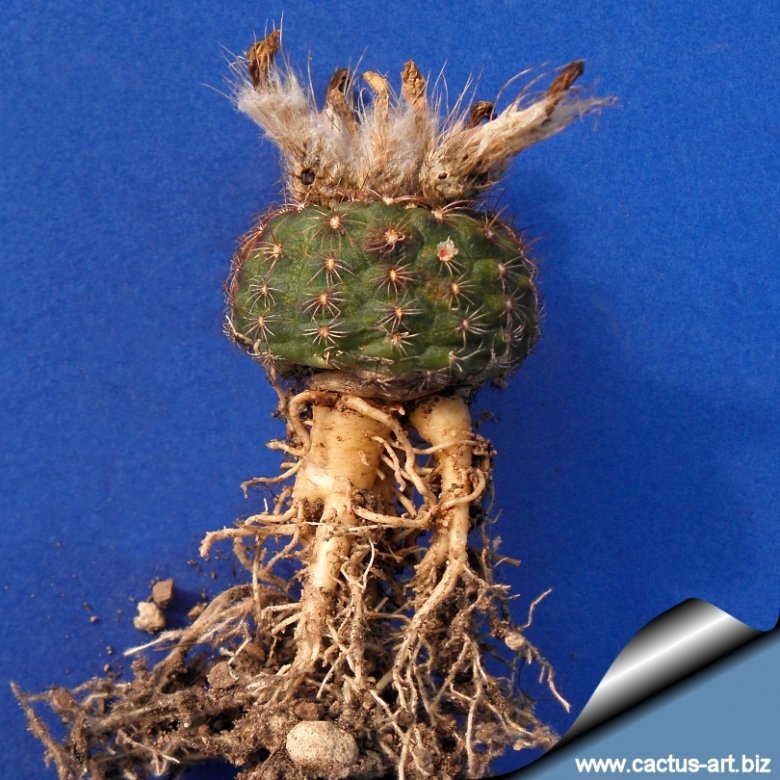
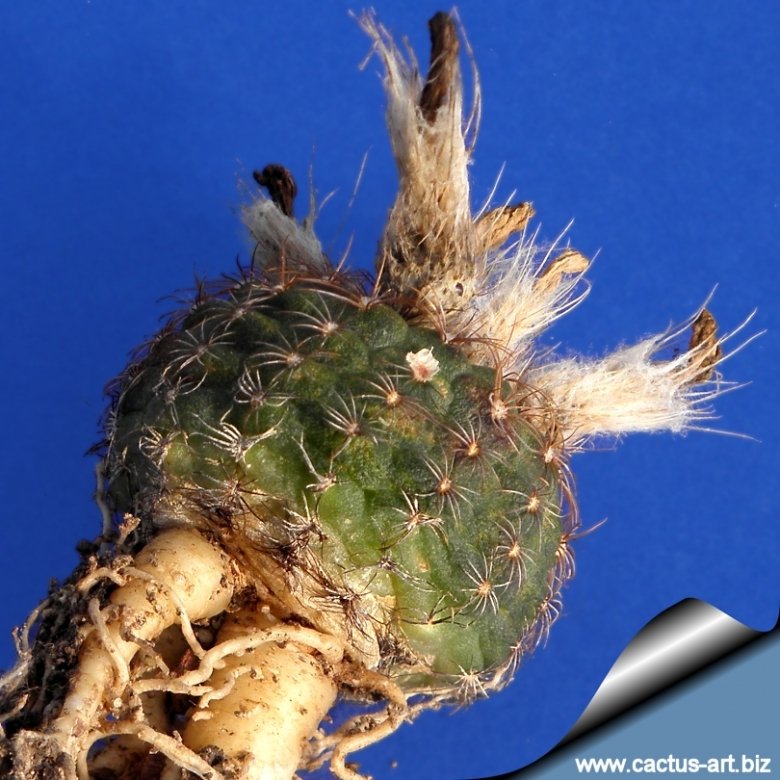
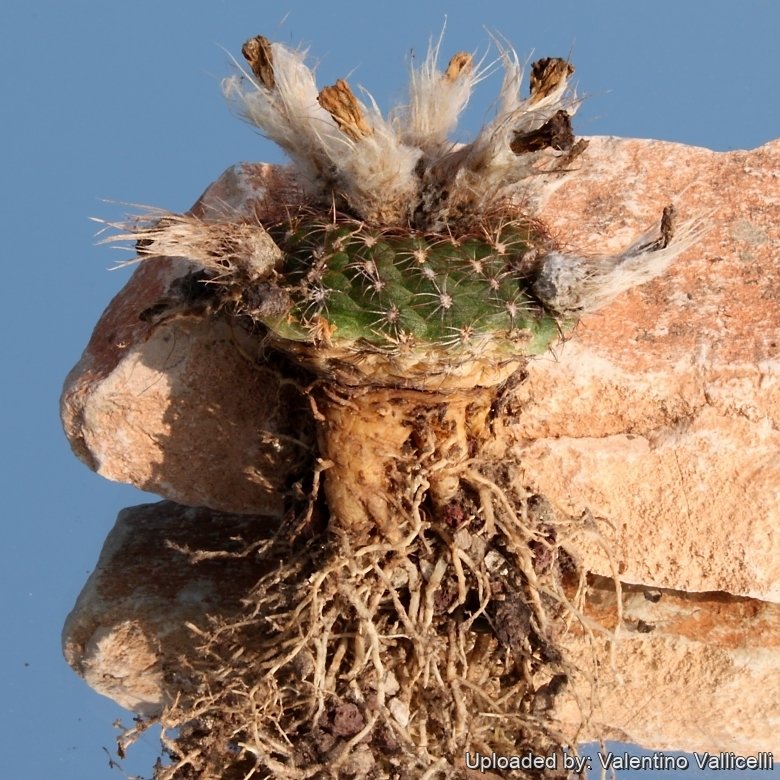
Roots: Fat central tap root.
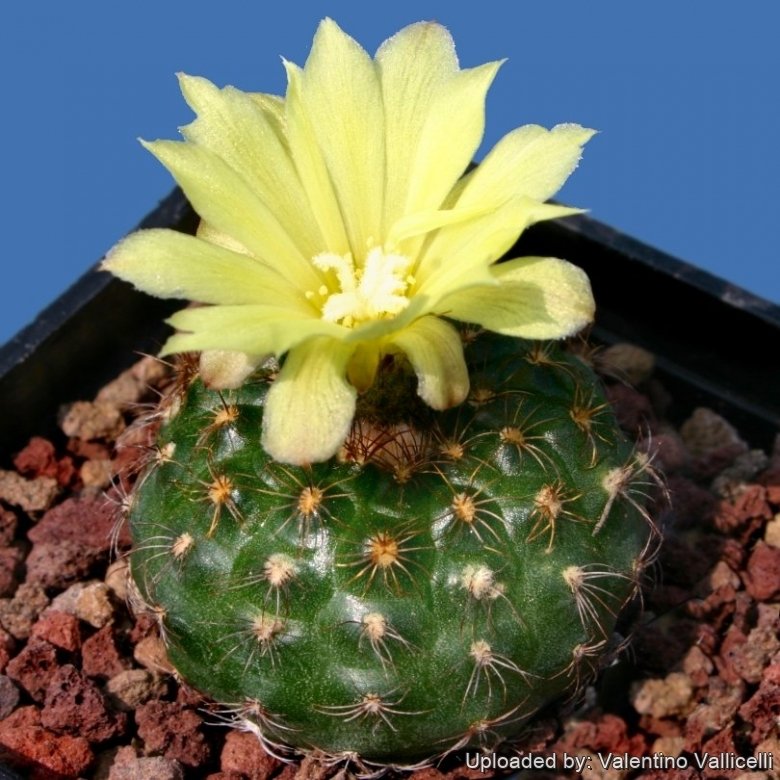
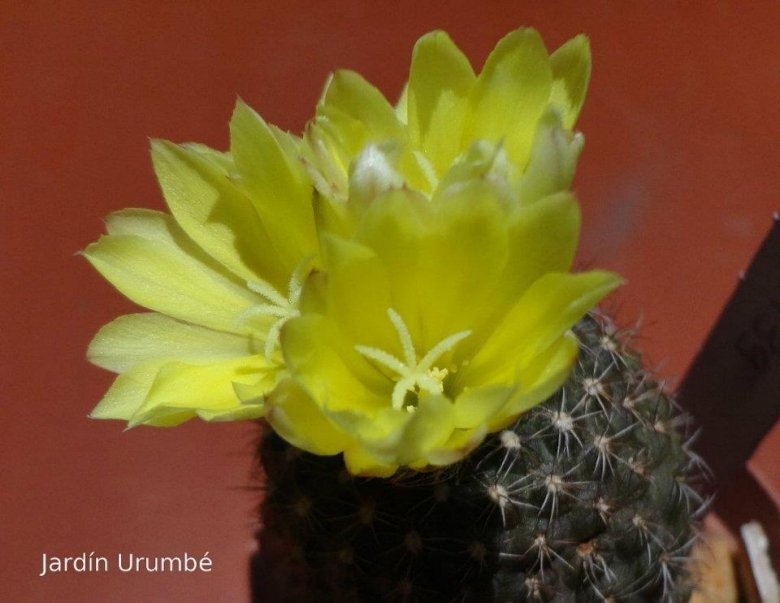
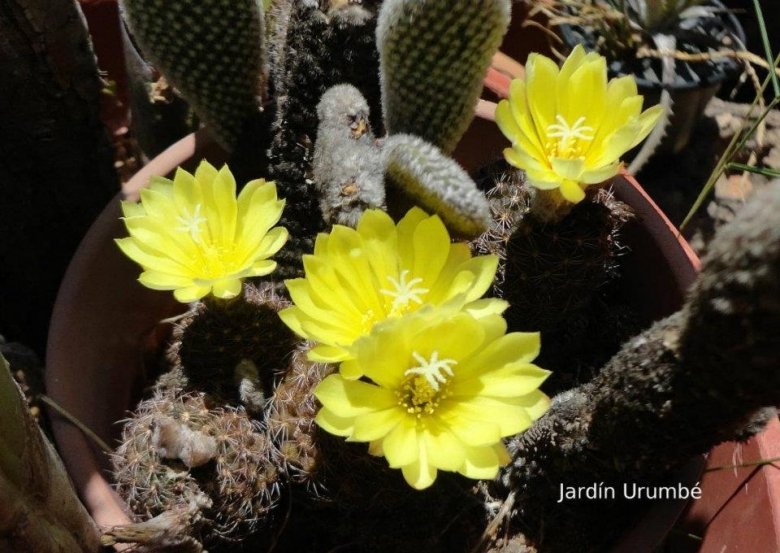
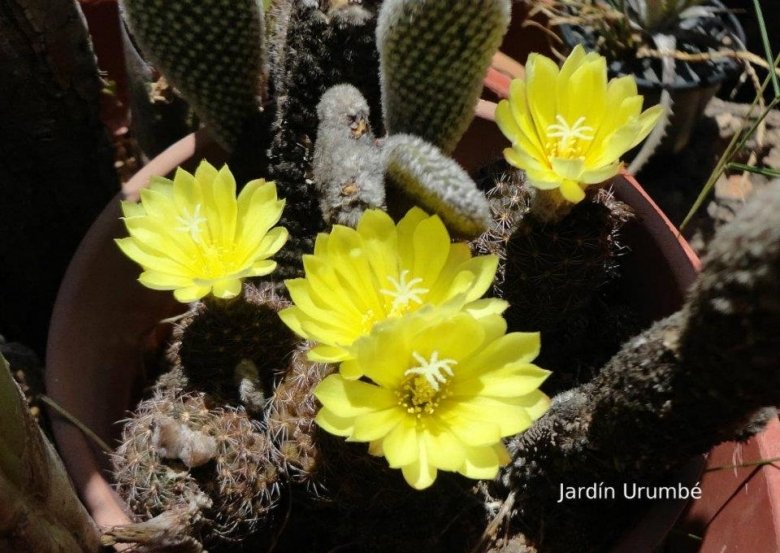
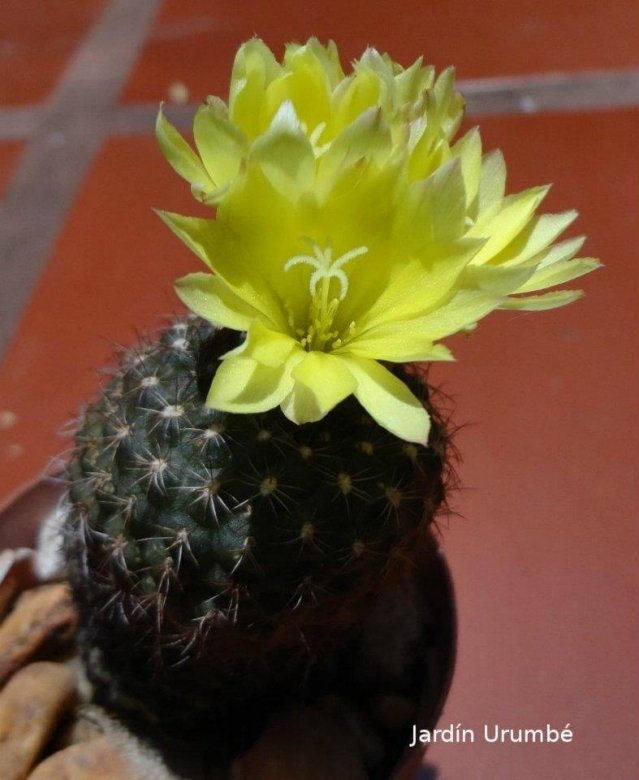
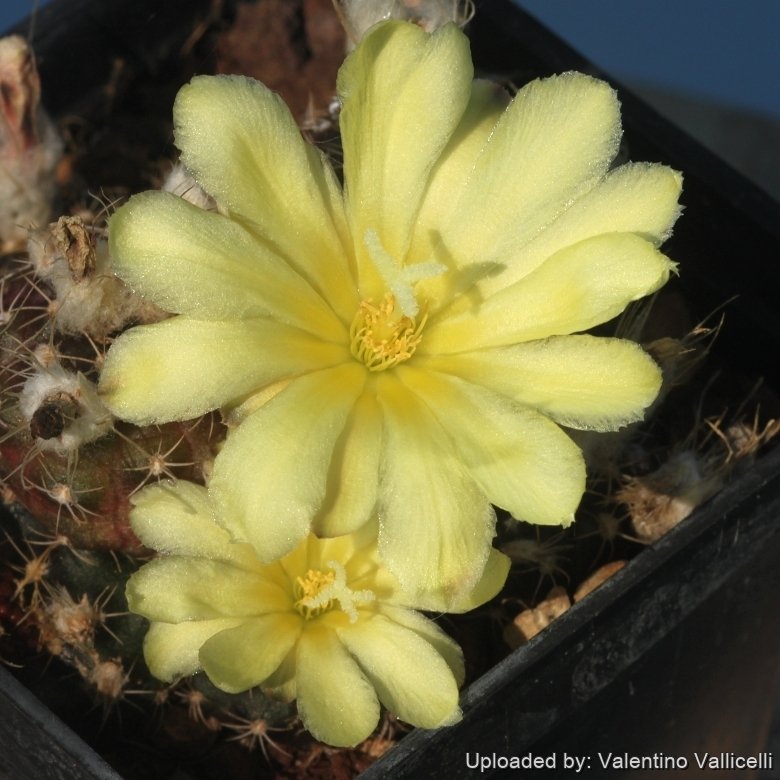
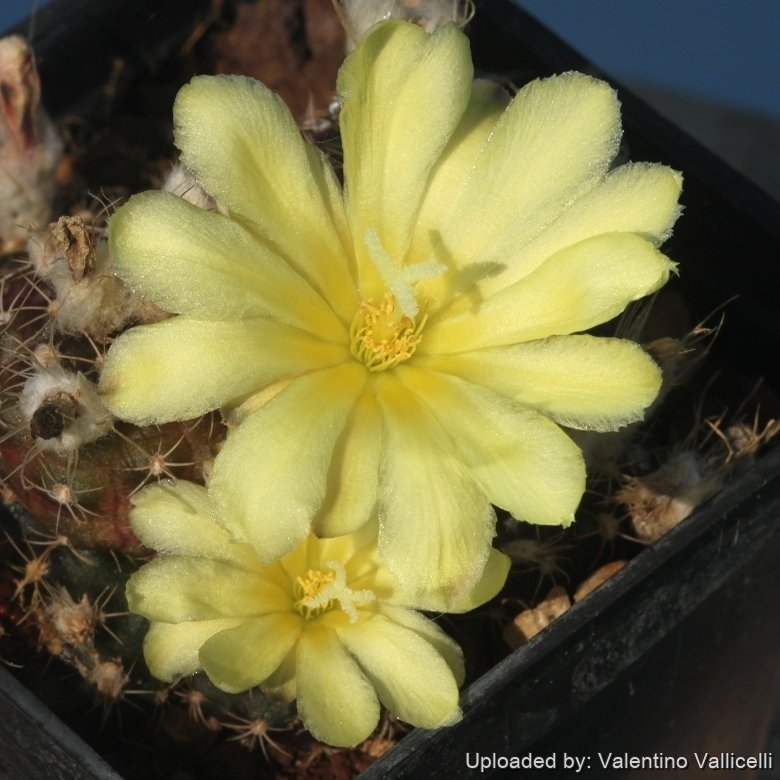
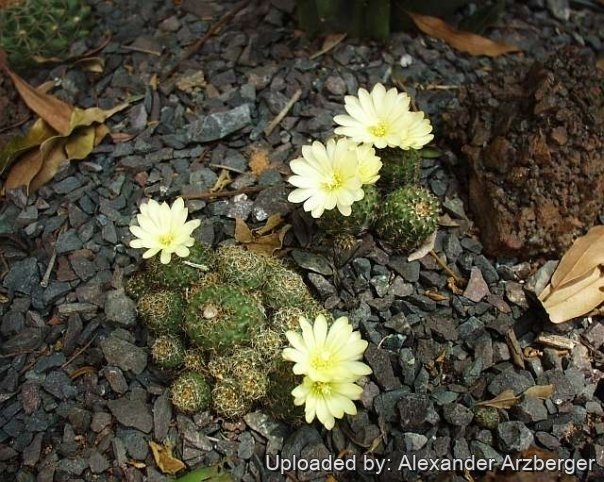
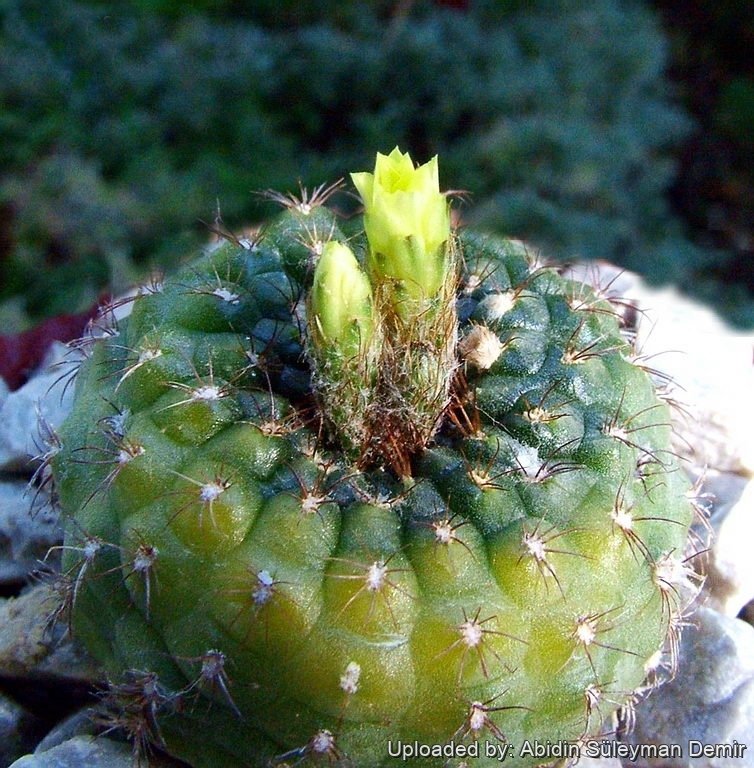
Flowers: Yellow small, infundibuliform, often cleistogamous (Even when their flowers do not open, they still form fruits with many seeds)
Blooming season: Flowers will open only in great heat, in the hottest, brightest, afternoon sun, if at all.
Fruits: Dry, indehiscent, that detach easily, yellowish, pericarp membranous, fragile that break easily, releasing the seed.
Origin and Habitat
Frailea schilinzkyana has a relatively small range in Rio Grande do Sul (Brazil); Entre Rios, Corrientes, and Misiones provinces (Argentina); Paraguarí and Concepción departments (Paraguay) and in Uruguay.
Altitude: 150-500 metres above sea level.
Type locality: In Brazil it grows on grass plains, elsewhere mostly on rocky outcrops and stony fields. Frailea schilinzkyana is not abundant and its distribution is sparse. In general, Frailea species have a relatively short lifespan but rapid reproduction (generation length is 3-5 years). The habitat of this cactus has a very high potential to be used for agriculture. The major threats are trampling by grazing cattle, agriculture, forestry (Eucalyptus plantations), and fire.
Cultivation and Propagation
Fraileas are are tiny plants with comparatively big yellow flowers, often bigger than the whole plant itself and are especially suitable for those with limited growing space. They can be easily grown in a sunny windowsill or a small greenhouse. The secret for keeping Fraileas happy and growing is to pot them in a rich, porous soil with good drainage and aeration, to give them lots of water and let them dry out between waterings. Fraileas do like more water than most other cacti. If you over-pot them (in about 6-7 cm pots) they grow much better and healthier, as they can be quite short-lived if not given correct growing conditions. During winter they like cool and dry places (minimum temperature of 5-10° C) but even light frosts do not harms them. Characteristically, during the dry season plants retract completely under the ground, both in the wild and in cultivation too. Occasional light spray of water during the winter helps plants from shrivelling up too much. In the summer they like the pot to be filled with rainwater (which is always better to use than tap water) quickly absorbed by the plants, and one can almost see the little bodies swelling up. After a day or two, it is best to drain off any remaining water in the under-pots.
Sun Exposure: They enjoy full sun. In a shaded position the plants grow faster, but are not flat shaped or dark coloured.
Propagation: With fresh harvested seeds or (rarely) by grafting. The seeds germinates well. Sow the them on the soil surface, so that they can grow to a reasonable size before they have to be pricked out into a bigger tray. The seed trays go into a heated propagator on a windowsill where they catch the afternoon sun. It does not take long for the seeds to germinate, and some will do so within a day or two after sowing. When they have reached a height of about 1 cm they are pricked out into a larger tray, where they remain until they are large enough to go into individual pots.
Notes
Most fraileas are autogamous, or self-fertile to their own pollen and self-fertilization occurs in the closed flower. They produces viable seeds without the flower having opened. This phenomenon is called cleistogamy. The accepted opinion is that Frailea flowers only open in full sun, otherwise fruits will form cleistogamously. In reality relations are quite different: Both Frailea grahliana and Frailea schilinskyana produce buds in the form of a miniature plant of barely 10 mm in section, which do not open but which may still become seed-bearing fruits. Only when the young plants grow larger and are amply surrounded with offsets, do buds develop which pass into open flowers. Plants having open flowers for the first time, also produce again in the following year (pre-supposing that growth continues in the same manner) a few cleistogamous flowers first and after that open flowers. Only when the plants are so large that they flower with open flowers right at the start of the season, does this ability apply to even the smallest offset. Frailea aurea, Frailea carminifilamentosa, Frailea pseudograhliana, and Frailea pumilia, behave in this same way. Larger-growing Fraileas such as Frailea bruchii, Frailea dadakii, Frailea pygmaea, which seldom make offsets, bear fewer flowers. Here again, open flowers only appear on older plants. For every standstill in growth, the plant answers with cleistogamous flowers - in the summer weather too. In the event of the standstill in growth occurring in spring - for instance owing to repotting - then open flowers only come in summer. This will have led to the wrong opinion, that Fraileas flowers only open in full sunshine.
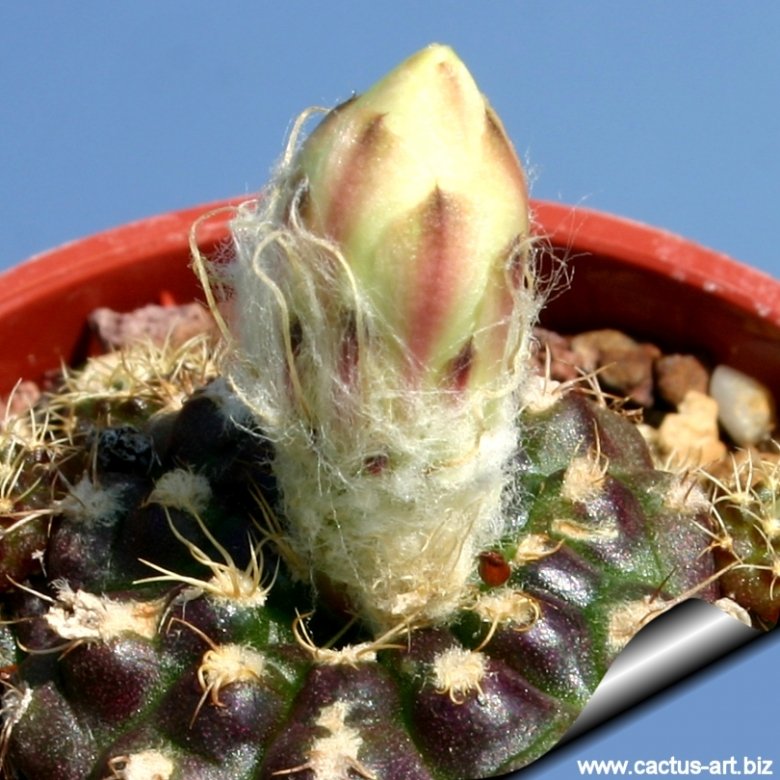
Cleistogamous buds are initially conical, then shortly a change occurs in the bud development - that part of the bud at the base starts growing thicker and petals are never formed. The buds that form flowers grow a slender egg shape and open quite some time later. Under normal circumstances the flowers opens in the greenhouse at a temperature above 20°C. They stay open only a few hours around noon, and they do not open again the next day. It is of interest that most of the open flowers do not form seeds if, one does not assist by pollinating by hand.
[W. Simon “The behaviour of some cacti during fertilisation cleistogamy.” The Chileans ‘69 pp.18-20 Volume 3 Number 14 (Translated from Succulenta for May 1967 by H. Vriend) <http://www.grahamcharles.org.uk/Chileans%20editions/Issue14.pdf\>\]
Bibliography
Major references and further lectures
-
James Cullen, Sabina G. Knees, H. Suzanne Cubey “The European Garden Flora Flowering Plants: A Manual for the Identification of Plants Cultivated in Europe, Both Out-of-Doors and Under Glass” Cambridge University Press, 11/Aug./2011
-
David Hunt, Nigel Taylor “The New Cactus Lexicon” DH Books, 2006
-
Edward F. Anderson “The Cactus Family” Timber Press, 2001
-
Larocca, J., Machado, M., Kiesling, R., Oakley, L., Pin, A. & Duarte, W. 2013. Frailea schilinzkyana. In: IUCN 2013. “IUCN Red List of Threatened Species.” Version 2013.2. <www.iucnredlist.org>. Downloaded on 09 January 2014.
-
W. Simon “The behaviour of some cacti during fertilisation cleistogamy.” The Chileans ‘69 pp.18-20 Volume 3 Number 14 (Translated from Succulenta for May 1967 by H. Vriend)
From llifle page Astrophytum friedrichii
Description
Frailea friedrichii is a dwarf cactus with unique and remarkably beautiful shape, the stems are small and solitary (fairly rarely clustered), dark green to coppery red, to 3 (or more) cm in diameter. It is at most a race of Frailea schilinzkyana. The key difference by which Frailea friedrichii was separated, namely the presence of more ribs (17-20), that are vertical, and forming tubercles, seems entirely spurious, and appears to fall within the natural variation of Frailea schilinzkyana and it should be synonymized with the latter.
Derivation of specific name: This member of the Cactaceae family was given this name in honour of Adolfo Maria Friedrich (1897– 1987), German photographer emigrating 1925 to Brazil and settling 1930 in Paraguay.
Stems: Single, globular, to 3-8 cm high and 3-6 in diameter, dark green to coppery red.
Ribs: 17-20, vertical, forming round tubercles to 4 mm in diameter.
Areoles: Oval, 1.25 mm long, 0.50-0.75 mm wide, with some light brown felt, later glabrous, to 1.5 mm apart.
Spines: Thin, amber, reddish or horn-coloured; all spines to 3-4 mm long.
Central spines: As many as 2, often absent, erect, slightly curved.
Radial spines: As many as 15, somewhat spreading, often bent and pectinate(6-7 on each side).
Flowers: Funnelform, lemon yellow, relatively large to 2-2.5 mm long and wide. Pericarpel spherical, c. 4 mm in diameter, lowest part, the lowest part naked, with areoles above, each of them with 3-6 light, curved, stiff, brown bristles to 3 mm long and white hairs. Receptacle short, about 4 mm long, with scales and in their axes 1-2 flexible, brown to light brown bristles 4-12 mm long, and soft white hair. Scales 1 to 3 mm long. Outer perianth segments spatulate, tapering, ending in a short needle-like tip, 6 to 8 mm long, 1.5 to 2 mm wide, dull-yellow outer side dirty-green, darkening toward the top with whitish or grey outer margins. Inner perianth segments 14 mm long, 3.5 mm wide, finely ciliate, yellow, outer side yellow to light pink, otherwise like the outer segments. Style 8.5 mm long, 0.8 mm in diameter, with 8 yellowish-white stigma lobes, 2,5 mm long, studded with papillae. Primary stamens 4-9 mm long, erect yellowish-white. Secondary stamens 4 to 5 mm long, curved upwards towards the anthers yellowish. Anthers 0.7 mm long, yellow.
Fruits: 1-18 mm long, and 6-8 mm wide, with light brown bristles and grey woolly hairs. Pericarp (skin), when ripe, dry and thin.
Seeds: Cap shaped dull black,1.5 mm long and 1.2 mm wide. Testa with very fine flat tubercles and with a strong crest on the back.
Origin and Habitat
Cordillera and Paraguarí (Piribebuy and adjacent areas with some intermediate form towards Rio Parana), Paraguay.
Notes
Fraileas are cleistogamous meaning that their flowers produce seed without even opening. Without the need for pollination, hence the buds rarely reach full bloom and remain closed. They usually produce little round, dry fruits without flowering. It would be a mistake to believe that this is always the case: Frailea pumila, is able to produce flowers which open normally, but they will open only in great heat in the hottest, brightest, afternoon sun, if at all.
Bibliography
Major references and further lectures
-
Edward Anderson “The Cactus family” Timber Press, Incorporated, 2001
-
Urs Eggli, Leonard E. Newton “Etymological Dictionary of Succulent Plant Names” Springer Science & Business Media, 29 June 2013
-
Gordon D. Rowley “Gordon Douglas Rowley’s A History of Succulent Plants”
Strawberry Press, 1997
- K.H. Prestlé “Die Gattung Frailea (Br. & R.) Prestlé” third edition - 1998
Source: Astrophytum friedrichii, LLIFLE - Encyclopedia of living forms, CC-BY-SA, retrieved 2026-10-25.
From llifle page Astrophytum grahlianum var. ( F.Haage ex K.Schum.) Halda & Malina
Description
Frailea grahliana is a common tiny and heavily clumping species that in cultivation can easily fill a 15 cm pot. It grows quickly.
Note: This specie is known from a very long time and is generally included within (as a synonym of) Frailea schilinzkyana . In habitat the plants are highly variable and there are intermediate forms with Frailea pumila and Frailea friederichii and some botanists consider all the different plants of this polymorphic group as F. pumila.
Stem: Dull-green, brownish-green to dark purple-green, top-shaped, depressed-globose, 3-4 cm in diameter and clumping around the base.
Roots: Fleshy yellowish.
Ribs: About 13 to 15 low and indistinct.
Central spines: Absent.
Radial spines: 8 to 11 yellowish, subulate, flattened on the surface, appressed and curved backward, 3-5 mm long.
Flowers: Pale to bright yellow, up to 4 cm long. Fraileas are cleistogamous meaning that their flowers produce seed without even opening. Without the need for pollination, hence the buds rarely reach full bloom and remain closed. They will open only in great heat in the hottest, brightest, afternoon sun, if at all.
Fruits: 6 mm in diameter, dry indehiscent with scales and bristles that detach easily, pericarp membranous, fragile that break easily releasing the seed. This species sets fruits without opening the flowers (cleistogamy)
Seeds: Brown, smooth.
Origin and Habitat
Until today the habitat of the original description is not known. Horst and Uebelmann field collect plants apparently show that this species does not grow only in Paraguay but also in Argentina.
Habitat: Frailea grahliana grows on flat sandstone at the edge of plates rocks, or on clayey soil among sandstone fragments, both in open an sunny spots or under grasses. The climate is warm and humid with hot summers and much thaw during the night. The winters are also warm even so occasionally light frosts may occurs, but the sandstone rocks warmth during the day and give off heat at night so rarely the temperature at soil level go below 5°C. It grows in association with Bromelia serra, Cererus lanosus and Monvillea sp. (paxtoniana?) that forms snake like stems.
Cultivation and Propagation
Grow them in rich, porous soil and let them dry out between waterings. These plants need a minimum temperature of 5-10° C (but occasionally temperatures of a few degrees below 0° are not dangerous).
Sun Exposure: It enjoys full sun, and it can take on a near black appearance when kept in bright light. In a shaded position the plants grow faster, but are not flat shaped and dark coloured.
Characteristically, during the dry season plants retract completely under the ground both in the wild and in cultivation too. This plant is short living (It does not live long - about 10-15 years).
Propagation: With fresh harvested seeds or (rarely) by grafting.
Bibliography
Major references and further lectures
-
N. L. Britton, J. N. Rose “The Cactaceae. Descriptions and Illustrations of Plants of the Cactus Family.” Volume 3, The Carnegie Institution of Washington, Washington 1922
-
- W. Simon “The behaviour of some cacti during fertilisation cleistogamy.” The Chileans ‘69 pp.18-20 Volume 3 Number 14 (Translated from Succulenta for May 1967 by H. Vriend)
-
Porsch, “Cactaceae” 1938/1, 1939/1: “Das Bestaubungsleben der Kakteenblufe”
-
Backeberg, “Die Cactaceae”, 1959.
-
Edward Anderson “The Cactus family” Timber Press, Incorporated, 200
-
James Cullen, Sabina G. Knees, H. Suzanne Cubey “The European Garden Flora Flowering Plants: A Manual for the Identification of Plants Cultivated in Europe, Both Out-of-Doors and Under Glass” Cambridge University Press, 11 August 2011
-
David R Hunt; Nigel P Taylor; Graham Charles; International Cactaceae Systematics Group. “The New Cactus Lexicon” dh books, 2006
Source: Astrophytum grahlianum var. ( F.Haage ex K.Schum.) Halda & Malina, LLIFLE - Encyclopedia of living forms, CC-BY-SA, retrieved 2026-10-25.
From llifle page Astrophytum perumbilicatum
Description
Frailea perumbilicata is a tiny solitary cactus with globular stems typically flattened and umbilicate above, (wider than taller). Frailea perumbilicata is considered by many a synonym of Frailea schilinzkyana. This two taxa are linked one to each other by plants with intermediate characteristics and shows similar features, namely size and form of stems, radial spines, flowers, fruit, etc., prove, that is impossible to differentiate between these taxa.
Habit: Frailea perumbilicata is a very small cactus that remains solitary or (occasiaonally) somewhat cespitose.
Stem: It is diminutive in size, 2-3 cm high and in diameter, depressed globular and somewhat flattened and umbilicate above, (wider than taller). Dull yellowish-green, green or olive green.
Ribs: Usually 15, divided into rounded tubercles.
Areoles: Placed on the upper side of the tubercles.
Radial spines: About 6 to 10 needle-like, twisted, spreading, more or less appressed and reflexed 2-3 mm long tannish-brow in colour.
Central spines: Usually absent, occasionally one stouter than the radials.
Roots: Fat central tap root.
Flowers: Sulphur yellow, infundibuliform, 3,4-4 cm long, often cleistogamous (Even when their flowers do not open, they still form fruits with many seeds)
Blooming season: Flowers will open only in great heat, in the hottest, brightest, afternoon sun, if at all.
Fruits: Dry, indehiscent, that detach easily, yellowish, pericarp membranous, fragile that break easily, releasing the seed.
Origin and Habitat
Frailea perumbilicata has a relatively small range in Rio Grande do Sul (Brazil) and Concepción departments in Uruguay.
Altitude: 150-500 metres above sea level.
Habitat: In Brazil it grows on grass plains, elsewhere mostly on rocky outcrops and stony fields. Frailea perumbilicata is not abundant and its distribution is sparse. In general, Frailea species have a relatively short lifespan but rapid reproduction (generation length is 3-5 years). The major threats are trampling by grazing cattle, agriculture, forestry (Eucalyptus plantations), and fire.
Bibliography
Major references and further lectures
-
James Cullen, Sabina G. Knees, H. Suzanne Cubey “The European Garden Flora Flowering Plants: A Manual for the Identification of Plants Cultivated in Europe, Both Out-of-Doors and Under Glass” Cambridge University Press, 11/Aug./2011
-
David Hunt, Nigel Taylor “The New Cactus Lexicon” DH Books, 2006
-
Edward F. Anderson “The Cactus Family” Timber Press, 2001
-
Larocca, J., Machado, M., Kiesling, R., Oakley, L., Pin, A. & Duarte, W. 2013. Frailea schilinzkyana. In: IUCN 2013. “IUCN Red List of Threatened Species.” Version 2013.2. <www.iucnredlist.org>. Downloaded on 09 January 2014.
-
Bcher Gruppe “Frailea: Frailea, Frailea Cataphracta, Frailea Schilinzkyana, Frailea Gracillima, Frailea Amerhauseri, Frailea Pygmaea” General Books LLC, 2010
Source: Astrophytum perumbilicatum, LLIFLE - Encyclopedia of living forms, CC-BY-SA, retrieved 2026-10-25.
From llifle page Frailea ybatense
Description
Frailea ybatensis (Occasionally misspelled “ybatense”) is one of the varieties of the wide ranging and variable Frailea schilinzkyana. It has less numerous spines, more numerous ribs, dark brownish-green or purple-violet stems, and citron yellow flowers opening in the afternoon. The differences with other Frailea schilinzkyana are in reality very minimal and most botanist agree on the fact that both should all be included in the Frailea schilinzkyana.
Habit: It is a small solitary (unless damaged) perennial stem succulent that grows deep seated flat to the ground surface.
Stem: Flattened-globular somewhat depressed at apex up to 4 cm in diameter and 2,5 cm high, green to dark-green.
Ribs: Up to 24 vertical or weakly spiralling with round tubercles about 6 mm apart. Usually red to purple-violet.
Areoles: Round covered with cream-white short wool.
Spines: Bristly, curved, up to 5 more or less pectinate or radially placed on both sides, one pointing downward, one (-2) upward and rarely one central spine, all the little ragged, creamy-white.
Flowers: Apical, diurnal, radial, funnel-shaped, 30 mm broad, yellow. Pericarpel about 8 mm long, 5 mm wide, below the naked, above whitish-brown hairs. Outer perianth segments spatulate, with a very sharp tip and pale green stripes, inner ones spatulate, acute, finely ciliate, pale-yellow. Style 10 mm long, pale-yellow; stigma lobes 5 mm long pale-yellow. Stamens pale-yellow in two rows, inner ones close to the style 9 mm long, outer rows 5-7 mm long. Anthers 1 mm long yellow. The flowers are often cleistogamous (Even when their flowers do not open, they still form fruits with many seeds).
Fruits: Globular, 7 mm in diameter, brown whit pale-brownish hairs.
Seeds: Boat shaped, dark brown, glossy 1,7-1,9 mm long, 1,2-1,4 mm wide.
Origin and Habitat
Close to Ytá-Ybaté, South East of Asunción, Paraguay.
Bibliography
Major references and further lectures
-
James Cullen, Sabina G. Knees, H. Suzanne Cubey “The European Garden Flora Flowering Plants: A Manual for the Identification of Plants Cultivated in Europe, Both Out-of-Doors and Under Glass” Cambridge University Press, 11/Aug./2011
-
David Hunt, Nigel Taylor “The New Cactus Lexicon” DH Books, 2006
-
Edward F. Anderson “The Cactus Family” Timber Press, 2001
-
Larocca, J., Machado, M., Kiesling, R., Oakley, L., Pin, A. & Duarte, W. 2013. Frailea schilinzkyana. In: IUCN 2013. “IUCN Red List of Threatened Species.” Version 2013.2. <www.iucnredlist.org>. Downloaded on 09 January 2014.
-
A.F.H. Buining & G. Moser, Succulenta (Netherlands) 50 (3): 46, 1971
-
“Alweer een artikel over Frailea’s.” J.J. De Morree, Succulenta (Netherlands) 68(5): 100-103, 1989.
-
“Frailea ybatensis”. Piante Grasse 27(2): 132, 2007.
-
“Frailea ybatense Buining et Moser spec. nov.”. A.F.H. Buining. Succulenta (Netherlands) 50(3): 46-47, 1971.
-
“Frailea’s ook in Paraguay. Ludwig Bercht & Volker Schädlich.” Succulenta (Netherlands) 87(1):36-42. 2008.
-
“Growing fraileas.” Angie Money. Cactusworld (BCSS) Volume 26, No. 1 March 2008.
-
“Paraguayaanse dwergen in de twintigste eeuw.” Lubomir Berka, Succulenta (Netherlands) 79(5): 216-221, 2000.
Source: Frailea ybatense, LLIFLE - Encyclopedia of living forms, CC-BY-SA, retrieved 2026-10-25.
From llifle page Frailea klingleriana
Description
At first glance it belongs to the group of Frailea grahliana, but is distinguished by the larger and coarser tubercles, longer spines and clear purple “moons” under its areoles.
Origin and Habitat
San José de Chiquitos, Easternt Bolivia.
Source: Frailea klingleriana, LLIFLE - Encyclopedia of living forms, CC-BY-SA, retrieved 2026-10-25.
Cultivars and forms (1)
Forms (1)
Gallery