Description
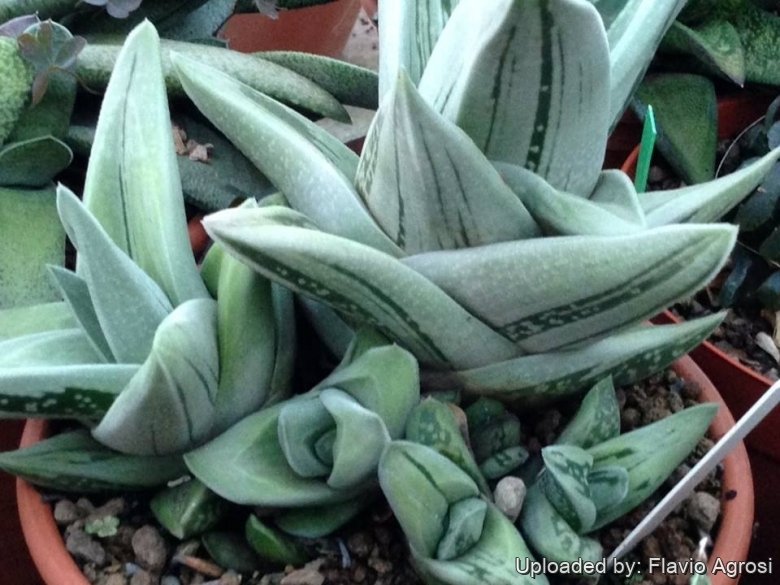
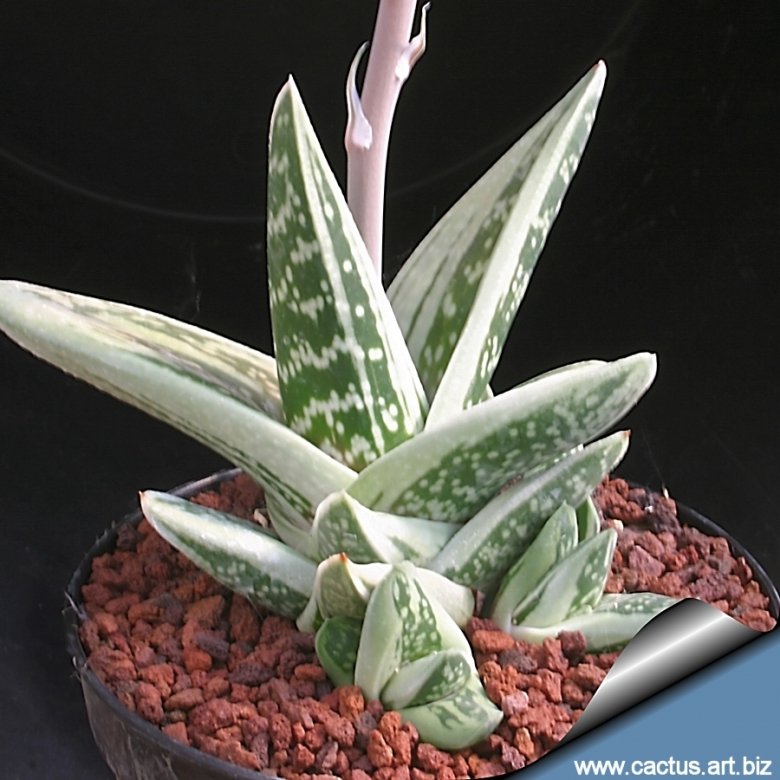
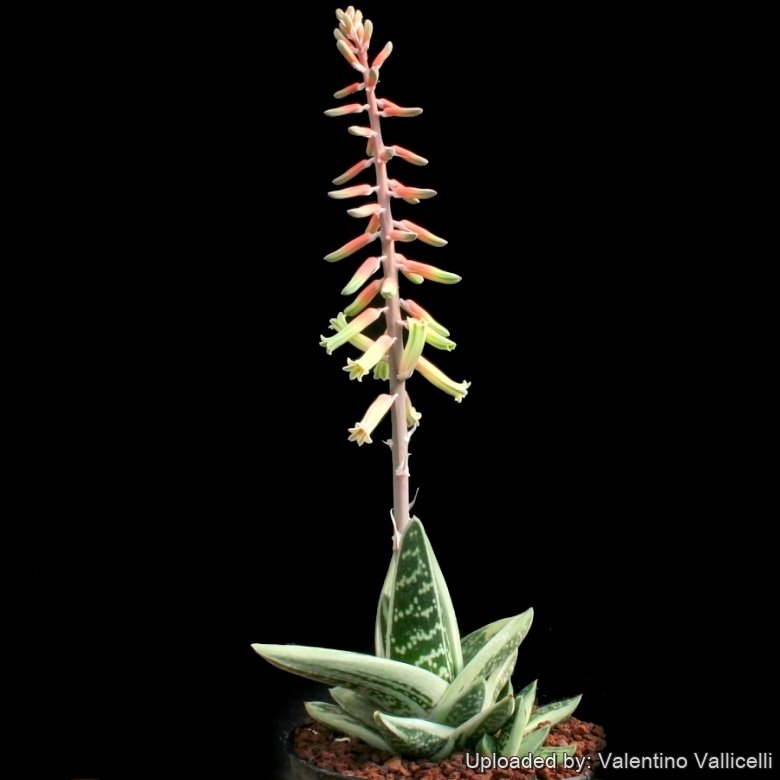
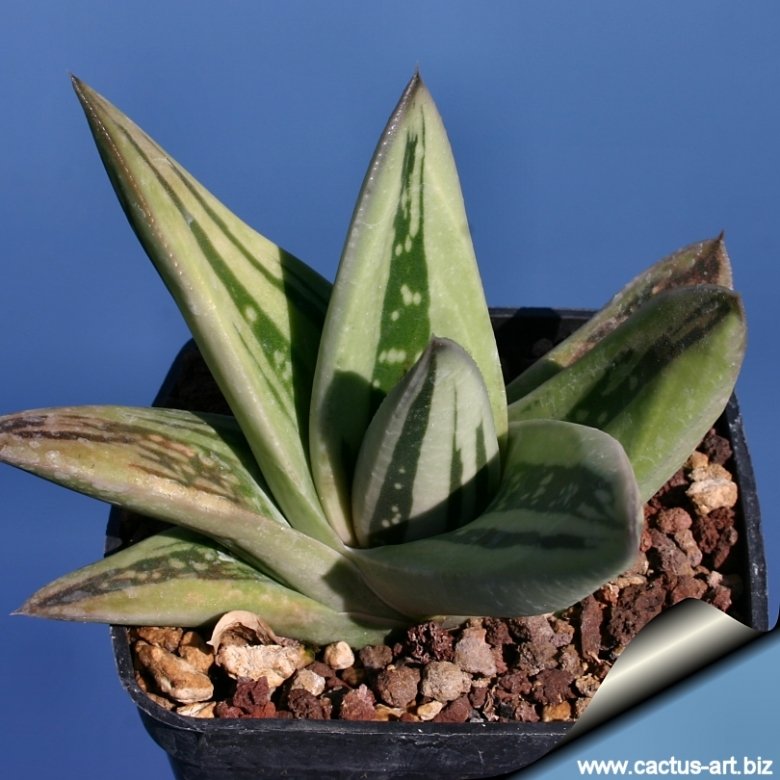
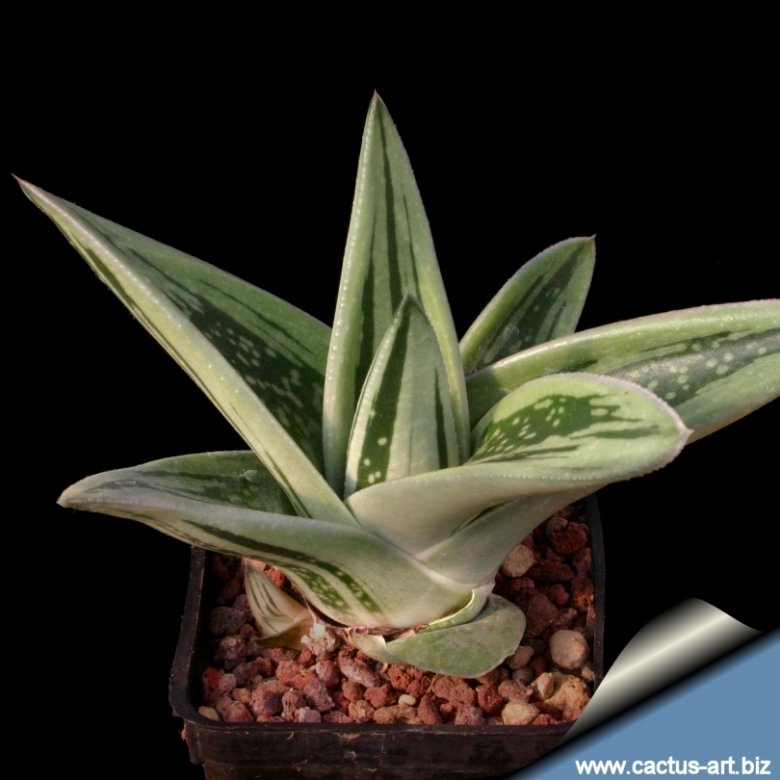
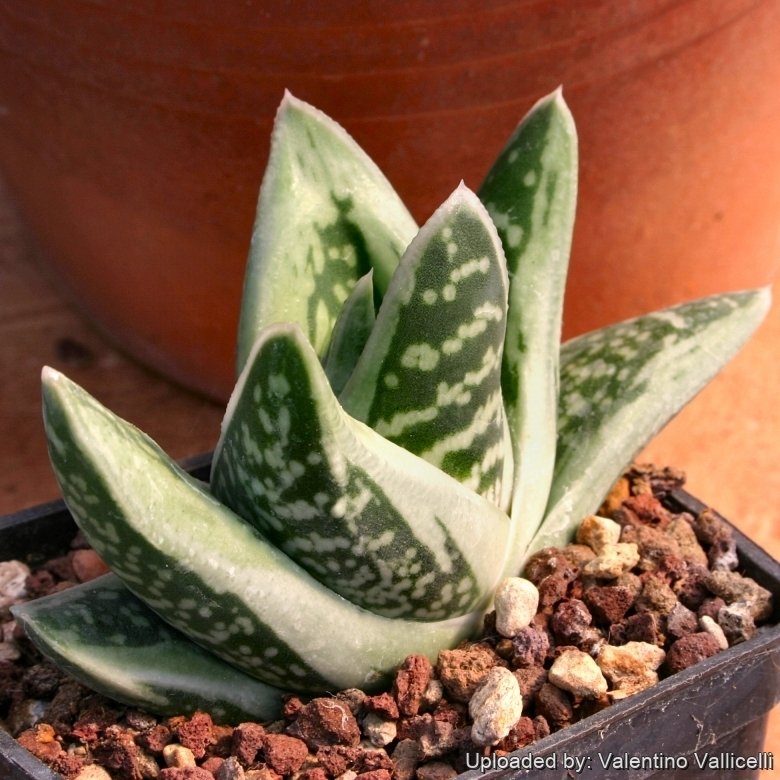
Gastrolea cv. Green Ice is a Gasteria/Aloe hybrid, and is properly called a Gasteraloe. It is a very compact plant with thick, smooth, toothless variegated/striped leaves coloured of icy light green and green. It grows relatively slowly, can get quite large with time with rosettes up to 30 cm across.
However no Gasteria species has leaves that look like this, in fact as a juvenile this plant has the typical flat strap-like leaves of any Gasteria but as it get older, looks more like an Aloe, so it is a true mixture of the two genera.
Aloe descoingsii (NOT Aloe vera or Aloe descoingsii, as sometime reported) is the parent Aloe. Supposedly the Gasteria that was used in this hybrid was a hybrid itself listed as either Gasteria cv. Old Man Silver, or Gasteria cv. Little Warty (itself a hybrid of ‘Old Man Silver’ with Gasteria batesiana).
Origin and Habitat
Garden origin (Nursery produced cultivar)
Cultivation and Propagation
Gasteraloe cv. Green Ice is slow growing but long-lived plant of easy culture which makes it a good houseplant and can be an excellent subject for the beginning gasteriaphile (it can grow easily on window sills, verandas and in miniature succulent gardens where it is happy to share its habitat with other smaller succulent plants).
Exposure: It needs light shade to shade, but will take full sun part of the day.
Soil: It prefers a very porous potting mix to increase drainage.
Waterings: During the hot summer months, the soil should be kept moist but not overly wet.
Fertilization: The plants are fertilized only once during the growing season with a balanced fertilizer diluted to ½ the recommended strength. During the winter months, water only when the soil becomes completely dry.
Hardiness: Frost hardy to -1°C (Or less).
Propagation: This Gasteraloe is easily propagated by the removal of offshoots or by leaf cuttings in spring or summer. To propagate by leaf cuttings, remove a leaf and let it lie for about one month (e.g. in a cool window sill), giving the wound time to heal. Then lay the leaf on its side with the basal part buried in the soil. This leaf should root within a month or two, and small plants will form at the leaf base. Young plants can be harvested the following season.
Gallery