Publication: Möller’s deutsche gärtner-zeitung
Description
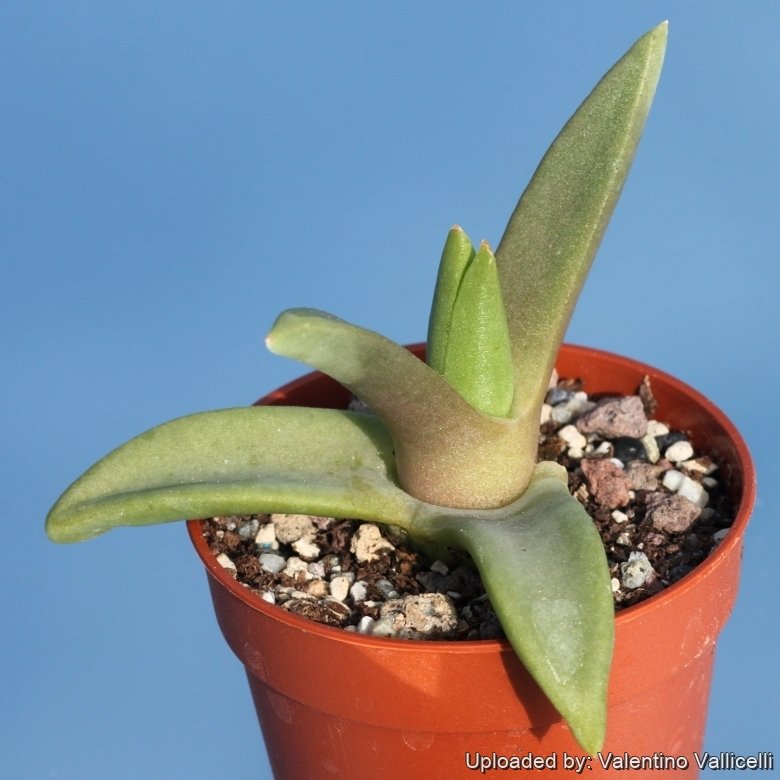
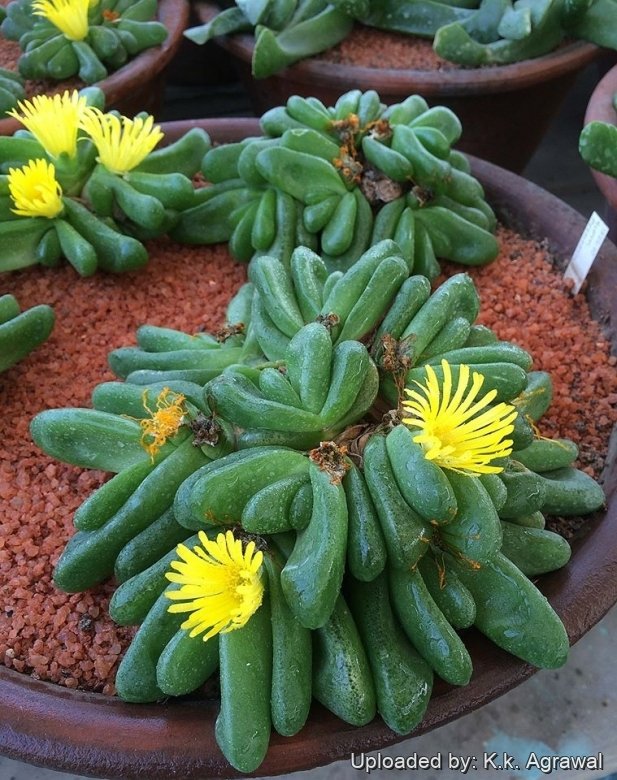
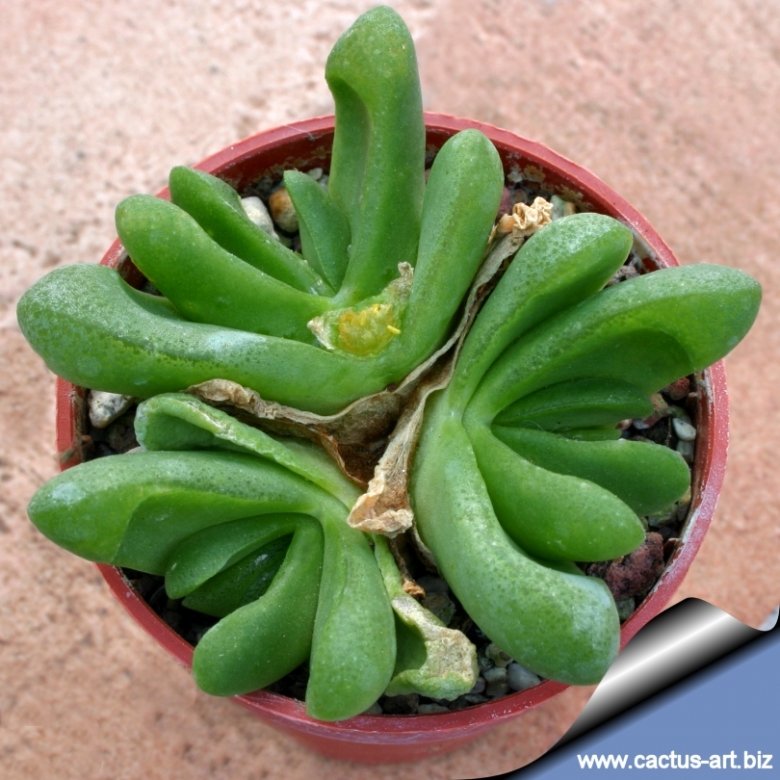
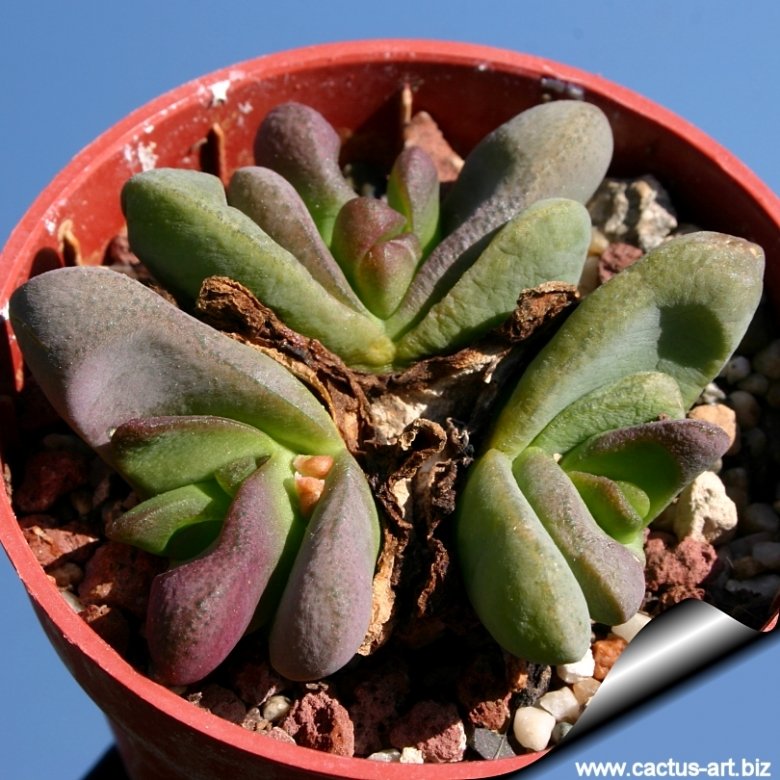
Glottiphyllum nelii is a small, clump-forming perennial succulent with small branching stems. It forms a mat of fleshy leaves 5-10 cm tall and up to 30 cm in diameter. It is dormant in high summer heat, and dormant in the darkness of a cold winter, but otherwise happy to grow whenever it is watered. There are indeed marked differences in sizes of leaf and flowers in plants from different population and also the growing condition (especially sun exposure and water availability) determine conspicuous differences in habit of cultivate specimens.
Stem: Very short.
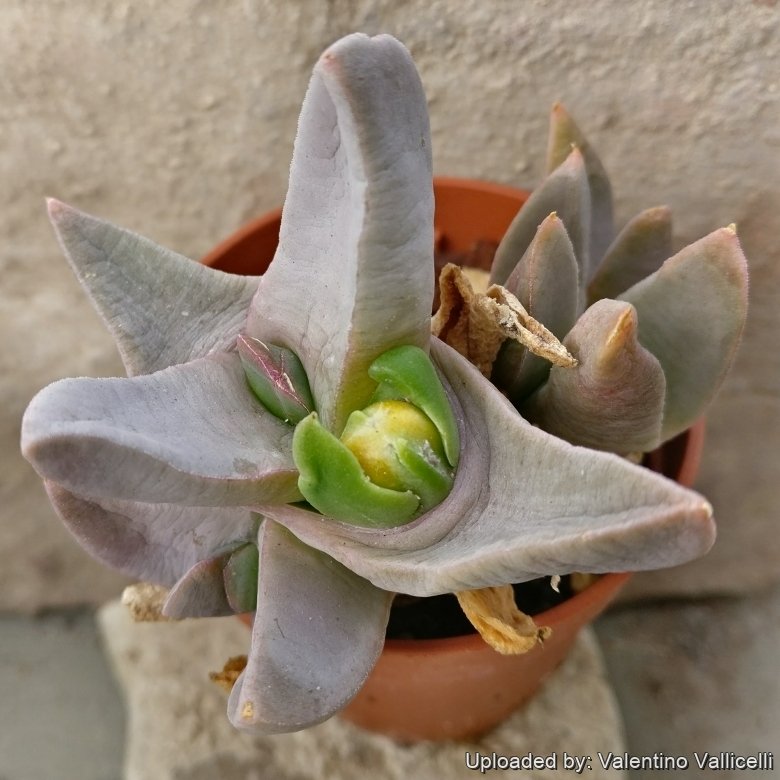
Rosettes: With up to three pairs of leaves arranged cross-wise (placed at right-angles). Individual rosettes about 5-10 cm in diameter.
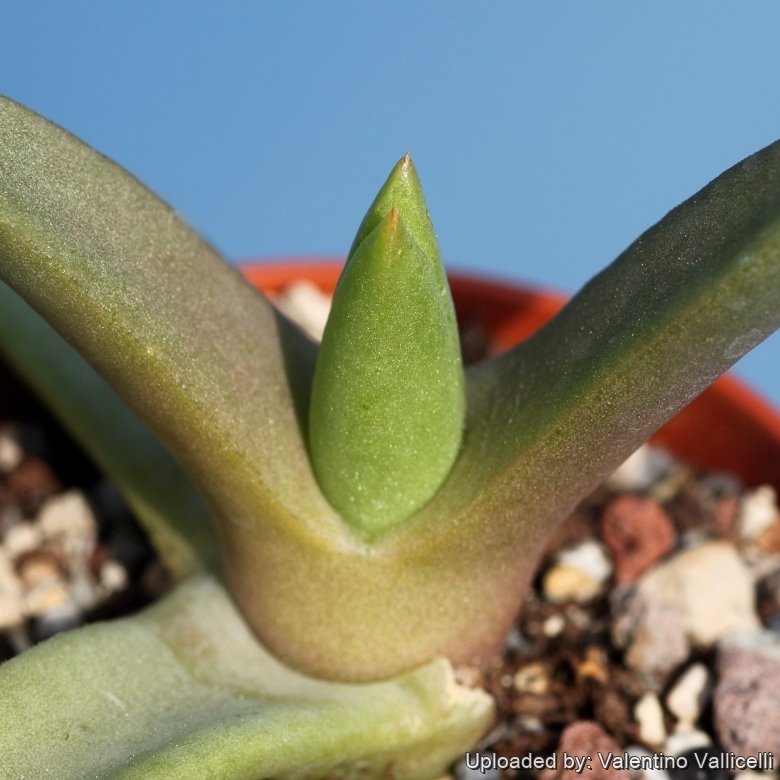
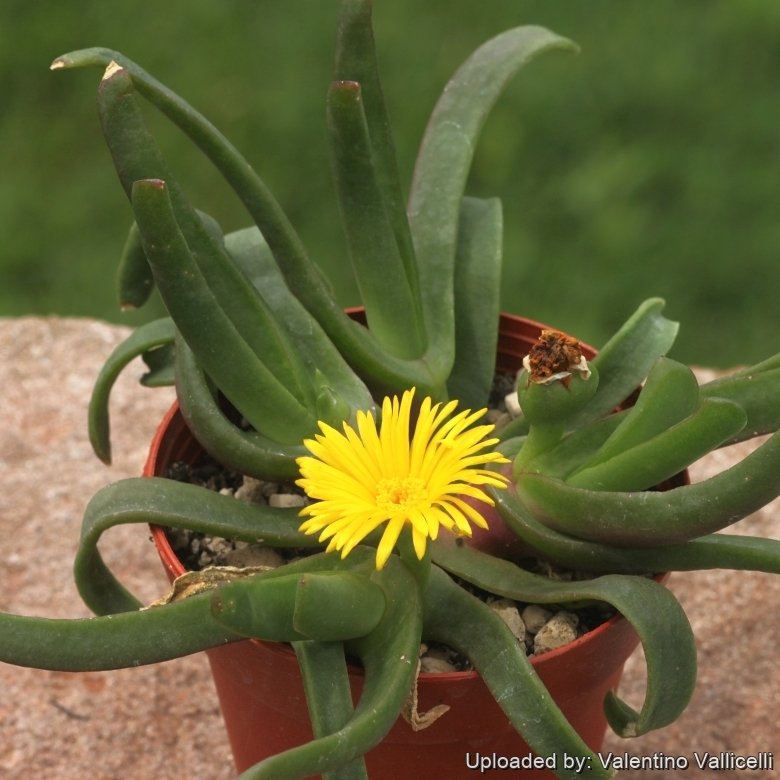
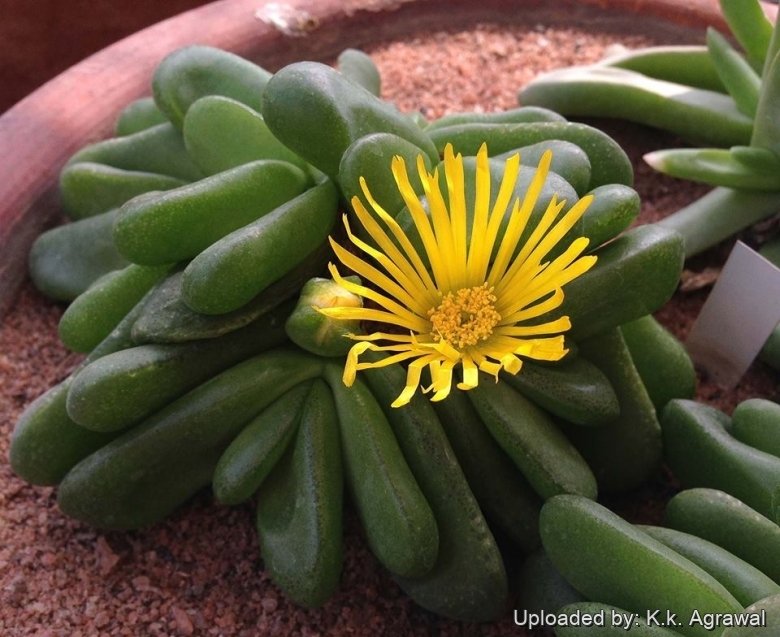
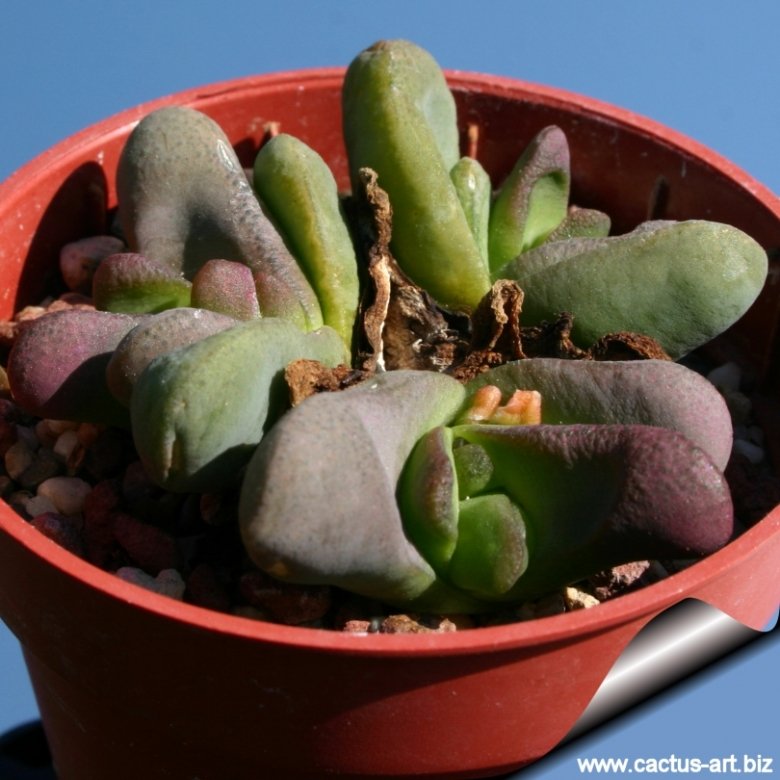
Leaves: usually 4-5 cm long (but occasionally up to 9 cm), 1-2 cm wide and 0,8-1,2 cm thick, semi-cylindrical, very clearly arranged in 2 ranks, in equal or moderately unequal pairs, tongue-shaped, tapered to to a sharp point, the longer leaf flat on the upper surface the tip often curved in like a hook and with rounded margins. The leaves are soft, dull glossy, pale green, opalescent, light absorbing, succulent and very juicy in texture, reminiscent of gummy bears. Given a very bright position, the leaves are compact, grey-green with red and purple, in shade they are untidy, dark glossy green and much more elongated.
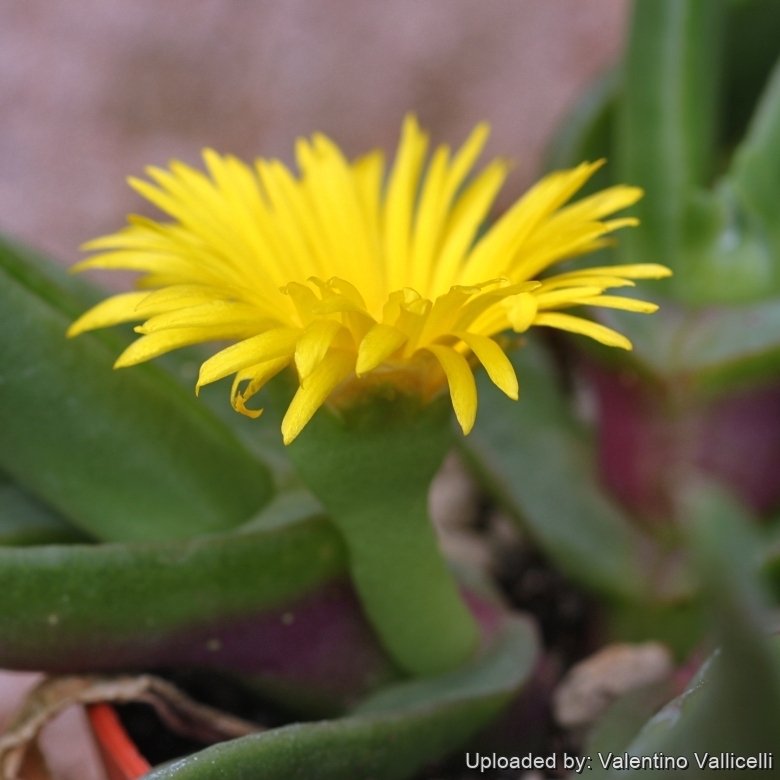
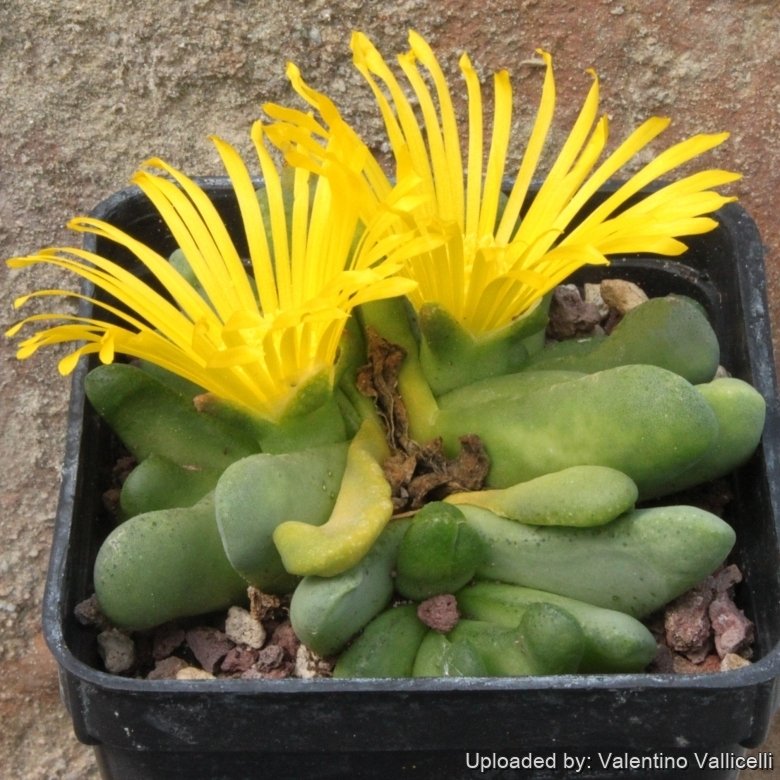
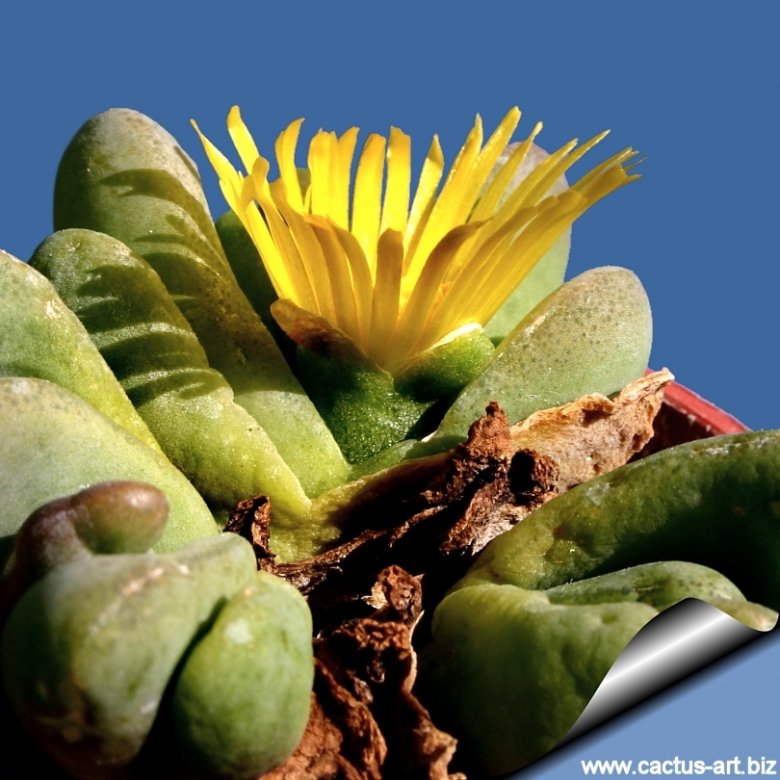
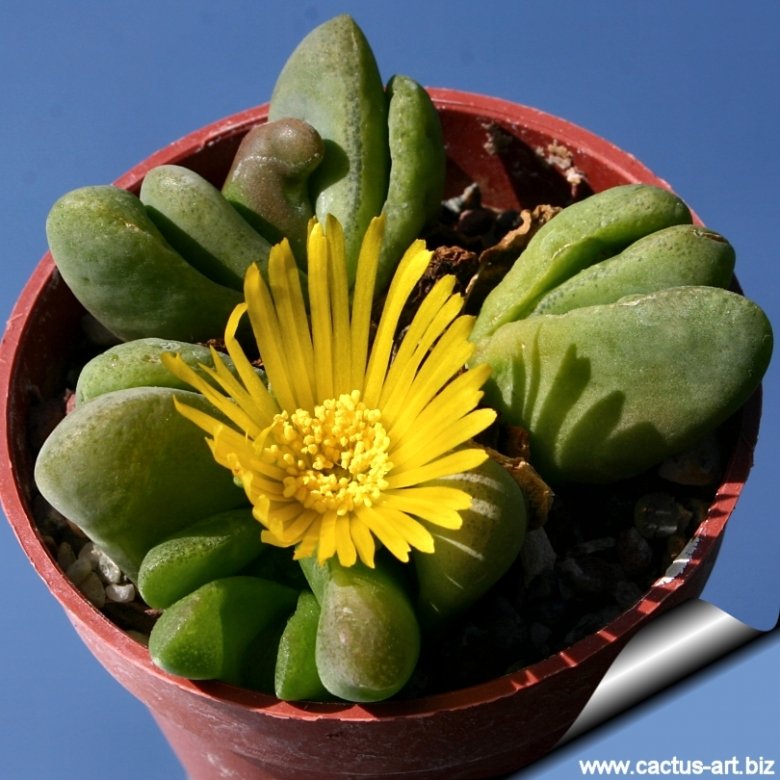
Flowers: Long-lived and very showy, up to 4 cm in diameter, yellow, daisy-like almost stalkless or with a very short peduncle. Petals golden yellow.
Blooming season: Flowers bloom in autumn.
Fruits: Persisting in the centre of the plant.
Origin and Habitat
Karoo region, South Africa.
Cultivation and Propagation
The plants in this genus represent some of the more easily cultivated succulent species. Their main growth period is in late winter and were heading for spring-summer dormancy, but they do best with at least a little water all year.
Soil: It grows best in sandy-gritty soil and requires good drainage as it it is prone to root rot. It can grows outdoor in sunny, dry, rock crevices (protection against winter wet is required) It can also be cultivated in alpine house, in poor, drained soil.
Fertilization: Feed it once during the growing season with a fertilizer specifically formulated for cactus and succulents (poor in nitrogen), including all micro nutrients and trace elements diluted to ½ the strength recommended on the label.
Watering: Requires little water otherwise their epidermis breaks (resulting in unsightly scars). Water moderately from the middle of summer to the end of winter, and keep the compost almost dry when the plants are dormant (only occasional misting). Water minimally in spring and summer, only when the plant starts shrivelling (, but they will generally grow even in summer if given water). If grown in a container, bottom watering by immersing the container is recommended. It must have very dry atmosphere.
Exposition: Keep cool and shaded in summer, but provide maximum light the rest of the year. Remember that a sunny locality is best, otherwise they will not flower properly.
Hardiness: It prefer a very bright situation and require a minimum temperature 5°C (But will take a light frost and is hardy down to -7° C for short periods if it is in dry soil). USDA zones 9A – 11. In areas prone to frost, grow in an intermediate greenhouse or conservatory, in pots.
Pests and diseases: Soft leaves mean easy to damage. May be susceptible to mealybugs and rarely scale.
Uses: Container, rock garden.
Remarks: However there are two ways to grow glottiphyllums: The first is to let nature take her course, which means giving them large pots and copious water; they will burgeon into enormous masses of glistening green leaves. The other is to starve them into svelteness by hot summer droughts, small pots, and firm loam. The results can be very attractive. In any case it is best to treat them as late winter growers.
Notes: The 50 or so species of this South African genus of succulents are so similar that many may be hybrids.
Propagation: Seeds or cuttings. Seeds germinate very easily and can be sown in early to mid-spring, but can be sown at most times of the year (Avoid very hot weather in summer) and germinated in heated humid environment. Do not sow the seeds too deep. If sown too deep, they will be smothered and probably not germinate. Under ideal conditions, seedlings will grow rapidly. Plant the seedlings out when they are 3–5 cm in height.
Alternatively, use stem cuttings taken towards the end of summer in an heated propagating case (15-21°C) Cuttings root easily and remain true to the species, while seeds tend to hybridize.
Bibliography
Major references and further lectures
-
Hermann Jacobsen, Vera Higgins (1946) “Description, Cultivation and Uses of Succulent Plants, Other Than Cacti” Abbey Garden Press.
-
Heidrun E. K. Hartmann (2002) “Aizoaceae F – Z” Springer.
-
Jacobsen, (1960) “Handbook of succulent plants”
-
Barkhuizen. (1981) “Succulents of southern Africa.”
-
Court. (1981)“Succulent flora of southern Africa”
-
Japan Succulent Society. (1981)“Colour encyclopedia of succulents.” pl. 93.
-
American Horticultural Society “The American Horticultural Society encyclopedia of garden plants” Macmillan, 30/Nov/1989
From llifle page Glottiphyllum pygmaeum
Description
The G. pygmaeum is dwarf form of Gibbaeum nelii, often confused with Gibbaeum neilii. It is a compact, rambling succulent with up to 5 branches (or more with age). It is dormant in high summer heat, and dormant in the darkness of a cold winter, but otherwise happy to grow whenever it is watered. The dimension varies from 15 cm tall and 30 cm in diameter in the standard form to only a few cm in diameter and height in the “pygmaeus” form (but often more in cultivation). Given insufficient light and too much water, they grow into great sprawling masses of fat, bright green leaves. Given a very bright position, the leaves are dark green, almost black at times, with red and purple. There are indeed marked differences in sizes of leaf and flowers in plants from different population and also the growing condition (especially sun exposure and water availability) determine conspicuous differences in habit of cultivate specimens.
Stem: Almost stem less or very short stemmed.
Leaves: The plant produces several, distichous leaves in 2 to 4 (or more) ranks on each branch. They are soft, dark green, glossy to waxy grey. Leaves have rounded, rarely sharp, edges dotted with dark rounded idioblast. They are succulent and very juicy in texture, reminiscent of gummy bears, in full sun they assume a purplish colouring
Fruits: Persisting in the center of the plant.
Flowers: Long-lived, yellow, daisy-like and very showy.
Blooming season: Late summer-autumn.
Origin and Habitat
South Africa (Little Karoo: Oudtshoorn)
Habitat: They grow in rocks under bushes or in open. The soisl incorporate slate, sandstone and (mostly) quartz. Rainfall in their native areas is between 100 and 200 mm, especially in March and November. Some plant in habitat have scars or burst in their skins, just like they do at home.
Cultivation and Propagation
The plants in this genus represent some of the more easily cultivated succulent species. Their main growth period is in late winter and were heading for spring-summer dormancy, but they do best with at least a little water all year. Requires little water otherwise their epidermis breaks (resulting in unsightly scars). Water moderately from the middle of summer to the end of winter, and keep the compost almost dry when the plants are dormant. Water minimally in spring and summer, only when the plant starts shrivelling (, but they will generally grow even in summer if given water) In areas prone to frost, grow in an intermediate greenhouse or conservatory, in pots of cactus compost, obtainable from good garden centres. Keep cool and shaded in summer, but provide maximum light the rest of the year. However there are two ways to grow glottiphyllums: The first is to let nature take her course, which means giving them large pots and copious water; they will burgeon into enormous masses of glistening green leaves. The other is to starve them into svelteness by hot summer droughts, small pots, and firm loam. The results can be very attractive. In any case it is best to treat them as late winter growers. Soft leaves mean easy to damage.
Propagation: Seeds or cuttings. Seeds can be sown in early to mid-spring and germinated in heated humid environment. Alternatively, use stem cuttings taken towards the end of summer in an heated propagating case (15-21°C)
Notes: The 50 or so species of this South African genus of succulents are so similar that many may be hybrids.
Bibliography
Major references and further lectures
- Heidrun E.K. Hartmann “Illustrated Handbook of Succulent Plants: Aizoaceae F-Z” Springer Science & Business Media, 2002
2)Doreen Court “Succulent Flora of Southern Africa” CRC Press, 01/Jun/2000
-
Gideon Smith u.a. (Hrsg.) “Mesembs of the World: Illustrated Guide to a Remarkable Succulent Group.” Briza Publications, 1998
-
James Cullen, Sabina G. Knees, H. Suzanne Cubey “The European Garden Flora Flowering Plants: A Manual for the Identification of Plants Cultivated in Europe, Both Out-of-Doors and Under Glass” Cambridge University Press, 11/ago/2011
-
Hermann Jacobsen “A handbook of succulent plants: descriptions, synonyms, and cultural details for succulents other than Cactaceae, Volume 1” Blandford Press, 1960
-
Werner Rauh “The Wonderful World of Succulents:Cultivation and Description of Selected Succulent Plants Other Than Cacti” Smithsonian Institution Press, 1984
-
Ed Storms “Growing the Mesembs” Tarrant Printing, 1976
Source: Glottiphyllum pygmaeum, LLIFLE - Encyclopedia of living forms, CC-BY-SA, retrieved 2026-10-25.
Gallery