Publication: Cact. Succ. J. (Los Angeles) 71(6): 325. 1999 [24 Nov 1999]
Description
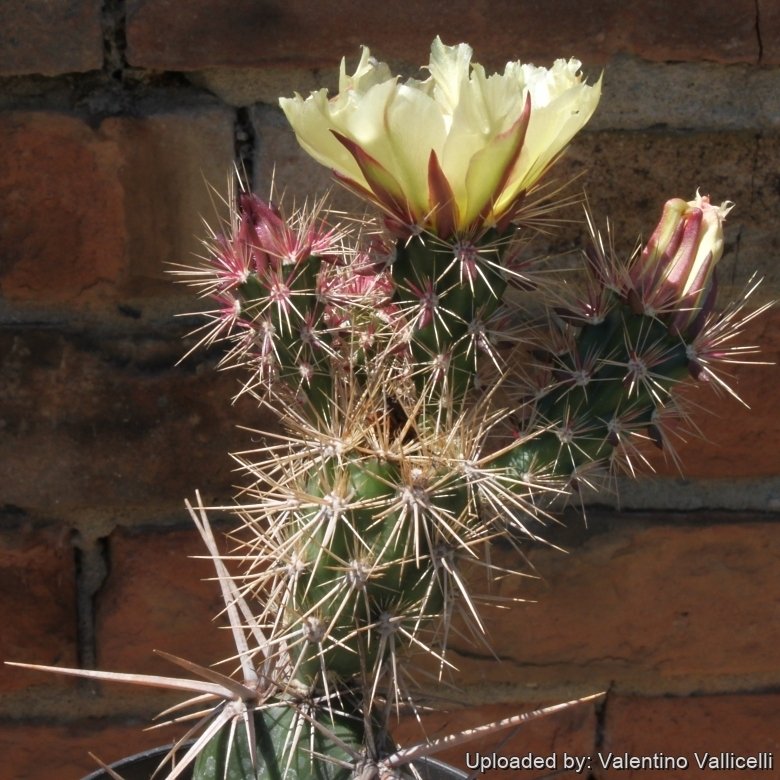
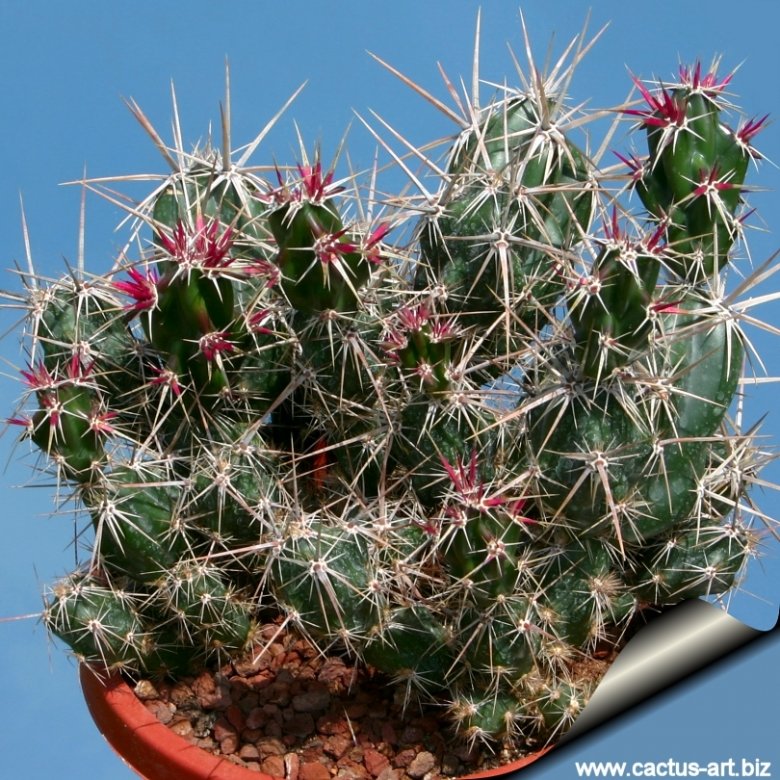
Grusonia invicta (Corynopuntia invicta) is a mat forming cactus that grows approximately 20-50 cm high and up to 2 m across (or more) with stout stems and very broad formidable spines.
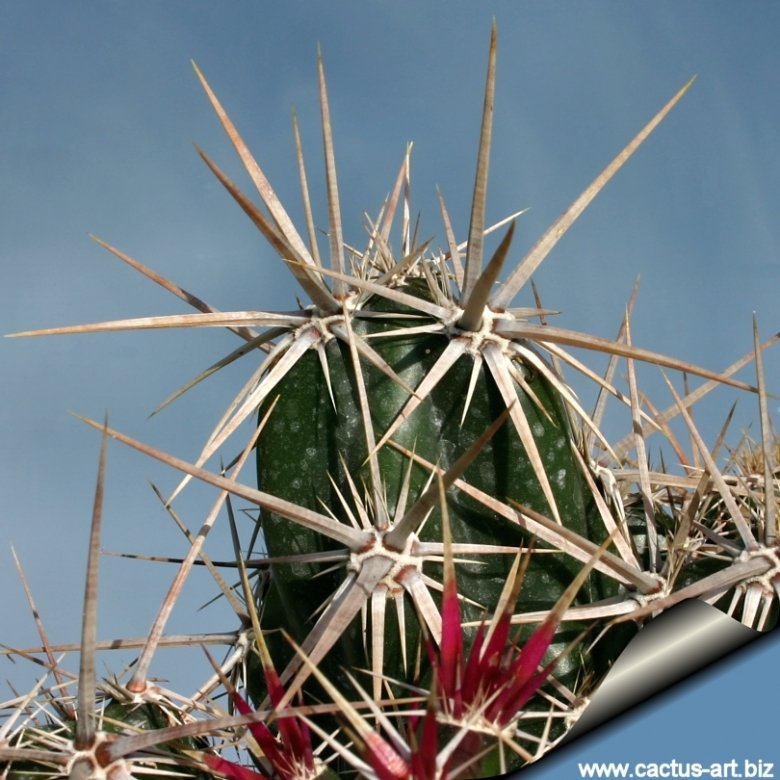
Stems: Jointed, deep green ascending or spreading. Segments obovoid to club-shaped, up to 12 cm long. Strongly tuberculate.
Tubercles: Large, flattened laterally, 3-4 cm long.
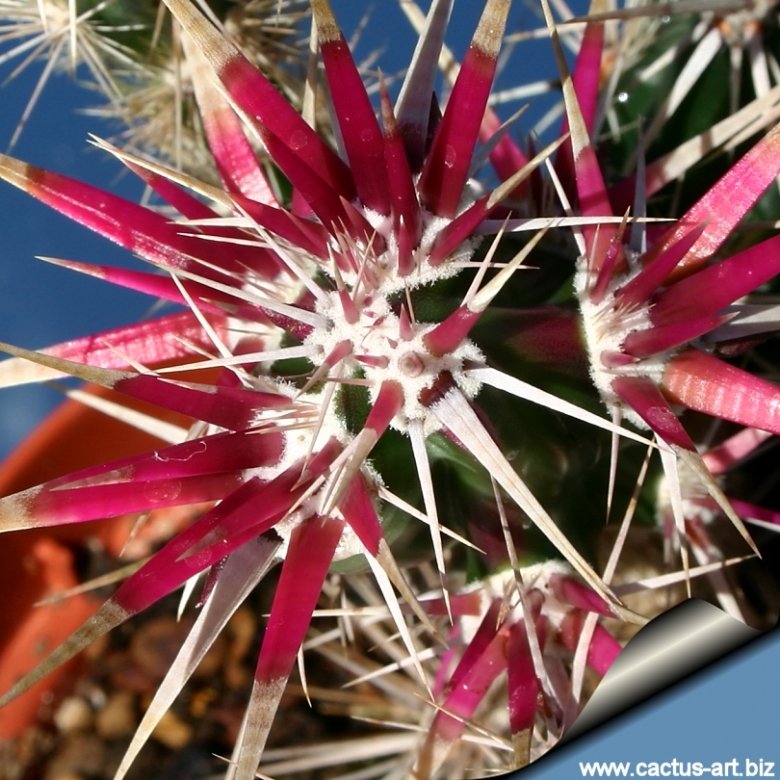
Areoles: Large up to 1,5 cm in diameter with white wool.
Glochids: Few white up to 4 mm long.
Leaves: Linear, slightly curved, reddish and ephemeral, 8-14 mm long.
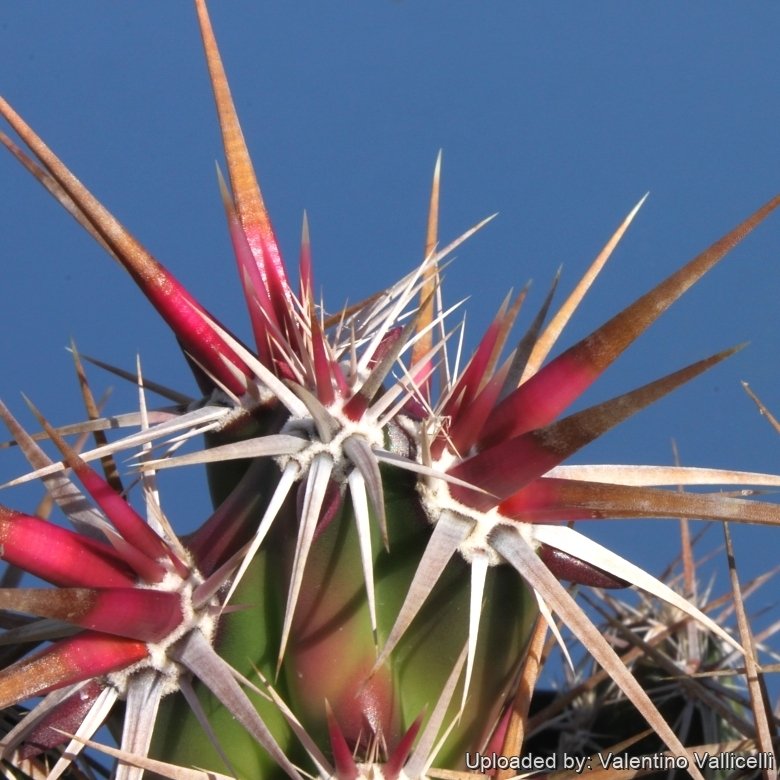
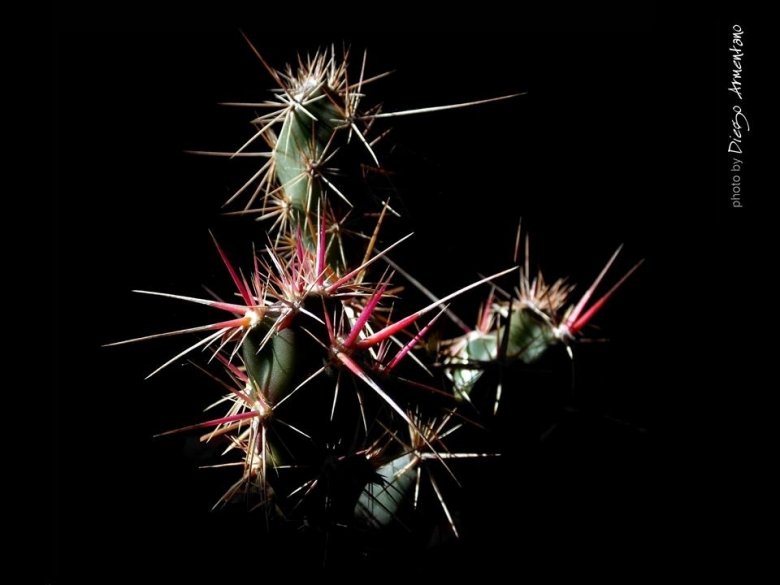
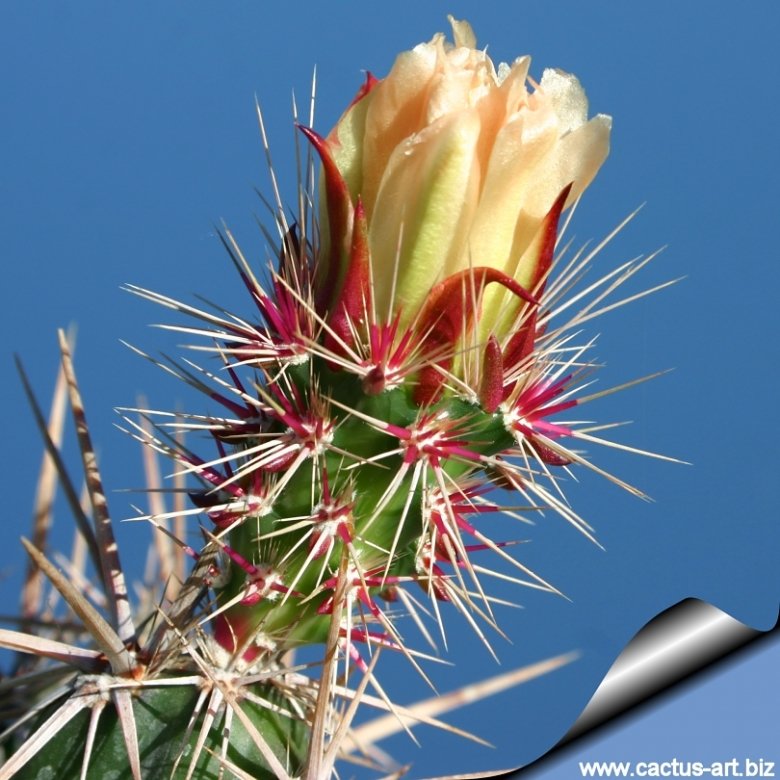
Spines: Thick, sharp-pointed, straight and strongly flattened, that look like little daggers, 1-5 cm long, and are at first reddish or purple with bright carmine-red base, turning greyish-white and finally black.
Radial spines: 6-10.
Central spines: 10-12 much stouter than the radials.
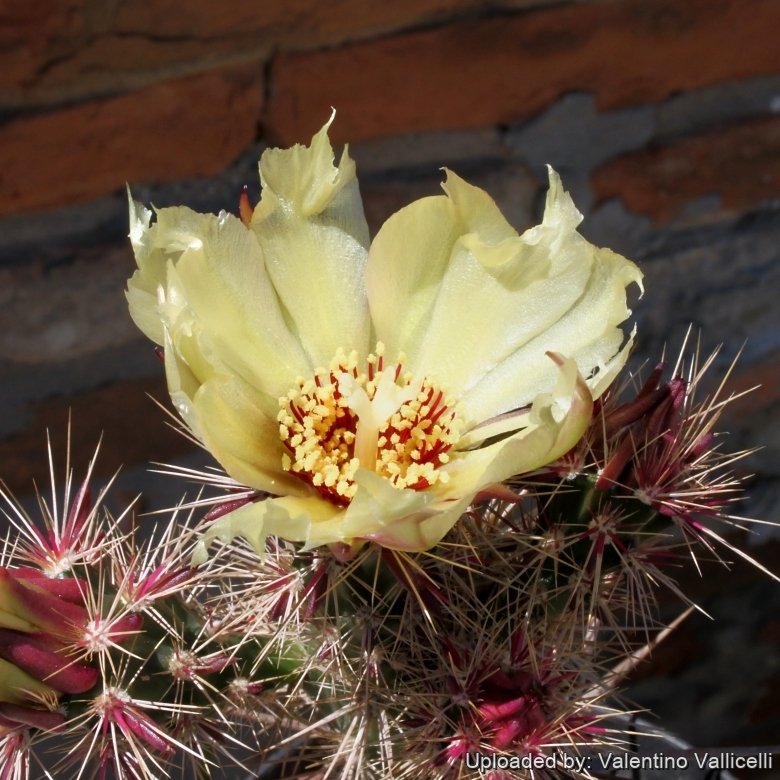
Flowers: Yellow up to 5 cm in diameter, with a magnificent form. Tepals ovate-acuminate. Ovary almost hidden by numerous reddish acicular spines.
Blooming season: April to May.
Seeds: Yellowish, 2 mm broad.
Origin and Habitat
Grusonia invicta (Corynopuntia invicta) . Vizcaíno Desert Region to just north of the Cape Region. Central Baja California, Mexico. This species is fairly common and there are definitely more than 10,000 mature individuals.
Altitude range: from sea level to 200 metres above sea level.
Habitat: This species grows in silty, sandy, or gravelly soil at low elevation near the coast in Sarcocaul shrubland. In some part of its range it grows among Echinocereus brandegeei and Echinocereus hancockii this three species look remarkably like one to each other. The adaptive value of this convergence (if any) is unknown. It is a widespread and abundant species with no threats. It is extremely spiny and very hardy.
Cultivation and Propagation
This plant from Baja California needs warmer winter temperatures, and can resist only occasional light frost, above -2 C. It is very sensitive to over-watering (rot prone) and needs good drainage. Fertilize with a half-strength liquid fertilizer in summer. Irrigate regularly during the growing season, keep absolutely dry in winter. Needs full sun.
Outdoors: Drought-tolerant; suitable for xeriscaping, little or no water once established,
Propagation: Seeds or herbaceous stem cuttings (Allow cut surface to callus over before planting).
Notes
This species strongly resemble in habit with Echinocereus brandegeei and Echinocereus hancockii and do not suggest in the remotest degree any of the other Opuntia.
Bibliography
Major references and further lectures.
-
Edward Anderson “The Cactus family” Timber Press, Incorporated, 2001
-
James Cullen, Sabina G. Knees, H. Suzanne Cubey “The European Garden Flora Flowering Plants: A Manual for the Identification of Plants Cultivated in Europe, Both Out-of-Doors and Under Glass” Cambridge University Press, 11/Aug/2011
-
David R Hunt; Nigel P Taylor; Graham Charles; International Cactaceae Systematics Group. “The New Cactus Lexicon” dh books, 2006
-
Flora of North America Editorial Committee, “Magnoliophyta: Caryophyllidae, part 1.” Fl. N. Amer. 2003
5)Nathaniel Lord Britton, Joseph Nelson Rose “Cactaceae: Descriptions and Illustrations of Plants of the Cactus Family” vol. 1 The Carnegie Institution of Washington, Washington 1919
-
Baker, M. & Puente, R. 2013. Corynopuntia invicta. The IUCN Red List of Threatened Species 2013: e.T152904A693102. http://dx.doi.org/10.2305/IUCN.UK.2013-1.RLTS.T152904A693102.en. Downloaded on 16 March 2016.
-
Peinado, M., Delgabillo, J., and Aguirre, J.L. “Plant Associations of El Vizcaino Biosphere Reserve, Baja California Sur, Mexico.” The Southwestern Naturalist 50: 129-149. 2005
Gallery