Publication: Revista Centro Estud. Farm. 2, no. 6: reprint pp. 16, 22. 1926 Fedde, Rep. Spec. Nov. 27: 256. 1930
Description
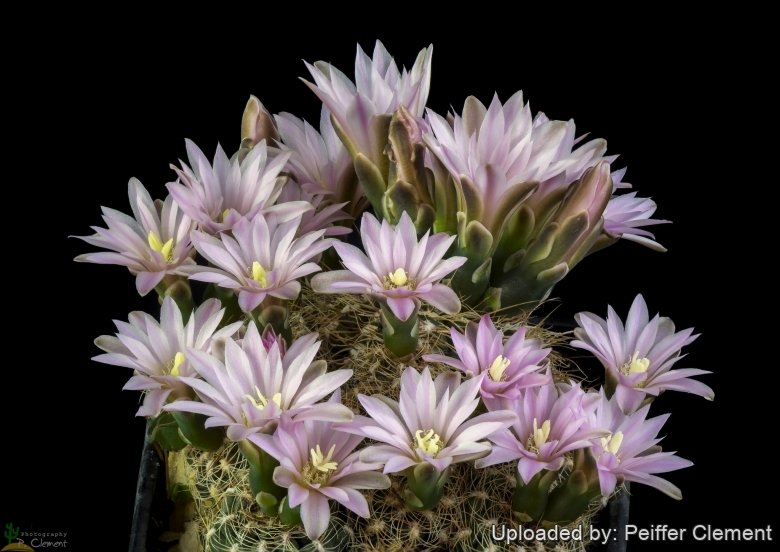
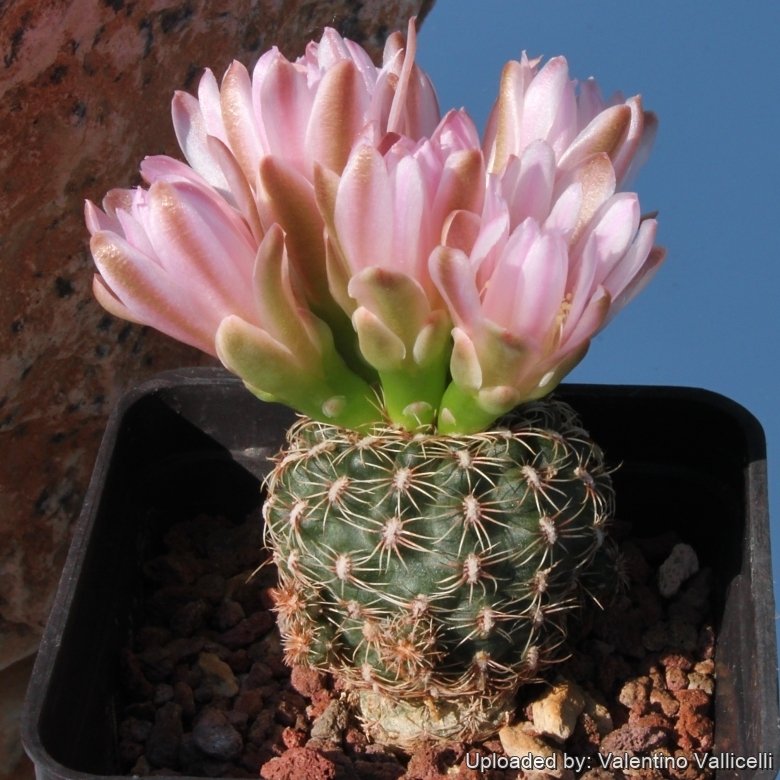
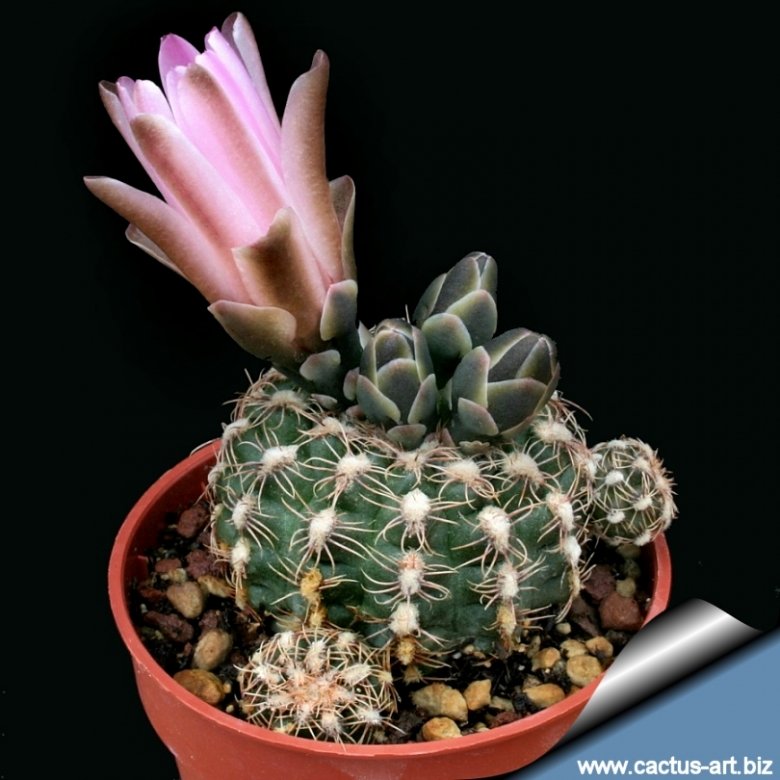
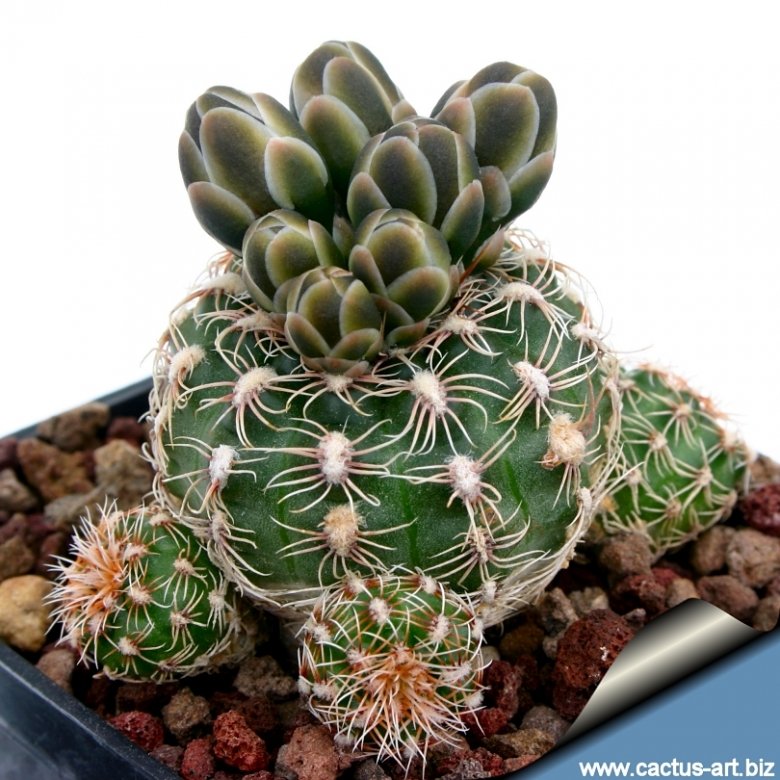
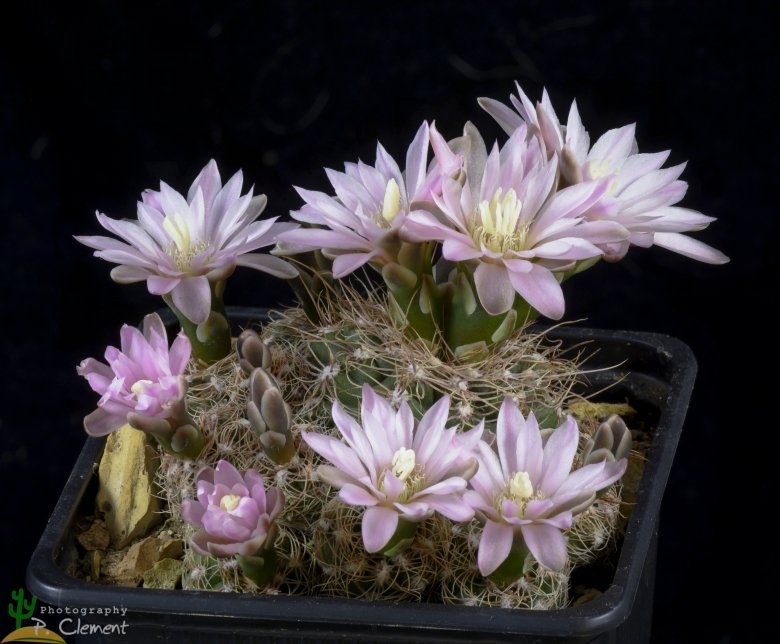
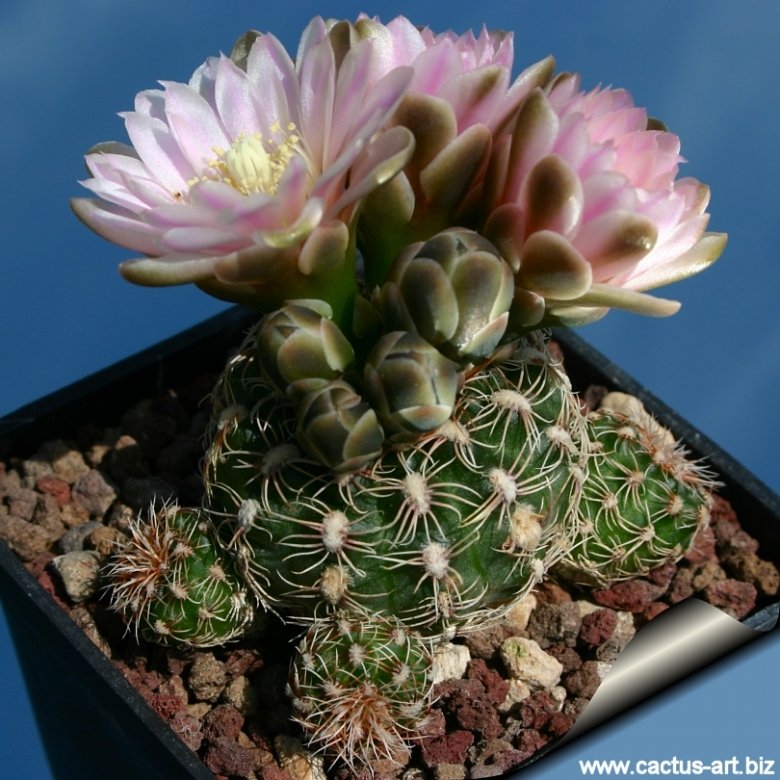
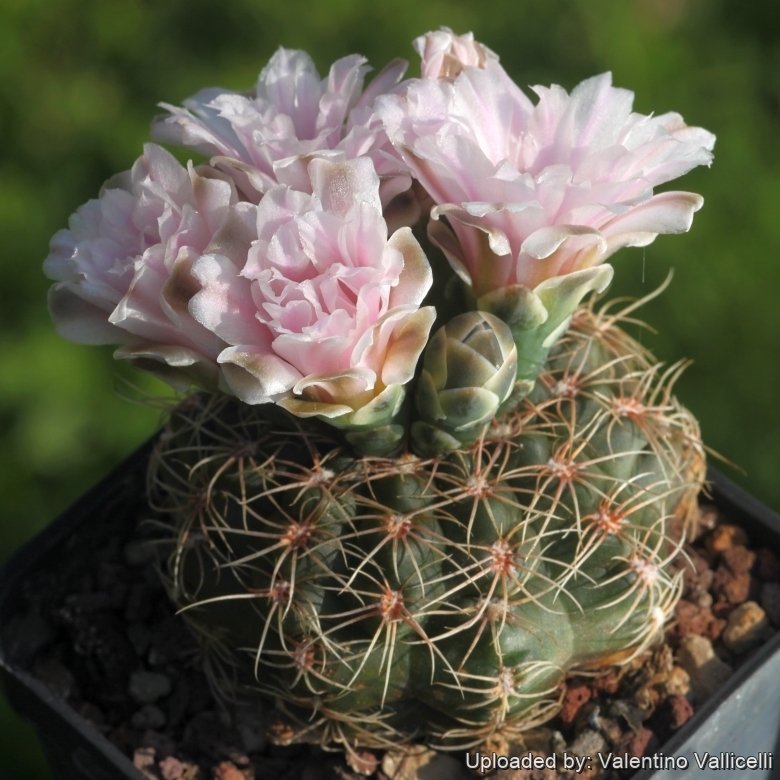
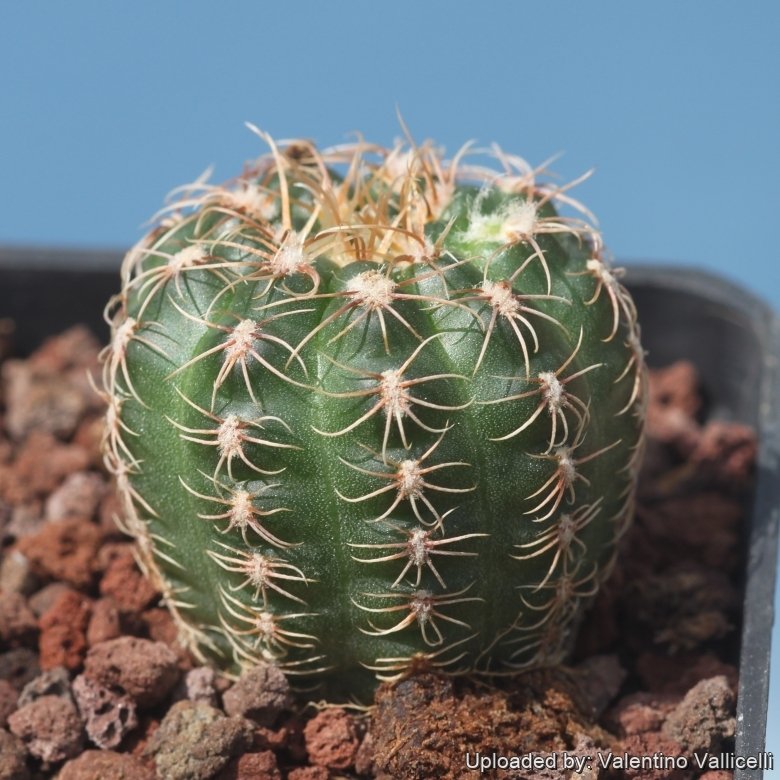
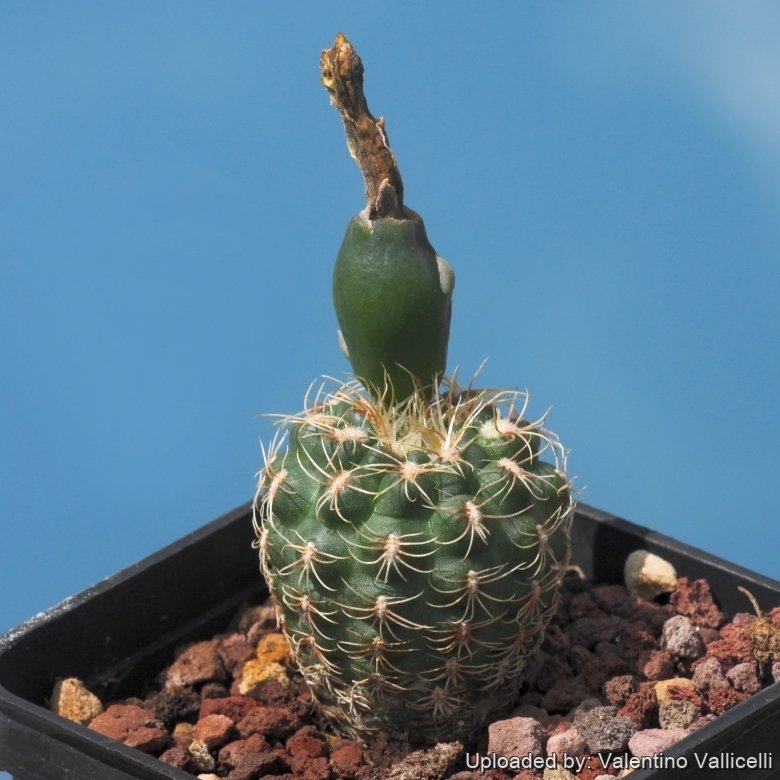
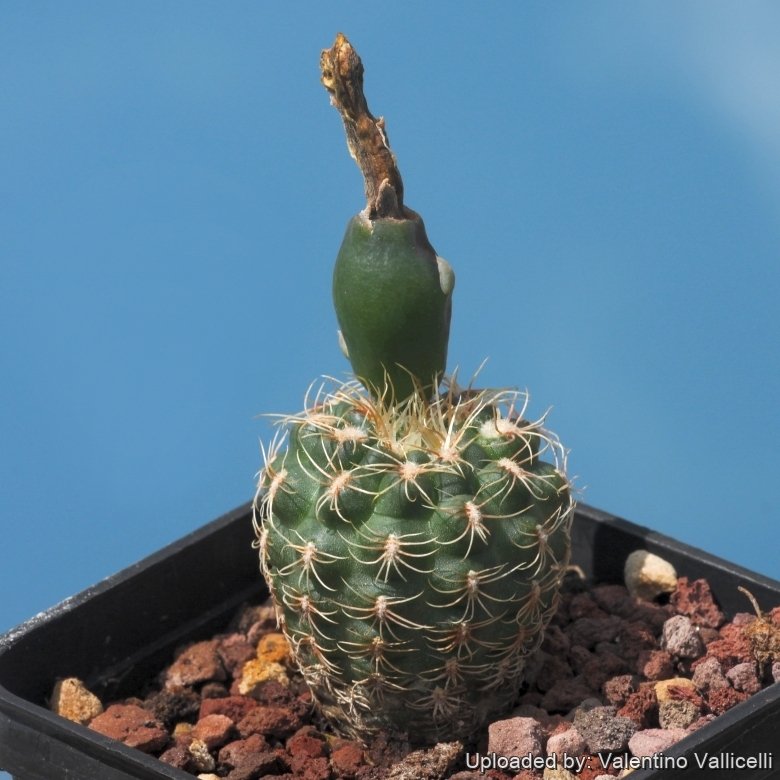
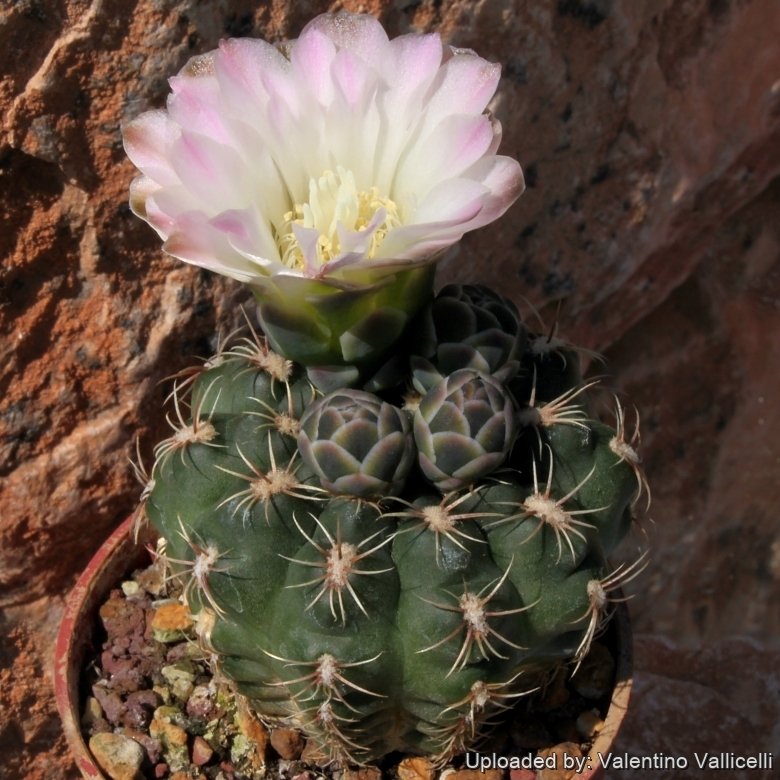
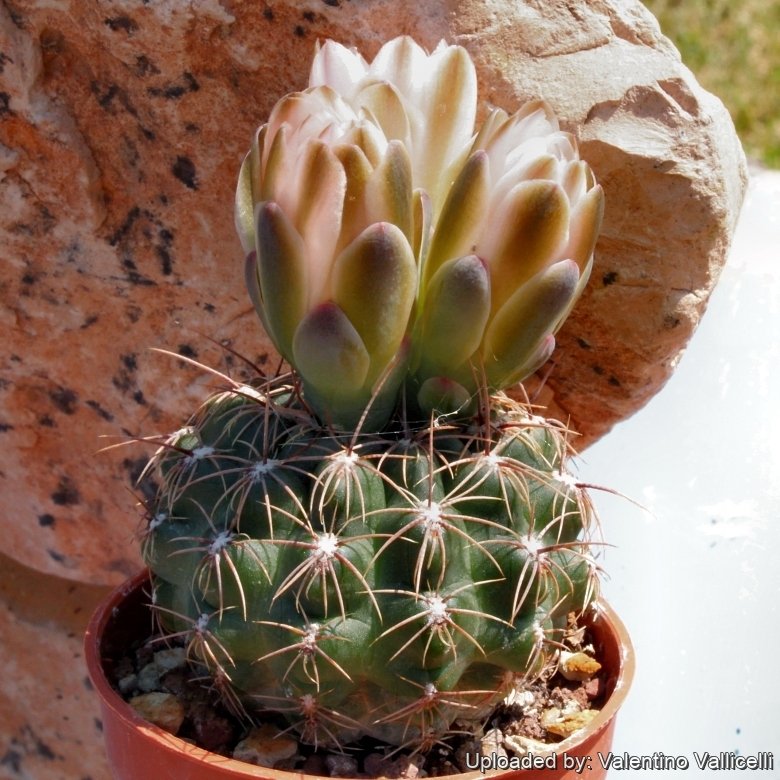
Gymnocalycium bruchii is a miniature clumping succulent that clusters when small. This species is very variable and has received many names.
Stems: Flattened, blue-green, thick growing up to 4 cm in diameter, 6 cm long.
Spines: White bristly, straight or curved
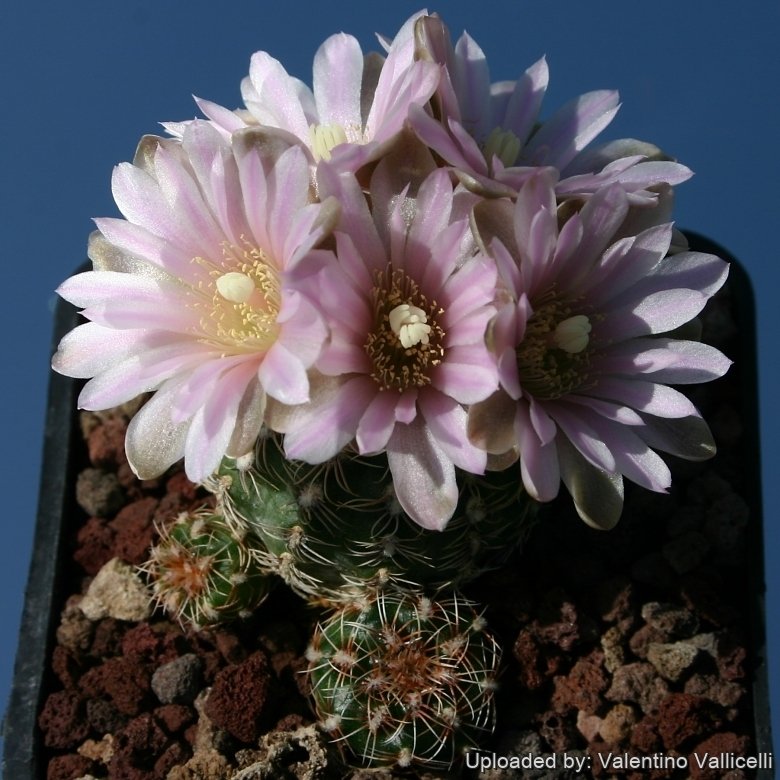
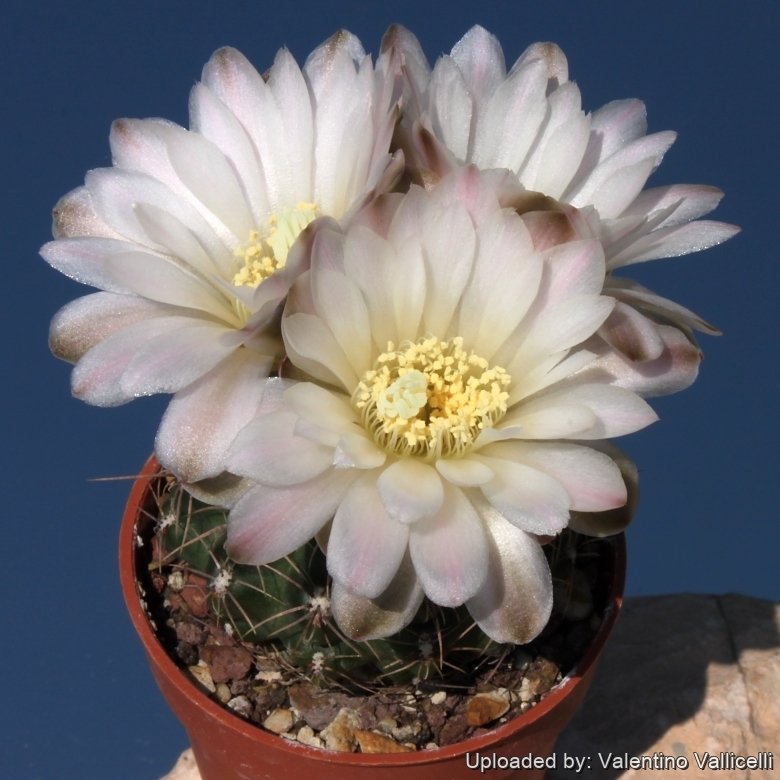
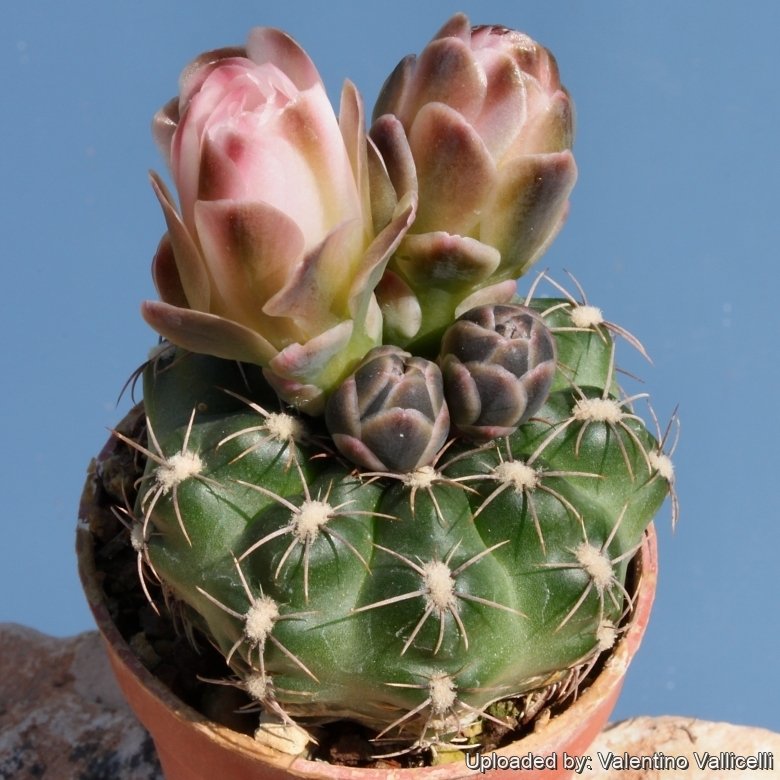
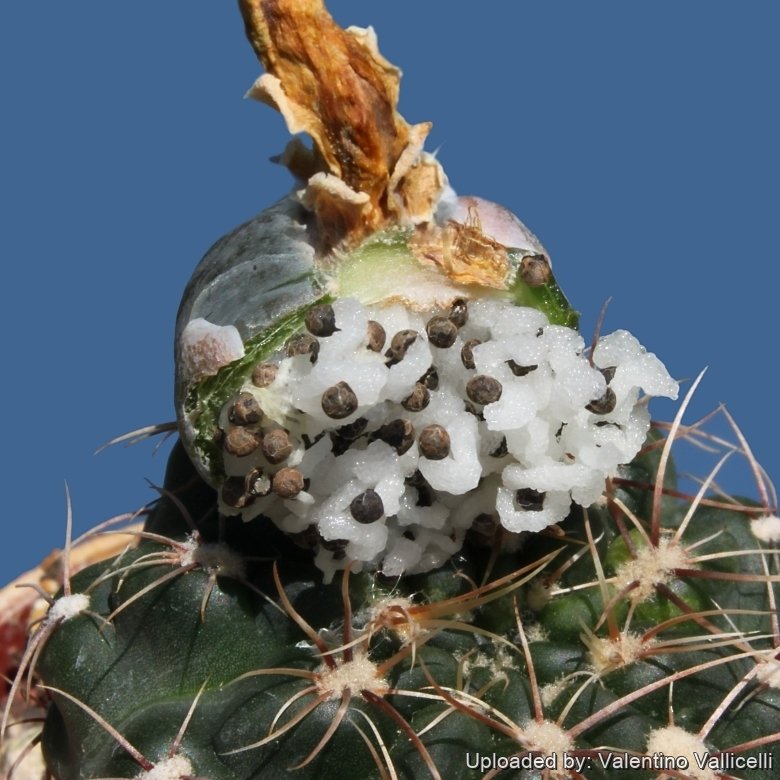
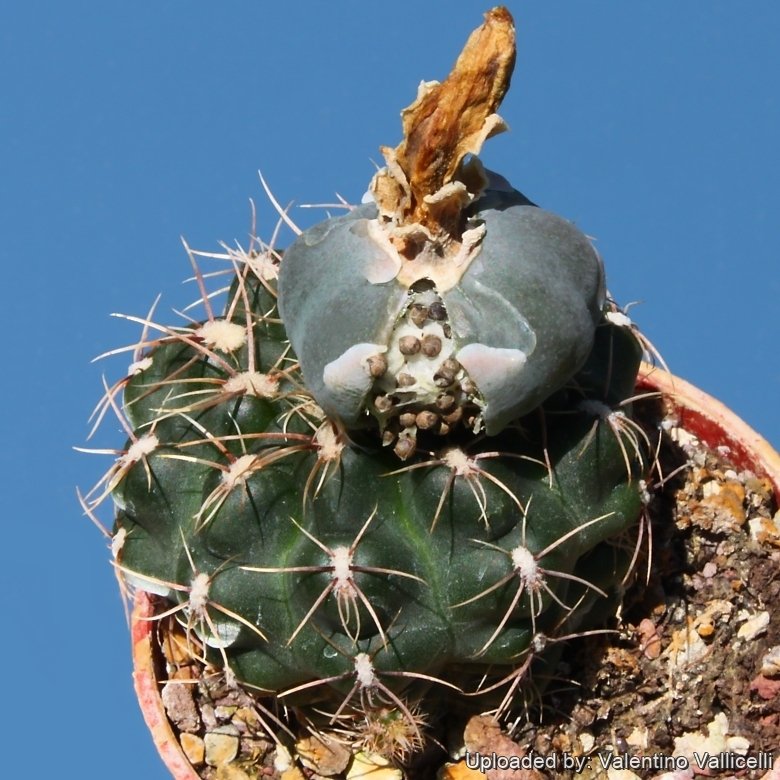
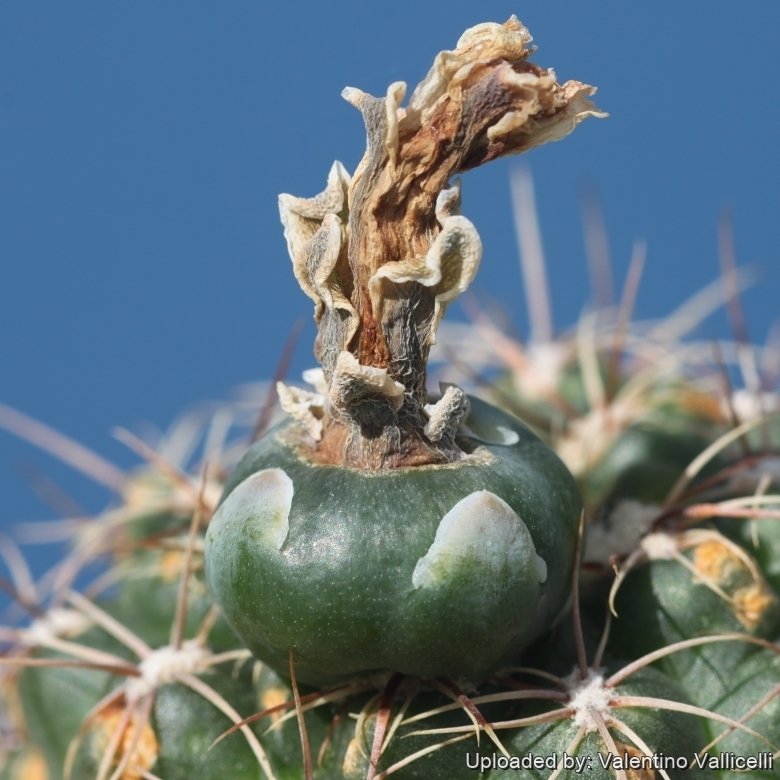
Flowers: Bell to funnel-shaped, 6 cm wide, with an unusual shade of lavender-white in early spring, followed by green fruits.
Remarks: This slow-growing plant will eventually form clusters up to 15 cm across.
Origin and Habitat
Argentina. Endemic to the Córdoba and San Luis provinces.
Habitat: Inhabits a wide range of environments and altitudes.
Cultivation and Propagation
Gymnocalycium bruchii is a summer grower species that is easy to cultivate. It is one of the most cold-tolerant South American species. It can grow outdoors and is hardy to -15° C or even less.
Growth rate: It is a relatively rapidly growing and easily flowering species that will make clumps given the best conditions.
Soils: It likes very porous standard cactus mix soil. Prefer a low pH compost, avoid substrata rich in limestone; otherwise growth will stop altogether.
Repotting: Use pot with good drainage.
Watering: Needs moderate to copious waterings in summer, but do not overwater (Rot prone), keep dry in winter.
Fertilization: Feed with a high potassium fertilizer in summer.
Hardiness: Reputedly very resistant to frost if kept on the dry side prior to, and during, cold weather (hardy to -15 C ° C, or less for short periods).
Exposition: The plant tolerates extremely bright situations but enjoys filtered sunlight or afternoon shade, inside it needs bright light, and some direct sun. Tends to bronze in strong light, which encourages flowering and heavy spine production.
Uses: It is an excellent plant for container growing. It always looks good and stays small. It look fine in a cold greenhouse and frame or outdoor in a rockery.
Pests & diseases: It may be attractive to a variety of insects, but plants in good condition should be nearly pest-free, particularly if they are grown in a mineral potting-mix, with good exposure and ventilation. Nonetheless, there are several pests to watch for:
- Red spiders: Red spiders may be effectively rubbed up by watering the plants from above.
- Mealy bugs: Mealy bugs occasionally develop aerial into the new growth among the wool with disfiguring results, but the worst types develop underground on the roots and are invisible except by their effects.
- Scales: Scales are rarely a problem.
- Rot: Rot it is only a minor problem with cacti if the plants are watered and “aired” correctly. If they are not, fungicides won’t help all that much.
Propagation: Division, direct sow after last frost. Seeds germinate in 7-14 days at 21-27° C in spring, remove gradually the glass cover as soon the plants will be well rooted (ca 1-2 weeks) and keep ventilated, no full sun for young plants! To make a cutting twist off a branch and permit it to dry out a couple of weeks, lay it on the soil and insert the stem end partially into the soil. Try to keep the cutting somewhat upright so that the roots are able to grow downward.
Bibliography
Major references and further lectures
-
Edward Anderson “The Cactus family” Timber Press, Incorporated, 2001
-
James Cullen, Sabina G. Knees, H. Suzanne Cubey “The European Garden Flora Flowering Plants: A Manual for the Identification of Plants Cultivated in Europe, Both Out-of-Doors and Under Glass” Cambridge University Press, 11/Aug/2011
-
David R Hunt; Nigel P Taylor; Graham Charles; International Cactaceae Systematics Group. “The New Cactus Lexicon” dh books, 2006
-
N. L. Britton, J. N. Rose “The Cactaceae. Descriptions and Illustrations of Plants of the Cactus Family.” Volume 4, The Carnegie Institution of Washington, Washington 1923, page. 41
-
Curt Backeberg “Die Cactaceae: Handbuch der Kakteenkunde” Gustav Fischer Verlag, Stuttgart New York 1982–1985
-
British Cactus & Succulent Journal, Volume 23, Page 174, Cactus & Succulent Society, 2005
From llifle page Echinocactus lafaldensis
Description
Major references and further lectures
- British Cactus & Succulent Journal, Volume 23, Page 174, Cactus & Succulent Society, 2005.
Origin and Habitat
Berg La Falda, 1500-2500 m, Córdoba (Argentina)
Source: Echinocactus lafaldensis, LLIFLE - Encyclopedia of living forms, CC-BY-SA, retrieved 2026-10-25.
From llifle page Gymnocalycium lafaldense f. hossei
Description
Gymnocalycium bruchii var. hossei| is a miniature clumping succulent, that clusters when small. It is one of the several forms of the very variable Gymnocalycium bruchii. This plant can look nearly identical to the other “bruchii”, but with brownish spines. All the other characteristics clearly show that they are congeneric, namely size and form of tubercles, number, size and form of spines, flowers and fruits.
Habit: It branches basally to form small crowded mounds barely rising above ground level, eventually up to 15 cm across.
Stems: Flattened, blue-green, thick growing up to 4 cm in diameter, 2-6 cm long.
Spines: Brownish bristly, straight or curved
Flowers: Bell to funnel-shaped, 6 cm wide, with an unusual shade of lavender-white in early spring, followed by olive-green fruits.
Origin and Habitat
Argentina.
Habitat: Hilly terrain.
Source: Gymnocalycium lafaldense f. hossei, LLIFLE - Encyclopedia of living forms, CC-BY-SA, retrieved 2026-10-25.
From llifle page Gymnocalycium andreae var. matznetteri
Description
Gymnocalycium bruchii subs. matznetteri is a miniature clumping succulent. This plant distingushes from the other “bruchii” for the shinning white or pale pink flowers and for the larger sized stems. The other characteristics clearly show that they are related with Gymnocalycium bruchii, namely form of tubercles, spines, flowers and fruits.
Habit: It branches basally to form small mounds.
Stems: Flattened, blue-green, thick growing up to 4-6 cm in diameter, 2-6 cm long.
Spines: Brownish bristly, straight or curved
Flowers: Bell to funnel-shaped, 6 cm wide, pure white or with an pale shade of lavender in early spring, followed by olive-green fruits.
Origin and Habitat
Córdoba, Argentina.
Source: Gymnocalycium andreae var. matznetteri, LLIFLE - Encyclopedia of living forms, CC-BY-SA, retrieved 2026-10-25.
Cultivars and forms (20)
Subspecies (13)
- Gymnocalycium bruchii subs. atroviride
- Gymnocalycium bruchii subs. cumbresitense
- Gymnocalycium bruchii subs. elegans
- Gymnocalycium bruchii subs. implexum
- Gymnocalycium bruchii subs. lacumbrense
- Gymnocalycium bruchii subs. lafaldense
- Gymnocalycium bruchii subs. matznetteri
- Gymnocalycium bruchii subs. melojeri
- Gymnocalycium bruchii subs. multicostatum
- Gymnocalycium bruchii subs. pawlovskyi
- Gymnocalycium bruchii subs. renatae
- Gymnocalycium bruchii subs. shimadae
- Gymnocalycium bruchii subs. susannae
Varieties (4)
Gallery