Publication: Taschenb. Cactuslieb. 2ed.: 48 +124 (1844) [ et Pfeiff. in Pfeiff. & Otto, Abbild. & Beschr. Bluh. Cact. ii. sub t. 1 (1845), in adnot. ]
Description
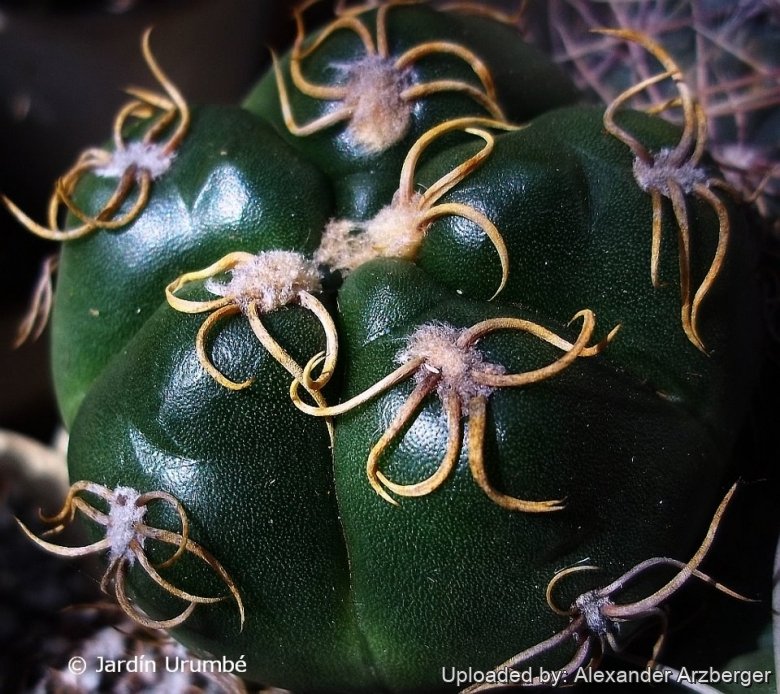
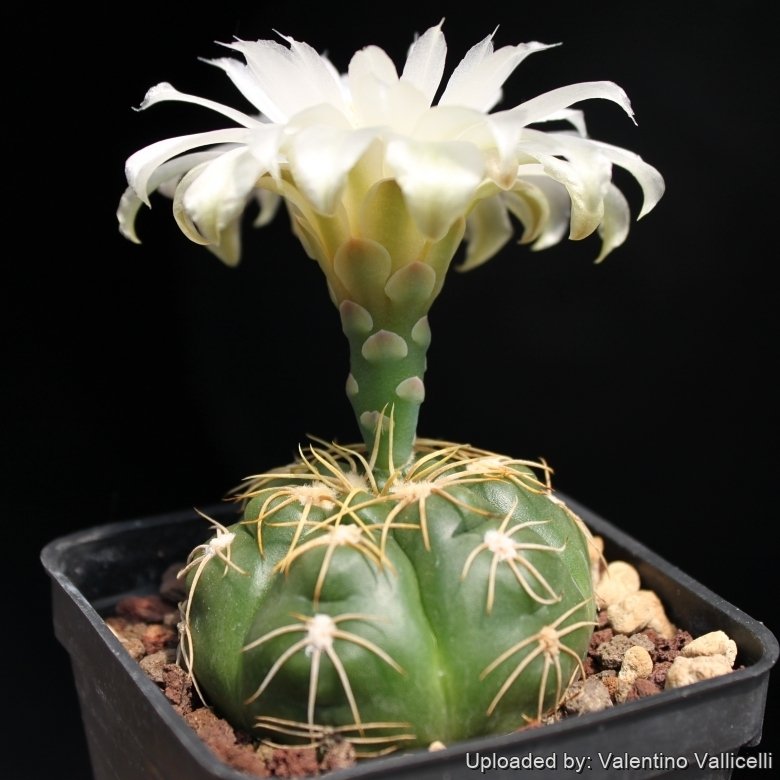
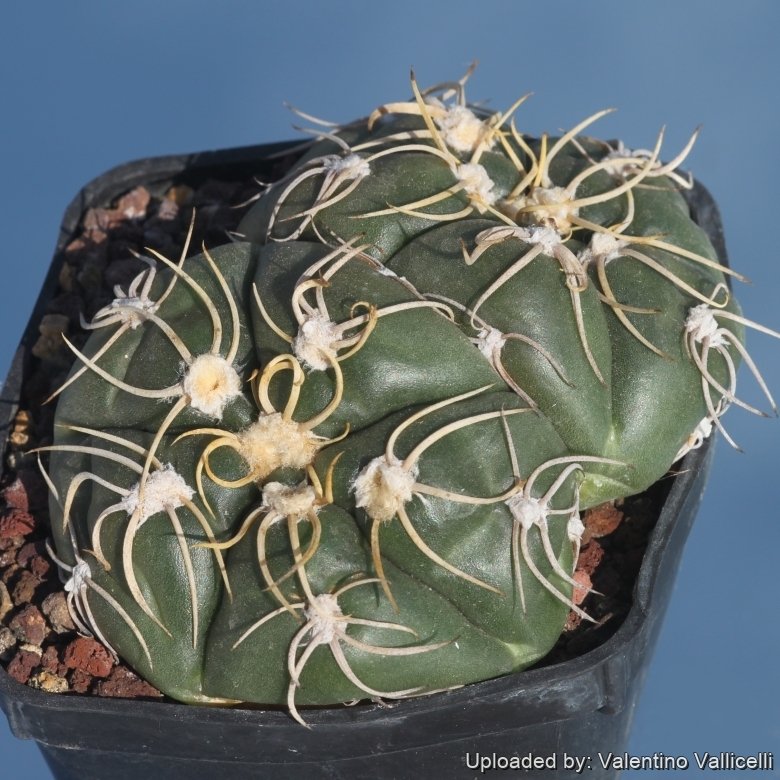
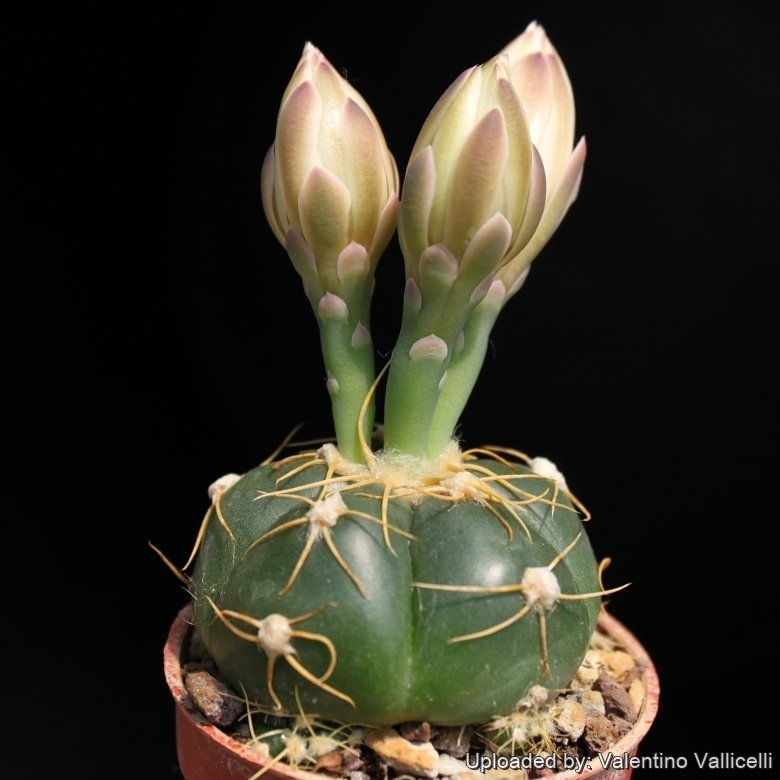
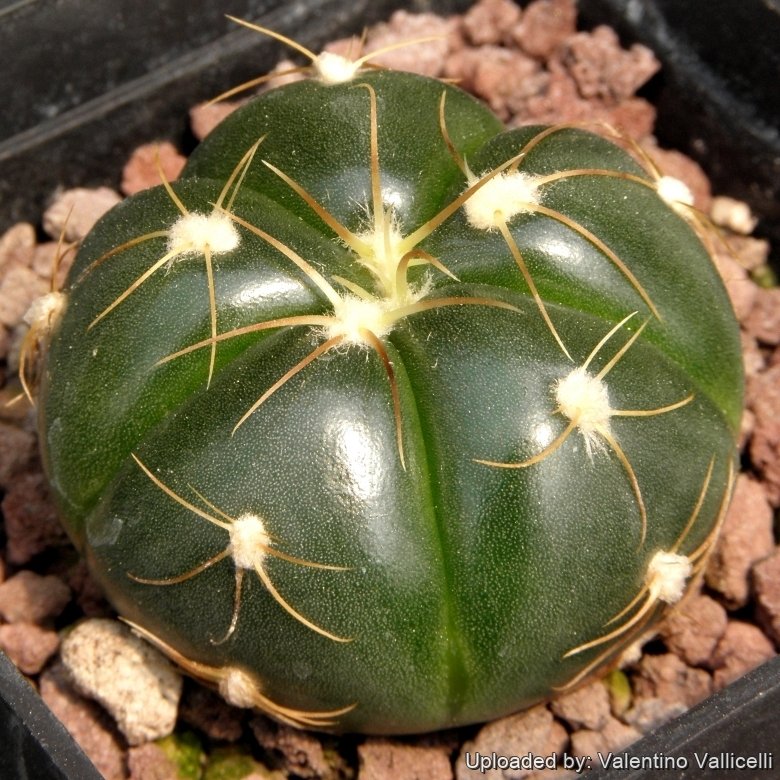
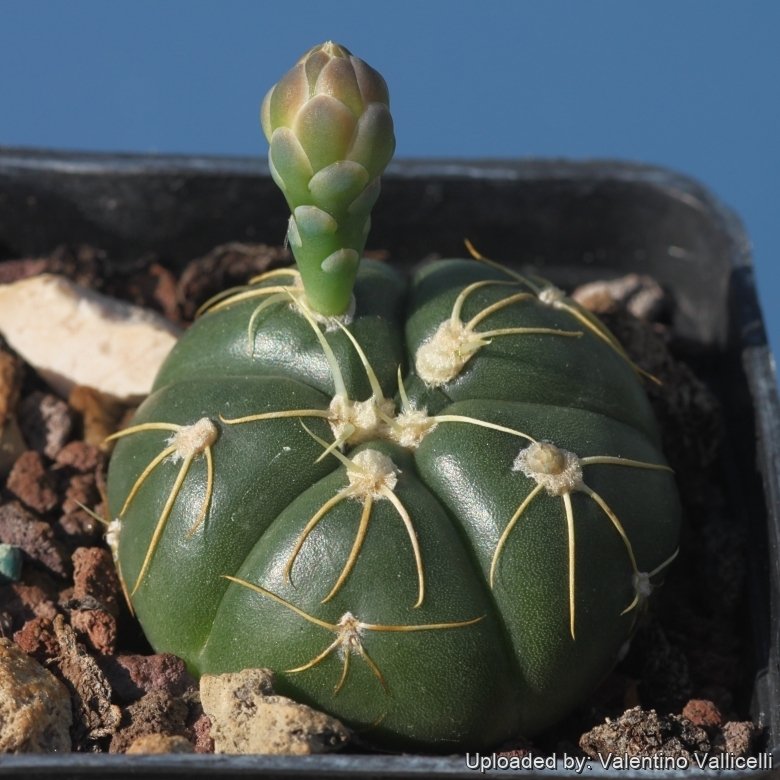
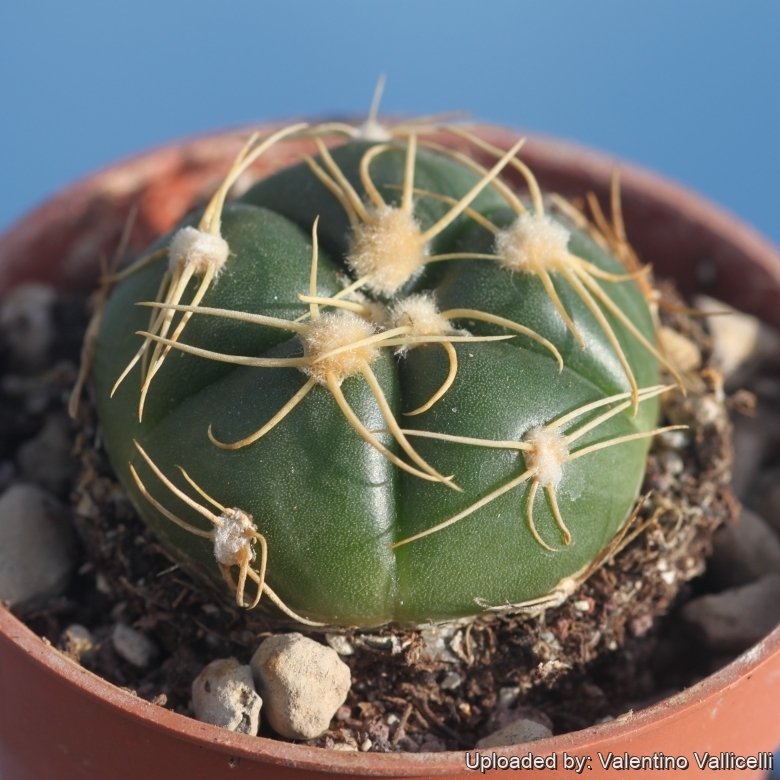
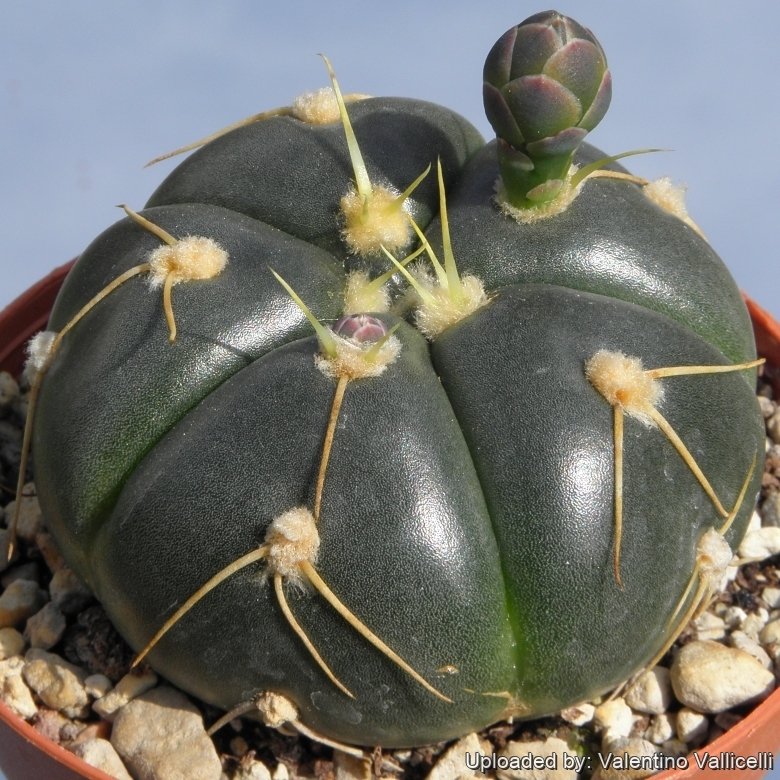
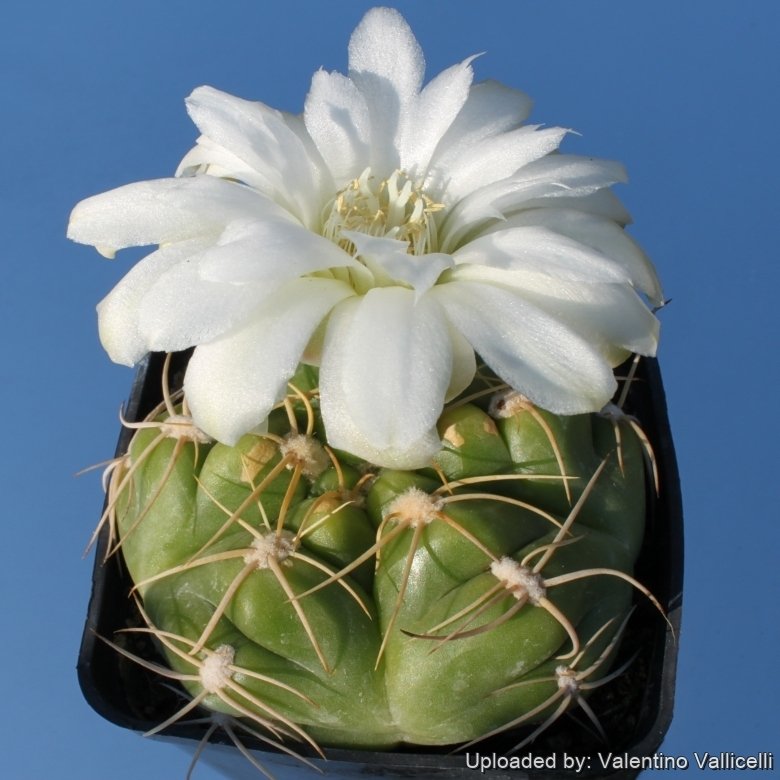
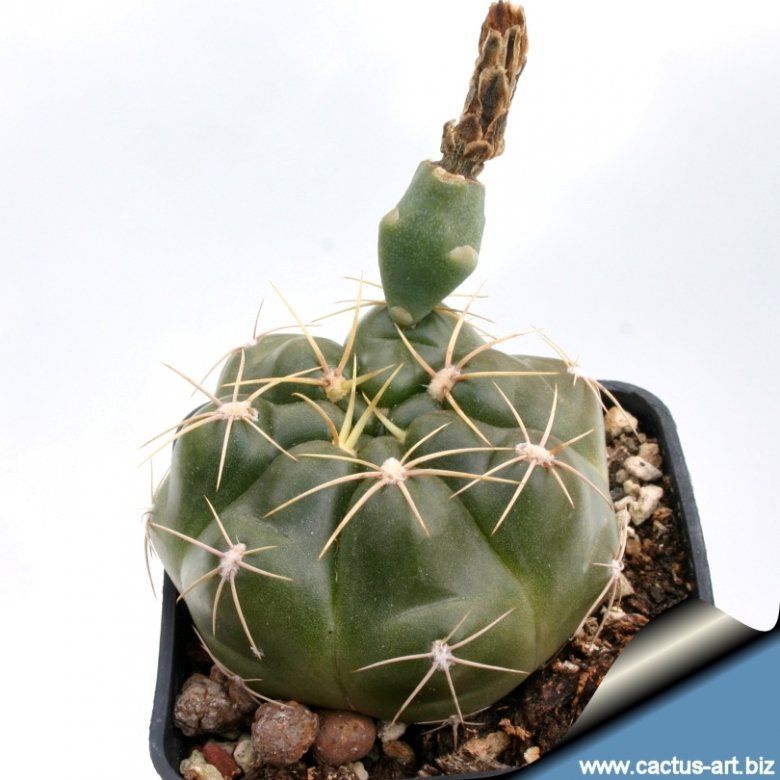
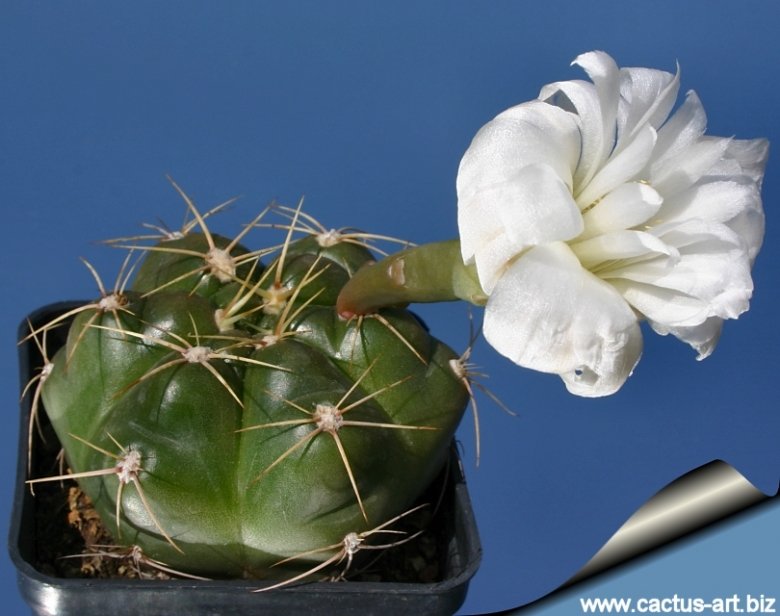
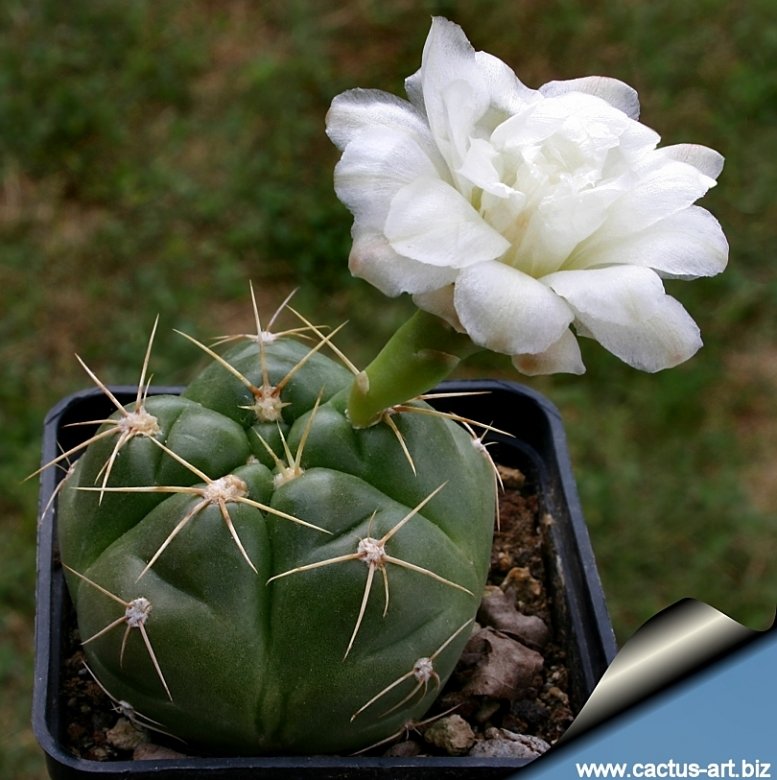
Gymnocalycium denudatum is a small globular, usually unbranched, cactus with glossy dark-green body and rounded ribs. Gymnocalycium denudatum is extremely variable.
Stem: Solitary, broadly globular, depressed globose or subglobose, 2-3 cm tall and 6-8 cm in diameter ( up to 10 cm tall 15 cm in diameter in cultivation) glossy greyish-green to dark green.
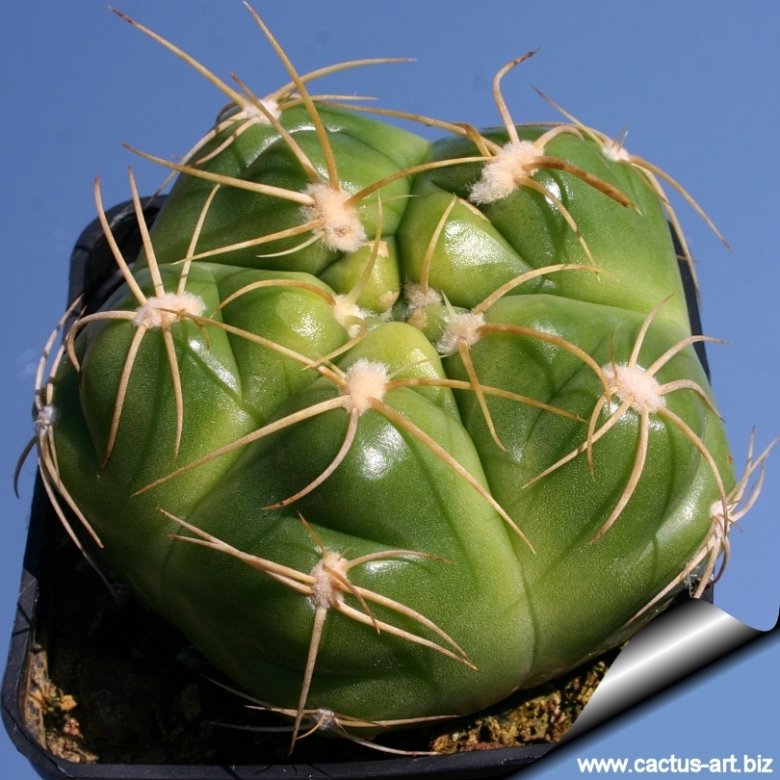
Ribs: Usually 5, occasionally up to 8, flat, with poorly developed tubercles (The ‘chin’ effect is not as visible as in other Gymnocalyciums).
Tubercles: Broad and low
Areoles: Few roundish, slightly woolly 1-2 cm apart.
Spines: All radials, spider-like, nearly harmless, 1-1,5 cm long, white or pale rose coloured, awl-shaped, slender, curved laterally or upward, somewhat twisted or bent and closely appressed against body.
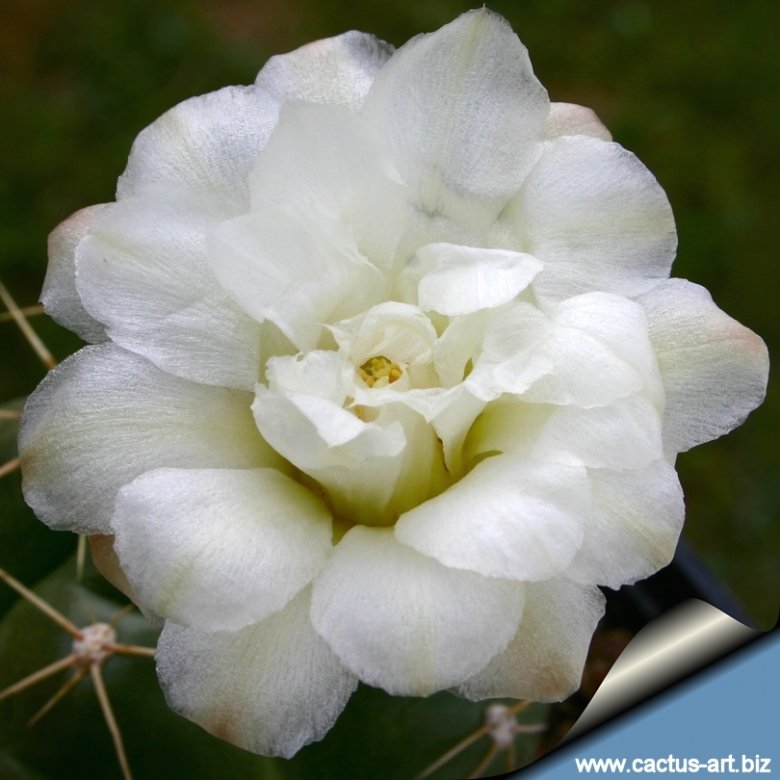
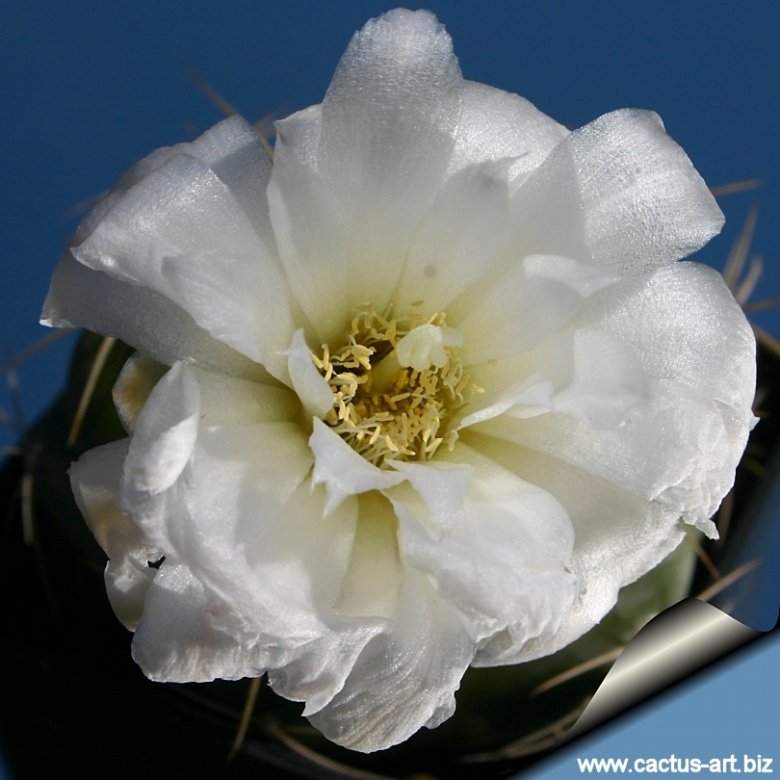
Flowers: Large shiny cream white sometime very pale rose-coloured , up to 5 cm long and 7 cm wide. Perianth segments oblong, acute. Pericarpel and flower-tube with occasional acute scales.
Blooming season: In spring and summer.
Fruits: Oblong, green.
Origin and Habitat
Southern America, Brazil (Rio Grande do Sul), Argentina (Corrientes, Misiones) Paraguay [possibly] and Uruguay.
Cultivation and Propagation
Gymnocalycium denudatum is a summer grower species that is easy to cultivate.
Growth rate: It is a relatively rapidly growing and easily flowering species.
Soils: It likes very porous standard cactus mix soil. Prefer a low pH compost, avoid substrata rich in limestone; otherwise growth will stop altogether.
Repotting: This plant needs plenty of space for its roots, repotting should be done every other year or when the it has outgrown its pot. Use pot with good drainage.
Watering: Needs moderate to copious waterings in summer, but do not overwater (Rot prone), keep dry in winter at a minimum temperature of 0°C.
Fertilization: Feed with a high potassium fertilizer in summer.
Hardiness: Reputedly resistant to light frost if kept on the dry side prior to, and during, cold weather (hardy to -2 C ° C, or less for short periods), but for safe cultivation it is best to avoid freezing temperatures.
Exposition: The plant tolerates extremely bright situations but enjoys filtered sunlight or afternoon shade, inside it needs bright light, and some direct sun. Tends to bronze in strong light, which encourages flowering and heavy spine production, but is likely to suffer from sun scorch or stunted growth if over exposed to direct sunlight during the hottest part of the day in summer.
Uses: It is an excellent plant for container growing. It always looks good and stays small. It look fine in a cold greenhouse and frame or outdoor in a rockery.
Pests & diseases: It may be attractive to a variety of insects, but plants in good condition should be nearly pest-free, particularly if they are grown in a mineral potting-mix, with good exposure and ventilation. Nonetheless, there are several pests to watch for:
- Red spiders: Red spiders may be effectively rubbed up by watering the plants from above.
- Mealy bugs: Mealy bugs occasionally develop aerial into the new growth among the wool with disfiguring results, but the worst types develop underground on the roots and are invisible except by their effects.
- Scales: Scales are rarely a problem.
- Rot: This species is particularly easy and accommodating, seldom suffer of cryptogamic diseases. Rot it is only a minor problem with gymnocalyciums if the plants are watered and “aired” correctly. If they are not, fungicides won’t help all that much.
Propagation: Direct sow after last frost. Seeds germinate in 7-14 days at 21-27° C in spring, remove gradually the glass cover as soon the plants will be well rooted (ca 1-2 weeks) and keep ventilated, no full sun for young plants!
Bibliography
Major references and further lectures
-
James Cullen, Sabina G. Knees, H. Suzanne Cubey “The European Garden Flora Flowering Plants: A Manual for the Identification of Plants Cultivated in Europe, Both Out-of-Doors and Under Glass” Cambridge University Press, 11/Aug./2011
-
David Hunt, Nigel Taylor “The New Cactus Lexicon” DH Books, 2006 ISBN 0953813444, 9780953813445.
-
Edward F. Anderson “The Cactus Family” Timber Press, 2001
-
N. Gerloff and D. Metzing in: “Kakteen und andere Succulenten” 53 (2): 29-39 2002
-
N. Gerloff and D. Metzing in Russian: “Kaktus-Klub” 2:35-44 2002
From llifle page Echinocactus megalothelos
Description
Gymnocalycium megalothelon is a form of Gymnocalycium denudatum, but not sufficiently differentiated and considered merely a local variant of the latter. The key difference by which the two were separated, namely the presence of more prominent tubercles, yellow spines and white double flowers, seems entirely spurious, but plants from this population do differ in various respects from that on the common Gymnocalycium denudatum.
Habit: It is a (usually) solitary geophytic cactus with five ribbed appearance.
Stem: Flattened or globular, grey-green to olive green, 5-6 cm in diameter, up to 5 cm tall, but in cultivation it can become 7-8 cm high (or more) over the years.
Ribs: 5-7, rounded, grooved transversely. Tubercles few per ribs, more prominent and “chinned” than in standard Gymnocalycium denudatum.
Radial spines: Stout 5-7 up to 12, but usually less in young plants, flattened against the body.
Central spines: Usually absent, or 1 erected one.
Flowers: Are some of the largest in this genus, often growing larger than the plant!, 6 up to 7 cm long and wide, pure white and double petaled. Self-fertile!
Fruits: Green.
Origin and Habitat
Argentina (San Luis)
Cultivation and Propagation
Gymnocalycium megalothelon is a summer grower species that is easy to cultivate.
Growth rate: It is a relatively rapidly growing and easily flowering species.
Soils: It likes very porous standard cactus mix soil. Prefer a low pH compost, avoid substrata rich in limestone; otherwise growth will stop altogether.
Repotting: This plant needs plenty of space for its roots, repotting should be done every other year or when the it has outgrown its pot. Use pot with good drainage.
Watering: Needs moderate to copious waterings in summer, but do not overwater (Rot prone), keep dry in winter at a minimum temperature of 0°C.
Fertilization: Feed with a high potassium fertilizer in summer.
Hardiness: Reputedly resistant to light frost if kept on the dry side prior to, and during, cold weather (hardy to -2 C ° C, or less for short periods), but for safe cultivation it is best to avoid freezing temperatures.
Exposition: The plant tolerates extremely bright situations but enjoys filtered sunlight or afternoon shade, inside it needs bright light, and some direct sun. Tends to bronze in strong light, which encourages flowering and heavy spine production, but is likely to suffer from sun scorch or stunted growth if over exposed to direct sunlight during the hottest part of the day in summer.
Uses: It is an excellent plant for container growing. It always looks good and stays small. It look fine in a cold greenhouse and frame or outdoor in a rockery.
Pests & diseases: It may be attractive to a variety of insects, but plants in good condition should be nearly pest-free, particularly if they are grown in a mineral potting-mix, with good exposure and ventilation. Nonetheless, there are several pests to watch for:
- Red spiders: Red spiders may be effectively rubbed up by watering the plants from above.
- Mealy bugs: Mealy bugs occasionally develop aerial into the new growth among the wool with disfiguring results, but the worst types develop underground on the roots and are invisible except by their effects.
- Scales: Scales are rarely a problem.
- Rot: This species is particularly easy and accommodating, seldom suffer of cryptogamic diseases. Rot it is only a minor problem with gymnocalyciums if the plants are watered and “aired” correctly. If they are not, fungicides won’t help all that much.
Propagation: Direct sow after last frost. Seeds germinate in 7-14 days at 21-27° C in spring, remove gradually the glass cover as soon the plants will be well rooted (ca 1-2 weeks) and keep ventilated, no full sun for young plants!
Bibliography
Major references and further lectures
- David R Hunt; Nigel P Taylor; Graham Charles; International Cactaceae Systematics Group. “The New Cactus Lexicon” dh books, 2006
2)Edward Anderson “The Cactus family” Timber Press, Incorporated, 2001
- James Cullen, Sabina G. Knees, H. Suzanne Cubey “The European Garden Flora Flowering Plants: A Manual for the Identification of Plants Cultivated in Europe, Both Out-of-Doors and Under Glass” Cambridge University Press, 11/Aug/2011
Source: Echinocactus megalothelos, LLIFLE - Encyclopedia of living forms, CC-BY-SA, retrieved 2026-10-25.
From llifle page Echinocactus denudatus var. intermedius
Description
denudatum x monvillei
Source: Echinocactus denudatus var. intermedius, LLIFLE - Encyclopedia of living forms, CC-BY-SA, retrieved 2026-10-25.
Cultivars and forms (4)
Subspecies (1)
Cultivars (1)
Gallery