Publication: Cacti (Borg), ed. 2. nom. inval. (Art. 33.1)
Description
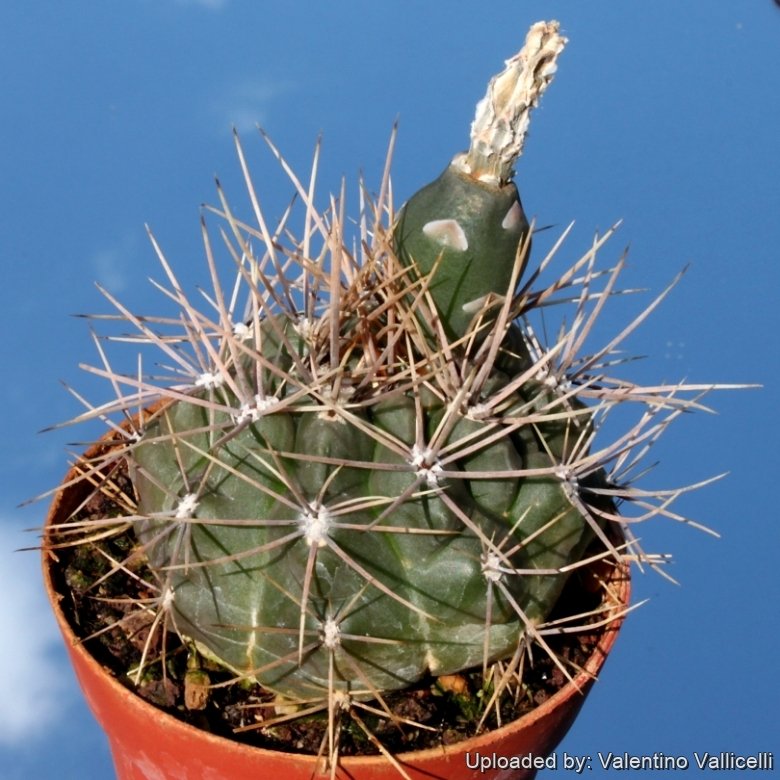
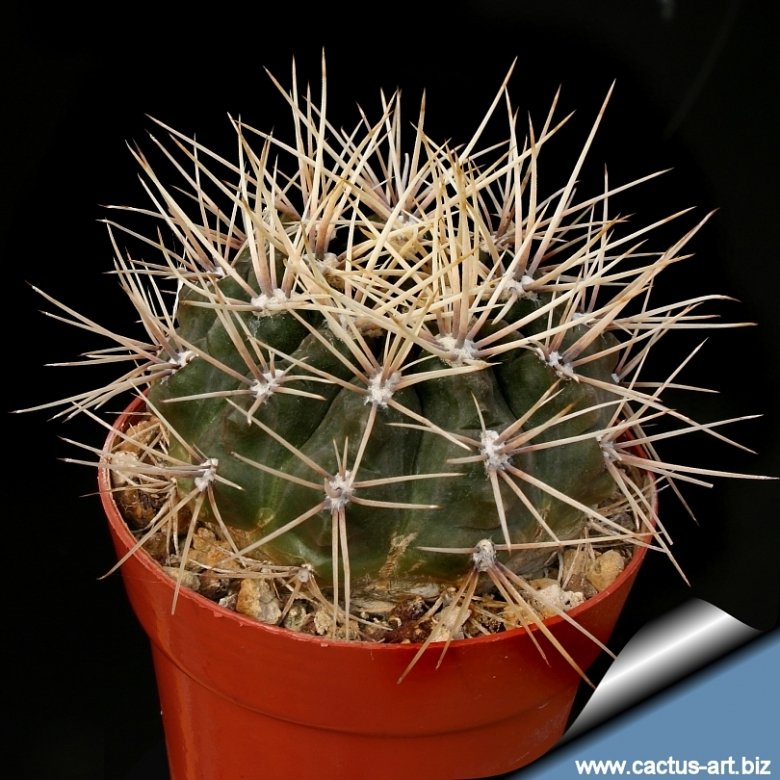
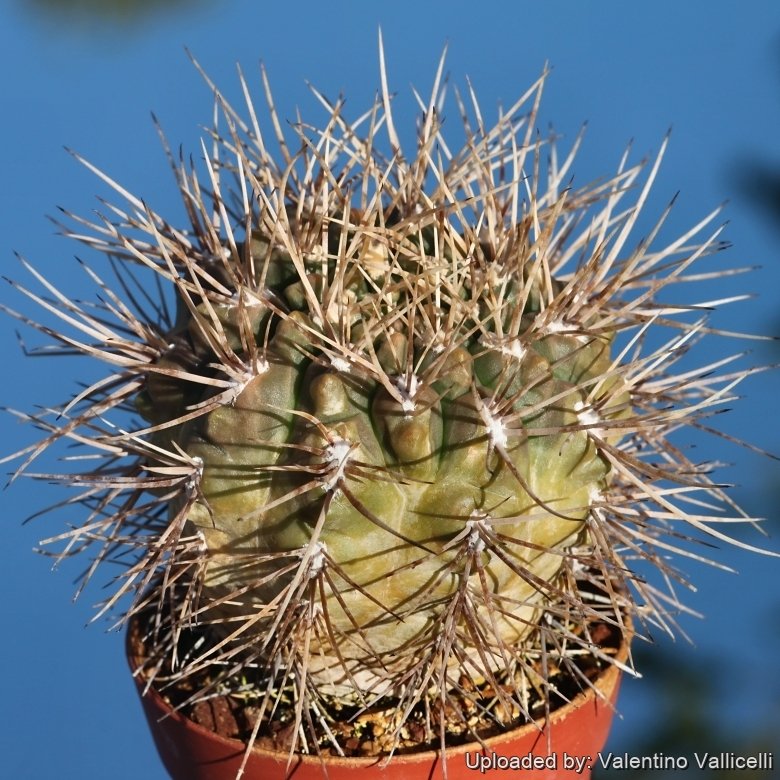
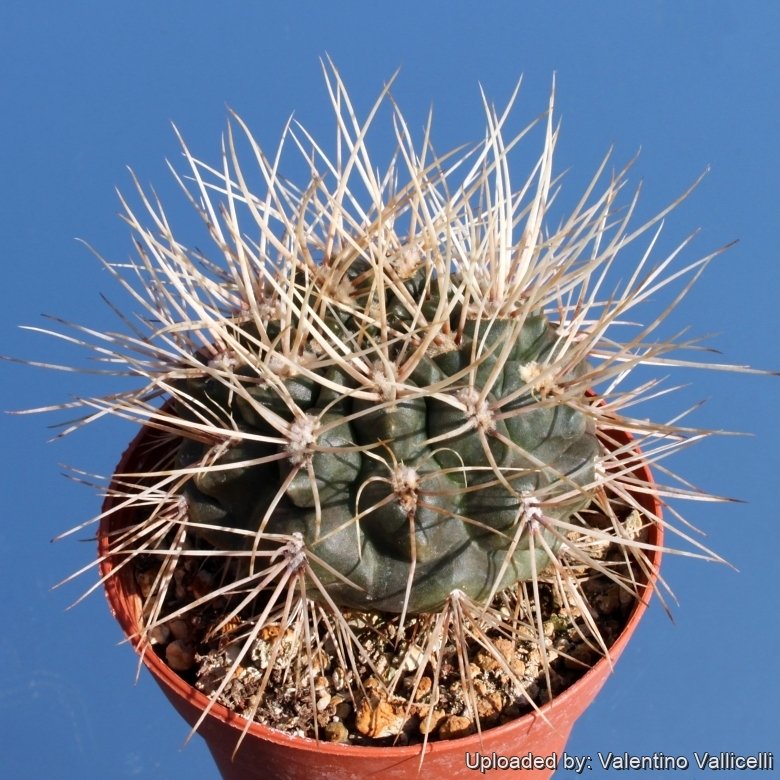
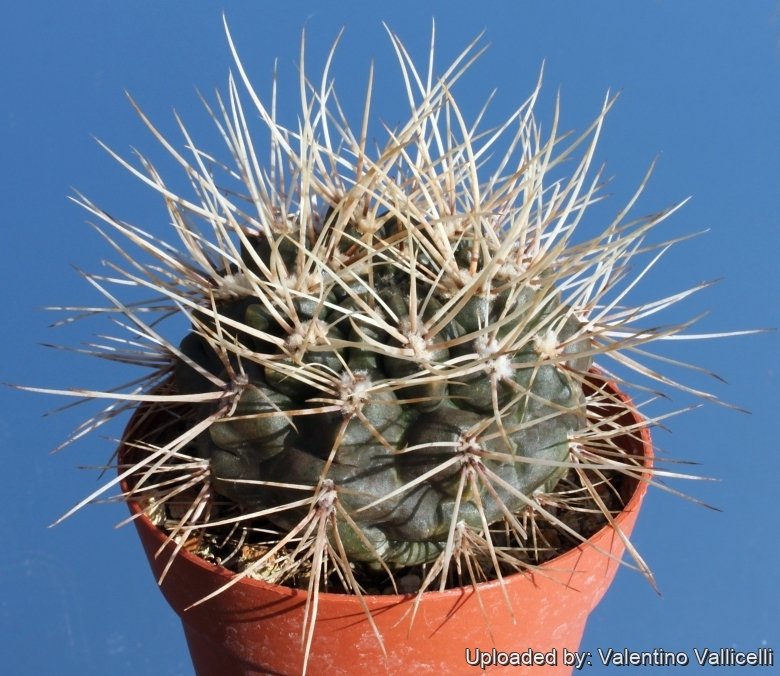
Gymnocalycium gibbosum var. nobile is a local or morphological form of the very variable and widely spread Gymnocalycium gibbosum characterized by strong, more numerous, longer, overlapping, white yellow spines; it is usually larger than the typical gibbosum.
Stem: Deep olive-green to almost black, flat to almost spherical, 3-5(-10) cm tall, up to 12 cm in diameter, the apex is slightly woolly.
Ribs: 10-16 straight, divided in well distinct, angular ribs.
Areoles: Whitish-grey, elongated.
Radial spines: 7-10 (-12) 25-35 mm, strong, long, erect, overlapping, pastel-white (but also yellow or black), with a darker (reddish or brownish) base when young, that becomes whitish-grey as they age.
Central spines: 0-2 very similar to the radials.
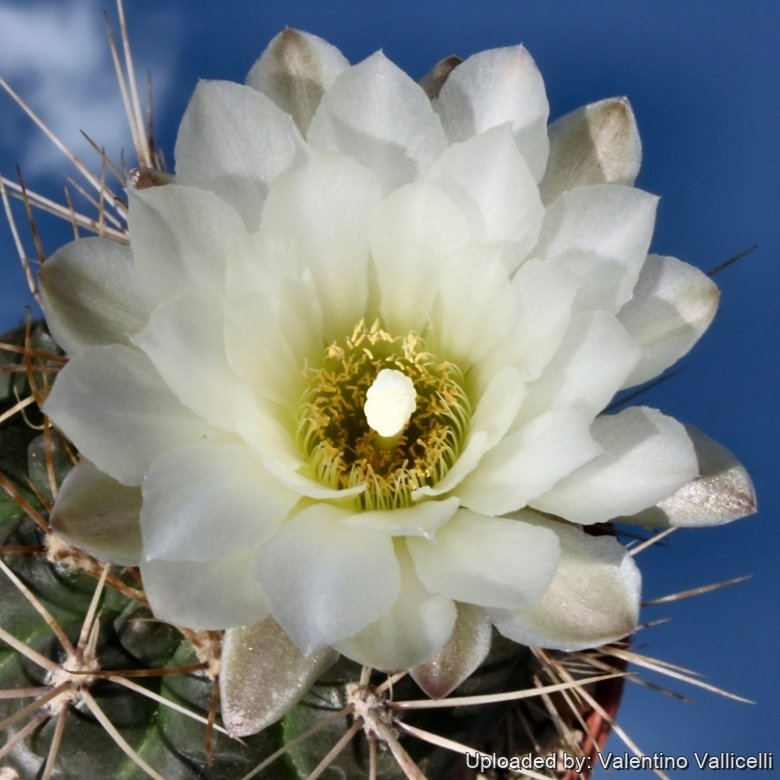
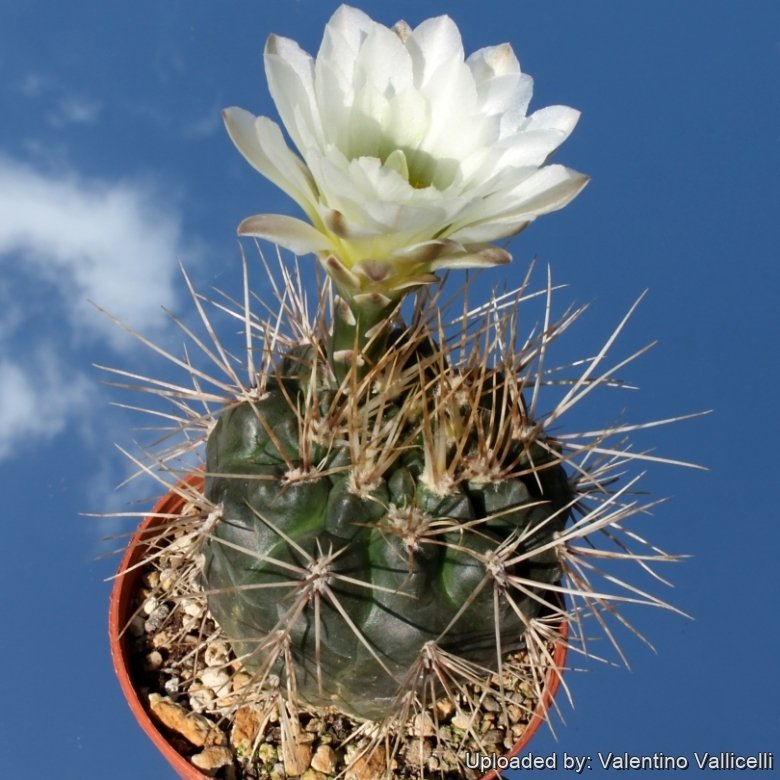
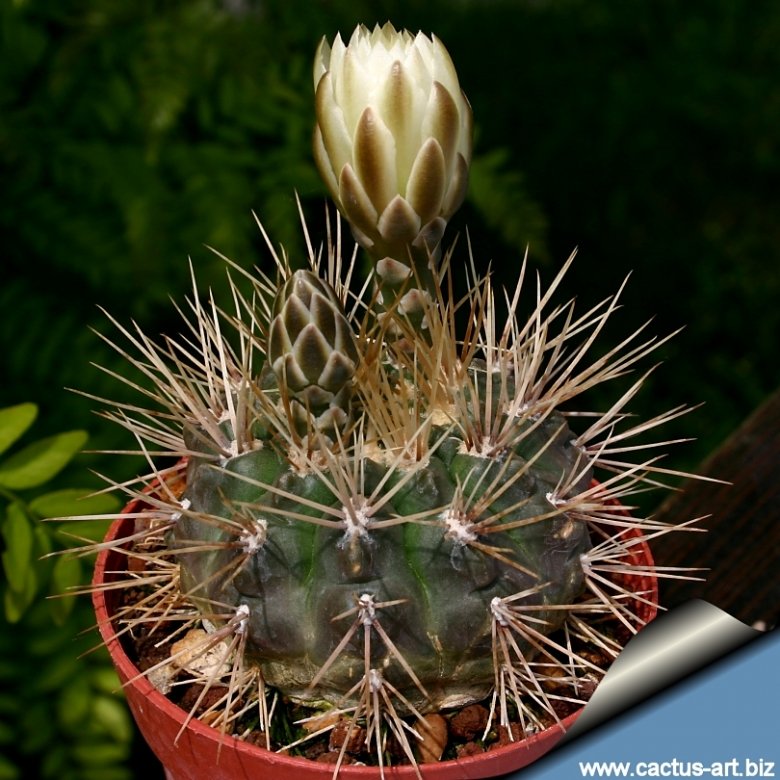
Flowers: Infundibuliform in the nearest periphery just around the apex, 45-60 mm long, 60-65 in diameter. Tepals ivory white with a brownish mid rib or occasionally reddish.
Blooming season: Will flower without a distinct resting period.
Fruits: Globose or fusiform, 20-40 mm long green with white bordered scale.
Origin and Habitat
This species is distributed in the mountains of Argentina of up to Patagonia .
Cultivation and Propagation
Gymnocalycium gibbosum var. nobile is a summer grower species that is easy to cultivate.
Growth rate: It is a relatively rapidly growing and easily flowering species that will make clumps given the best conditions.
Soils: It likes very porous standard cactus mix soil. Prefer a low pH compost, avoid substrata rich in limestone; otherwise growth will stop altogether.
Repotting: This plant needs plenty of space for its roots, repotting should be done every other year or when the it has outgrown its pot. Use pot with good drainage.
Watering: During cold weather periods keep rather dry, but it can handle excessive water to little water, keep dry in winter at a minimum temperature of 0°C. Make sure that soil gets the chance to dry out in between waterings.
Fertilization: Feed with a high potassium fertilizer in summer.
Frost Tolerance: Reputedly resistant to frost if kept on the dry side prior to, and during, cold weather (Hardy down to -12° to -32° C), but for safe cultivation it is best to avoid severe freezing temperatures.
Exposition: The plant tolerates extremely bright situations but enjoys filtered sunlight or afternoon shade, inside it needs bright light, and some direct sun. Tends to bronze in strong light, which encourages flowering and heavy spine production, but is likely to suffer from sun scorch or stunted growth if over exposed to direct sunlight during the hottest part of the day in summer.
Uses: It is an excellent plant for container growing. It always looks good and stays small. It look fine in a cold greenhouse and frame or outdoor in a rockery.
Pests & diseases: It may be attractive to a variety of insects, but plants in good condition should be nearly pest-free, particularly if they are grown in a mineral potting-mix, with good exposure and ventilation. Nonetheless, there are several pests to watch for:
- Red spiders: Red spiders may be effectively rubbed up by watering the plants from above.
- Mealy bugs: Mealy bugs occasionally develop aerial into the new growth among the wool with disfiguring results, but the worst types develop underground on the roots and are invisible except by their effects.
- Scales: Scales are rarely a problem.
- Rot: This species is particularly easy and accommodating, seldom suffer of cryptogamic diseases. Rot it is only a minor problem with gymnocalyciums if the plants are watered and “aired” correctly. If they are not, fungicides won’t help all that much.
Propagation: Mainly through seeds. Seeds germinate in 7-14 days at 21-27° C in spring, remove gradually the glass cover as soon the plants will be well rooted (ca 1-2 weeks) and keep ventilated, no full sun for young plants!
Seed Collecting: Permit fruit to ripen, fruit must be significantly overripe before harvesting seed; clean and dry seeds.
Bibliography
Major references and further lectures
-
Edward Anderson “The Cactus family” Timber Press, Incorporated, 2001
-
James Cullen, Sabina G. Knees, H. Suzanne Cubey “The European Garden Flora Flowering Plants: A Manual for the Identification of Plants Cultivated in Europe, Both Out-of-Doors and Under Glass” Cambridge University Press, 11/Aug/2011
-
David R Hunt; Nigel P Taylor; Graham Charles; International Cactaceae Systematics Group. “The New Cactus Lexicon” dh books, 2006
-
N. L. Britton, J. N. Rose “The Cactaceae. Descriptions and Illustrations of Plants of the Cactus Family.” Volume 4, The Carnegie Institution of Washington, Washington 1923
-
Curt Backeberg “Die Cactaceae: Handbuch der Kakteenkunde” Gustav Fischer Verlag, Stuttgart New York 1982–1985
Gallery