Publication: Cactaceae Syst. Init. 24: 25. 2008 [Aug 2008]
Description
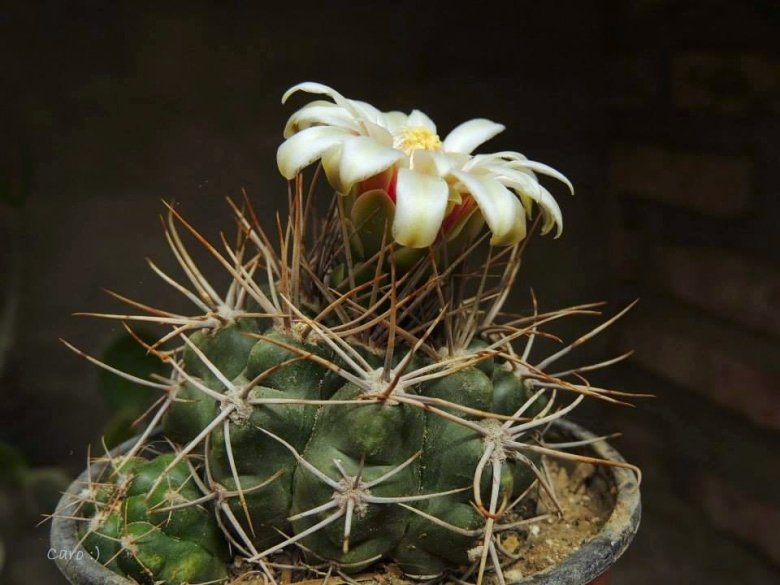
They have been described as solitary, but they can also form groups with age. The plants in habit are each one different from its neighbours! Some has strong spines others weak, curly, straight, long or short ones and in all different combinations.
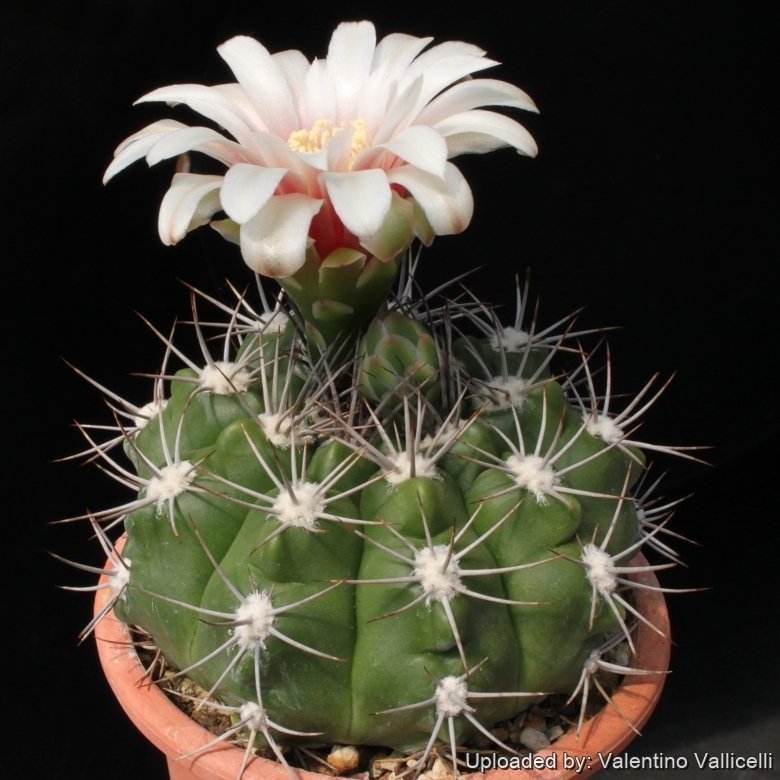
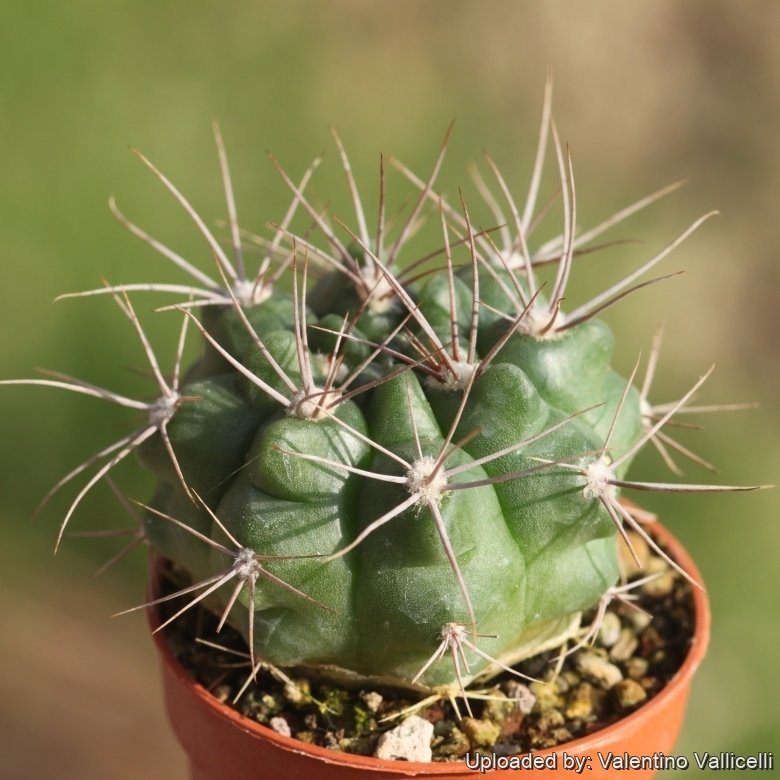
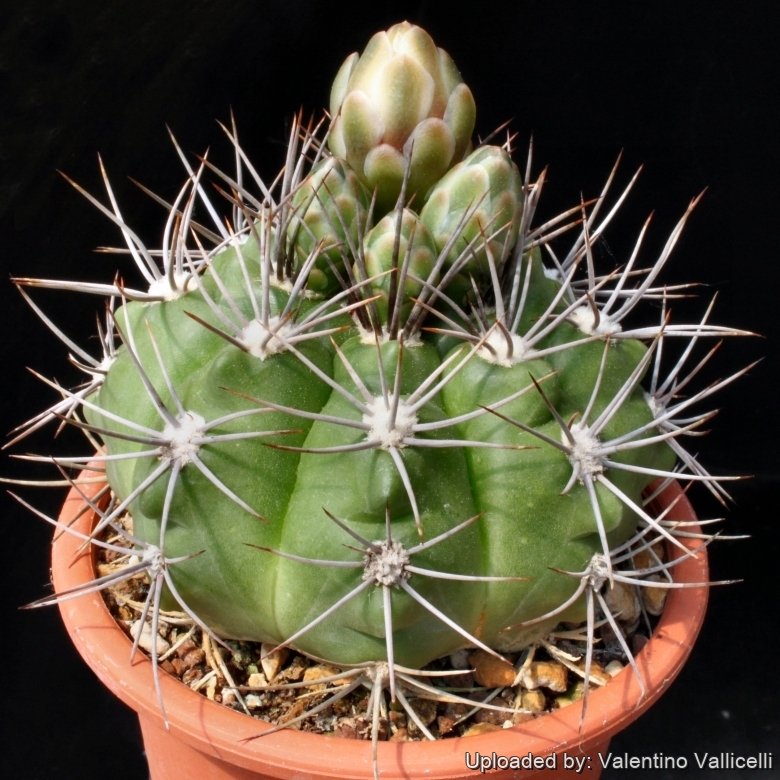
Stem: Usually globular up to 30 cm tall and 18cm across. Grass green to olive green.
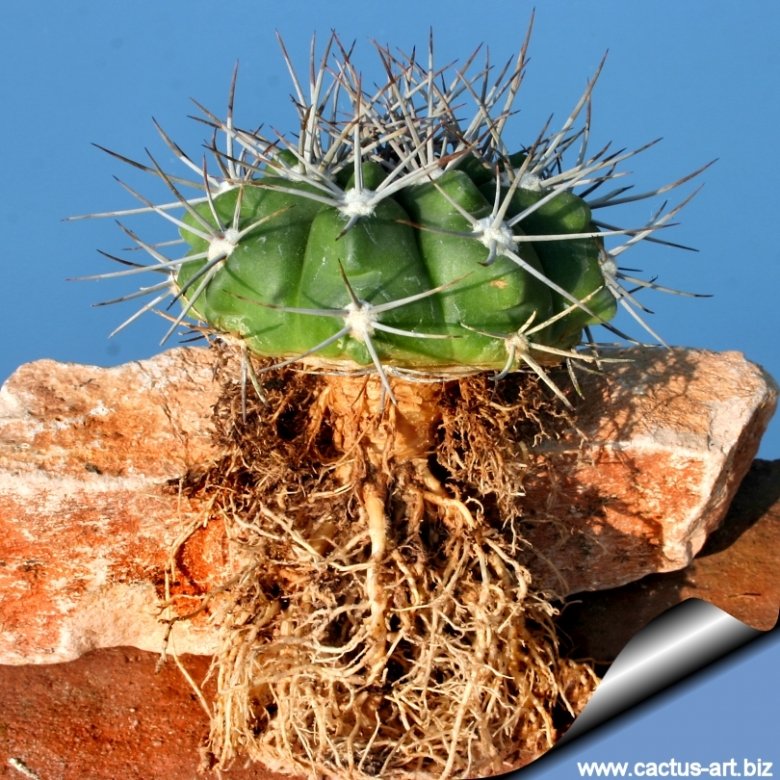
Roots: Fibrous.
Ribs: About 9-12 which consist of flattened protuberances, each of which finishes with a large elliptical, densely furred areola length 12 mm.
Radial spines: 9-15 (-20) up to 4 cm long; Varying from brownish to grey, but those near the apex are mostly reddish-brown.
Central spines: 4-6 (-11) resembling the radial ones.
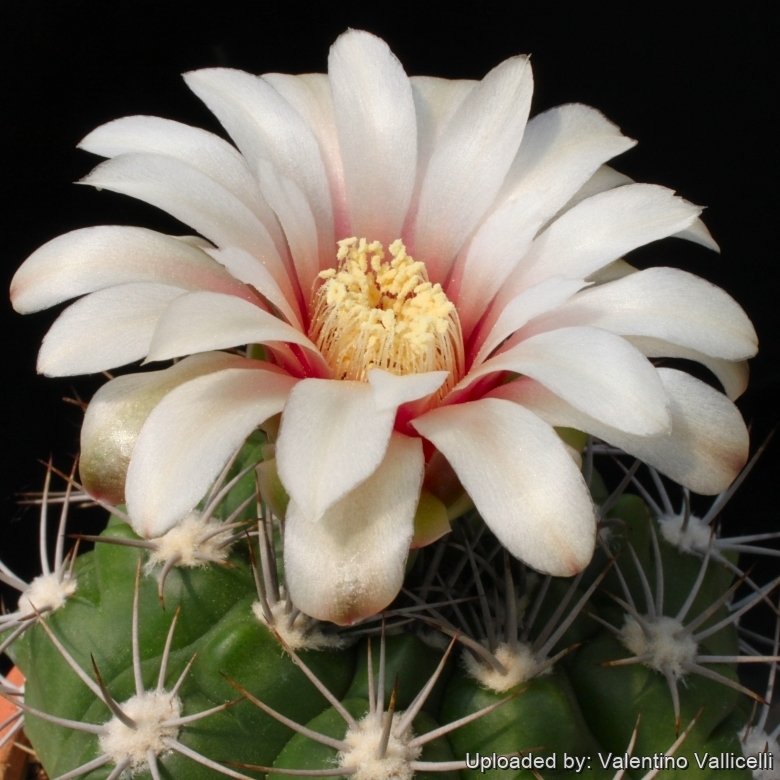
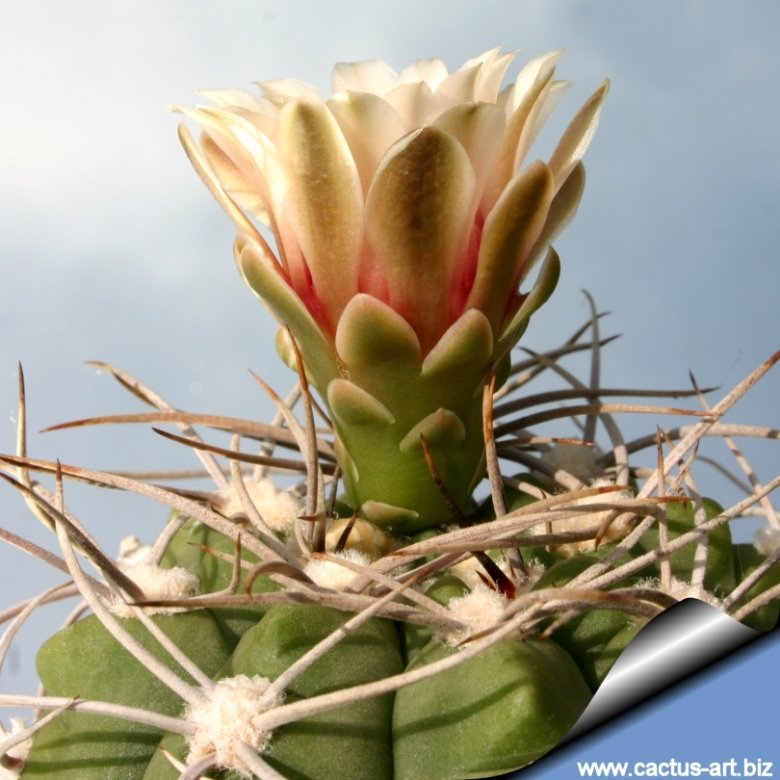
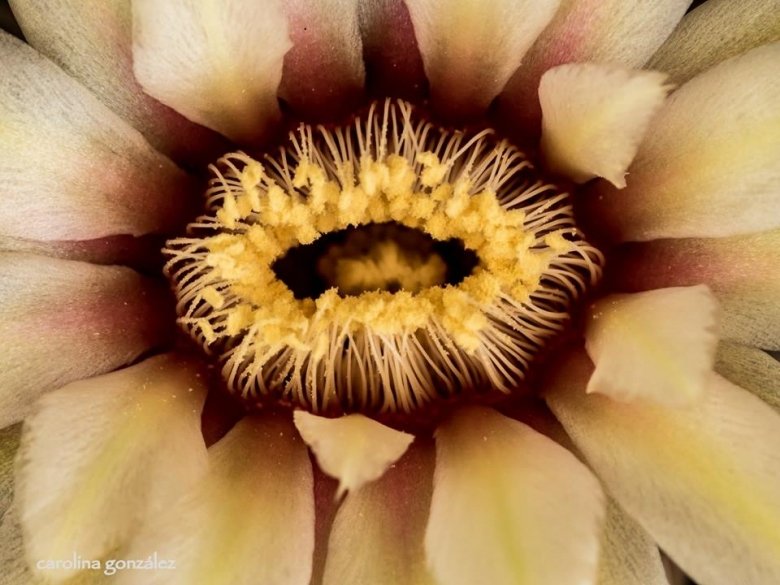
Flowers: White with a reddish throat. The diameter and length are identical and are equal to 5 cm. Seedlings bloom at the age of 5-7 years.
Remarks: Seems to be a pretty variable plant you might get some other names which are effectively the same plant and also not sure all plants identified as this are really this.
Origin and Habitat
Córdoba, Argentina.
Type locality: Sierra de Ischilin, prope Santa Catalina, 850 m, Córdoba (Argentina).
Altitude range: 600-1200 metres above sea level.
Habitat: This plant grows among hight grasses in the mossy cracks and cavities in rocky cliffs and in bushy hills.
Cultivation and Propagation
Gymnocalycium mostii is a summer grower species that offers no cultivation difficulties. Water regularly in summer ( but can handle excessive water to few water) Keep this plant almost dry in winter at a minimum temperature of 0°C, prefer relatively rich substrate and low pH compost (if possible not limestone) otherwise growth will stop altogether. Feed with a high potassium fertilizer in summer. It is quite frost resistant if kept dry (Hardy to -12C). This plant needs plenty of space for its roots, repotting should be done every other year or when the it has outgrown its pot. This species is particularly easy and accommodating, seldom suffer of cryptogamic diseases.
Sun Exposure: Light shade. It may tolerate bright situations but is likely to suffer from sun scorch or stunted growth if over exposed to direct sunlight during the hottest part of the day in summer.
Propagation: Direct sow after last frost. (seldom produces offsets)
Seed Collecting: Permit fruit to ripen. Fruit must be significantly overripe before harvesting seed; clean and dry seeds.
Bibliography
Major references and further lectures
-
Edward Anderson “The Cactus family” Timber Press, Incorporated, 2001
-
James Cullen, Sabina G. Knees, H. Suzanne Cubey “The European Garden Flora Flowering Plants: A Manual for the Identification of Plants Cultivated in Europe, Both Out-of-Doors and Under Glass” Cambridge University Press, 11/Aug/2011
-
David R Hunt; Nigel P Taylor; Graham Charles; International Cactaceae Systematics Group. “The New Cactus Lexicon” dh books, 2006
Gallery