Publication: Gymnocalycium 6(1): 79 (1993), as ‘ochoterenai’
Description
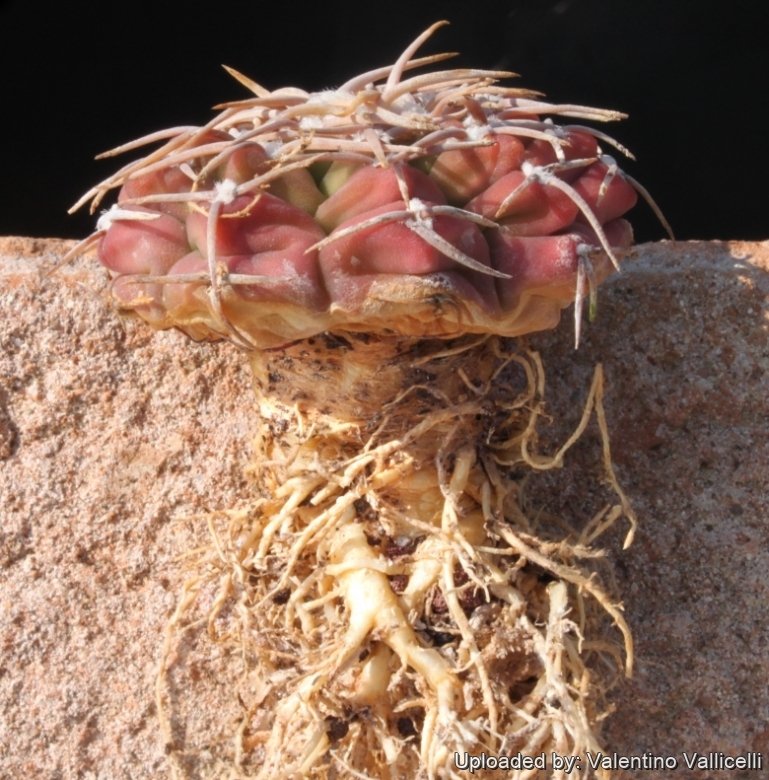
This is a very slowly growing specie. Generally solitary but old specimens may cluster from the base.
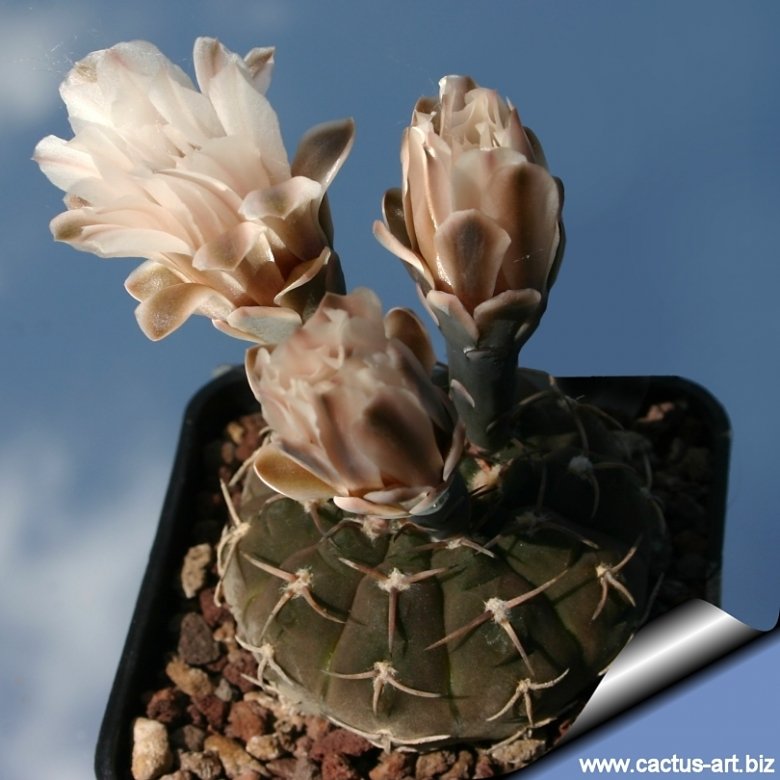
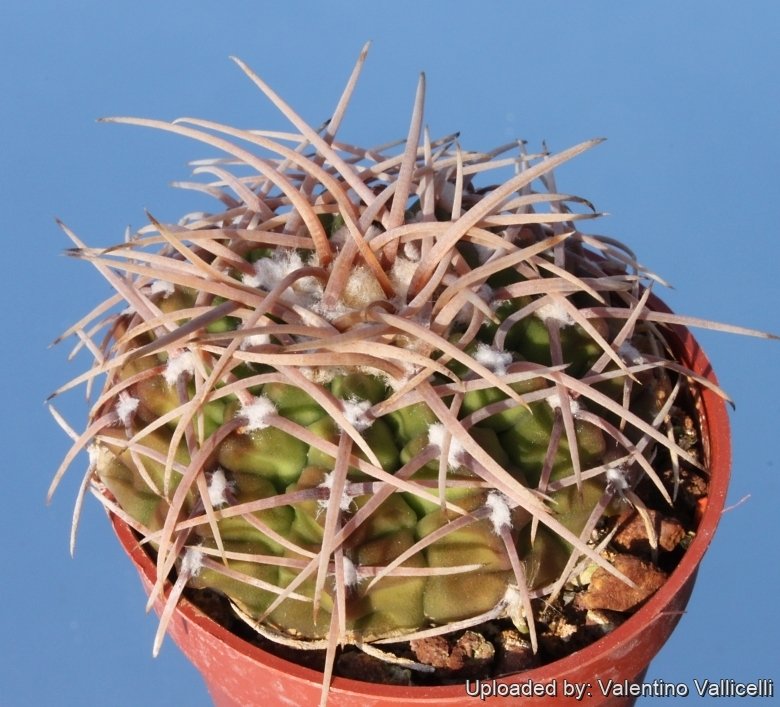
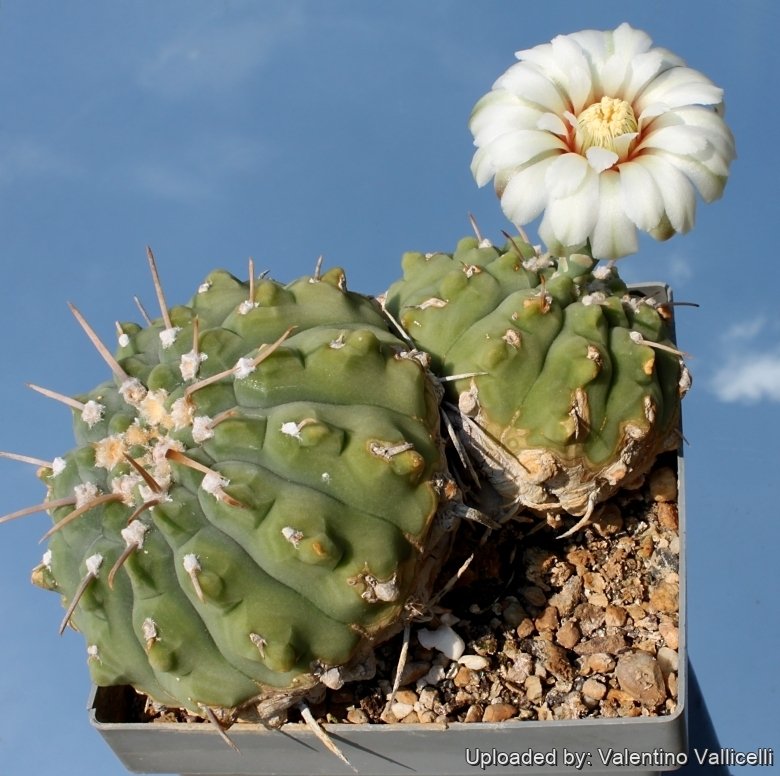
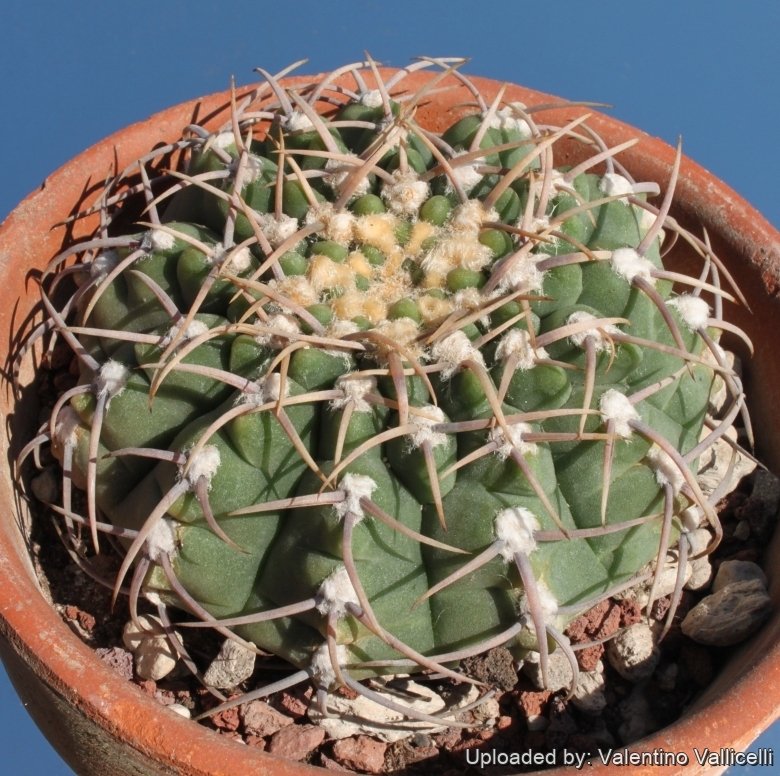
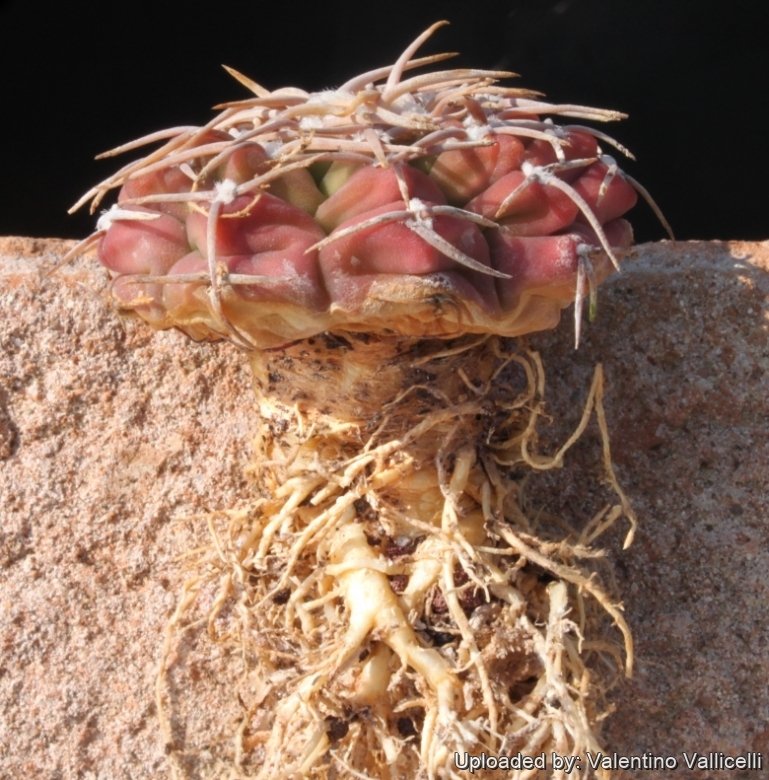
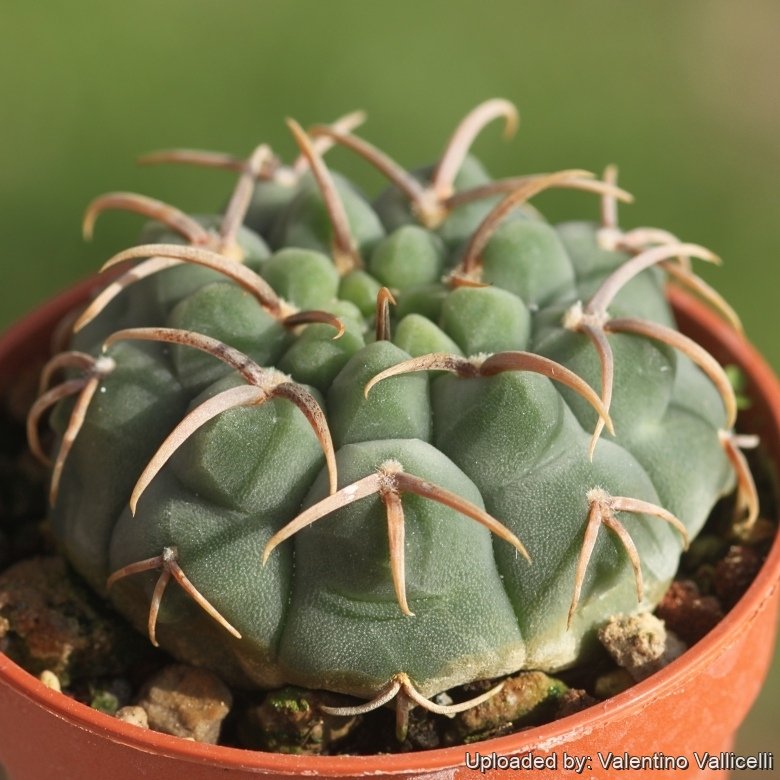
Stem: Flattened with dull grey-green or blue green epidermis, up to 9 cm high 4-10 cm broad (or more in culture)
Ribs:11-14 scarcely prominent.
Areoles: Whit grey wool .
Spines: Stiff and bent to the body, very variable both in length (1 to 2 cm long), cross-section and number ( 1 to 3 in each areole) though some areoles are completely spineless, The most characteristic vatteri form is the one with only 1 spine.
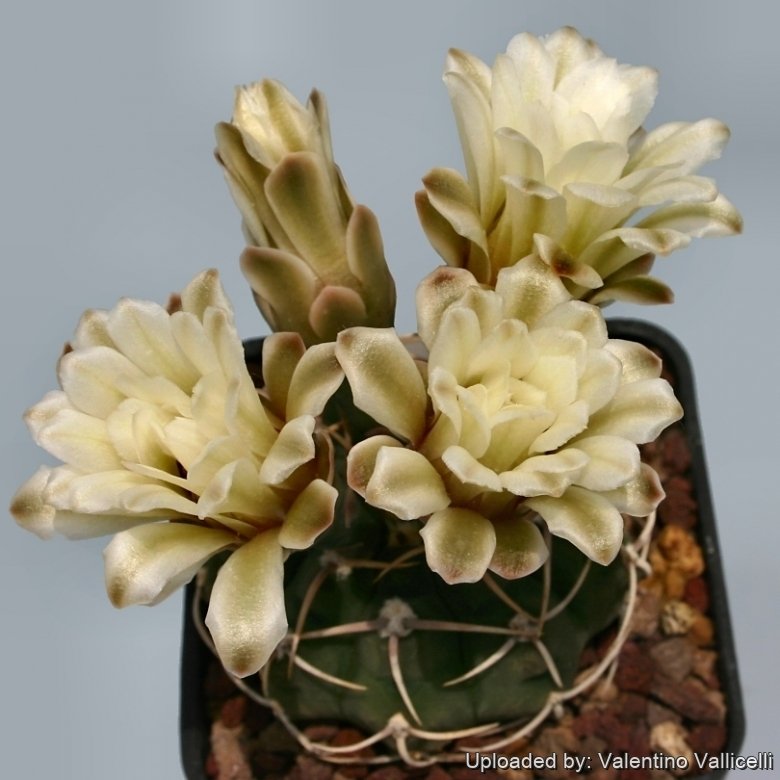
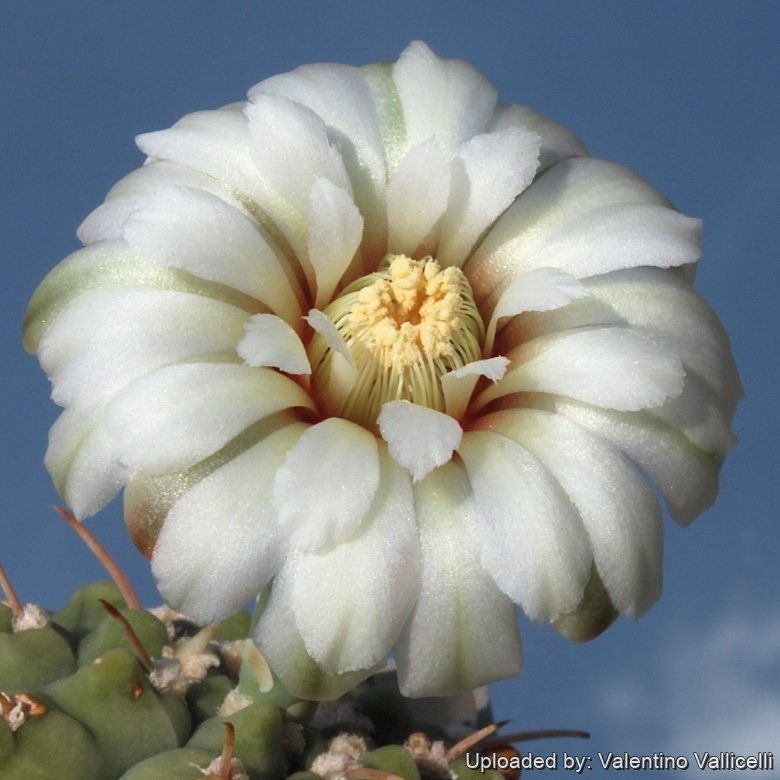
Flowers: 4-5 cm long and 4 cm broad, white with pink to brownish-red throat.
Blooming time: Profuse flowers from late spring to summer.
Origin and Habitat
Argentina, Catamarca, Córdoba
Cultivation and Propagation
It is a summer grower species that offers no cultivation difficulties. Water regularly in summer (but do not overwater ) keep rather dry in winter. Feed with a high potassium fertilizer in summer. It is quite frost resistant if kept dry (hardy to -5° C) Sun Exposure: Light shade.
Propagation:: Direct sow after last frost.(seldom produces offsets)
Bibliography
Major references and further lectures
-
Edward Anderson “The Cactus family” Timber Press, Incorporated, 2001
-
James Cullen, Sabina G. Knees, H. Suzanne Cubey “The European Garden Flora Flowering Plants: A Manual for the Identification of Plants Cultivated in Europe, Both Out-of-Doors and Under Glass” Cambridge University Press, 11/Aug/2011
-
David R Hunt; Nigel P Taylor; Graham Charles; International Cactaceae Systematics Group. “The New Cactus Lexicon” dh books, 2006
-
N. L. Britton, J. N. Rose “The Cactaceae. Descriptions and Illustrations of Plants of the Cactus Family.” Volume 4, The Carnegie Institution of Washington, Washington 1923
-
Curt Backeberg “Die Cactaceae: Handbuch der Kakteenkunde” Gustav Fischer Verlag, Stuttgart New York 1982–1985
Gallery