Publication: Desert Pl. Life 5: 3. 1933 Backeb. & Knuth, Kaktus-ABC, 207. 1935 Gray Herb. Card Cat, Issue 139; Backeb. in Backeb. &F. M. Knuth, Kaktus-ABC, 207 (1935).
Description
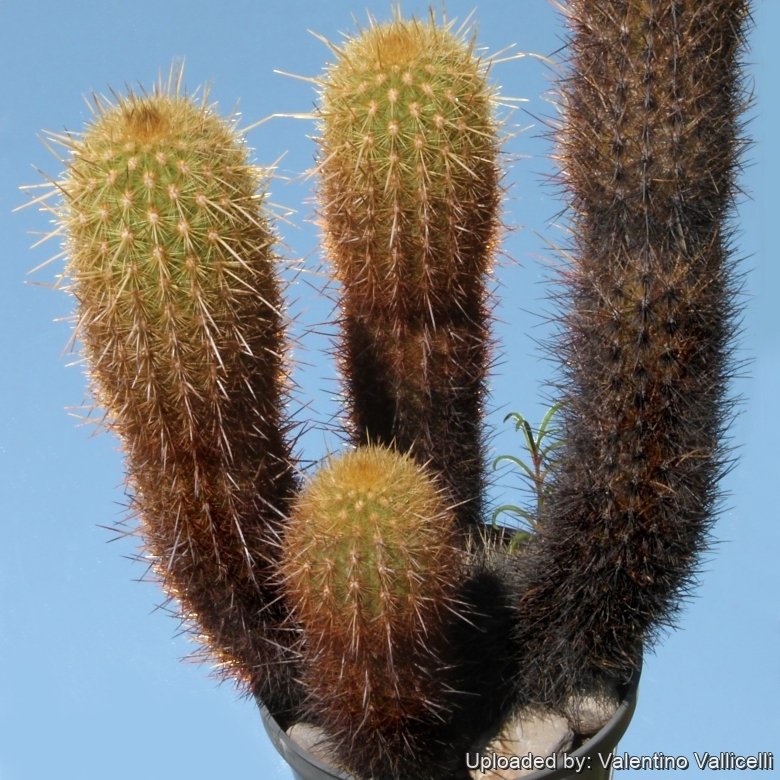
Haageocereus acranthus (Formerly known as Binghamia acrantha) has thick very spiny stems, with a stiff erect habit of growth which normally do not branch, but over time new stems arise from the base to form a clump.
Stems: Green erect or curving or upright, to 1-2(-3) m tall, 7-10 cm in diameter.
Ribs: 12-14 somewhat tuberculate near the stem tips.
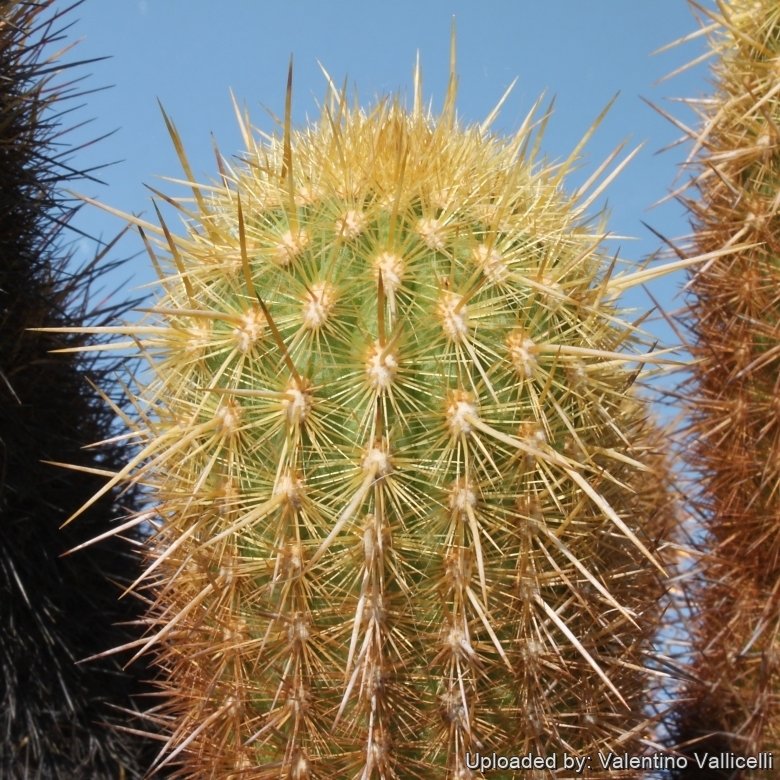
Areoles Closely set, yellow to dark brown with yellowish woolly hairs. Flowering areoles well differentiated, woolly, white, generally disposed in ring-like pseudo- cephalia
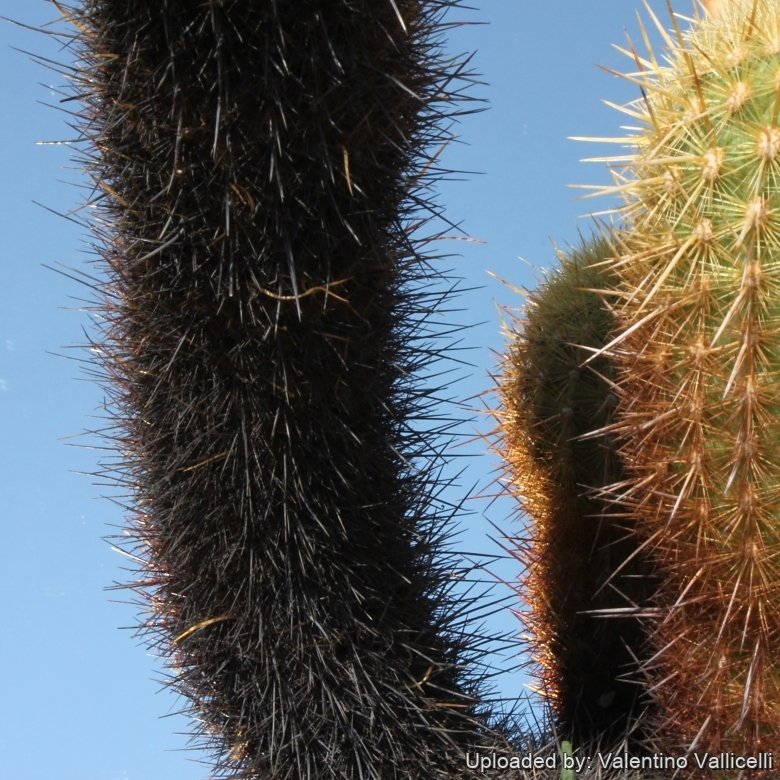
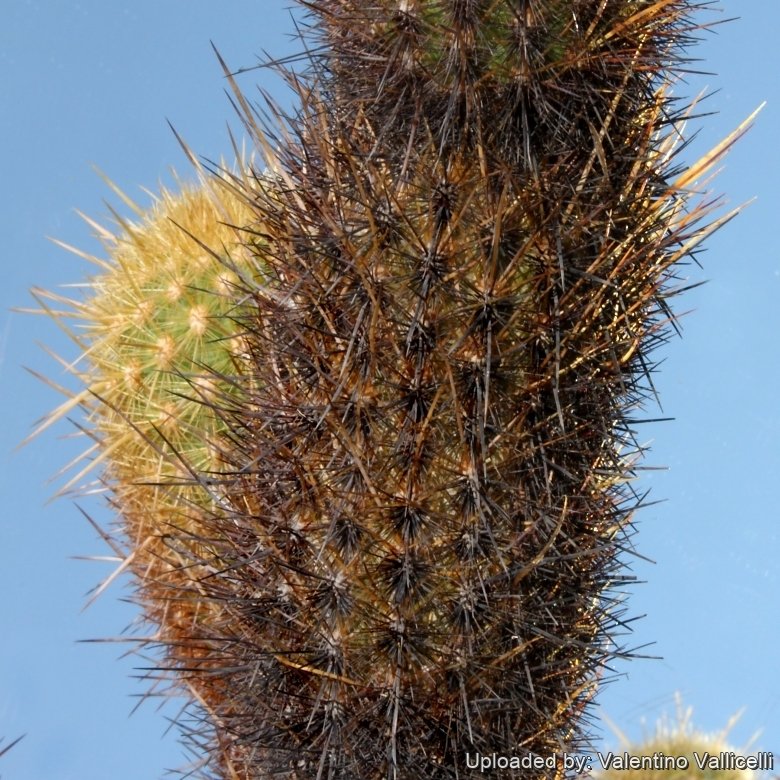
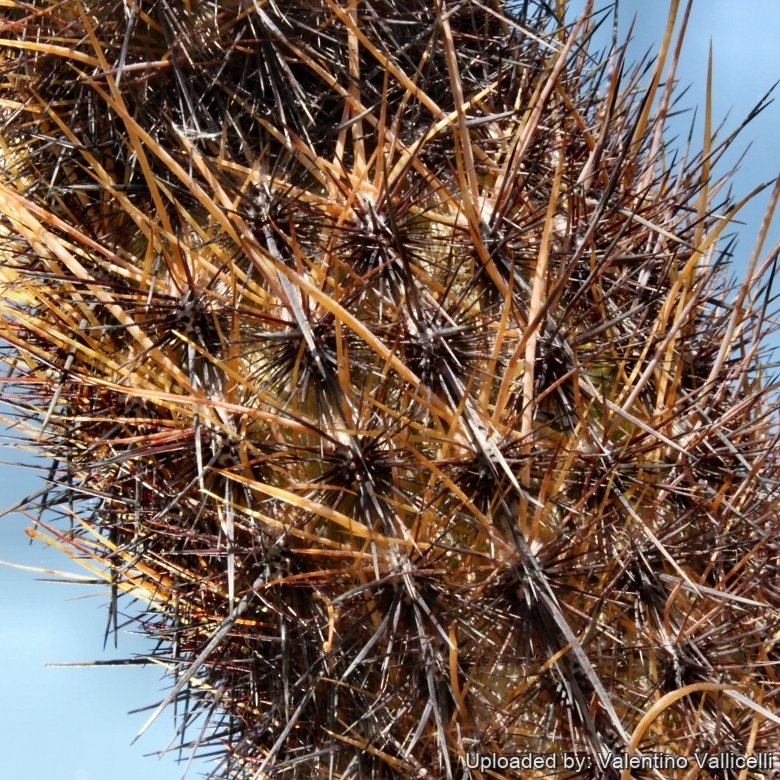
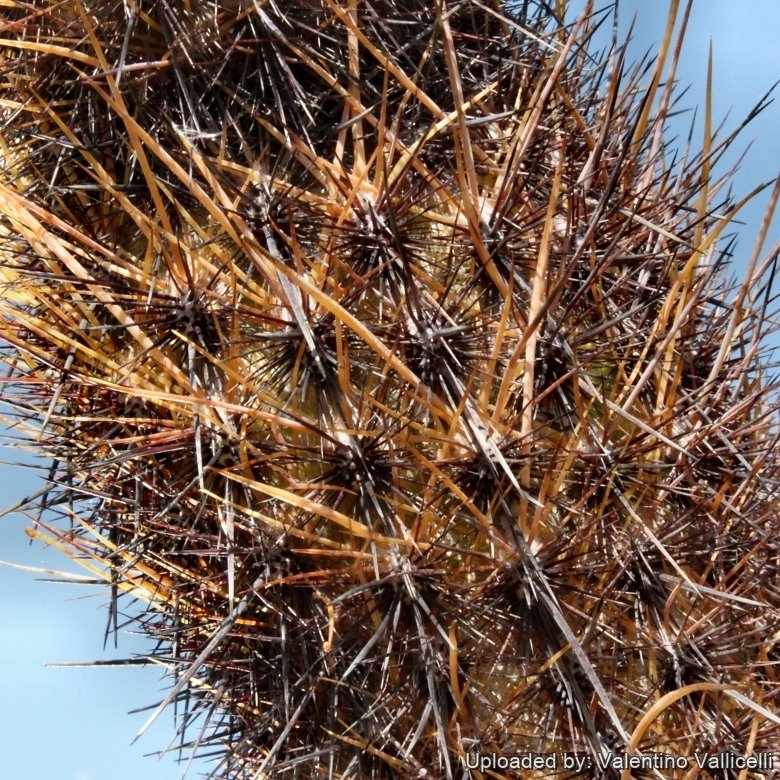
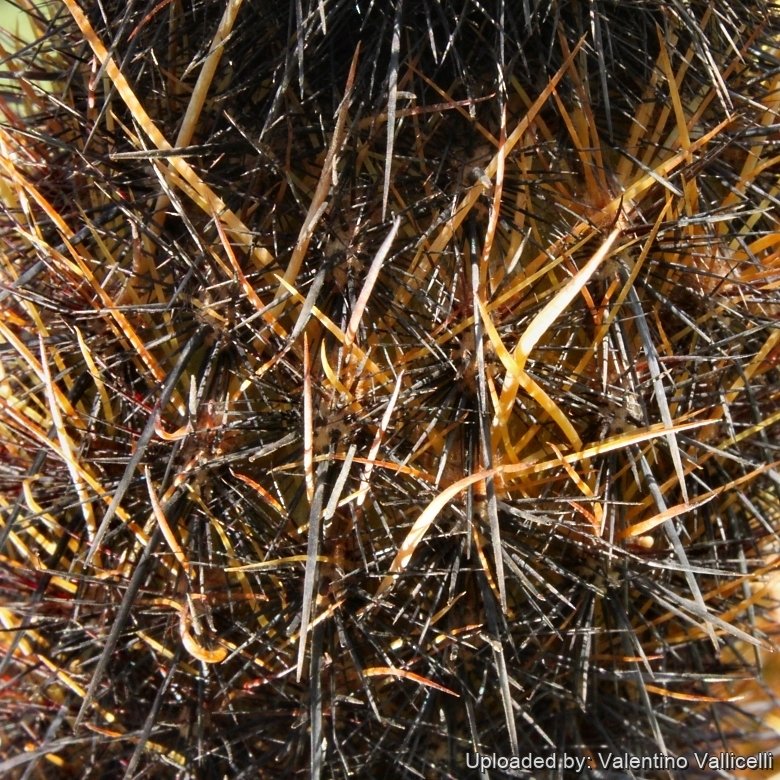
Spines: Very coarse, continuing to grow on the trunk throughout the life of the cactus.
Central spines: Principal central spines one, sometimes up to 3, downward pointing, very stout 2-4(-6) cm long (usually less than 2 cm long in var. acranthus) yellow, yellowish-brown to brown and and darkening with age.
Radial spines: Yellow, 20-30(-40), in 2-3 series, the outermost about 1 cm long.
Flowers: Greenish white 6-8 cm long, 5-6 cm wide. Tube flared in upper half, greenish and covered by abundant white trichomes. Perianth-segments white or pale pink.
Flowering Time: Early summer.
Fruit: Round, green.
Origin and Habitat
It is endemic to the valleys of the Rio Rimac and Rio Lurin in the vicinity of Lima. Central Peru.
Altitude: 100-2400 meters above sea level.
Cultivation and Propagation
Considering that Haageocereus acranthus comes from a habitat with an extremely arid climate, they are remarkably tolerant of pot culture. These plants are susceptible to overwatering. They requires also an appropriate air circulation. Haageocereus are summer grower species easy to cultivate.
Growth rate: This is a moderately slow growing cactus kept for the beauty of its form that will make clumps given the best conditions.
Soils: It likes very coarse mineral cactus mix soil, but can become too elongated if compost is too rich.
Repotting: Use pot with good drainage.
Watering: It requires light but regular waterings in summer, but let the soil mix dry between waterings, but do not overwater (Rot prone), it must be strictly kept dry throughout the winter quiescent period since it is very sensitive to any moisture excesses keep dry in winter.
Fertilization: Feed with a high potassium fertilizer in summer.
Hardiness: Not highly tolerant of a great deal of frost. They need to be kept in a cool place during winter rest and are resistant to light frost if kept on the dry side prior to, and during, cold weather ( they are hardy to -2 C ° C or less for short periods). However some warmth throughout the year will increase the grower’s success (minimum 5° to 10°C during rest season).
Exposition: Requires full sun or light shade and careful watering to keep plant compact with strong coloured spines. Tends to bronze in strong light, which encourages flowering and heavy spine production. Light shadow my be useful in the hottest summer days.
Uses: It is an excellent plant for container growing. It look fine in a cold greenhouse and frame or outdoor in a rockery.
Pests & diseases: It may be attractive to a variety of insects, but plants in good condition should be nearly pest-free, particularly if they are grown in a mineral potting-mix, with good exposure and ventilation. Nonetheless, there are several pests to watch for:
- Red spiders: Red spiders may be effectively rubbed up by watering the infested plants from above.
- Mealy bugs: Mealy bugs occasionally develop aerial into the new growth among the wool with disfiguring results, but the worst types develop underground on the roots and are invisible except by their effects.
- Scales: Scales are rarely a problem. It is wise to treat your whole collection with a systemic insecticide twice a year in spring and autumn.
- Rot: Rot is only a minor problem with cacti if the plants are watered and “aired” correctly. If they are not, fungicides won’t help all that much. To prevent rottenness it is also advisable to surround its root neck by very rough sand or grit, this help a fast water drainage.
Propagation: Seeds or offsets. Seeds germinate in 7-14 days at 21-27° C in spring, remove gradually the glass cover as soon the plants will be well rooted (ca 1-2 weeks) and keep ventilated, no full sun for young plants!
Bibliography
Major references and further lectures
-
Friedrich Ritter “Kakteen in Südamerika Ergebnisse meiner 20jährigen Feldforschungen: Volume 4: Peru” 1981
-
Edward Anderson “The Cactus family” Timber Press, Incorporated, 2001
-
James Cullen, Sabina G. Knees, H. Suzanne Cubey “The European Garden Flora Flowering Plants: A Manual for the Identification of Plants Cultivated in Europe, Both Out-of-Doors and Under Glass” Cambridge University Press, 11/Aug/2011
-
David R Hunt; Nigel P Taylor; Graham Charles; International Cactaceae Systematics Group. “The New Cactus Lexicon” dh books, 2006
-
John Borg “Cacti: a gardener’s handbook for their identification and cultivation” Blandford P., 1970
-
Walther Haage “Cacti and succulents: a practical handbook” Dutton, 1963
From llifle page Haageocereus lachayensis
Description
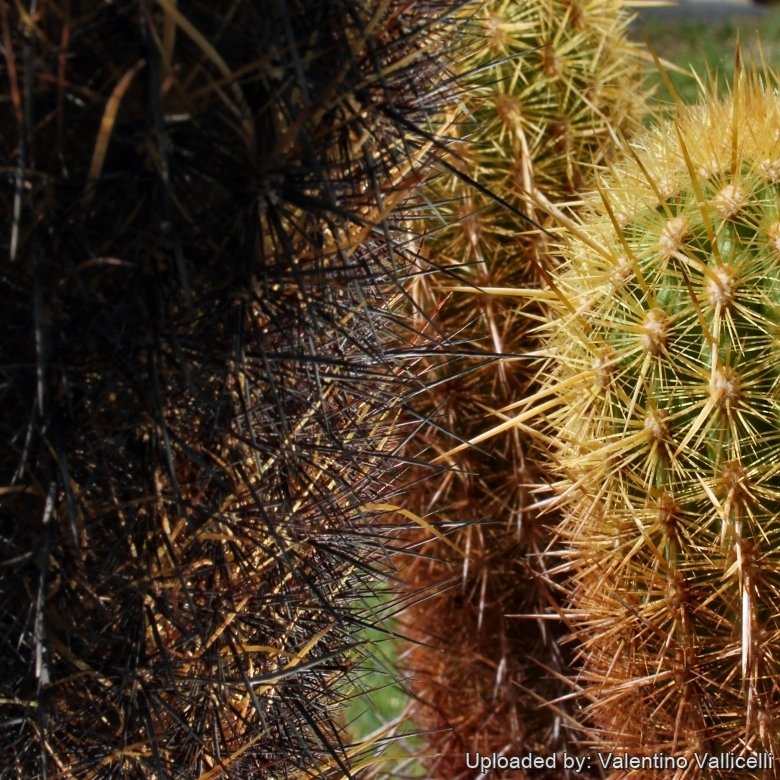
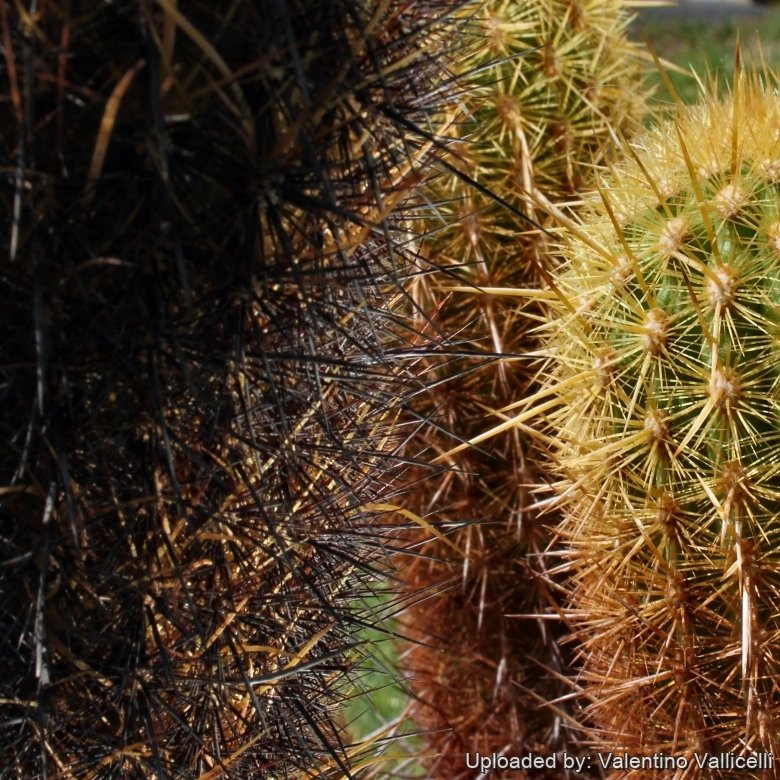
Haageocereus lachayensis is one of the geographical form of the widespread and morphologically variable Haageocereus acranthus, of its morphological and geographical variant was early classified as different independent species, but nowadays all this plant are considered part of a multiform species, where each form is linked to others by populations of plants with intermediate characteristics. Haageocereus lachayensis has a very distinctive thick spination, spines on stem apexes are golden yellow but year after year they become more and more dark and at the base of the plant they are almost black creating an extraordinary contrast of colours.
Habit: It is a columnar succulent with upright stems which normally do not branch, but over time new stems arise from the base to form a clump.
Stems: Green erect or curving or upright, to 1-2(-3) m tall, 7-10 cm in diameter.
Ribs: 12-14 somewhat tuberculate near the stem tips.
Areoles Closely set, yellow to dark brown with yellowish woolly hairs. Flowering areoles well differentiated, woolly, white, generally disposed in ring-like pseudo- cephalia
Spines: Very coarse, continuing to grow on the trunk throughout the life of the cactus, yellow at first, then turning progressively to an almost black colouration.
Central spines: Principal central spines one, sometimes up to 3, downward pointing, very stout 2-4 cm long
Radial spines: 20-30(-40), in 2-3 series, the outermost about 1 cm long.
Flowers: Greenish white 6-8 cm long, 5-6 cm wide. Tube flared in upper half, greenish and covered by abundant white trichomes. Perianth-segments white or pale pink.
Flowering Time: Early summer.
Fruit: Round, green.
Origin and Habitat
Lomas de Lachay, South of Huacho, Lima, Peru.
Altitude: Around 100-800 metres above sea level.
Habitat: It grows in very dry coastal desert and lower stony part of canyons with fog playing a fundamental rule regarding the area’s vegetation. The Haageocereus lachayensis form extensive colonies in the lower, rocky areas. The endemic bird ‘cactus canastero’ (Asthenes cactorum), relies on this vegetation for survival.
Cultivation and Propagation
Considering that Haageocereus lachayensis comes from a habitat with an extremely arid climate, they are remarkably tolerant of pot culture. These plants are susceptible to overwatering. They requires also an appropriate air circulation. Haageocereus are summer grower species easy to cultivate.
Growth rate: This is a moderately slow growing cactus kept for the beauty of its form that will make clumps given the best conditions.
Soils: It likes very coarse mineral cactus mix soil, but can become too elongated if compost is too rich.
Repotting: Use pot with good drainage.
Watering: It requires light but regular waterings in summer, but let the soil mix dry between waterings, but do not overwater (Rot prone), it must be strictly kept dry throughout the winter quiescent period since it is very sensitive to any moisture excesses keep dry in winter. Outdoors, once established, requires minimal water. Irrigation is usually required only in times of extreme heat or drought.
Fertilization: Feed with a high potassium fertilizer in summer.
Hardiness: Not highly tolerant of a great deal of frost. They need to be kept in a cool place during winter rest and are resistant to light frost if kept on the dry side prior to, and during, cold weather ( they are hardy to -2 C ° C or less for short periods). However some warmth throughout the year will increase the grower’s success (minimum 5° to 10°C during rest season).
Exposition: Requires full sun or light shade and careful watering to keep plant compact with strong coloured spines. Tends to bronze in strong light, which encourages flowering and heavy spine production. Light shadow my be useful in the hottest summer days.
Uses: It is an excellent plant for container growing. It look fine in a cold greenhouse and frame or outdoor in a rockery.
Pests & diseases: It may be attractive to a variety of insects, but plants in good condition should be nearly pest-free, particularly if they are grown in a mineral potting-mix, with good exposure and ventilation. Nonetheless, there are several pests to watch for:
- Red spiders: Red spiders may be effectively rubbed up by watering the infested plants from above.
- Mealy bugs: Mealy bugs occasionally develop aerial into the new growth among the wool with disfiguring results, but the worst types develop underground on the roots and are invisible except by their effects.
- Scales: Scales are rarely a problem. It is wise to treat your whole collection with a systemic insecticide twice a year in spring and autumn.
- Rot: Rot is only a minor problem with cacti if the plants are watered and “aired” correctly. If they are not, fungicides won’t help all that much. To prevent rottenness it is also advisable to surround its root neck by very rough sand or grit, this help a fast water drainage.
Propagation: Seeds or offsets. Seeds germinate in 7-14 days at 21-27° C in spring, remove gradually the glass cover as soon the plants will be well rooted (ca 1-2 weeks) and keep ventilated, no full sun for young plants!
Source: Haageocereus lachayensis, LLIFLE - Encyclopedia of living forms, CC-BY-SA, retrieved 2026-10-25.
Cultivars and forms (1)
Varieties (1)
Gallery