Description
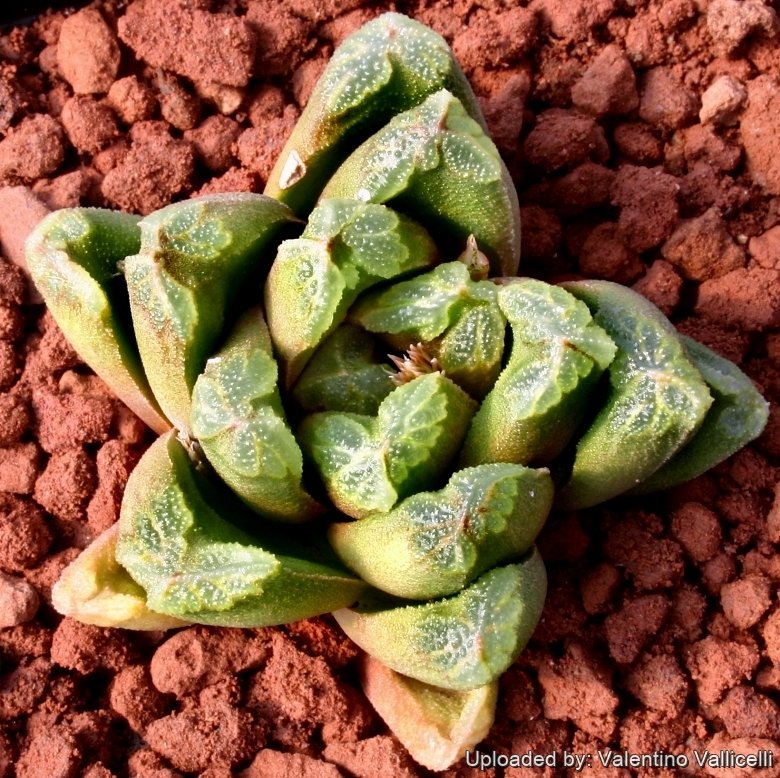
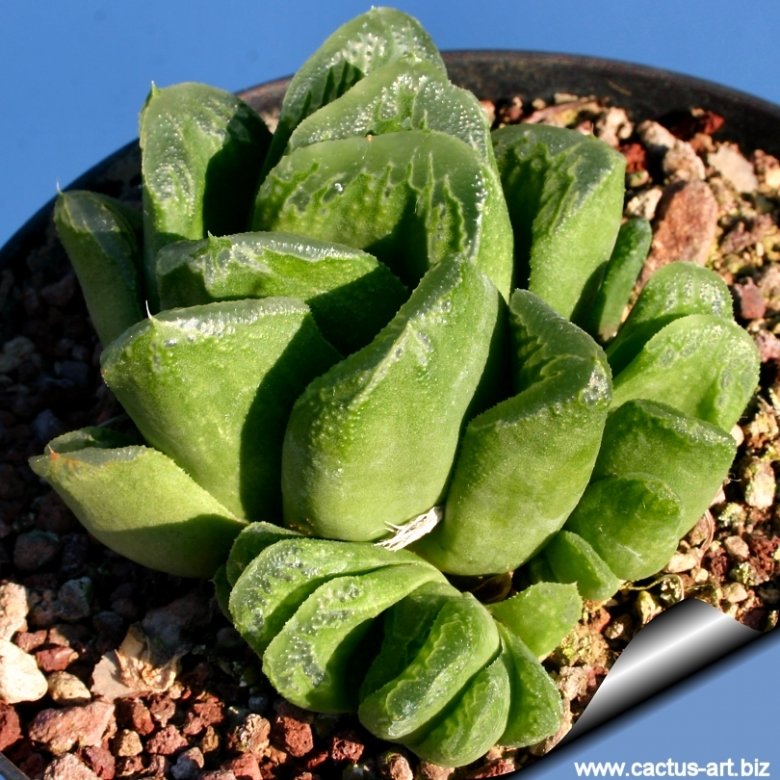
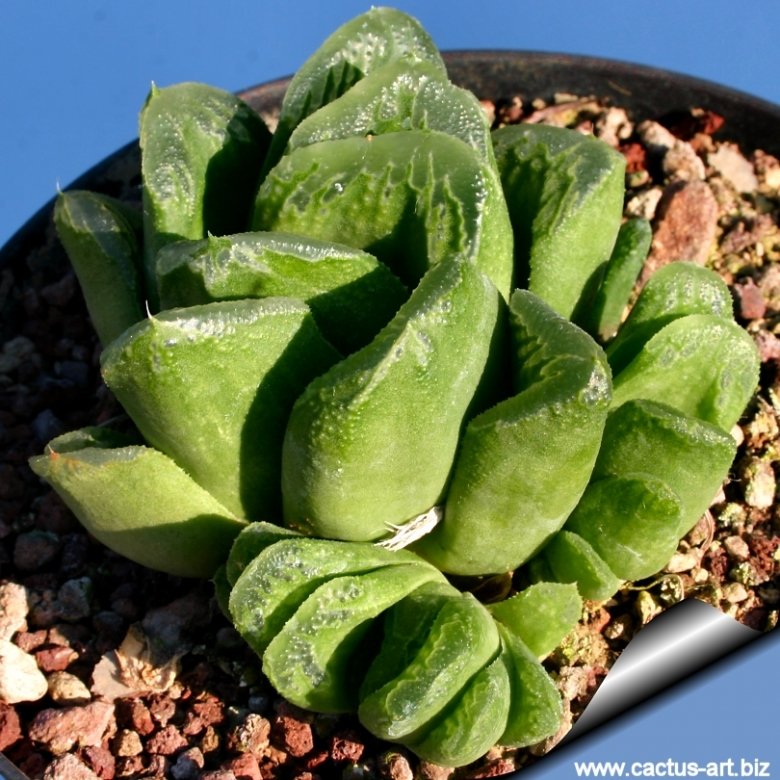
Haworthia “Green Rose” is a very nice hybrid, characterized by broad squared-off leaves which are incurved like a rose bud and ability to form nice clumps.It seems to be an hybrid between Haworthia truncata and Haworthia magifica.
Rosettes: Bright green that have a nice rose shape.
Rosettes: Bright green that have a nice rose shape.
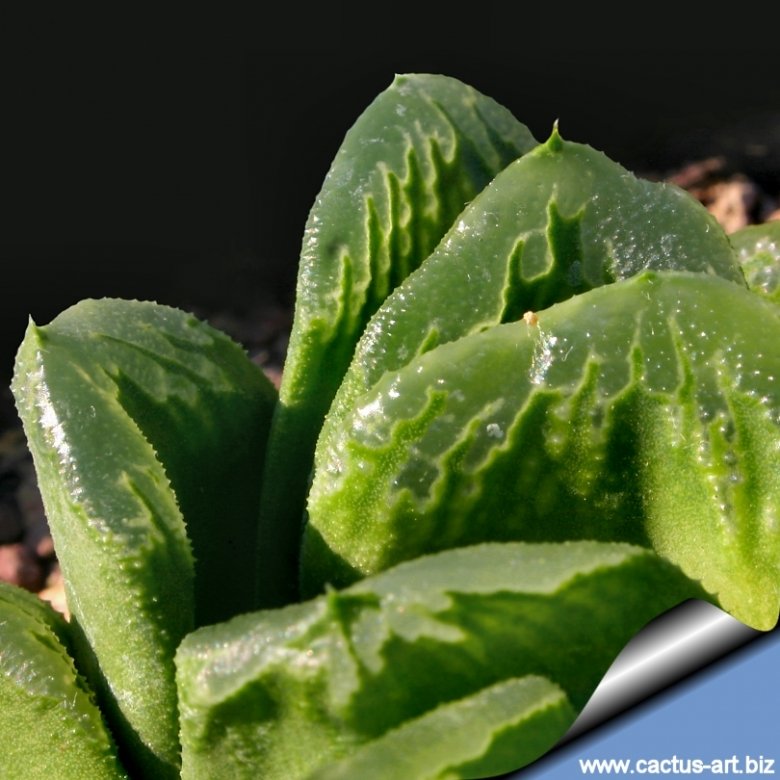
Leaves:Squat lime and marbled chartreuse with “semi”-transparent windows, lovely frosted with shades of lime green. The tips of the leaves are like windows looking into the green jelly inside and seem to glisten.
Flowers: The flower stalks reaches over a 30 cm in height, and feature small white blossoms and cream/tan hanging, inconspicuous flowers.
Blooming season: Blooms repeatedly, mainly in late Spring/Early Summer.
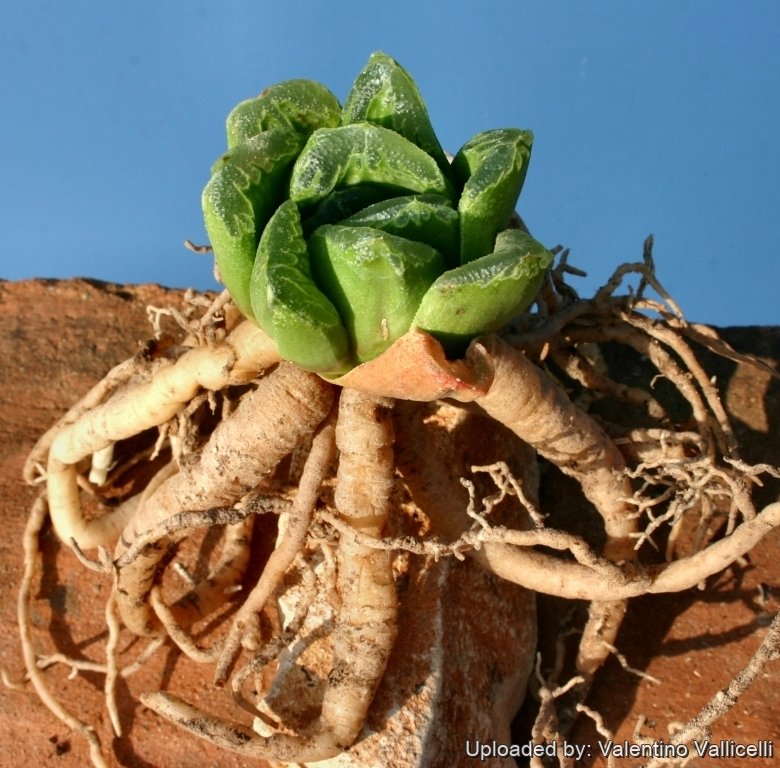
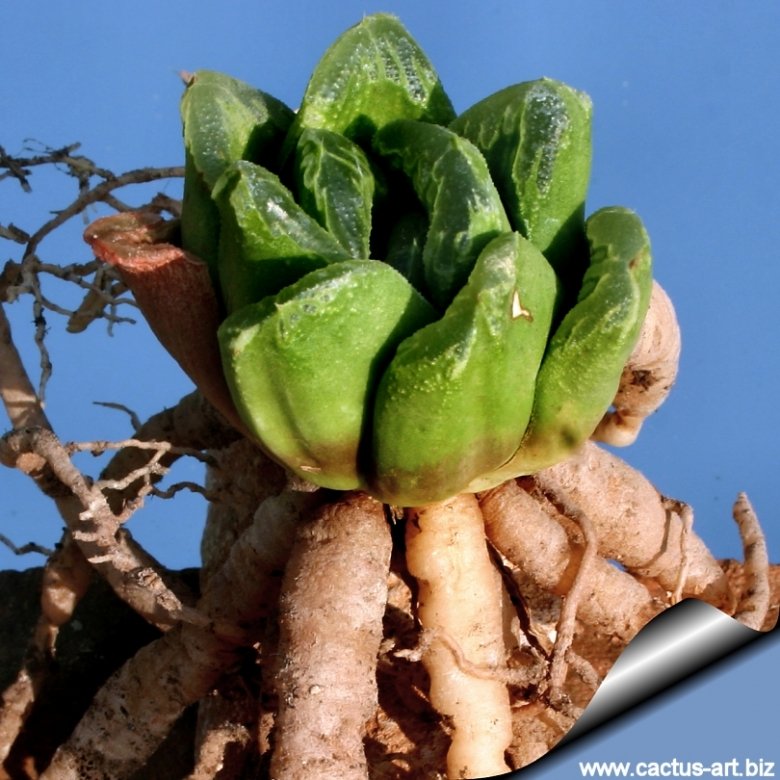
Roots: It has a huge fat, succulent root system, the roots are contractile.
Origin and Habitat
Garden origin (Nursery produced cultivar)
Cultivation and Propagation
Easy to grow it need regular water but do not water again until dry. Also, it is a species that is dormant in the winter and require very little water (maybe even none) during the cold months. Offsets readily. Needs a deep pot to accommodate the long, thick, contractile roots.
Frost Tolerance: Light frost protection required. Minimum of 5ºC for safe growing (but hardy up to -5°C or less.)
Sun Exposure: Requires light shade to bright light (protect from strong midday sun). In shade the body colour will remain mostly green, while full sun will darken a bit. Can be sunburned if moved from shade/greenhouse into full sun too quickly. The amount of sunlight it can withstand without scorching depends upon the how hot it becomes in the summer in the locale in which it is planted. During the spring it may be able to take full sun until the heat arrives at the end of spring. In an area that has hot afternoon sun, it may be able to take full morning sun, but requires afternoon shade or afternoon light shade.
Propagation: Offsets that appear at the base between the leaves; leave them attached to form a cluster, or wait until they are 1/3 the size of the parent and then detach and plant.
Gallery