Publication: Natl. Cact. Succ. J. (U. K.) 34(2): 31 (1979)
Description
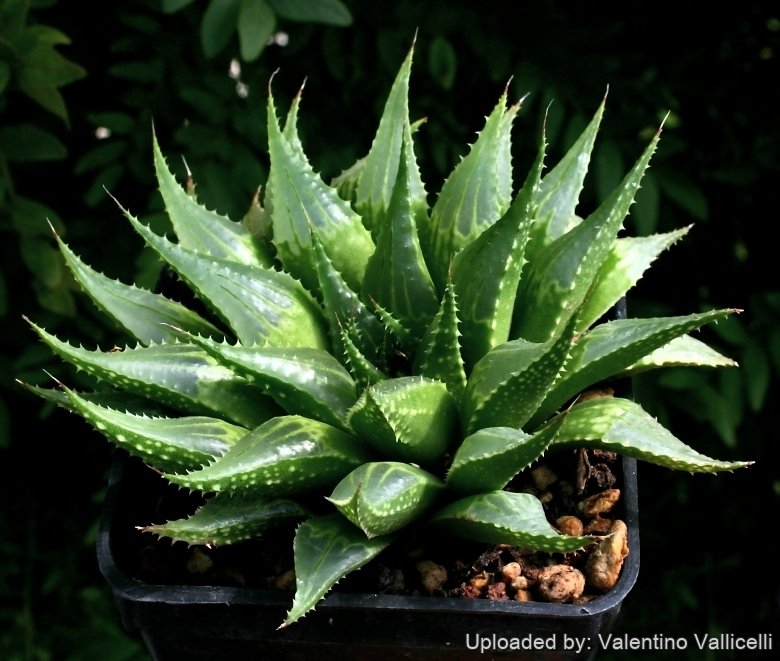
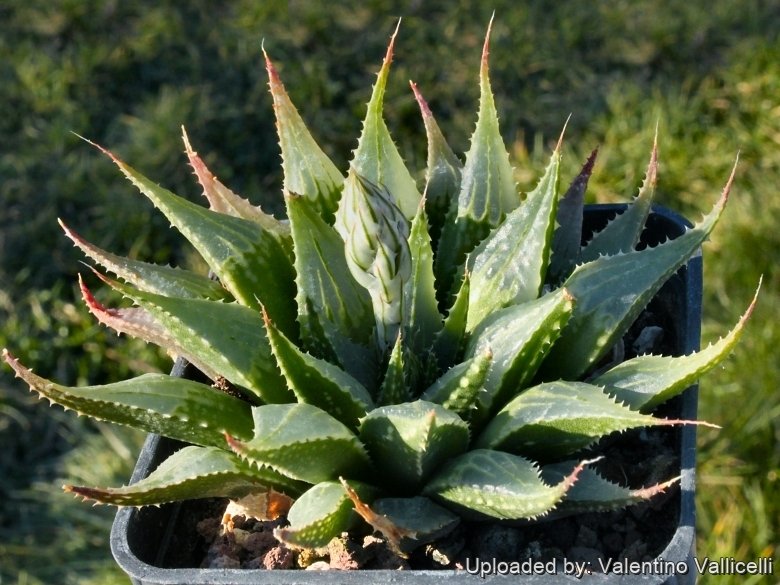
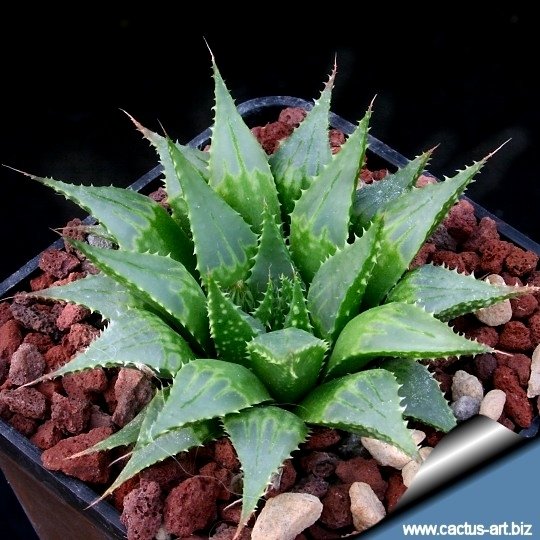
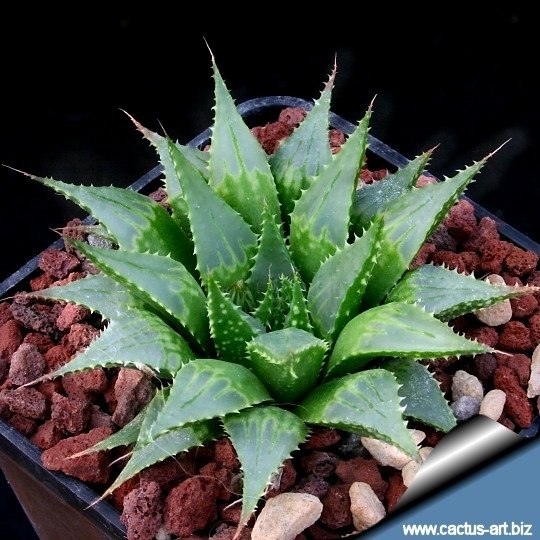
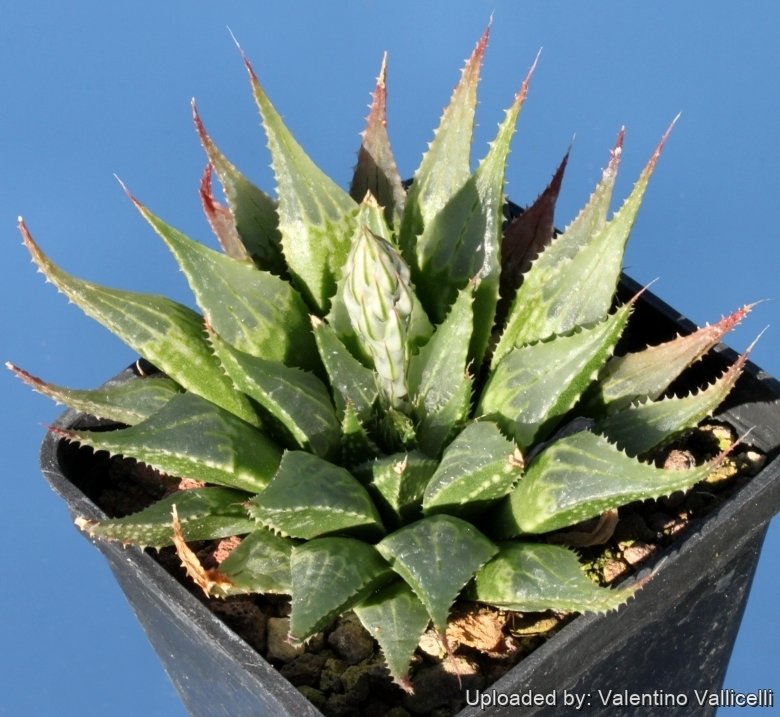
Haworthia emelyae var. multifolia is one of the morphological or local form of Haworthia emelyae. It distinguishes from the latter for the larger rosettes with many more, slender, suberect leaves that have a smooth and green surface. It is also more robust and eventually forms more rosettes.
Related species: It is related with Haworthia serrata and Haworthia heidelbergensis.
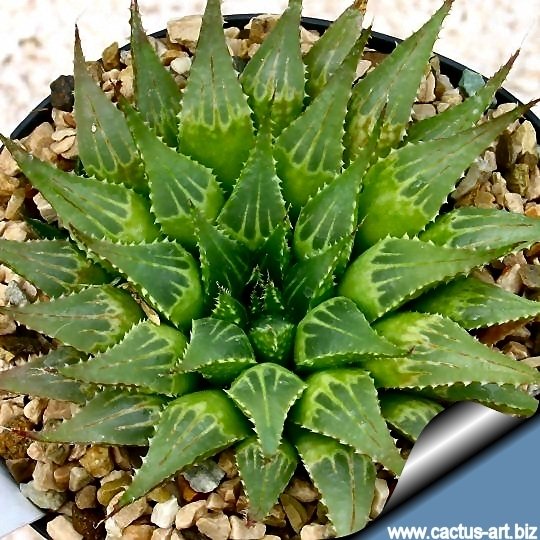
Rosette: Stemless, about 4-6 (or more) cm in diameter, with up to 60 (usually 20-30) leaves.
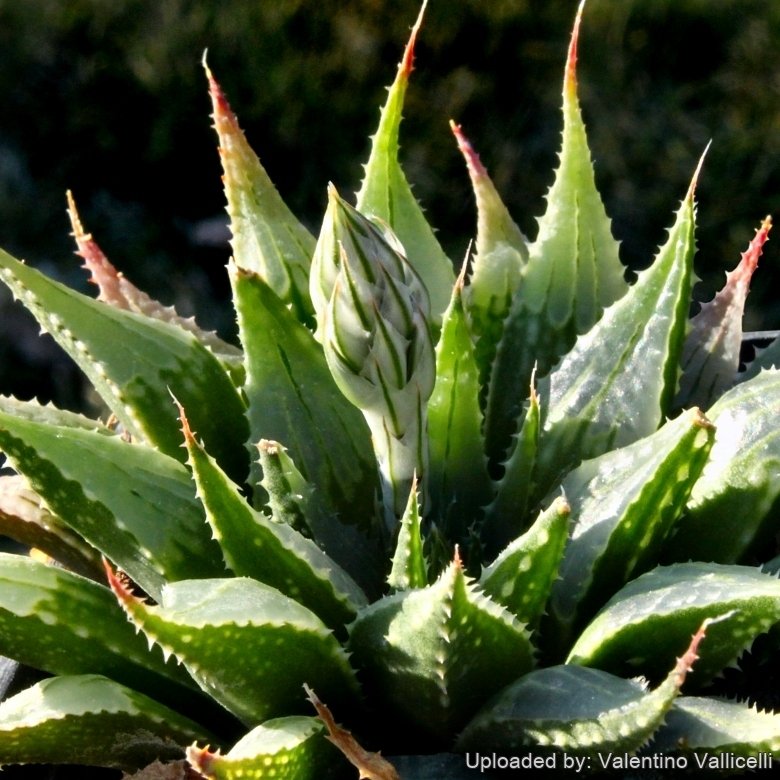
Leaves: 2-3(-4,5) cm long, ovate-oblong to triangular lanceolate, narrow, sharply pointed, scarcely retused, more or less recurved, lime-green to dark-green, the upper triangular face, convex and windowed with translucent appearance enhanced by longitudinal light green lines aligned towards the apex. Margins and keels with small teeth.
Inflorescences: Produces a short stemmed raceme which is uncommon for the genus, usually less than 30 cm tall, unbranched, erect and wiry. Only few flowers open together at the same time.
Flowers: Small, characteristically two-lipped and white. The flower’s Structure, colour and fruits are typical of the genus.
Origin and Habitat
Western Cape, South Little karoo, Ladismith and adjacent areas, Republic of South Africa
Habitat: It grows on a variety of geological formations, mainly amongst quartz stones.
Cultivation and Propagation
Very easy to grow and common.
Watering Needs: Need regular water but do not water again until dry. Also, it is a species that is dormant in the winter and require very little water (maybe even none) during the cold months.
Frost Tolerance: Light frost protection required. Minimum of 5ºC for safe growing (but hardy up to -5°C or less.)
Sun Exposure: Requires light shade to bright light (protect from strong midday sun). In shade the body colour will remain mostly green, while full sun will darken it and give it red/brown body colour. Can be sunburned if moved from shade/greenhouse into full sun too quickly. The amount of sunlight it can withstand without scorching depends upon the how hot it becomes in the summer in the locale in which it is planted. It will have more colour if it receives more light. During the spring it may be able to take full sun until the heat arrives at the end of spring. In an area that has hot afternoon sun, it may be able to take full morning sun, but requires afternoon shade or afternoon light shade.
Propagation: Seeds or (usually) offsets that appear at the base between the leaves; leave them attached to form a cluster, or wait until they are 1/3 the size of the parent and then detach and plant.
Bibliography
Major references and further lectures
-
Urs Eggli “Illustrated Handbook of Succulent Plants: Monocotyledons” Springer, 01/gen/2001
-
M. B. Bayer “The new Haworthia handbook” National Botanic Gardens of South Africa, 1982
-
John Pilbeam “Haworthia and Astroloba: A Collector’s Guide” 1983
-
Stuart Max Walters, James Cullen “The European Garden Flora: Pteridophyta, Gymnospermae, Angiospermae” Cambridge University Press, 1986
-
John Robert Brown “Unusual Plants:110 Spectacular Photographs of Succulents” Abbey Garden Press, 1954
-
Doreen Court “Succulent Flora of Southern Africa” Struik Nature, 2010
-
Bayer, MB “Haworthia Revisited: A revision of the genus” Umdaus Press, Hatfield. 1999
-
Hilton-Taylor, C.. “Red data list of southern African plants.” Strelitzia 4. South African National Botanical Institute, Pretoria. 1996
Gallery