Publication: Cact. Succ. J. (Los Angeles) 70(4): 180. 1998
Description
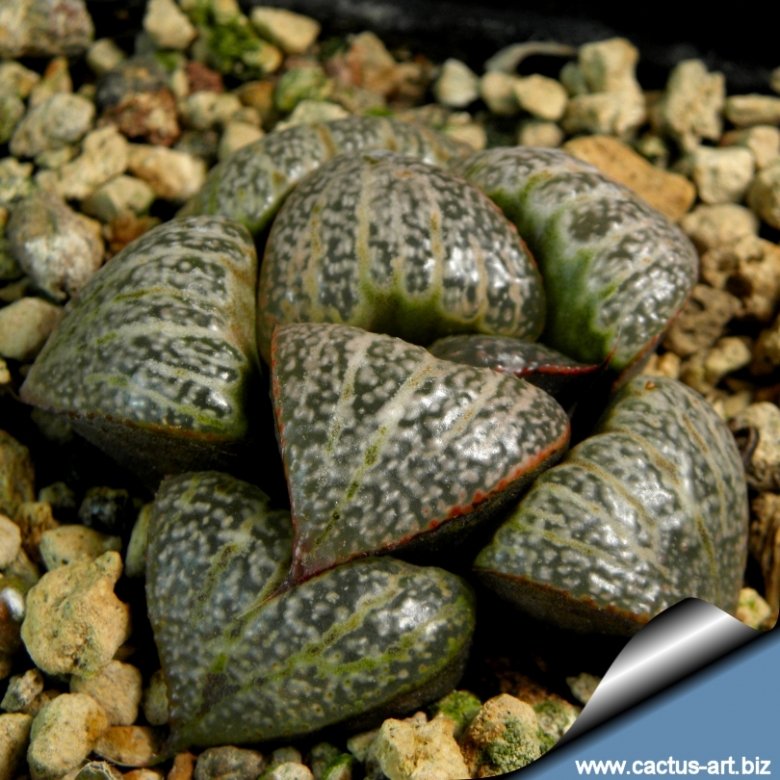
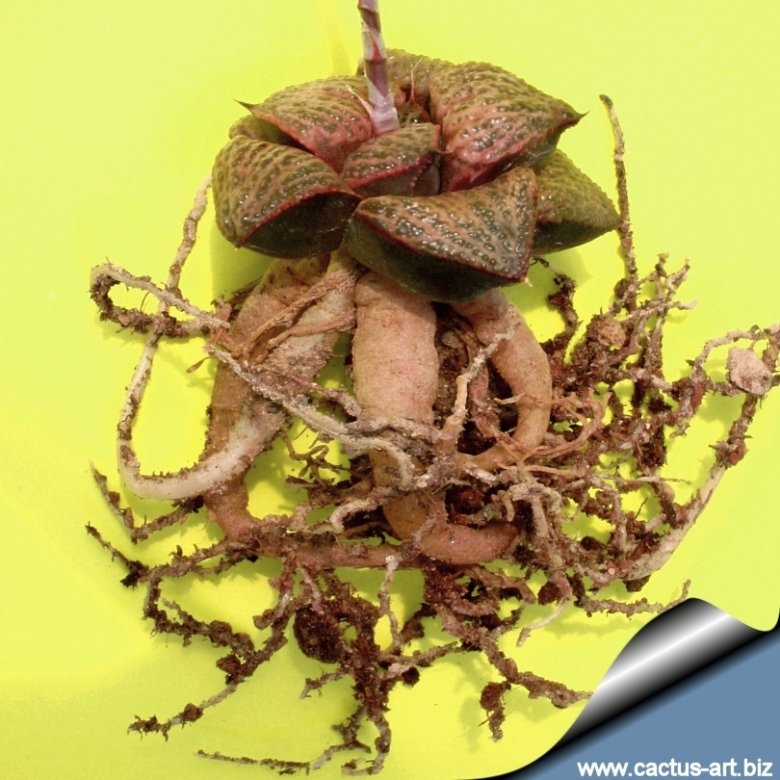
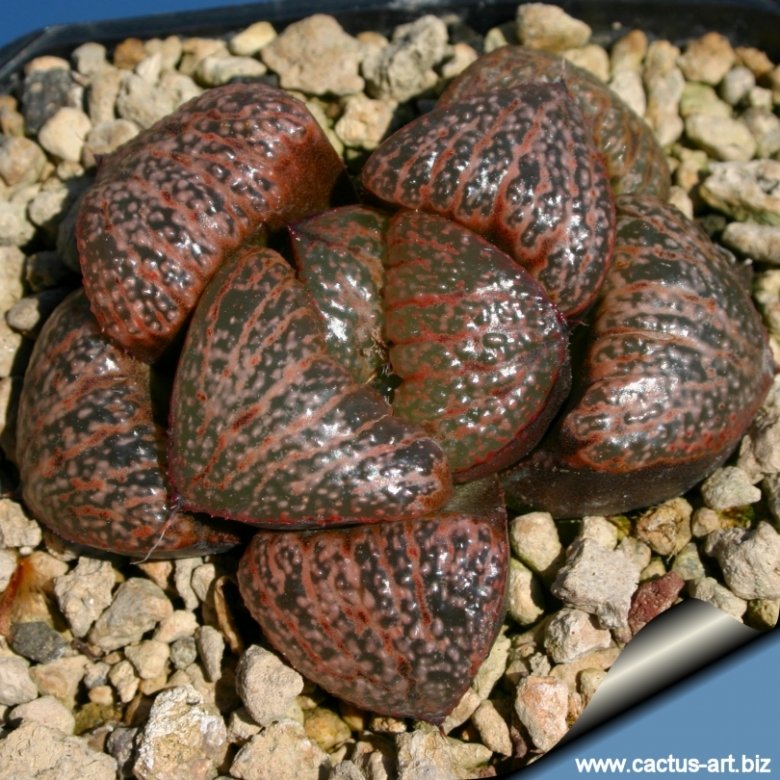
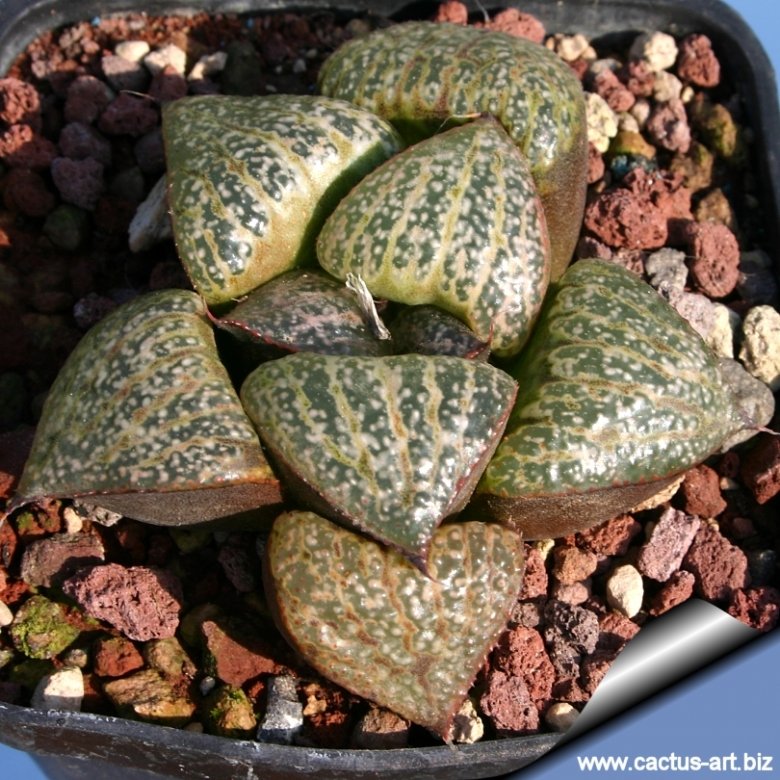
Haworthia magnifica var. splendens is a slow growing species that stay usually solitary but that can occasionally proliferates after several years. The superlative epithets of this variety give a hint of the exquisite beauty of this plant, that shows shades of bronze-rose in half shade culture.
Similar species: It is similar to Haworthia truncata but the growth and arrangement of the fat windowed leaves is mounding.
Stem: Stemless.
Rosettes: Up to 8 cm in diameter that flush at soil level in habitat.
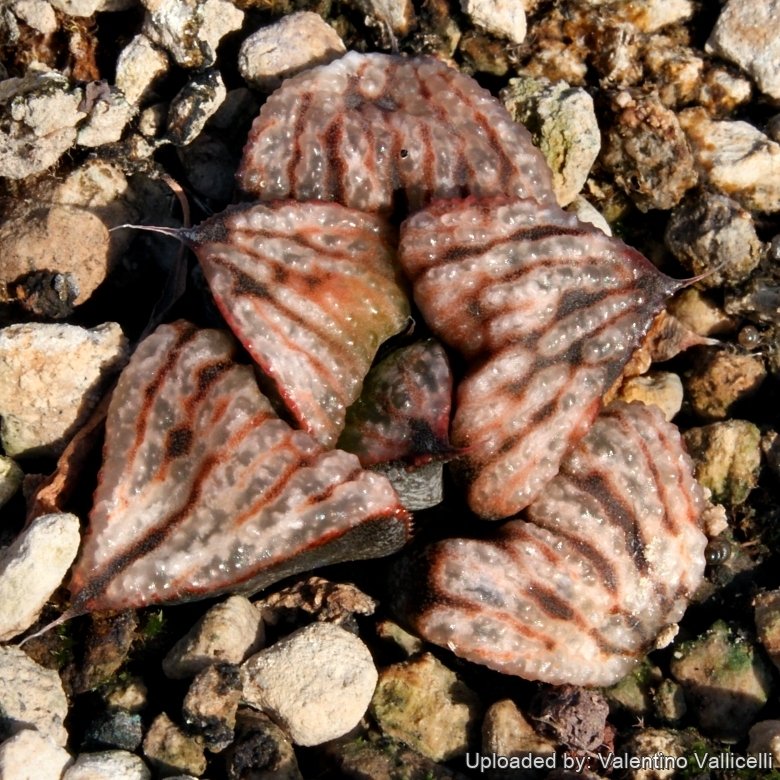
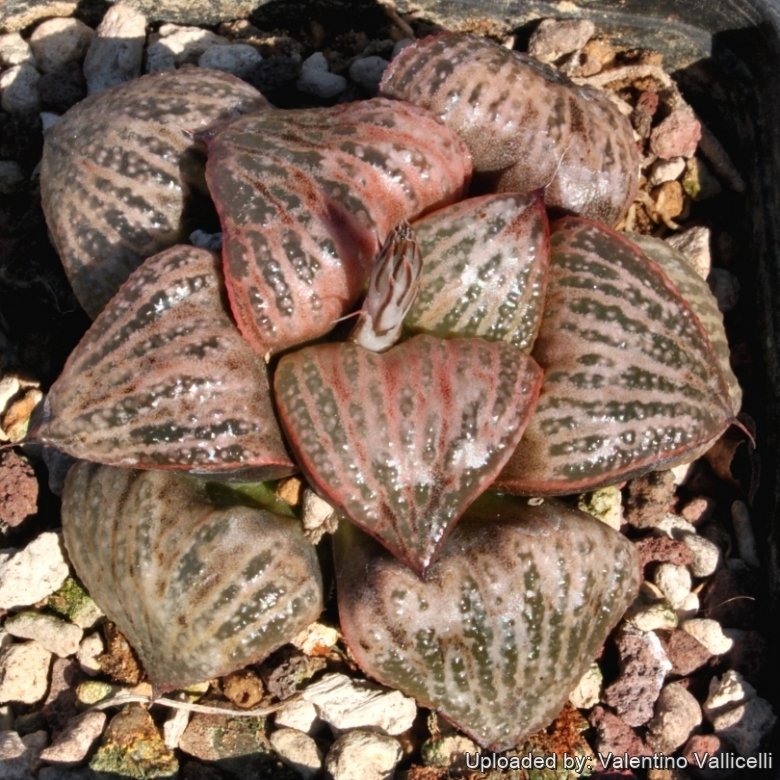
Leaves: Very attractive, spreading and retuse up to 3,5 cm long, triangular-elliptic, end area triangular, swollen, dark green to purplish with 4-5 longitudinal silvery-grey lines along the upper surfaces and with shiny raised tubercles. Margin entire or finely toothed. The tip of the leaf is more or less translucent between the veins.
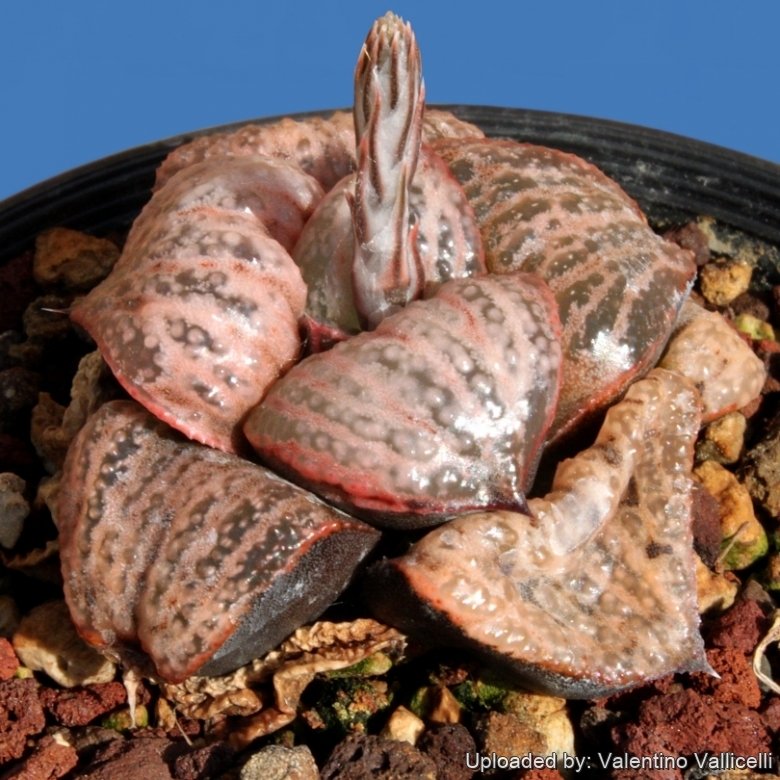
Remarks: If grown properly, the nicest forms resemble little sculptures and all turn extraordinary colours if treated right: purple, turquoise, pink, gold, and may be streaked and dotted with white, gold and silver as well. H. magnifica var. splendens however shows wide variations, this variety alone is enough to keep aficionados of the genus engaged for generations, selecting from a seemingly vast potential of degrees of glossiness, colours and translucence, lineate patterns and papillae. The best colours come just as they enter and exit dormancy.
Flowers: Produces a slender inflorescence up to 40 cm tall, with 15-25 flower, petals white with a brownish-green mid-vein and green throat. Only few flowers open together at the same time. The flower’s Structure, colour and fruits are typical of the genus.
Origin and Habitat
South Africa, Cape Province.
Type Locality: Near Albertinia, 200 metres above sea level.
Cultivation and Propagation
It is a very slow growing species, it needs regular water, but do not water again until dry. Also, it is a species that is dormant in the winter and require very little water (maybe even none) during the cold months.
Frost Tolerance: Light frost protection required. Minimum of 5ºC for safe growing (but hardy up to -5°C or less.)
Sun Exposure: Requires light shade to bright light (protect from strong midday sun). In shade the body colour will remain mostly green, while full sun will darken and give it a reach pink-red body colour. Can be sunburned if moved from shade/greenhouse into full sun too quickly. The amount of sunlight it can withstand without scorching depends upon the how hot it becomes in the summer in the locale in which it is planted. It will have more colour if it receives more light. During the spring it may be able to take full sun until the heat arrives at the end of spring. In an area that has hot afternoon sun, it may be able to take full morning sun, but requires afternoon shade or afternoon light shade.
Propagation: In contrast to most of the other Haworthia, these plants are reluctant or very slow to offset, and some never do, reproducing themselves only by seed.
Notes
It show wide variations of glossiness, colours and translucence, lineate patterns and papillae. The best colours come just as it enter and exit dormancy.
Bibliography
Major references and further lectures
-
M. B. Bayer “The new Haworthia handbook” National Botanic Gardens of South Africa, 1982
-
John Pilbeam “Haworthia and Astroloba: A Collector’s Guide” 1983
-
Stuart Max Walters, James Cullen “The European Garden Flora: Pteridophyta, Gymnospermae, Angiospermae” Cambridge University Press, 1986
-
Gibbs Russell, G. E., W. G. Welman, E. Reitief, K. L. Immelman, G. Germishuizen, B. J. Pienaar, M. v. Wyk & A. Nicholas. “List of species of southern African plants.” Mem. Bot. Surv. S. Afric1987
Gallery