Publication: Syn. Pl. Succ. 90 1812
From llifle page Aloe pseudorigida
Description
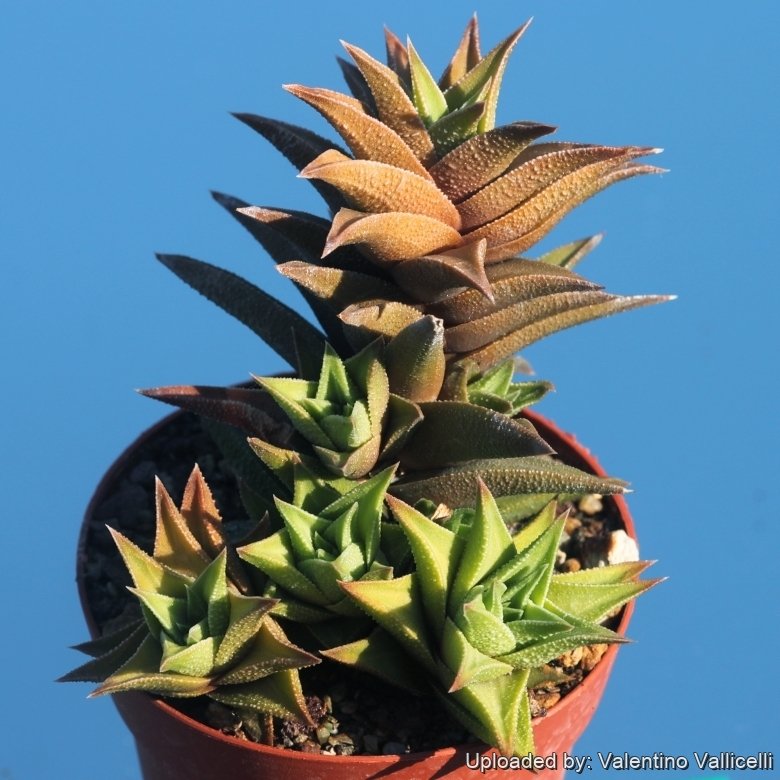
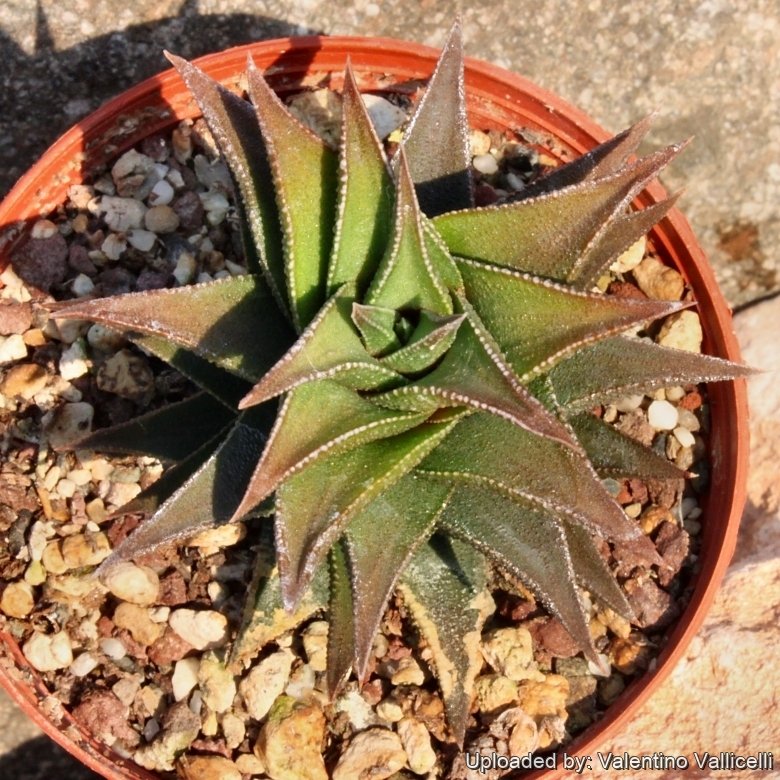
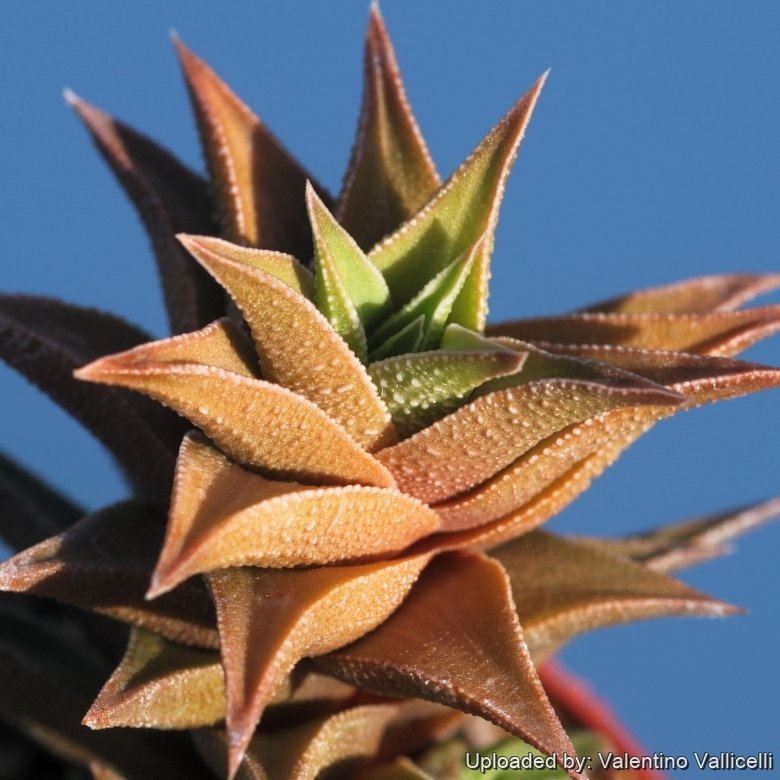
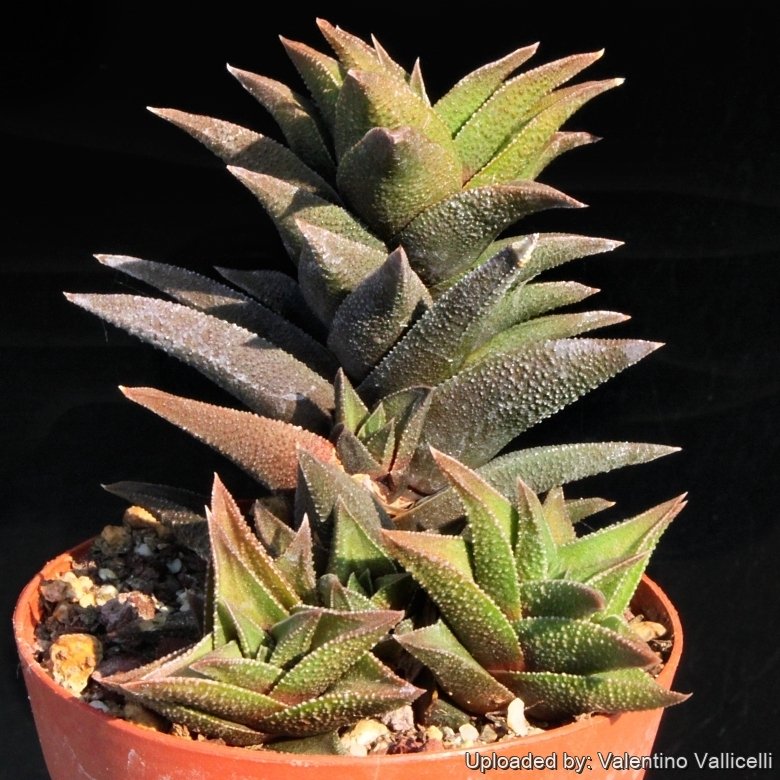
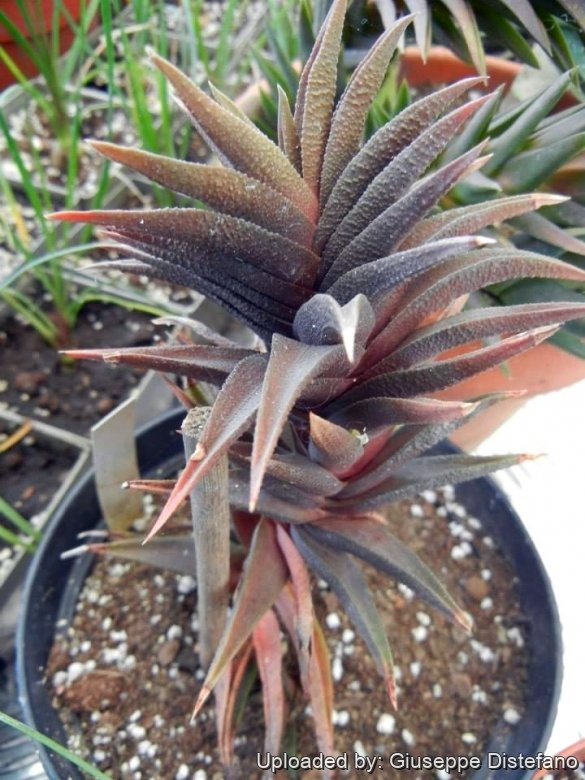
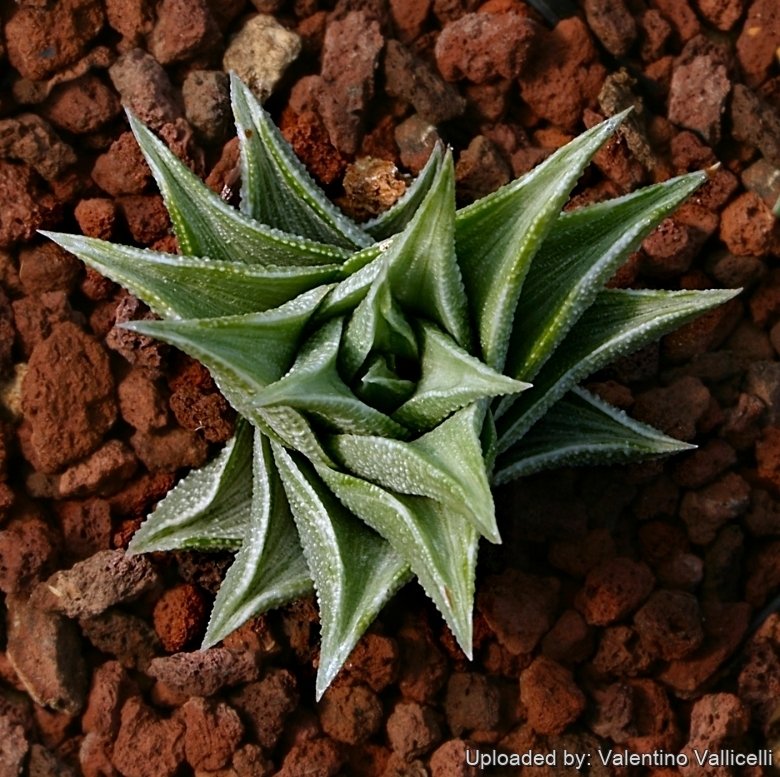
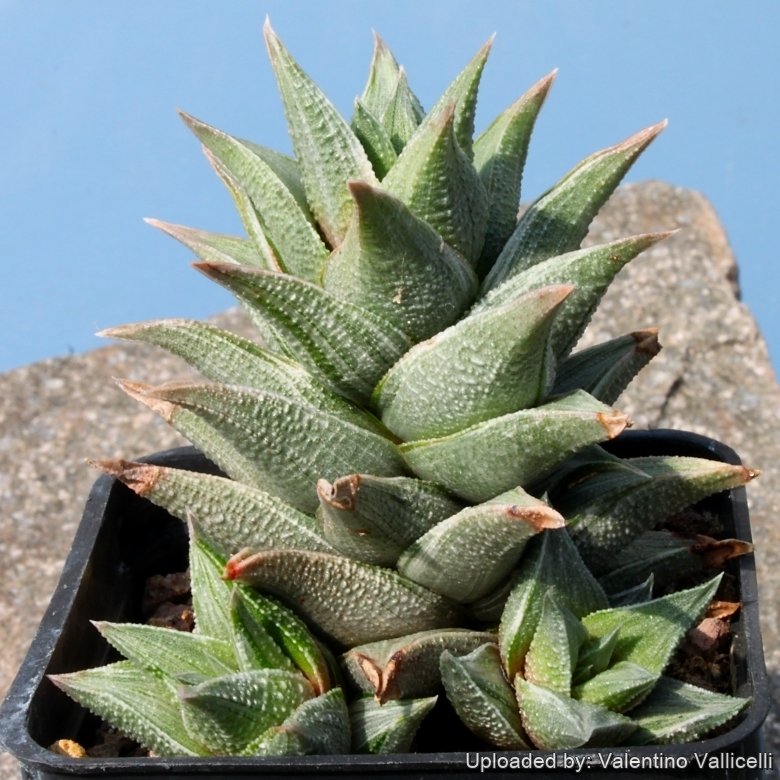
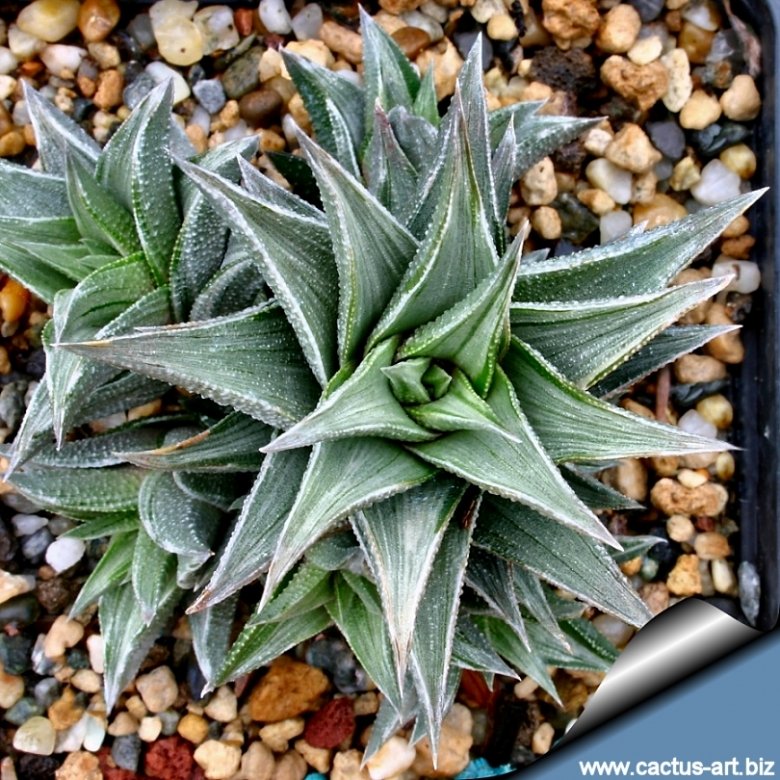
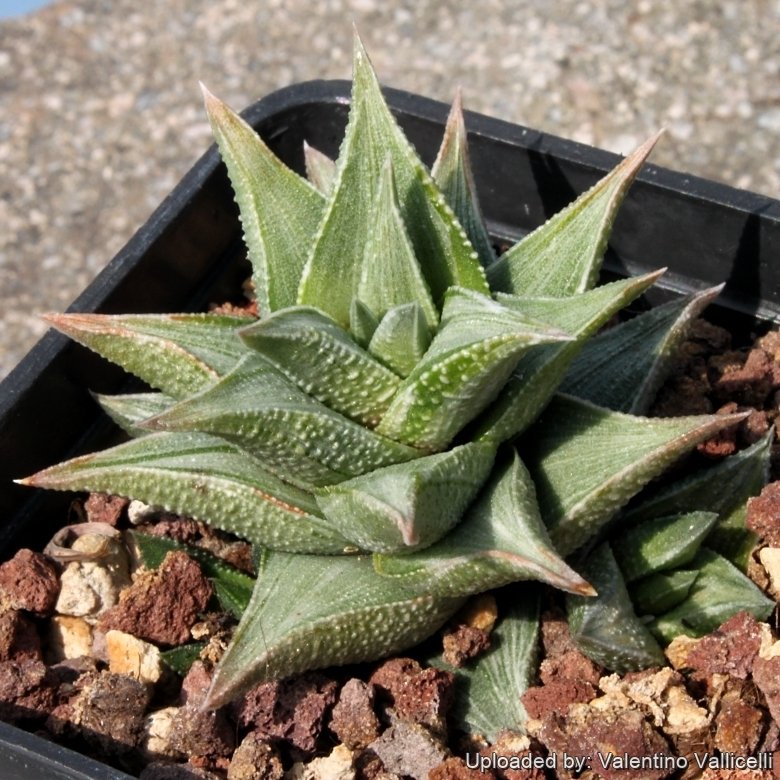
H. tortuosa var. pseudorigida is a small leaf succulent, which forms characteristic series of leaves arranged in spiral along the stem. The name pseudorigida (from Greek “pseudo” false and “rigidus”“ almost-solid) refers to the consistency of the leaves, tha are very hard and firm. It is a larger growing form but hardly distinguishable from other Haworthia tortuosa varieties. Daughterly rosettes are abundantly formed at the base of the older plants.
Stem: Up to 20 cm tall.
Leaves: Dull green 2-4 cm long, 0,7-1,3 cm wide, and up to 0,4 cm thick, pointed, triangular in section and distinctly placed in strongly twisted rows round the axes; They are rough, or slightly verruculose on the back with a tuberculate or slightly serrated edge. Cilias are absent
Flowers: Whitish. The flower’s Structure, colour and fruits are typical of the genus.
Cultivation and Propagation
This is one of the choicest haworthias. It needs regular water, but do not water again until dry. Also, it is a species that is dormant in the winter and requires very little water (maybe even none) during the cold months. Prefers a draining acidic soil without limestone.
Frost Tolerance: Light frost protection required. Minimum of 5º C for safe growing (but hardy up to -5°C or less.).
Sun Exposure: Some shade is also in order; it can be sunburned if moved from shade/greenhouse into full sun too quickly. The amount of sunlight it can withstand without scorching depends upon how hot it becomes in the summer in the location in which it is planted. It will have more colour if it receives more light. During the spring it may be able to take some sun until the heat arrives at the end of spring. In an area that has hot afternoon sun, it may be able to take full morning sun, but requires afternoon shade or afternoon light shade.
Propagation: Usually by seeds or offsets that appear at the base between the leaves; leave them attached until they are 1/3 the size of the parent and then detach and plant.
Source: Aloe pseudorigida, LLIFLE - Encyclopedia of living forms, CC-BY-SA, retrieved 2026-10-25.
From llifle page Aloe tortuosa
Description
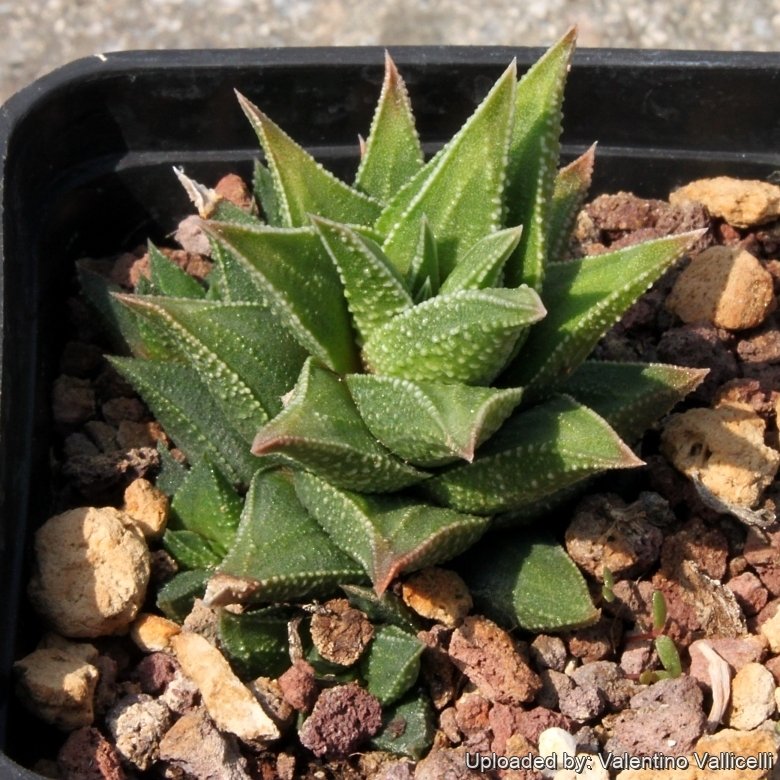
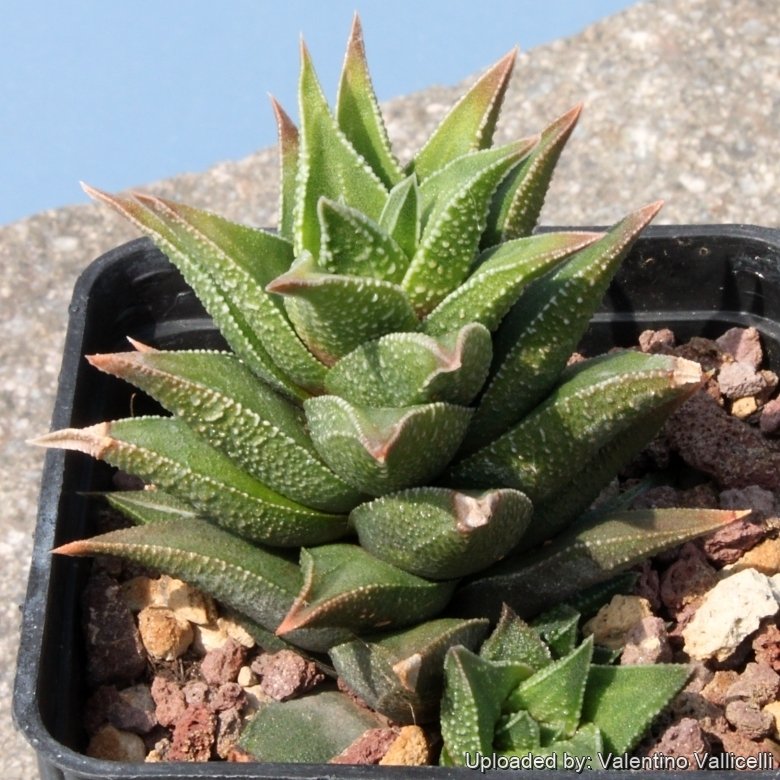
This is a small leaf succulent, which forms characteristic series of leaves arranged in spiral along the stem. Daughterly rosettes are abundantly formed at the base of the older plants. It is a variable species supposed to be an hybrid of Haworthia viscosa, it is frequent in cultivation, as are its varietis and cultivars, and there is also a variegated form (Haworthia tortuosa f. variegata)
Stem: Up to 20 cm tall.
Leaves: Dull green 2-3 cm long, 0,7-1,3 cm wide, and up to 0,4 cm thick, pointed, triangular in section and distinctly placed in strongly twisted rows round the axes; They are rough, or slightly verruculose on the back with a tuberculate or slightly serrated edge. Cilias are absent
Flowers: Whitish. The flower’s Structure, colour and fruits are typical of the genus.
Origin and Habitat
Garden origin (Haworthia viscosa hybrid ? )
Cultivation and Propagation
This is one of the choicest variegated haworthias. It needs regular water, but do not water again until dry. Also, it is a species that is dormant in the winter and requires very little water (maybe even none) during the cold months.
Frost Tolerance: Light frost protection required. Minimum of 5º C for safe growing (but hardy up to -5°C or less.).
Sun Exposure: Some shade is also in order; it can be sunburned if moved from shade/greenhouse into full sun too quickly. The amount of sunlight it can withstand without scorching depends upon how hot it becomes in the summer in the location in which it is planted. It will have more colour if it receives more light. During the spring it may be able to take some sun until the heat arrives at the end of spring. In an area that has hot afternoon sun, it may be able to take full morning sun, but requires afternoon shade or afternoon light shade.
Propagation: Usually by seeds or offsets that appear at the base between the leaves; leave them attached until they are 1/3 the size of the parent and then detach and plant.
Source: Aloe tortuosa, LLIFLE - Encyclopedia of living forms, CC-BY-SA, retrieved 2026-10-25.
From llifle page Haworthia tortuosa f. variegata
Description
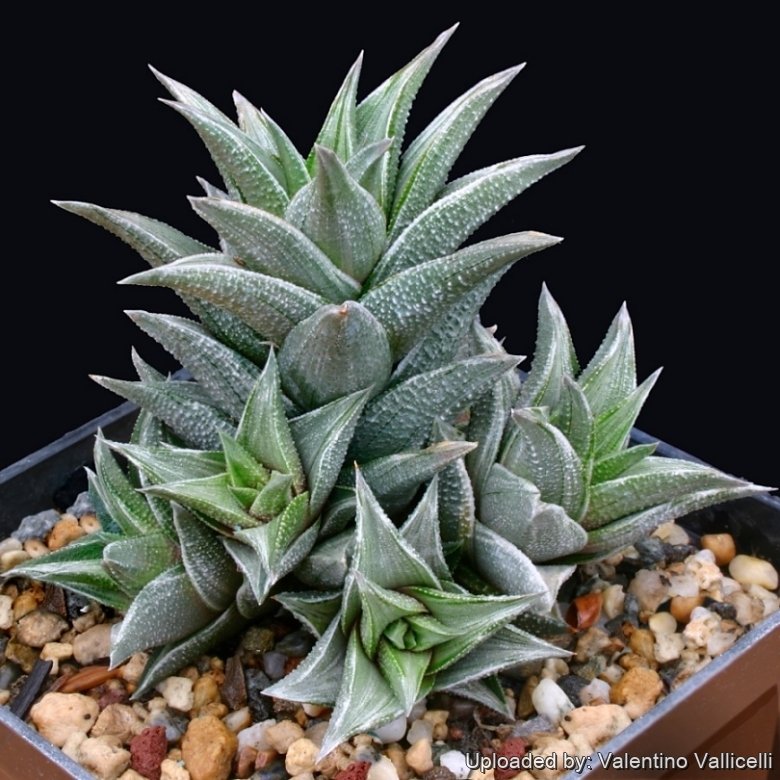
This is a small leaf succulent, which forms characteristic series of leaves arranged in spiral along the stem. Daughterly rosettes are abundantly formed at the base of the older plants.
Stem: Up to 20 cm tall.
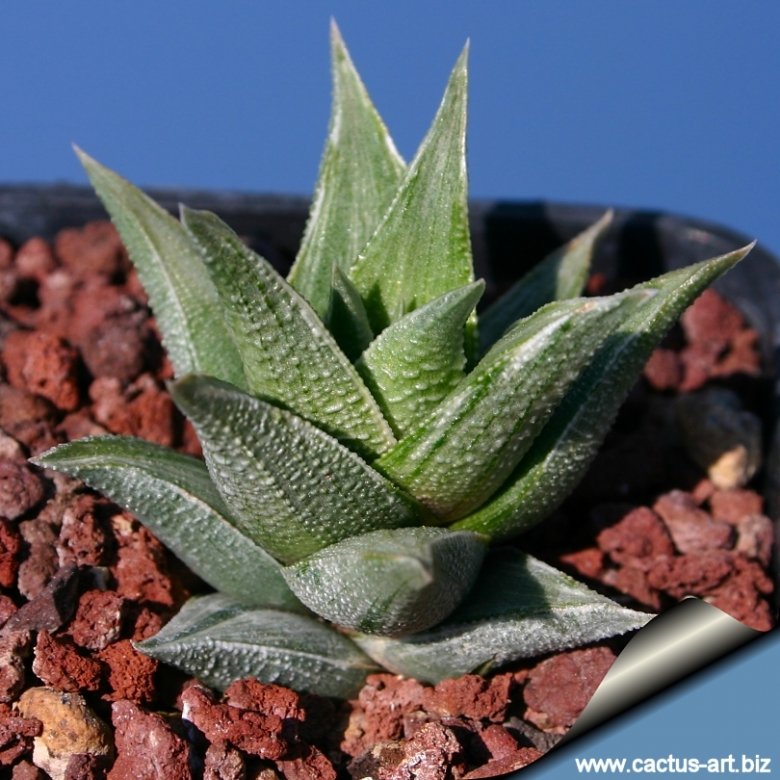
Leaves: Dark blue-green with grey variegated lines (The base of leaves may redden a little ) 2-3 cm long, 0,7-1,3 cm wide, and up to 0,4 cm thick, triangular in section. They are rough, or slightly verruculose. Cilias are absent
Flowers: Whitish. The flower’s Structure, colour and fruits are typical of the genus.
Origin and Habitat
Garden origin (Nursery produced cultivar)
Cultivation and Propagation
This is one of the choicest variegated haworthias. It needs regular water, but do not water again until dry. Also, it is a species that is dormant in the winter and requires very little water (maybe even none) during the cold months.
Frost Tolerance: Light frost protection required. Minimum of 5º C for safe growing (but hardy up to -5°C or less).
Sun Exposure: Some shade is also in order; it can be sunburned if moved from shade/greenhouse into full sun too quickly. The amount of sunlight it can withstand without scorching depends upon how hot it becomes in the summer in the location in which it is planted. It will have more colour if it receives more light. During the spring it may be able to take some sun until the heat arrives at the end of spring. In an area that has hot afternoon sun, it may be able to take full morning sun, but requires afternoon shade or afternoon light shade.
Propagation: Usually by seeds or offsets that appear at the base between the leaves; leave them attached until they are 1/3 the size of the parent and then detach and plant.
Source: Haworthia tortuosa f. variegata, LLIFLE - Encyclopedia of living forms, CC-BY-SA, retrieved 2026-10-25.
Cultivars and forms (2)
Subspecies (1)
Varieties (1)
Gallery