Publication: Index Seminum [St.Petersburg (Petropolitanus)] 8: 64. 1841 [25 Jan 1842]
Description
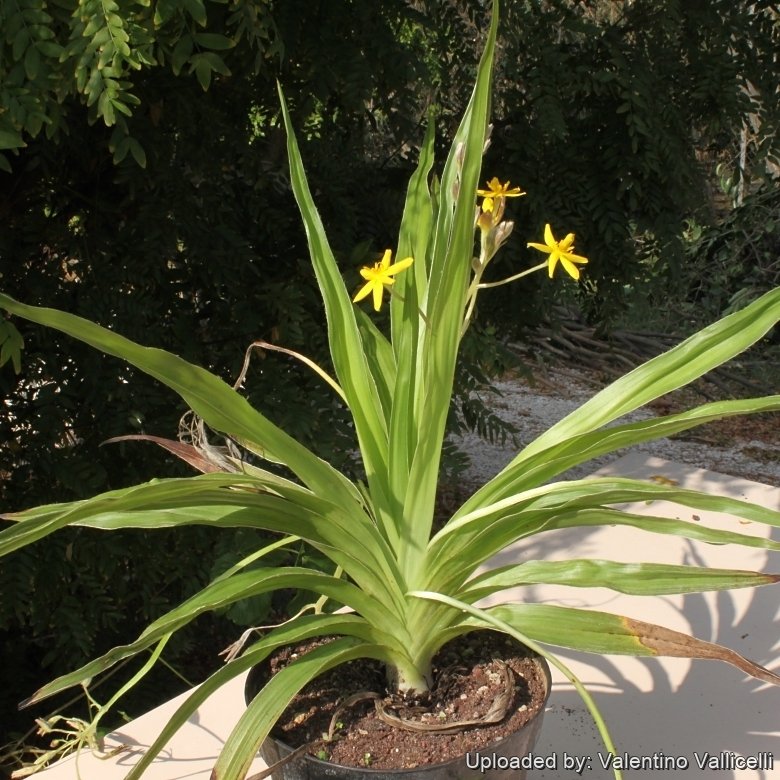
It is a beautiful tuberous perennial plant about 10 to 50 cm tall.
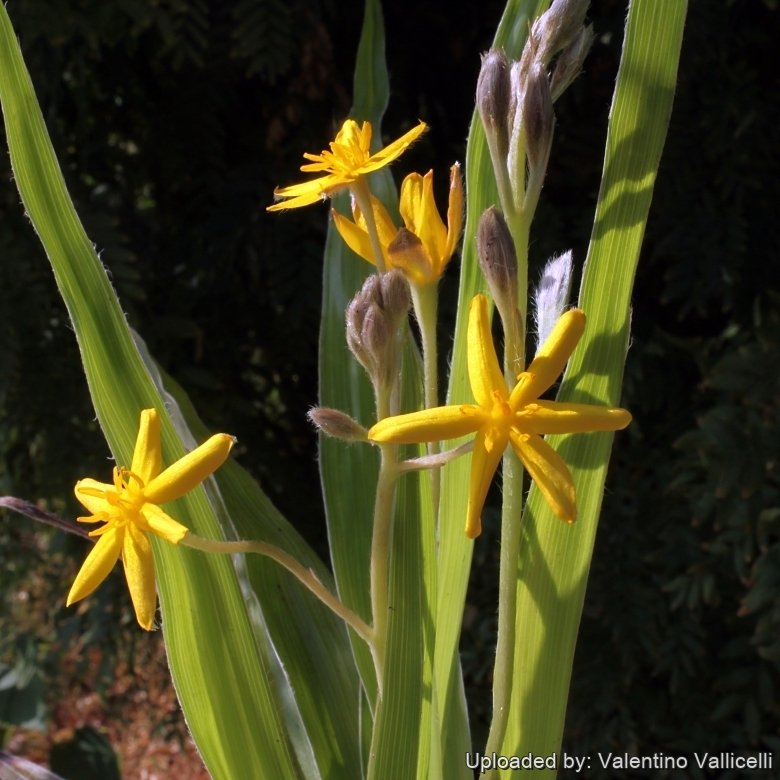
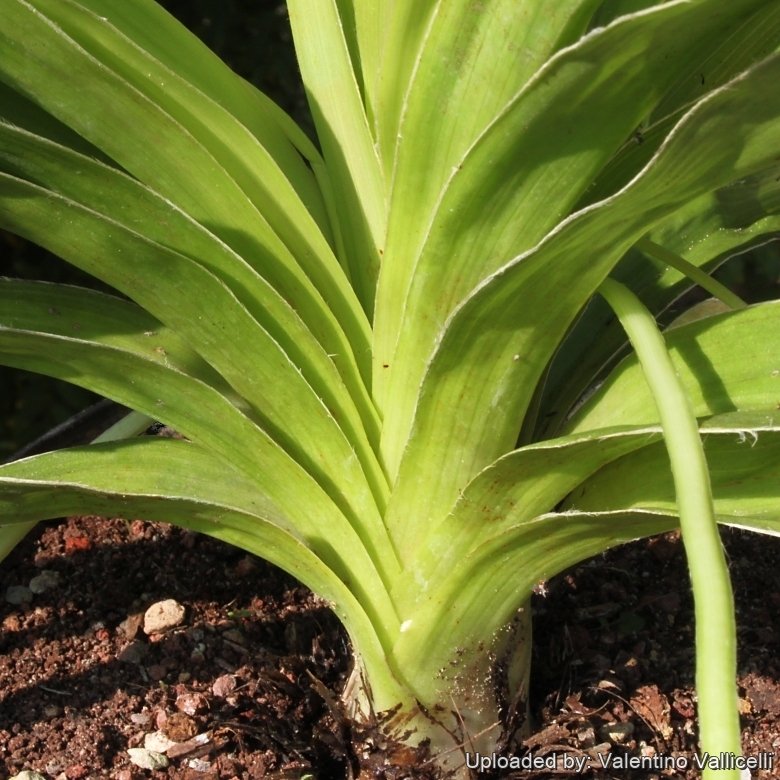
Leaves: Straplike, up to 400 mm long, neatly arranged one above the other in 3 ranks, distinctly arching in the shape of a sickle, keeled, broad, with prominent ribs and tapering towards the tips and are hairy all over. The lower surface of the leaves is densely hairy with white hairs. Leaves appear above ground , sometimes borne on the stem in spring before the flowers.
Tuber: Dark brown, big fat, with not elongated and stem-like, vertical, it is covered with bristly hairs, and is bright yellow when freshly cut. It has an unpleasant bitter taste.
Roots: Fleshy.
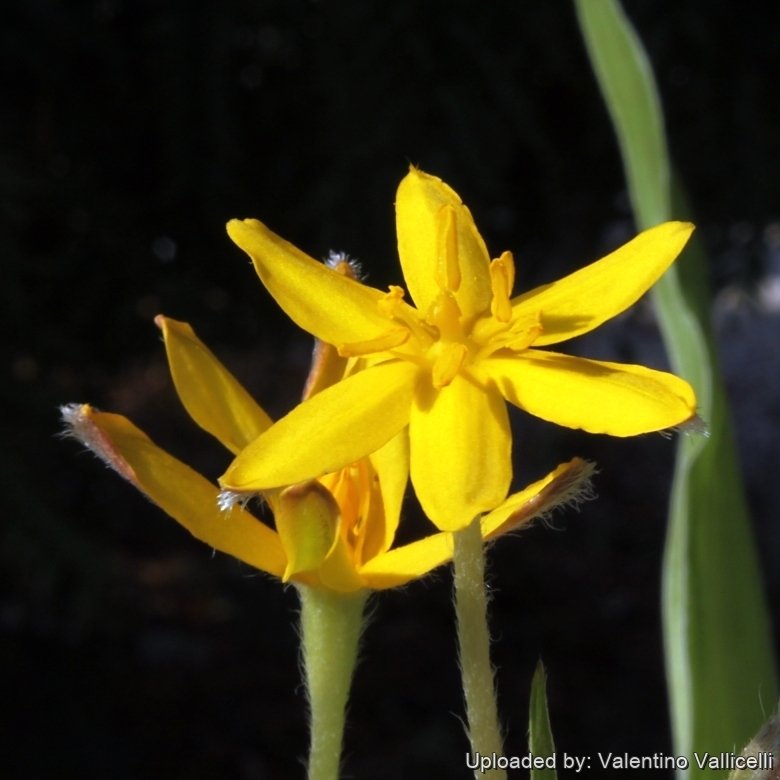
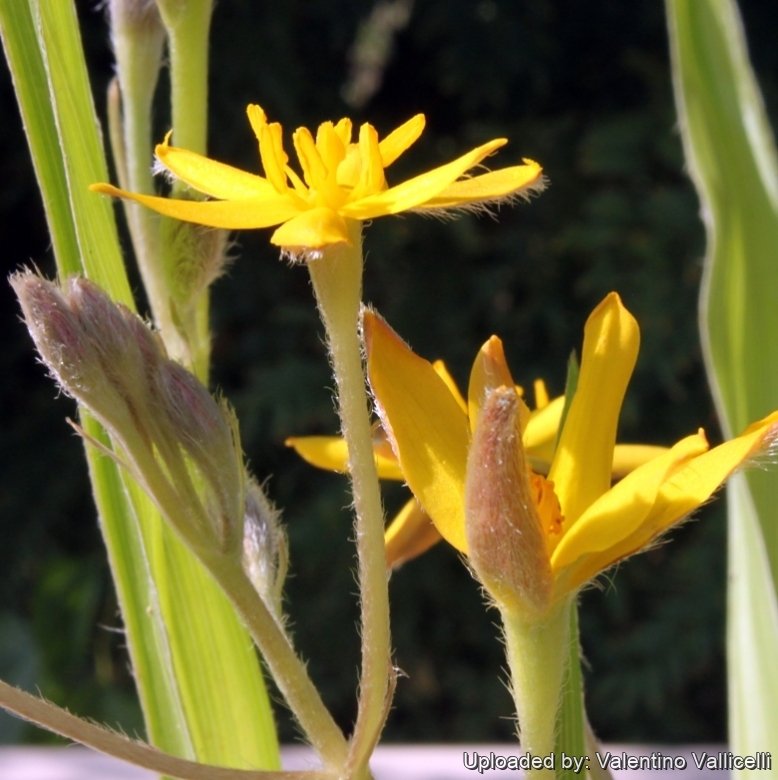
Flowers: yellow star-shaped flowers. on 5 or 6 slender erect inflorescences, each carrying 5–13 bright yellow, star-shaped flowers with 6 tepals. Six free stamens arise from the base of the tepals with prominent anthers. The style is short and fat, carrying the robust stigma.
Blooming season: September to January The flowers are short-lived open in the mornings and close at midday. Flowers open sequentially from the base to the apex. Usually 1–3 flowers are open at the same time, thus encouraging cross-pollination.
Seeds: Hard, black, smooth and glossy.
Origin and Habitat
Widespread in the summer rainfall region of South Africa, from coast to interior, extending nothwards into Botswana where populations become fewer
Habitat: It is found in marshy forest margins and grassland where its yellow star-like flowers herald the arrival of spring and summer rains. Altitude 50 - 1800 m.
Cultivation and Propagation
Uses: It is probably the best known medicinal plant in South Africa used for centuries in African traditional medicine and the tuber is used in infusions and decoctions to treat a variety of ailments from headaches, mental disorders, arthritis, cancer and and recently recognized in the alternative medicine trade as a ‘wonder cure’ for its immune-boosting properties.
The leaves are used to make rope and the tuber is used as a dye to blacken floors.
Gallery