Description
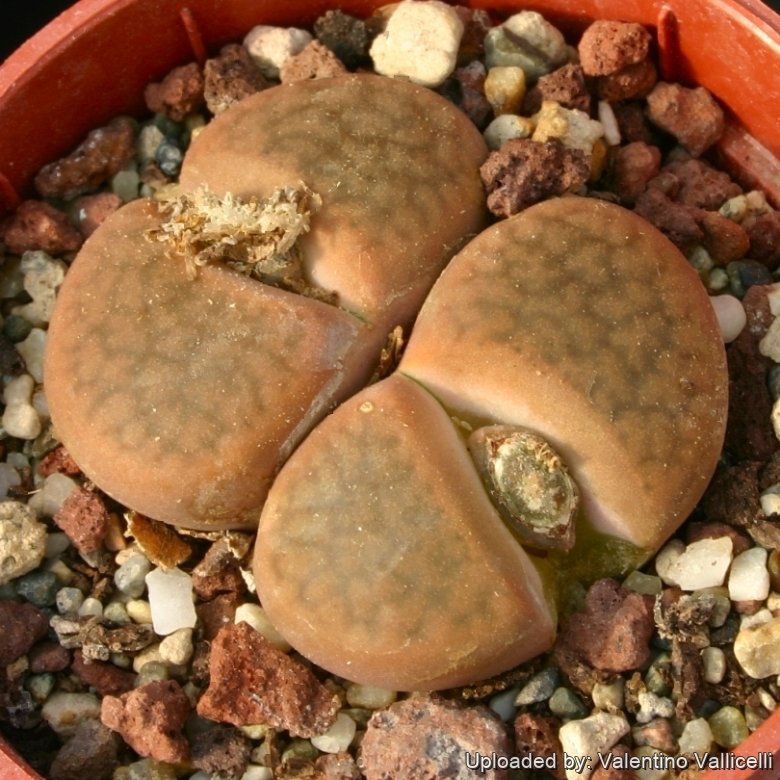
L. hookeri is a medium to very large species, up to 46 X 35 mm, usually about 30 X 23 mm. with up to 10 or more heads (mostly 2-4)
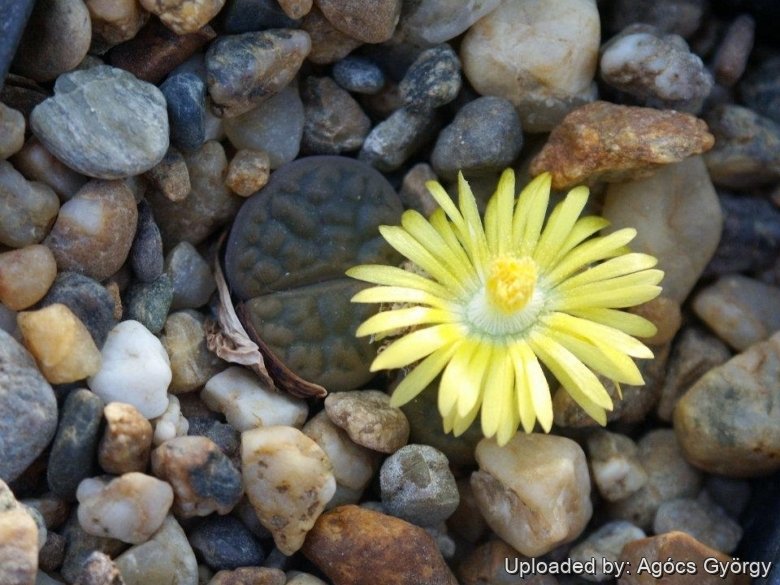
Bodies (paired leaves): Obconical, truncate, top surface flat to slightly convex. The face is elliptical more or less equal. The fissure is shallow 3-7 mm, the lobes are conjunct. This species is characterized by an obscure network of simple and forked groves and lines, and numerous irregular small island enclosed by groves. Margins are irregularly incise with narrow lines tapering out of the grows. This species is quite variable and the colours and face pattern varies considerably in plant from different provenance. L. hookeri comprises several more or less intergrading and distinct variety.
The var. subfenestrata is distingushed for having obscurely transluscent windows with very shallow channels, obscure islands, dark brownish slate colour and polished appearance. Shoulders, face margins and islands various shades of opaque brownish grey, buff or greyish, yellowish, greenish or pinkish brown; the margins often suffused with a band of more intense colour. Windows and channels various shades of obscurely transluscent dark brownish slate, brownish green.
Origin and Habitat
TL: 15 km SSW of Prieska, South Africa
Cultivation and Propagation
L. hookeri is a summer growing species with dry rest period over winter. Easy to grow it tolerates a degree more excess water than some particular hydrophobic species, even so it must have a very open mineral, fast draining mix with little compost and a high degree of grit, coarse sand, small lava gravel or pebbles. Give them the maximum amount of light you are able to give them, but care should be taken about exposing them to the full blast of the sun rays in summer. Such tiny plants can easily get scorched or broiled and their appearance spoiled (this may not matter in the wild, where the Lithops have probably shrunk into the ground and becomes covered with sands).
The basic cultivation routine is: Stop watering after flowering. Start watering after the old leaves completely dry. (Usually late March or Early April) Water freely during the growing season, soak the compost fully but allow it to dry out between waterings, no water when cold. Some growers fertilize frequently, some hardly ever. Keep them dry during the winter. Nearly all problems occur as a result of overwatering and poor ventilation especially when weather conditions are dull and cool or very humid. If too much water is supplied the plants will grow out of character, bloat, split and rot. Keep them in small pots as solitary clumps or as colonies in large, shallow terracotta seed pans.
Notes: After flowering in the autumn and extending through winter season the plant doesn’t need watering, but they will still be growing, the new bodies will be increasing in size extracting water from the outer succulent leaves, allowing them to shrivel away. In fact the plant in this time extracts water and nutrient stored in the outer succulent leaves, allowing them to dehydrate relocating the water to the rest of the plant and to the new leaves that form during this period until the old leaves are reduced to nothing more than “thin papery shells”.